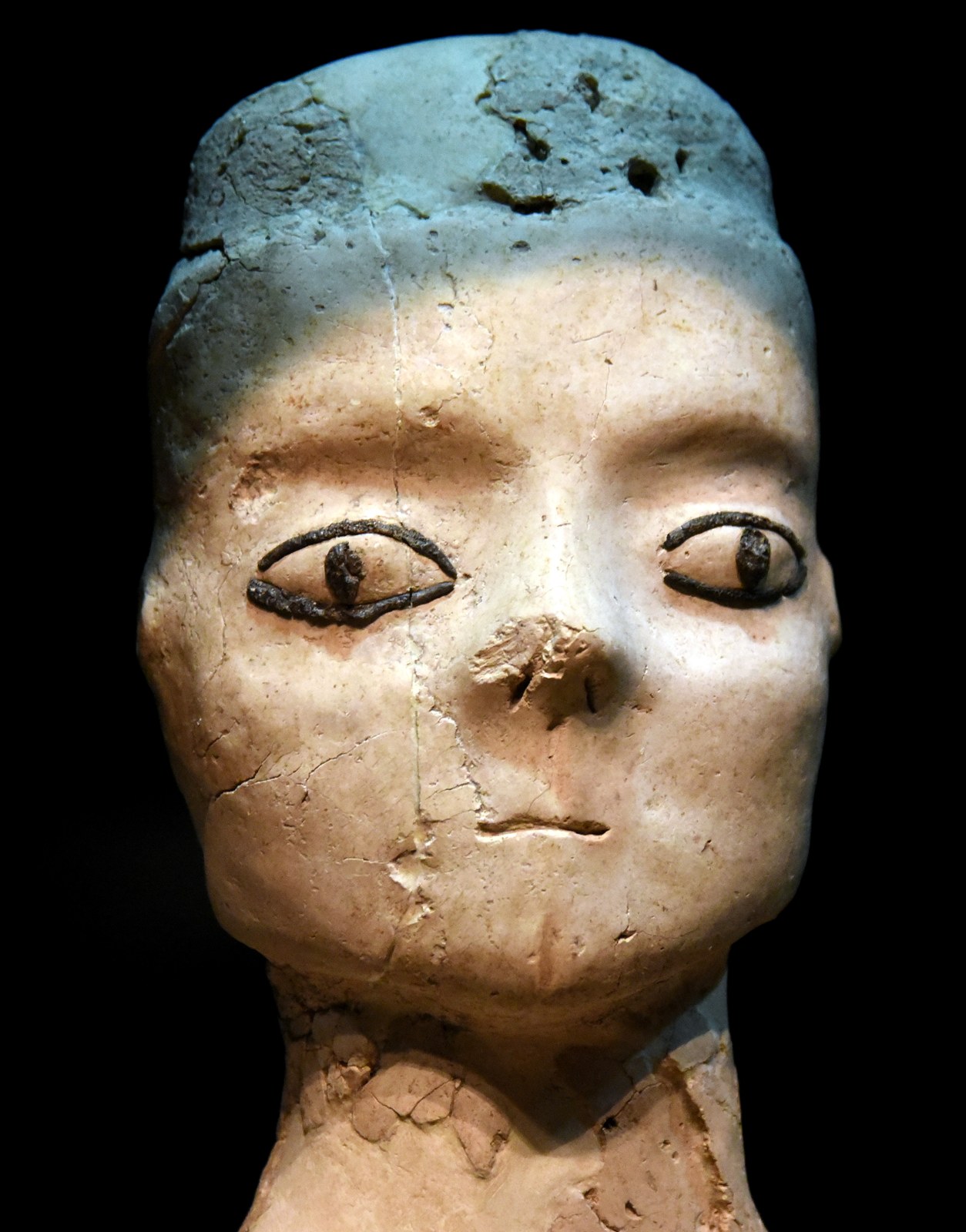
Neolithic site near Amman, Jordan, known for large Pre-Pottery Neolithic plaster statues. Faces and decorated eyes are recognizable, but the figures’ names and religious function remain unresolved.
Head of a plaster statue from Ain Ghazal, Pre-Pottery Neolithic, Jordan Museum, Amman. Photograph: Osama Shukir Muhammed Amin, CC BY-SA 4.0. A comparison from another community, not direct evidence of an Ubaid maker’s skillOsama Shukir Muhammed Amin — CC BY-SA 4.0 · CC BY-SALicense · Image source
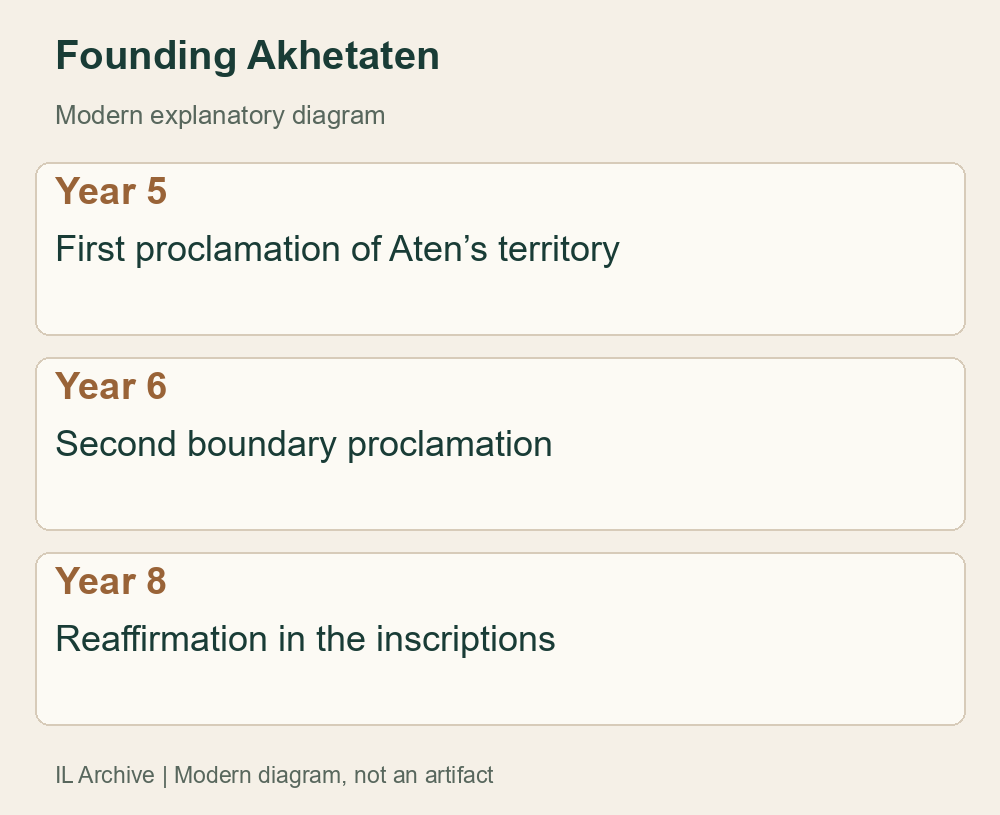
Site of Akhenaten’s capital in Middle Egypt; boundary stelae record successive proclamations and reaffirmation.
Modern timeline of boundary-stela proclamations in years 5, 6 and 8. Not an archaeological city plan or a claim that all changes occurred on one day; inscriptional claims do not verify revelationIL Archive · original diagram · CC BYImage source
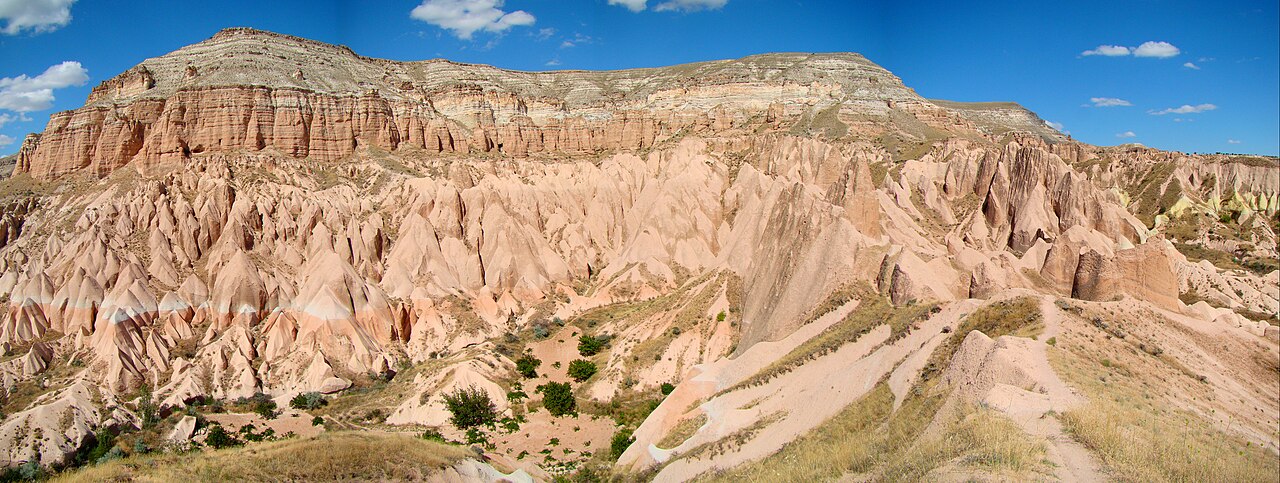
Anatolia is the region occupying the Asian part of present-day Turkey
Aktepe Hill near Göreme in Cappadocia, central Anatolia in present-day Turkey, 31 July 2009. A landscape photograph, not a representation of one particular ancient kingdom or peopleBjørn Christian Tørrissen / Wikimedia Commons · CC BY-SA 3.0 · CC BY-SALicense · Image source
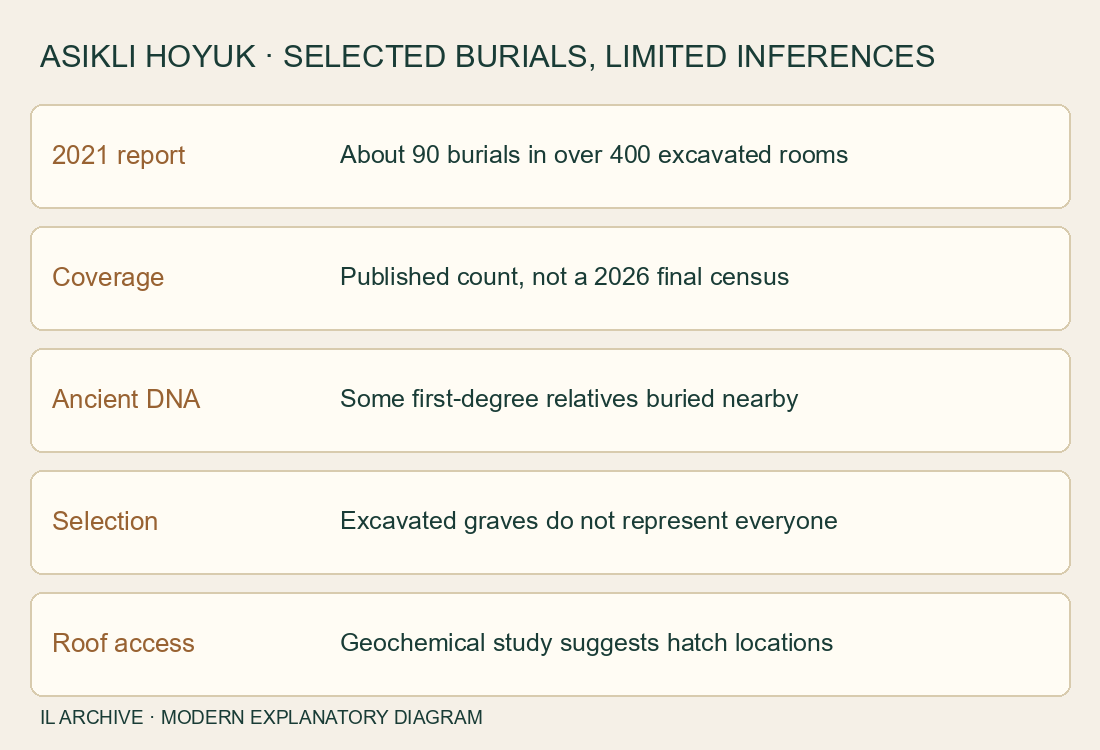
A Neolithic Cappadocian settlement with successive buildings and selected subfloor burials.
Modern Aşıklı guide: 2021 counts, some close relatives and selective burial. Proposed roof hatches are architectural inferences, not evidence of a heaven or underworld doctrineModern explanatory diagram by IL Archive · CC BY 4.0 · CC BYImage source
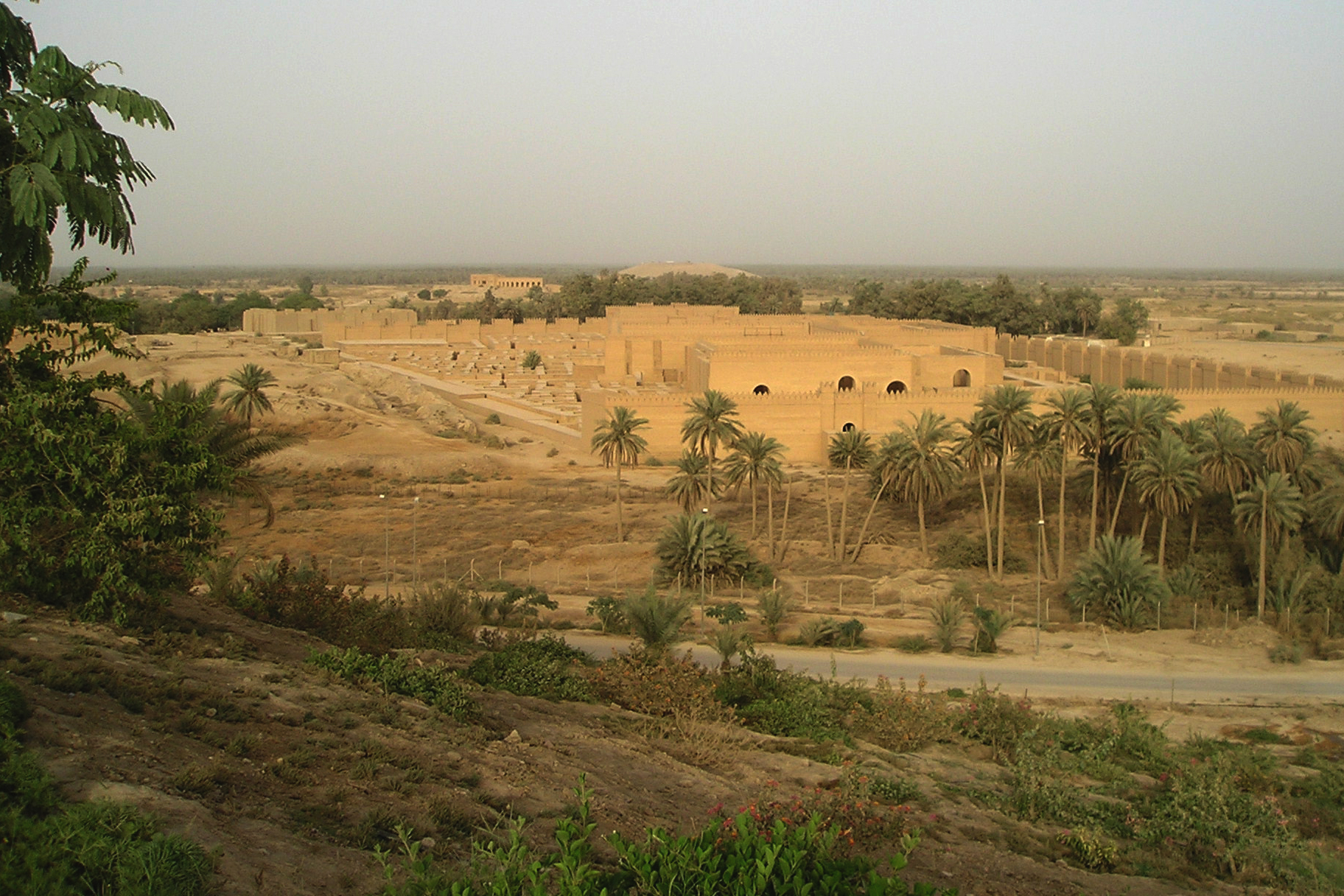
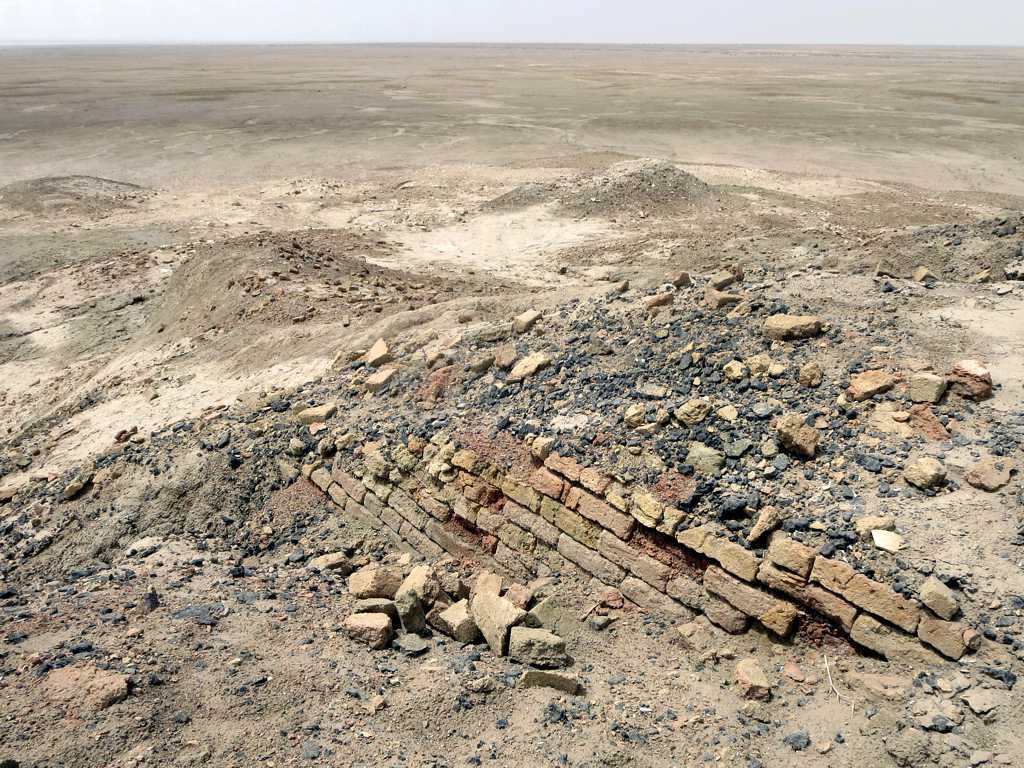
Babylon is an ancient city in central present-day Iraq, south of Baghdad
The site of Babylon in Iraq, in a photograph dated 2009 on its source page. It includes buildings reconstructed in modern times over the archaeological site, alongside the surrounding landMaj. Mike Feeney, U.S. Army / Wikimedia Commons · Public domain in the United States · Public domainImage rights · Related reference · Image source
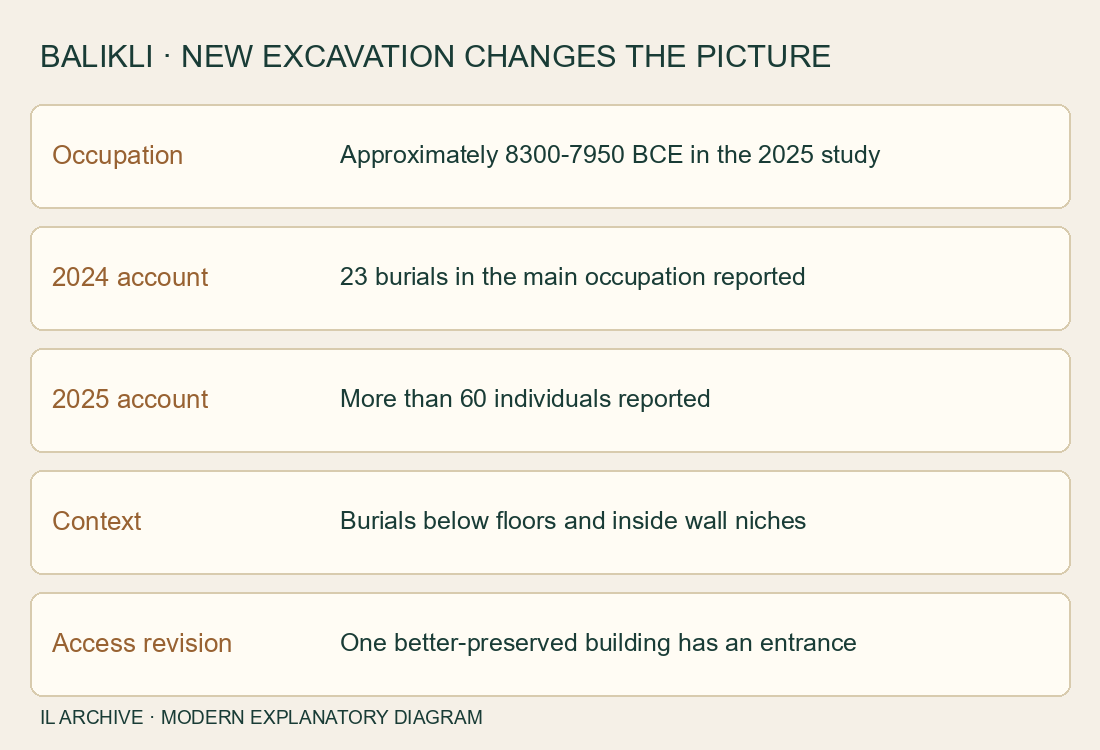
A central Anatolian Neolithic site with floor and wall burials and special skull treatment.
Modern Balıklı guide: changing counts in the 2024 and 2025 reports, with floor and wall burials. An entrance in one better-preserved building prevents universal claims of roof accessModern explanatory diagram by IL Archive · CC BY 4.0 · CC BYImage source
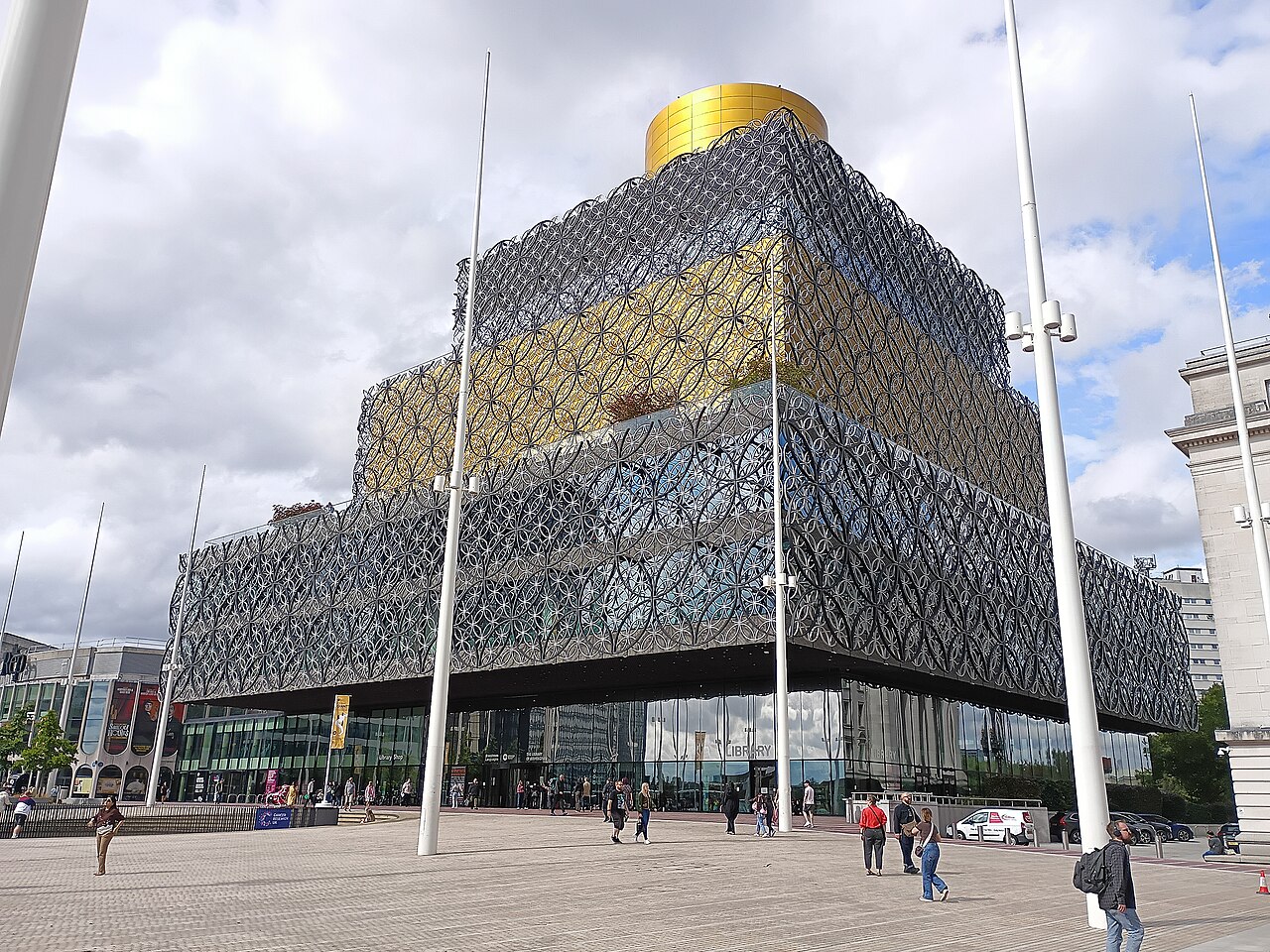
Birmingham is a city in England whose university preserves early Qur’anic parchment leaves
The public Library of Birmingham, England, on 6 September 2025. A contemporary city view; the Qur’anic leaves are held by the university’s Cadbury Research Library, a different institutionFatih Renkligil / Wikimedia Commons · CC BY-SA 4.0 · CC BY-SALicense · Image source
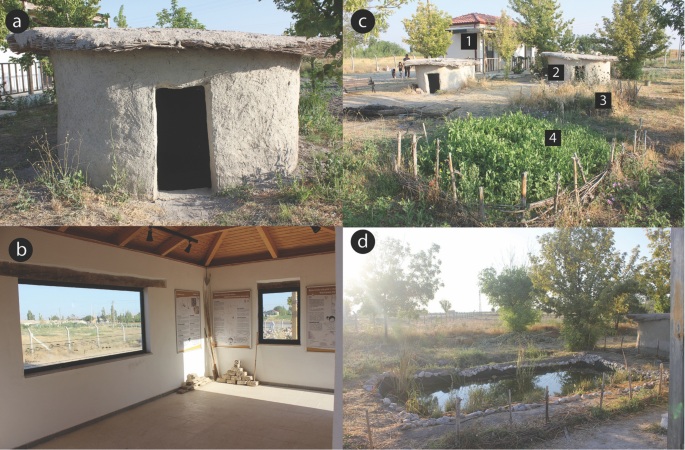
A Konya Plain Neolithic settlement with oval houses and burials associated with continued building use.
Boncuklu today: replica houses, visitor-centre interior, interpretative garden and pond, Figure 6 of the 2026 study. Modern facilities, not an excavation photograph or burial-ritual reconstructionPhotos: Andrew Fairbairn (AF) · Chaddock et al. 2026 · CC BY 4.0 · CC BYImage source
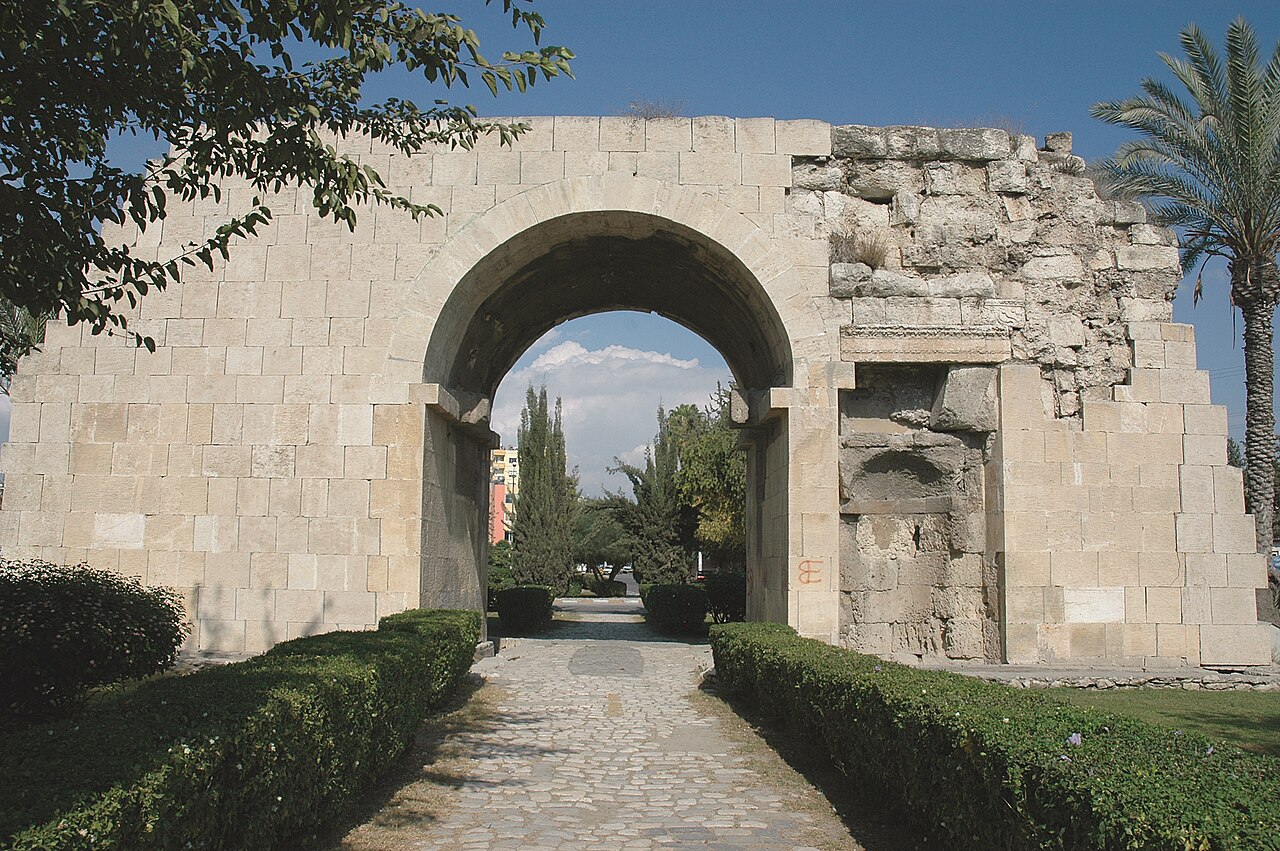
Historical region on Anatolia’s southern coast in modern Türkiye, with plains and uplands connected to the Levant and Anatolian interior.
The gateway known as Cleopatra’s Gate in Tarsus, a city of historical Cilicia in modern Türkiye, 3 October 2005. A view of a place in the region; the popular name does not date the visible buildingDosseman / Wikimedia Commons · CC BY-SA 4.0 · CC BY-SALicense · Image source
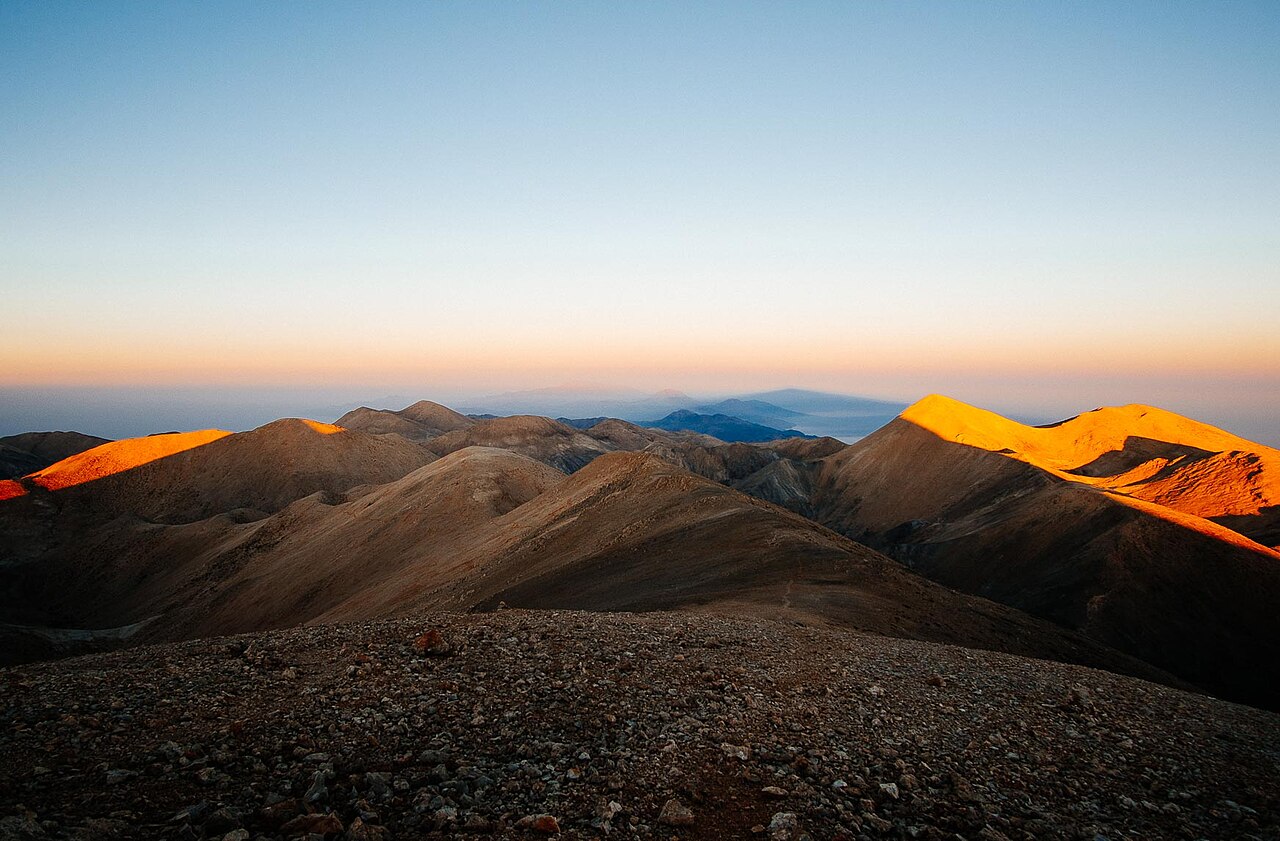
Greek island in the eastern Mediterranean, associated in Hesiod with hiding the infant Zeus.
Mountain landscape in the Lefka Ori of Crete, near Pachnes, 5 August 2016, according to the photographer’s metadata. A modern island view, not a location of Zeus’s hiding in the storyorestakoskaialexandroulini / Wikimedia Commons · CC BY-SA 4.0 · CC BY-SALicense · Image source
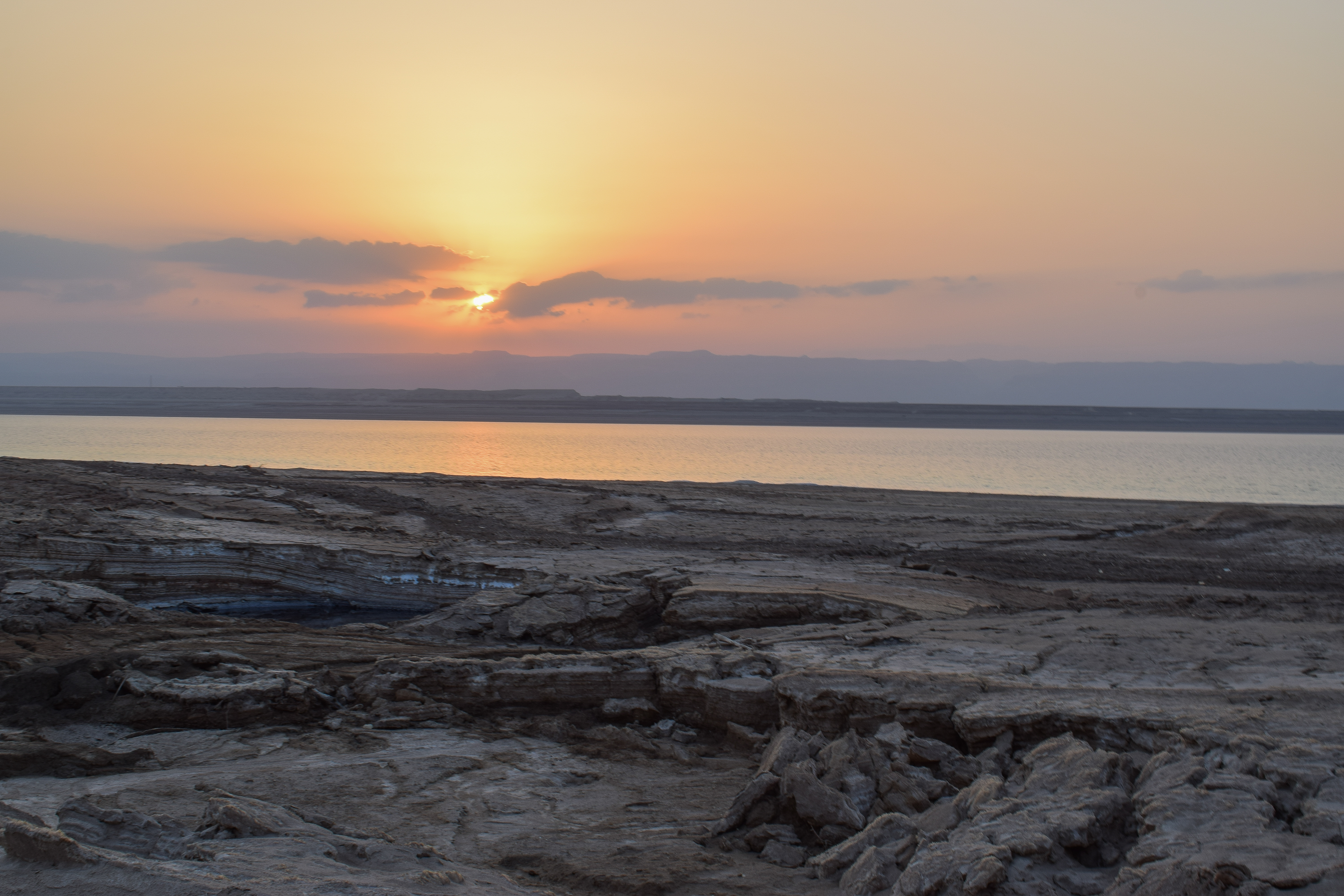
The Dead Sea is a salt lake in the Jordan Rift Valley, near sites where ancient manuscripts were found
Sunset over the Dead Sea from its eastern shore at Ghor Al-Haditha, Jordan, on 26 October 2018. The Judean Mountains appear on the western horizon. The photograph illustrates the lake’s geography; the Qumran manuscript caves lie elsewhere on its western sideRob Watson (distributed via imaggeo.egu.eu) · CC BY 3.0 · CC BYLicense · Image source
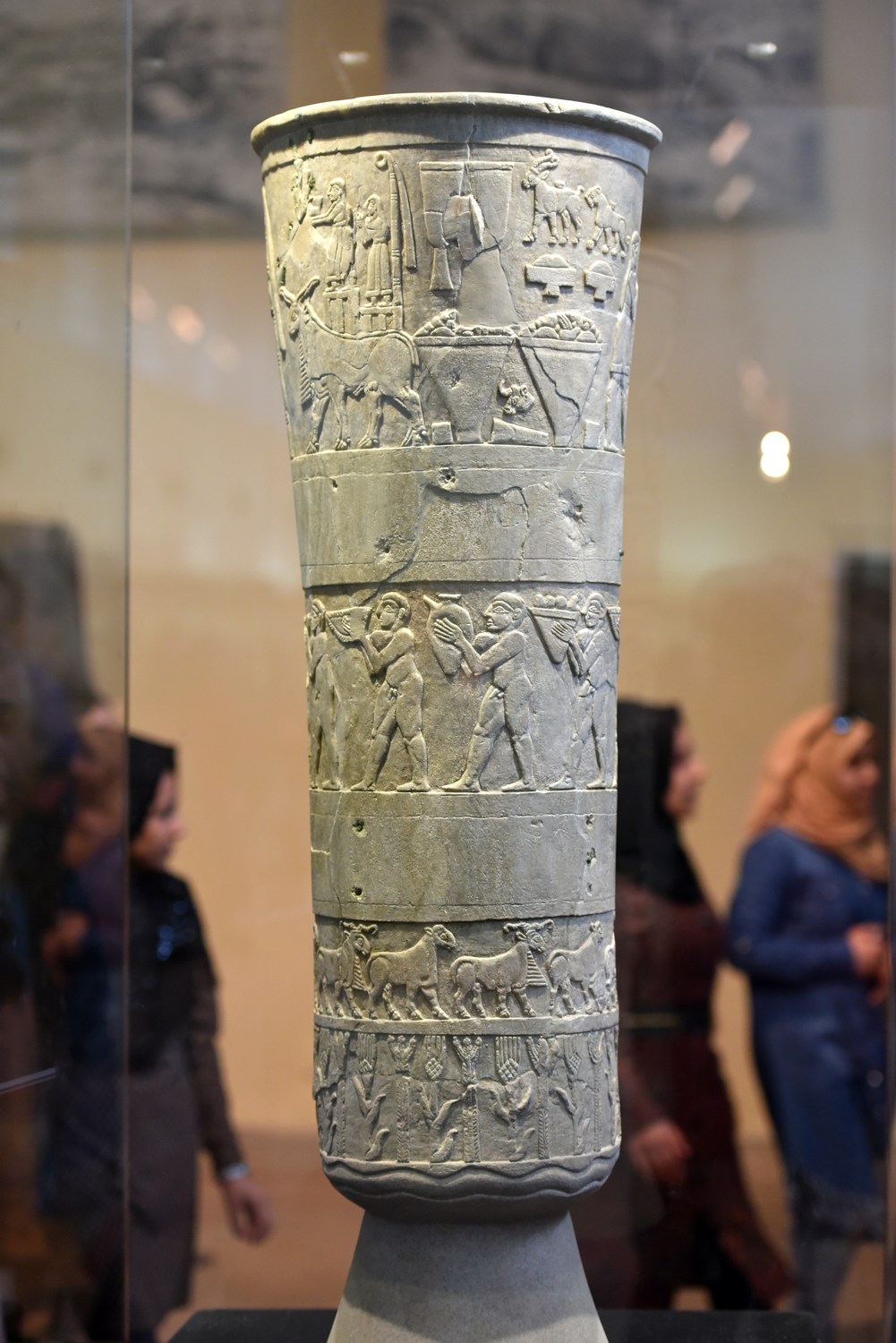
An ancient Gulf trading region linked archaeologically to Bahrain and also a Sumerian literary setting whose mythical scenes are not all historical descriptions.
The place in which the garden of Genesis 2–3 is planted; the story describes rivers, trees and a human test, while its archaeological location and name’s derivation remain unsettled.
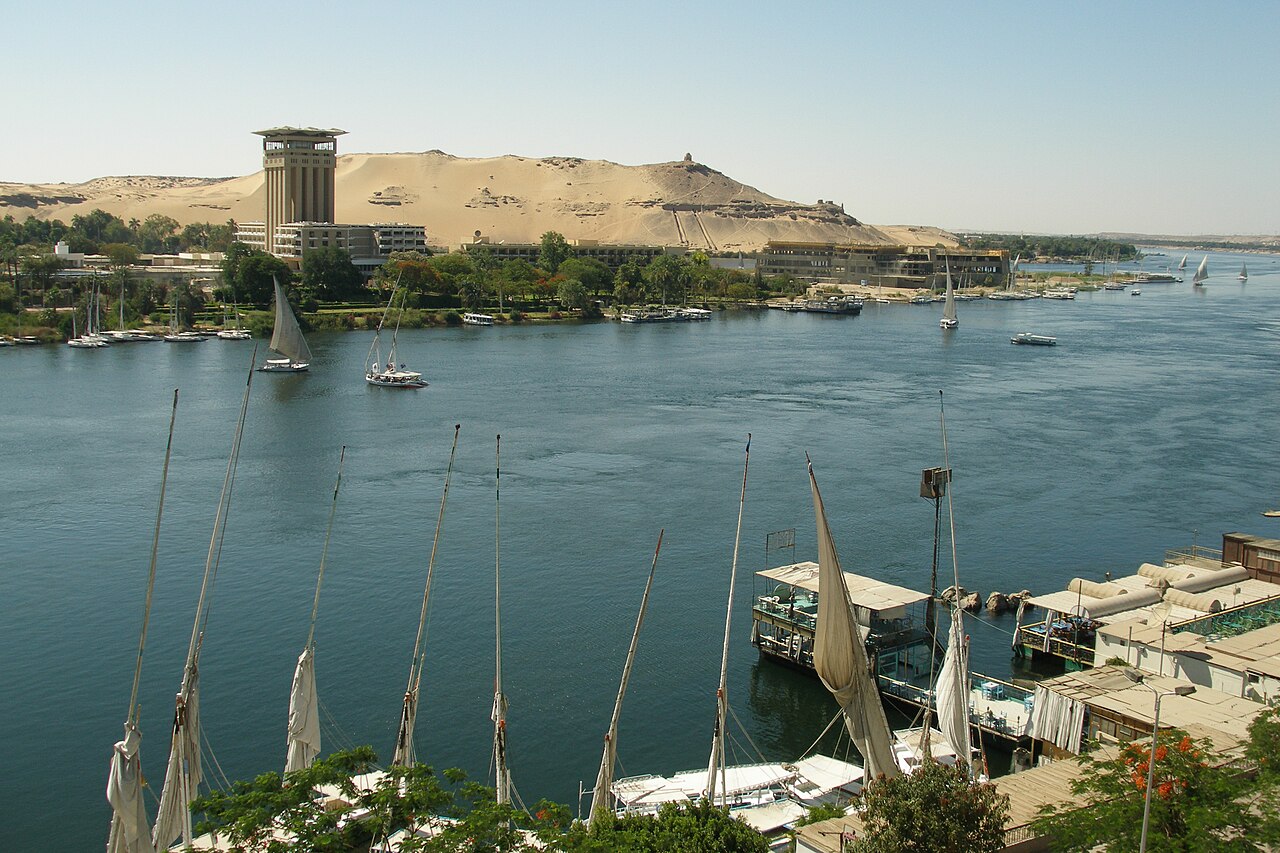
Island near Aswan at the Nile’s first cataract; Persian-period Aramaic papyri document a Jewish community and Yaho’s temple.
Modern view of Elephantine Island and the Nile near Aswan; geographical context, not the remains of Yaho’s templeZureks / Wikimedia Commons / CC BY-SA 3.0 · CC BY-SALicense · Image source
Abu Shahrain in southern Iraq, with a long architectural sequence beginning before writing. Associated with Enki in historical times, which does not establish the sacred being’s identity in its earliest layers.
Eridu ziggurat remains, photographed by David Stanley on 11 April 2016. The visible architecture postdates the Ubaid; it is not a photograph of its earliest temples or evidence of their deity’s identityDavid Stanley — CC BY 2.0 · CC BYImage source
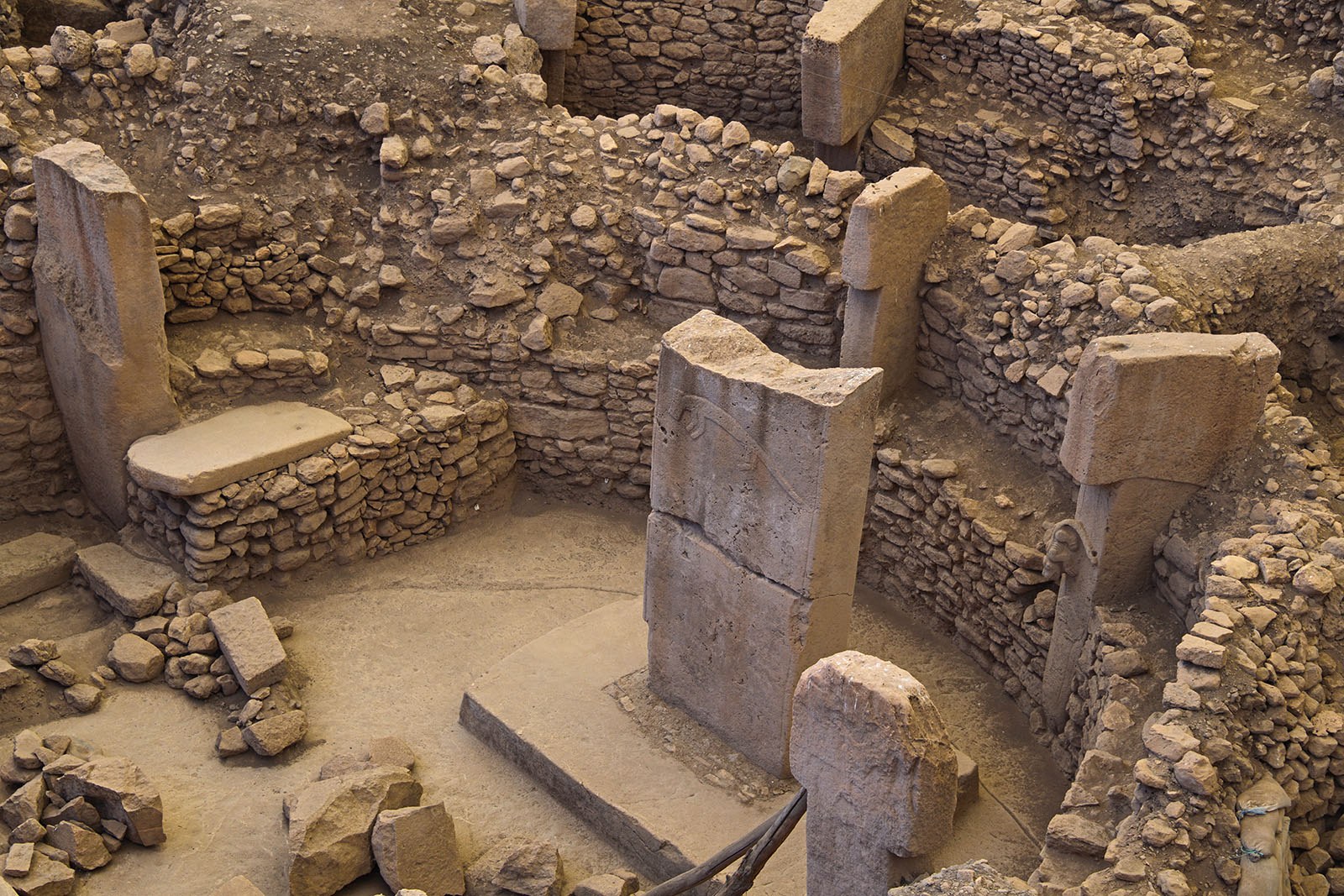
A Neolithic site in southeastern Turkey, known for communal buildings and T-shaped pillars; the excavation team describes a settlement with a pronounced ritual component.
Building C at Göbekli Tepe, southeastern Turkey, photographed in 2019. T-shaped pillars and communal architecture in a settlement with a ritual component; any proposed divine identities remain unknown. Some pillars have been restoredDosseman (Dick Osseman) · CC BY-SALicense · Image source
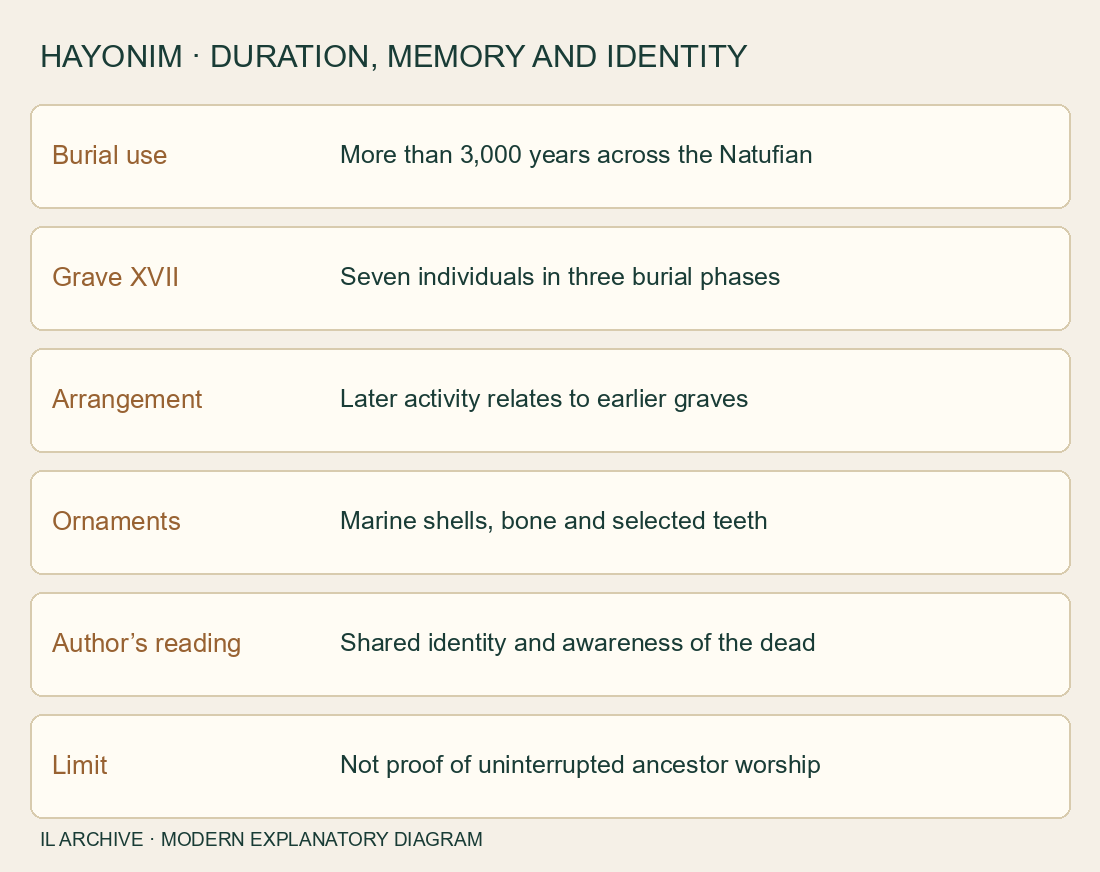
A Galilean cave with Natufian graves and ornaments; its long funerary use informs research on identity and place memory.
Modern diagram of Hayonim burial duration, Grave XVII phases and ornaments. Memory and identity interpret the evidence; duration does not establish one continuous group or ancestor worshipModern explanatory diagram by IL Archive · CC BY 4.0 · CC BYImage source
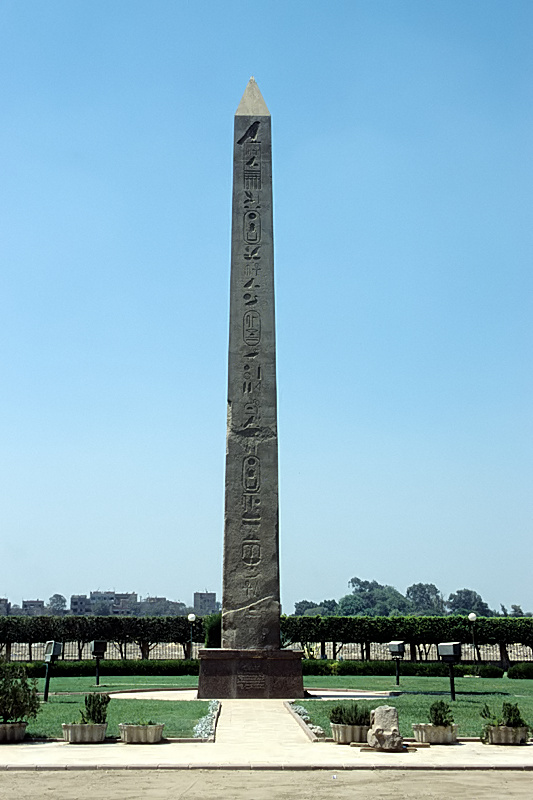
Heliopolis is the Greek name of Egyptian Iunu, at Matariya in northern present-day Cairo
The obelisk of Senusret I at Matariya in Cairo, at the site of ancient Iunu/Heliopolis, 2 September 2001. It belongs to the Middle Kingdom, in the twentieth century BCE; the monument’s date differs from that of this modern photographRoland Unger / Wikimedia Commons · CC BY-SA 3.0 · CC BY-SALicense · Related reference · Image source
Hermopolis is an ancient Egyptian city at Ashmunein, called Khemenu in Egyptian
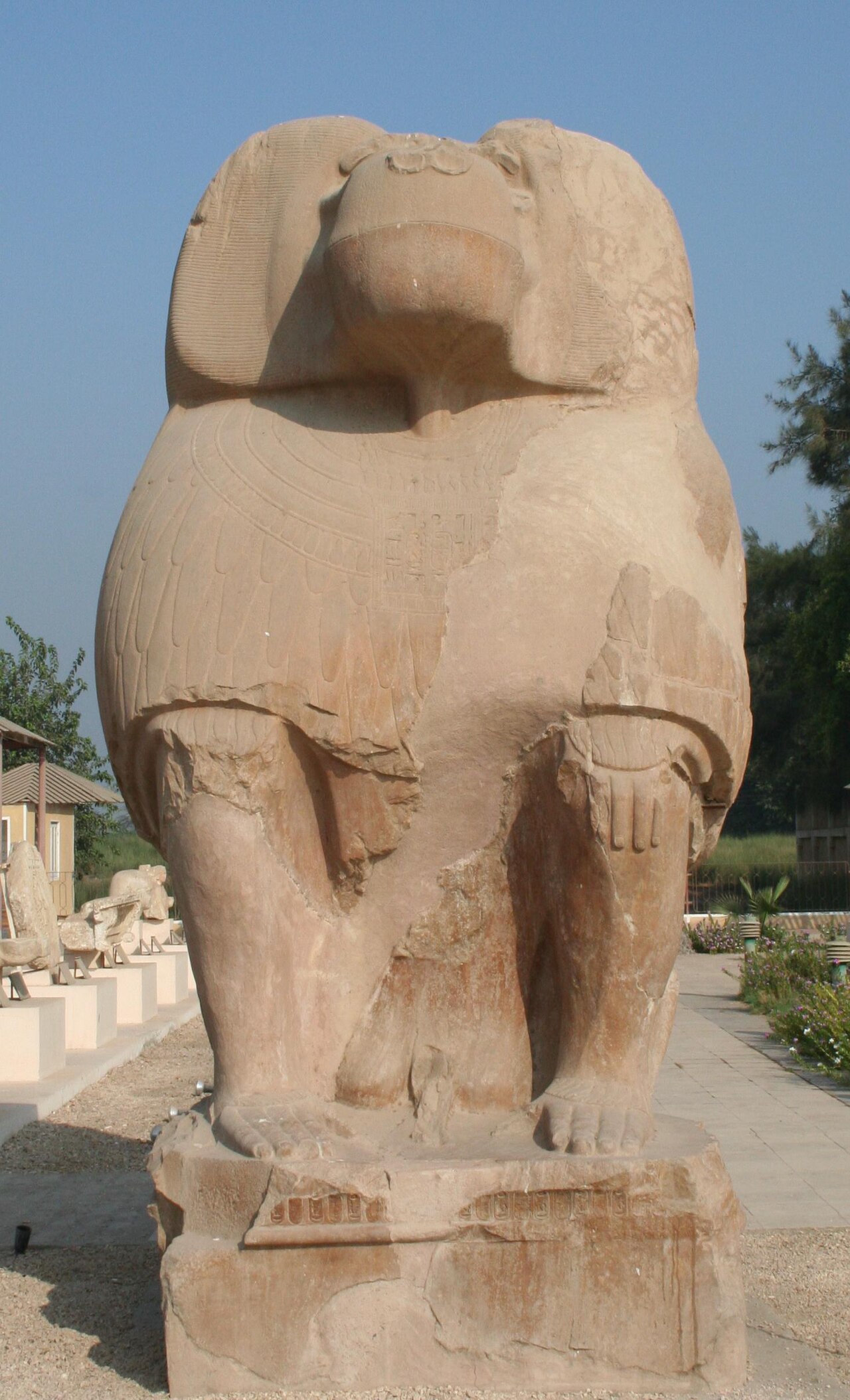
A colossal statue of Thoth as a baboon at Ashmunein/Hermopolis, from Amenhotep III’s reign in the fourteenth century BCE. Photographed on 18 September 2006; it offers a material example of the city’s association with ThothEinsamer Schütze / Wikimedia Commons · CC BY-SA 3.0 · CC BY-SALicense · Related reference · Image source
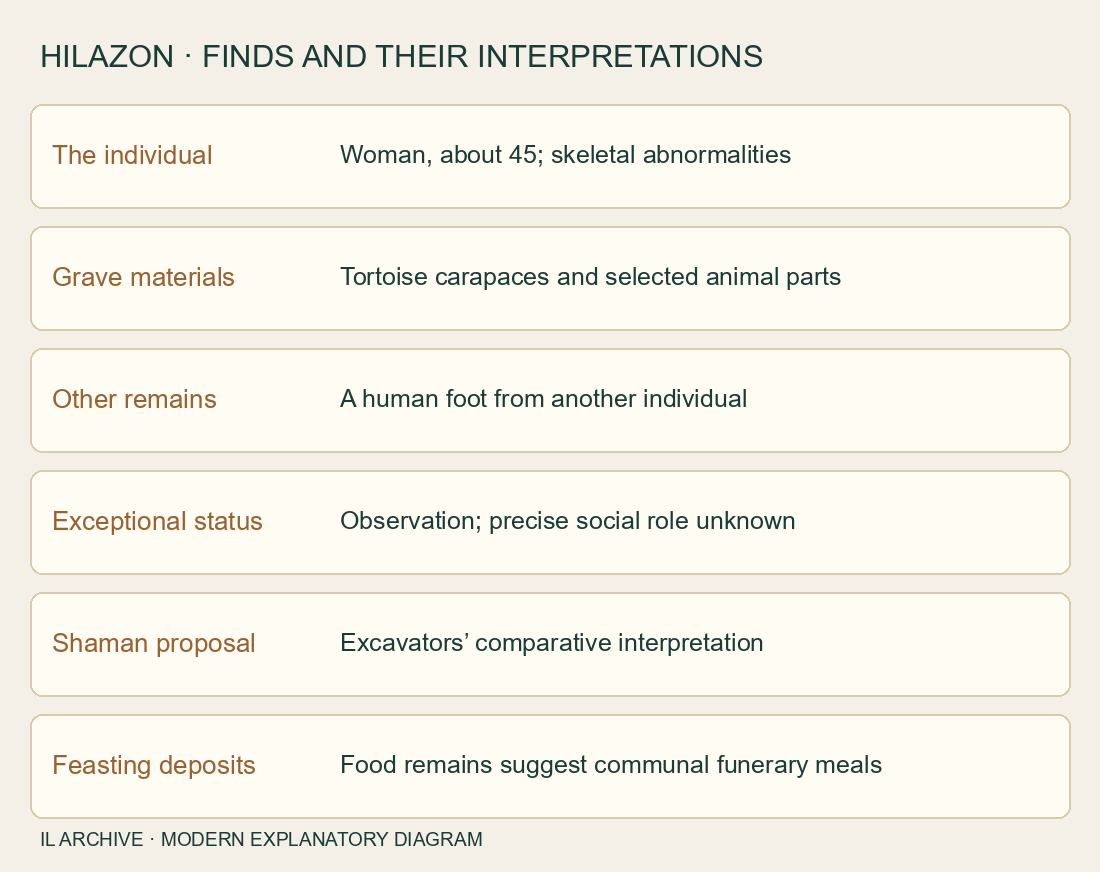
A Late Natufian burial cave in Galilee, with an exceptional woman’s grave and deposits interpreted as funerary feasts.
Modern evidence guide for Hilazon. Finds, age and skeletal abnormalities are observations; shaman is the excavators’ interpretation. Not a reconstruction of the burial or womanModern explanatory diagram by IL Archive · CC BY 4.0 · CC BYImage source
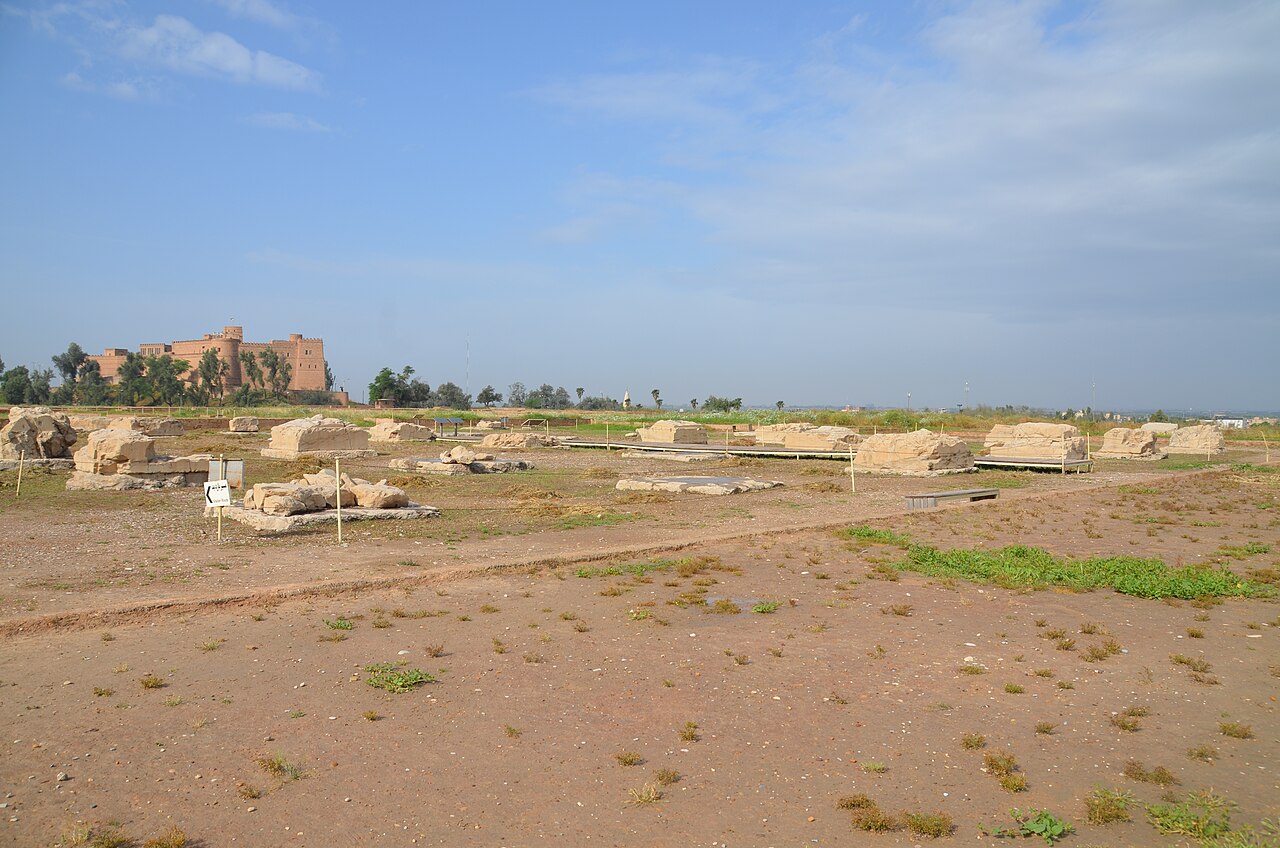
Iran is the modern country containing Shush, ancient Susa
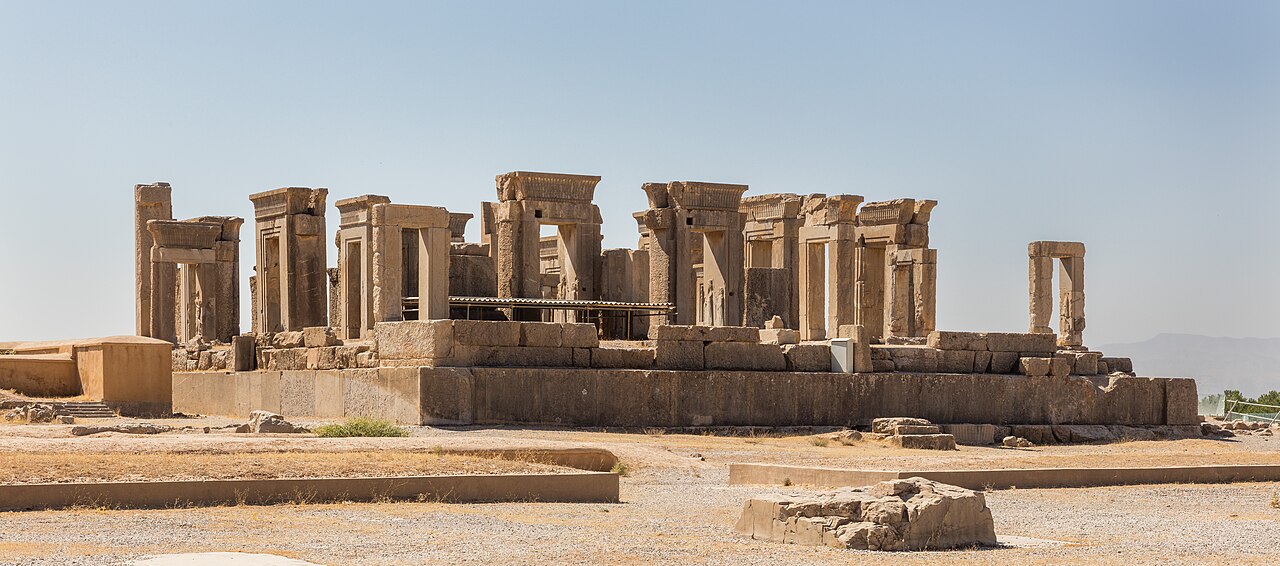
Ruins of Darius’s palace at Persepolis in southwestern Iran, 24 September 2016. They belong to the Achaemenid period; construction of the site’s complex began around 518 BCE. This is one ancient Iranian site, distinct from Susa mentioned in the definitionDiego Delso, delso.photo · CC BY-SA 4.0 / Wikimedia Commons · CC BY-SALicense · Related reference · Image source
Iraq is a modern country encompassing much of ancient Mesopotamia
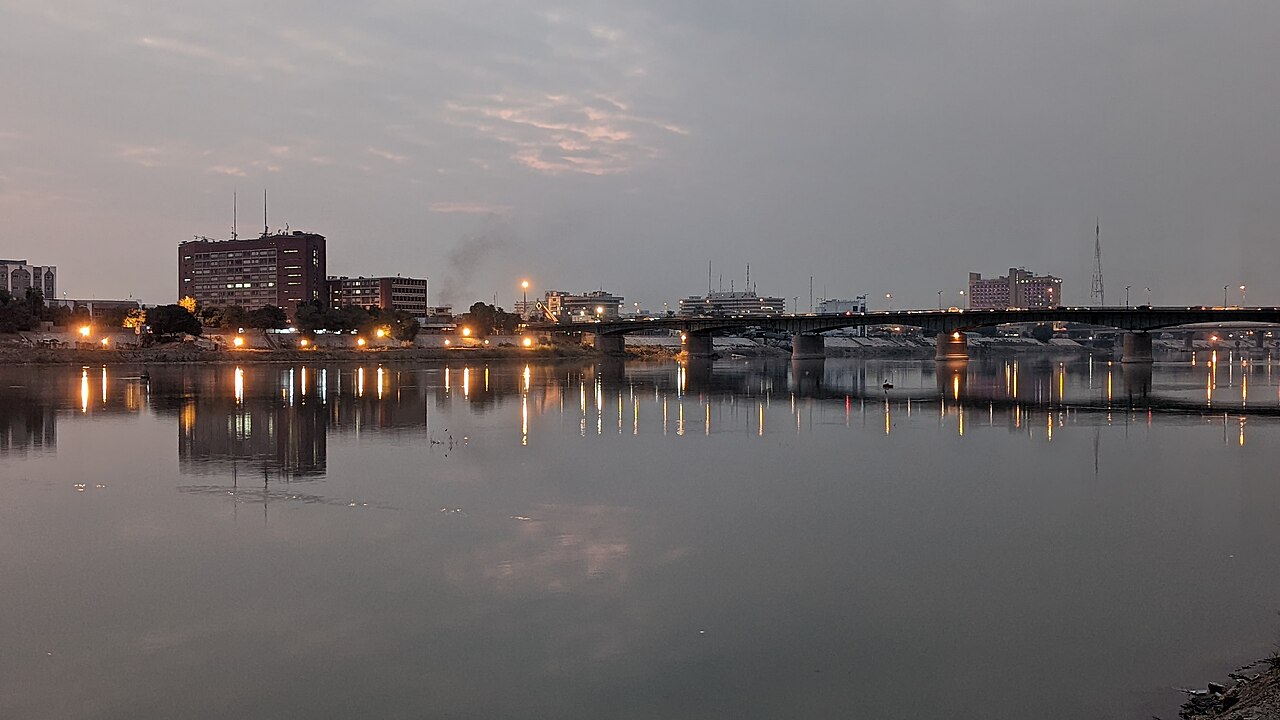
The Tigris in Baghdad, Iraq, on the evening of 29 December 2021. A modern river and city view illustrating the present geographical setting of MesopotamiaKushared (Mohammed Sardar) / Wikimedia Commons · CC BY-SA 4.0 · CC BY-SALicense · Image source
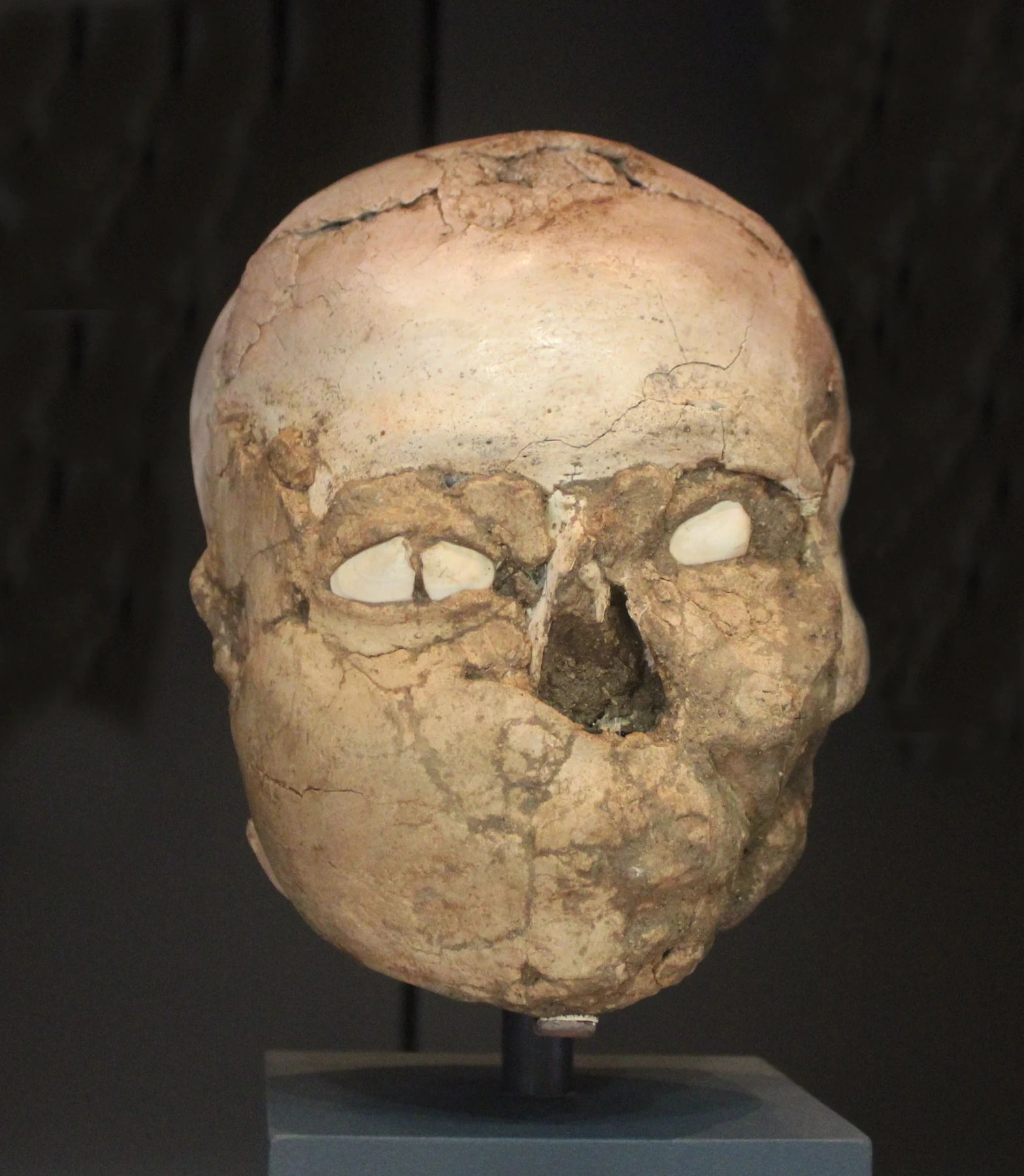
Archaeological mound near present-day Jericho in Palestine’s Jordan Valley, preserving early Neolithic settlement and Bronze Age layers.
Plastered skull from Jericho, Pre-Pottery Neolithic B, displayed at the British Museum. An ancient modeled face on human remains, not a modern facial reconstructionZunkir; image cleanup: Pataliputra / Wikimedia Commons / CC BY-SA 4.0 · CC BY-SALicense · Image source
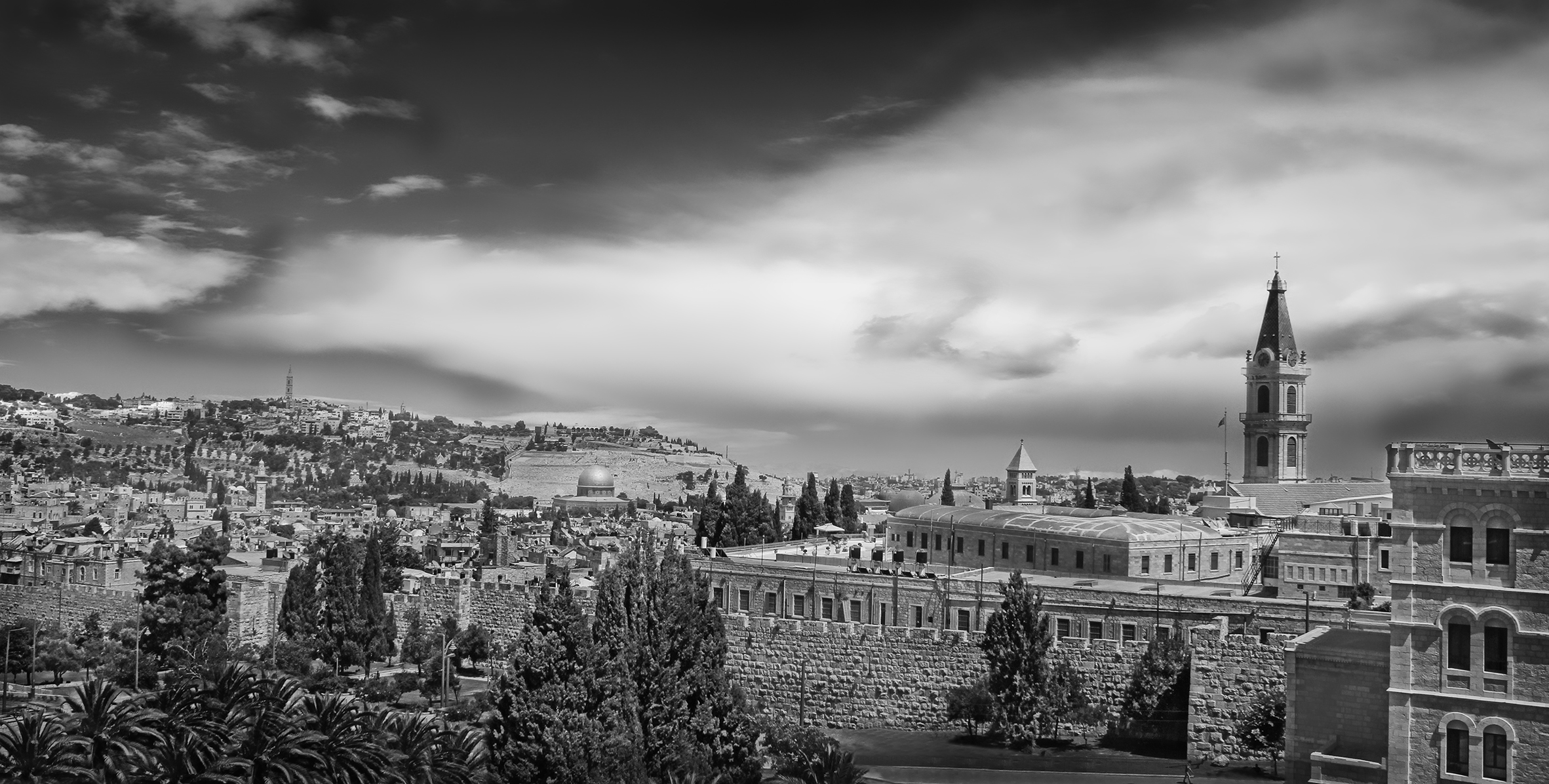
Jerusalem is a city of religious importance in Judaism, Christianity and Islam
Jerusalem’s Old City seen from the north, photographed on 20 July 2012. The Dome of the Rock and the Mount of Olives appear in the background. This modern view brings together landmarks from several periods; it differs from the city in the time of the kingdom of JudahAmr Miqdadi / Wikimedia Commons · CC BY-SA 4.0 · CC BY-SALicense · Image source
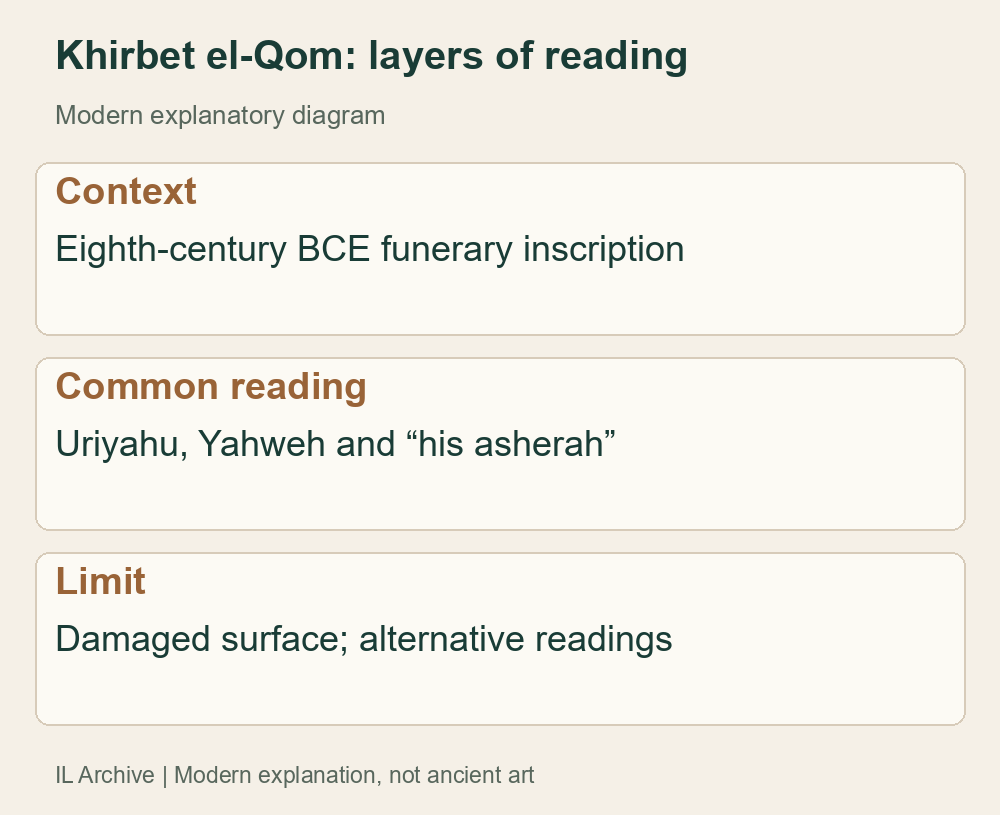
Site west of Hebron known for an eighth-century BCE funerary inscription commonly associating Yahweh with “his asherah”; damaged text and readings disputed.
Modern diagram of context, common reading and limits at el-Qom. Not the inscription or its physical layout; debated translation not made certainIL Archive · original diagram · CC BYImage source
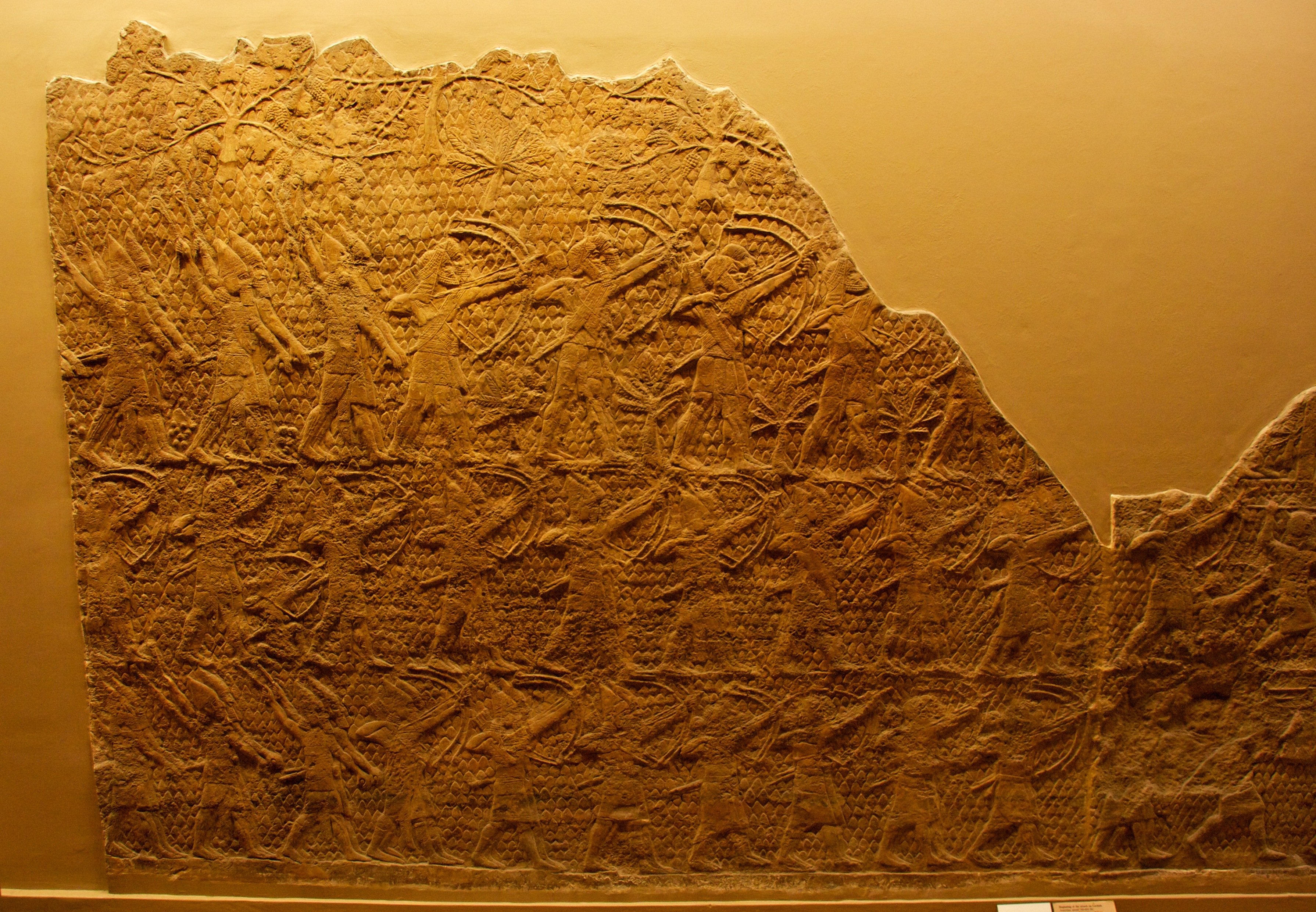
Judah was an ancient southern Levantine kingdom centered on Jerusalem in the Iron Age
Detail of the Assyrian reliefs showing the siege of Lachish, a city of the kingdom of Judah, during Sennacherib’s campaign of 701 BCE. Carved at Nineveh around 700–692 BCE and held in the British Museum. Photographed on 12 September 2010; an Assyrian representation of the event from the attackers’ perspectivePhotograph by Mike Peel (www.mikepeel.net) · CC BY-SA 4.0 / Wikimedia Commons · CC BY-SALicense · Related reference · Image source
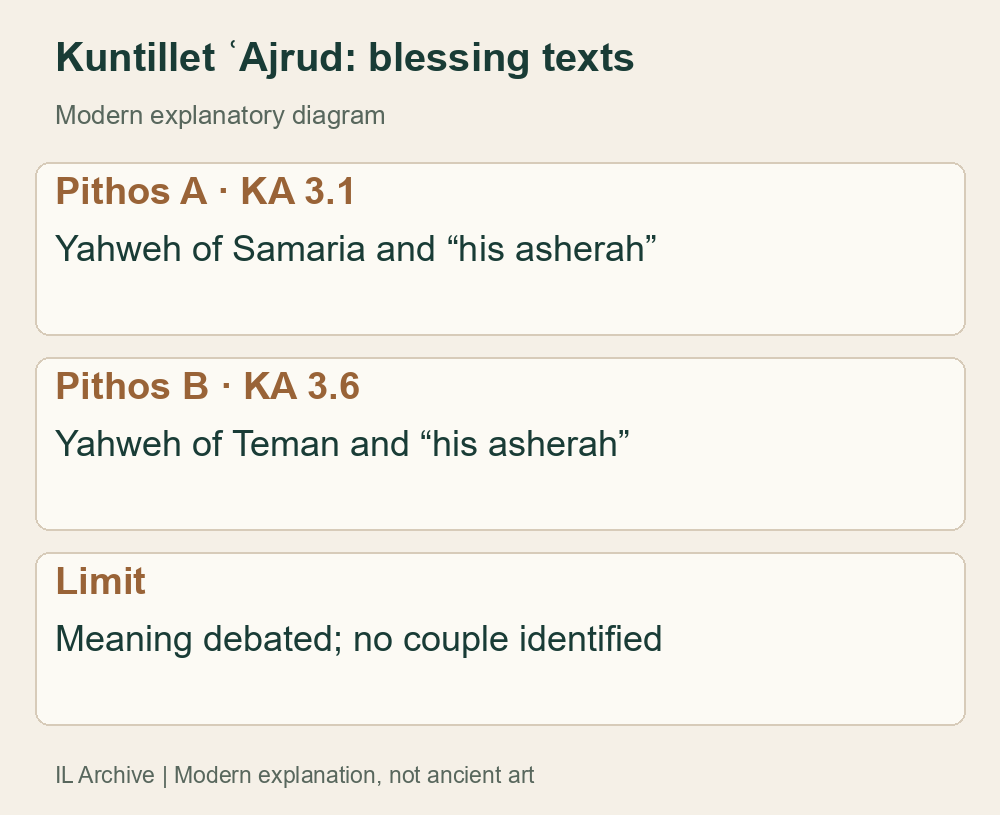
Sinai site preserving blessings by Yahweh of Samaria/Teman and “his asherah” around 800 BCE; building function and wording disputed.
Modern summary of two Kuntillet ʿAjrud formulas in published readings. Not a jar photograph, inscription facsimile or map; does not settle “his asherah” or drawing identitiesIL Archive · original diagram · CC BYImage source
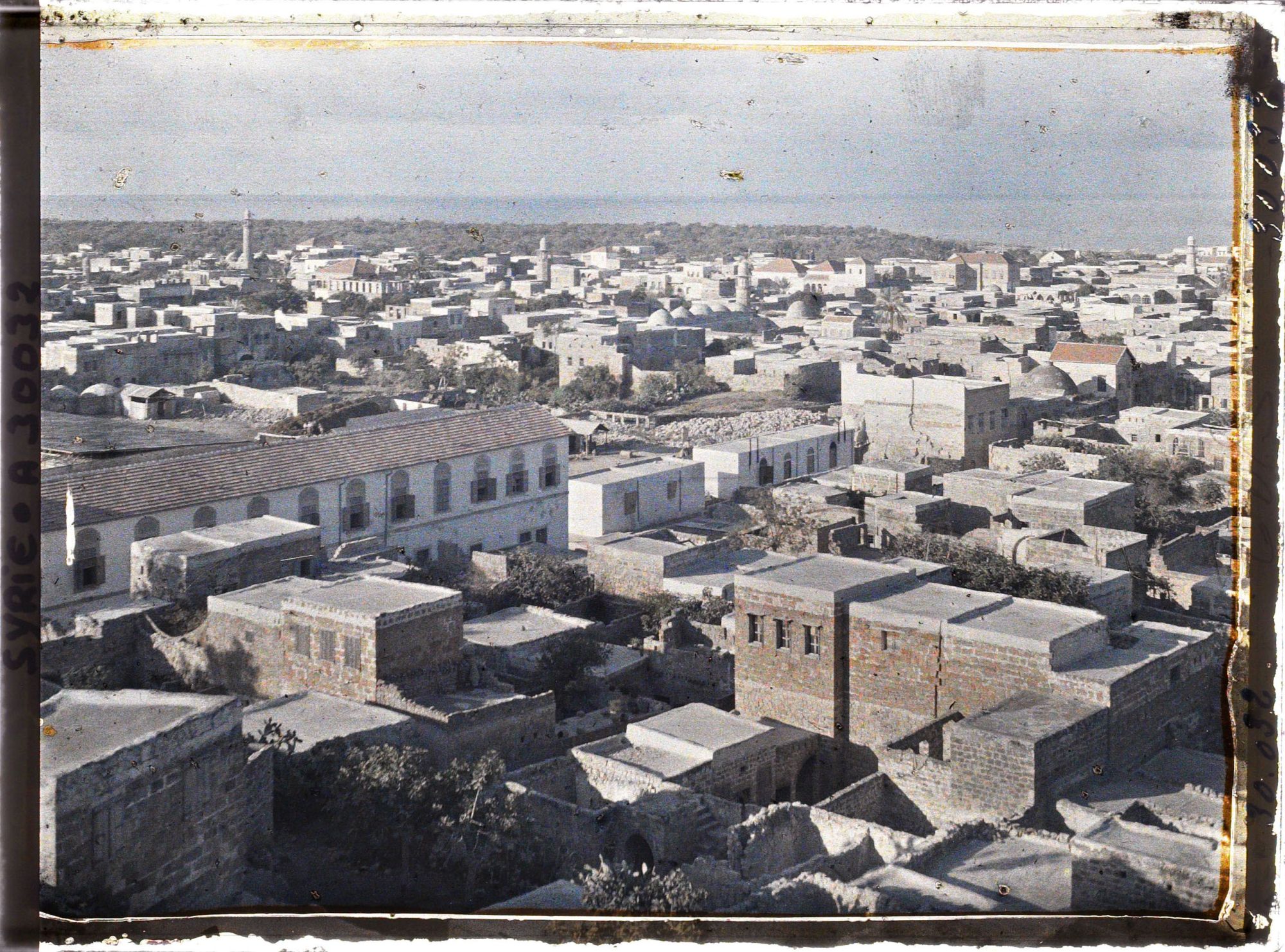
A coastal city in Syria, south of ancient Ugarit at Ras Shamra.
Latakia photographed by Frédéric Gadmer on 27 October 1921, an autochrome, A30032S. A historical city view, rather than the ruins of Ugarit. Musée Albert-Kahn, Département des Hauts-de-SeineFrédéric Gadmer · Département des Hauts-de-Seine / Musée départemental Albert-Kahn · A30032S · CC BY 4.0 · CC BYLicense · Image source
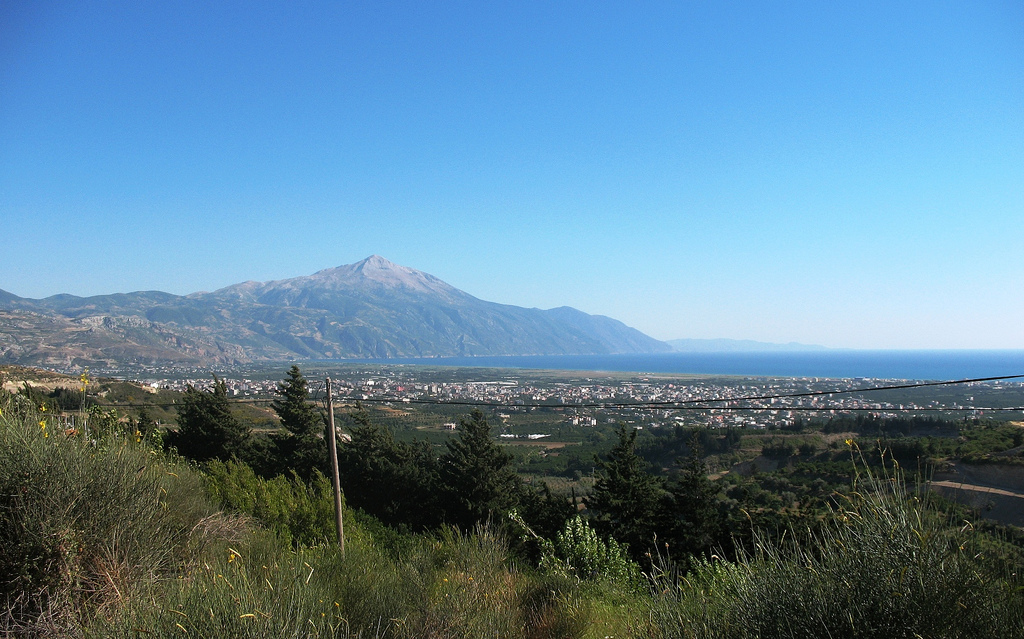
Coastal mountain in the Syrian–Turkish border area, known as Jebel Aqra and by ancient names including Kasios.
Jebel Aqra, also known as Mount Kasios, with the Mediterranean coast in the Syrian–Turkish area. Summer 2008 according to the photographer, Anthiok; the original August upload date does not establish the day of captureAnthiok at English Wikipedia / Wikimedia Commons · CC BY 3.0 · CC BYLicense · Related reference · Image source
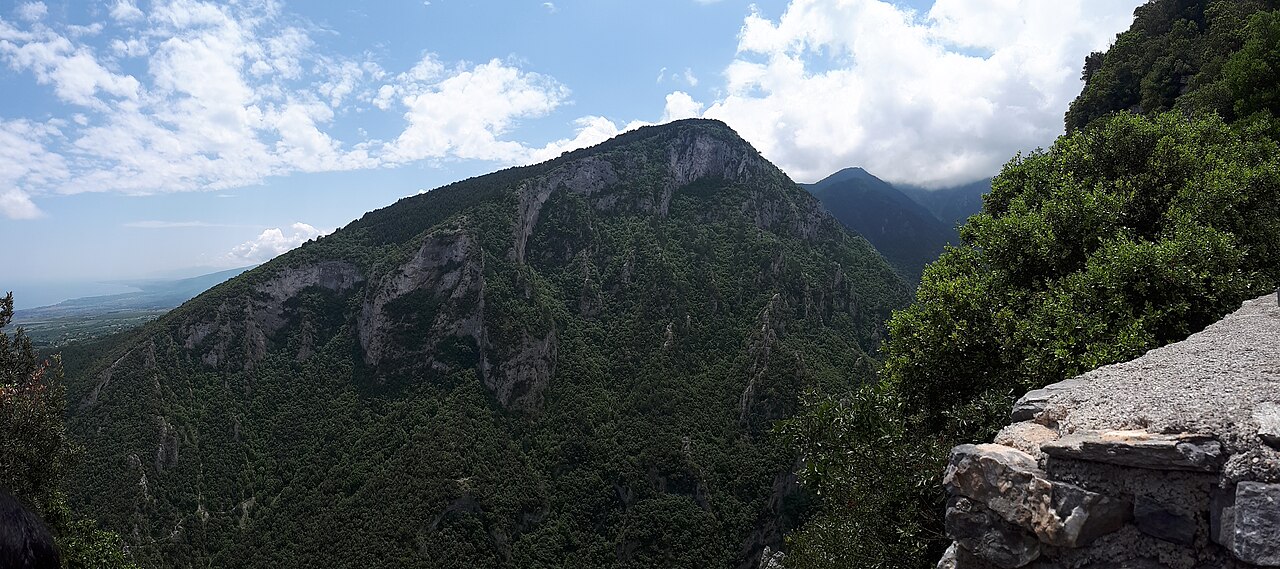
Mountain in northern Greece associated in ancient traditions with the divine community’s dwelling.
Slopes of Mount Olympus, Greece, photographed in 2018. A geographical view; the gods’ residence in the epics belongs to their poetic representation of the worldGeorgios Gianno, 2018 / Wikimedia Commons · CC BY-SA 4.0 · CC BY-SALicense · Image source
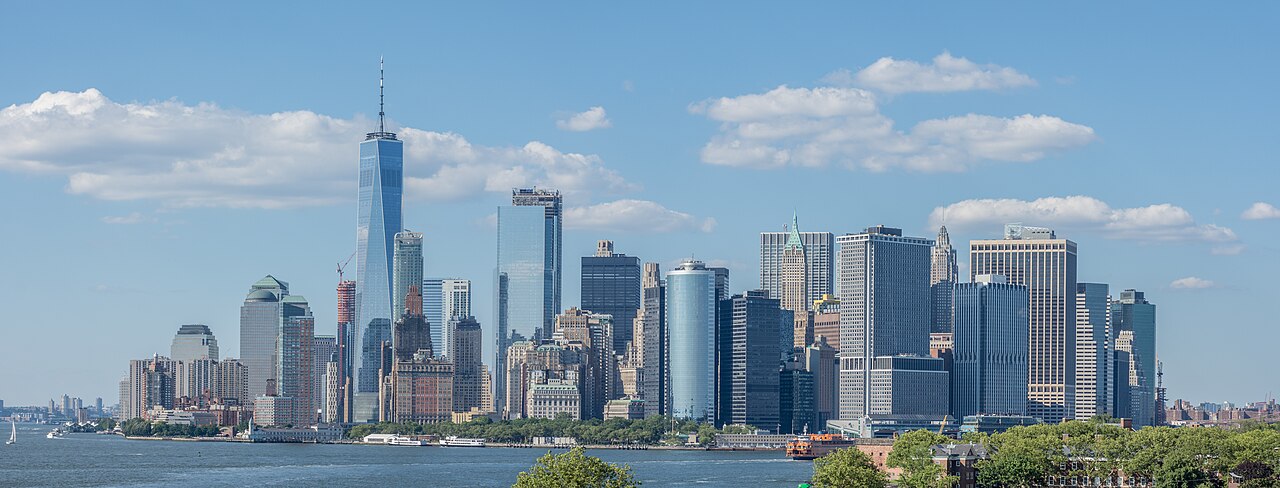
New York City is in the United States and houses the Metropolitan Museum of Art
Lower Manhattan, New York City, seen from Governors Island in 2017. A contemporary city view; the Metropolitan Museum mentioned in the definition is not shownMusikAnimal / Wikimedia Commons · CC BY-SA 4.0 · CC BY-SALicense · Image source
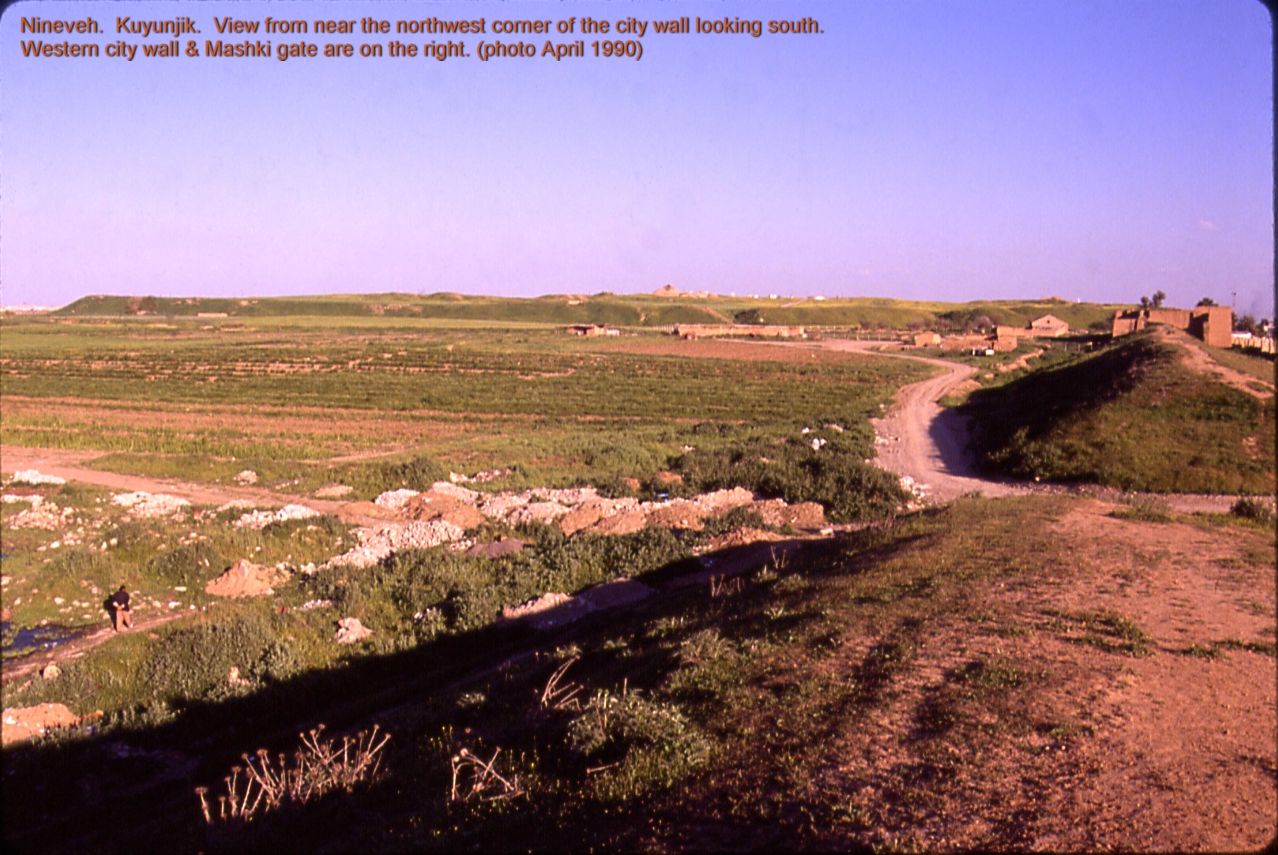
Nineveh is an ancient Assyrian city near Mosul in northern Iraq; Kuyunjik is one of its archaeological mounds
Kuyunjik mound at Nineveh in northern Iraq, in an April 1990 photograph taken near the northwestern corner of the city wall. A dated archival view of the site at that time; the photographer’s original annotation remains in the imageFredarch / Wikimedia Commons · CC BY-SA 3.0 · CC BY-SALicense · Image source
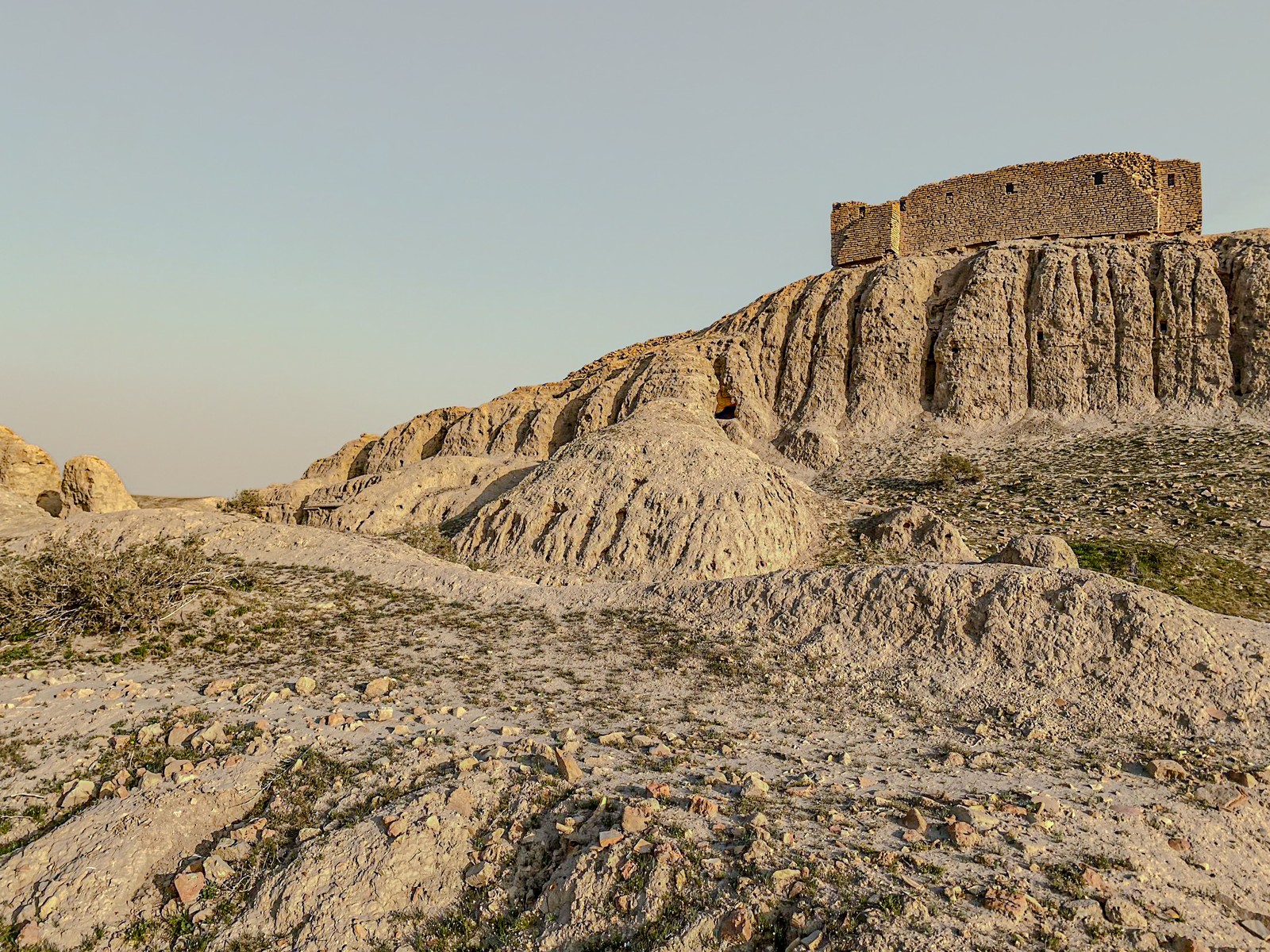
Mesopotamian city and major Enlil cult centre, connected with kings’ legitimacy beyond the city.
Ziggurat mound at Nippur from the southwest, photograph by Noémi Alzayadi. The building on top dates to late-nineteenth-century excavations, not a standing Sumerian temple. Modern site context; display copy resized onlyNoémi Alzayadi · Wikimedia Commons · CC BY-SA 4.0 · CC BY-SAImage source
Historical inland Anatolian region with an Iron Age kingdom; Gordion was a major center.
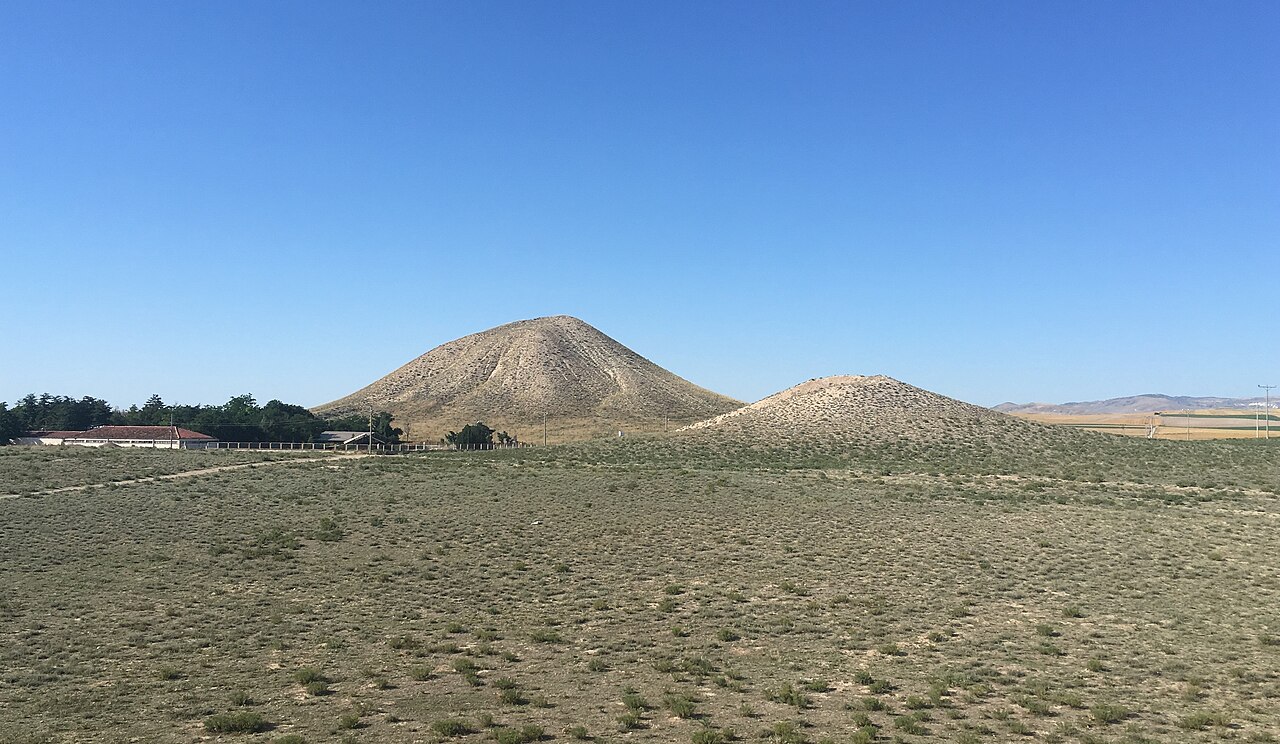
Burial mounds MM and P at Gordion, in modern Türkiye. A view of Phrygian remains by Archaeologist 1950, 2 July 2019; regional archaeological context, not evidence for a specific story’s routeArchaeologist1950 / Wikimedia Commons · CC BY-SA 4.0 · CC BY-SALicense · Image source
Site near the northwestern Dead Sea; neighboring caves preserve ancient Jewish textual finds, not one complete Bible.
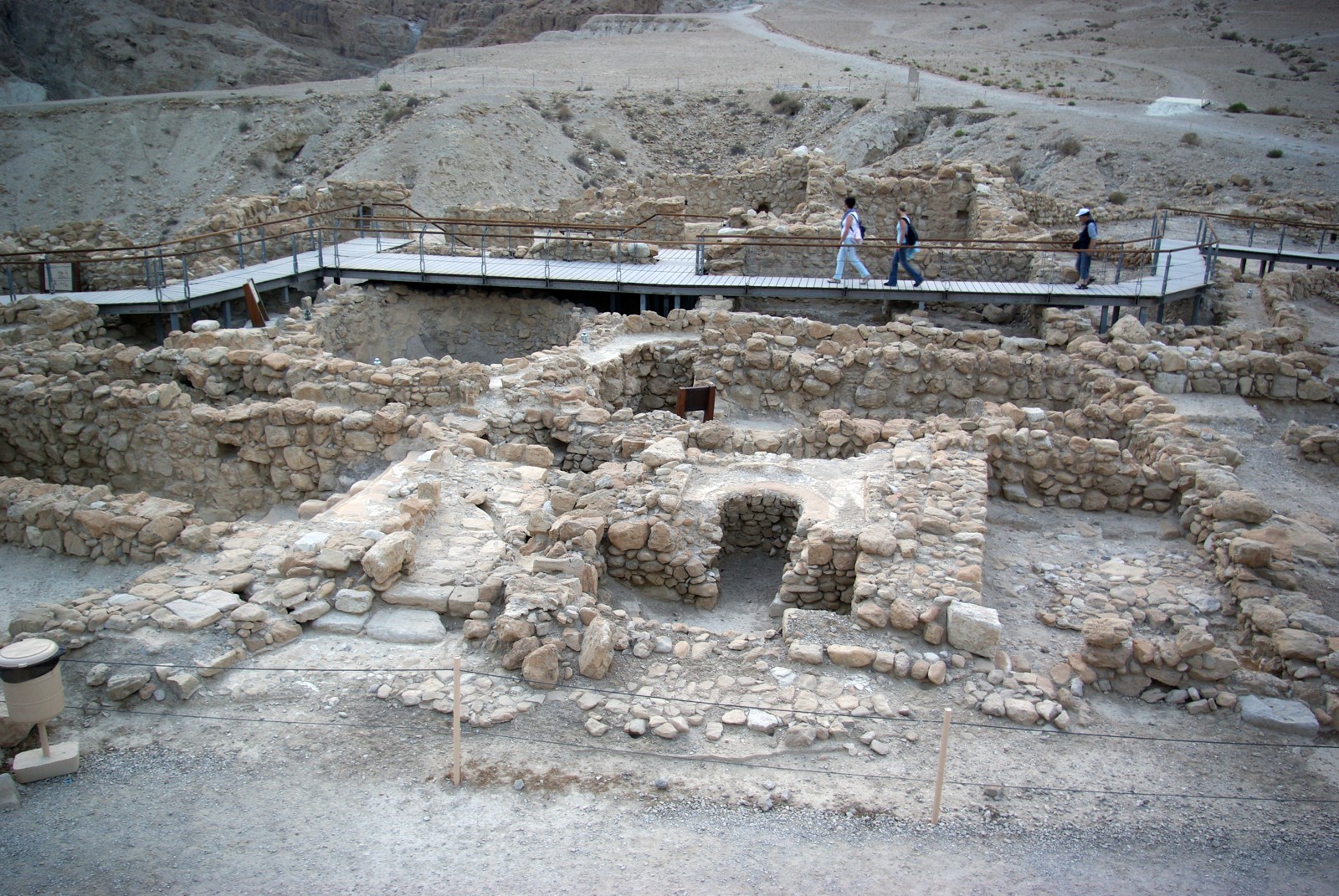
Qumran site remains in a modern photograph. Context for the manuscripts, not Cave 4 or a Jeremiah fragment. Original preserved; display resized without croppingBerthold Werner, 12 November 2008 · Public domainImage source
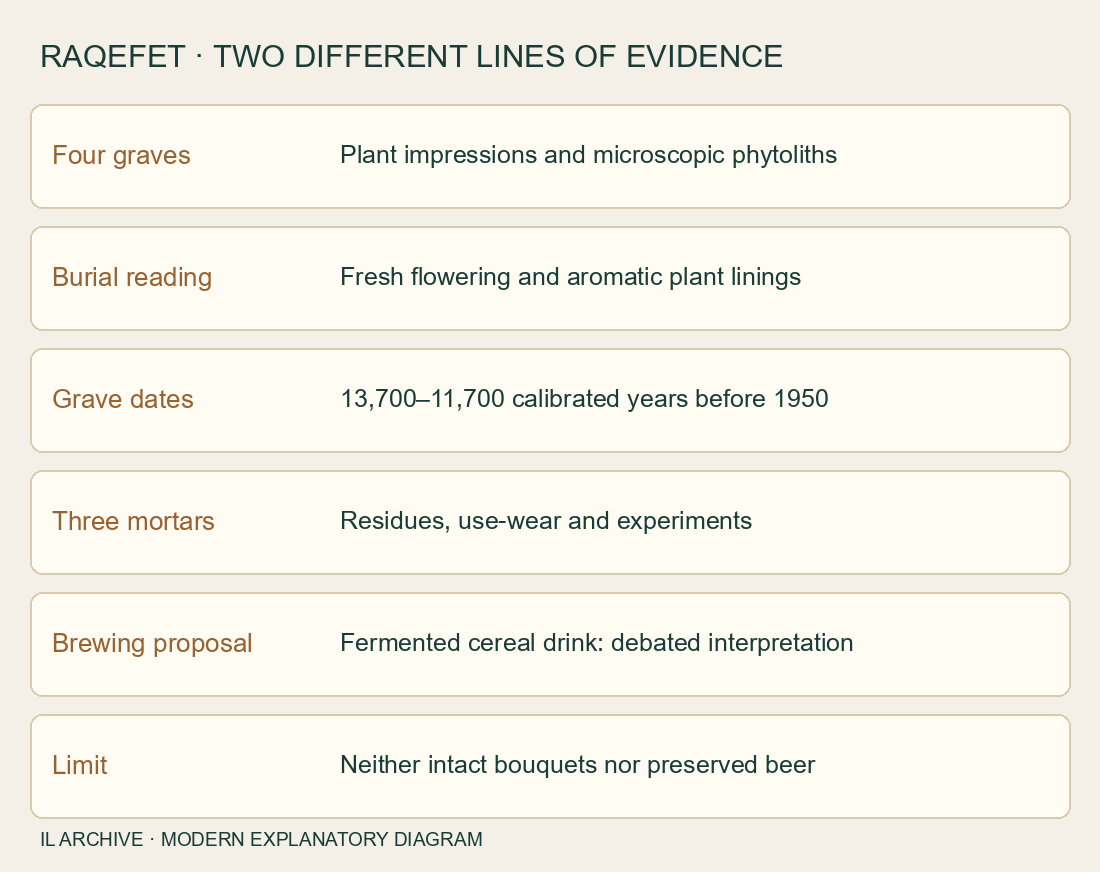
A Mount Carmel cave with plant-lined burial evidence and mortars whose possible use for brewing has been debated.
Modern diagram separates Raqefet’s plant-lined grave evidence from mortar residues interpreted as brewing. The latter was subsequently debated; no preserved beer was recoveredModern explanatory diagram by IL Archive · CC BY 4.0 · CC BYImage source
Sinai is a peninsula in eastern Egypt; in the Torah the name also denotes the mountain of revelation to Moses
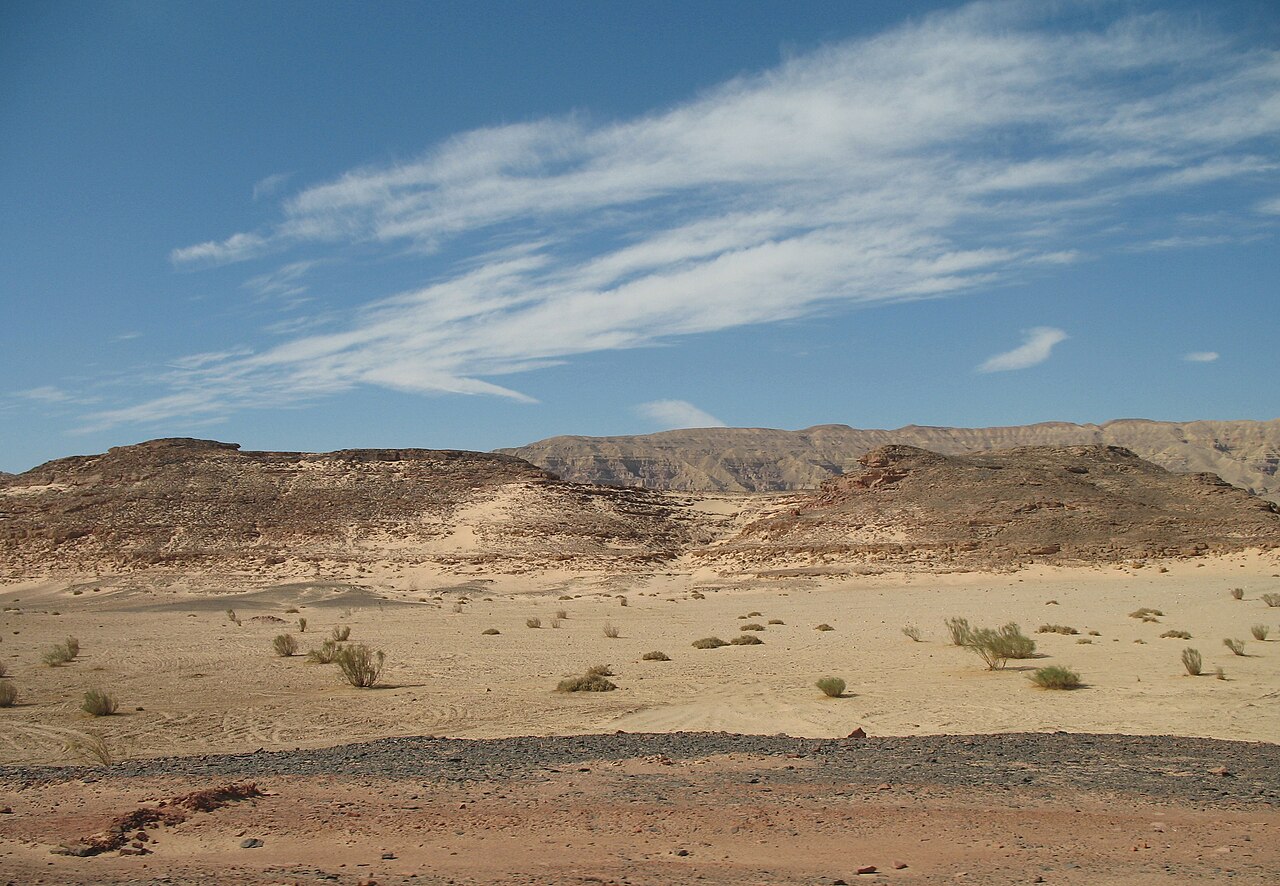
A view of the Sinai desert in Egypt, 22 November 2008. It shows the peninsula’s landscape without identifying the mountain meant by the biblical narrativesMarc Ryckaert (MJJR) / Wikimedia Commons · CC BY 3.0 · CC BYLicense · Image source
Susa is an archaeological city at Shush in southwestern present-day Iran
Remains of the Apadana hall of Darius’s palace at Susa, at Shush in southwestern Iran, 18 April 2019. The column bases and archaeological remains appear in the foregroundCarole Raddato / Wikimedia Commons · CC BY-SA 2.0 · CC BY-SALicense · Image source
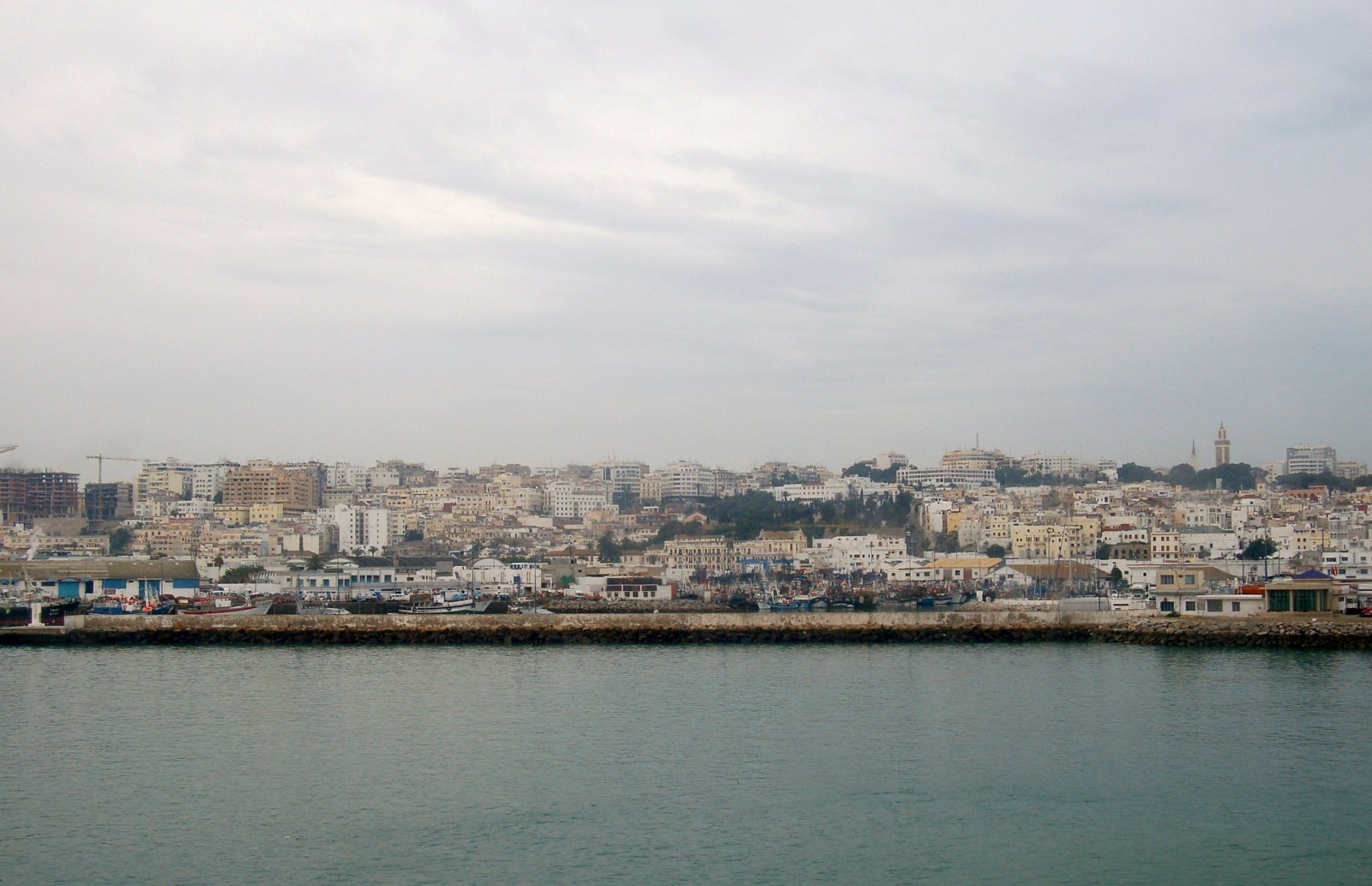
City in northern Morocco by the Strait of Gibraltar, proposed in one interpretation of the Quran's meeting of the seas.
Tangier and its port from the sea, 18 September 2008; a modern city view, not a confirmed location of Moses' storyPhotograph by Alex Lomas; Wikimedia Commons, CC BY 2.0. · CC BYLicense · Image source
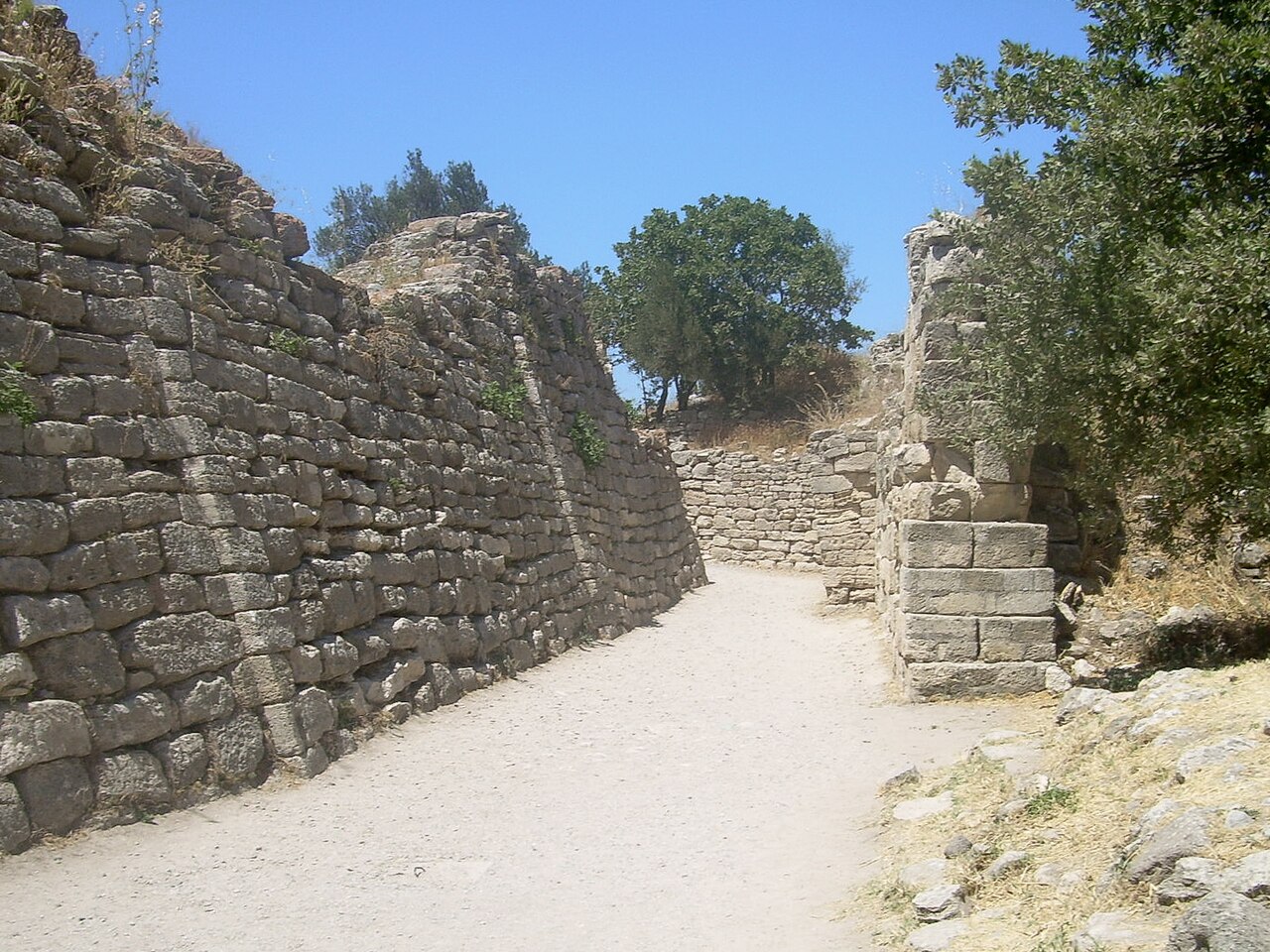
Archaeological site in northwestern Turkey associated with Troy in Greek tradition.
Archaeological walls at Troy/Hisarlik in present-day Turkey, photographed in 2012. The site’s remains alone do not establish the Iliad’s detailed account of the Trojan WarCherryX, 2012 / Wikimedia Commons · CC BY-SA 3.0 · CC BY-SALicense · Image source
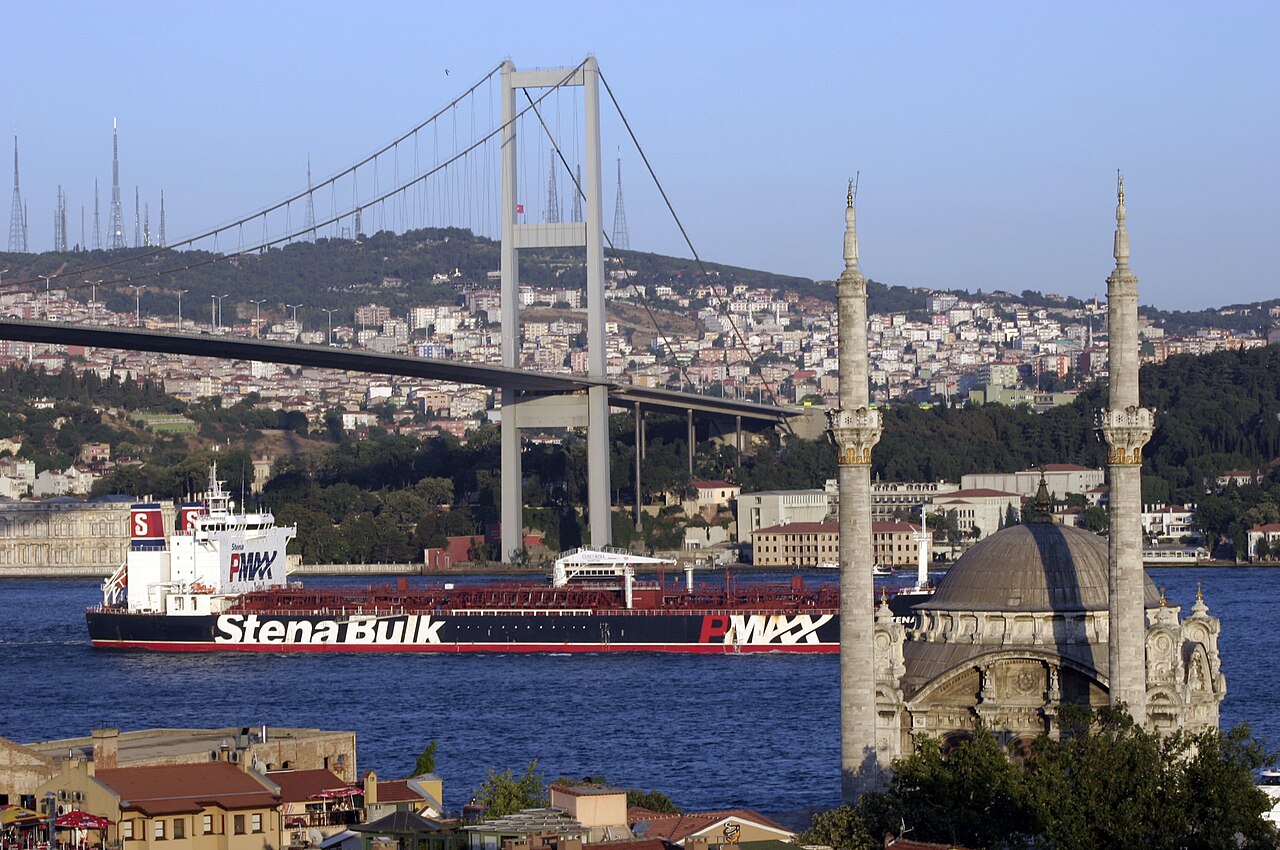
Turkey is a modern country including Anatolia and territory in southeastern Europe
Ortaköy Mosque and the Bosphorus Bridge in Istanbul, Turkey, June 2008. A modern view of the strait and the bridge joining the city’s European and Asian shoresCaiuscamargarus / Wikimedia Commons · CC BY-SA 3.0 · CC BY-SALicense · Image source
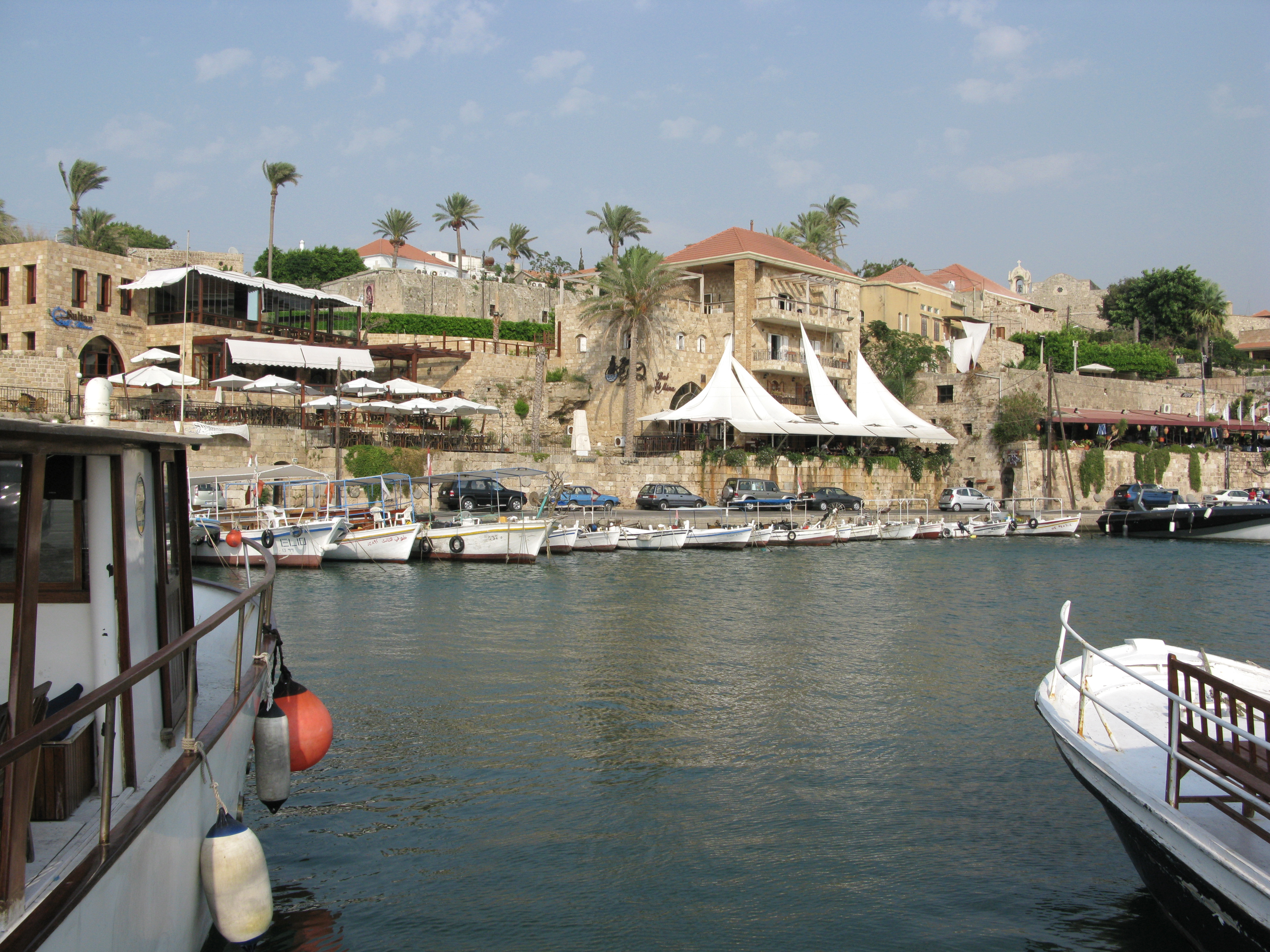
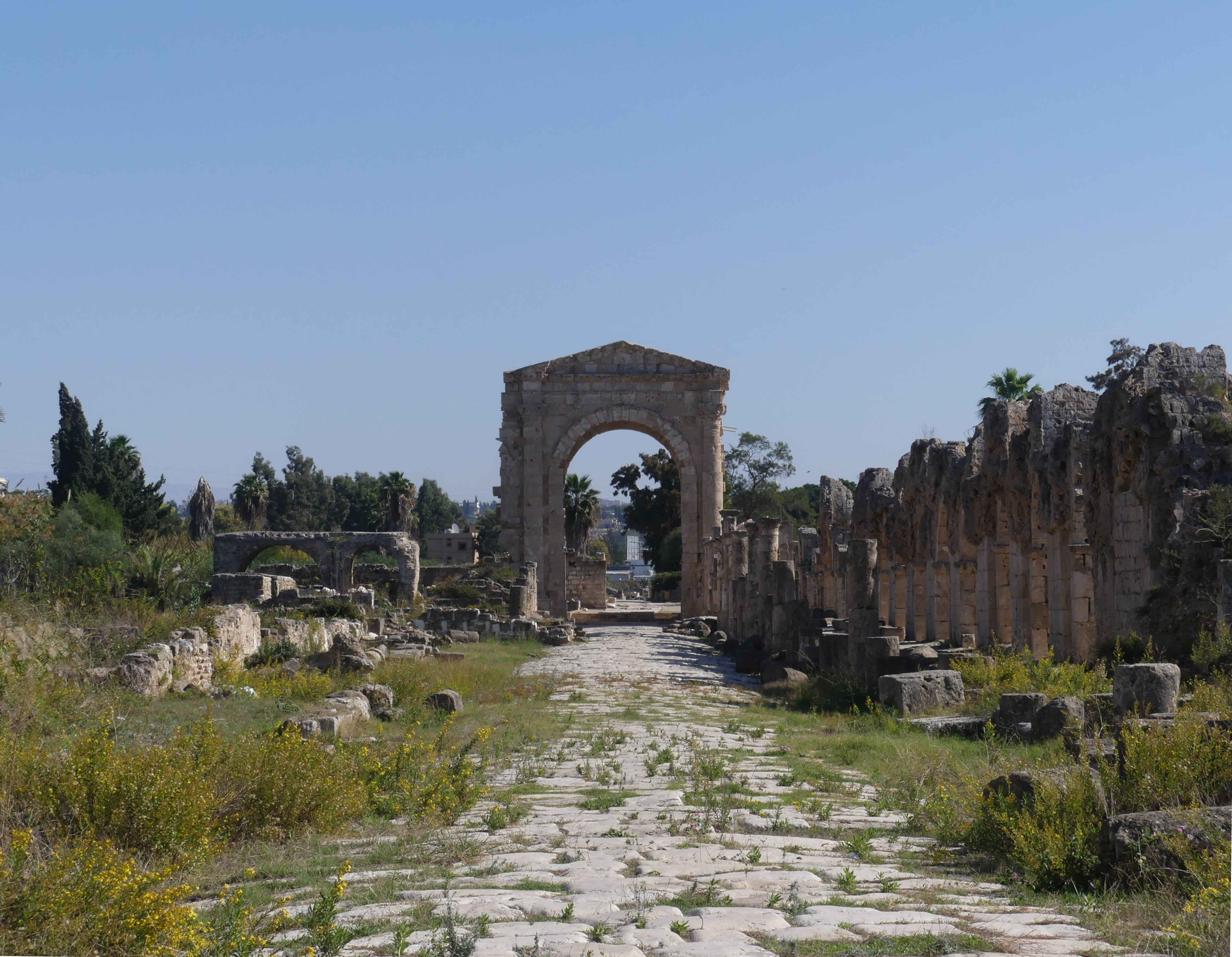
Tyre is a city on the coast of present-day southern Lebanon and an important ancient Phoenician center
The restored Roman triumphal arch at Al Bass in Tyre, Lebanon, with aqueduct remains on its right. The arch dates to the second century CE. This photograph, taken on 19 November 2019, shows a later phase in the Phoenician city’s historyRomanDeckert / Wikimedia Commons · CC BY-SA 4.0 · CC BY-SALicense · Related reference · Image source
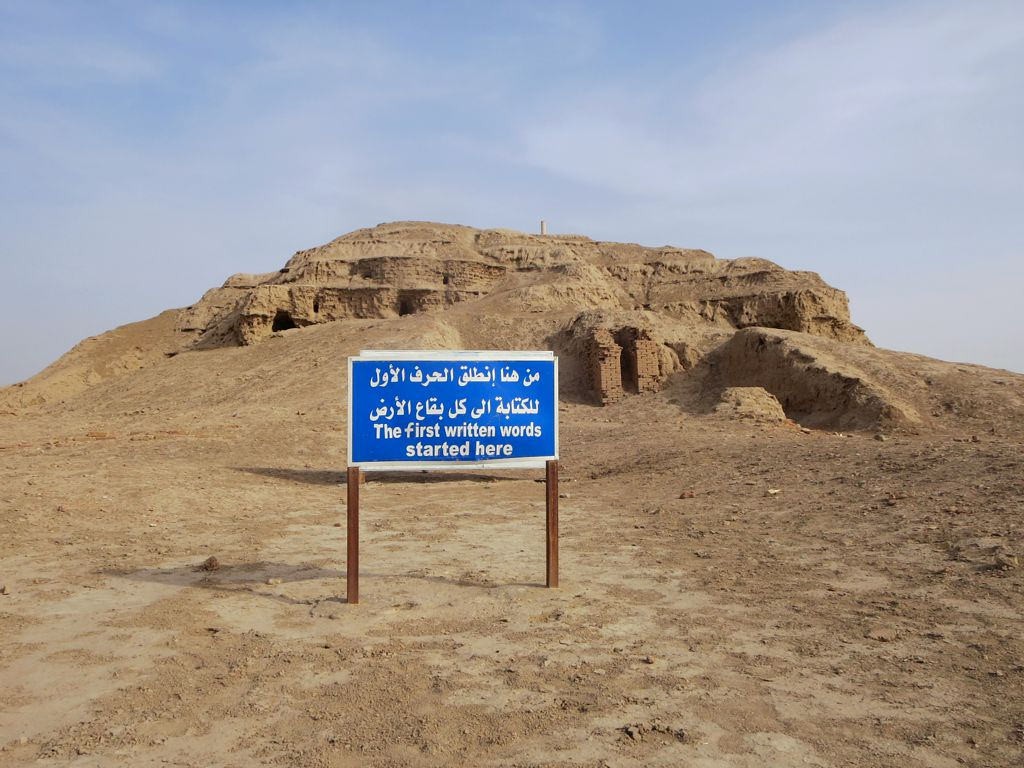
Ancient city at Warka in southern Iraq, a major urban centre around 3200 BCE that preserved early writing and accounting tablets.
Architectural remains at Uruk/Warka, photographed by David Stanley, 9 April 2016. The sign is modern; its claim about first writing is not independent evidence of global priority or an exact invention dateDavid Stanley · CC BY 2.0 · CC BYLicense · Image source
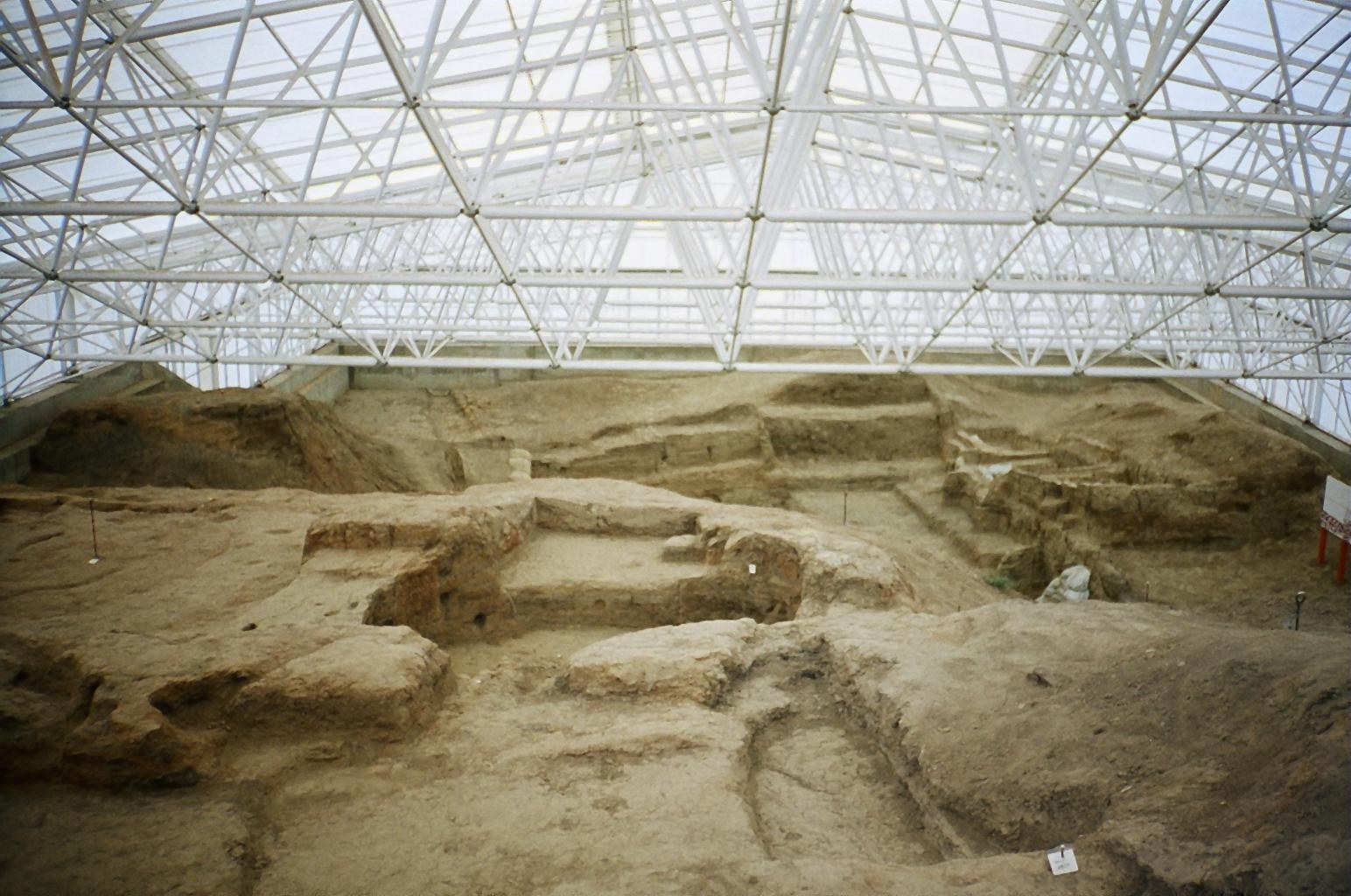
A Neolithic site in central Anatolia where domestic houses combined dwelling with burial, symbolism and social memory.
The southern excavation area at Çatalhöyük in central Anatolia. Domestic building remains support study of dwelling, burial and social memory; the photograph is not a reconstruction of the original housesZiggurat · CC BY-SALicense · Image source
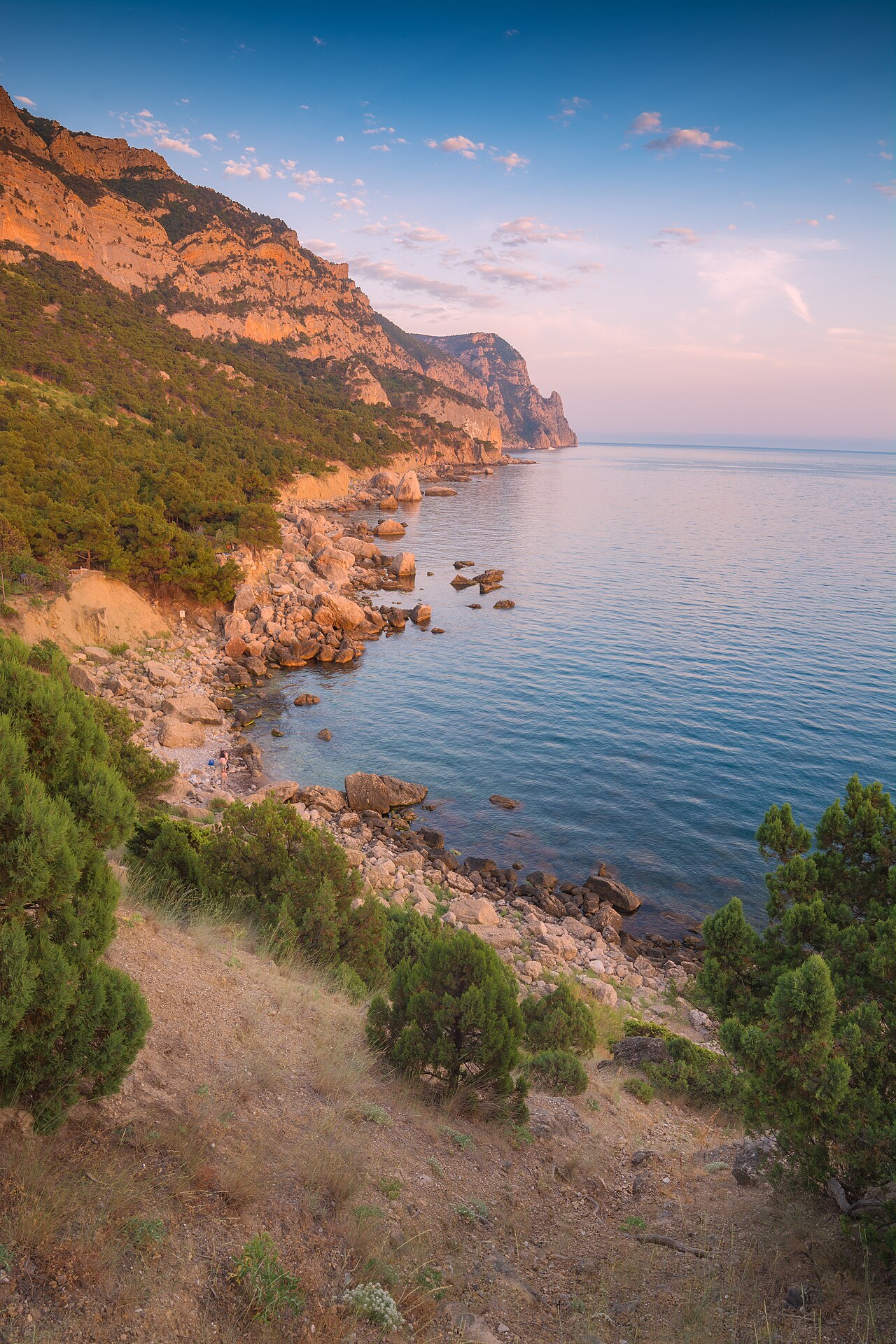
Ancient Greek name for Taurian territory on the Black Sea, associated with today's Crimean peninsula; the setting of Euripides' Iphigenia play.
Rocky Black Sea coast in the Crimean peninsula, modern photograph. Regional context for Tauris, not the site of Iphigenia's temple in the playVitalii Bashkatov / Wikimedia Commons · CC BY-SALicense · Image source
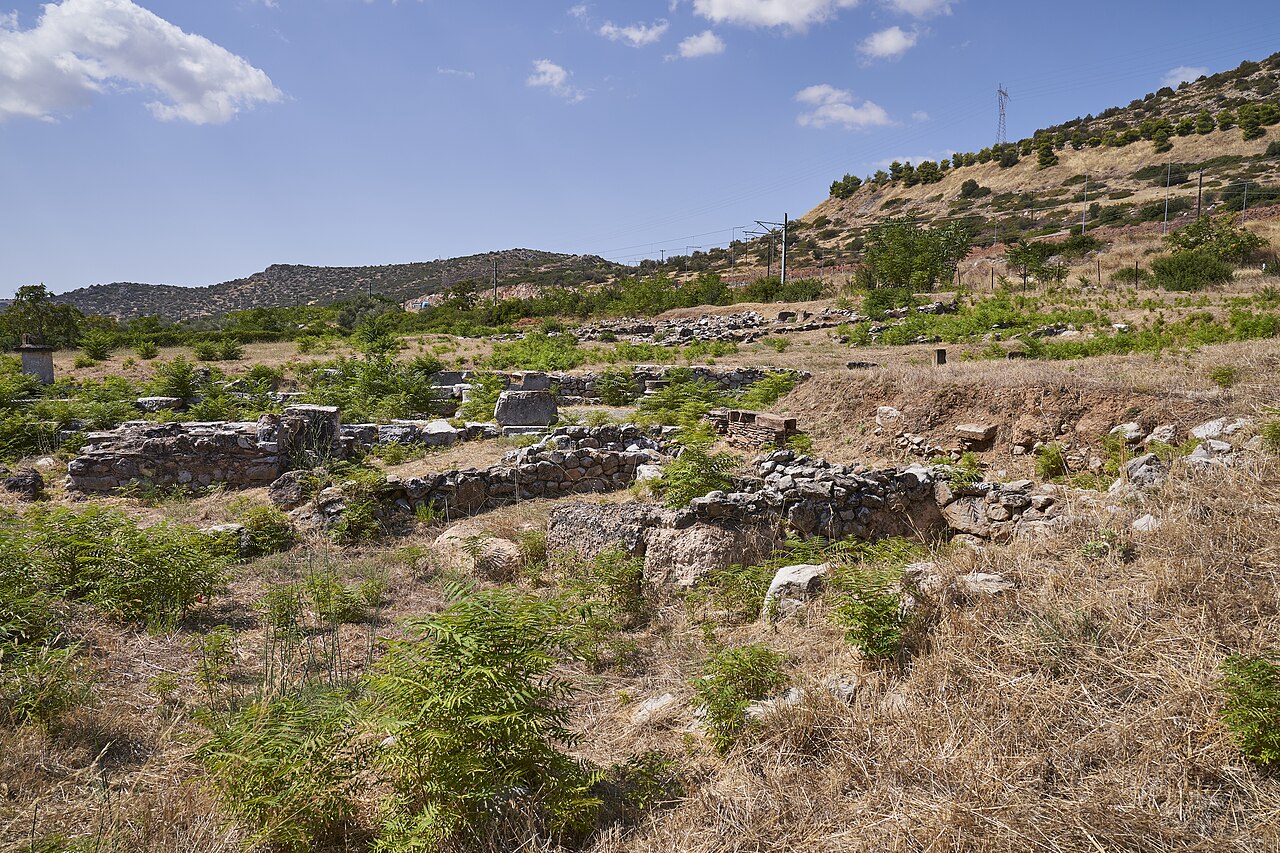
Ancient place on the Boeotian coast near the Euripus Strait in Greece; setting of Iphigenia's Greek story and site of a fifth-century BCE Artemis temple.
Artemis sanctuary remains at Aulis, Greece; George E. Koronaios, 2021. Evidence for a cult site, not for Iphigenia's episodeGeorge E. Koronaios / Wikimedia Commons · CC BY-SAImage source
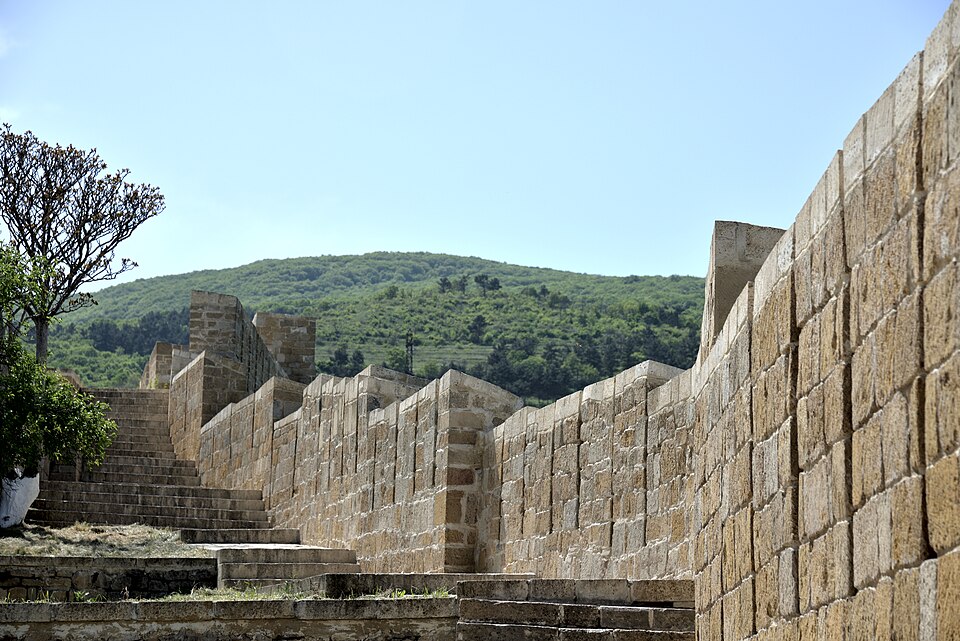
Caspian-coast city in Russia's Dagestan with Sasanian fortifications; its existence does not identify Dhul Qarnayn's barrier.
Derbent's northern city wall in Dagestan, photographed in 2018. It shows a real fortification, not proof of Gog and Magog's barrierPhotograph by Aleksandr Baidukov; Wikimedia Commons. · CC BY-SAImage source
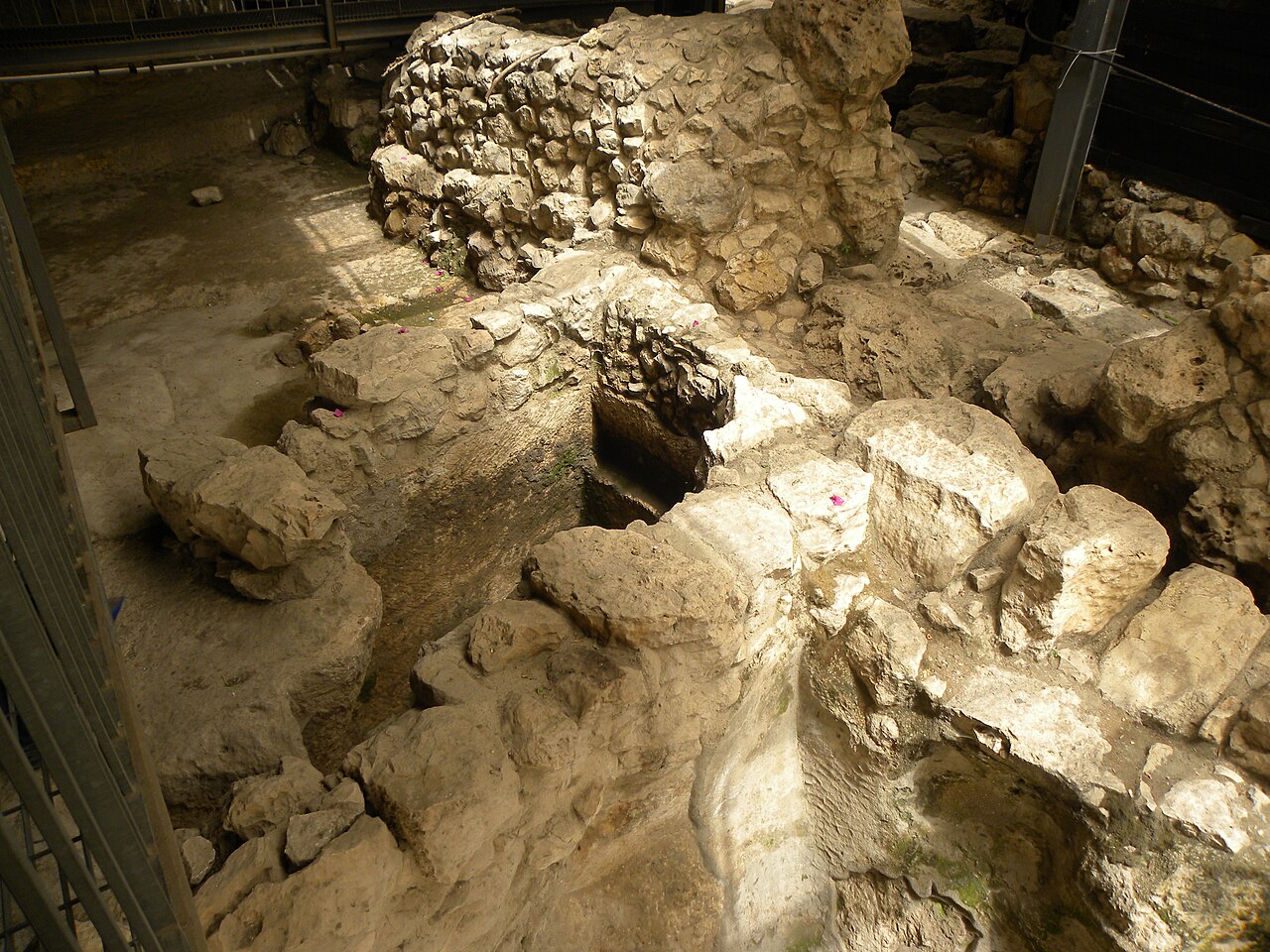
Name of a stronghold linked to David's city in 2 Samuel, later extended to Jerusalem and its religious centre; its referent changes across texts.
Modern excavations at the northern end of Jerusalem's eastern hill, photographed in 2011. Context for the city's history, not the site of Abraham's narrated sacrificeIan Scott / Wikimedia Commons · CC BY-SALicense · Image source
The land named in Genesis 22 as Abraham's destination; 2 Chronicles later associates Mount Moriah with the Jerusalem Temple site, not an independently located journey.
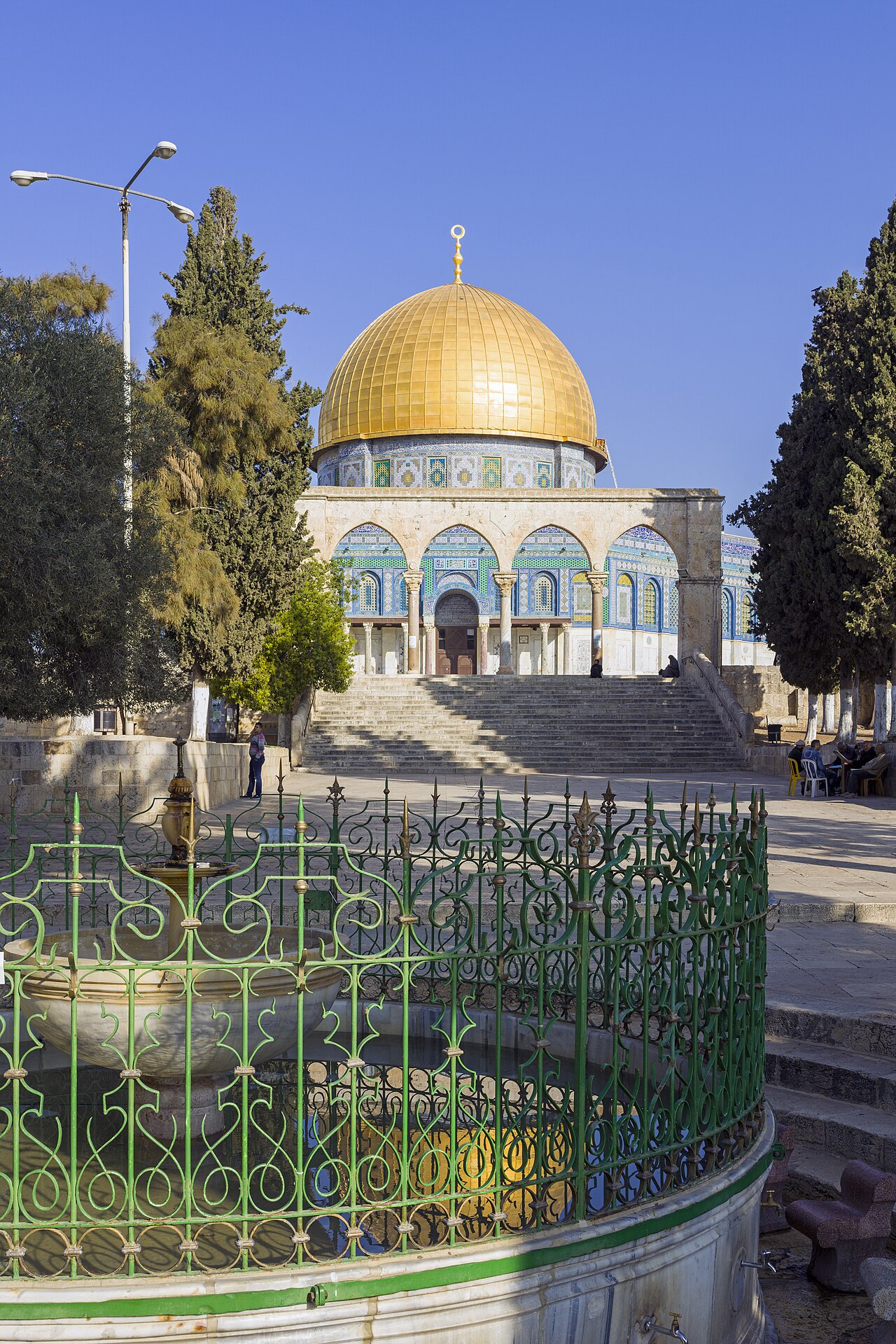
Dome of the Rock, Jerusalem, photographed in 2013. 2 Chronicles associates Mount Moriah with the Temple site; this modern view illustrates that later association, not an independently located Genesis mountainAndrew Shiva / Wikimedia Commons · CC BY-SALicense · Image source
لا سجلات مرتبطة في العلاقات المنشورة.
Marib and Sanaa region / South Arabia / modern Yemen
An ancient South Arabian kingdom centered in present-day Yemen and prominent in the first millennium BCE; its attestation does not establish the Queen of Sheba's biography.
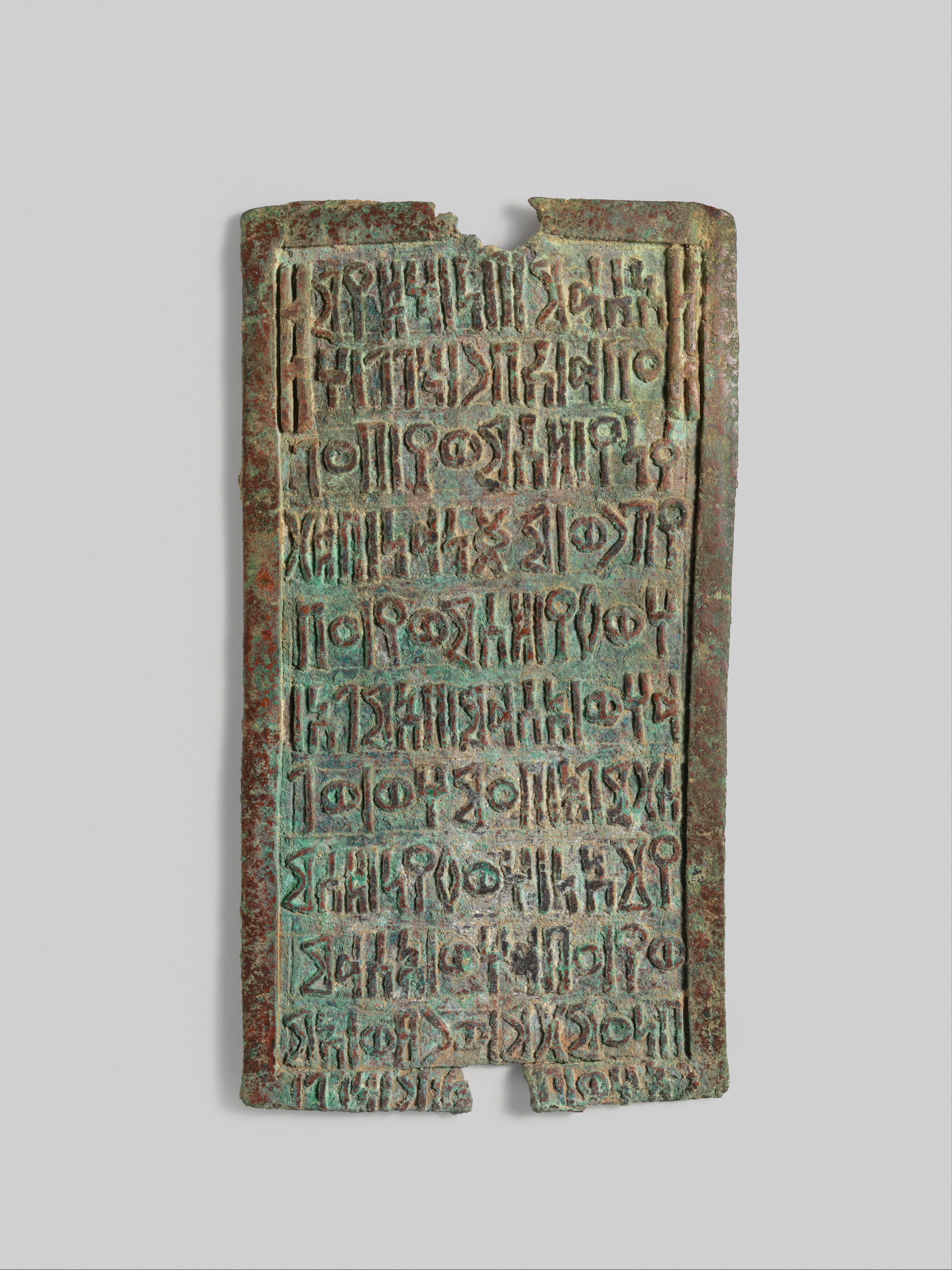
Copper-alloy votive plaque with a Sabaean dedicatory inscription, South Arabia, late first millennium BCE. A witness to Sabaean writing, not to the queen's identity. Met 1993.169; public domainThe Metropolitan Museum of Art; Pfeiffer Fund, 1993. · Public domainObject record
Ancient kingdom in western Anatolia with its capital at Sardis; neither a modern state nor a synonym for Magog.
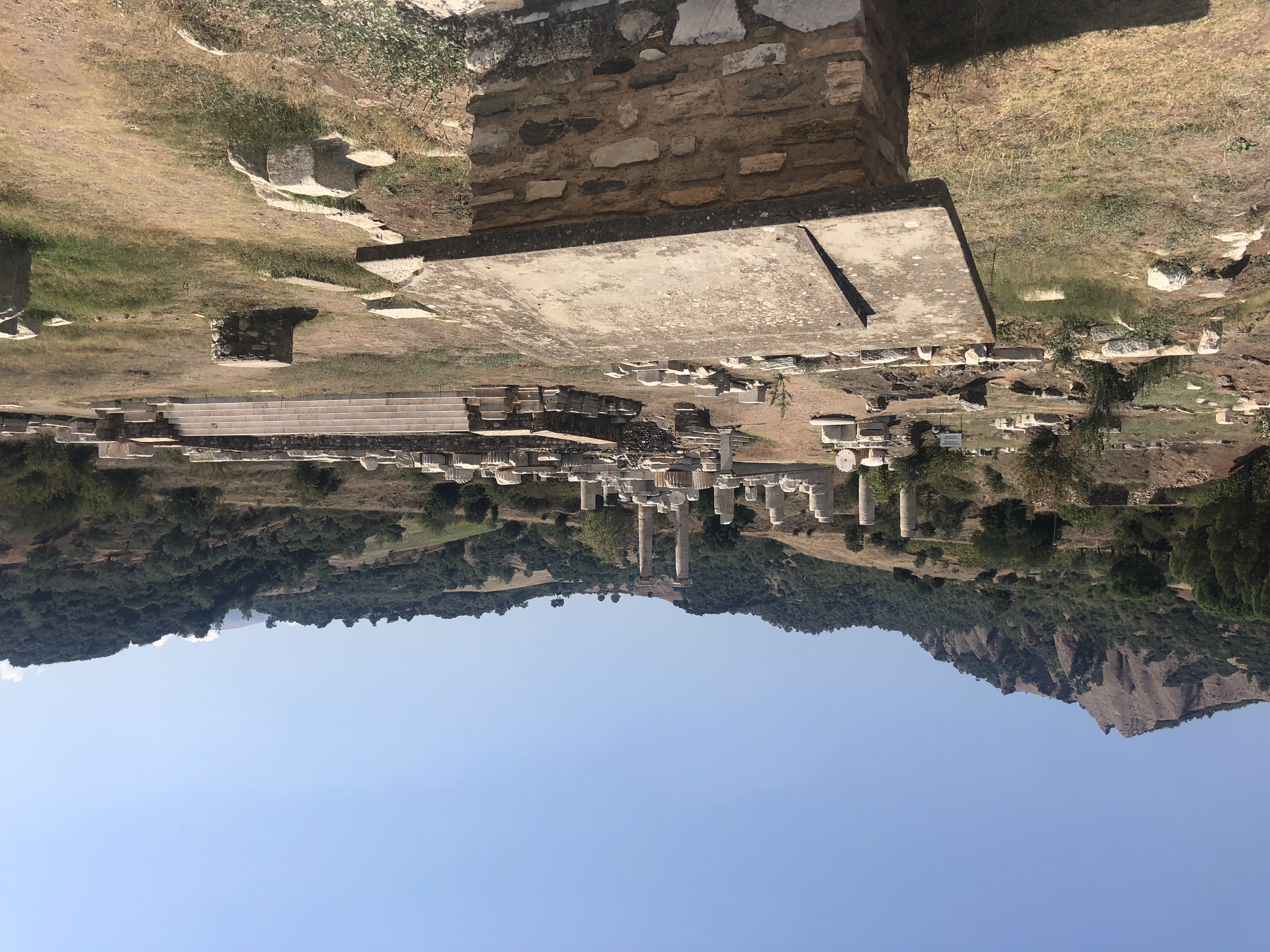
Artemis temple remains at Sardis, ancient Lydia's capital. This temple postdates Gyges; the photograph locates the site rather than his reignPhoto: Raicem; Wikimedia Commons. · CC BY-SAImage source
A historical region associated with the Tigris and Euphrates, home to many societies and civilisations.
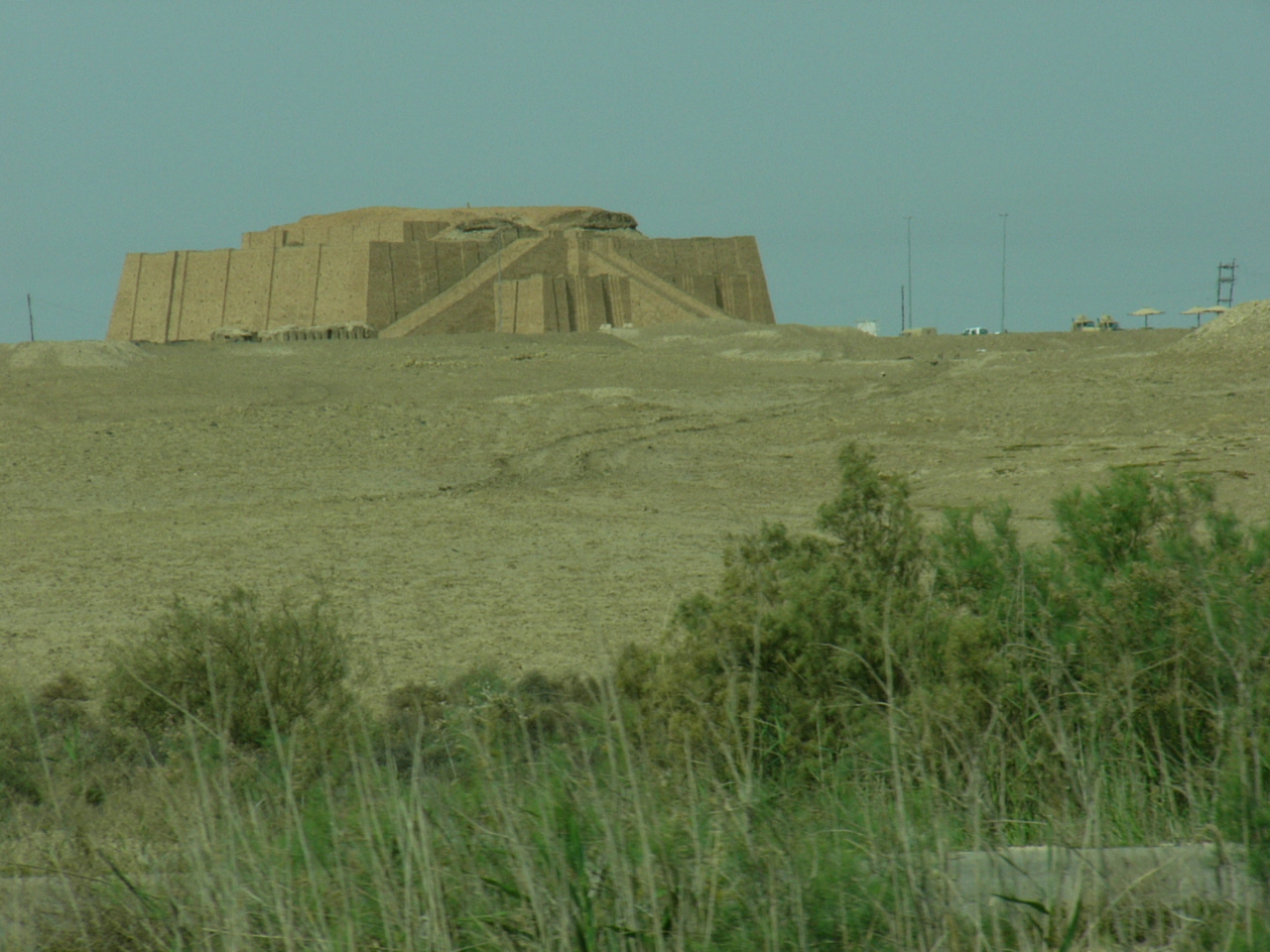
The ziggurat of Ur in southern Iraq, in a modern photograph that includes restored parts of the structure. An example of a Mesopotamian site, not an image of the entire region or a reconstruction of all its periodsDanyelflorea · CC BY-SA 3.0 · CC BY-SALicense · Image source
An ancient city at Tell Mardikh in Syria, known for its third-millennium BCE tablet archive.
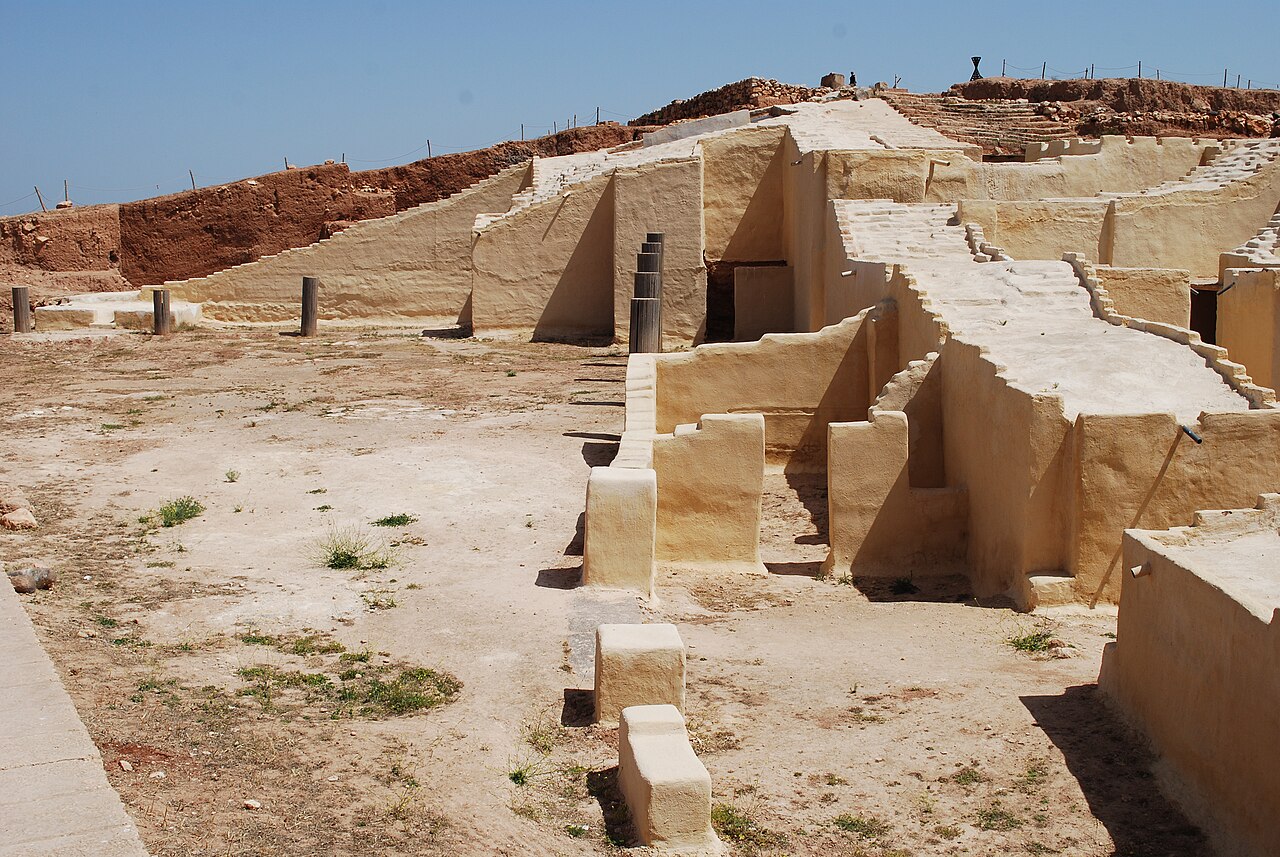
Remains of Palace G at Ebla, Tell Mardikh: a photograph of the archaeological site. It provides the archive’s setting and does not independently date every visible building phaseGianfranco Gazzetti · CC BY-SA 4.0 · CC BY-SALicense · Image source
An ancient city and kingdom on the Euphrates, at Tell Hariri in eastern Syria.
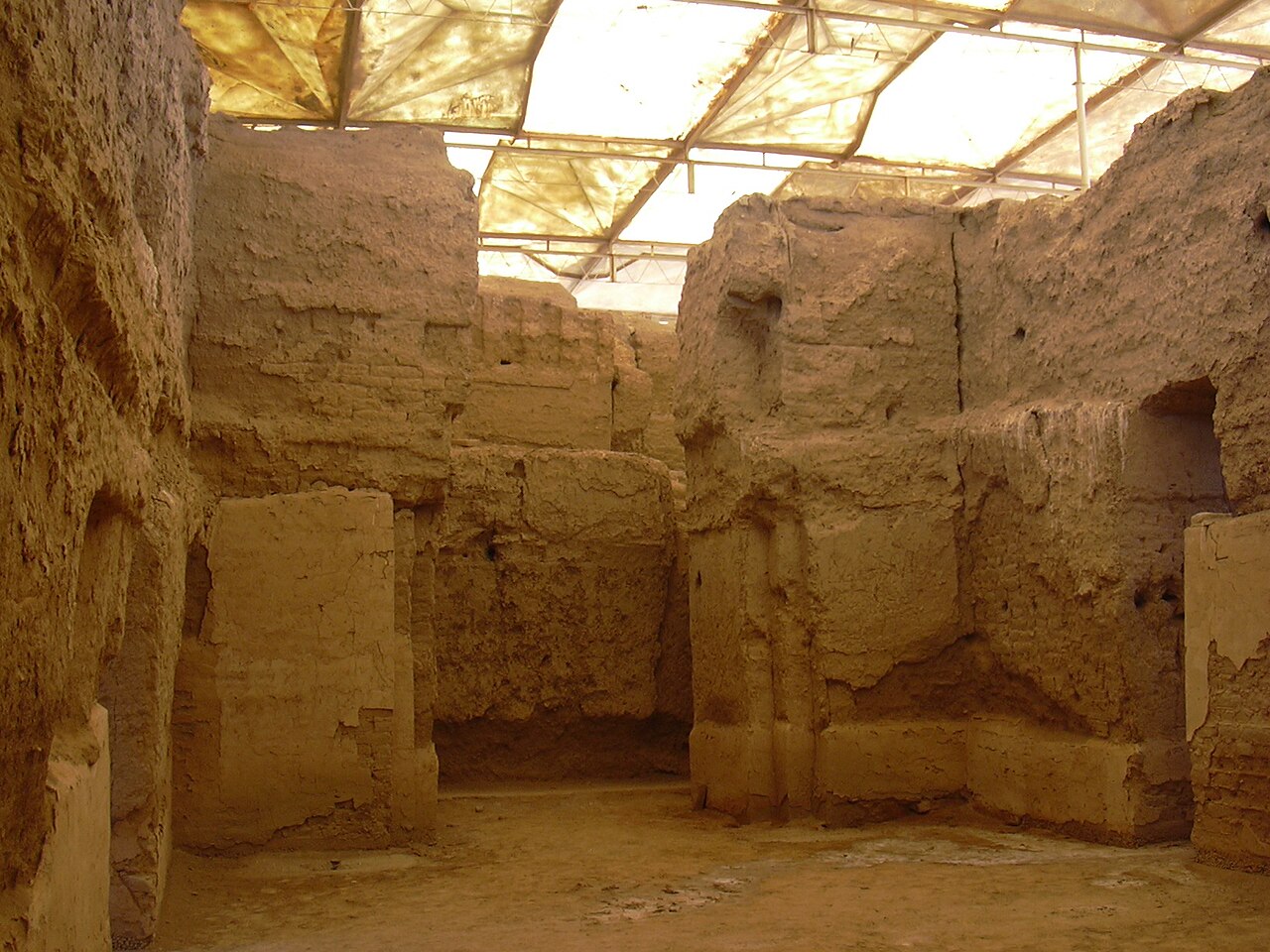
Ruins of the palace associated with Zimri-Lim at Mari, Tell Hariri. A photograph of the setting of the royal archives, not a reconstruction of its ancient appearanceHerbert Frank from Wien (Vienna), AT · CC BY 2.0 · CC BYLicense · Image source · Related reference
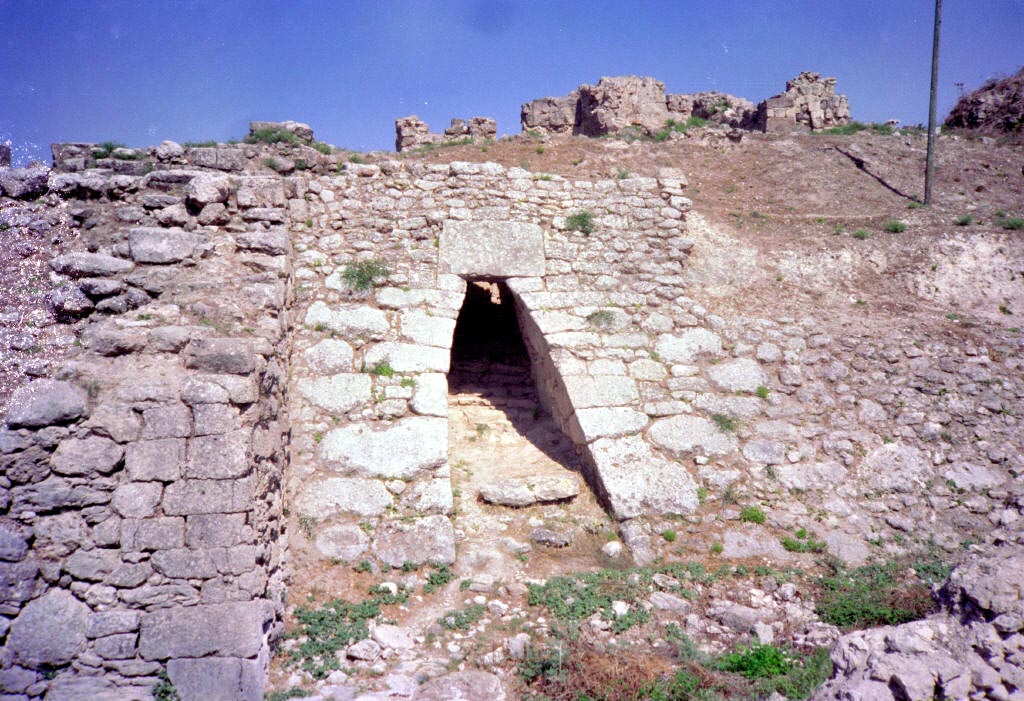
Ancient city and kingdom at Ras Shamra on the Syrian coast, flourishing between the fourteenth and early twelfth centuries BCE and preserving multilingual archives.
Entrance to Ugarit at Ras Shamra, near Latakia; photographed in August 1989. A modern photograph of the archaeological site, reused unchangedMbenoist (M. Benoist) — Wikimedia Commons · CC BY-SA 3.0 · CC BY-SALicense · Image source