Site · City
Mari
- Names
- Tell Hariri
- Timeline
- From 2900 BCE to 1760 BCE
- Region
- The Levant
Mari at Tell Hariri on the Syrian Euphrates was founded around 2900 BCE and rebuilt through three major urban phases. Its palace and cuneiform archives illuminate trade, royal government and religious practice, especially in the eighteenth century BCE.
Estimated reading time: 7 min Published Last reviewed:
Share article
Video
The Name No One Owns | The Road of El
More than four thousand years ago a palace burned at Ebla, and one small word waited in its clay: ʾl, El. We follow it through names and inscriptions, from Ebla, Mari and Ugarit to the kings of Samʾal, Karatepe and Saba and the stones of the basalt desert, then set the Torah's names and the Arabic question side by side. Some scenes are AI-generated illustrations.
The YouTube player loads only when you press play. Watch on YouTube
Text
Introduction
Mari was a city on the Euphrates in eastern Syria; its remains are now known as Tell Hariri. It is famous for the cuneiformCuneiformWriting with wedge-shaped signs, developed from Mesopotamian recording traditions and used for several languages from the third millennium BCE.Glossary · Click to read the explanation letters recovered from its royal palace, but the city's history began more than a thousand years before those documents. This account follows its urban and political development and asks what architecture and texts reveal about government, labour and worship—and whose experiences they leave out. Official cult records and the evidence of personal names must not be treated as interchangeable. [1]
A city on the Euphrates and its trading position
Mari stood on the right bank of the middle Euphrates, near present-day Abu Kamal and the Syrian–Iraqi border. The river connected it with routes running north towards the metal and timber resources of AnatoliaAnatoliaAnatolia is the region occupying the Asian part of present-day TurkeyGlossary · Click to read the explanation and south towards Mesopotamian cities. Its prosperity therefore depended on more than agriculture: river traffic, caravans and payments associated with trade contributed to its political importance. Archaeological traces of waterways survive, although the precise date and full function of some long canals remain matters of inference. [2]
Three successive cities
Archaeologists distinguish three major urban phases, conventionally called Cities I, II and III. The first Mari was founded on previously unoccupied terrain around 2900 BCE as an ambitious planned settlement. The parts excavated so far attest to metalworking, pottery and exchange, but the political history of this earliest phase remains poorly known. [3]
City II was extensively reorganised around the middle of the third millennium BCE. Mari had contacts with centres such as EblaEblaAncient city at Tell Mardikh, southwest of Aleppo, Syria. Its Palace G archives illuminate third-millennium BCE administration, language, and cult; the site has later occupation phases.Glossary · Click to read the explanation in western Syria, sometimes competitive and sometimes cooperative, as well as with cities of southern MesopotamiaMesopotamiaHistorical region associated with the Tigris and Euphrates: Uruk, Ur, Eridu, cuneiform, Sumer, Akkad, Babylon and Assyria, their languages and cults, and the limits of archaeological evidence.Glossary · Click to read the explanation. The circular plan and water-management works show the engineering needed to establish a city beside the Euphrates. Not every canal traced today can securely be dated to the original foundation. [4]
City II was destroyed around 2300 BCE during AkkadianAkkadianAn ancient East Semitic language written in cuneiform from the third millennium BCE; its varieties include Babylonian and Assyrian, and it served in international diplomacy.Glossary · Click to read the explanation expansion. Some interpretations tentatively attribute the attack to Sargon of Akkad; others have proposed Naram-Sin. The site was gradually rebuilt as City III by rulers bearing the title shakkanakku, originally a governor or military commander, who came to exercise independent power. The Great Royal Palace was constructed around 2050 BCE, centuries before the best-known letters found there. [3][5][6]
Amorite kings and the end of the kingdom
Amorite rulers came to power in the early second millennium BCE. Yahdun-Lim was followed by a period when Shamshi-Adad, ruler of a larger Upper Mesopotamian realm, placed his son Yasmah-Addu on Mari's throne. After Shamshi-Adad's power collapsed, Zimri-LimZimri-Lim, king of MariEighteenth-century BCE king of Mari, recipient of letters reporting river ordeals.Glossary · Click to read the explanation ruled in the eighteenth century BCE. His relations with other rulers, including Yarim-Lim of AleppoAleppo, historical cityNorthern Syrian city whose region appears in Mari reports, with architecture from multiple periods.Glossary · Click to read the explanation, required negotiation and alliances: Mari was not an isolated river city. A recent reassessment of the letters notes that relatively few surviving texts directly document that alliance; the wording of an oath is a scholarly reconstruction, not a fully preserved quotation. [5][7]
Mari ceased to be a major royal capital when forces of HammurabiHammurabiKing of Babylon in Mesopotamia, reigning around 1792–1750 BCE. A celebrated legal text preserved on a stele and cuneiform copies bears his name.Glossary · Click to read the explanation of BabylonBabylonBabylon is an ancient city in central present-day Iraq, south of BaghdadGlossary · Click to read the explanation attacked it, plundered and burned the palace, around 1760 BCE. Sources give closely spaced dates, including 1761 and 1759 BCE, depending on the event and chronological reconstruction; a rounded date is more responsible than asserting a single unquestionable year. The capital's fall did not mean that life throughout the middle Euphrates ended. [5]
The palace: royal administration and ritual space
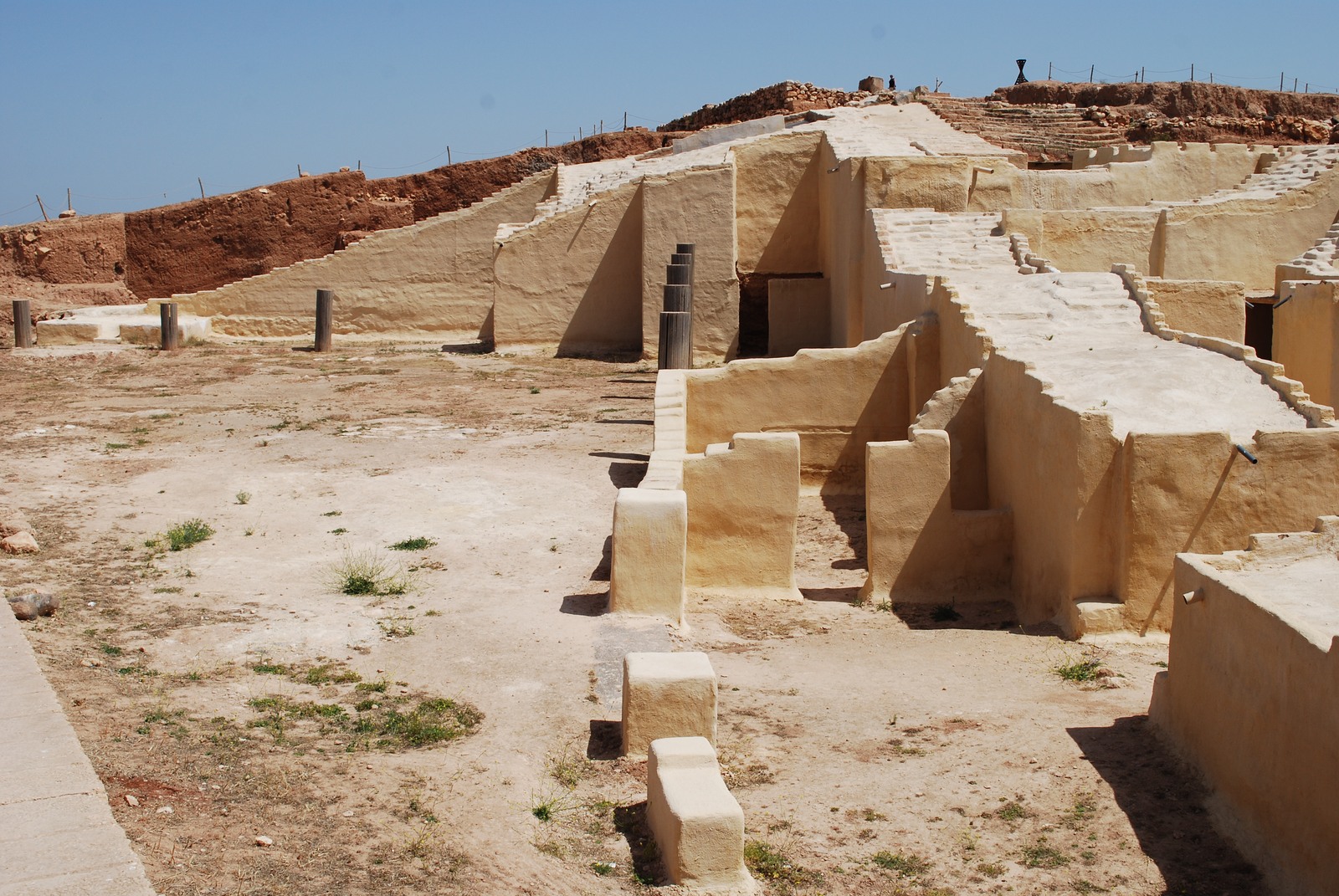
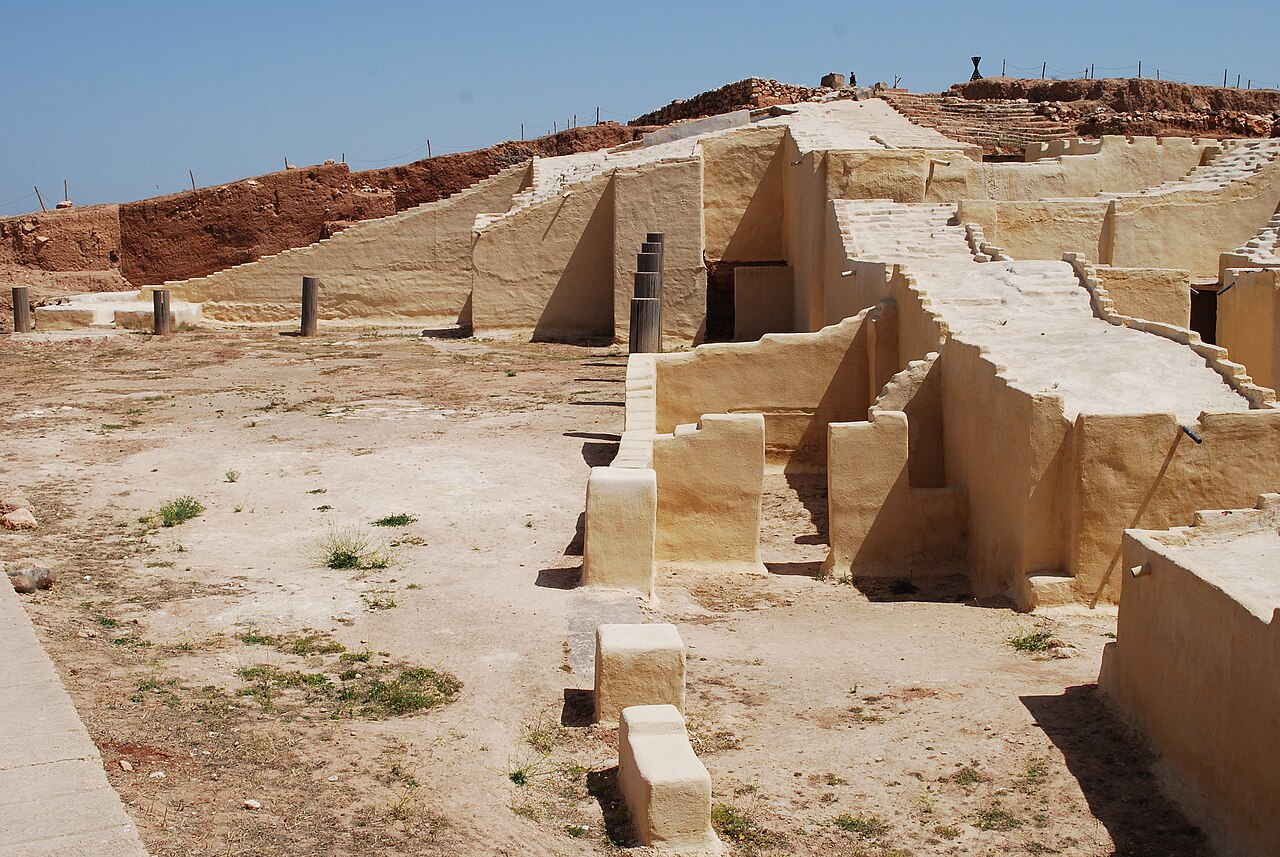
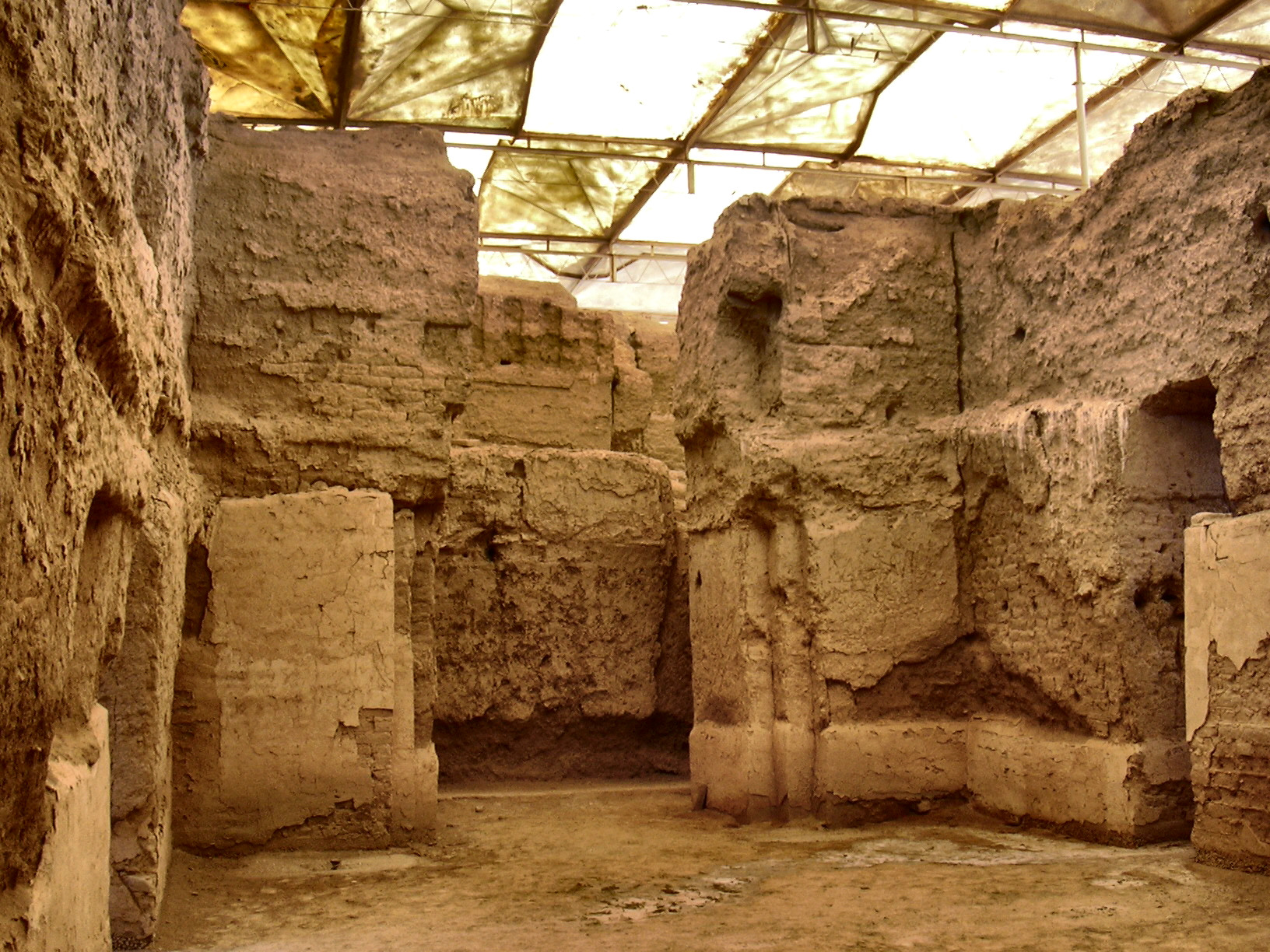
In its final phase, the Great Royal Palace occupied about two hectares, with hundreds of rooms and courtyards, including reception areas, stores and ceremonial spaces. Its surviving mud-brick walls, plaster and internal layout offer evidence for access to the centre of authority and the organisation of official life. The upper storeys are not preserved intact, so some architectural reconstructions and room functions remain tentative. The cover image shows ancient walls under modern protective roofing, not the palace in its original appearance. [8]
Paintings once decorated several palace areas, although many compositions survive only in fragments. The celebrated Investiture Painting combines royal authority with divine imagery, yet its conventional title cannot establish that the depicted ruler is Zimri-Lim himself. A study of the palace's decoration argues that the paintings belong to different phases and that the figure in this scene is more likely one of his predecessors. Royal art expresses ideas of kingship; it is not automatically a portrait of an identified king. [9]
What the royal archives contain
Mari's cuneiform tablets include palace accounts, royal and gubernatorial correspondence, and records concerning provisions and ritualRitualAn organised or distinguished practice meaningful to a community; it may leave traces, but its form alone does not reveal an associated doctrine.Glossary · Click to read the explanation activity. The French archaeological presentation estimates around 2,000 documents from the late shakkanakku period and around 15,000 Amorite-period texts spanning approximately half a century. In his account of the excavations, Dominique Charpin refers to some 20,000 tablets and fragments discovered during the campaigns of the 1930s. These are not necessarily competing totals: one counts particular classes of written documents, while the other includes physical finds and fragments. It would be misleading to call them 20,000 complete letters. [10][11]
Accounts concern grain, livestock, textiles and distributions to personnel; the series of the ‘king's meals’ forms part of palace record-keeping. Other documents deal with travel, orders and political communication. The famous archive illuminates primarily the closing decades of Mari's history, not an unbroken written record beginning with its foundation. A letter also served a particular administrative or diplomatic purpose: the writer's interests have to be weighed against other evidence. [10]
Diplomacy, women and society
Letters describe provincial authorities, movements of pastoral groups, relations between settled and mobile communities, disputes and diplomatic missions. Palace sources also reveal the involvement of royal women, from queen-mothers, queens and princesses to members of the court's service hierarchy. They offer glimpses of kinship, management and political activity, but they tell us much more about the elite palace world than about all households in the kingdom. [10][12]
Writing, languages and personal names
Mari's texts were written in cuneiformCuneiformWriting with wedge-shaped signs, developed from Mesopotamian recording traditions and used for several languages from the third millennium BCE.Glossary · Click to read the explanation, in forms of Akkadian or closely related Semitic speech, with differences between periods. Akkadian political control and later Amorite reforms affected signs, tablet forms and formulae. Amorite is particularly visible in personal names and selected terms; an Amorite name does not mean that the entire letter is written in the Amorite languageAmorite languageA West Semitic language studied especially through personal names, much of whose evidence comes from the Old Babylonian period (ca. 2000–1600 BCE).Glossary · Click to read the explanation. This matters especially when assessing names containing divine names or kinship words. [13]
Deities, worship and divination
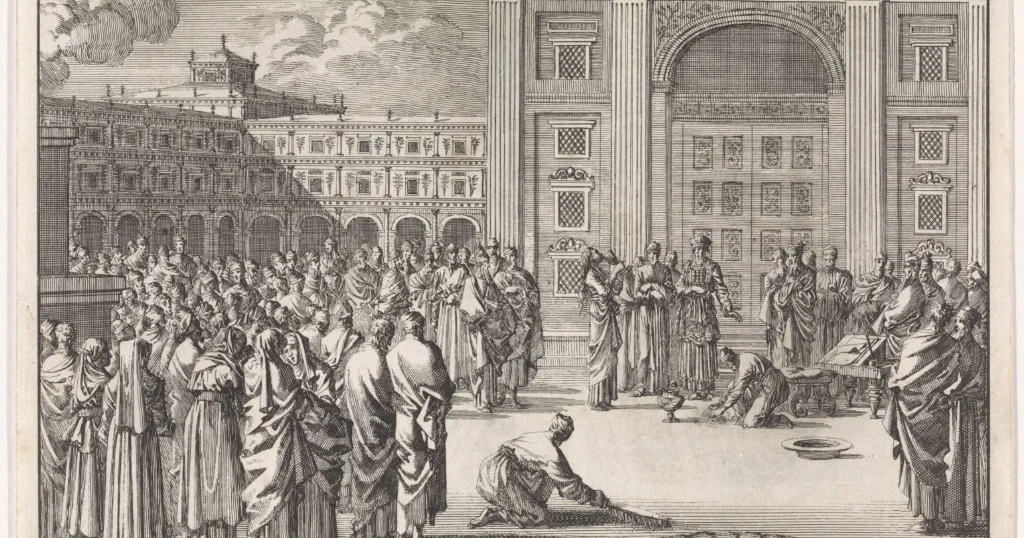
Mari had temples for IshtarInanna / IshtarA prominent Mesopotamian goddess whose Sumerian name Inanna became associated with Akkadian Ishtar across diverse traditions. She was associated with desire, war, royal authority and Venus, while local forms and genealogies varied among texts.Glossary · Click to read the explanation and forms of Inanna, for ShamashShamashMesopotamian god of the sun and justice, shown before Hammurabi on an eighteenth-century BCE stele preserved in the Louvre.Glossary · Click to read the explanation and for other gods. Textual evidence also attests the significance of DaganDaganA god worshipped in Syria and Mesopotamia, especially at Tuttul and Terqa on the Euphrates, and associated with royal authority. His name appears as Dagon in the Hebrew Bible; no ancient image of him is securely identified.Glossary · Click to read the explanation and Adad (Addu)Adad: storm godAdad is the storm god in Mesopotamian traditions, associated with rain, thunder and powers of fertility or destruction.Glossary · Click to read the explanation in cult and personal names. Practices included offerings and libations, as well as the kispum ceremony commemorating the dead. Divination for royal decisions could involve the examination of animal livers, omens, dreams and prophetic messages conveyed to the king. Palace ritual, however, does not by itself describe the practice of every inhabitant. [14]
Ichiro Nakata compared an official list of deities with evidence from personal names in Old Babylonian Mari texts. He found common prominence for gods such as Addu, Dagan, Shamash and EaEnkiMesopotamian deity also known as Ea, linked with Eridu and the Abzu (deep fresh waters), wisdom, incantations, and narratives of creation and cosmic order. Later written attestations do not identify the deity of Eridu’s earliest layers.Glossary · Click to read the explanation, alongside differing distributions for others. That is a modern comparative argument, not a statement by an ancient list about a ‘popular religion’. Personal names provide indirect evidence about family traditions and preferences; they are not a direct count of worshippers. [1]
Rediscovery and the survival of evidence
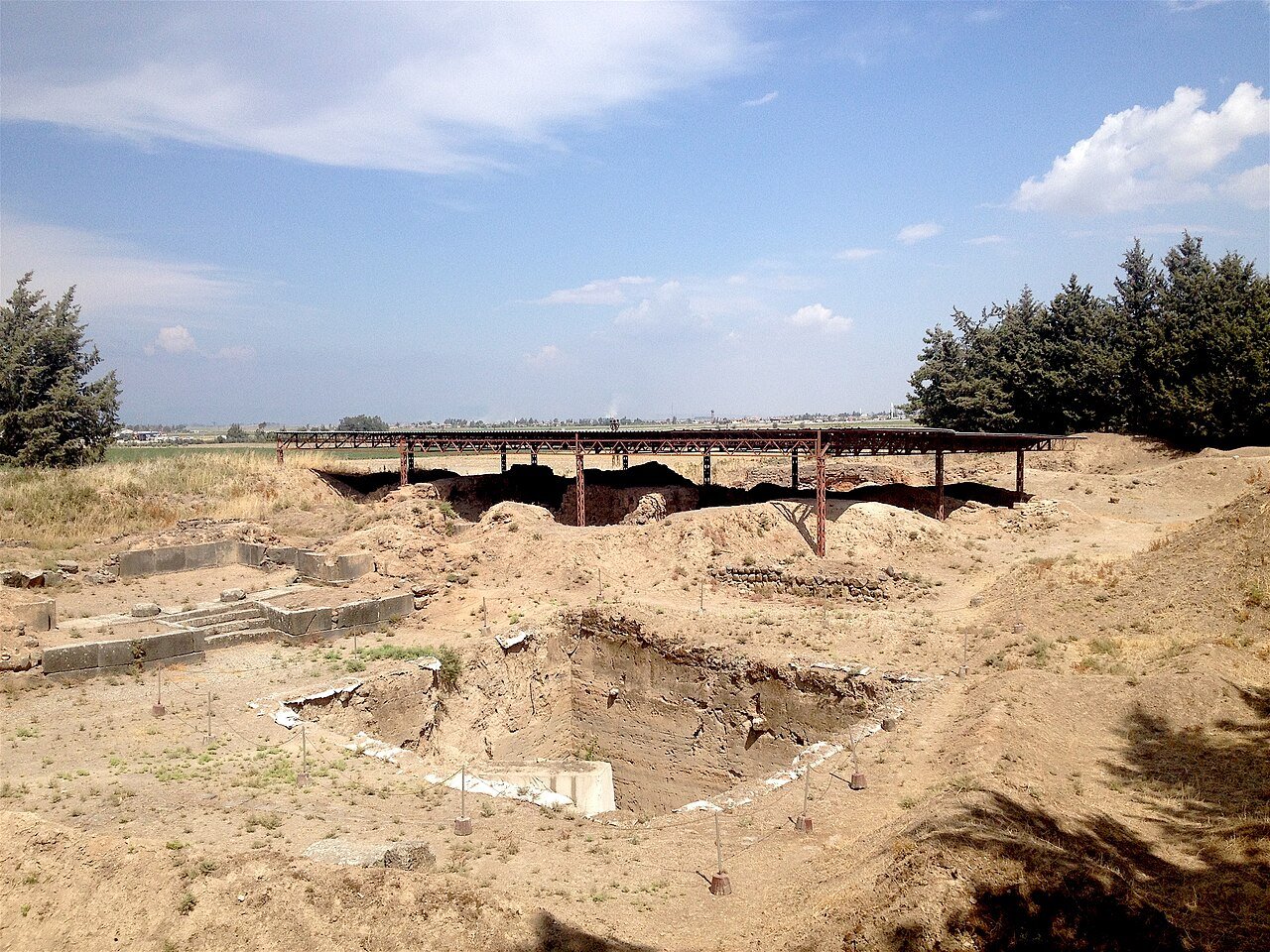
Excavations began at Tell Hariri in 1933 under André Parrot. An inscribed royal statue found in January 1934 helped establish the identification of the site as Mari. The palace, sanctuaries and written archives were subsequently uncovered, and later campaigns continued under other archaeologists. Since the Syrian conflict began, looting and erosion have damaged the site. Specialists compare satellite imagery with excavation plans to distinguish earlier archaeological trenches from illicit digging. The work of conservation and publication is now part of Mari's history, since the archaeological landscape itself is changing. [15][16]
Mari therefore offers two connected views of the past: a city repeatedly rebuilt over more than a millennium, and an exceptionally dense royal archive from one relatively late phase. Its strength lies in combining archaeology with written evidence; its limit is that palace documents are not the voices of the whole city or the record of its entire history.
References and notes (16)
- Ichiro Nakata, “Official Pantheon and Popular Pantheon of Mari,” Bulletin of the Society for Near Eastern Studies in Japan 19/1 (1976), pp. 1–15, 103. Publisher’s English abstract and PDF English abstract (p. 103); table headings glanced at, not a full reading or translation of the Japanese article. Return to the text ↑
- Pascal Butterlin, “Trade crossroads,” Mari archaeological portal, French Ministry of Culture. Sections “The Euphrates: a major communications route” and “The port of Mari” on the institutional page. Return to the text ↑
- Pascal Butterlin, “Urban stratigraphy,” Mari archaeological portal, French Ministry of Culture. Whole concise overview of Cities I–III and their approximate dates. Return to the text ↑
- Jean-Claude Margueron, “Planning a new city,” Mari archaeological portal, French Ministry of Culture. Sections on circular planning, segmented substructure and canals, including the dating caveat. Return to the text ↑
- Pascal Butterlin, “Histoire politique,” Mari archaeological portal, French Ministry of Culture. All three short sections on Mari, the shakkanakkus and Amorite dynasties; source gives 1759 BCE for destruction. Return to the text ↑
- Jean-Claude Margueron, “City III,” Mari archaeological portal, French Ministry of Culture. Opening paragraph on the debated destruction of City II and alternative attributions to Sargon or Naram-Sin. Return to the text ↑
- Dominique Charpin, “The alliance between Zimri-Lim of Mari and Yarim-Lim of Aleppo,” Collège de France symposium abstract, 19 June 2026. Written symposium abstract only; neither audio nor the original letters/ARM 35 was read. Return to the text ↑
- Jean-Claude Margueron, “Discovery and excavation,” Great Royal Palace of Mari, French Ministry of Culture. Palace excavation history, area and room counts, and limits of architectural reconstruction. Return to the text ↑
- Béatrice Muller, “The palace’s painted decorations,” Mari archaeological portal, French Ministry of Culture. Passages on the Investiture Painting, different phases and the debated identification of the ruler. Return to the text ↑
- “Archives texts,” Mari archaeological portal, French Ministry of Culture. Sections on shakkanakku and Amorite texts and examples of accounts and correspondence. Return to the text ↑
- Dominique Charpin, “1933: the discovery of Mari,” Collège de France lecture summary, 1 March 2021. Written lecture summary, including the c. 20,000 tablets/fragments figure and discovery sequence; audio not played. Return to the text ↑
- Jean-Claude Margueron, “Diverse sources,” Mari archaeological portal, French Ministry of Culture. Sections on power and society, including the social hierarchy of women in the palace. Return to the text ↑
- “Writing and language,” Mari archaeological portal, French Ministry of Culture. Sections on the cuneiform corpus, Akkadian influence and Amorite reform and names. Return to the text ↑
- Pascal Butterlin, “The world of the gods,” Mari archaeological portal, French Ministry of Culture. Sections on shrines, rites, divination and kispum; this is not a reading of individual tablets. Return to the text ↑
- “Excavation history,” Mari archaeological portal, French Ministry of Culture. Sections on Parrot, Margueron and Butterlin and the excavation sequence. Return to the text ↑
- Mathilde Mura, “The destruction of Mari,” Mari archaeological portal, French Ministry of Culture. Sections distinguishing erosion, earlier excavations and looting damage. Return to the text ↑
Suggest a correction · Suggest a source for this record
Cite this record
IL Archive, «Mari», https://ilarchive.com/en/sites/mari
Continue reading