Person
Hammurabi
King of Babylon in Mesopotamia, reigning around 1792–1750 BCE. A celebrated legal text preserved on a stele and cuneiform copies bears his name.
Last reviewed:
Text
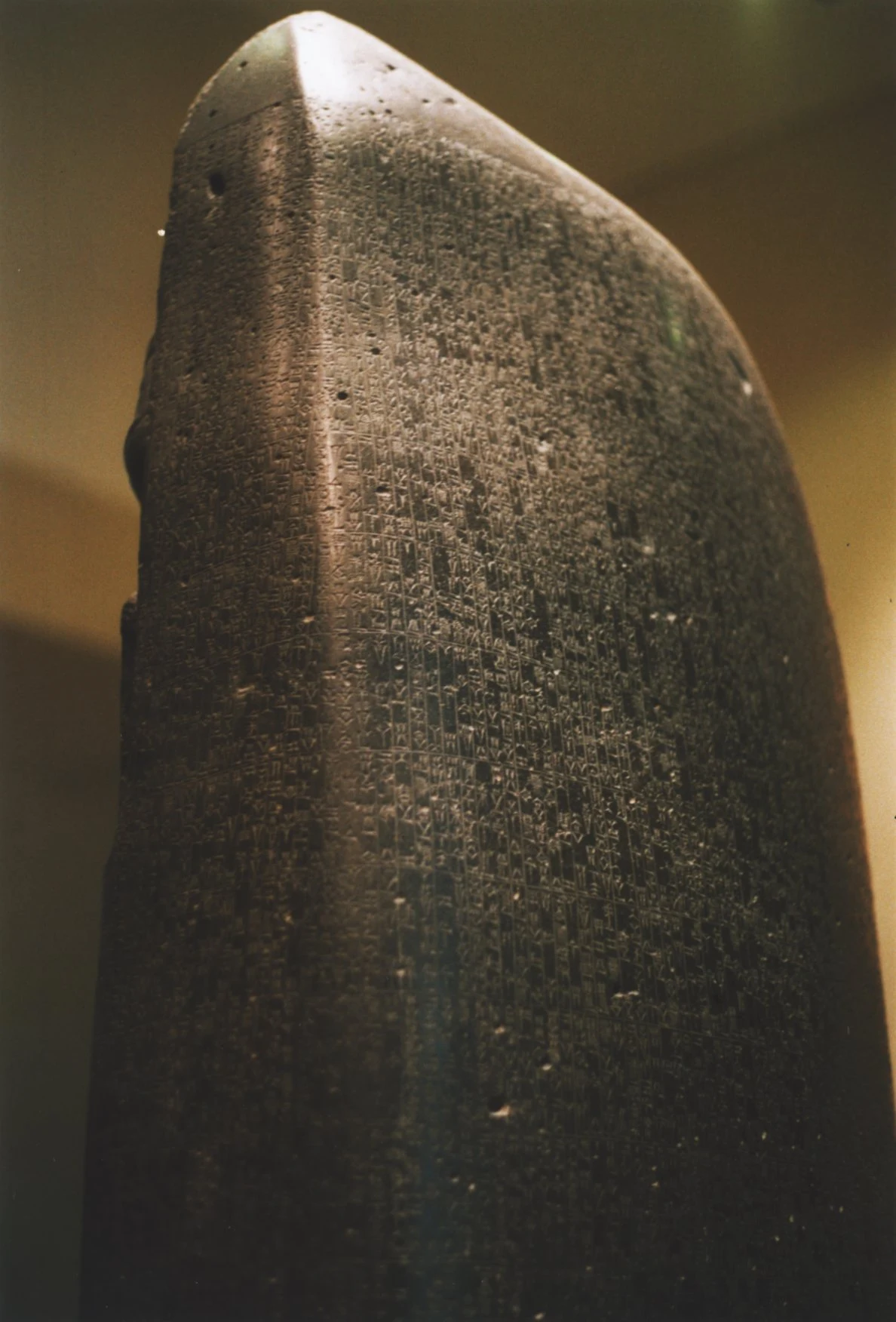
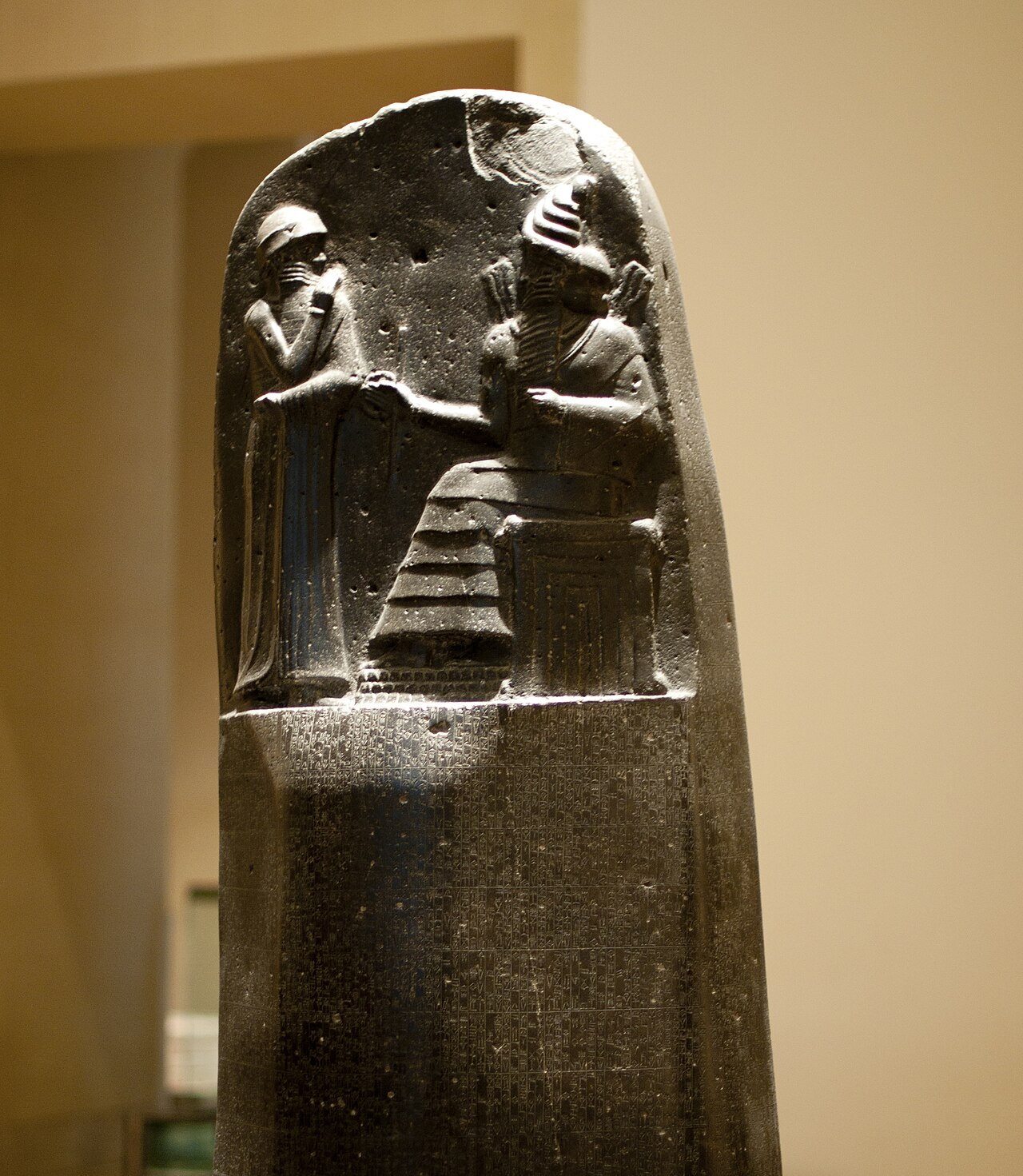
Hammurabi ruled BabylonBabylonBabylon is an ancient city in central present-day Iraq, south of BaghdadGlossary · Click to read the explanation in MesopotamiaMesopotamiaHistorical region associated with the Tigris and Euphrates: Uruk, Ur, Eridu, cuneiform, Sumer, Akkad, Babylon and Assyria, their languages and cults, and the limits of archaeological evidence.Glossary · Click to read the explanation, within modern IraqIraqIraq is a modern country encompassing much of ancient MesopotamiaGlossary · Click to read the explanation, conventionally around 1792–1750 BCE. His reign belongs to the Old Babylonian period. One of his best-known monuments is a stele, an upright inscribed stone, preserved in the Louvre as SB 8. [1]
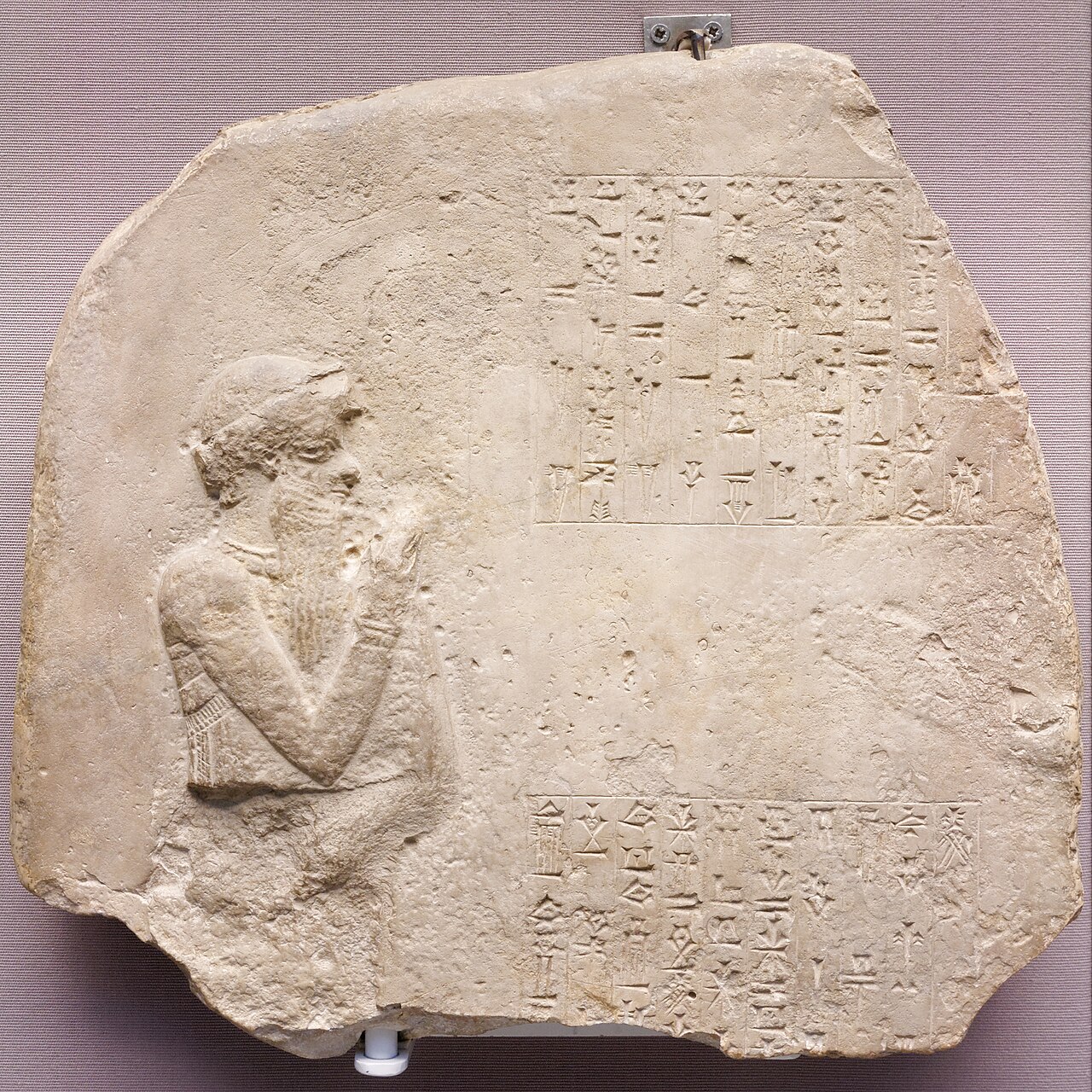
At its top the king appears before ShamashShamashMesopotamian god of the sun and justice, shown before Hammurabi on an eighteenth-century BCE stele preserved in the Louvre.Glossary · Click to read the explanation, god of the sun and justice. Beneath the scene is a legal text framed by a royal prologue and epilogue. The collection continued to be copied after Hammurabi’s time, so we distinguish the king’s date from the age of the copy being read or viewed.
Suggest a correction · Suggest a source for this record
Cite this record
IL Archive, «Hammurabi», https://ilarchive.com/en/people/hammurabi
Continue reading