Entity
Shamash
A reference page linking a name, group, or concept to the materials that discuss it.
Shamash, called Utu in Sumerian, was the Mesopotamian sun god and a divine judge. Hymns, royal monuments and oracle records show how his worship connected light, justice and kingship.
Estimated reading time: 3 min Published Last reviewed:
Share article
Video
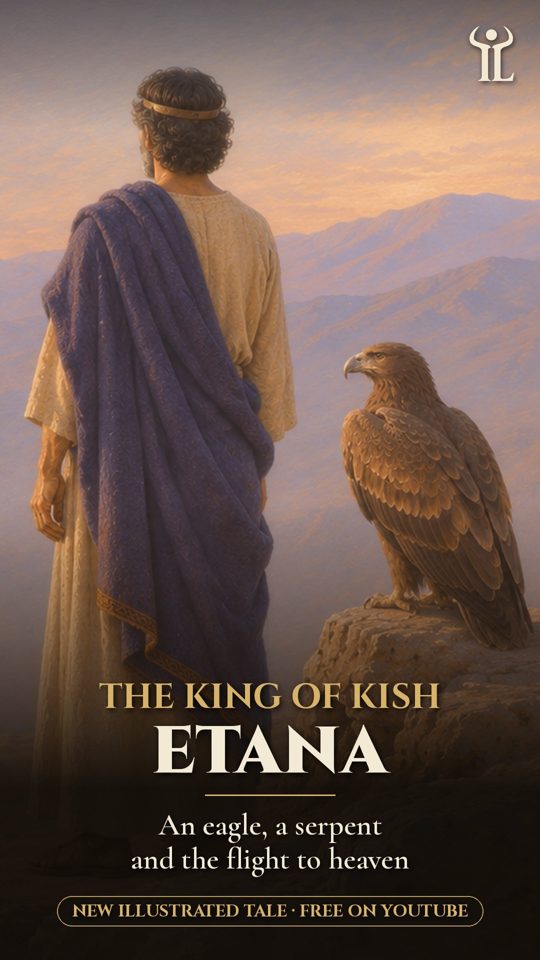
Etana: An eagle, a serpent and the flight to heaven
An eagle, a serpent and the flight to heaven. The whole story in two illustrated chapters, told from the ancient clay tablets; where the tablets are broken, the narration says so. Illustrations, narration voice and visual effects were created with AI tools by IL Archive; the text is a faithful retelling based on the ancient tablets.
The YouTube player loads only when you press play. Watch on YouTube
Text
Introduction
Shamash, called Utu in Sumerian, was the Mesopotamian god of the sun. His daily light was understood to reach places and reveal deeds hidden from human sight. Hymns praise him as a judge, while Babylonian monarchs represented themselves before him on inscribed monuments. Two such images survive on HammurabiHammurabiKing of Babylon in Mesopotamia, reigning around 1792–1750 BCE. A celebrated legal text preserved on a stele and cuneiform copies bears his name.Glossary · Click to read the explanation’s stele and the Sun-God Tablet from Sippar. [1][2][4]
The sun as witness and judge
Utu is attested in early cuneiformCuneiformWriting with wedge-shaped signs, developed from Mesopotamian recording traditions and used for several languages from the third millennium BCE.Glossary · Click to read the explanation texts from UrukUrukAncient city at Warka in southern Iraq, a major urban centre around 3200 BCE that preserved early writing and accounting tablets.Glossary · Click to read the explanation and Ur. Two principal centres of his worship were Sippar and Larsa. Each city had a sanctuary called Ebabbar, a Sumerian name meaning “Shining House.” [1]
In the AkkadianAkkadianAn ancient East Semitic language written in cuneiform from the third millennium BCE; its varieties include Babylonian and Assyrian, and it served in international diplomacy.Glossary · Click to read the explanation Hymn to Shamash, the god brings light to fields and mountains and protects travellers on difficult roads. The hymn illustrates his judicial authority through the fates of two judges. Shamash punishes one and raises the prudent judge to a position of honour at the palace. The same poem describes dishonesty in trade. Its examples place divine judgement in the everyday business of courts and markets as well as in the royal sphere. [1]
Shamash on Hammurabi’s stele
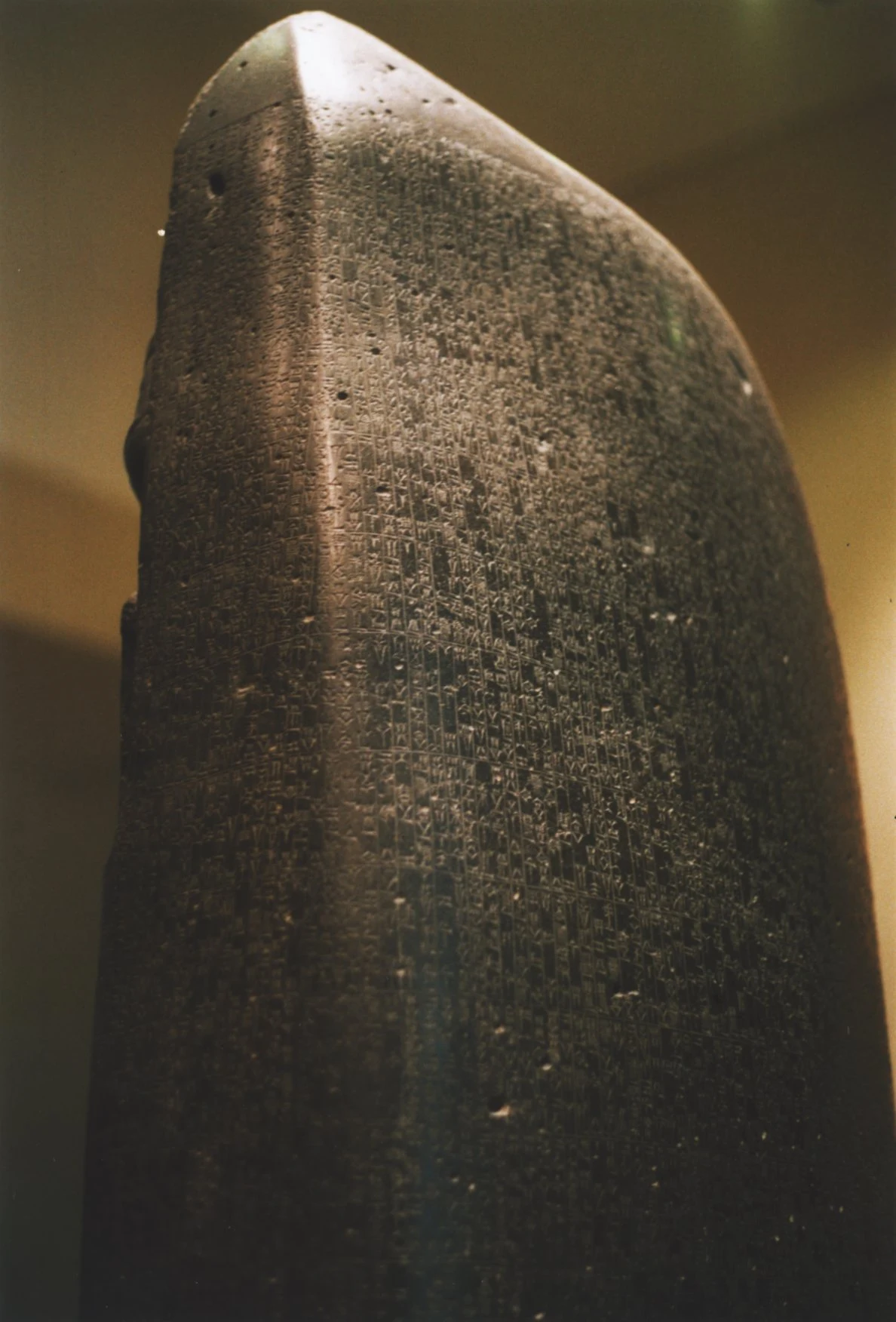
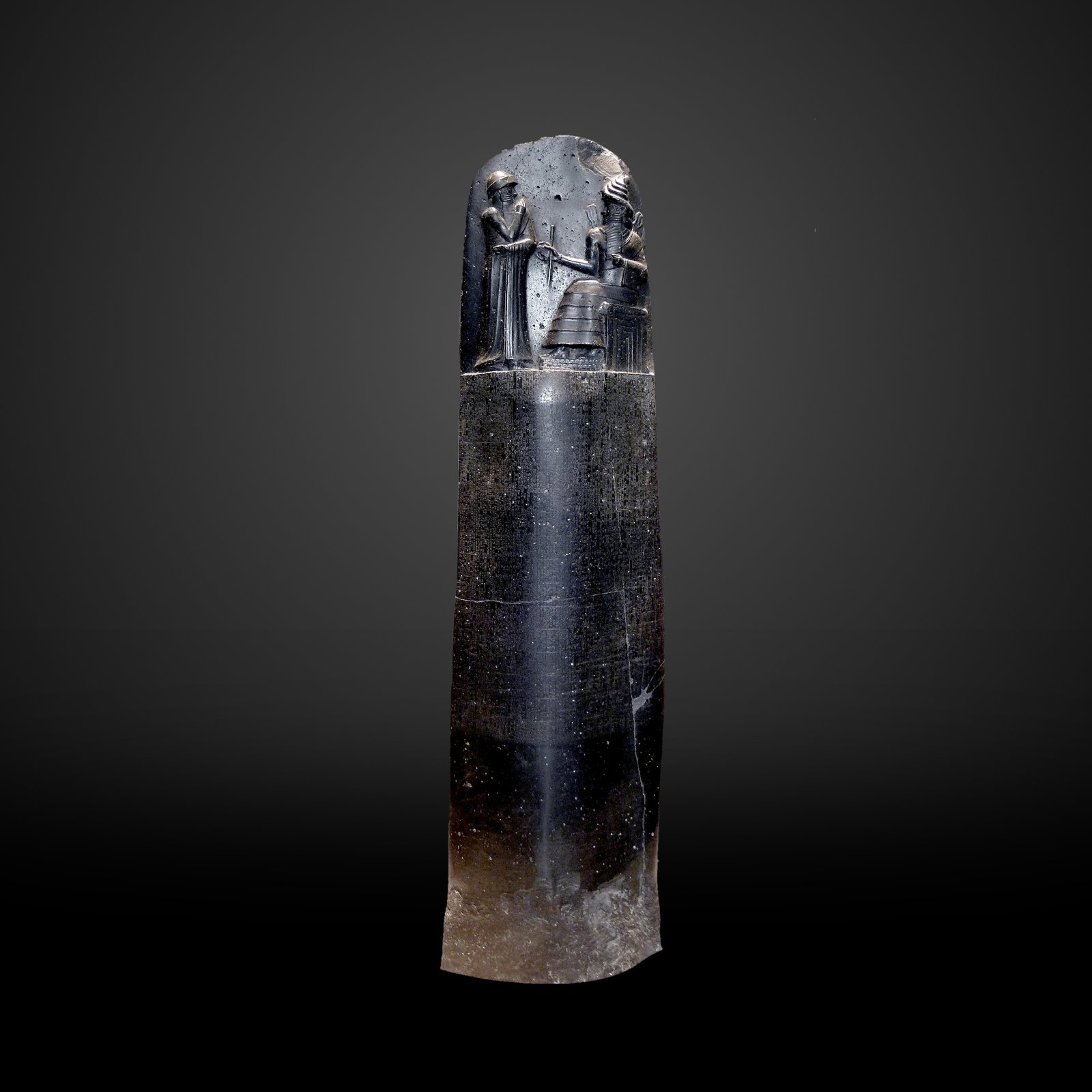
On the upper relief of the eighteenth-century BCE stele of HammurabiHammurabiKing of Babylon in Mesopotamia, reigning around 1792–1750 BCE. A celebrated legal text preserved on a stele and cuneiform copies bears his name.Glossary · Click to read the explanation (Louvre SB 8), a standing king faces the enthroned sun god. Rays extend from the god’s shoulders, and his feet rest on a support that the Louvre interprets as the mountains of sunrise. Shamash extends a rod and ring. The Louvre reads these as signs of royal authority associated with the duty to uphold justice. The legal inscription occupies the stone below the relief. By bringing image and text together, the monument places the king’s judicial role under divine authority. [2][3]
The Sun-God Tablet from Sippar
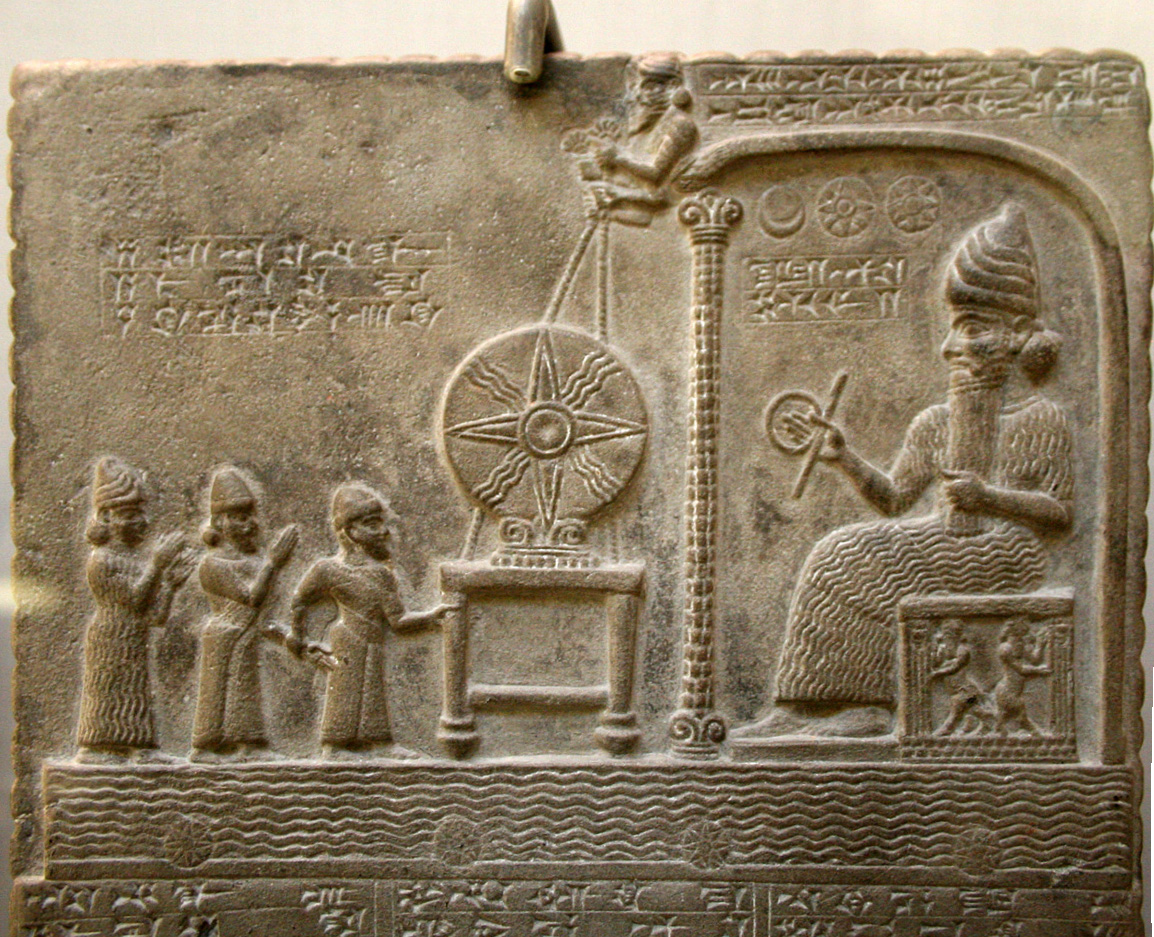
On a limestone tablet dated by the British Museum to 860–850 BCE, a priest and the goddess Aya lead King Nabu-apla-iddina before Shamash. The seated god holds a rod and ring, and a large solar disc rests on a stand in front of him. Above are the emblems of three deities. A lunar disc represents Sin, a solar disc Shamash and an eight-pointed star IshtarInanna / IshtarA prominent Mesopotamian goddess whose Sumerian name Inanna became associated with Akkadian Ishtar across diverse traditions. She was associated with desire, war, royal authority and Venus, while local forms and genealogies varied among texts.Glossary · Click to read the explanation. [4]
The tablet’s inscription records the king’s renewal of the sanctuary’s offerings and resources. It tells how an older cult statue had been destroyed and how a priest’s discovery of an image allowed a new statue to be made on the king’s orders. The relief and inscription thus present the king’s intervention as a restoration of worship at Sippar. [4][5]
Questions addressed to the god
The Neo-Assyrian court also called upon Shamash in divination. Clay tablets preserve questions addressed to the god on matters that the king needed to decide. A specialist sought an answer in signs read in the internal organs of a sacrificial sheep, particularly the liver. The diviner’s report provided the court with an interpretation of those signs. [6]
Quick answers
Are Shamash and Utu the same deity?
Utu is the Sumerian name of the Mesopotamian sun god. Shamash is the Akkadian name. [1]
Why does Shamash appear on Hammurabi’s stele?
The Louvre interprets his rod and ring as insignia of authority that link Hammurabi’s rule to the duty to uphold justice. [2][3]
Which object appears in the photograph?
It shows the upper relief of the Sun-God Tablet found at Sippar. The original is in the British Museum, number 1881,0428.34.a. [4]
References and notes (6)
- Luděk Vacín, “On the Solar Aspect of the King in Ur III Royal Ideology” Opening discussion of the names Utu and Shamash, Ebabbar at Sippar and Larsa, and the judges and merchants of the Akkadian hymn. Return to the text ↑
- Musée du Louvre, “Code de Hammurabi”, SB 8 Object record. Dating, relief figures, rod and ring, and the cuneiform legal inscription. Return to the text ↑
- Musée du Louvre, “The Code of Hammurabi” Section on Hammurabi as upholder of justice. The interpretation of Shamash’s solar attributes and the insignia he extends to the king. Return to the text ↑
- British Museum, “Tablet of Shamash”, 1881,0428.34.a Catalogue description. Date, material, findspot, figures and divine symbols, and the inscription recording the restoration of the temple endowment. Return to the text ↑
- Johannes Gutenberg University Mainz, “Sun-God Tablet” Discussion accompanying the frontal view. The inscription’s account of the cult statue and the renewal of rites at Sippar. Return to the text ↑
- F. M. Fales and G. B. Lanfranchi, “The Impact of Oracular Material on the Political Utterances and Political Action in the Royal Inscriptions of the Sargonid Dynasty” Opening discussion. The queries addressed to the sun god and the role of sacrificial divination at the Assyrian court. Return to the text ↑
Suggest a correction · Suggest a source for this record
Cite this record
IL Archive, «Shamash», https://ilarchive.com/en/entities/shamash
Continue reading
Related readings
Related posts and imagesAll videos and images