Study
Hammurabi and the Covenant Code: parallels and the limits of borrowing
An extended study of a topic, with evidence and references.
- Timeline
- From 1800 BCE to 600 BCE
- Region
- Mesopotamia
What happens when an ox kills someone, or an enslaved person’s eye is injured? Reading Hammurabi and Exodus 21 to explain parallels, differences and possible legal transmission.
Share article
Text
Introduction
Why do closely related legal provisions appear both in the Babylonian Laws of HammurabiLaws of HammurabiAn eighteenth-century BCE Babylonian legal text in Akkadian, presenting property, family, labor and injury provisions within Hammurabi’s account of justice.Glossary · Click to read the explanation, from the eighteenth century BCE, and in the Covenant CodeCovenant CollectionScholarly name for laws in Exodus chapters 20–23, within the Torah, addressing service, injuries, property and worship. Their composition date is debated.Glossary · Click to read the explanation in Exodus, one of the five books of the TorahTorah / PentateuchGenesis, Exodus, Leviticus, Numbers and Deuteronomy: Mosaic corpus with a compositional history. Torah can also mean teaching or law beyond these five books.Glossary · Click to read the explanation? This study compares cases involving a goring ox, injuries, and service because of debt. It explains what the collections share and what changes in penalties, people’s legal standing, and the source of authority.
The aim is to investigate the historical relationship between the texts: did the writers of the Covenant Code know and rework HammurabiHammurabiKing of Babylon in Mesopotamia, reigning around 1792–1750 BCE. A celebrated legal text preserved on a stele and cuneiform copies bears his name.Glossary · Click to read the explanation’s text, or did they receive more widely circulated legal customs and teachings? We examine the dates of the evidence and proposed routes of contact to understand why the similarities merit study and what is needed to establish borrowing.
The ox and its owner’s responsibility
An ox kills someone. Is its owner responsible, or was this an accident the owner could not foresee? Does the ruling change if the owner knew the animal was dangerous and failed to take precautions? Hammurabi's laws and Exodus pose these questions in a series of related cases.
This is one reason scholars compare the texts. There are also injuries to eyes and teeth, a pregnant woman, and service arising from debt. The parallels are detailed enough to merit investigation, but the rulings do not coincide everywhere. We will read particular examples before examining explanations of their relationship.
Which two collections?
The Laws of HammurabiLaws of HammurabiAn eighteenth-century BCE Babylonian legal text in Akkadian, presenting property, family, labor and injury provisions within Hammurabi’s account of justice.Glossary · Click to read the explanation are a Babylonian text from the eighteenth century BCE associated with the king whose name they bear. The Covenant CollectionCovenant CollectionScholarly name for laws in Exodus chapters 20–23, within the Torah, addressing service, injuries, property and worship. Their composition date is debated.Glossary · Click to read the explanation is a scholarly designation for laws in Exodus, one of the Torah's five books. It is usually located around Exodus 20:22–23:33, with disagreement over its precise boundaries. This article focuses especially on chapter 21. [2][3]
Exodus places these laws within MosesMosesCentral figure in Exodus, Torah traditions and the Qur’an; childhood accounts differ in detail.Glossary · Click to read the explanation's narrative and the relationship between YahwehYahwehThe divine proper name written YHWH in the Hebrew Bible.Glossary · Click to read the explanation, Israel's god, and the community. Narrative time and the laws' composition are different questions, however. We will later present a proposed eighth–seventh-century BCE dating as a scholarly model rather than a settled date.
The Torah also contains laws in Leviticus, Deuteronomy and Numbers, which may treat the same issue differently. We therefore compare two particular collections here. The history of all legislation and its later Jewish, Christian and Islamic interpretations requires a broader scope. The relationship between these two collections is itself debated. [7]
The stele, the king and justice
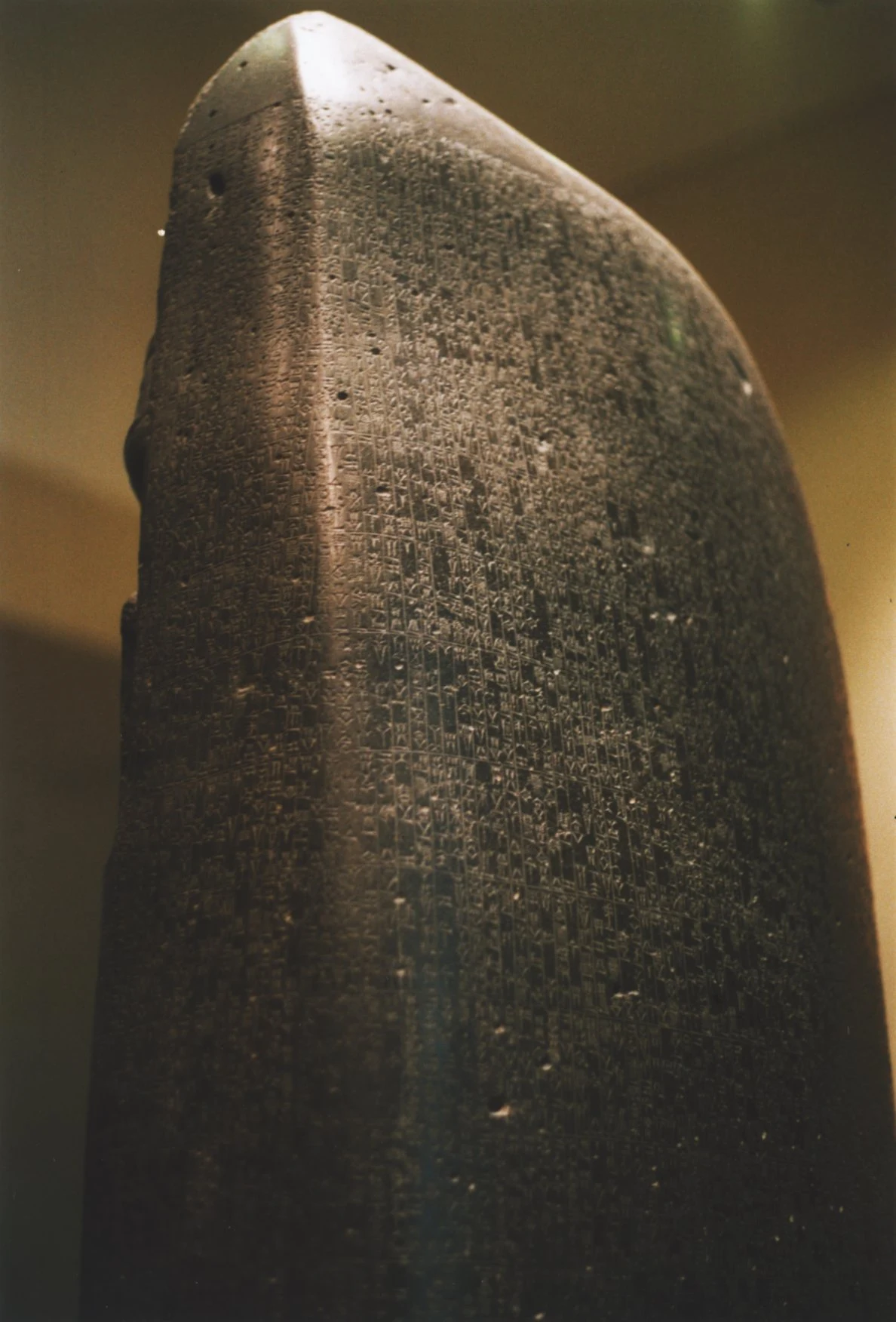
HammurabiHammurabiKing of Babylon in Mesopotamia, reigning around 1792–1750 BCE. A celebrated legal text preserved on a stele and cuneiform copies bears his name.Glossary · Click to read the explanation ruled BabylonBabylonBabylon is an ancient city in central present-day Iraq, south of BaghdadGlossary · Click to read the explanation in MesopotamiaMesopotamiaA historical region associated with the Tigris and Euphrates, home to many societies and civilisations.Glossary · Click to read the explanation, within modern IraqIraqIraq is a modern country encompassing much of ancient MesopotamiaGlossary · Click to read the explanation, around 1792–1750 BCE. A stele is an upright inscribed stone. The example preserved in the Louvre as SB 8 was found at SusaSusa, ancient ShushSusa is an archaeological city at Shush in southwestern present-day IranGlossary · Click to read the explanation during excavations in 1901–1902, away from its Babylonian home. [1]
Its text contains a royal prologue, provisions presenting cases and consequences, and an epilogue. At the stone's top, Hammurabi appears before ShamashShamashMesopotamian god of the sun and justice, shown before Hammurabi on an eighteenth-century BCE stele preserved in the Louvre.Glossary · Click to read the explanation, god of the sun and justice. The monument joins an image of royal authority with the king's statements about rulings and fairness. [1][2]
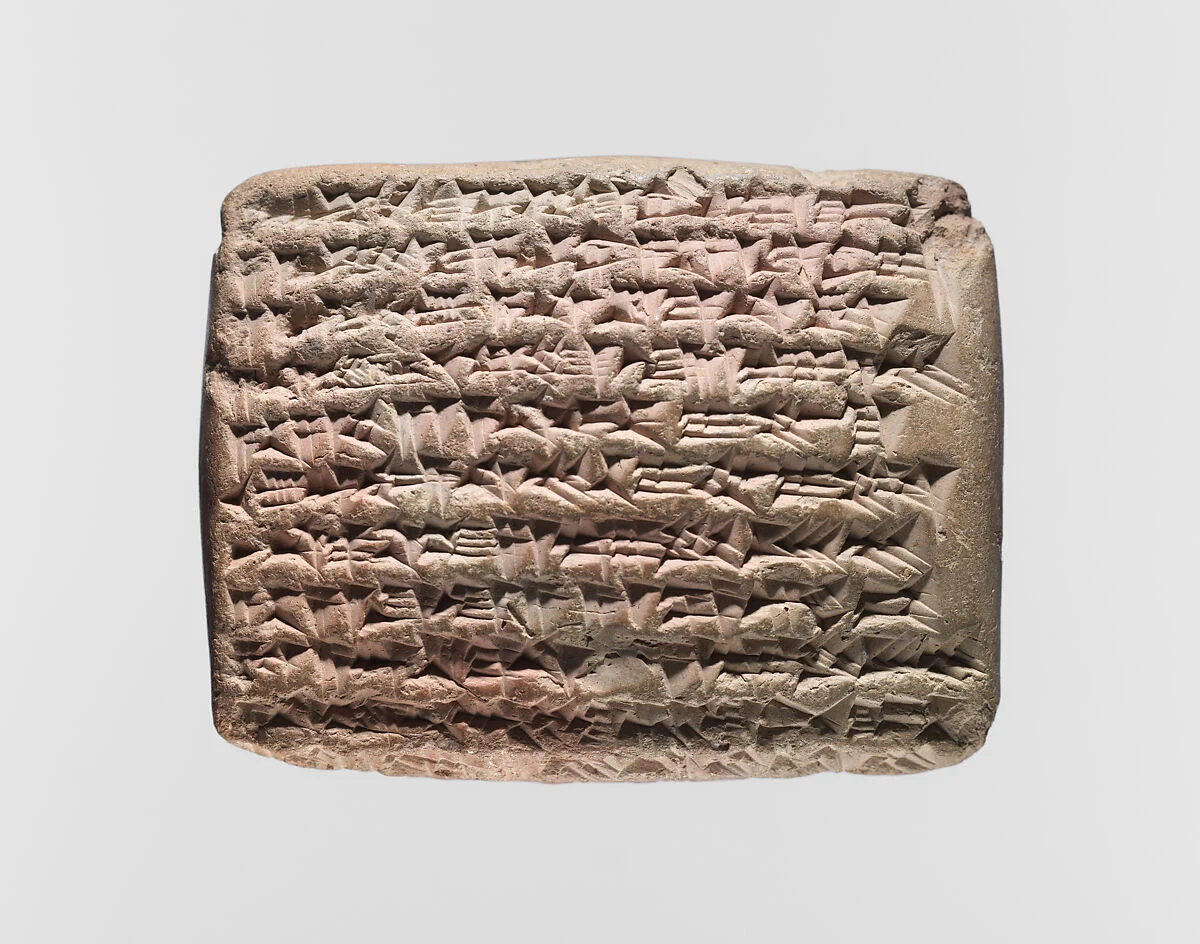
The collection's function nevertheless requires interpretation. Kathryn SlanskiKathryn SlanskiYale scholar of Mesopotamia, studying texts, images, inscribed monuments, law and authority.Glossary · Click to read the explanation reads the stele as a public declaration of justice and royal commemoration, studying the inscription's continued copying after his time. This makes comparison with court records important: what a king wrote, what scribes learned, and how judges ruled are connected aspects, but are different witnesses. [4]
A royal or educational text can reflect people's problems and familiar rules. The extent to which each provision was applied remains open to examination, instead of assuming the stone operated as a comprehensive modern legal code.
If this happens, this is the ruling
Many Hammurabi provisions begin with a situation and state its consequence: if someone injures another person or fails an obligation, what follows? The Covenant Collection also uses this form. It organizes law through examples whose details readers or learners can follow.
The form and some everyday problems are shared. A society keeping livestock and lending money may encounter accidents and debts resembling those of another society. The question of a textual relationship becomes stronger when specific details recur in a similar sequence and a possible historical route of contact exists.
The goring ox and the owner's responsibility
Hammurabi §§250–252 distinguish an incidental goring, a known dangerous ox whose owner was warned but failed to take precautions, and a victim who is enslaved. Exodus 21:28–32 offers a related structure. The shared question concerns the owner's knowledge and ability to prevent danger. [2][3]
- An incidental accident: Hammurabi §250 assigns no penalty to the case described. Exodus 21:28 exempts the owner, but the ox is stoned and its flesh may not be eaten.
- Known danger and negligence: Hammurabi §251 requires half a mina of silver. Exodus 21:29 makes the owner liable to death with the ox; verse 30 then allows a ransom if imposed.
- An enslaved victim's death: Hammurabi §252 requires one-third of a mina. Exodus 21:32 prescribes thirty shekels to the victim's master and the stoning of the ox.
Mina and shekel are weight units used to measure silver, rather than names of modern coins. Researcher David WrightDavid P. WrightHebrew Bible and ancient Near Eastern law and ritual scholar, professor emeritus at Brandeis.Glossary · Click to read the explanation's presentation of the provisions explains half a mina as thirty shekels and a third as twenty. But the comparison's value extends beyond the amount: the ox's fate, its owner's liability and the ransom procedure also matter. [5]
Degrees of responsibility thus converge while consequences change. Exodus mentions men, women, sons and daughters. Expressions in AkkadianAkkadianAn ancient East Semitic language written in cuneiform in Mesopotamia.Glossary · Click to read the explanation, the Babylonian text's language, also deserve attention: a phrase such as son of a man can denote a social category rather than always referring to a child.
The example is consequently strong for comparing a sequence of rulings, although the writer or copy through which material might have traveled remains unknown.
An eye for an eye and social status
Hammurabi §§196–201 regulate injury to the eye, bone and tooth. The penalty changes with the victim's legal status: bodily retaliation in some cases, silver compensation in others, and a payment calculated from a slave's value in another. Bodily retaliation means inflicting a corresponding injury on the assailant as these provisions formulate it. [2]
These categories extend beyond a simple division into rich and poor. Akkadian terminology has legal and social meanings requiring attention in close analysis. What matters here is that a victim's status affects the kind of penalty, alongside the injury itself.
Exodus 21:23–25 instead offers a concise sequence: life, eye, tooth, hand, foot, burn, wound and bruise, each in exchange for its counterpart. Equivalence appears in both texts, but its presentation differs: detailed cases in Hammurabi, a general formula in Exodus. [3]
Exodus addresses injury to a slave's eye or tooth in verses 26–27 and makes freedom the consequence. This differs from compensating the owner with half the slave's value in Hammurabi §199. Social categories remain present in both collections, but their treatment differs.
Questions of application follow: was retaliation carried out literally, were monetary alternatives accepted, and how did later interpreters understand it? Legal wording, judicial history and interpretation each require their own evidence. Eye for an eyeLex talionisA formula linking a penalty to a harm, such as “eye for eye”; its setting and application vary across texts.Glossary · Click to read the explanation begins an inquiry rather than answering all those questions.
Injury to a pregnant woman
Hammurabi §209 requires silver for striking a woman of the specified category and causing pregnancy loss. If she dies, §210 makes the assailant's daughter liable to death. The punishment falls on another member of the assailant's family. [2]
In Exodus 21:22–25, men fighting injure a pregnant woman and her children come out. A payment follows if there is no harm; otherwise the text moves to life for life. Interpretations of the children's emergence and the harm differ: miscarriage or premature birth, and injury to mother or child? These translation and interpretation questions affect how the provision is read. [3]
Despite that disagreement, one difference remains clear: Exodus does not order the assailant's daughter killed here. David Wright sees the changed penalty and formulation as intentional revision of Babylonian material. That is his explanation of the relationship, beyond describing the differing ruling itself. [5]
Deuteronomy 24:16 explicitly forbids killing parents for children or children for parents. It is a witness from another Torah legal collection. It establishes the presence of this principle there, while its judicial application requires further evidence. [9]
Service arising from debt
Hammurabi §117 permits service by a wife, son or daughter surrendered because the debtor cannot pay. It sets three years of work followed by release in the fourth. Exodus 21:2 gives a purchased HebrewHebrewA Northwest Semitic language in the Canaanite group, with ancient and modern forms.Glossary · Click to read the explanation male slave six years of service and freedom in the seventh. Both texts limit service, with differing durations and categories covered. [2][3]
Differences also appear within the Torah. Exodus distinguishes the man from a sold daughter in verses 7–11. Deuteronomy 15:12–18 includes both a Hebrew man and a Hebrew woman in release after six years and requires provision for the released person on departure. [8]
These details clarify comparison: a member of an indebted family, a purchased slave and a sold daughter are situations requiring their particular provisions to be read. Limited service also differs from forms of slavery to which the text assigns no such duration. We therefore explain how people enter service and who the ruling covers before comparing release conditions.
Who announces justice?
Hammurabi's prologue connects his authority with the gods; the epilogue says his words protect the weak from the strong and secure justice for orphan and widow. Exodus has commands protecting foreigner, widow, orphan and poor person. Both texts speak of protecting vulnerable people within religious frameworks. [2][10]
Who announces the provisions, and how authority is presented, differs. Hammurabi speaks as a just king commissioned by gods. In Exodus 24, Moses reads the covenant book and the people accept it; the laws are placed within a relationship between Yahweh and the community. [11]
Differences therefore extend beyond a penalty or an amount of silver. Law's place in the story through which a community presents justice and authority also changes, even when everyday problems are similar.
How do scholars explain the connection?
Wright argues for direct literary dependenceLiterary dependenceA relationship explaining a text’s composition through another text.Glossary · Click to read the explanation: he proposes that the Covenant Collection's scribes knew Hammurabi's text and creatively revised it. He places this in 740–640 BCE, during Neo-Assyrian influence over Israel and JudahKingdom of JudahJudah was an ancient southern Levantine kingdom centered on Jerusalem in the Iron AgeGlossary · Click to read the explanation. This is a proposed composition period within his model, distinct from Hammurabi's time roughly a millennium earlier. [5][6]
Other explanations include circulating legal customs and shared scribal education, or Mesopotamian traditions reaching the LevantThe LevantThe Levant is a regional name for lands along the eastern MediterraneanGlossary · Click to read the explanation through successive stages. Bruce WellsBruce WellsHebrew Bible and ancient Near Eastern law scholar at the University of Texas at Austin, studying legal texts and litigation.Glossary · Click to read the explanation published a scholarly response to Wright's thesis. We checked its bibliographic information; the discussion of alternatives here also relies on Wright's article actually read. [7][5]
The interpretations differ over what establishes a writer's knowledge of Hammurabi's particular text. A writer might know and change a text, or work within a tradition containing similar rulings. We therefore examine resemblance and change together, weighing which explanation best accounts for details and possible contact.
Questions for assessing transmission
The inquiry can be organized into six connected questions:
- When was each text composed? Hammurabi's collection is earlier, but the Covenant Collection's date and editing stages remain debated. Chronological sequence permits a possible direction to be examined without establishing it alone.
- Was contact possible? Continued copying after the king made later knowledge possible. We also need to determine when Israelite and Judahite scribes might encounter the text and in what language.
- How specific is the resemblance? A dangerous ox, warning its owner and negligence form a more precise sequence than livestock simply existing in two societies.
- How are provisions arranged? We read cases' sequence, location and exceptions alongside shared words.
- What route is proposed? No intermediary manuscript or writer's testimony survives, leaving an unattested route hypothetical.
- Are there other explanations? Shared customs, scribal learning and independent developmentIndependent developmentSimilar elements arising without historical transmission between them.Glossary · Click to read the explanation are tested alongside borrowing.
What does the evidence support?
The texts support detailed parallels in legal issues and important differences in penalties, categories and religious framing. Hammurabi's text also continued to circulate after the king's time, so any proposed connection need not have occurred during his life. [2][3][4]
Direct dependence of the Covenant Collection is a serious academic model, with continuing disagreement over extent, date and mechanism. The comparison's scope does not permit extending it to the whole Torah or all religious legislation.
Research gains value when we understand how communities formulated responsibility and fairness and circulated or reinterpreted legal traditions. Where evidence supports a literary relationship, it helps explain this history. Questions of belief remain different from examining texts and their paths.
Further reading: Similarity does not mean borrowing, When was the Torah written?, and The flood before Noah.
References and notes
- Louvre catalogue for SB 8: object identification, material, date, Hammurabi–Shamash relief and findspot. Catalogue metadata consulted. The article photograph shows another inscribed face, not the upper relief. SB 8; catalogue Return to the text ↑
- Robert Francis Harper’s 1904 public-domain translation. Specified provisions, prologue and epilogue consulted; sensitive passages checked against academic quotations in Wright and Slanski. Its older social-category translations are not current philological authority. Paragraph numbering is modern editorial convention. Robert Francis Harper, 1904; §§117, 196–214, 250–252; prologue and epilogue Return to the text ↑
- Exodus 21, primary comparison text. KJV chapter consulted with the Hebrew expressions published by Wright; this study paraphrases provisions rather than supplying a new critical translation. One translation does not settle the pregnancy-and-harm debate. Exodus 21:2–11, 18–32 Return to the text ↑
- Full 14-page article read from Yale’s repository. It examines monument, text, image, audience, copying and royal justice. An interpretation of the monument’s function does not establish universal enforcement or absence of practical influence. Kathryn E. Slanski, Yale Journal of Law & the Humanities 24 (2012), pp. 97–110; especially 101–108 Return to the text ↑
- Full article consulted. Wright’s own presentation of his thesis includes Hebrew text, legal comparisons and alternative explanations. Intentional rewriting is a scholarly argument, not an ancient statement that the laws were transferred. David P. Wright, 2019; assault, talion and goring ox; footnotes 4–9, 25–26 Return to the text ↑
- Publisher’s abstract and contents consulted, not the full book. The abstract documents the direct-dependence model and proposed 740–640 BCE setting; it does not establish consensus dating or details from unread chapters. David P. Wright, Inventing God’s Law (2009); publisher’s abstract Return to the text ↑
- Publication record checked; full article unavailable. Cited to document a scholarly response to Wright, not to claim a direct reading of Wells’s argument. Shared-tradition alternatives are also described in Wright’s consulted article. Bruce Wells, Maarav 13/1 (2006), pp. 85–118; bibliographic record only Return to the text ↑
- Release of Hebrew men and women, with a departing provision. Primary evidence from a collection distinct from Exodus 21, not automatic evidence of social enforcement. Deuteronomy 15:12–18 Return to the text ↑
- Primary statement of individual liability and rejection of killing children for parents or conversely. Verse consulted; its existence does not date the revision of Exodus. Deuteronomy 24:16 Return to the text ↑
- Protection of foreigners, widows, orphans, poor debtors and pledges: primary material for comparison with royal justice discourse, without assuming transmission of this passage. Exodus 22:21–27; English verse numbering Return to the text ↑
- Reading the covenant book and the community’s response in the narrative. Evidence for the text’s presentation of authority, not an independent record of the collection’s composition date. Exodus 24:3–8 Return to the text ↑
Research history
Substantive changes are retained here. Minor copy edits remain in the internal operational log.
-
Substantive record update
-
Substantive record update
-
Substantive record update
-
Substantive record update
Suggest a correction · Suggest a source for this record
Cite this record
IL Archive, «Hammurabi and the Covenant Code: parallels and the limits of borrowing», Edition 5, https://ilarchive.com/en/studies/hammurabi-and-covenant-code
Continue reading