Study
Widow, Orphan, and Resident Outsider: Justice between Mesopotamia and the Torah
An extended study of a topic, with evidence and references.
- Timeline
- From 2500 BCE to 500 BCE
- Region
- Mesopotamia and the Levant
How texts of Lagash, Ur, Nanshe and Hammurabi framed protection of widows and orphans, and Hebrew texts included resident outsiders in wages, harvests, tithes and festivals.
Estimated reading time: 8 min Published Last reviewed:
Share article
Text
Introduction
Centuries before the Torah, texts from MesopotamiaMesopotamiaHistorical region associated with the Tigris and Euphrates: Uruk, Ur, Eridu, cuneiform, Sumer, Akkad, Babylon and Assyria, their languages and cults, and the limits of archaeological evidence.Glossary · Click to read the explanation made protecting widows and orphans a sign of just government. How does this tradition relate to HebrewHebrewA Northwest Semitic language of the Canaanite group, encompassing Iron Age epigraphy, Biblical, Rabbinic, medieval and Modern Hebrew; its scripts and pronunciations changed over time.Glossary · Click to read the explanation commands that place the resident outsider alongside them and require a share of harvests, tithes, and festivals? This study compares the earlier evidence and Hebrew texts to understand what continued in the language of justice and what changed in the people addressed and the actions required.
We begin with royal inscriptions and Sumerian literature, then read Exodus, Deuteronomy, royal poetry, and prophetic criticism. Dating the evidence and comparing its wording help distinguish a shared regional tradition from its adaptation in a new setting, while assessing how much can be established about transmission between texts. [1][2][3][6][8]
Who bears responsibility for protection?
A king announces that he protected widows and orphans. Elsewhere, a ruling safeguards children's property when their mother remarries, and a command requires a harvester to leave a forgotten sheaf in the field. All concern people whose protection may be weakened, but they assign responsibility differently: to the king, judges, the family, and members of the community. Following that responsibility reveals more than the resemblance between two words. [1][5][8]
Who are the widow, orphan, and outsider?
A widow has lost her husband; she might have property and relatives or lack resources and protection. In many ancient uses an “orphan” is a child whose father has died, even if the mother survives. The common concern is the possible loss of someone who represents the household and protects its rights, rather than poverty in every case. This helps explain the pairing in societies where kinship provided much protection. [18]
The Hebrew gērGēr: the Resident Outsider in Hebrew TextsThe Hebrew gēr is a resident outsider whose protections, work, gleaning and ritual roles differ by text; not simply any foreigner or later convert.Glossary · Click to read the explanation in the Deuteronomic passages is someone residing within the local community who does not necessarily have the kinship support and inherited land available to others. We therefore use “resident outsider.” This person's position may differ from that of a traveler or foreign visitor, and from the legal categories that our own period calls refugees. [7][8][9][15]
Where do the witnesses belong in time?
The Mesopotamian evidence read here ranges from the middle of the third millennium to the first half of the second millennium BCE. A common scholarly reconstruction connects part of Deuteronomy’s legal core with Judah in the late seventh century BCE, alongside older traditions and expansions during and after the Babylonian exileBabylonian exileJudean deportations to Babylonia and the kingdom’s collapse in the early sixth century BCE; several phases, not everyone removed or returned at once.Glossary · Click to read the explanation. This frames the text’s growth; it does not date every verse or every book of the Torah to a single moment. [21]
Lagash and Ur: justice in the image of the king
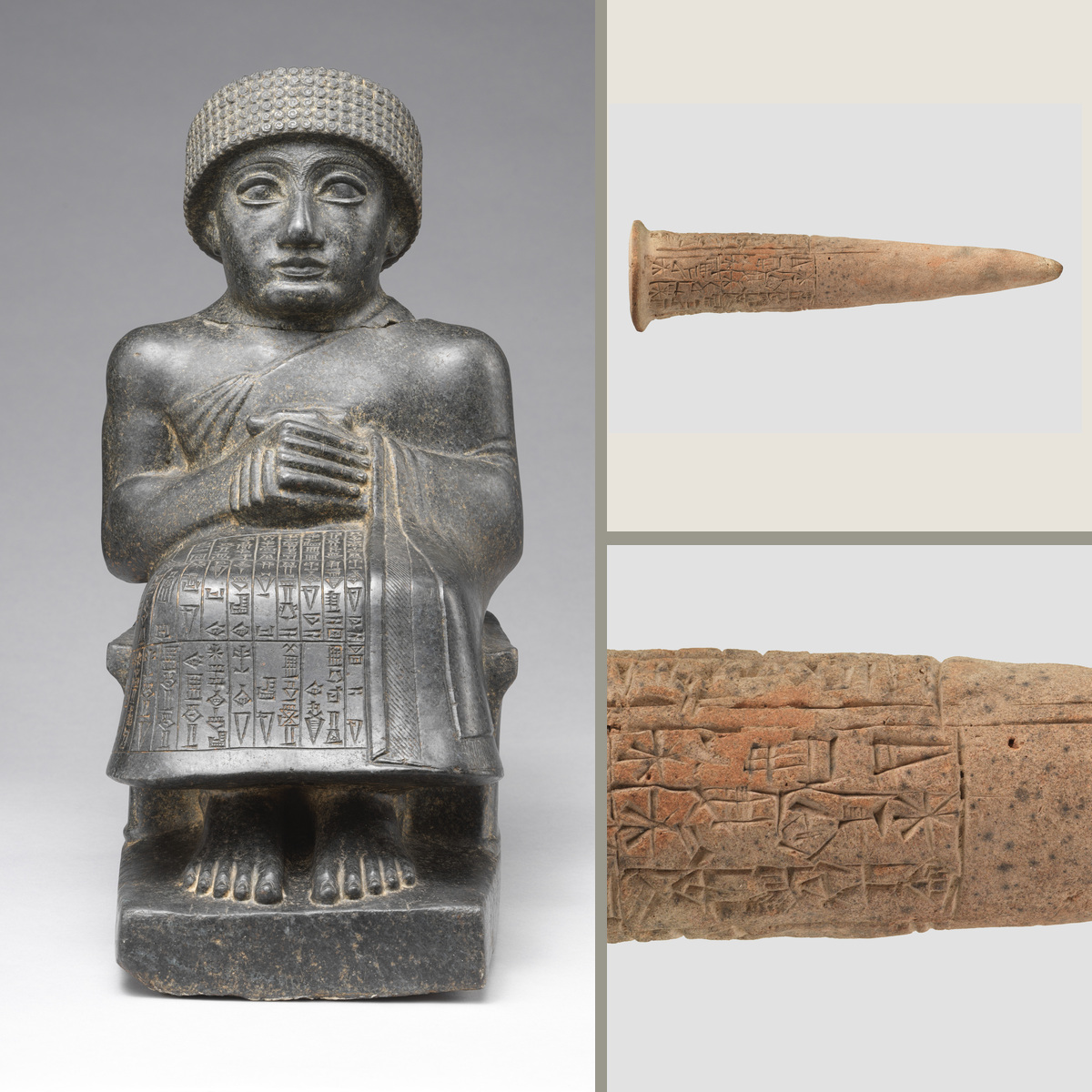
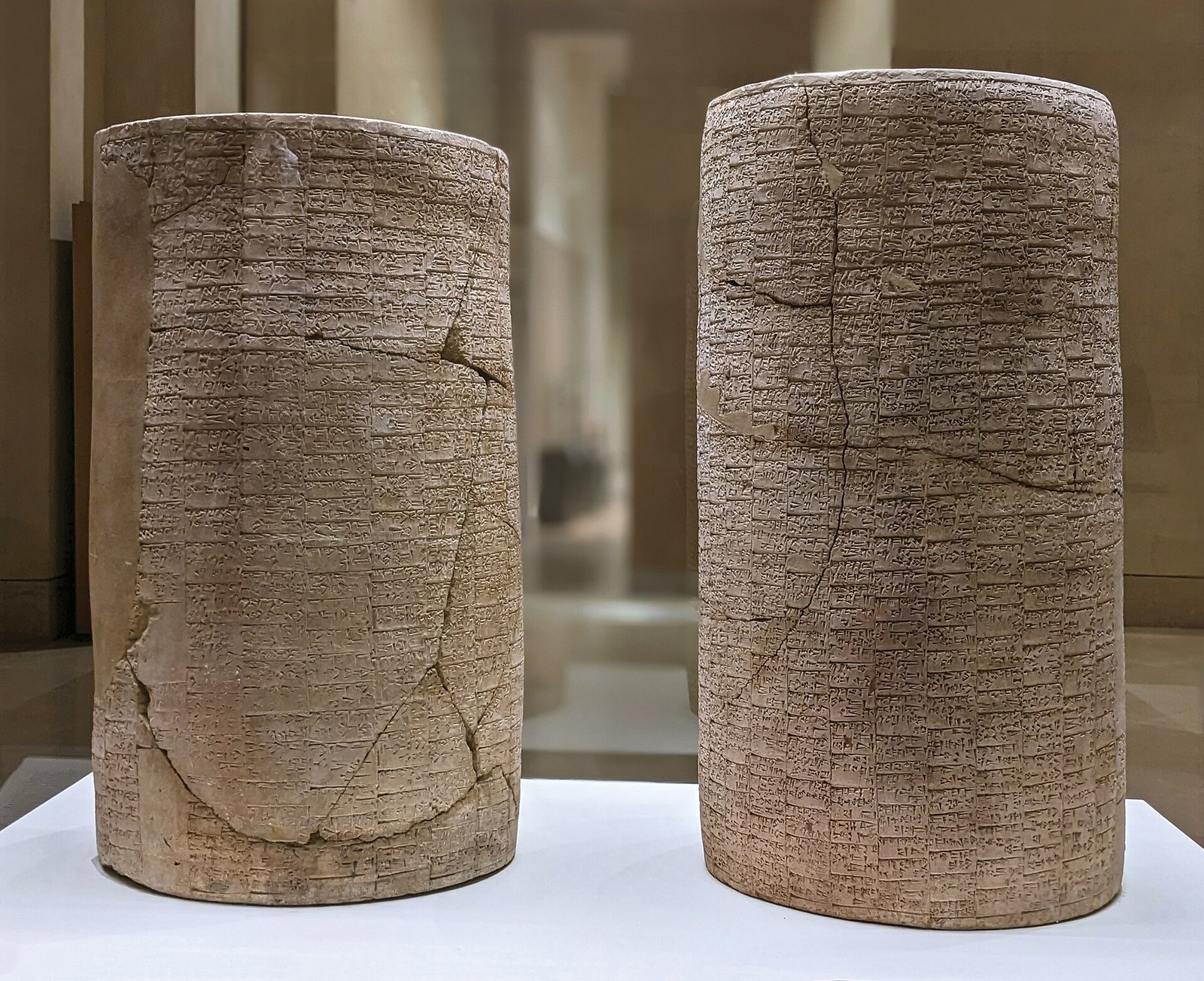
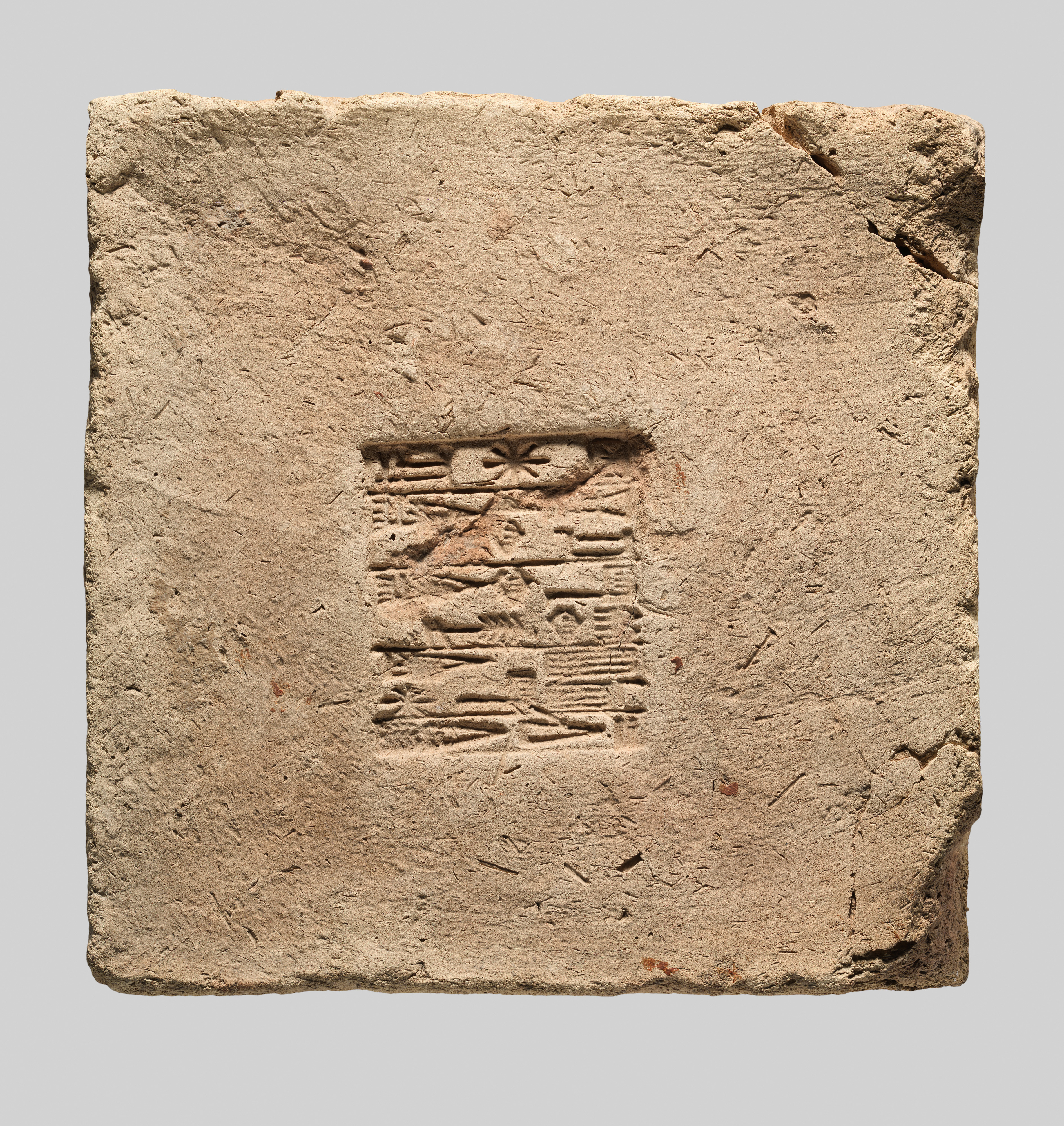
At LagashLagash, Sumerian city-stateCity-state in present-day southern Iraq; Girsu was one of its centers associated with royal inscriptions.Glossary · Click to read the explanation, a city-state in what is now southern IraqIraqIraq is a modern country encompassing much of ancient MesopotamiaGlossary · Click to read the explanation, the ruler UrukaginaUrukagina, ruler of LagashRuler of Lagash around 2350 BCE, associated with reform inscriptions concerning burdens and justice.Glossary · Click to read the explanation announced reforms around 2350 BCE addressing burdens imposed on inhabitants. The passage we read ends with an undertaking before NingirsuNingirsuA major god of the Sumerian state of Lagash, invoked in Urukagina’s reform undertaking.Glossary · Click to read the explanation, a major deity of the state: the powerful would not subordinate the orphan or widow. Protecting those with weaker support thus became part of the ruler's presentation of his authority. [1]
The prologue to the laws attributed to Ur-NammaLaws attributed to Ur-NammaSumerian laws attributed to Ur-Namma, read through witnesses and composite editions.Glossary · Click to read the explanation, king of Ur in the late third millennium BCE, says that the orphan is not subordinated to the rich, the widow to the powerful, or someone with less to someone with more. Its position matters: this royal principle introduces the legal cases that follow. It shows that protecting these groups justified government, while tracing the courts' work requires records of cases themselves. [2]
Nanshe: care in a hymn
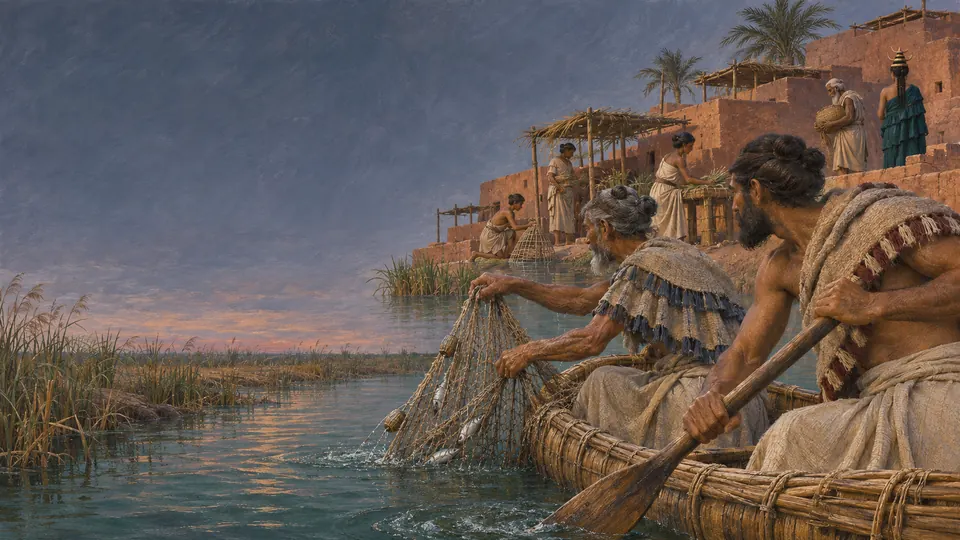
A hymn to the Sumerian goddess NansheNansheSumerian goddess praised in a hymn for caring for widows, orphans, people in need, and fugitives.Glossary · Click to read the explanation offers another voice. She knows the orphan and widow, cares for those in need, shelters fugitives, and seeks a place for the weak. Her care also concerns people in debt service and a widow who could not remarry. Economic and family protection form part of this portrait of a caring deity. [3]
Multiple witnesses preserve the text. CDLI dates its composite edition to the Old Babylonian period, approximately 1900–1600 BCE: this frames the collected witnesses rather than fixing the poem's first composition. The hymn shows that concern for people without support also belonged to Mesopotamian religious literature. Its English translation's use of “refugees” does not, by itself, identify their status with Deuteronomy's gēr. [3][20]
Hammurabi: safeguarding children's property
In the eighteenth century BCE, the Babylonian king HammurabiHammurabiKing of Babylon in Mesopotamia, reigning around 1792–1750 BCE. A celebrated legal text preserved on a stele and cuneiform copies bears his name.Glossary · Click to read the explanation made protecting the weak against the strong an announced purpose of his rule. Between the prologue and epilogue of his legal collection, specific cases show how some protections were formulated. [4][5]
Section 177 concerns a widow with young sons who wishes to remarry. Judges inventory her first husband's property; it is entrusted to the woman and her new husband to administer and raise the children, whose household goods must not be sold. A buyer of the children's property loses the payment, and the property returns to its owners. This safeguards a particular household and its children's rights, rather than providing every widow with an income. [5][19]
Exodus: the command addresses the community
ExodusBook of ExodusTorah book recounting Israel’s departure from Egypt and containing different formulations of seventh-day rest.Glossary · Click to read the explanation 22 forbids its hearers to wrong the resident outsider, recalling that the Israelites were outsiders in EgyptEgyptEgypt lies mainly in northeastern Africa and includes the Sinai Peninsula in AsiaGlossary · Click to read the explanation. It then prohibits afflicting the widow and fatherless child and promises that their cry will be heard. Rules about lending to a person in need and returning a pledged garment before night follow. Everyday conduct becomes the subject of a religious and legal demand addressed to recipients of the law. [6]
Marty LockshinMarty LockshinScholar of Jewish interpretation and professor emeritus at York University.Glossary · Click to read the explanation, a scholar of Jewish interpretation, reads this form of address as turning an ethical value into a legal responsibility for members of the community. He supports the argument through the wording of the commands and comparison with royal prologues and family cases in other collections. His argument asks who must act, while recognizing that older Near Eastern literature also called for care of vulnerable people. [16]
Deuteronomy: wages, fields, tithes, and festivals
DeuteronomyBook of DeuteronomyTorah book presenting commandments in Moses’ discourse and grounding Sabbath rest in slavery and liberation from Egypt.Glossary · Click to read the explanation 10 says that YHWHYahwehThe proper name of Israel’s deity, written יהוה (YHWH), the Tetragrammaton. Its exact ancient pronunciation is not directly preserved; texts and inscriptions witness its history.Glossary · Click to read the explanation executes justice for the fatherless and widow and loves the outsider, providing food and clothing. It then commands the community to love that person, recalling Egypt. Biblical scholar Mark R. GlanvilleMark R. Glanville, biblical scholarScholar of Deuteronomy, kinship and care for outsiders; director of the Centre for Missional Leadership at St. Andrew’s Hall.Glossary · Click to read the explanation argues that Deuteronomy's three-part formula—outsider, fatherless child, and widow—brings together people who may lack protective kinship. His chapter abstract describes laws incorporating them into the community's relationships, food, and festivals, beyond assistance in isolation. [7][15]
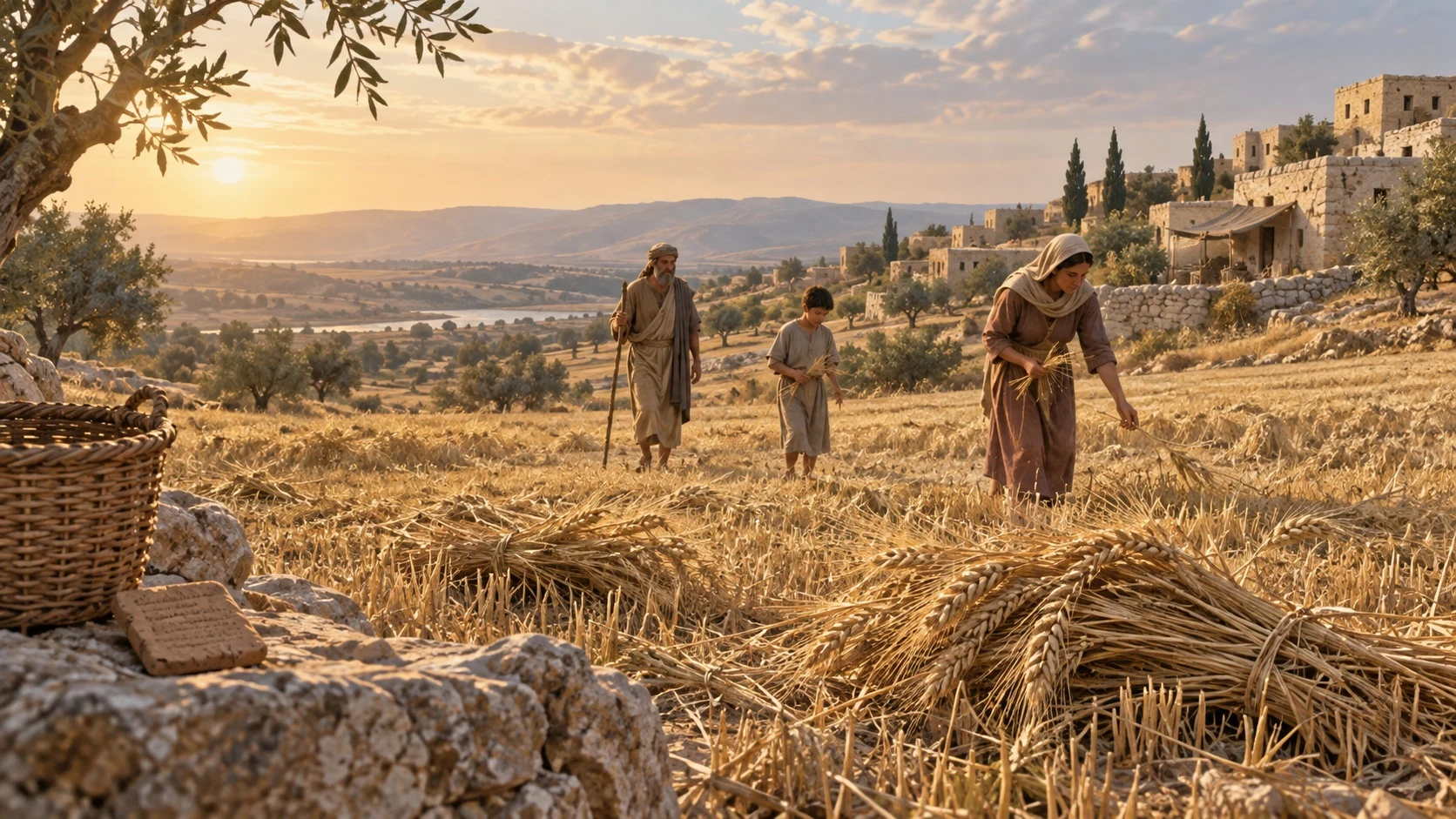
In Deuteronomy 24 the demand takes concrete forms: pay the poor worker on time, whether a compatriot or resident outsider; do not pervert the outsider's or fatherless child's case; and do not take a widow's garment as a pledge. A forgotten sheaf must be left for them. So must what remains after beating the olive trees and gathering grapes. The text connects these acts to remembering servitude in Egypt. [8]
Other laws widen participation. In the third year the tithe is stored in the towns for the Levite, outsider, fatherless child, and widow to eat, and its giver must declare that it has been distributed. At Weeks and Booths they join the celebration with the household, its workers, and the Levite. Protection is thus distributed across wages, justice, food, and festivities, while differences of circumstance and status remain. [9][10][11]
Kings and prophets within the same picture
Addressing the community did not remove the ideal of a just king. Psalm 72Psalm 72 and royal justiceHebrew prayer for a king who judges the poor fairly and rescues the needy without a helper.Glossary · Click to read the explanation prays for a king who judges the poor fairly and rescues the needy person without a helper. Dylan R. JohnsonDylan R. JohnsonAncient Near Eastern historian and Hebrew Bible scholar specializing in ancient legal cultures.Glossary · Click to read the explanation, a scholar of ancient Near Eastern law, places this example within the continuation of royal-justice traditions in Hebrew literature, alongside differing depictions of wisdom and authority. Responsibilities of rulers and communities coexist; they are not periods abruptly separated. [12][17]
IsaiahBook of IsaiahProphetic collection in the Hebrew Bible; its first chapter addresses justice and the cases of the fatherless and widow.Glossary · Click to read the explanation 1 calls for justice for the fatherless and defense of the widow, then accuses city leaders of bribery and failing to hear their cases. The temple address in JeremiahBook of JeremiahProphetic book addressing Judah and the Babylonian crisis; chapter 34 recounts liberation followed by renewed subjection.Glossary · Click to read the explanation 7 ties the community's future to doing justice and not oppressing the outsider, fatherless, and widow. These passages use the same standard to question leadership and conduct. They preserve social criticism within the texts; measuring the response requires additional evidence about people's lives. [13][14]
What can be established about the connection?
Mesopotamian evidence establishes the earlier presence of language protecting widows and orphans, across royal inscriptions, hymns, and family rulings. Hebrew texts also express this tradition in royal poetry, alongside detailed commands addressed to the community. Comparison becomes stronger when it brings together chronology, similarities of wording, the phrase's function, and historical contact between cultures. [1][2][3][5][12][17]
Here, a shared regional tradition explains an important part of the resemblance. Attributing a Hebrew formulation to copying a particular Urukagina inscription or Hammurabi clause requires more specific evidence. Establishing influence does not always depend on finding an intermediate copy or a named transmitter. But the evidence read here more clearly establishes the continuation and adaptation of a justice tradition than borrowing from one identified witness. [15][16][17]
Protection as actions
The comparison shows the question widening from a ruler's announcement of protection to arrangements for children's property, workers' wages, what a landholder leaves, and who shares the community's food. The actions and those responsible differ, while protecting the vulnerable remains a shared standard for government and conduct.
Implementation remains a further research question. Commands and promises tell us what counted as justice; court, household, and economic records help show how people acted on it. Keeping these questions distinct allows us to read what Hebrew texts add within their Near Eastern history, without reducing that history to one text. [5][8][9][13][14]
Related readings
- Hammurabi and the Covenant Code: parallels and the limits of borrowing
- Marriage, Inheritance, and a Brother’s Widow: One Law or Different Solutions?
- Slavery and Debt Service between Hammurapi and the Torah: Are These Texts Describing the Same Institution?
- From the River to “Bitter Water”: How Did the Ancients Seek Divine Judgment?
References and notes (21)
- Urukagina reforms, CDLI RIME 1.09.09.01; composite lines 303–318, especially 313–318, read; not all witnesses. Return to the text ↑
- Laws of Ur-Namma, CDLI P432130; prologue 150–181 read, with the comparison at 162–171; not the entire collection. Return to the text ↑
- Nanshe hymn, ETCSL 4.14.1; complete English translation, lines 1–255, especially 20–31, and bibliography read; no independent tablet collation. Return to the text ↑
- Louvre presentation of the Hammurabi stela, a prior museum reference in this study. For the wording of section 177 see the modern edition in note 19. Return to the text ↑
- Hammurabi in L. W. King’s older translation; section 177 and epilogue passages read, with the parties checked against CDLI in note 19. Not an independent edition of the entire Akkadian text. Return to the text ↑
- Exodus 22:20–26 in Mechon-Mamre Hebrew/JPS 1917 numbering, read fully; corresponds to 22:21–27 in common English numbering. Return to the text ↑
- Deuteronomy 10:17–19; Hebrew and JPS 1917 read throughout the passage. Return to the text ↑
- Deuteronomy 24:14–22; full passage read in Hebrew/JPS 1917, distinguishing a forgotten sheaf from remaining olives and grapes. Return to the text ↑
- Deuteronomy 14:27–29; third-year tithe, Hebrew and JPS 1917 read. Return to the text ↑
- Deuteronomy 26:11–15; declaration of tithe distribution, Hebrew and JPS 1917 read. Return to the text ↑
- Deuteronomy 16:9–17; participation at Weeks and Booths, Hebrew and JPS 1917 read. Return to the text ↑
- Psalm 72:1–14; Hebrew and JPS 1917 read; no composition date inferred from the poem’s heading alone. Return to the text ↑
- Isaiah 1:17 and 23; both verses read in Hebrew/JPS 1917 in this review, not a fresh reading of the entire chapter. Return to the text ↑
- Jeremiah 7:1–15; Hebrew and JPS 1917 read throughout, especially 5–11. Return to the text ↑
- Mark R. Glanville, The Stranger, Fatherless, and Widow in Deuteronomy, Oxford Handbook of Deuteronomy; first online 15 December 2020, print volume 2025. Full abstract on the author’s page and chapter metadata read, not the full chapter. Return to the text ↑
- Marty Lockshin, You Shall Not Ill-Treat Any Widow or Orphan: A Moral Value Made Law, 15 February 2023, updated 5 October 2026; full main essay and notes 1–6 and 12–20 read, not all notes or cited books. Return to the text ↑
- Dylan R. Johnson, The woman from Tekoa (2 Sam. 14) and the character of judicial wisdom in Ancient Israel, JSOT 48/1 (2023), pp. 50–68; abstract, introduction, selected wisdom and petition passages, and conclusion read, not the entire article. Return to the text ↑
- J. T. Fitzgerald, Orphans in Mediterranean Antiquity and Early Christianity, Acta Theologica Supplement 23 (2016), pp. 29–48; abstract, introduction, section 2, section 3 introduction and 3.1–3.2 read, not the entire article or its cited sources independently. Return to the text ↑
- CDLI Hammurabi edition P464358; section 177, lines 2201′–2239′, read in Akkadian and English translation, plus epilogue 3202′–3205′. The first husband’s estate is entrusted to the woman and new husband for the children, not to the woman alone. Return to the text ↑
- CDLI P473750, metadata for the Nanshe A composite: Old Babylonian, ca. 1900–1600 BCE. Metadata read; not turned into a certain first-composition date. Return to the text ↑
- Christine Hayes, Yale lecture 11, On the Steps of Moab: Deuteronomy; selected text-growth, dating and historical-context passages in chapters 2 and 3 read, not the entire course. Presents older core traditions, seventh-century reform connections and exilic/postexilic expansions as scholarly reconstruction. Return to the text ↑
Suggest a correction · Suggest a source for this record
Cite this record
IL Archive, «Widow, Orphan, and Resident Outsider: Justice between Mesopotamia and the Torah», https://ilarchive.com/en/studies/widow-orphan-and-stranger
Continue reading
Related readings