Person · Figure
Lugalzagesi
- Names
- Lugal-Zage-Si · Lugalzagesi · Lugalzaggesi · Lugalzaggisi
- Timeline
- From 2316 BCE to 2292 BCE
- Region
- Mesopotamia
Ruler of Umma who became king of Uruk in the 24th century BCE. He brought much of Sumer under one rule and sacked Lagash, then lost it all to Sargon of Akkad.
Estimated reading time: 6 min Published Last reviewed:
Share article
Text
Introduction
Lugalzagesi was a Sumerian ruler who began as governor of Umma, a city in southern IraqIraqIraq is a modern country encompassing much of ancient MesopotamiaGlossary · Click to read the explanation, and became king of UrukUrukAncient city at Warka in southern Iraq, a major urban centre around 3200 BCE that preserved early writing and accounting tablets.Glossary · Click to read the explanation. For a few years he held most of the great cities of Sumer, and on stone vases given to the god EnlilEnlilEnlil/Ellil: a major Mesopotamian god associated with destinies, kingship, and Ekur at Nippur, already prominent in third-millennium god lists. His name’s origin and cult beginnings remain debated.Glossary · Click to read the explanation at NippurNippur / NuffarAncient Nippur (modern Nuffar, Iraq), major cult centre of Enlil and Ekur; excavations revealed sanctuaries, houses and thousands of cuneiform tablets across many periods.Glossary · Click to read the explanation he called himself "king of the Land". Then Sargon of AkkadSargon of AkkadSargon of Akkad was a historical third-millennium BCE ruler and founder of the Akkadian dynasty; royal accounts of his campaigns must be distinguished from later stories of his birth and rise.Glossary · Click to read the explanation defeated him and took over his kingdom. [1][3]
We know him from his own inscriptions, from the words of his enemies, and from the tablets of his officials. Later scribes remembered him in the Sumerian King List and in a story about the young Sargon. This entry sets these sources side by side and shows where they disagree. [3][7][8]
Governor of Umma
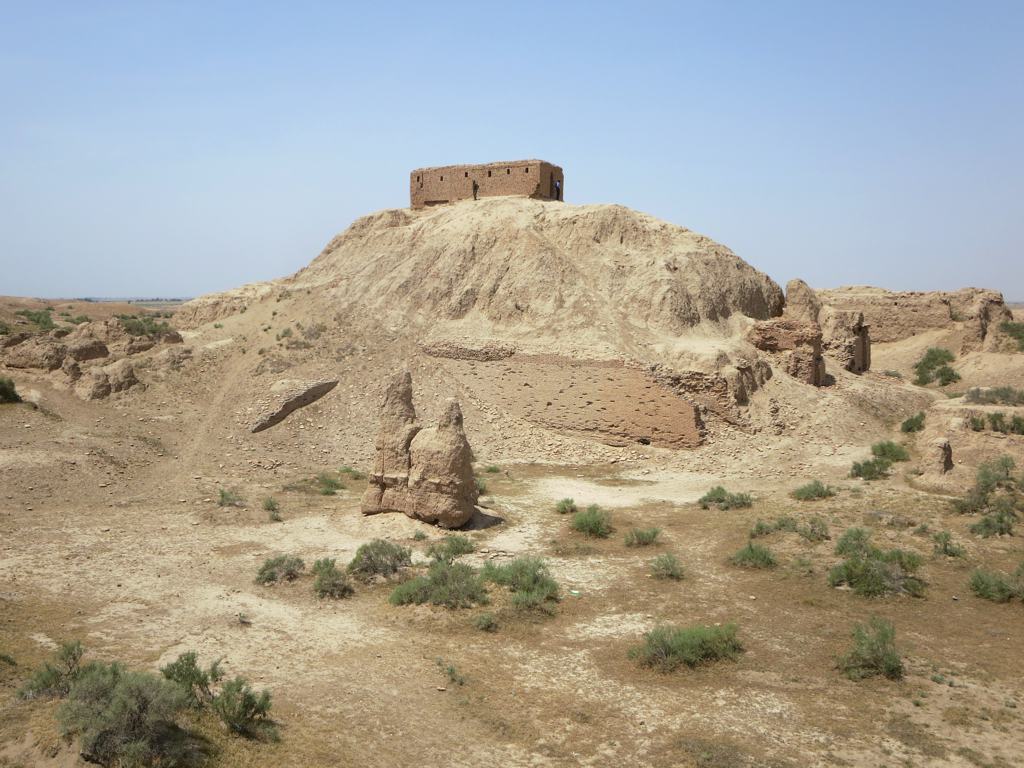
Umma and its neighbour LagashLagash, Sumerian city-stateCity-state in present-day southern Iraq; Girsu was one of its centers associated with royal inscriptions.Glossary · Click to read the explanation were old rivals over the farmland along their shared border; the Stele of the Vultures records one of their earlier wars. Lugalzagesi's father ruled Umma before him. CuneiformCuneiformWriting with wedge-shaped signs, developed from Mesopotamian recording traditions and used for several languages from the third millennium BCE.Glossary · Click to read the explanation writes the father's name with two signs that scholars read in different ways: older books give "Ukush", the Oxford corpus of royal inscriptions reads "Bubu", and the 2015 survey by Walther Sallaberger and Ingo Schrakamp simply writes U2.u2. [1][2][3]
Father and son both call themselves "lumah priest of NisabaNisabaMesopotamian goddess of grain and writing, associated with Ereš and scribes; also called Nidaba.Glossary · Click to read the explanation", a high title in the service of the goddess of grain and writing, and neither names an earlier ancestor. Some scholars have therefore suggested that the family came from Eresh, Nisaba's city, and not from the old ruling house of Umma. [3]
About 110 administrative tablets from Zabalam, a temple town of Umma, date from his sixth to eighth year as governor. They record how farmland was shared out. In his seventh year, the people who received fields included the governors of Adab and Nippur and high officials of Uruk. Since land could probably be shared out only inside one state, these cities seem to have come under the same rule. [3]
King of Uruk and "king of the Land"
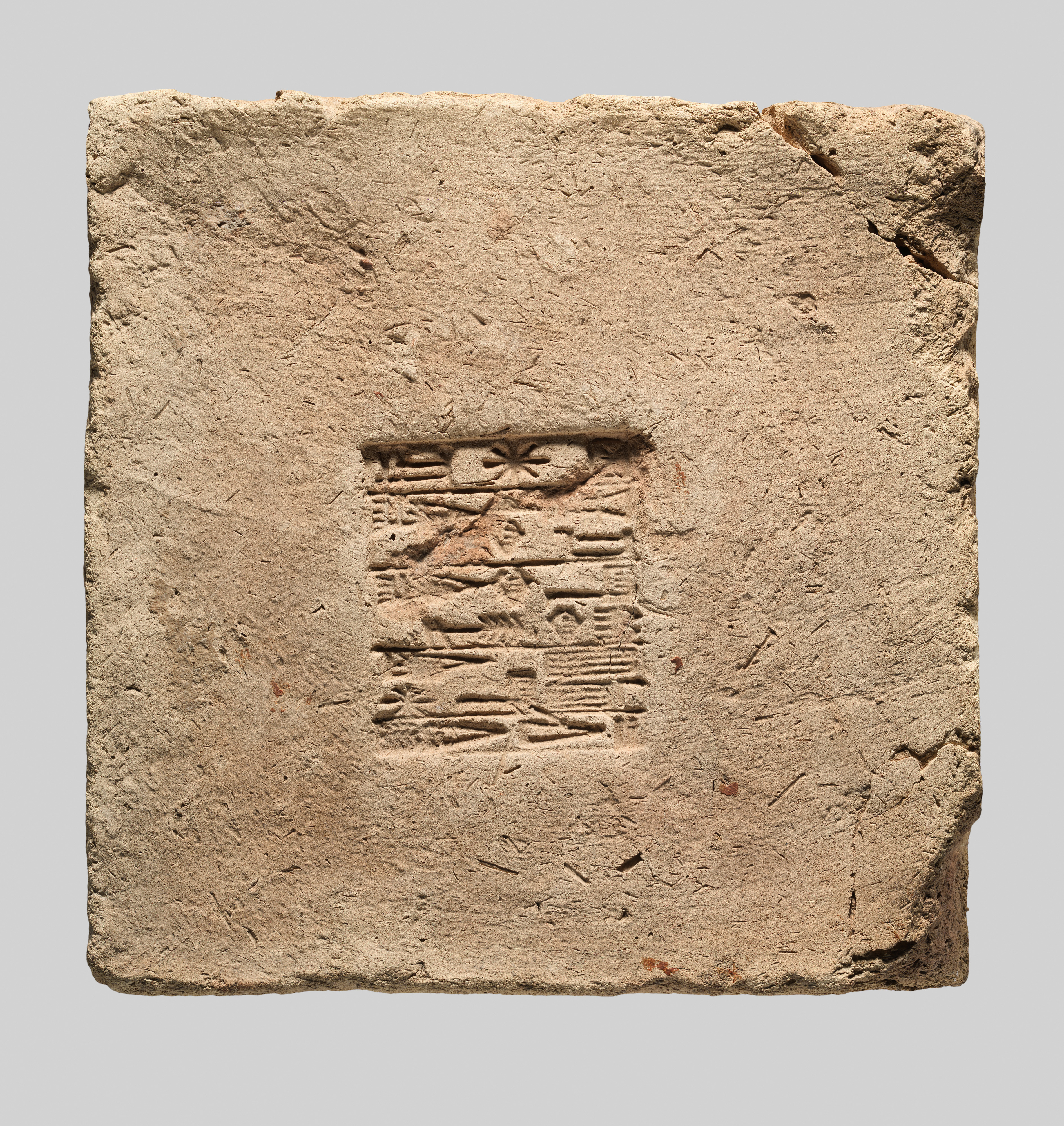
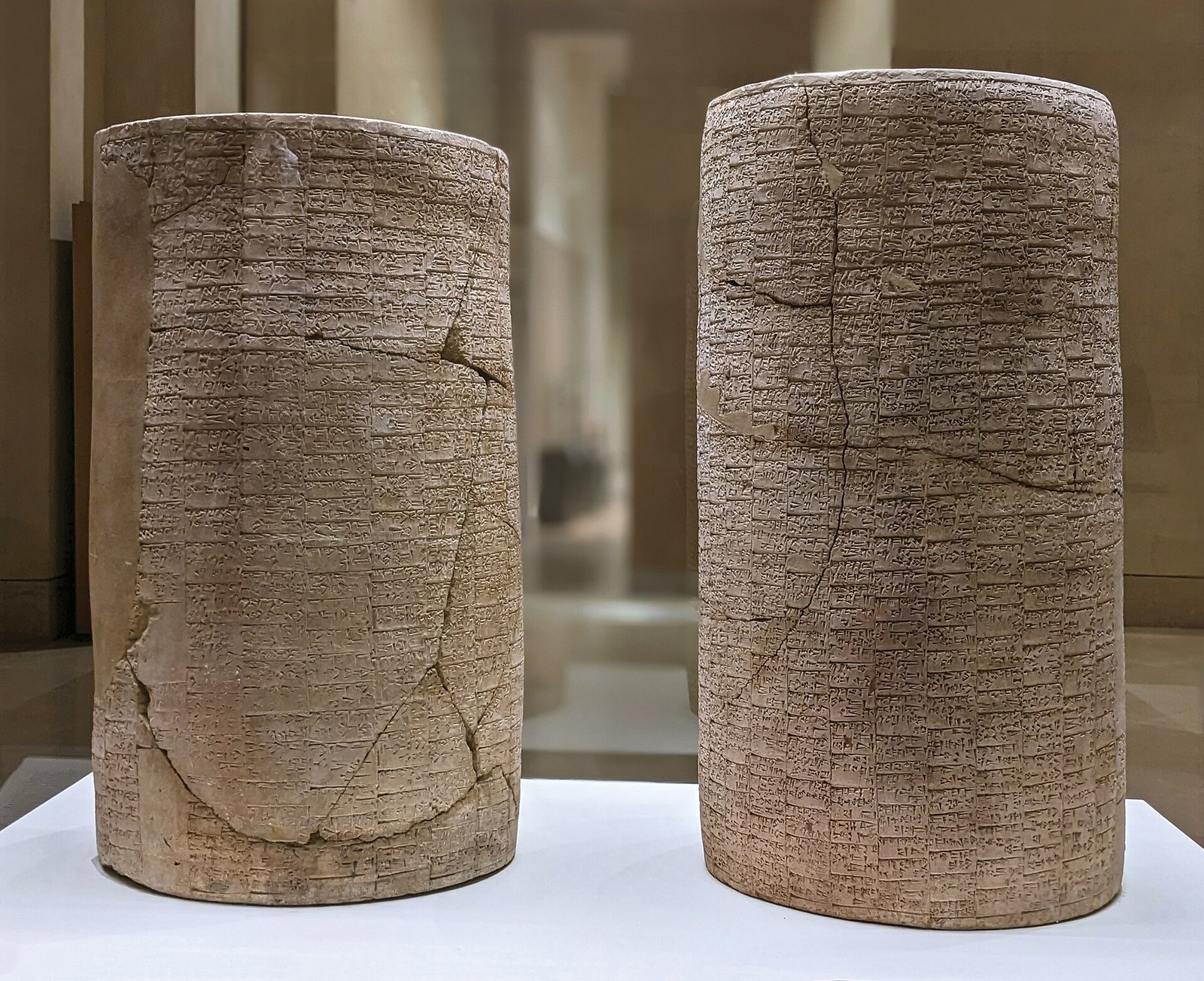
His best-known inscription was carved on many stone vases given to Enlil at Nippur. The American scholar Hermann Hilprecht pieced the text together in 1896 from fragments of more than 60 vases. [1][2]
In it he is "king of Uruk, king of the Land", priest of An, the sky god, and favoured by Enlil, EnkiEnkiMesopotamian deity also known as Ea, linked with Eridu and the Abzu (deep fresh waters), wisdom, incantations, and narratives of creation and cosmic order. Later written attestations do not identify the deity of Eridu’s earliest layers.Glossary · Click to read the explanation, Utu, Suen, InanaInanna / IshtarA prominent Mesopotamian goddess whose Sumerian name Inanna became associated with Akkadian Ishtar across diverse traditions. She was associated with desire, war, royal authority and Venus, while local forms and genealogies varied among texts.Glossary · Click to read the explanation and other gods. Enlil, it says, made the lands from east to west obey him and opened the roads "from the Lower Sea along the Tigris and the Euphrates to the Upper Sea", usually understood as the Gulf and the Mediterranean. Uruk, Ur, Larsa, Umma, Zabalam and Ki-an rejoice under his rule. In return he gives Enlil rich food offerings and sweet water, and asks for a long life and a peaceful land. [1][2]
A royal inscription is a statement of claims, not a map of borders. Sallaberger and Schrakamp note what the vase leaves out: it never names Girsu, Lagash or Adab. A year name from Nippur, "the year Lugalzagesi assumed kingship", shows that he was recognised there as king. [3]
The war with Lagash
Before Lugalzagesi struck, a king of Uruk called Enshakushana had besieged Girsu, the capital of Lagash, three times. Lagash was exhausted: rations were cut, and old fathers replaced their sons in the army. In the seventh or eighth year of UrukaginaUrukagina, ruler of LagashRuler of Lagash around 2350 BCE, associated with reform inscriptions concerning burdens and justice.Glossary · Click to read the explanation of Lagash, Lugalzagesi invaded from the Umma border. [3]
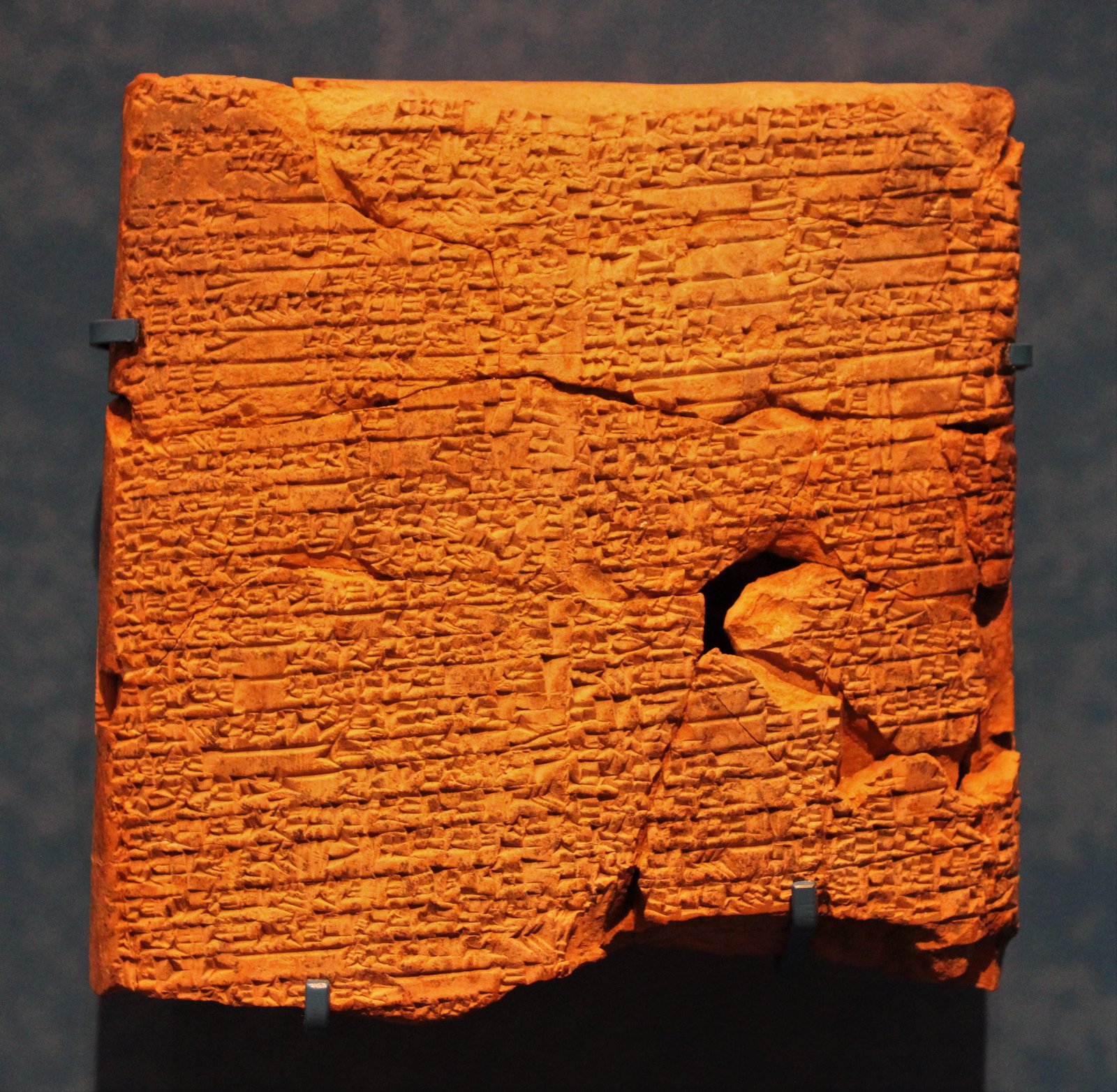
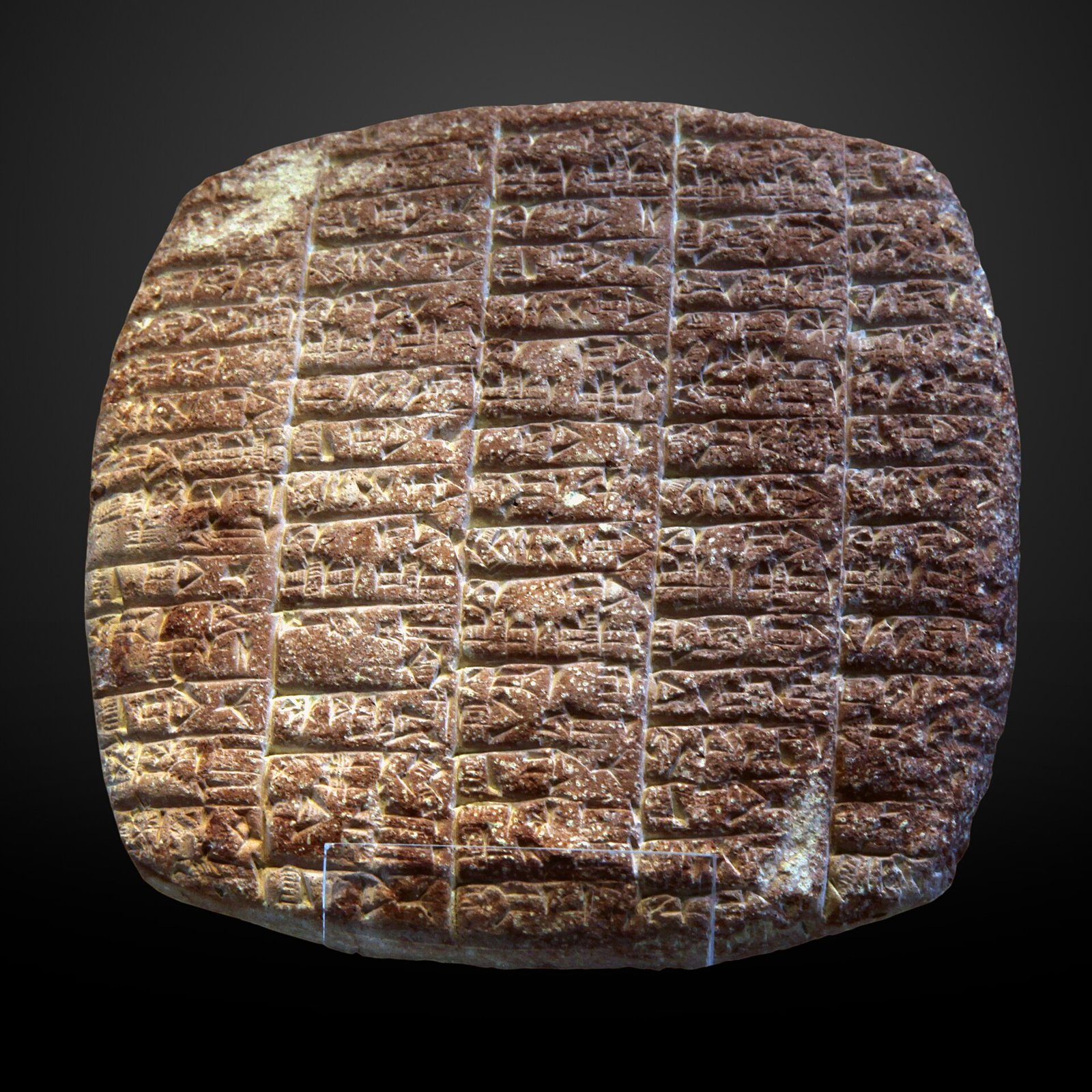
The Lagash side of the story survives on a small clay tablet, about 10 centimetres square, found at Girsu (modern Tello) in 1903 and now in the Louvre (AO 4162). It lists shrine after shrine that "the leader of Umma" burned or looted, carrying off their precious metals and lapis lazuli and smashing their statues. It ends with an accusation: [4][5]
NingirsuNingirsuA major god of the Sumerian state of Lagash, invoked in Urukagina’s reform undertaking.Glossary · Click to read the explanation was the chief god of Lagash. The tablet says that the hand raised against him must be cut off. Urukagina, now only "king of Girsu", cannot punish the deed himself, so the text hands the punishment to Nisaba, "the personal god of Lugalzagesi, the ruler of Umma". This is the earliest known mention of Lugalzagesi, and it calls him governor of Umma, not king of Uruk. [3][4]
Which came first?
The order of events is debated. Aage Westenholz held that Lugalzagesi was acknowledged as king at Nippur before the war with Lagash came to a head. Gianni Marchesi gives more weight to the title "governor of Umma": in his view Lugalzagesi was still a governor under Enshakushana when he attacked Lagash, and became king of Uruk later. Sallaberger and Schrakamp argue that he first defeated Urukagina as governor of Umma, then took Uruk, Nippur and Adab, and only then dealt Lagash its final blow. On every reading, his conquests fell within a few years. [3]
Defeat by Sargon
Sargon's own inscriptions tell the end. Most of them survive in copies made by later scribes. One of them, written in both AkkadianAkkadianAn ancient East Semitic language written in cuneiform from the third millennium BCE; its varieties include Babylonian and Assyrian, and it served in international diplomacy.Glossary · Click to read the explanation and Sumerian, says that Sargon conquered Uruk and tore down its walls. He fought Lugalzagesi, "king of Uruk", captured him, and "took him to the gate of Enlil in a neck stock", a wooden collar for prisoners. The gate of Enlil probably means EkurEkur: Enlil’s Temple at NippurEkur (“Mountain House”) was Enlil’s chief sanctuary at Nippur, present-day Iraq; the name may extend to its precinct. Hymns and royal inscriptions attest to its prestige and rebuilding across periods; it is not simply the ziggurat.Glossary · Click to read the explanation, Enlil's temple at Nippur, the god whose favour Lugalzagesi had claimed. Sargon then conquered Ur, the land of Lagash down to the sea, and Umma. What became of Lugalzagesi afterwards is not recorded. [3][6]
Dates
The Sumerian King List gives him 25 years; one manuscript has 34. The Umma tablets make 25 years plausible, and the figure probably counts his years at Umma as well as at Uruk. In the chronology that Sallaberger and Schrakamp prefer, he ruled about 2316–2292 BCE, give or take 30 years. Many handbooks use dates a few decades higher, for example 2334 BCE for the start of Sargon's reign. The reigns of Urukagina, Lugalzagesi and Sargon overlapped, and Sargon may have ruled in the north for years before he turned south. [3][7]
In later memory
The King List makes him the only king of a dynasty of Uruk, after which "Uruk was defeated and the kingship was taken to Agade", Sargon's city. The list sets kingdoms one after another, even when they really existed side by side. [3][7]
A Sumerian tale, Sargon and Ur-ZababaSargon and Ur-ZababaFragmentarily preserved Sumerian composition depicting Sargon as Ur-Zababa’s cupbearer and naming his father La’ibum, distinct from the Akkadian birth legend.Glossary · Click to read the explanation, gives him a part in Sargon's rise. The king of Kish sends his young cupbearer Sargon to Lugalzagesi in Uruk with a clay message asking for Sargon's death. Lugalzagesi at first does not grasp it, then tells the envoy: "Envoy, Sargon does not yield." The tablets break off there. It is a literary story, not a record of events, but it shows that later scribes still tied the two men together. [8]
Sargon's victory made him the sole king of Sumer and Akkad, and the Akkadian Empire grew from it. Yet Lugalzagesi's vases show that he had claimed to be "king of the Land" before Sargon did. [1][3]
References and notes (8)
- Electronic Text Corpus of Sumerian Royal Inscriptions (ETCSRI), “Lugal-zage-si 1” (RIME 1.14.20.01, composite text of the Nippur vase inscription), Oracc Whole text with English translation: i 3–35 (titles: king of Uruk, king of the Land, išib priest of An, lumah priest of Nisaba, child of Bubu, ruler of Umma; the gods who favour him), i 36–ii 11 (Enlil gives him the lands; the roads from the Lower Sea along the Tigris and Euphrates to the Upper Sea), ii 12–46 (the rulers bow to Uruk; Uruk, Ur, Larsa, Umma, Zabala and Ki-an rejoice), iii 3–40 (food offerings and sweet water for Enlil at Nippur, prayer, dedication). Return to the text ↑
- H. V. Hilprecht, Old Babylonian Inscriptions Chiefly from Nippur, Part II (The Babylonian Expedition of the University of Pennsylvania, Series A: Cuneiform Texts, vol. I, part 2), Philadelphia, 1896 Pp. 41–42 with notes (Lugalzaggisi son of Ukush, the empire “from the Persian Gulf to the Mediterranean Sea”, Erech as capital; about 103 inscribed vases presented to Enlil of Nippur); catalogue of plates, text No. 87 (restored on Pls. 38–42 from five joined fragments and 83 other fragments of 63 vases; photographs Pl. XIX, Nos. 49–61). Internet Archive scan. Return to the text ↑
- Walther Sallaberger and Ingo Schrakamp (eds), History & Philology (ARCANE III: Associated Regional Chronologies for the Ancient Near East and the Eastern Mediterranean), Turnhout: Brepols, 2015, chapters by W. Sallaberger and I. Schrakamp Pp. 80–81 (rulers of Umma: U2.u2 and Lugalzagesi, the lumah title of Nisaba, the suggested origin in Eresh, the archive of about 110 texts, 25 years plausible); pp. 85–90 (Urukagina's sieges and defeat, 6.2 Lugalzagesi's kingdom: Zabalam land texts of year 7, the vase inscription, the Nippur year name, the views of Westenholz and Marchesi, table 21; 6.3 the rise of Sargon); p. 105 (Sargon's inscriptions mainly in Old Babylonian copies); p. 135, table 39 (MC and MC II dates). Return to the text ↑
- Electronic Text Corpus of Sumerian Royal Inscriptions (ETCSRI), “URU-KA-gina 05” (RIME 1.09.09.05, the lament over the destruction of Lagash), Oracc Whole English translation: obverse i–v and reverse i (the shrines of Lagash burned and looted by the leader of Umma) and reverse ii 7–10 (the fields of Ningirsu, the sin against Ningirsu, Iri-kagina king of Girsu, Nisaba the personal god of Lugal-zage-si, ruler of Umma). Return to the text ↑
- Musée du Louvre, Département des Antiquités orientales, “Lamentation sur la ruine de Lagash”, AO 4162, collection record Whole record: clay tablet, Early Dynastic IIIB, Girsu (Tello), excavated by Gaston Cros, entered the collection in 1903; 10 × 10.1 × 3 cm; Sumerian; lists the temples destroyed by Lugalzaggesi, prince of Umma; bibliography (Frayne RIME 1 E1.9.9.5; Steible 1982 Ukg. 16). Return to the text ↑
- Electronic Text Corpus of Sumerian Royal Inscriptions (ETCSRI), “Sargon 01 (Sumerian)” (RIME 2.01.01.01, composite), Oracc Whole English translation: line 1 (Uruk conquered, its walls torn down), line 21 (Lugal-zagesi, king of Unug, captured and taken to the gate of Enlil in a neck stock), lines 30–53 (Ur, the temple of Ninmar, from Lagash to the sea, weapons washed in the sea, Umma), the closing curse and the note on the socle. Return to the text ↑
- J. A. Black, G. Cunningham, E. Robson and G. Zólyomi, “The Sumerian king list,” c.2.1.1, The Electronic Text Corpus of Sumerian Literature, Oxford, 1998–2006 English translation, lines 244–266: the dynasty of Kish with Ur-Zababa, Lugal-zage-si in Unug (25 years; manuscript P3+BT14: 34), the kingship taken to Agade, Sargon the cupbearer of Ur-Zababa. Return to the text ↑
- J. A. Black, G. Cunningham, E. Robson and G. Zólyomi, “The Sargon legend,” c.2.1.4, The Electronic Text Corpus of Sumerian Literature, Oxford, 1998–2006 English translation, segment B lines 53–56 (the clay message about murdering Sargon, sent to Lugal-zage-si in Unug) and segment C lines 1–12 (Lugal-zage-si and the envoy; “Sargon does not yield”; the text breaks off). Return to the text ↑
Suggest a correction · Suggest a source for this record
Cite this record
IL Archive, «Lugalzagesi», https://ilarchive.com/en/people/lugalzagesi
Continue reading
Related readings