Entity · Deity
Ninlil
A reference page linking a name, group, or concept to the materials that discuss it.
Mesopotamian goddess and consort of Enlil, associated with Nippur, destinies and royal ritual, and known as Mulliltu/Mullissu in Akkadian and Assyrian contexts; her genealogies and roles vary by text and period.
Estimated reading time: 5 min Published Last reviewed:
Share article
Text
Introduction
Ninlil was a goddess in Mesopotamian traditions, known as the consort of EnlilEnlilEnlil/Ellil: a major Mesopotamian god associated with destinies, kingship, and Ekur at Nippur, already prominent in third-millennium god lists. His name’s origin and cult beginnings remain debated.Glossary · Click to read the explanation and associated with NippurNippur / NuffarAncient Nippur (modern Nuffar, Iraq), major cult centre of Enlil and Ekur; excavations revealed sanctuaries, houses and thousands of cuneiform tablets across many periods.Glossary · Click to read the explanation in IraqIraqIraq is a modern country encompassing much of ancient MesopotamiaGlossary · Click to read the explanation. Her history brings together worship, poetry and early writing: how can her clearly attested divine identity be distinguished from archaic signs conventionally labelled with her name, and how do her roles change between Sumerian worship and Assyrian royal protection? [1]
The name and its limits
Ninlil is sometimes translated “Lady of the breeze”, but this is not a secure original meaning. The ORACC entry explains that the argument relies on a late commentary associating the goddess with the north wind. A later learned interpretation of a name cannot establish her function at the beginning of her cult. Her actions and attestations therefore matter more here than any single etymology. [1]
Dates of the evidence
- Late fourth millennium BCE — UrukUrukAncient city at Warka in southern Iraq, a major urban centre around 3200 BCE that preserved early writing and accounting tablets.Glossary · Click to read the explanation writings whose relationship to the later name is debated; not every religious identification is secure. [2][3]
- Late third millennium BCE — royal offering accounts mention Ninlil and Enlil at Nippur: administrative evidence of practice, distinct from mythological narratives. [10]
- Old Babylonian period, approximately 1900–1600 BCE — the catalogue framework for the transmission of Enlil and Ninlil, not a date for a divine wedding or a fixed year of initial composition. [8]
- Seventh century BCE — Assyrian prophecies address crown prince AshurbanipalAshurbanipalAshurbanipal was an Assyrian king of the seventh century BCE, reigning about 668–631 BCEGlossary · Click to read the explanation in Mullissu’s name, a different setting whose details cannot automatically be projected into early Sumer. [9]
Authority and worship
Poetry does not reduce Ninlil to a wife. An adab hymn to Ninlil credits her with determining destinies alongside Enlil and exercising authority among the gods, and associates her with Ki-ur and EkurEkur: Enlil’s Temple at NippurEkur (“Mountain House”) was Enlil’s chief sanctuary at Nippur, present-day Iraq; the name may extend to its precinct. Hymns and royal inscriptions attest to its prestige and rebuilding across periods; it is not simply the ziggurat.Glossary · Click to read the explanation. This language of religious praise conveys her standing for the text’s authors. [4]
The opening of line 12 offers a direct example, in the ETCSL composite edition’s transliteration, not an independent transcription of a tablet:
The rendering follows the edition’s translated meaning alongside its transliterated original; the selected excerpt contains no marked restoration. This comparative praise supports her authority within worship, but does not establish one permanent ranking of gods in every city. [4]
Her cult centres included TummalTummalCult centre of Ninlil in the Nippur region, not securely located; remembered in a text about successive royal restorations.Glossary · Click to read the explanation, whose precise location remains uncertain. The History of the Tummal recounts successive rulers restoring the centre and bringing Ninlil there, followed by her regular visits. It witnesses cultic and royal memory, rather than providing a contemporary record of every narrated event. [1][7]
A study published in 2024 adds administrative evidence rather than praise alone. Its analysis of the coronation ritualRitualAn organised or distinguished practice meaningful to a community; it may leave traces, but its form alone does not reveal an associated doctrine.Glossary · Click to read the explanation of Ibbi-Suen, the last king of the Third Dynasty of Ur, connects a ritual text with records of sacrificial expenditure. Tablet MAH 19352 mentions Enlil and Ninlil at Nippur alongside the king’s entry. Correspondences in the sequence and timing of places strengthen the connection between the documents and ritual. This supports Ninlil’s role in royal ceremonies without demonstrating that every coronation followed the same programme. [10]
Sud and Ninlil: distinct narratives
Tradition associates Sud with ŠuruppakŠuruppakSumerian city at Tell Fara, Iraq, associated with Sud; distinct from Ereš in Enlil and Sud.Glossary · Click to read the explanation in southern Iraq, but Enlil and Sud sets their meeting in ErešErešSumerian city associated with Nisaba; its archaeological location remains uncertain. Not the goddess Ereshkigal.Glossary · Click to read the explanation, the city of NisabaNisabaMesopotamian goddess of grain and writing, associated with Ereš and scribes; also called Nidaba.Glossary · Click to read the explanation, goddess of grain and writing. Enlil’s envoy negotiates marriage with Sud’s household, and she receives the name Ninlil; Haya and Nisaba appear as her parents. The story expresses the identification of two goddesses, not the identity of the two cities. [1][5]
Enlil and Ninlil instead narrates Ninlil’s refusal of Enlil’s advances, his subsequent sexual assault and her conception of the moon god Nanna/Su’enNanna / Su’en / SinMesopotamian moon god known as Nanna, Su’en and Sîn/Sin. Worshipped especially at Ur and Harran, he is associated with the crescent and lunar cycle; names and myths have different histories.Glossary · Click to read the explanation. Enlil is expelled from the city as ritually impure; Ninlil follows him, and subsequent encounters result in the conception of Nergal, Ninazu and Enbilulu. This narrative combines violence and divine genealogy; it is a myth, not a historical account or a fixed family tree for every tradition. [6]
The composite catalogue record assigns this poem to Old Babylonian literature, approximately 1900–1600 BCE: a framework for textual transmission, not a date for the story’s events. [8]
What do the earliest writings establish?
ORACC’s entry cites Uruk IV and III attestations, but identifying them requires distinguishing signs from readings. PCSL uses the conventional label NINLIL and lists four published Uruk III occurrences; that count alone does not establish four direct references to the goddess. [1][2]
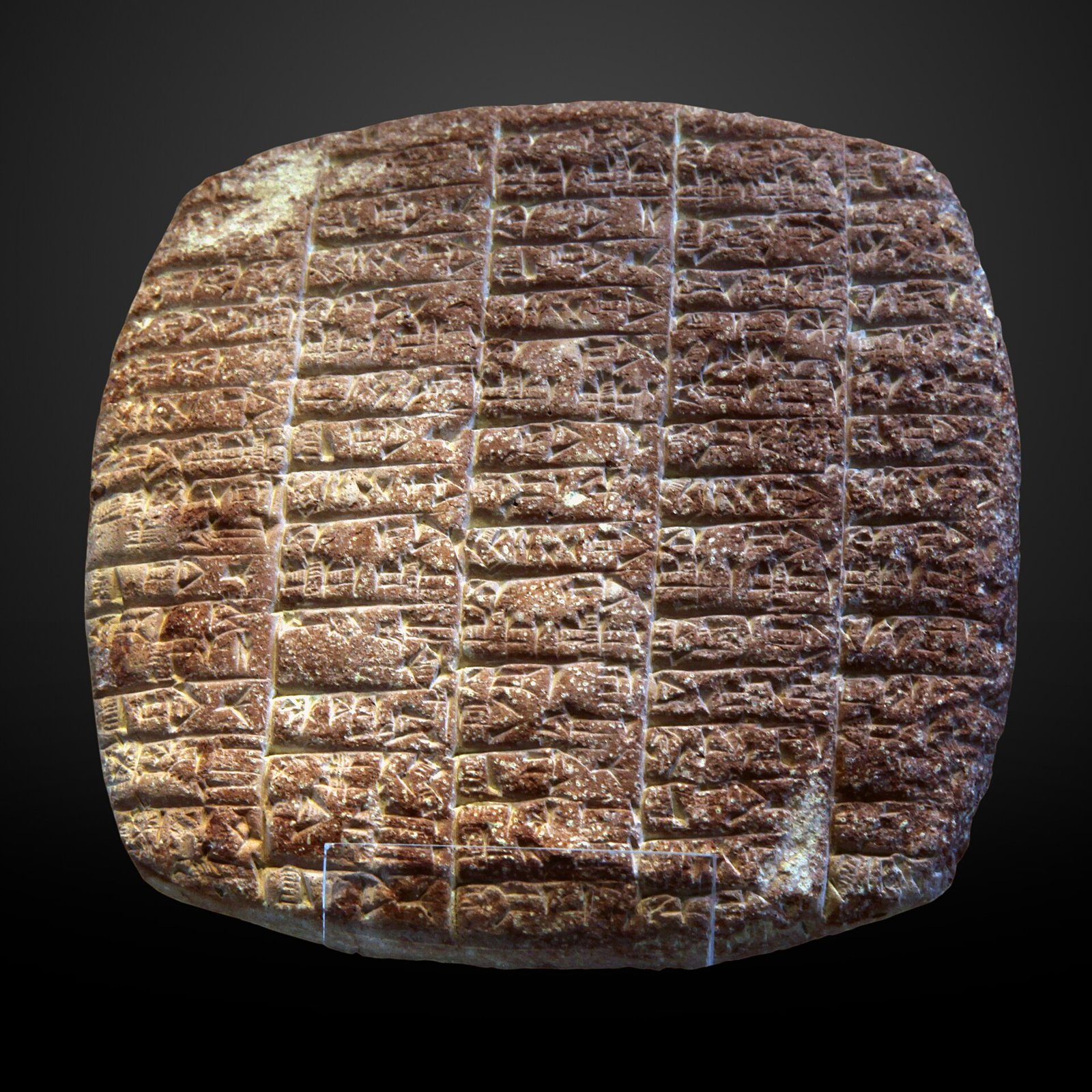
Early-writing specialist Robert K. EnglundRobert K. EnglundUCLA Assyriologist and Sumerologist specializing in early Mesopotamian writing; a pioneer of the Cuneiform Digital Library Initiative.Glossary · Click to read the explanation discusses writings of cities and deities, including W23998,1, a witness of the Archaic Cities List. His account of forms associated with Enlil and Ninlil is a debatable reconstruction, particularly cautious about Uruk IV shapes. Similar signs therefore cannot project the complete divine family described in later poems into an earlier age. [3]
Mullissu in Assyrian tradition
Ninlil was also known by the AkkadianAkkadianAn ancient East Semitic language written in cuneiform from the third millennium BCE; its varieties include Babylonian and Assyrian, and it served in international diplomacy.Glossary · Click to read the explanation form Mulliltu and, in Assyrian usage, Mullissu; in that setting she was paired with Aššur, the chief god of the Assyrian kingdom. A change of name alone cannot establish the transmission of a particular rite. The Assyrian witness reveals a specific later role. [1]
In prophecies addressed to Ashurbanipal, a seventh-century BCE Assyrian king, the prophetess Mullissu-kabtat speaks in the goddess’s name. The first clause of reverse line 6 in SAA 9, no. 7 reads:
This reproduces the published edition’s transliteration and meaning, not a new collation of the tablet photograph. No restoration marks occur in this excerpt; the divine writing NIN.LÍL is read Mullissu in the Assyrian Akkadian context. Images of care and nursing follow in reverse lines 7–11. The king is portrayed as a divinely protected child, not assigned a literal human genealogy: divine motherhood reinforces confidence and royal legitimacy. [9]
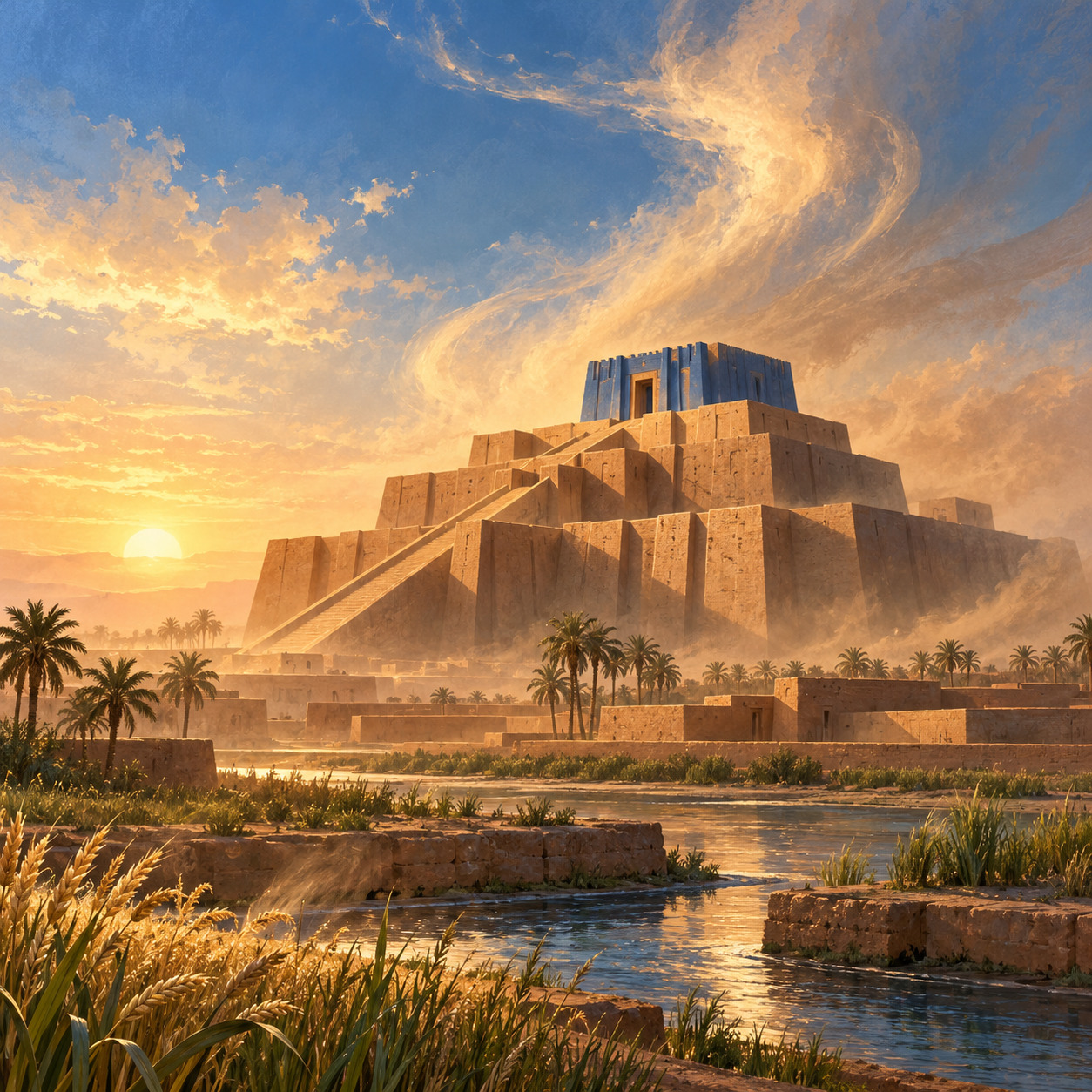
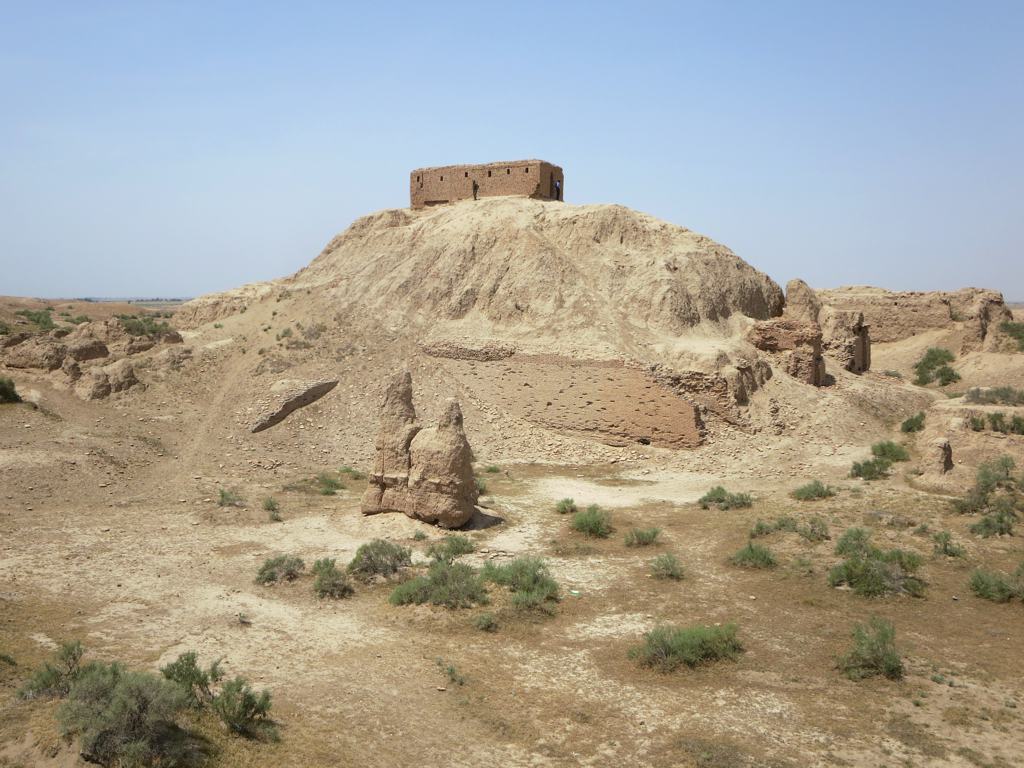
Her textual identity remains clearer than an archaeological likeness that can confidently be named. The accompanying photograph of Nippur illustrates the setting of worship, not the goddess’s appearance. Literary marriage, ritual participation and royal motherhood reveal different aspects across texts and periods; they do not form a single uninterrupted biography. [1][5][9][10]
References and notes (10)
- Nicole Brisch, “Ninlil”, Ancient Mesopotamian Gods and Goddesses, ORACC. Introduction and sections Functions, Genealogy, Cult Places, Time Periods, Name and Spellings, Iconography; indexed text. Return to the text ↑
- ORACC, Proto-Cuneiform Sign List (PCSL), NINLIL, sign o 0901578. Indexed distribution table: four published Uruk III occurrences; the sign label is not independent proof of divine identity. Return to the text ↑
- Robert K. Englund, “Notes on KIDₐ”, Cuneiform Digital Library Notes 2011:6. Discussion of p. 239 of Steinkeller’s article, Cities List W 23998,1, and paragraphs surrounding figure 1; Englund’s reconstruction and qualifications. Return to the text ↑
- ETCSL, University of Oxford, An adab to Ninlil, 4. 24. 1; transliterated composite text and English translation. Lines 1–12 and 14–26; excerpt from the opening of line 12 in the composite, not an independent tablet collation. Return to the text ↑
- ETCSL, University of Oxford, Enlil and Sud, 1. 2. 2; English translation. Version A, lines 1–102 and 156–170; version B, lines 15–29. Return to the text ↑
- ETCSL, University of Oxford, Enlil and Ninlil, 1. 2. 1; English translation. Refusal and assault: 22–53; expulsion and pursuit: 54–64; encounters and genealogy: 65–142. Return to the text ↑
- ETCSL, University of Oxford, The history of the Tummal, 2. 1. 3; English translation. Lines 1–30: restoration, bringing Ninlil to the centre and her visits. Return to the text ↑
- Cuneiform Digital Library Initiative, P 469518, Enlil and Ninlil composite, CDLI Literary 000336. Catalogue metadata: Old Babylonian, ca. 1900–1600 BCE; composite record, not one tablet. Return to the text ↑
- Simo Parpola, Assyrian Prophecies, SAA 9 (1997), no. 7, Prophecies for Crown Prince Assurbanipal; electronic SAAo edition, P 334928. Obverse 1–3 and reverse 6–11 in indexed transliteration and translation; quotation limited to the first clause of reverse 6. Direct page unavailable; tablet photograph not examined. Return to the text ↑
- Walther Sallaberger, “The coronation of the Ur III King Ibbi-Suen: from Sumer’s main shrines to Innana-Ninkununa’s garden at Ur”, in Ur 1922–2022, ed. J. Nicholas Postgate and David C. Thomas (2024). Pp. 149 and 152–153, especially table 1 and MAH 19352. These passages read and table visually checked, not the entire chapter. Return to the text ↑
Suggest a correction · Suggest a source for this record
Cite this record
IL Archive, «Ninlil», https://ilarchive.com/en/entities/ninlil
Continue reading
Related readings