Enlil and Sud Chapter 1
The name of Ninlil
An ill-spoken approach gives way to formal negotiation. Jewellery, herds, fruit and precious goods arrive in Eresh, and Aruru leads Sud into the Ekur. At the end of the poem, Ninlil receives the authority to govern gifts of grain, writing and land.
SourcesTurn the pages with the arrows, the arrow keys or a swipe.
ENLIL AND SUD
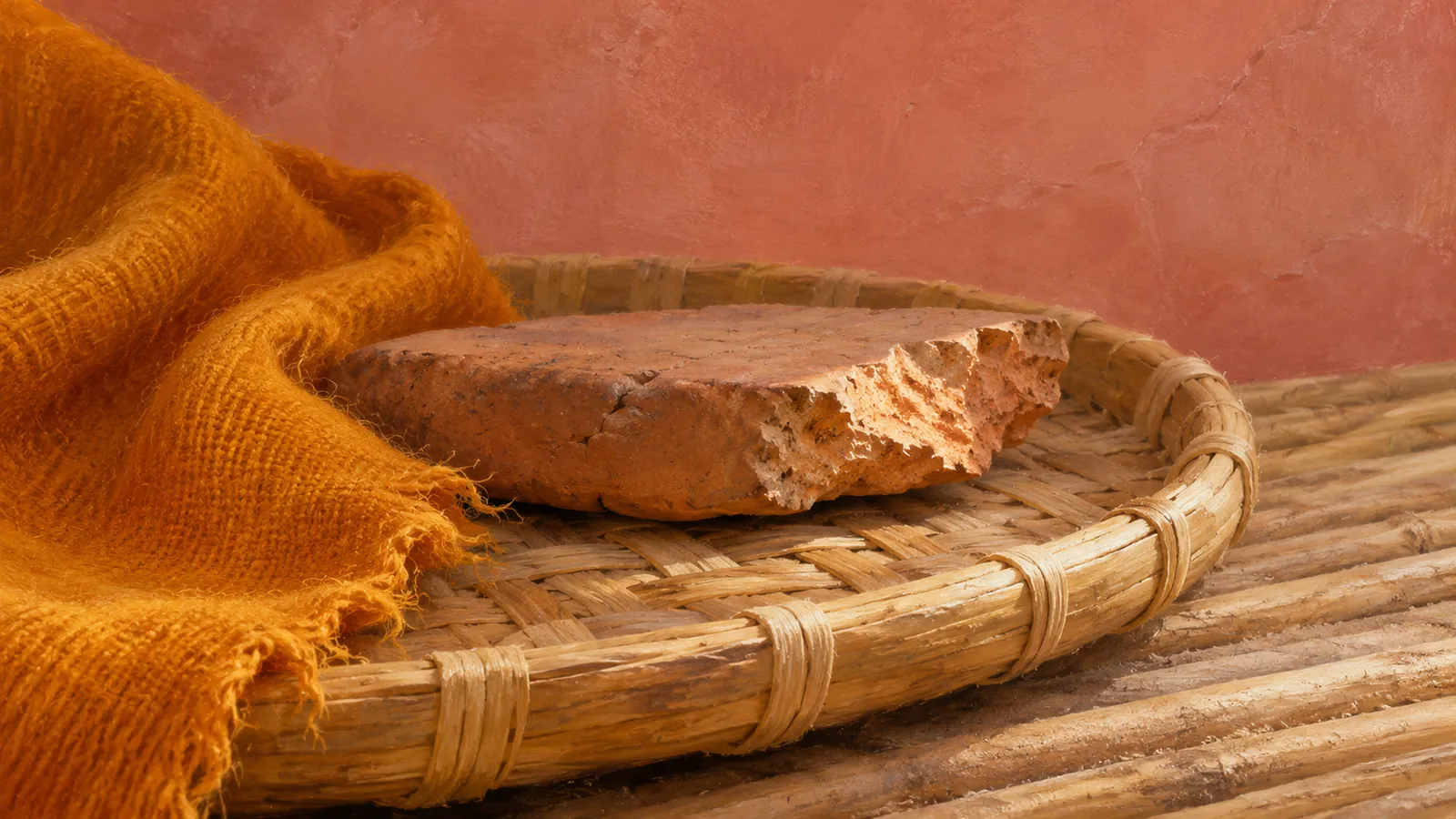
The first lines of the poem reach us in pieces. We hear of Haia and of Nisaba caring for the daughter who will stand at the center of the story.
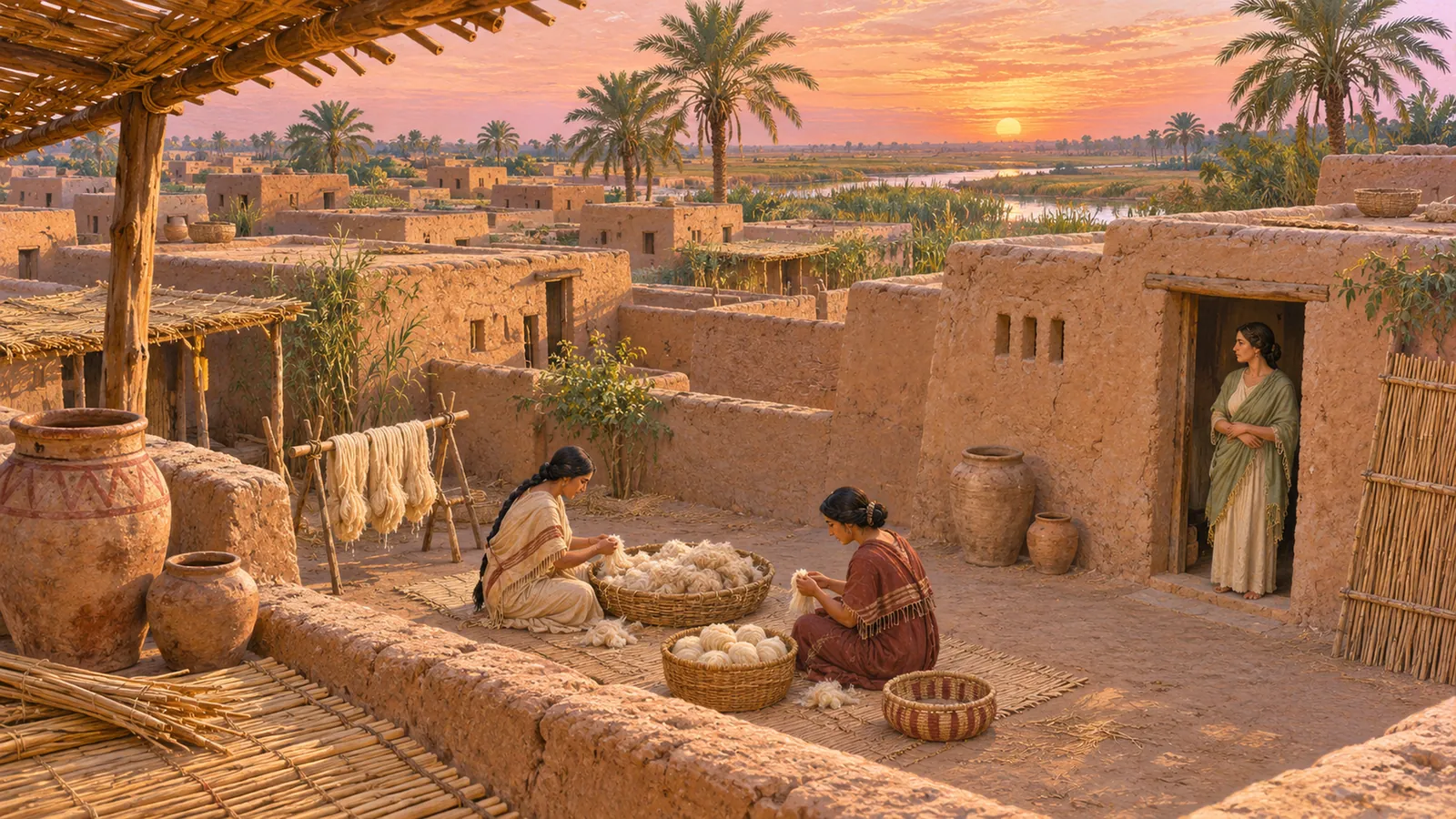
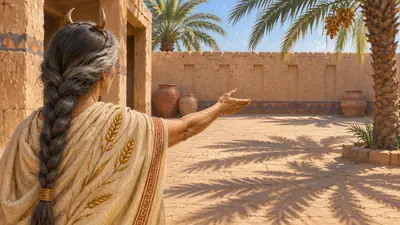
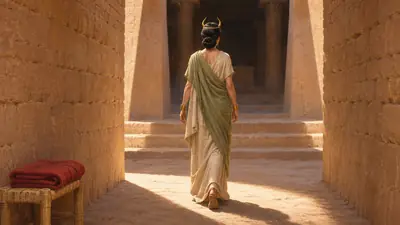
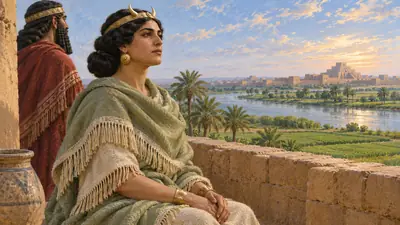
Then the words come into focus at Eresh. Sud stands at the entrance of the E-zagin, Nisaba’s house. The poet lingers over the way she holds herself at the gate.
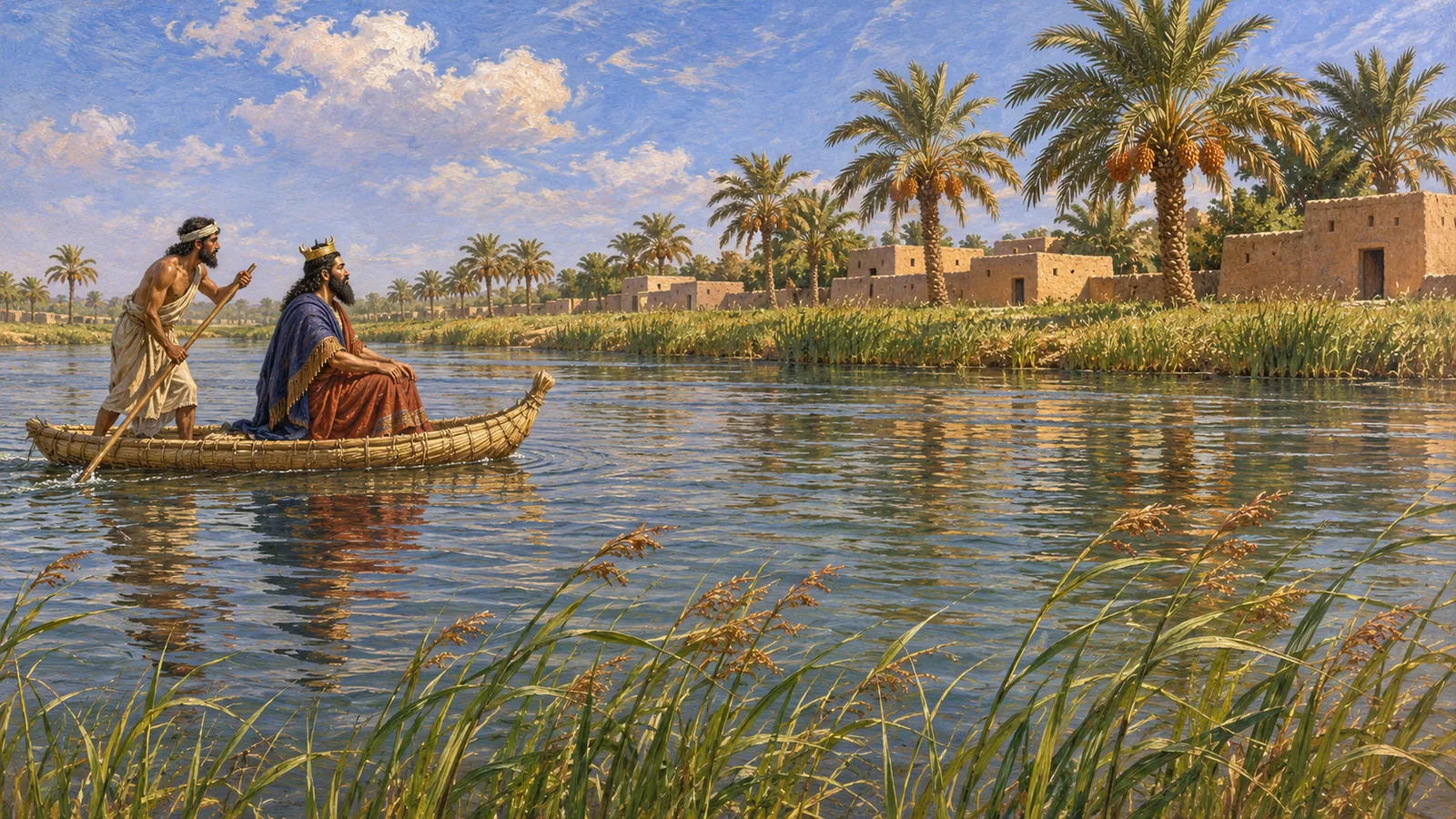
Enlil has no wife in his house at Nippur. He travels through Sumer in search of one. The story turns with him when he stops in Eresh.
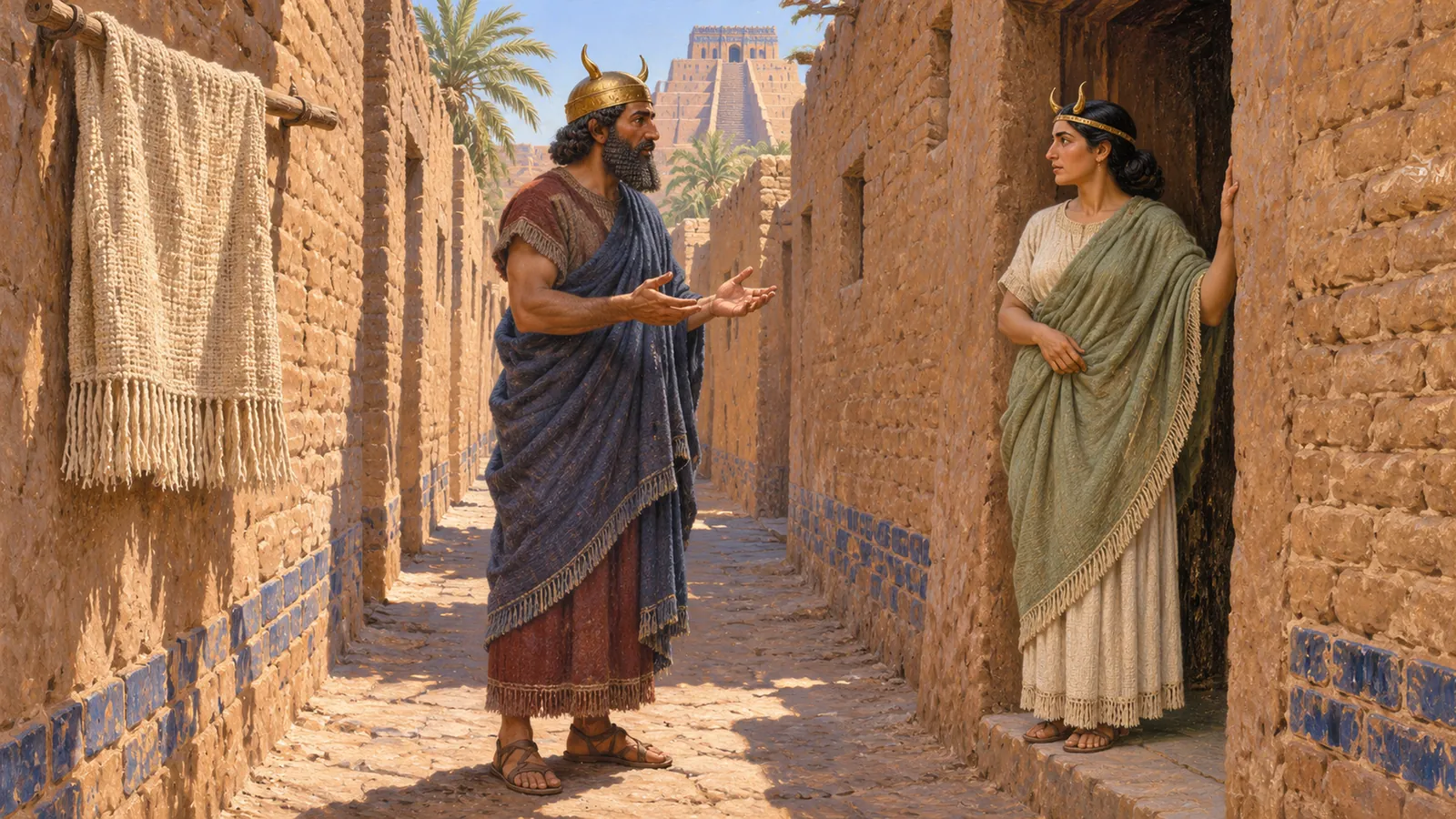
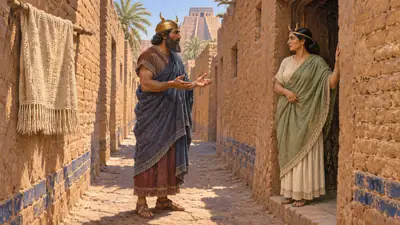
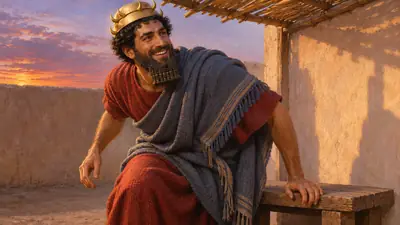
He is delighted to see Sud and says he will dress her as a queen. Then he faults her for standing in the street. Praise and insult come in the same breath.
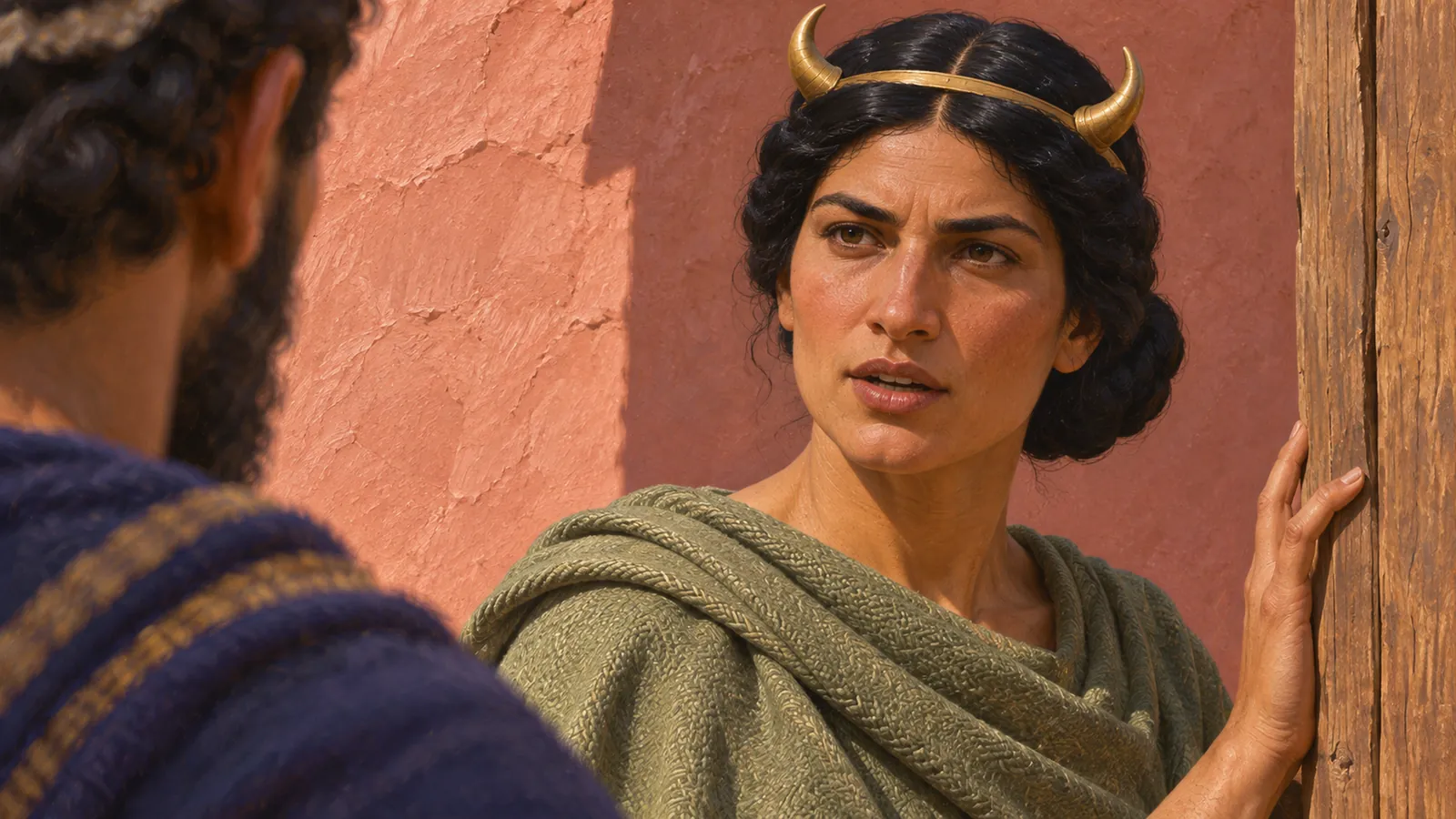
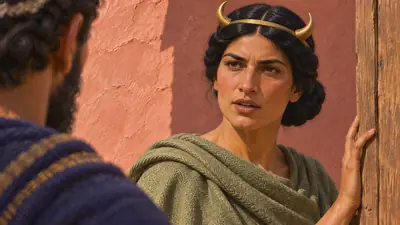
Sud answers from the entrance. If she wishes to stand proudly at her own door, who can speak against her? She asks what he wants and why he came.
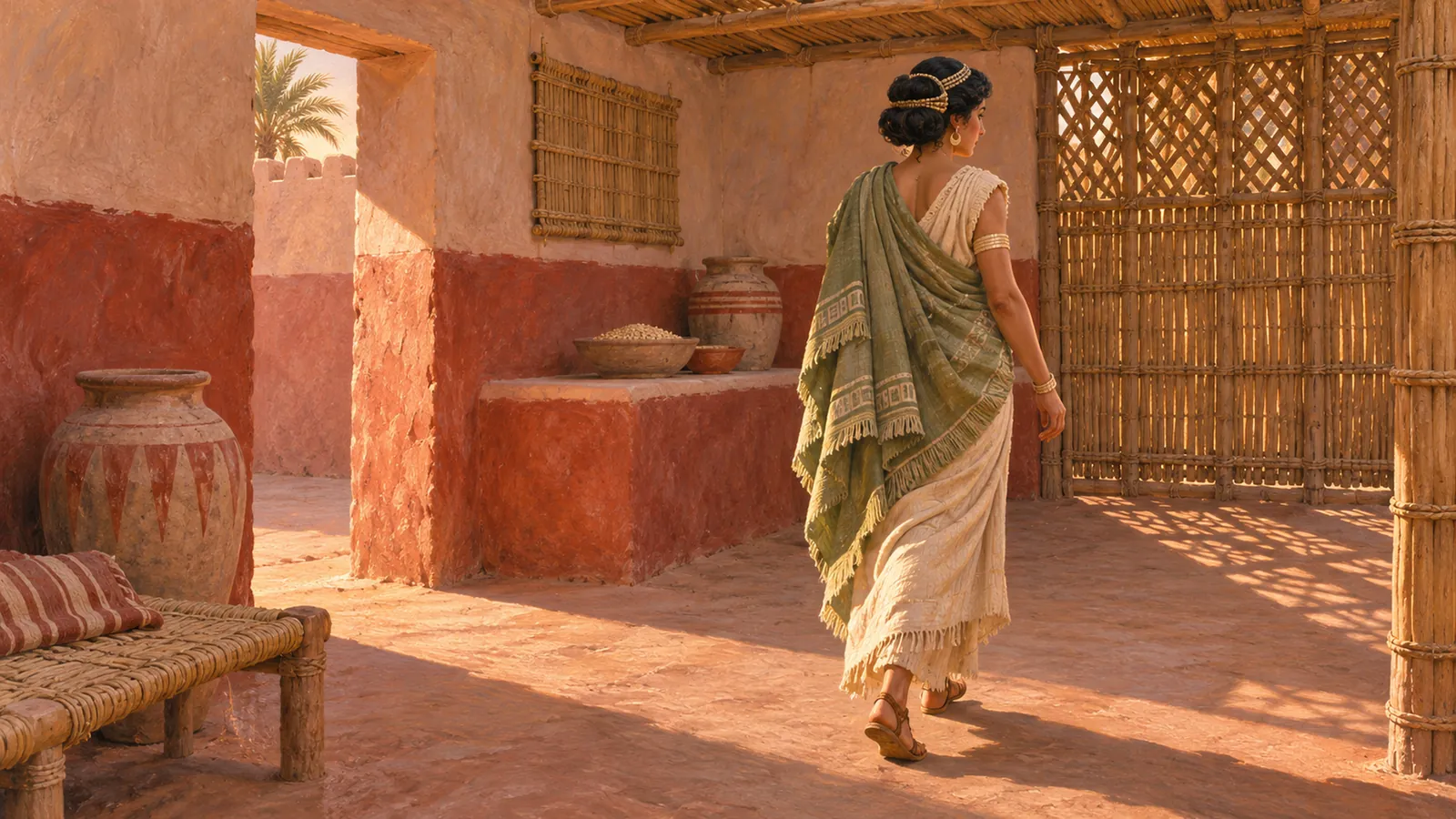
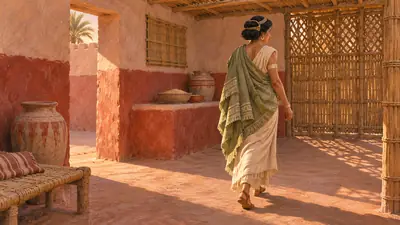
Enlil moves closer and asks to speak to her of marriage. He says the choice is in her hands. Before he can go on, Sud goes into the house.
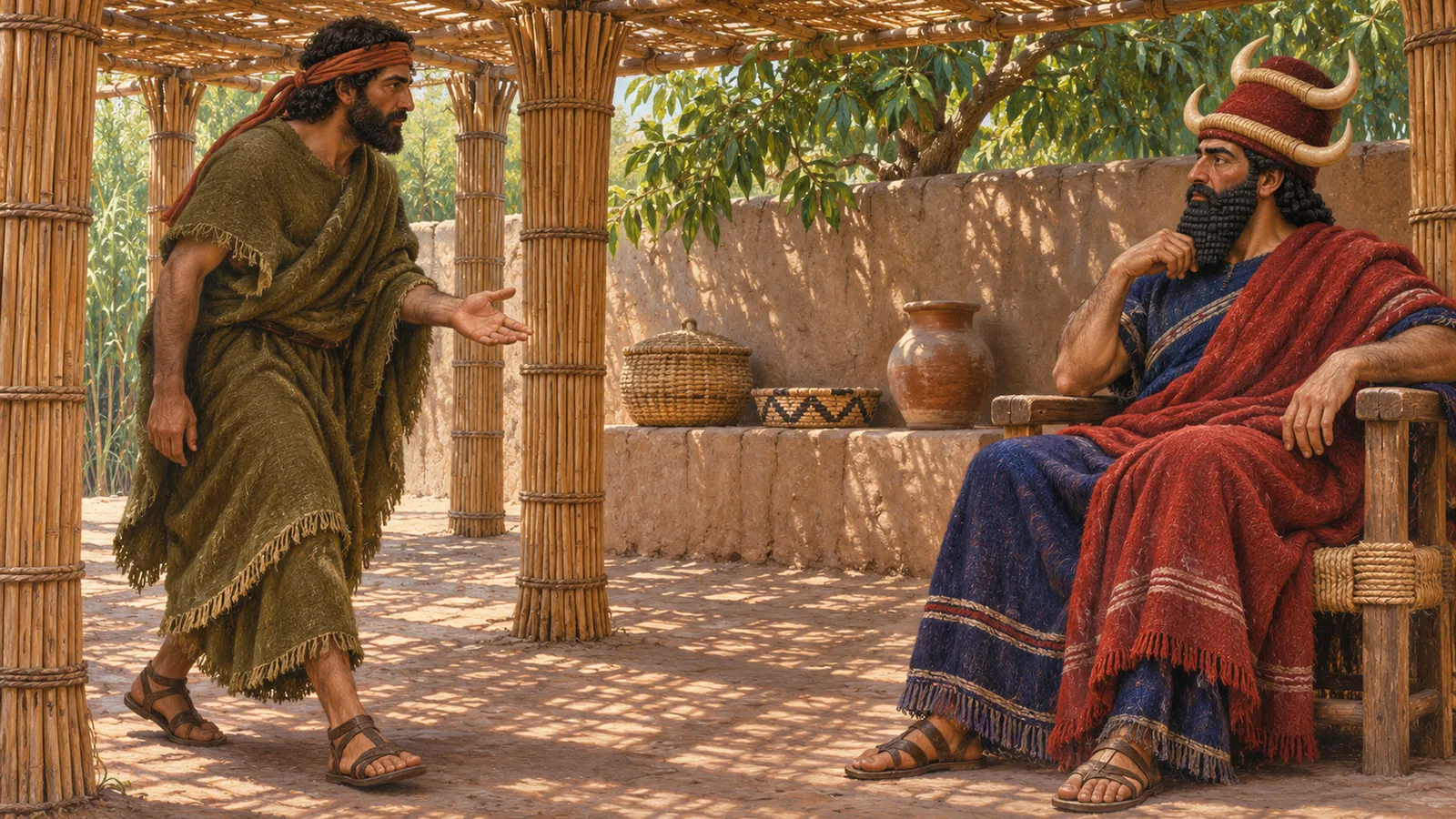
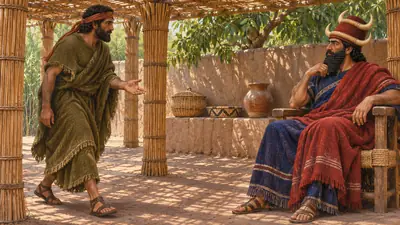
His heart pounding, Enlil calls for his adviser. Nuska comes to hear what he wants. He is to return to Eresh without delay and speak with Nisaba.
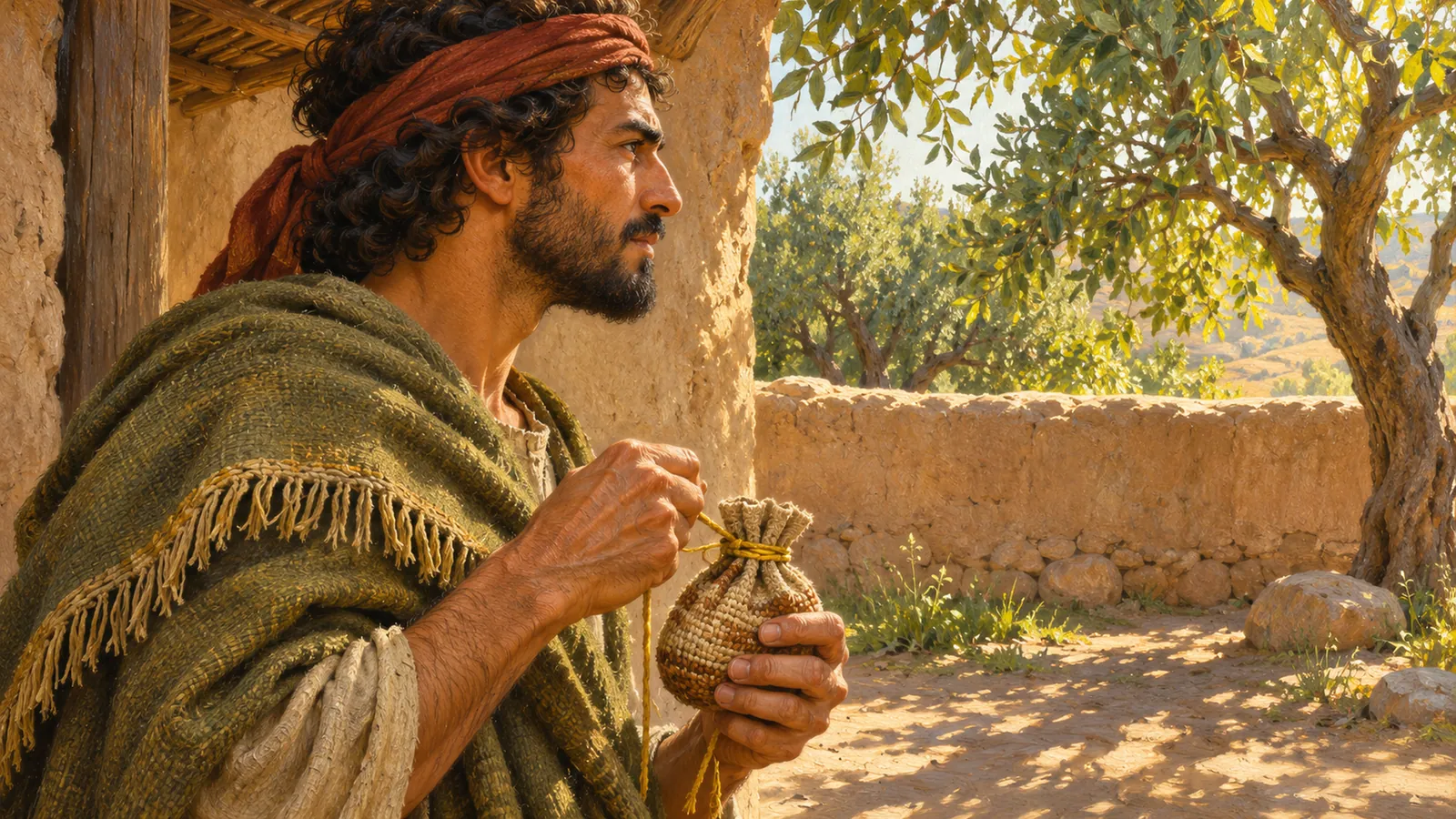
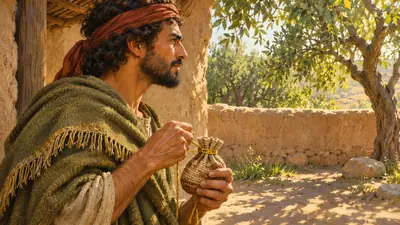
He must carry Enlil’s request for Nisaba’s consent and the promise of gifts. Enlil also tells him to bring jewelry for Sud in his left hand.
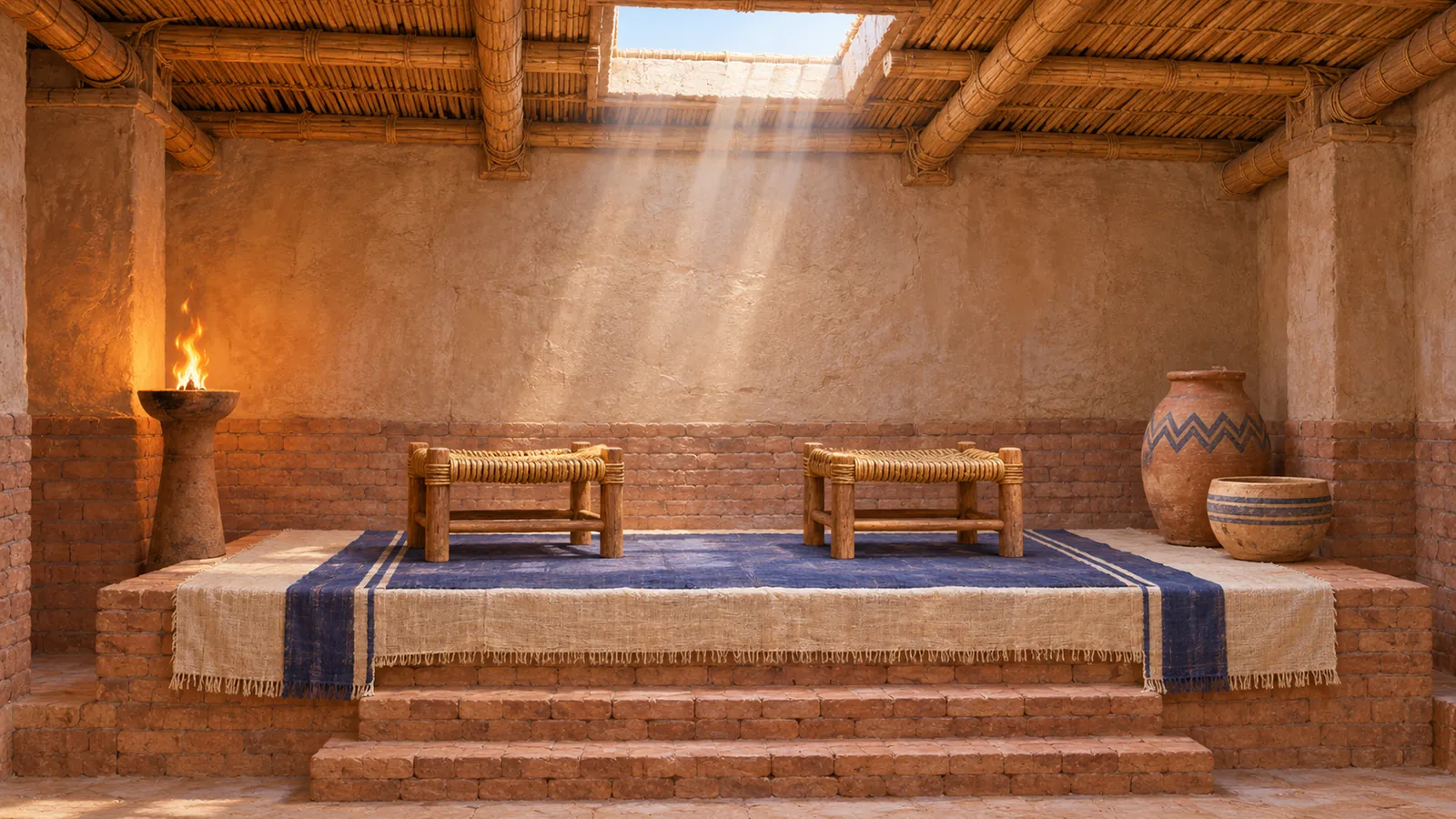
Enlil names the place he would give Sud beside him in the Ekur. She would share the raised seat, decide destinies and assign powers among the gods.
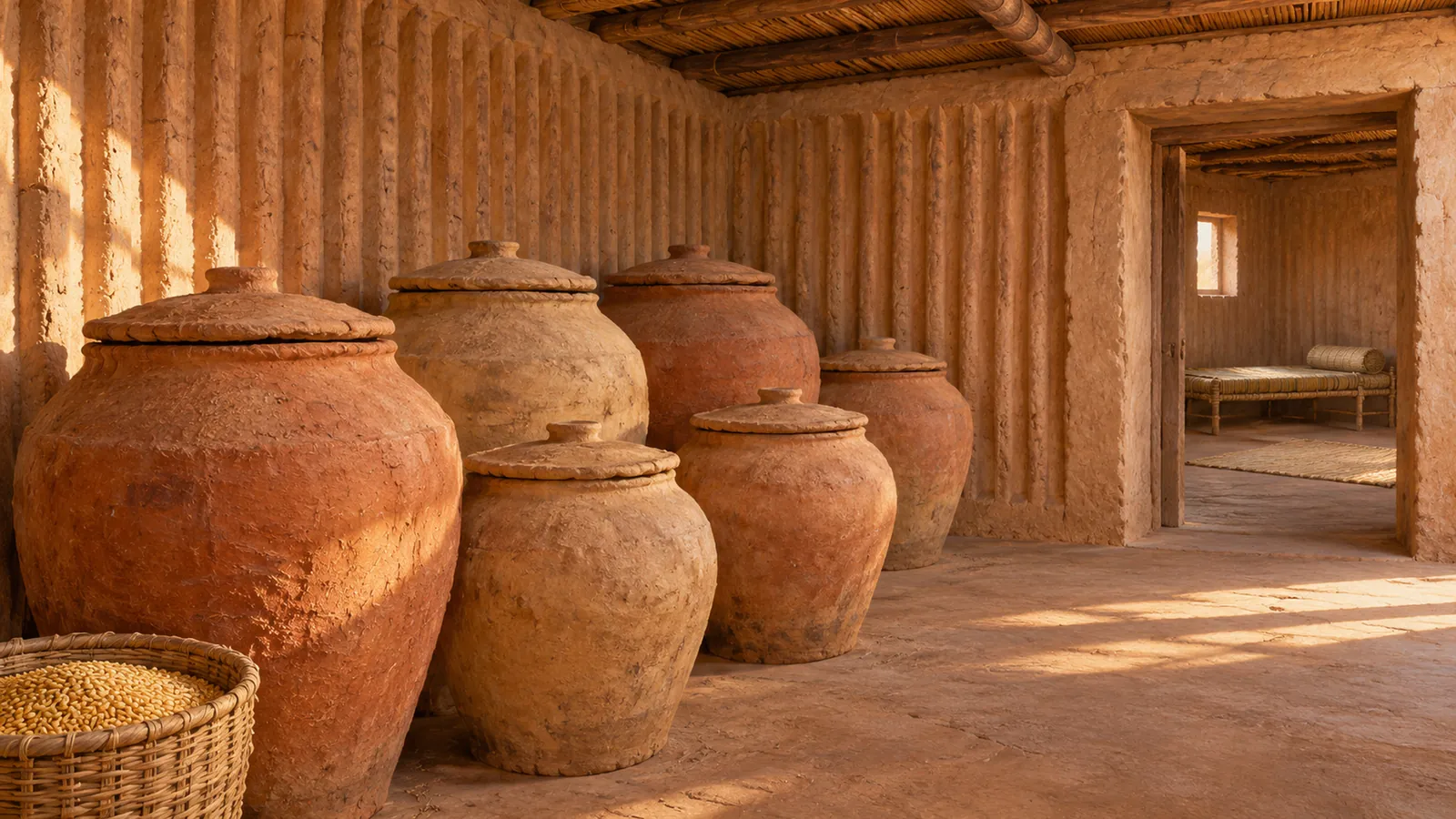
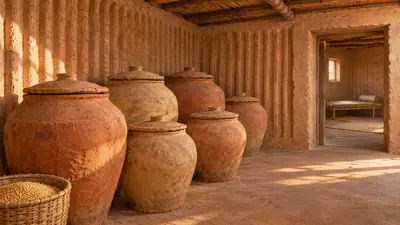
He promises her a storehouse and the Kiur as a private place of her own. Her new name, Ninlil, is to be known far beyond the city.
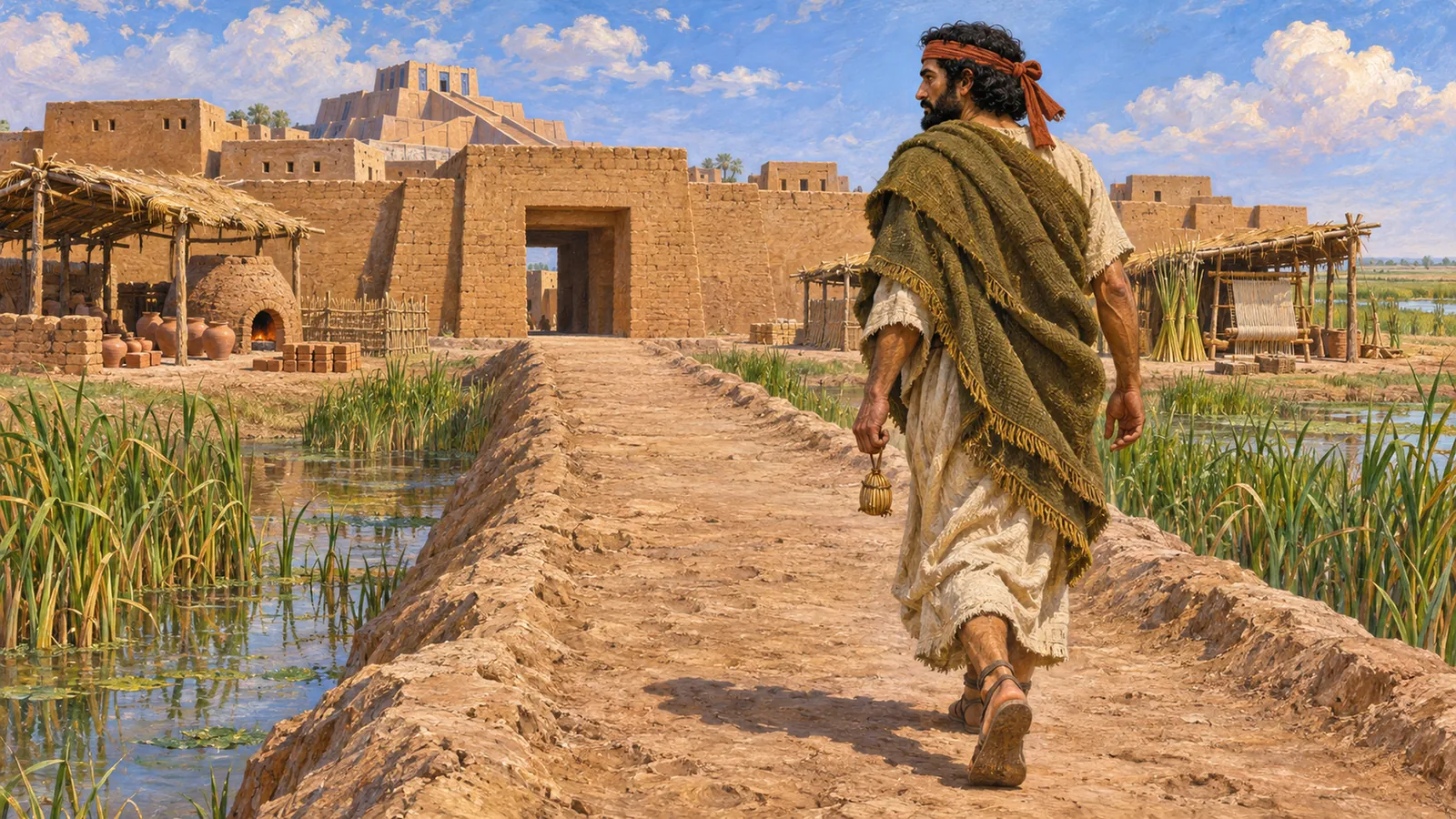
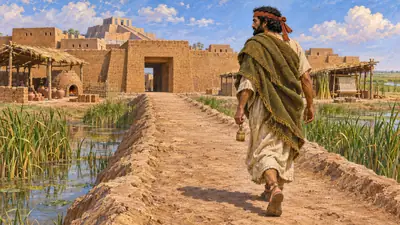
Nuska sets out as instructed. When he reaches Eresh, he goes to the E-zagin and enters the house where Nisaba receives him under another of her names, Nanibgal.
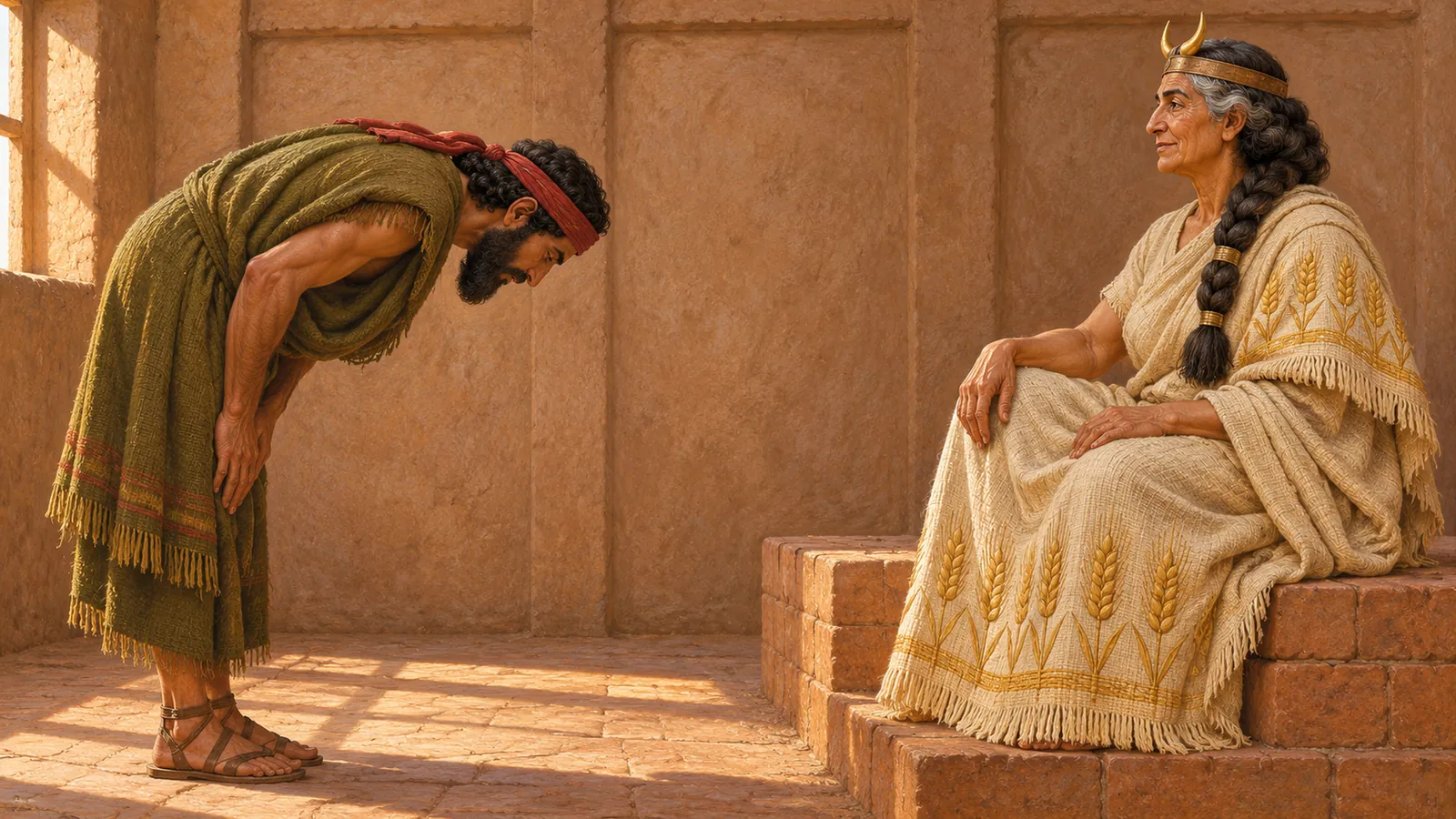
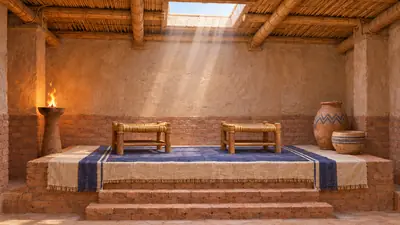
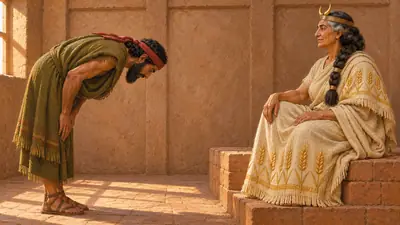
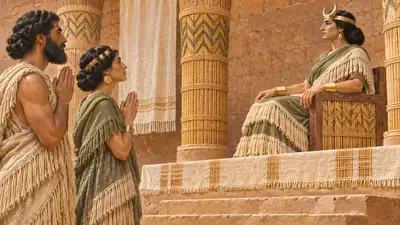
Nuska bows low before Nisaba on her raised seat. Here, as at the door, a visitor has come to her household. This time the visitor waits to hear her answer.
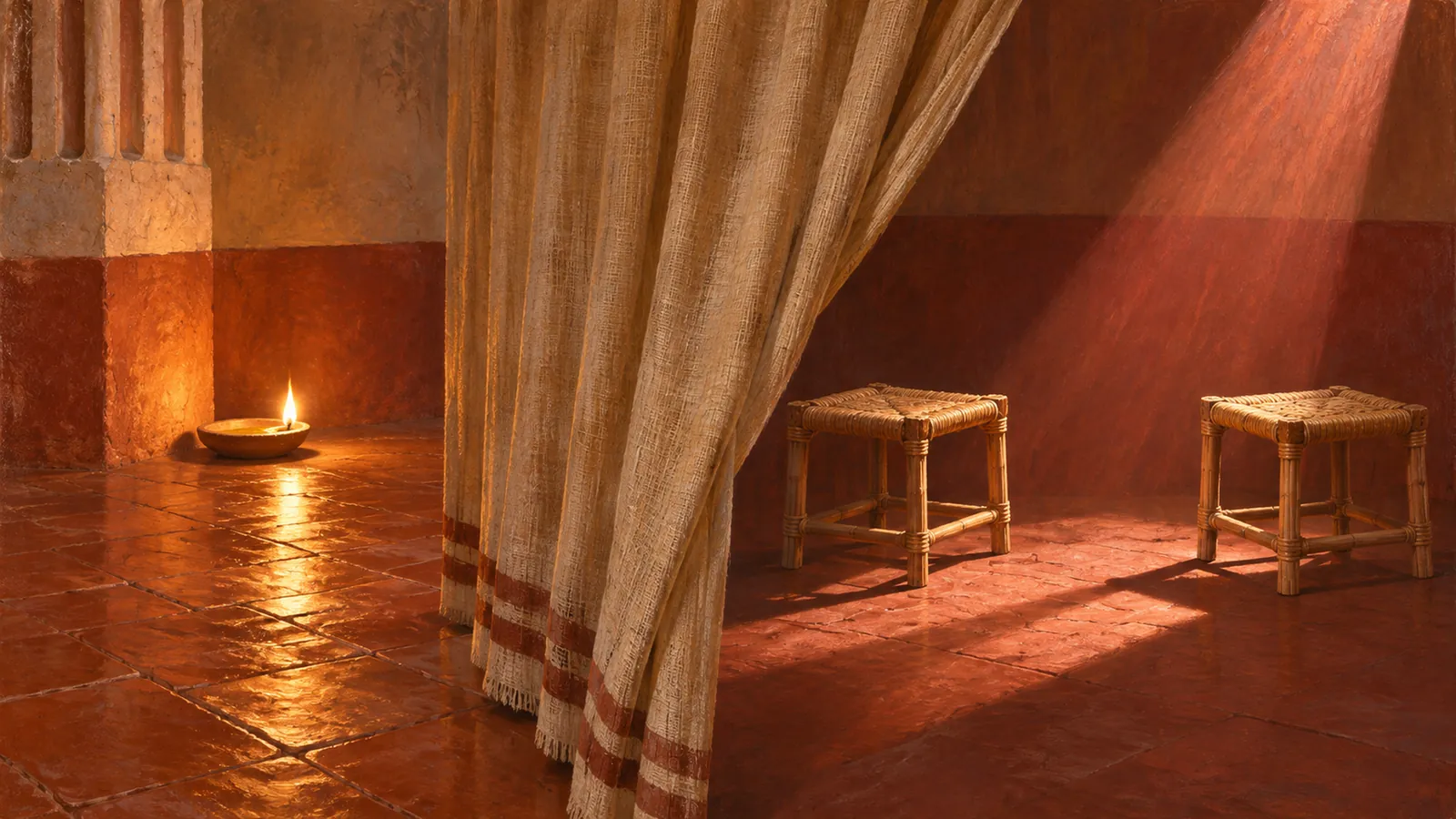
The clay breaks away during their exchange. A fragment lets us hear Nuska mention Sud. Nisaba’s reply resumes with praise for the adviser who serves Enlil.
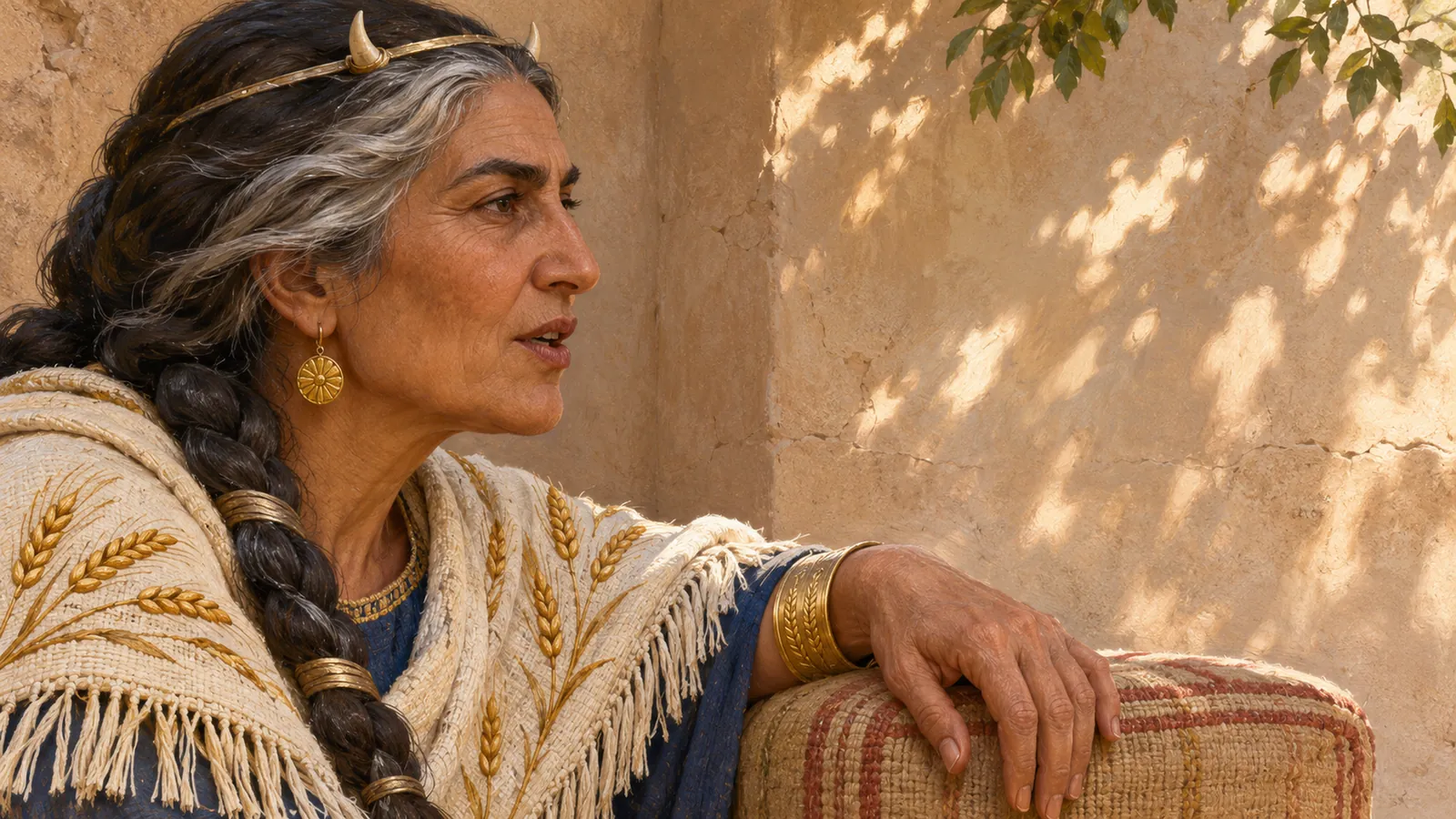
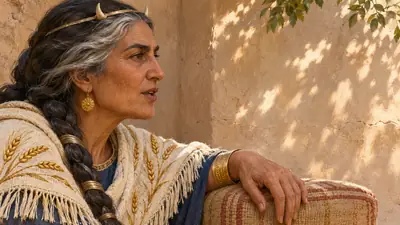
She asks whether the message is true. If the gifts come as promised, she says, they can repair the insult. Enlil may become her son-in-law.
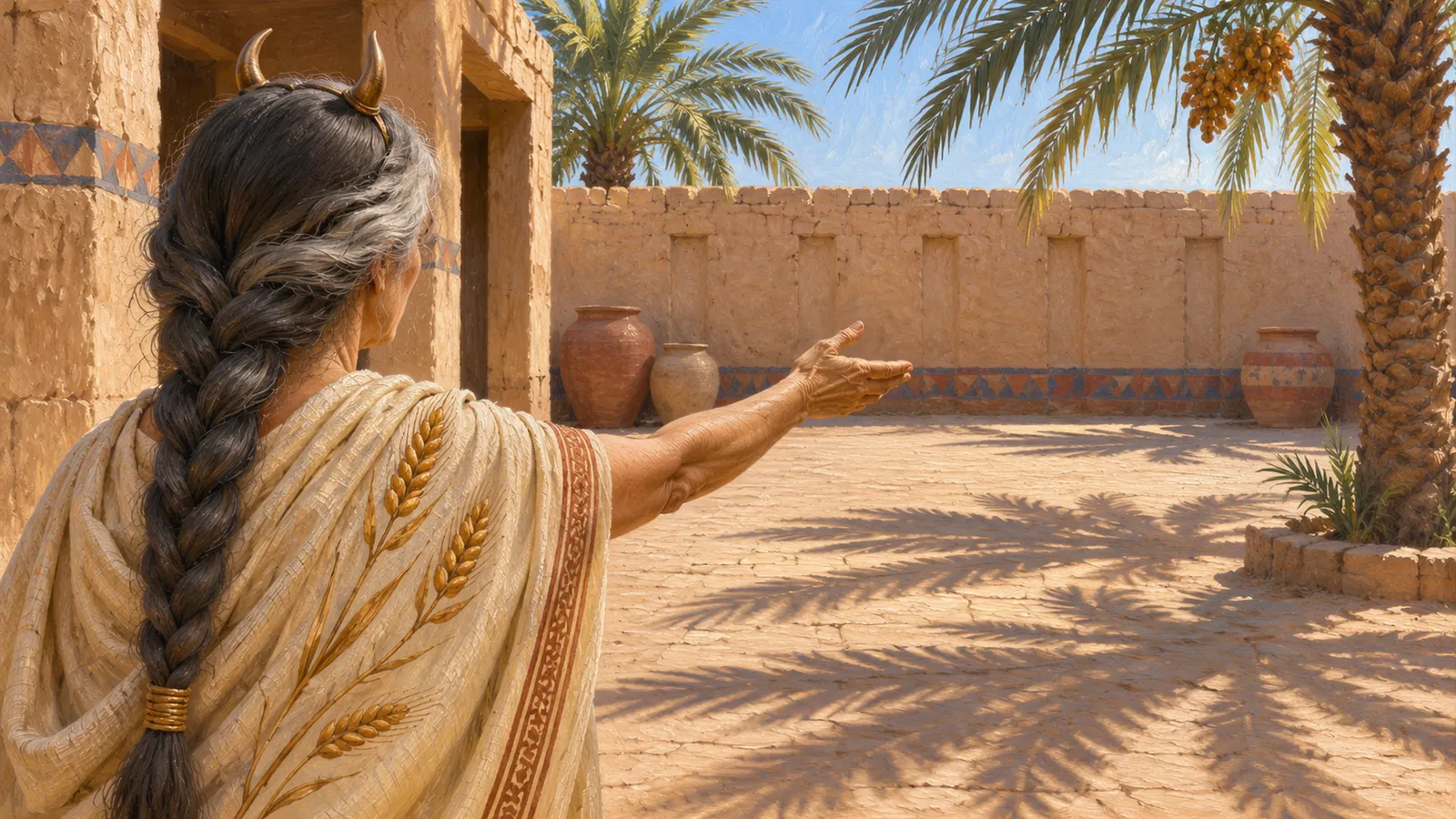
Nisaba tells Nuska to ask for Enlil’s sister. Aruru is to come from his household and accompany Sud. She will enter the family as Sud’s sister-in-law.
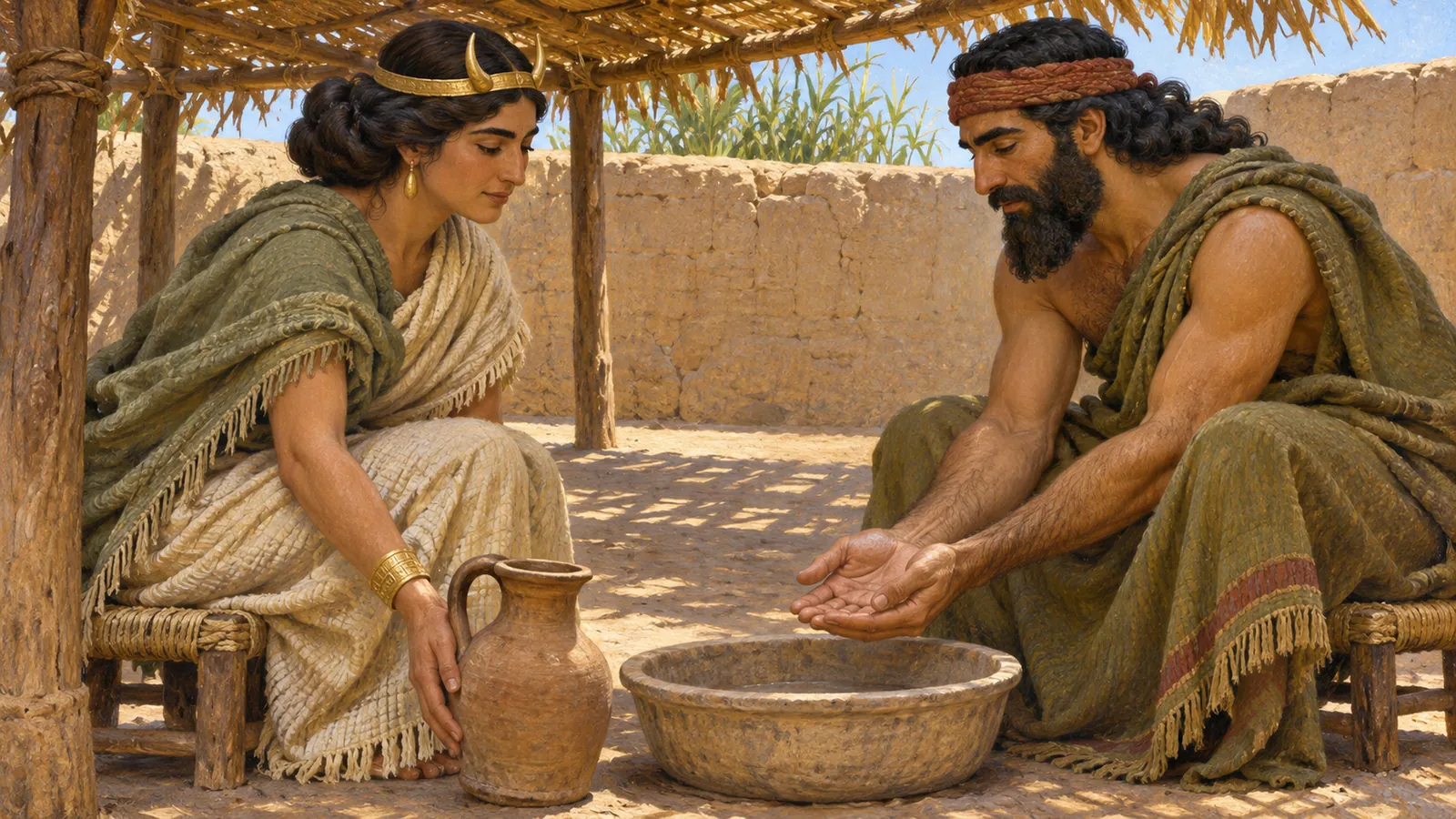
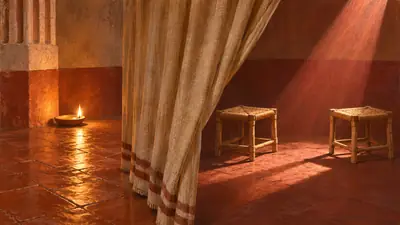
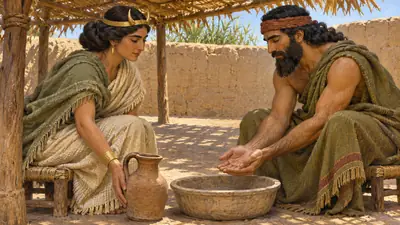
When the messenger sits down, Nisaba calls for her daughter. Sud comes from the private rooms to greet him. The poem shows her washing Nuska’s hands herself.
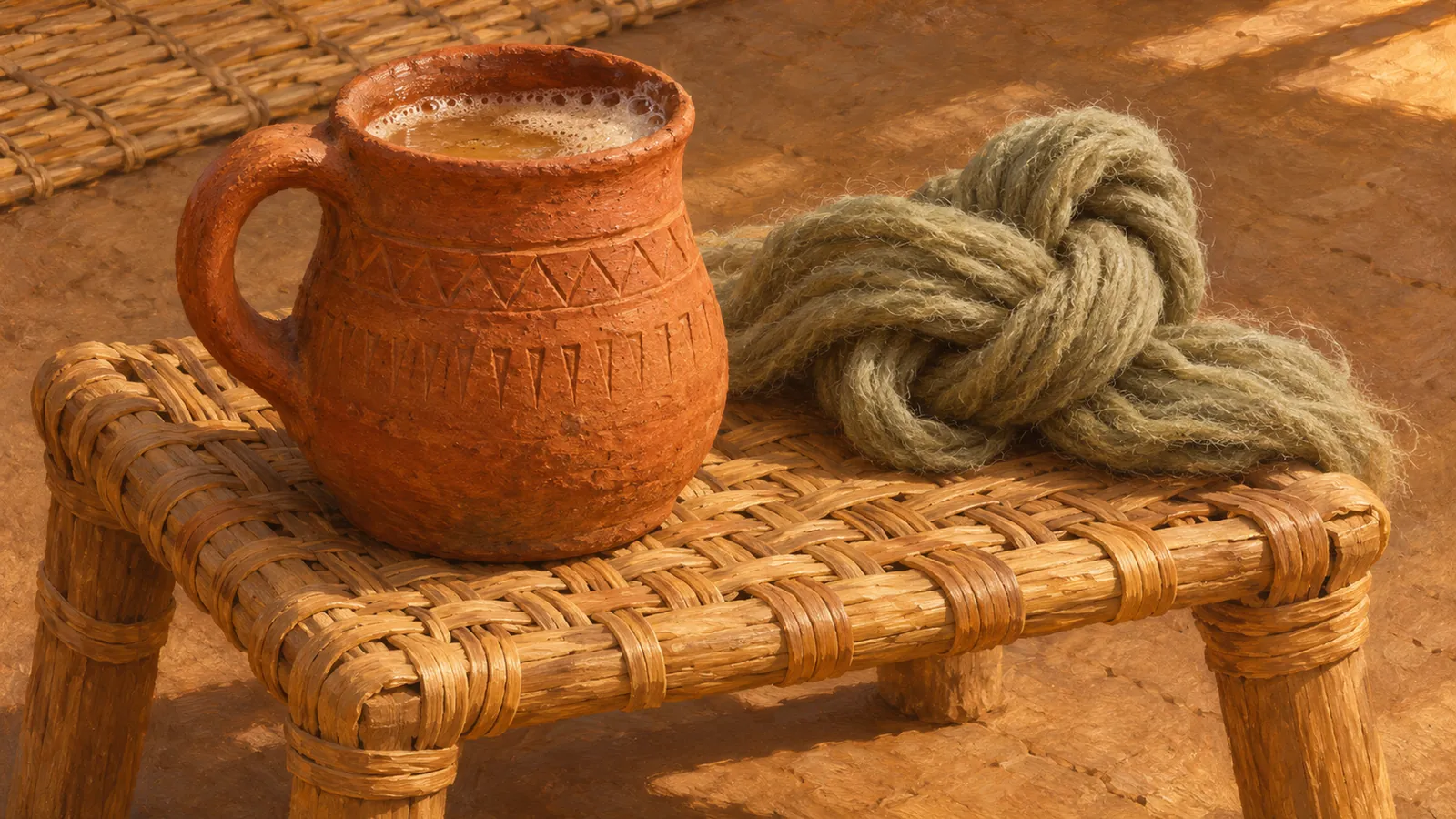
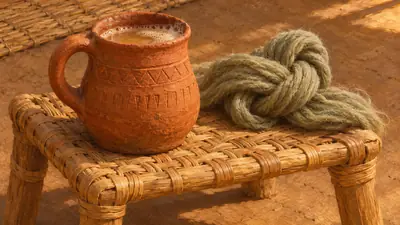
Then she sets a tankard of beer in his hands, as her mother instructed. This is the welcome a guest receives once he is admitted to the house.
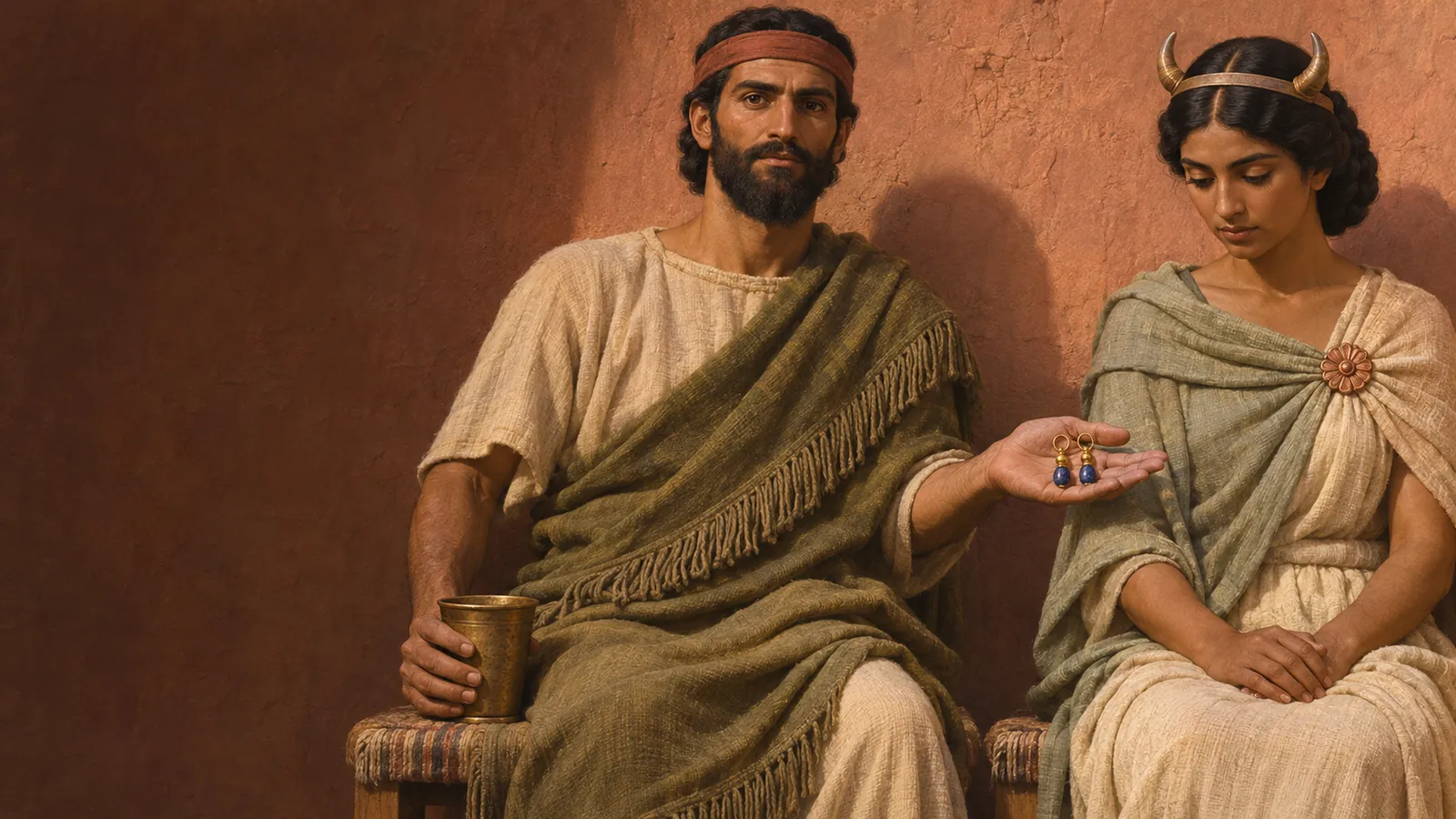
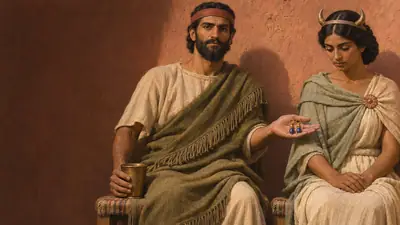
Nuska opens his left hand and gives Sud the jewelry. She accepts the gifts. The remaining pieces of these lines preserve her action more clearly than her words.
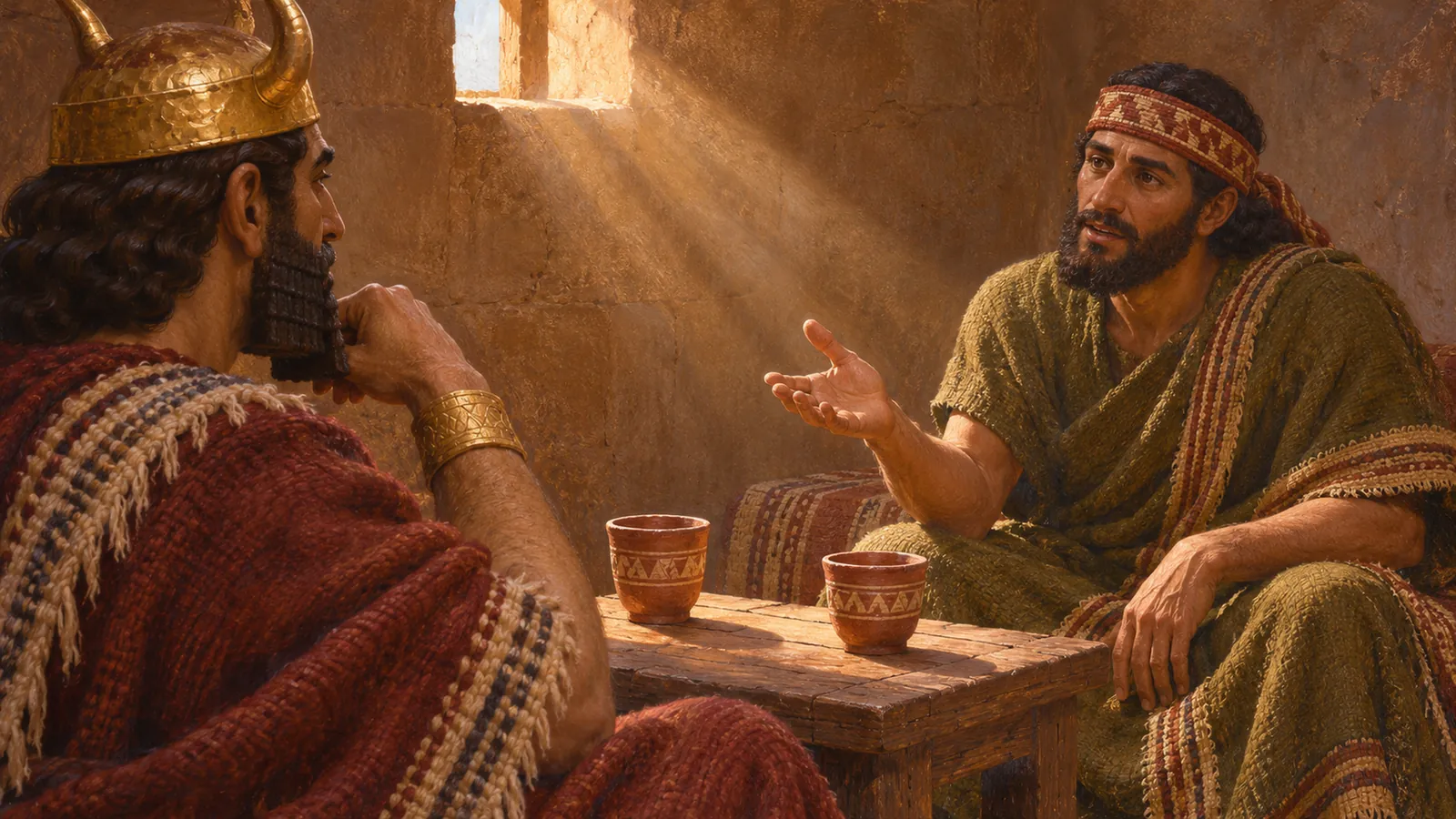
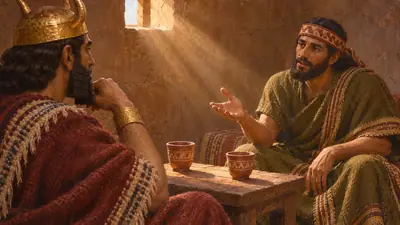
Nuska returns to Nippur and bows before Enlil. He repeats Nisaba’s terms, including her request for Aruru. What the messenger heard in one house must now be heard in the other.
WEDDING GIFTS
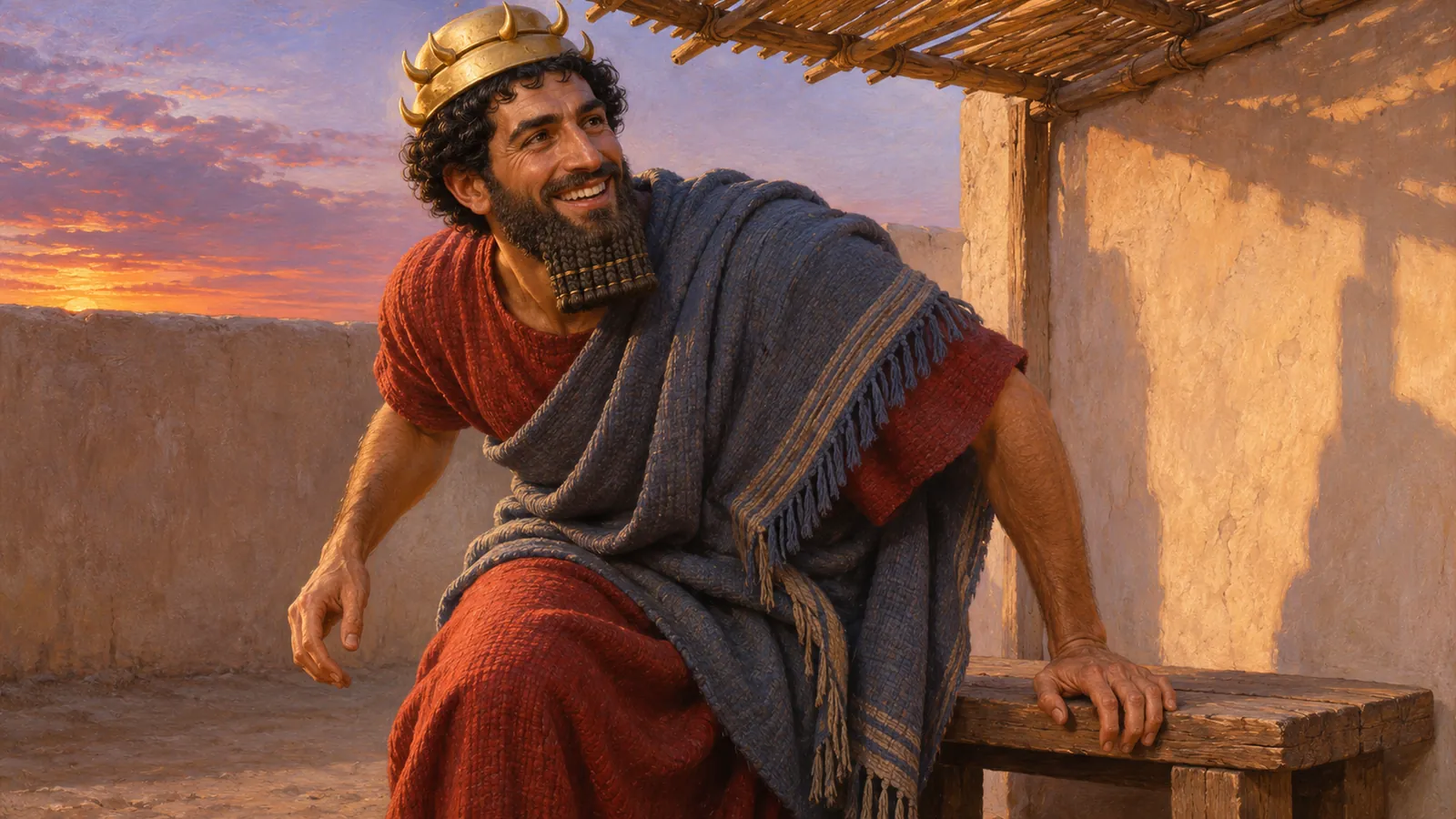
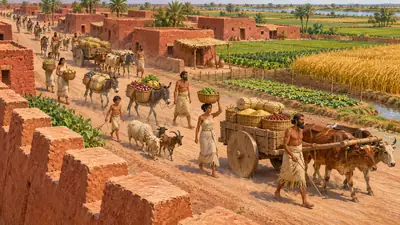
The reply brings Enlil great joy. He raises his head and animals come running. The poem answers his delight with a procession large enough to fill many verses.

From the wild country come red deer, gazelles and bulls with wide horns. The list grows stranger and louder as it brings together bears, wild sheep and other animals.
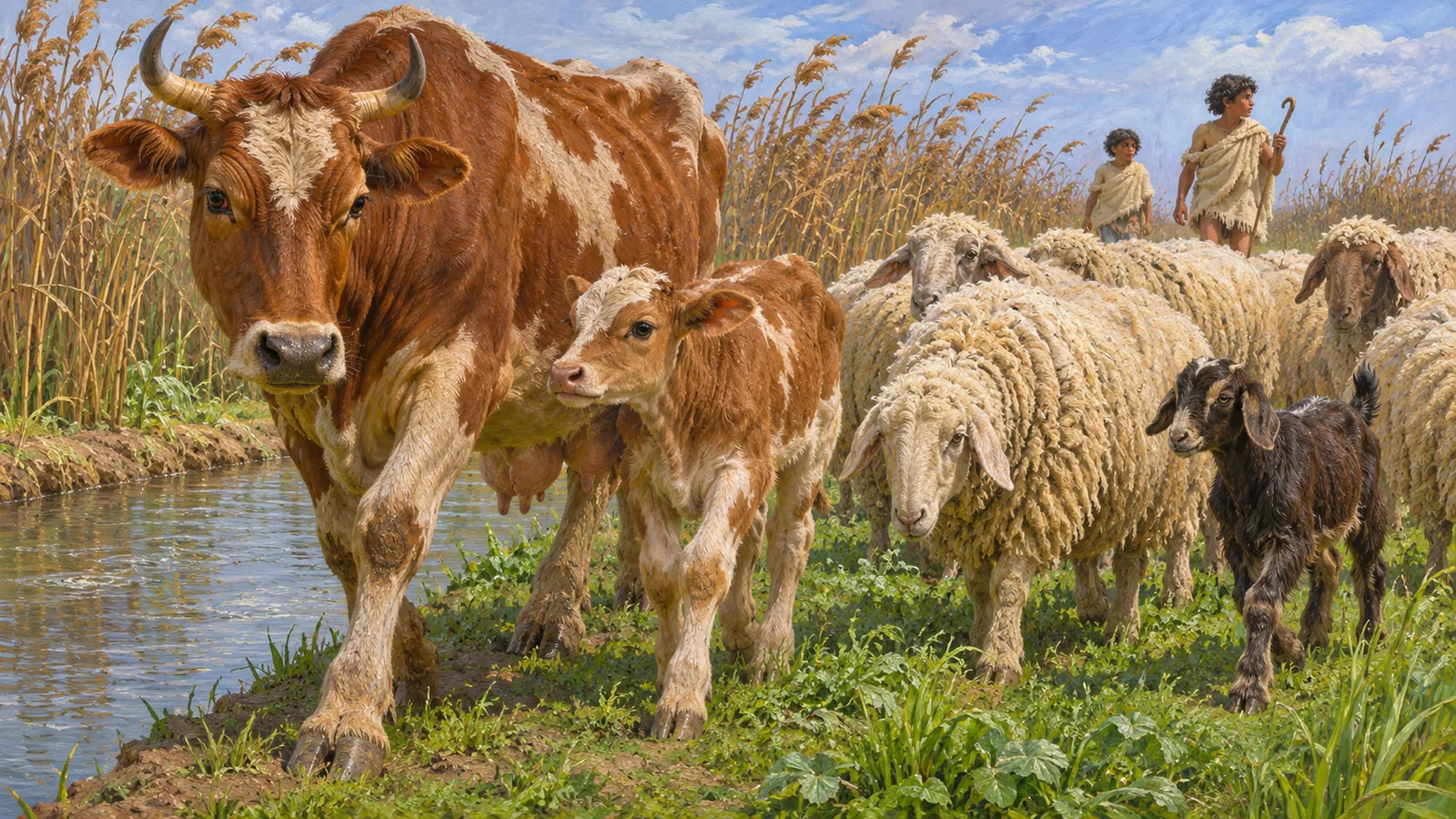
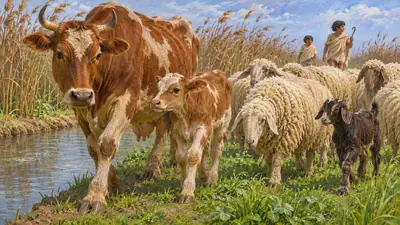
Behind them go cows with calves, ewes with lambs, and goats with their kids. Amid the grandeur the poet notices the young animals butting and pawing the ground.
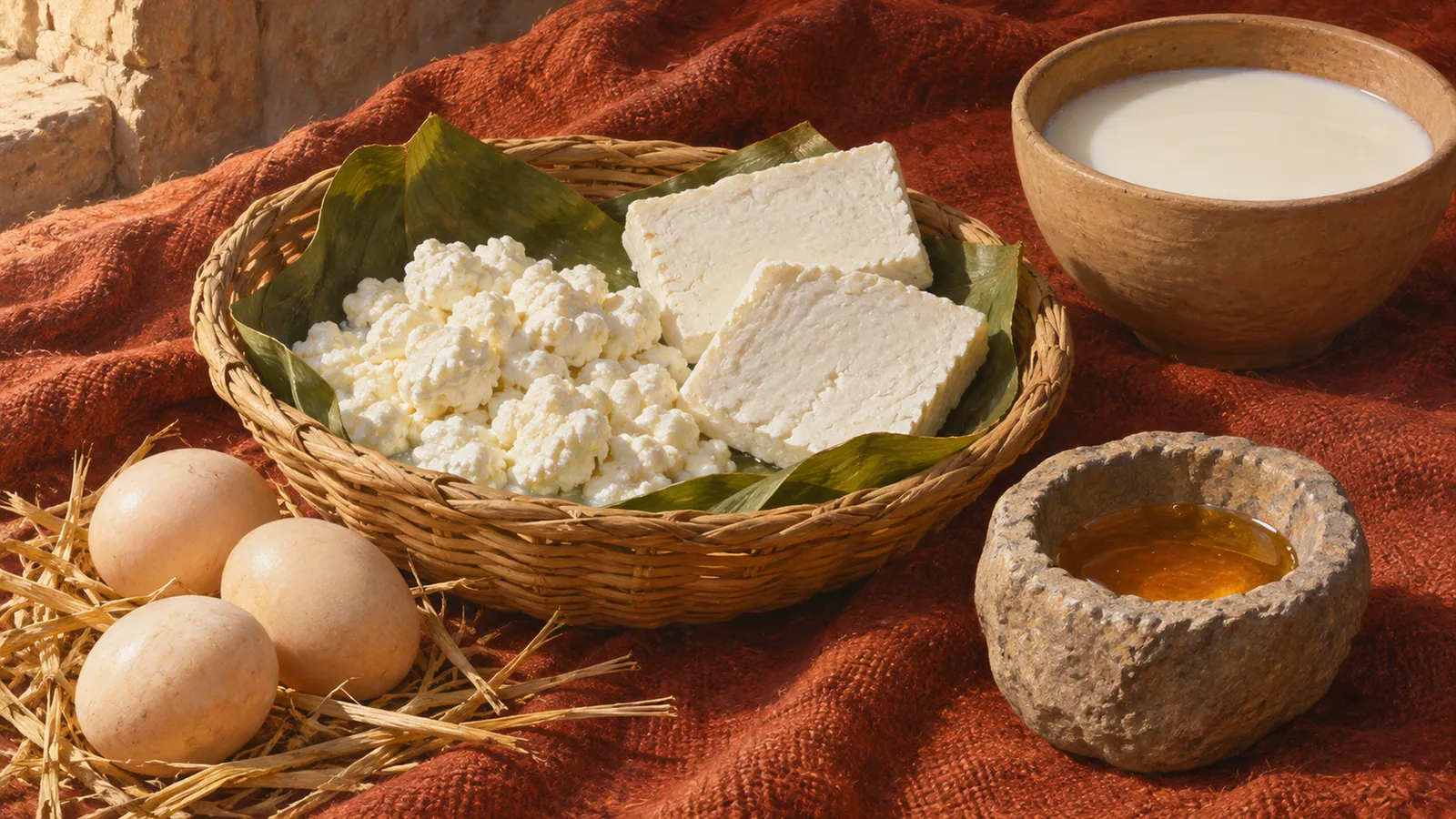
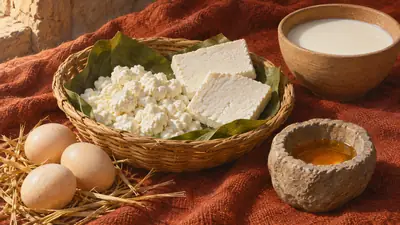
There are great cheeses and little cheeses, some seasoned. Milk, cooked eggs and different kinds of honey go with them. The poet gives the food its turn in the procession.
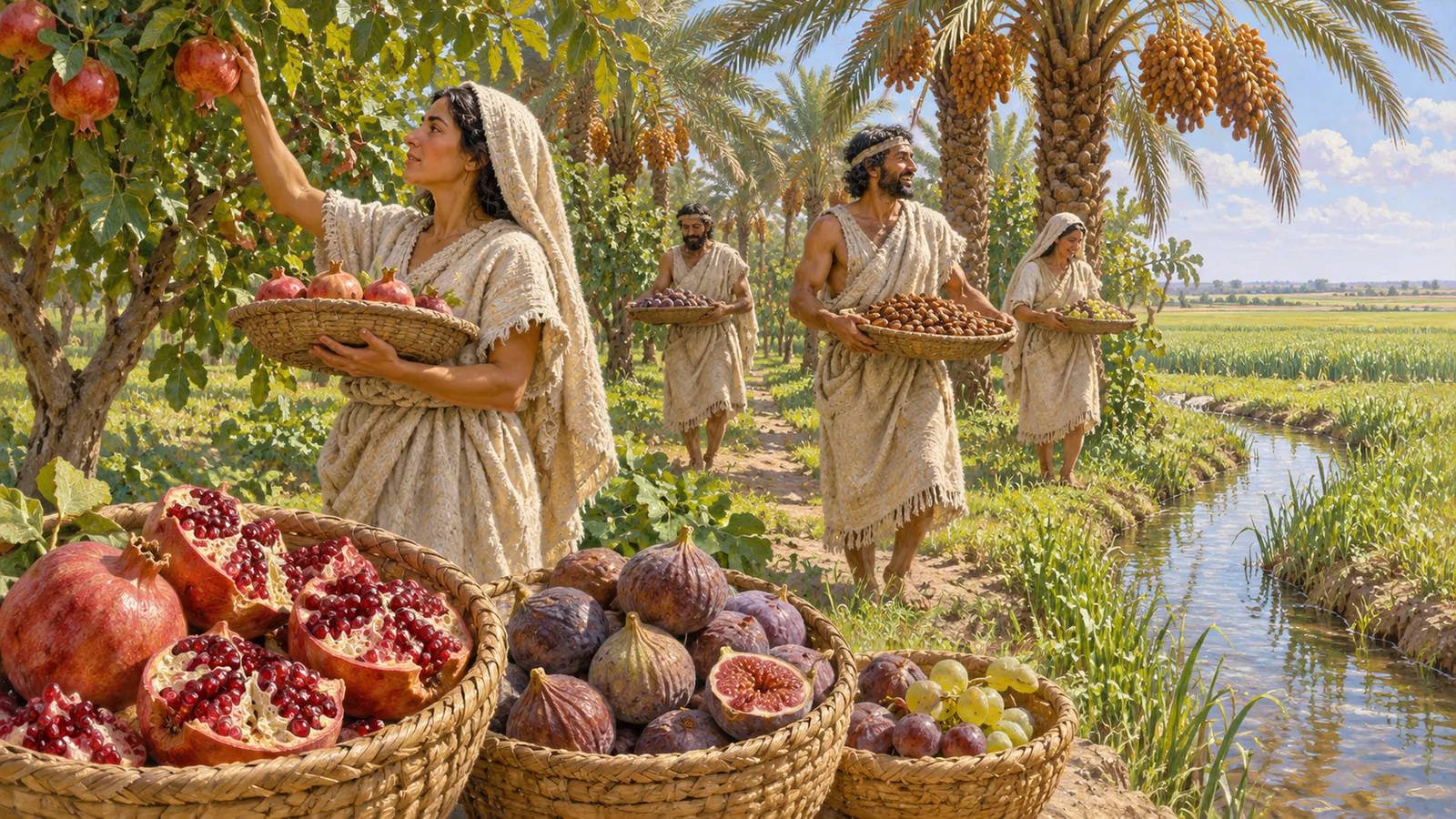
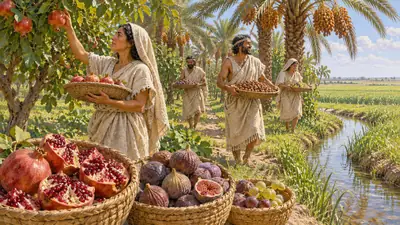
Then come figs, nuts, great pomegranates and early grapes. Some fruit is already gathered, some still on the trees. The gifts carry the orchard with them to Eresh.
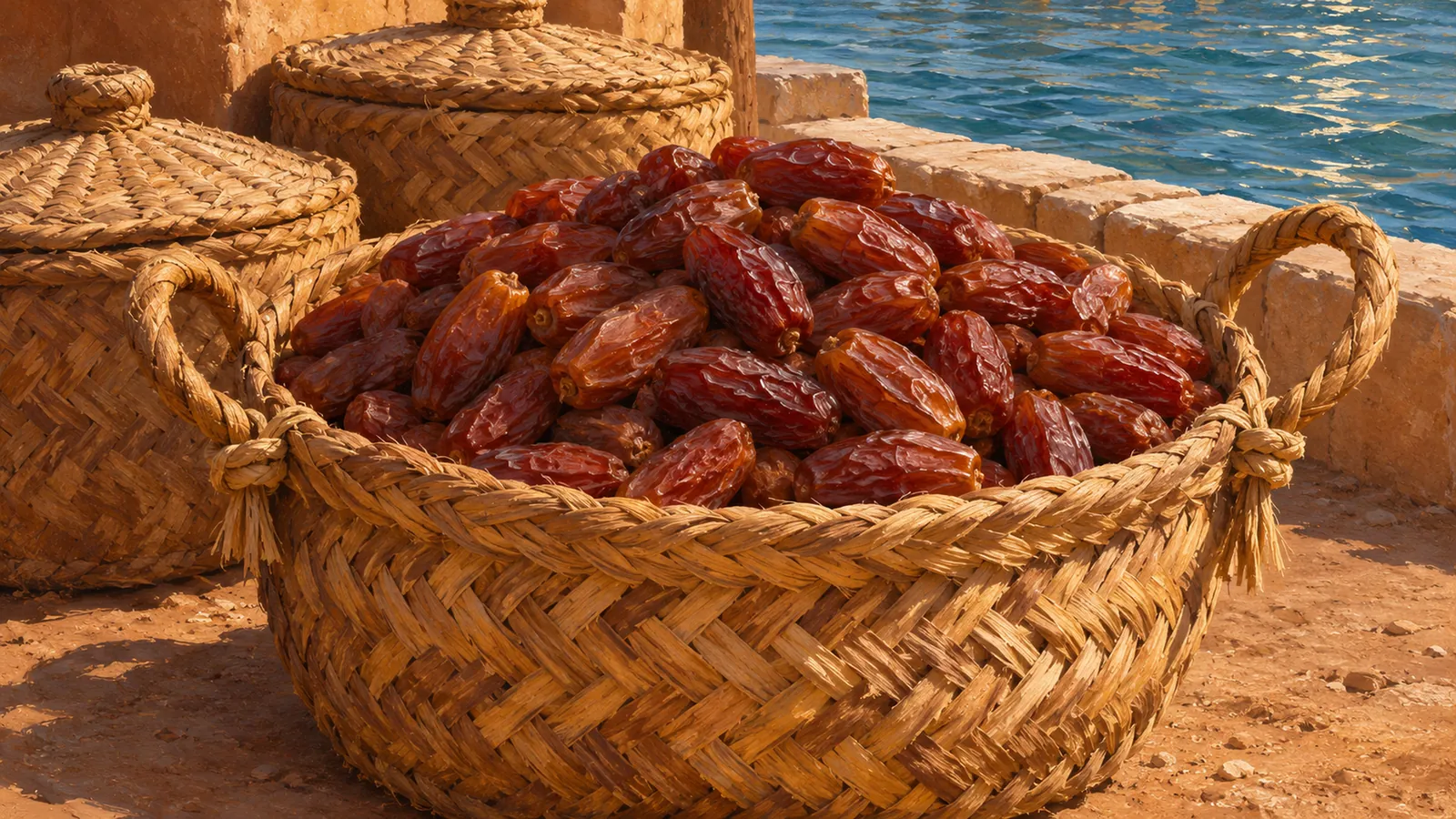
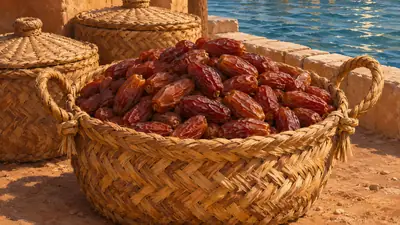
The poet also names baskets of dates from Dilmun. Among the fruits of the nearby gardens, these dates give the procession a connection to a land beyond Sumer.
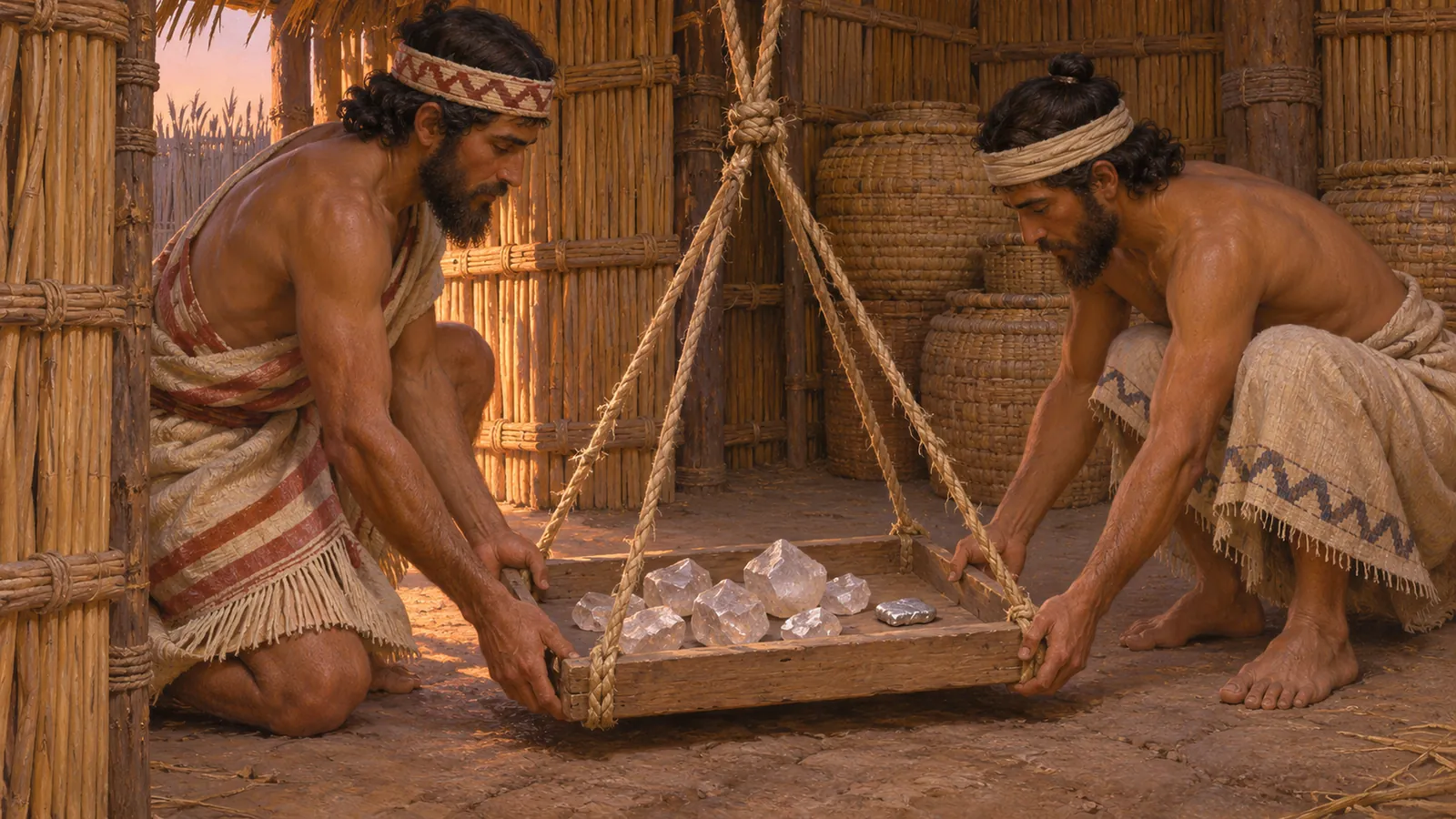
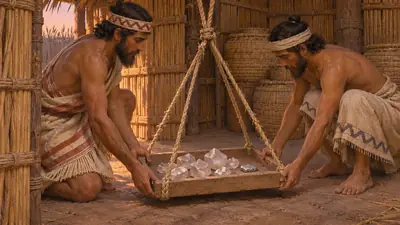
Heavy loads come from the uplands and from the distant land called Harali. The damaged list still yields flashes of rock crystal, gold and silver among its riches.
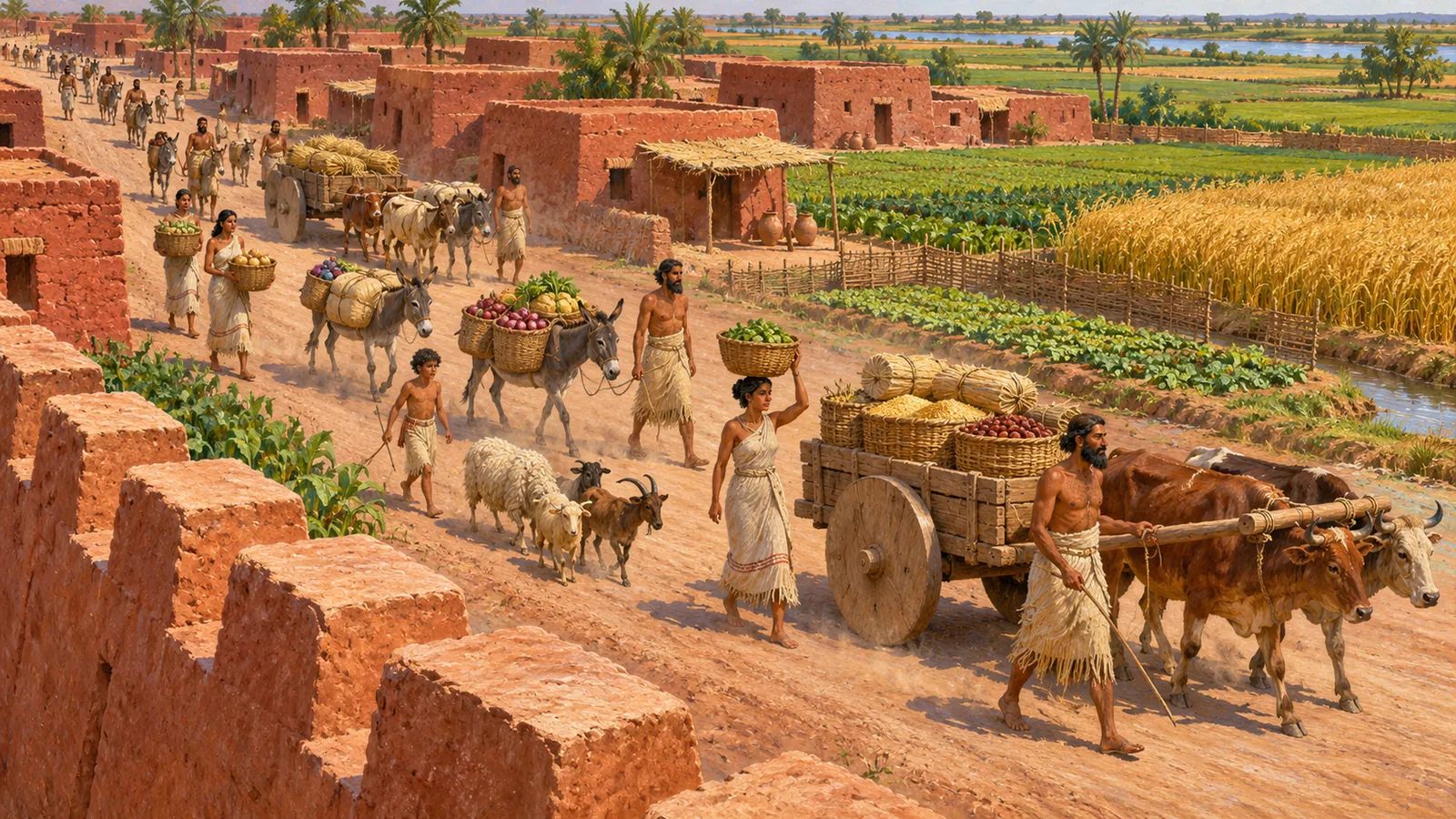
Dust from the march rises like rain clouds. Inside Eresh, the city fills with marriage gifts. Outside, some of the procession still stretches along the roads.
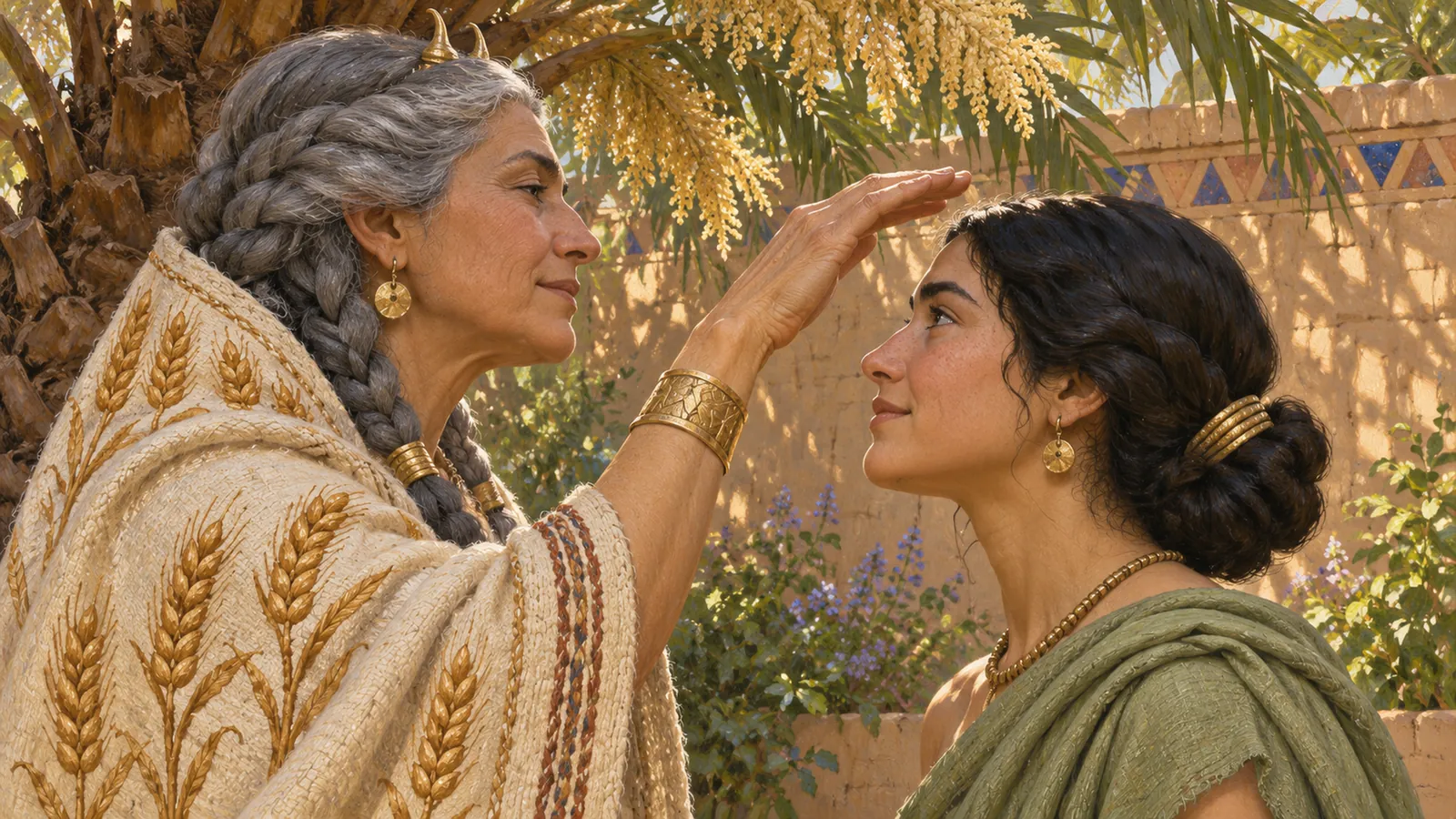
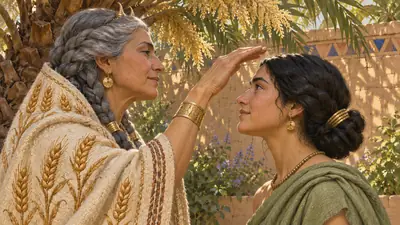
Nisaba turns to her daughter and blesses her. May Enlil speak kindly to her, may prosperity reach the house ahead of her and joy come after her.
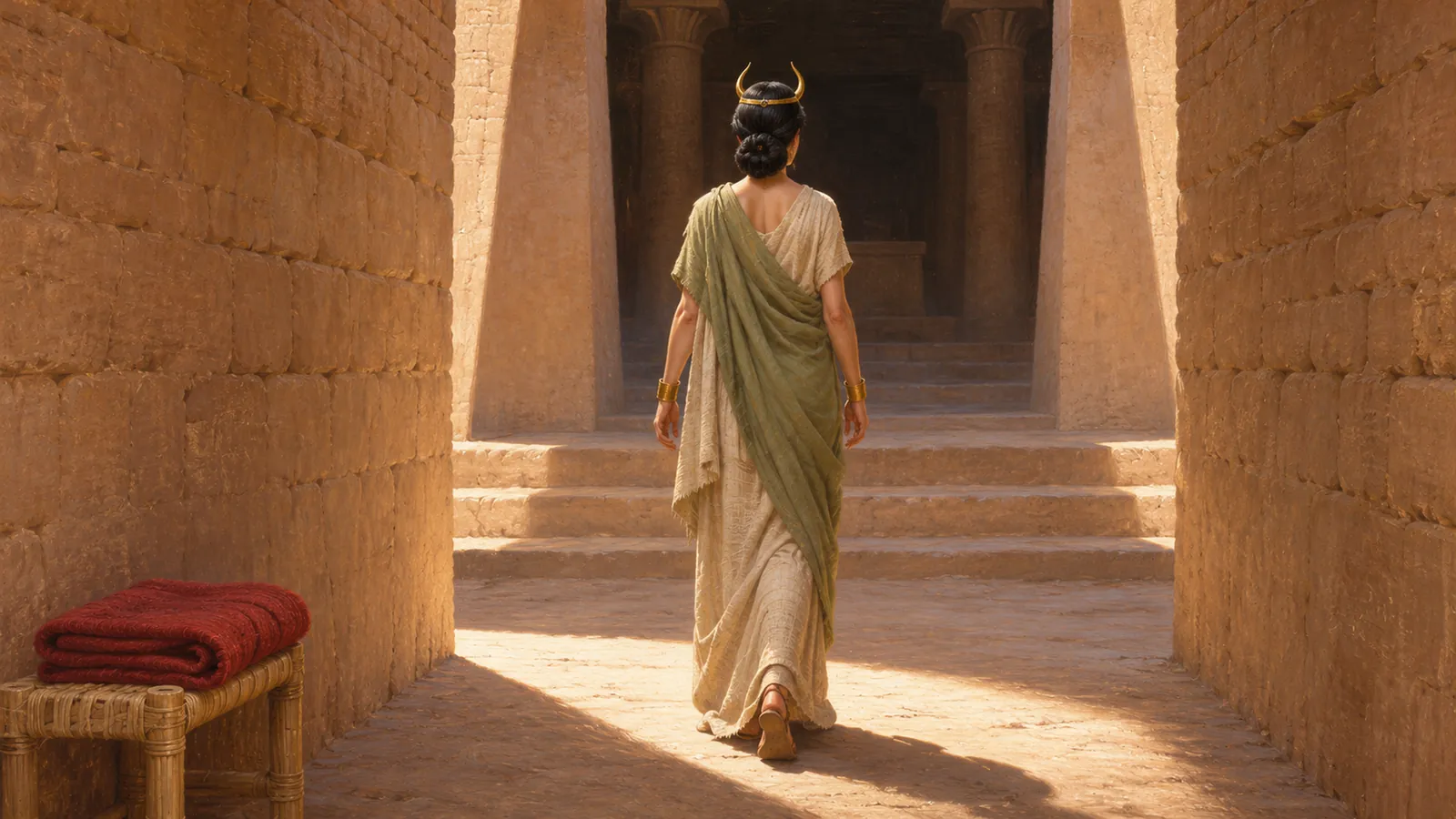
Nisaba speaks of the future she has chosen for her daughter. She tells Sud to enter the Emah with her head held high. Her words send Sud on her way.
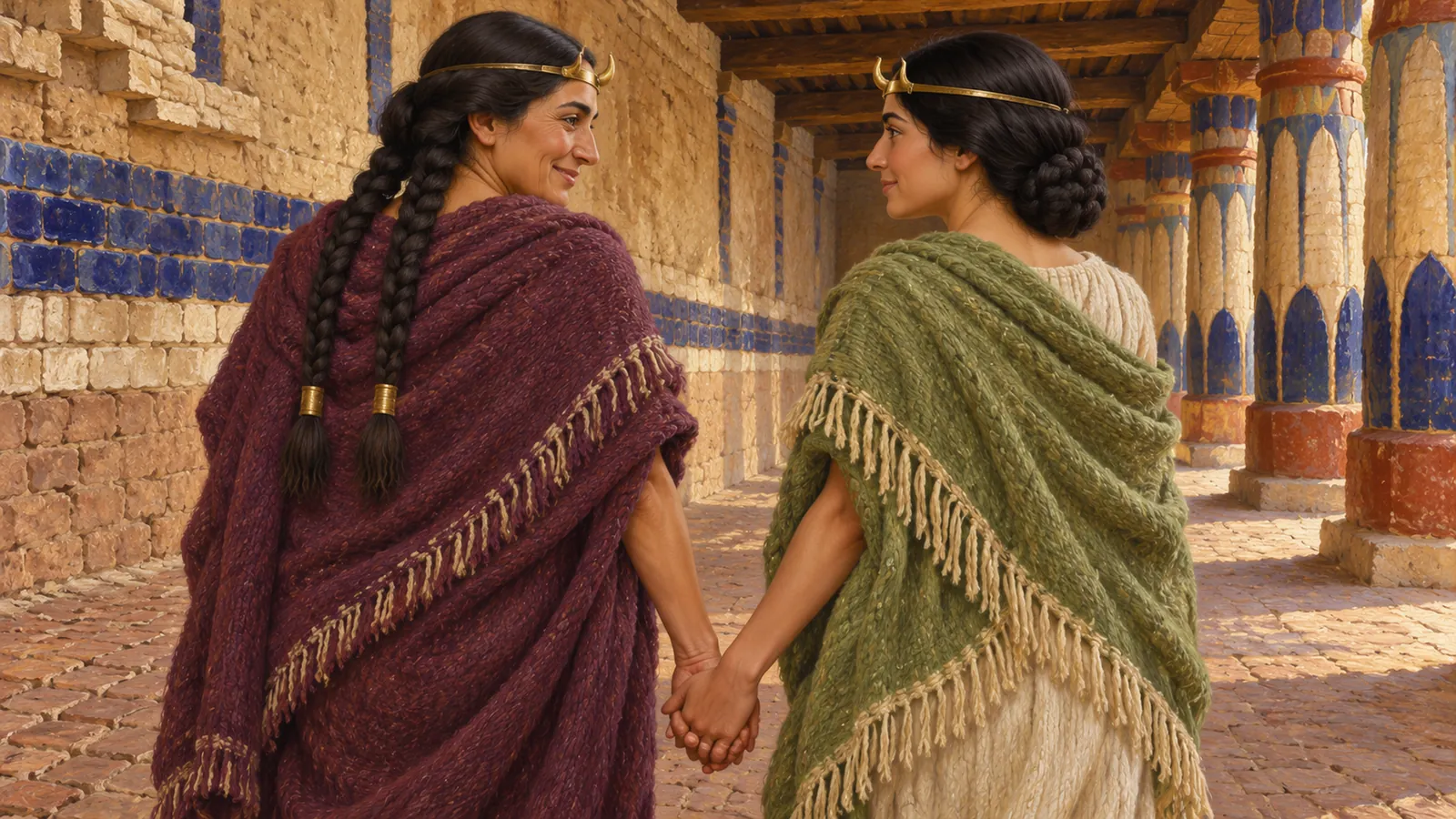
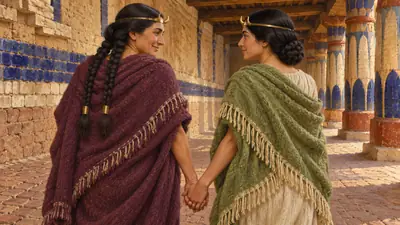
Aruru takes Sud by the hand, as Nisaba had requested of Enlil. She conducts her to the Emah and brings her into the Ekur, Enlil’s house.
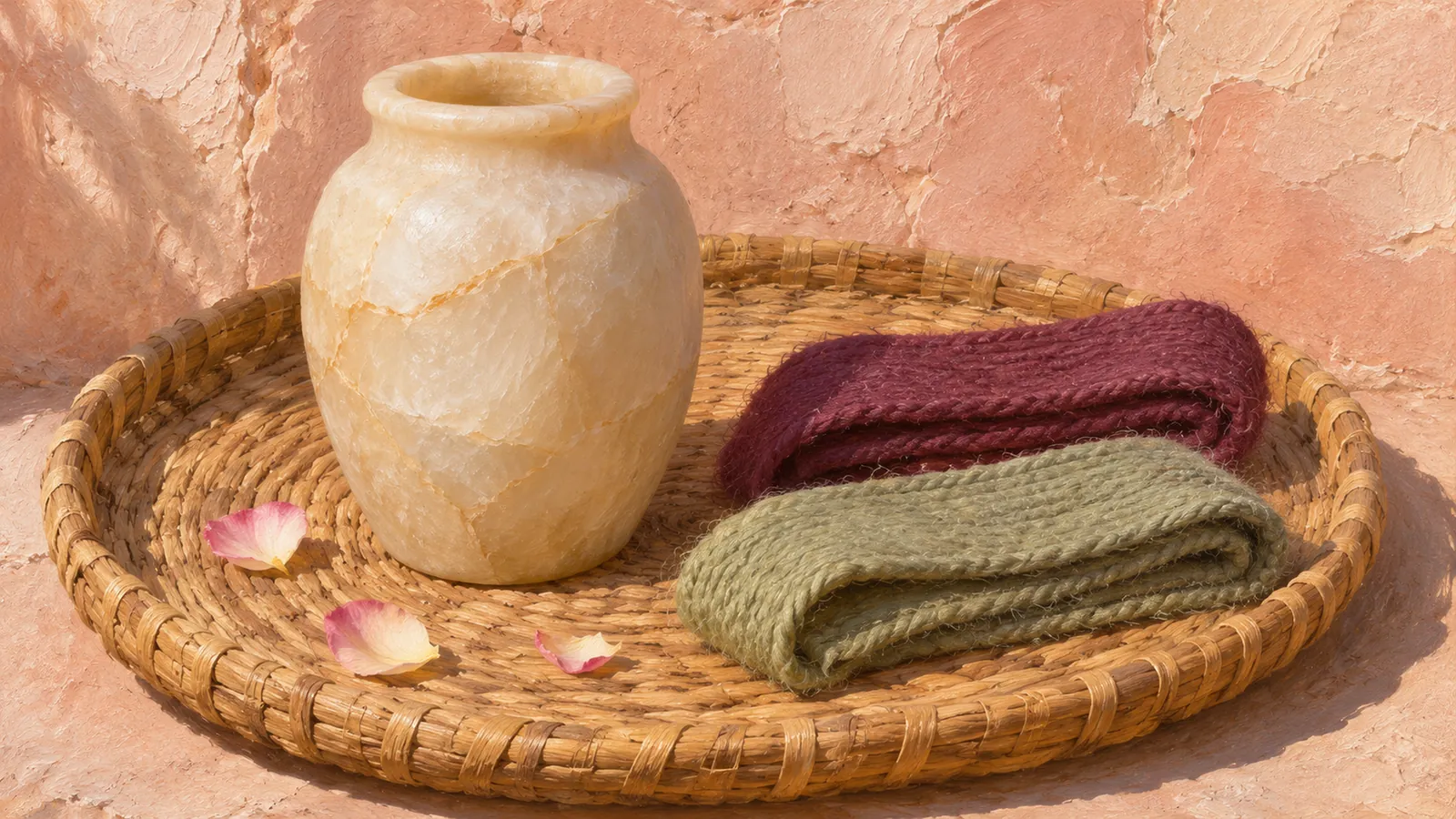
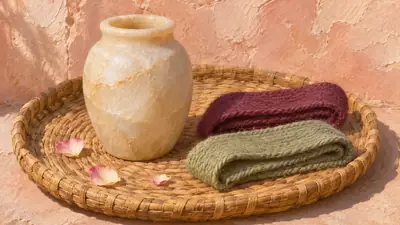
A later tablet from Susa tells this part with another detail. In the shining house, Aruru pours fine perfume over Sud’s face before she enters the wedding chamber.
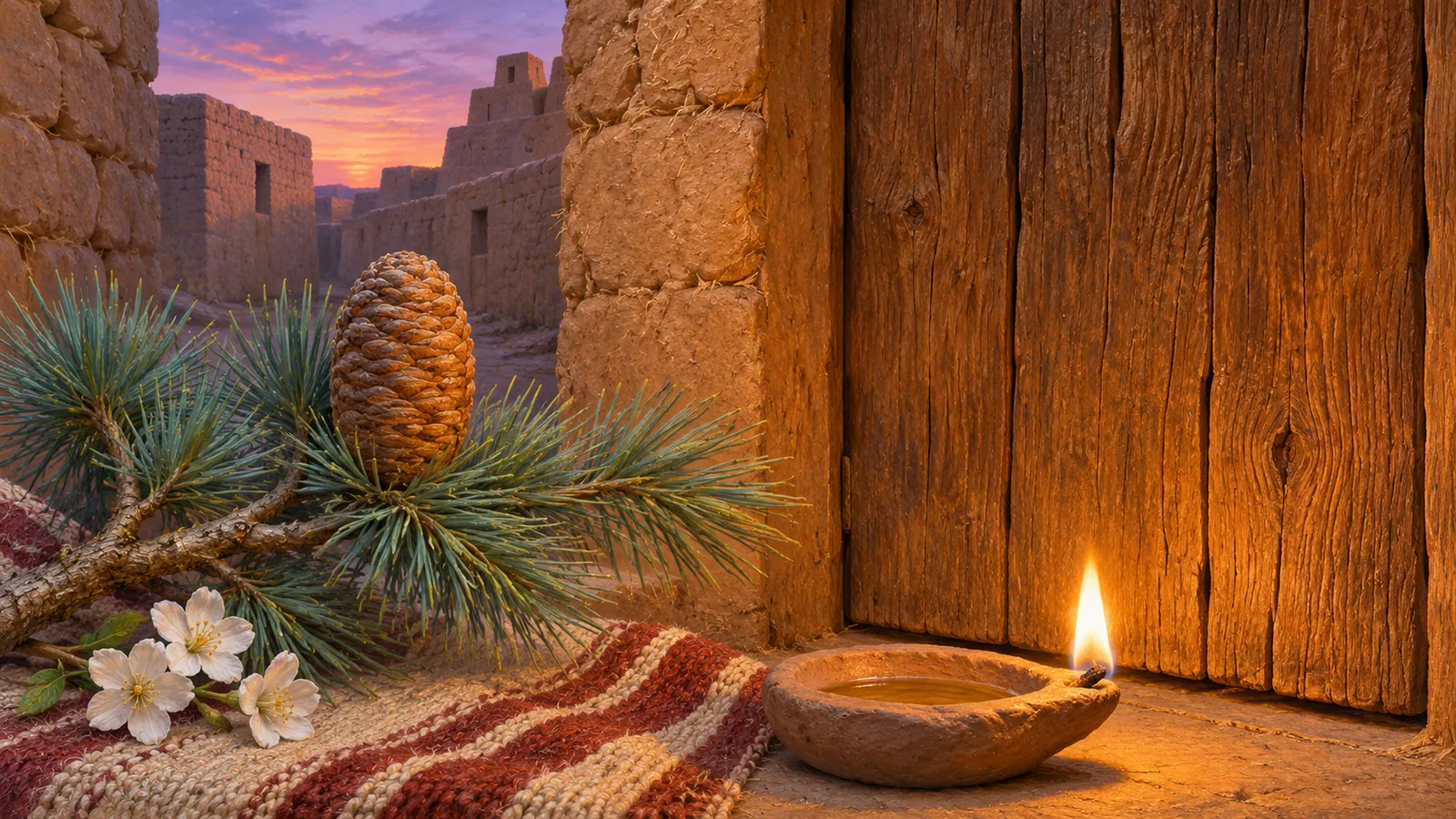
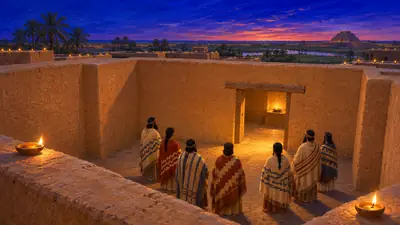
Sud and Enlil come together as wife and husband in the Ekur. The poet clothes the private chamber in flowers and gives it the scent of a cedar forest.
NINLIL
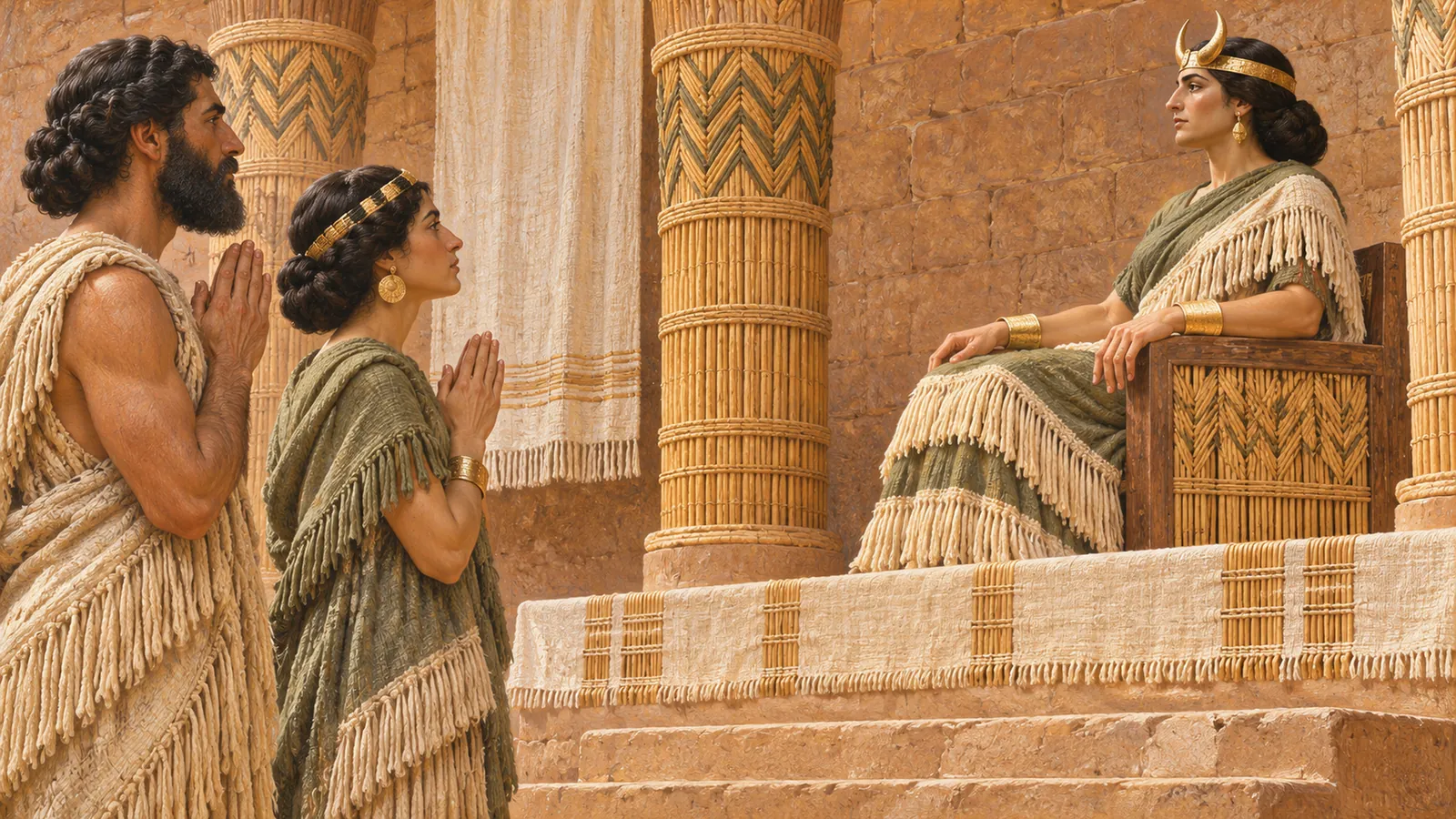
The Susa tablet lets us see what follows. Sud takes her place on Enlil’s raised seat. The people now direct their prayers to her in her own right.
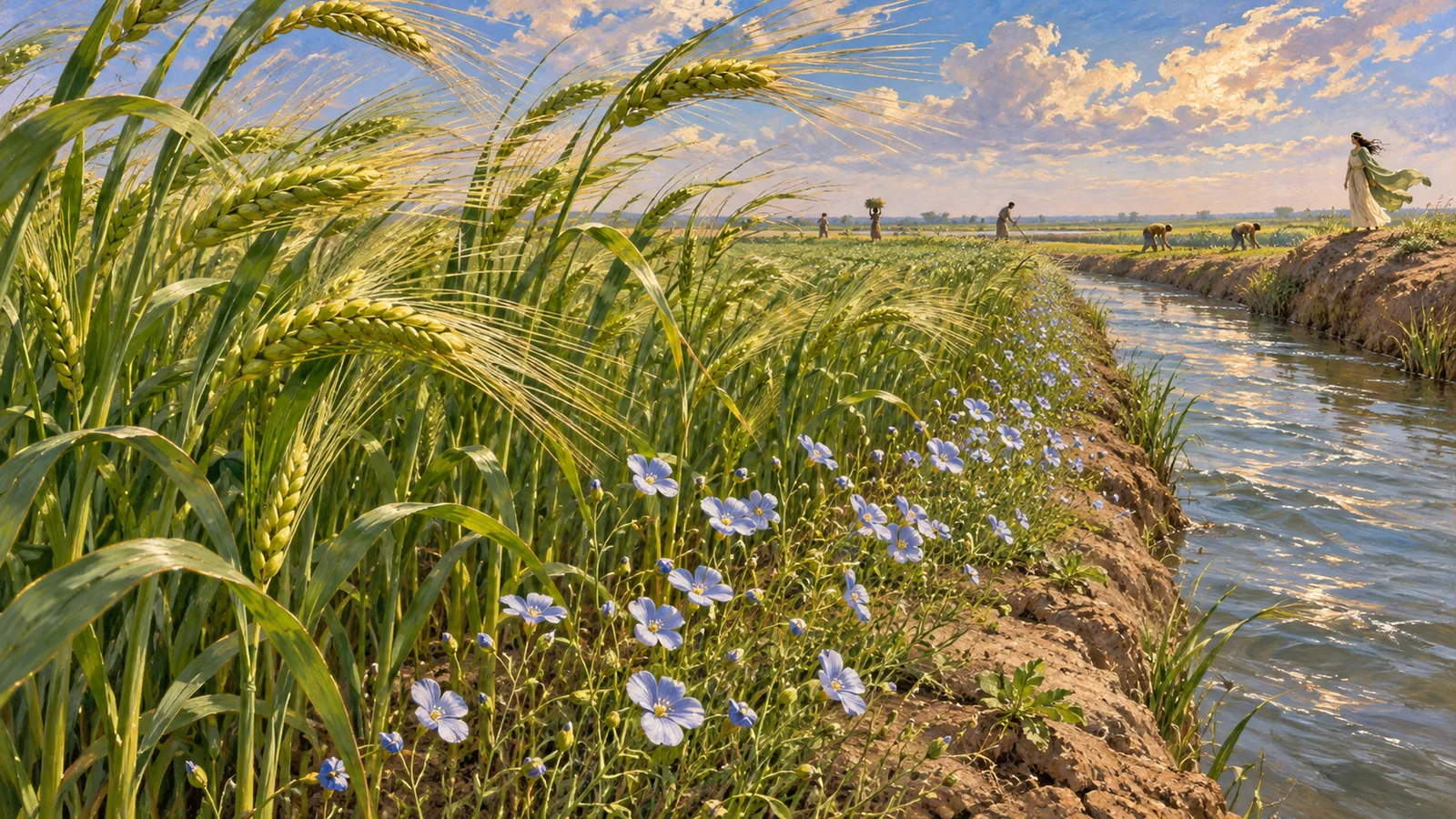
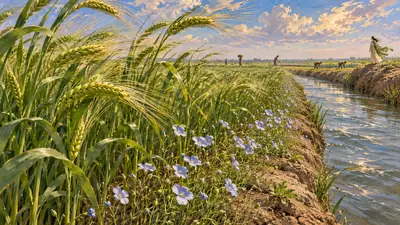
Enlil calls her Ezina, the growing grain that gives life to Sumer. He places her in the furrows, where a new season raises grain and flax together.

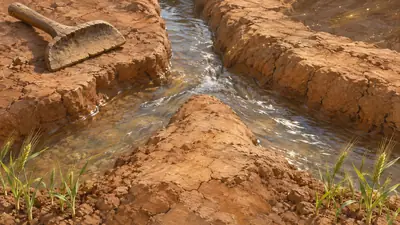
In one copy, Ishkur brings water to the growing plants. The version from Susa gives Sud charge of channels and levees too. The promise reaches into the work of the fields.
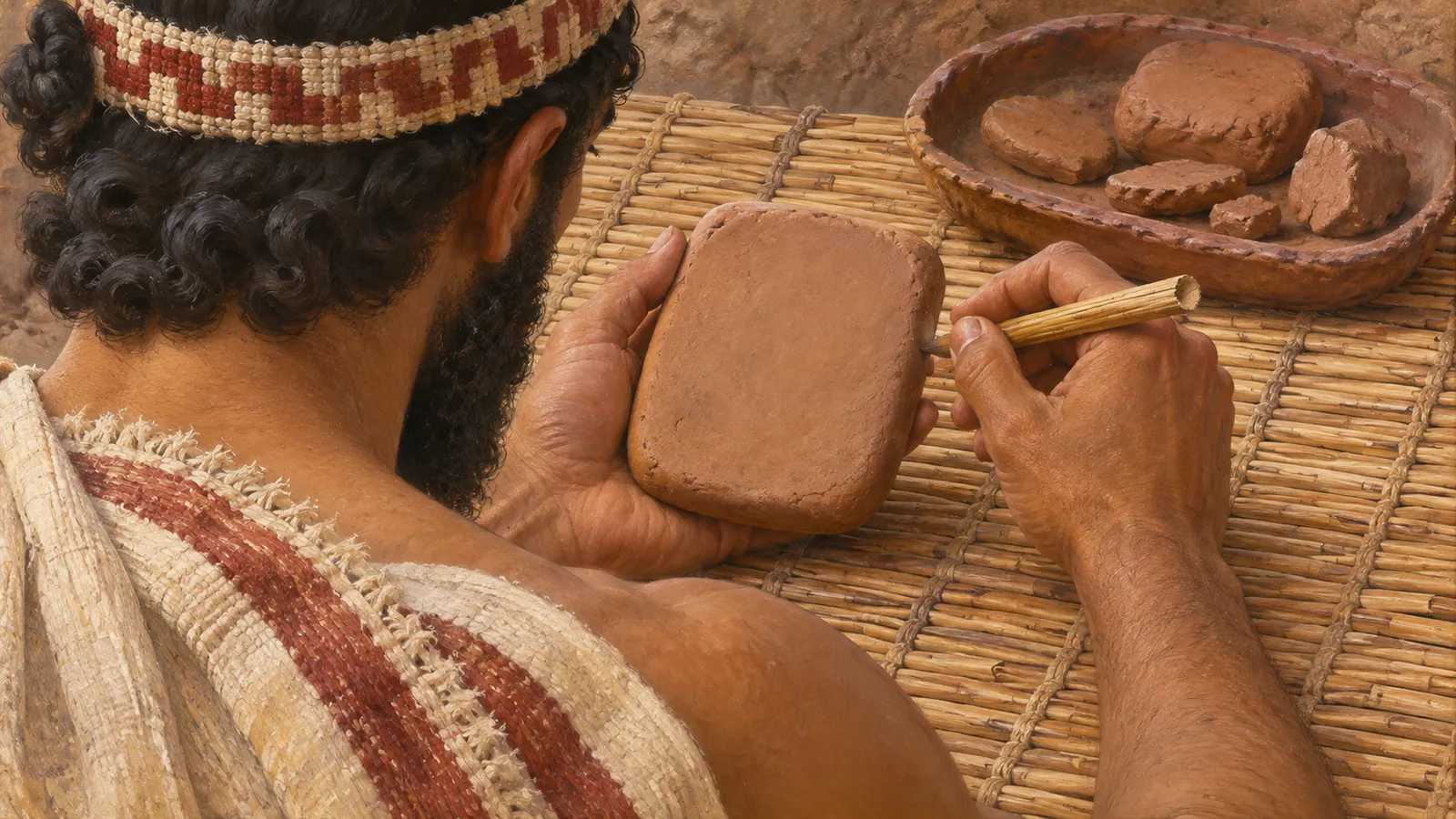
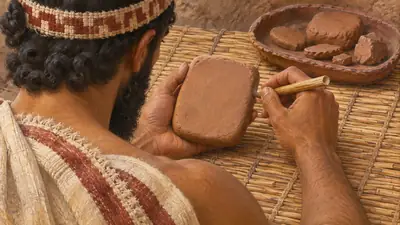
Then come the scribe’s tools and tasks. The tablet, the reed and the board for writing are entrusted to Sud, along with the keeping and reckoning of accounts.
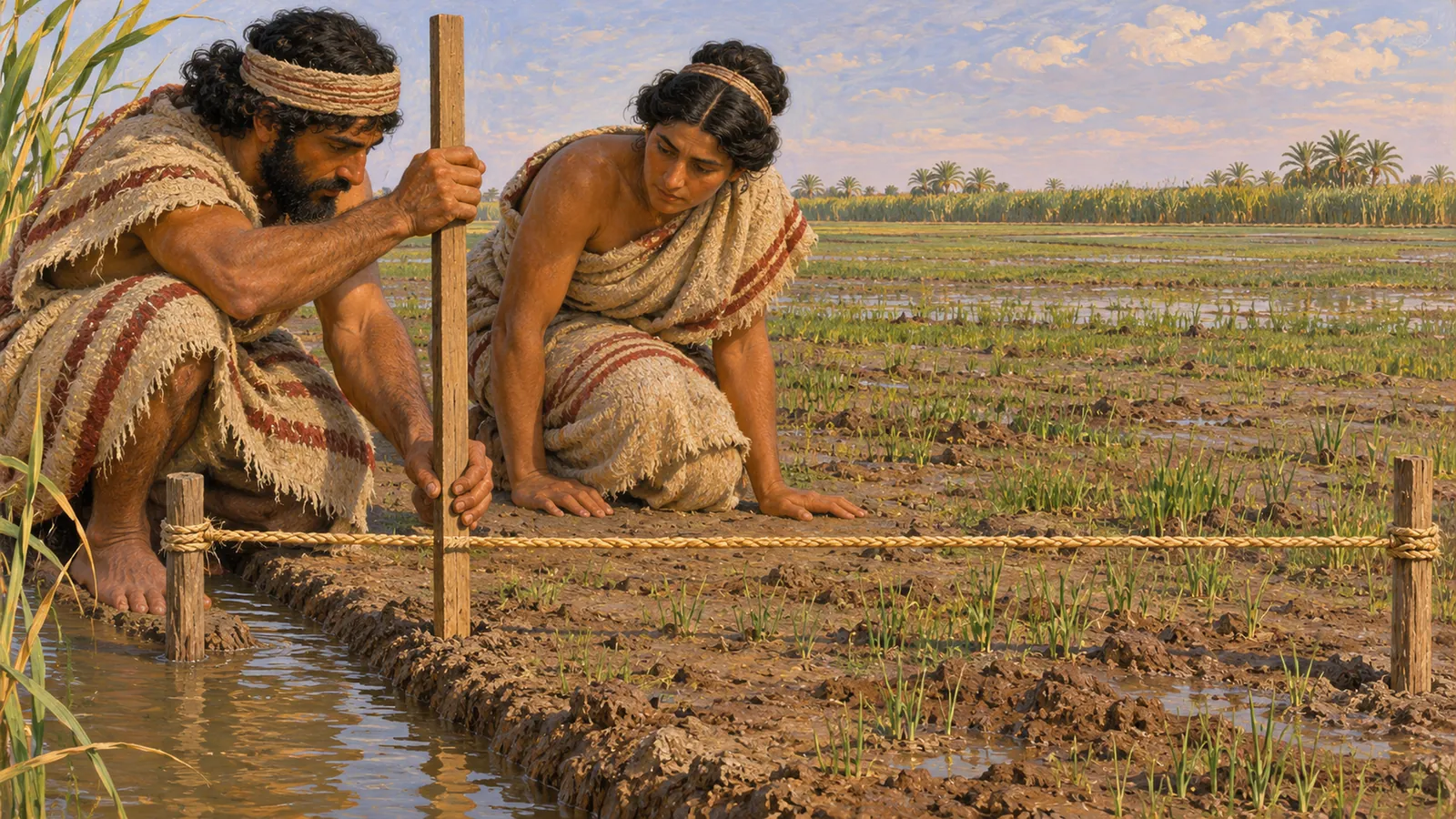
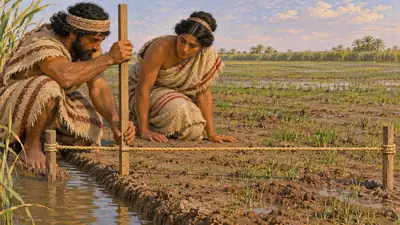
The surveyor’s rope, peg and rod also belong in her hands. With them people measure the earth and mark boundaries. The gifts have become duties that shape the land.
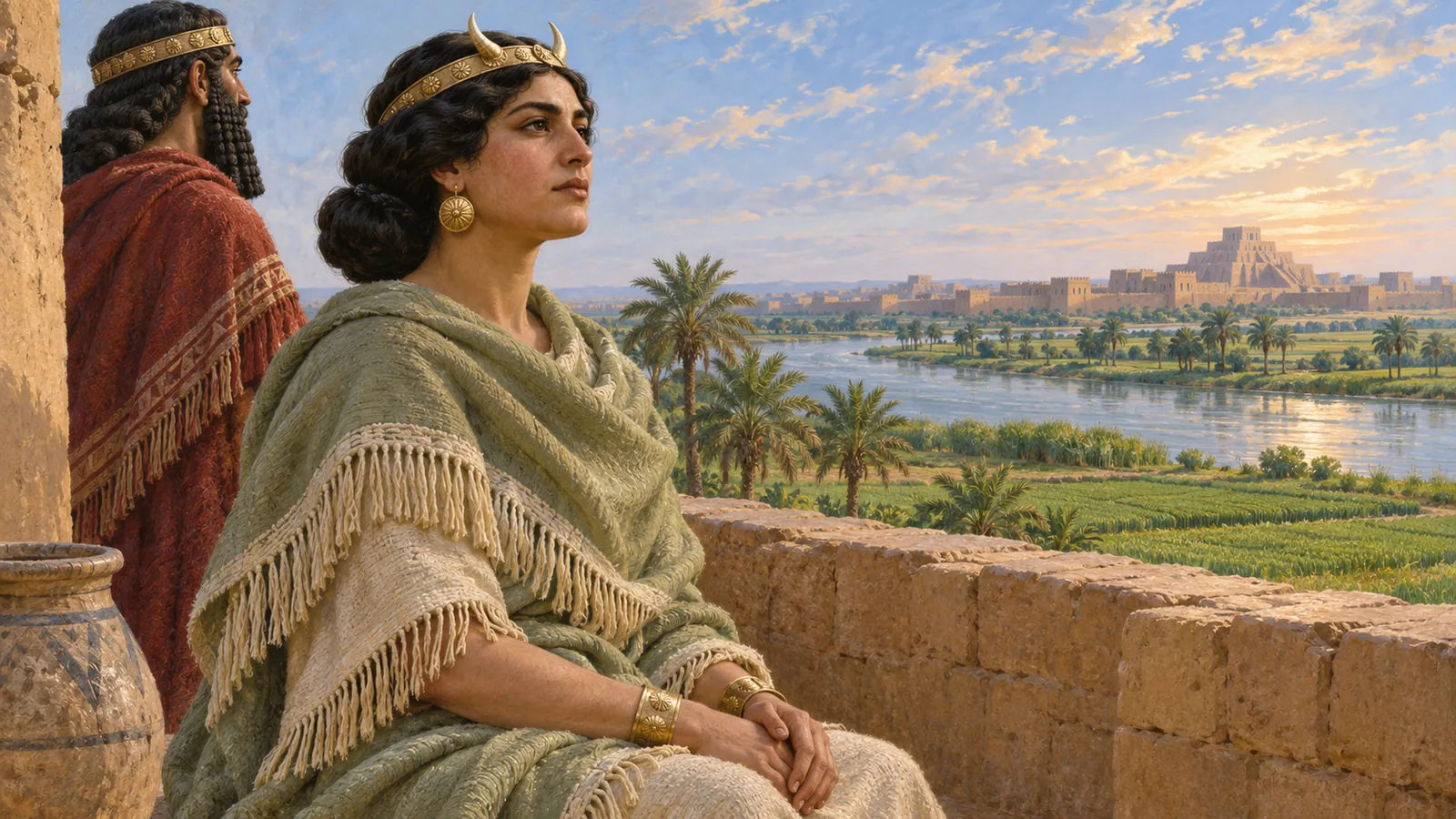
The older text breaks near the words that change Sud’s name. At Susa, the change is clear. Enlil is king, and Sud, as Ninlil, is queen.
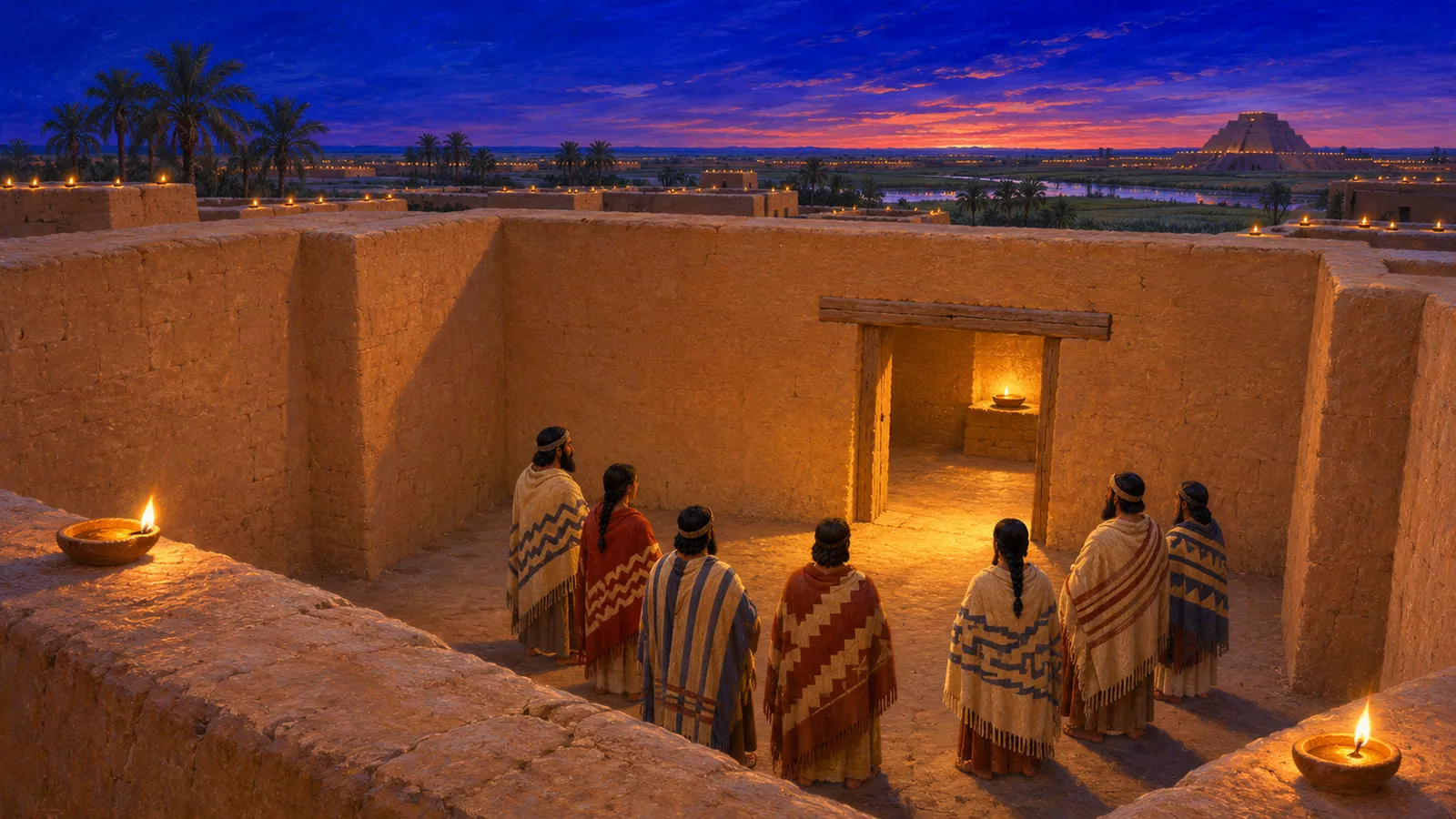
At the shrine in Nippur, the Susa tablet remembers the giving of presents and a song of praise. The setting fades, while the name Ninlil carries through the damaged ending.
End of chapter 1
All pages

Sources
Editions consulted
- Electronic Text Corpus of Sumerian Literature, 1.2.2: — version A and the version B supplement from Susa.
- Miguel Civil, Enlil and Ninlil: The Marriage of Sud: — text edition and analysis, JAOS 103, 43–66.
- Penn Museum, tablet fragment from Nippur, P278098: — object record for a nine-line witness of the poem.
- Electronic Text Corpus of Sumerian Literature, composite Sumerian text
- Susa tablet of the marriage of Sud, Louvre inventory SB 12361
- Miguel Civil’s text edition, bibliography and identifiers at CDLI
Ancient lines behind each page
- Page 1: ETCSL A 1–8; Nippur witness P278098
- Page 2: ETCSL A 1–8
- Page 3: ETCSL A 9–14
- Page 4: ETCSL A 14–16
- Page 5: ETCSL A 17–22
- Page 6: ETCSL A 23–26
- Page 7: ETCSL A 27–33
- Page 8: ETCSL A 27–33
- Page 9: ETCSL A 34–43
- Page 10: ETCSL A 34–43
- Page 11: ETCSL A 43–49
- Page 12: ETCSL A 44–59
- Page 13: ETCSL A 49–59
- Page 14: ETCSL A 60–69
- Page 15: ETCSL A 69–73
- Page 16: ETCSL A 74–90
- Page 17: ETCSL A 82–90
- Page 18: ETCSL A 90–94
- Page 19: ETCSL A 95–102
- Page 20: ETCSL A 103–105
- Page 21: ETCSL A 103–113
- Page 22: ETCSL A 109–113
- Page 23: ETCSL A 114–117
- Page 24: ETCSL A 118–123
- Page 25: ETCSL A 118–123
- Page 26: ETCSL A 124–129
- Page 27: ETCSL A 130–136
- Page 28: ETCSL A 137–145; B 1–4
- Page 29: ETCSL A 141–145; B 1–4
- Page 30: ETCSL A 146–149; B 5–8
- Page 31: ETCSL B 5–8
- Page 32: ETCSL A 150–155; B 7–9
- Page 33: ETCSL B 9–14
- Page 34: ETCSL A 156–162; B 15–21
- Page 35: ETCSL A 159–164; B 18–26
- Page 36: ETCSL A 163–170
- Page 37: ETCSL A 164–170; B 22–26
- Page 38: ETCSL A 169–170; B 26–29
- Page 39: ETCSL A Segment B 1; B 30–31
Illustrations made with AI tools by IL Archive; the text is based on the ancient sources (see the sources at the end of each chapter).