Entity · Deity
Nisaba
A reference page linking a name, group, or concept to the materials that discuss it.
Mesopotamian goddess of grain and writing, associated with Ereš and scribes; also called Nidaba.
Last reviewed:
Text
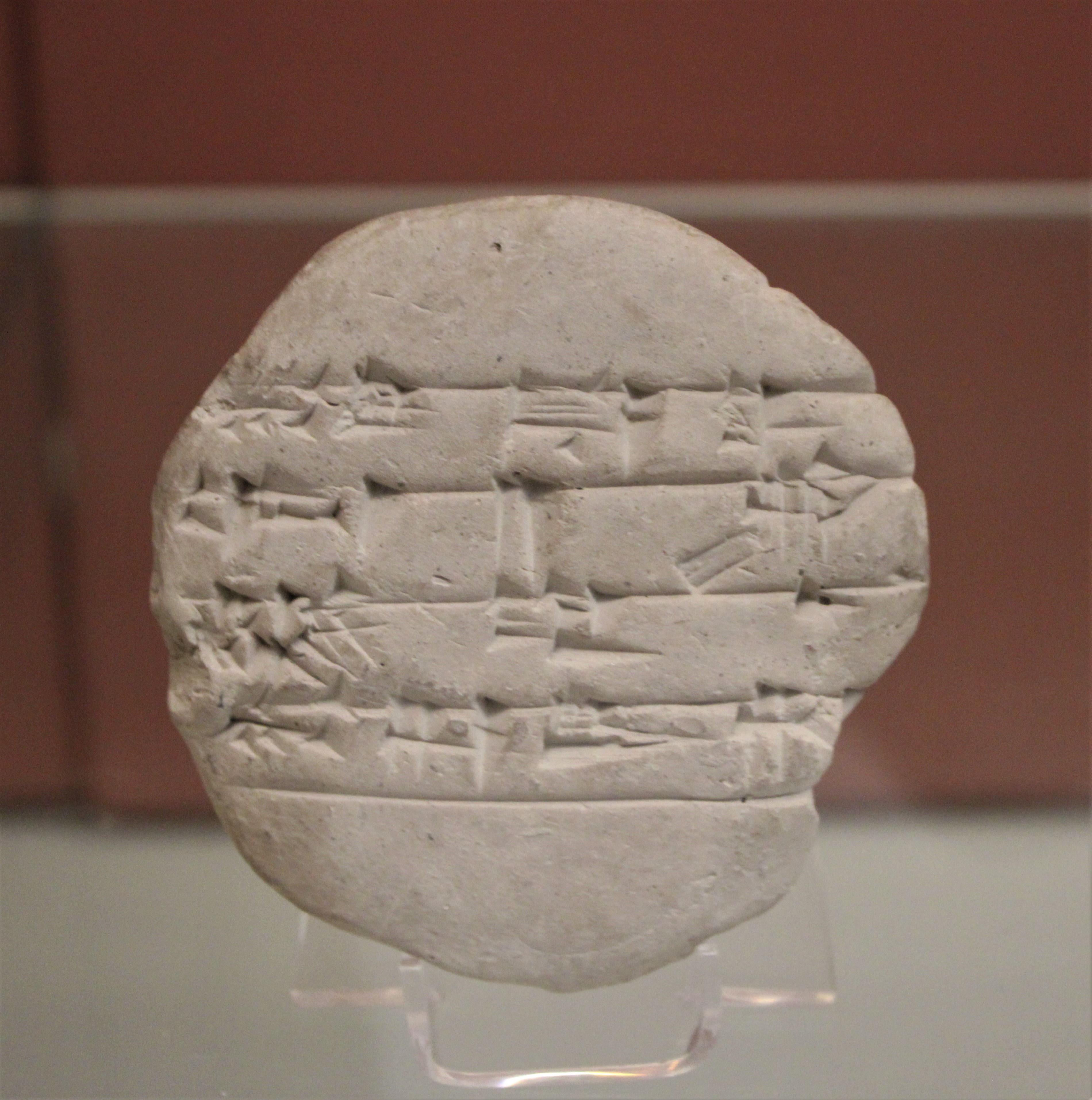
Nisaba, also written Nidaba or Nissaba, was a Mesopotamian goddess associated with grain, writing and the city of ErešErešSumerian city associated with Nisaba; its archaeological location remains uncertain. Not the goddess Ereshkigal.Glossary · Click to read the explanation. She patronized scribal work; no surviving image is securely agreed to portray her. [1]
Her hymn combines tablets, reeds and wisdom with the growth of barley and flax, so her role was not confined to writing. In EnlilEnlilEnlil/Ellil: a major Mesopotamian god associated with destinies, kingship, and Ekur at Nippur, already prominent in third-millennium god lists. His name’s origin and cult beginnings remain debated.Glossary · Click to read the explanation and Sud she appears in the parentage of Sud, renamed NinlilNinlilMesopotamian goddess and consort of Enlil, associated with Nippur, Tummal, destinies and royal ritual. Identified with Sud in literary tradition and known as Mulliltu/Mullissu in Akkadian and Assyrian contexts; her genealogies and roles vary by text and period.Glossary · Click to read the explanation: a relationship within a particular literary tradition, not a genealogy shared by every text. [2][3]
References and notes
- Johanna Tudeau, “Nidaba”, Ancient Mesopotamian Gods and Goddesses, ORACC. Indexed sections on functions, cult places and iconography. Return to the text ↑
- ETCSL, University of Oxford, A hymn to Nisaba, 4.16.1; English translation. Old Babylonian version, lines 1–20 and 27–35. Return to the text ↑
- ETCSL, University of Oxford, Enlil and Sud, 1.2.2; English translation. Version A, lines 1–102 and 156–170; version B, lines 15–29. Return to the text ↑
Suggest a correction · Suggest a source for this record
Cite this record
IL Archive, «Nisaba», https://ilarchive.com/en/entities/nisaba
Continue reading
Related readings