The Debate between Hoe and Plough Chapter 1
Who Works the Land?
The proud Plough claims the harvest as his own. The small Hoe points to the work that sustains the fields and the towns. Enlil hears the dispute, and the poem has the last word.
SourcesTurn the pages with the arrows, the arrow keys or a swipe.
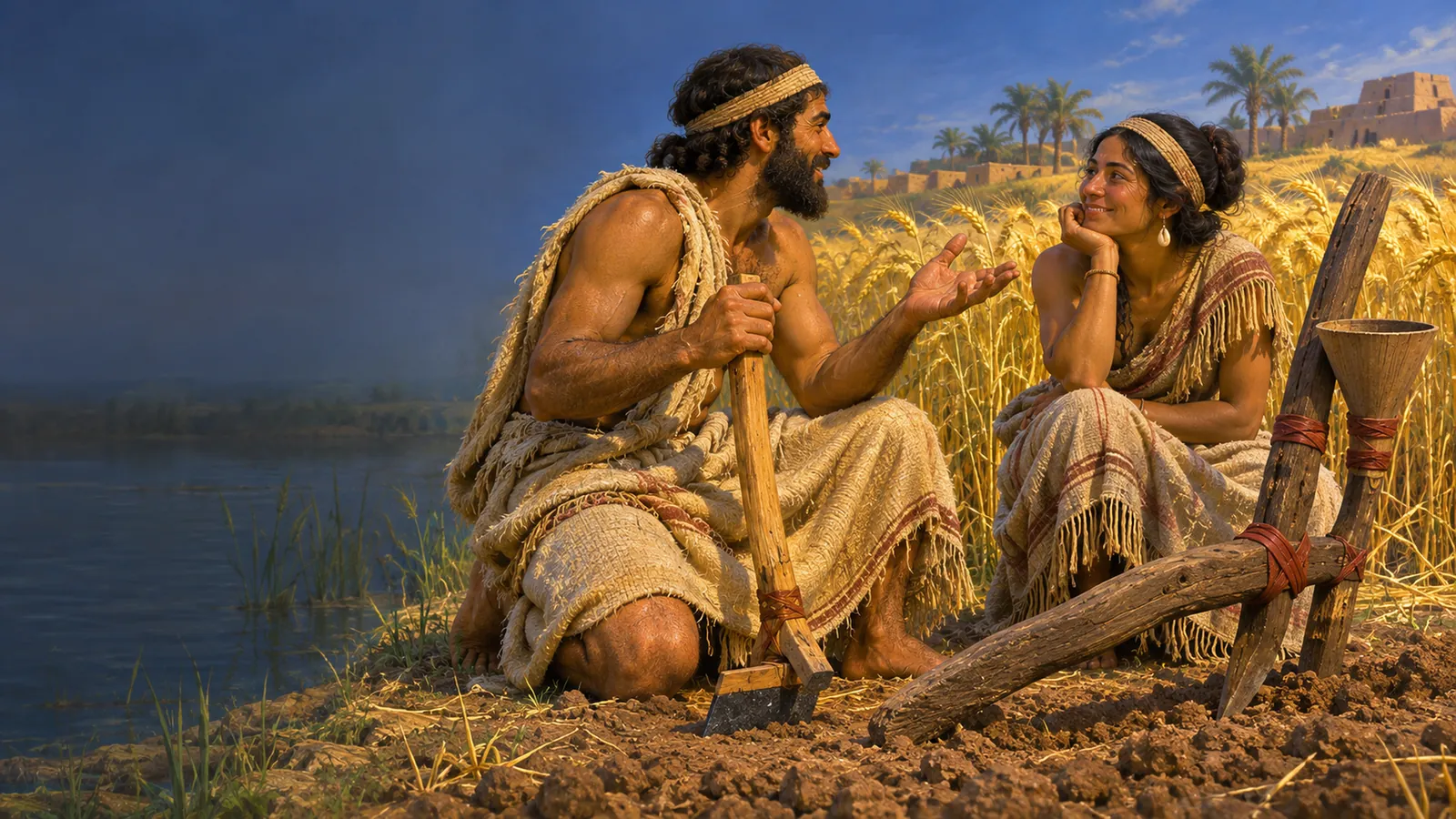
TWO TOOLS
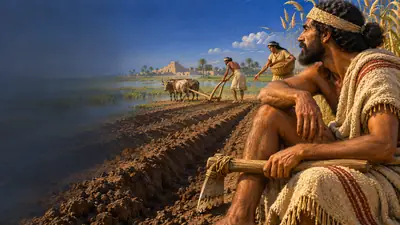
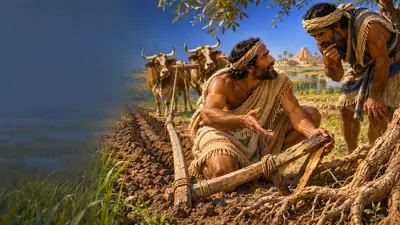
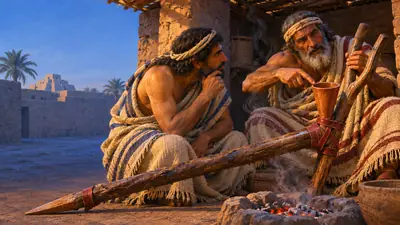
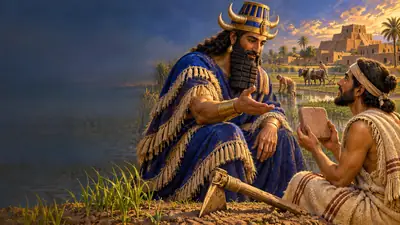
On the plain of Sumer, two wooden tools had a quarrel. It was the little Hoe that first challenged the proud Plough.
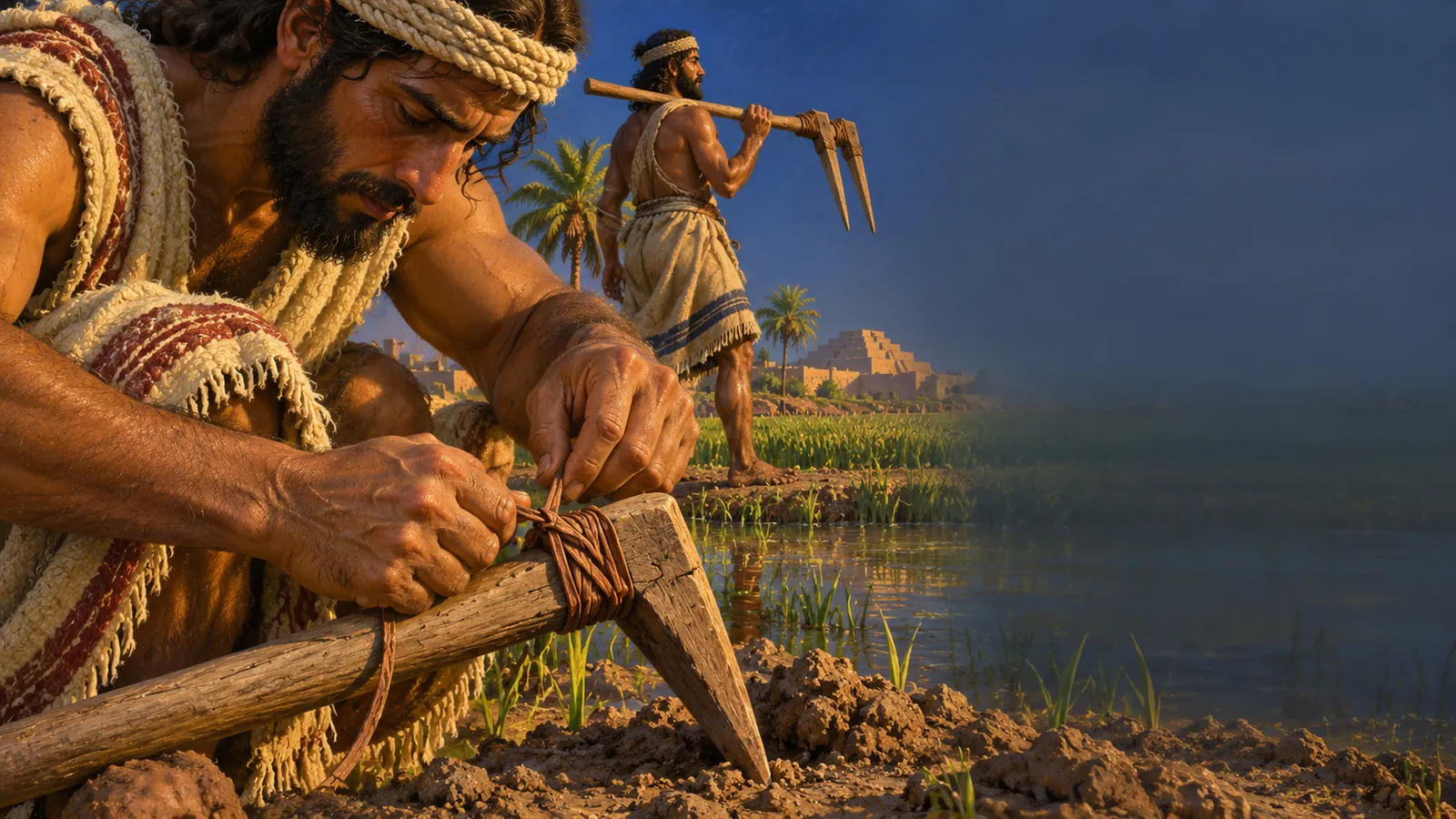
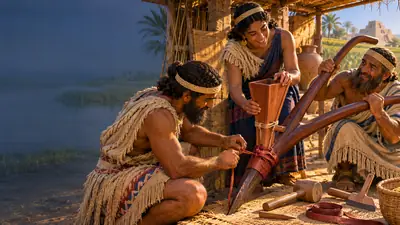
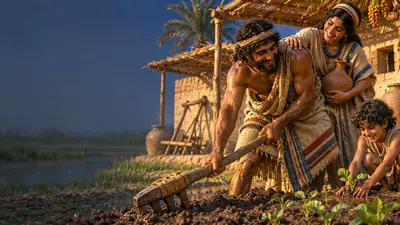
There were hoes of poplar and of tamarisk. Some had two teeth, some had four. This worn tool, bound with leather, was called a child of the poor.
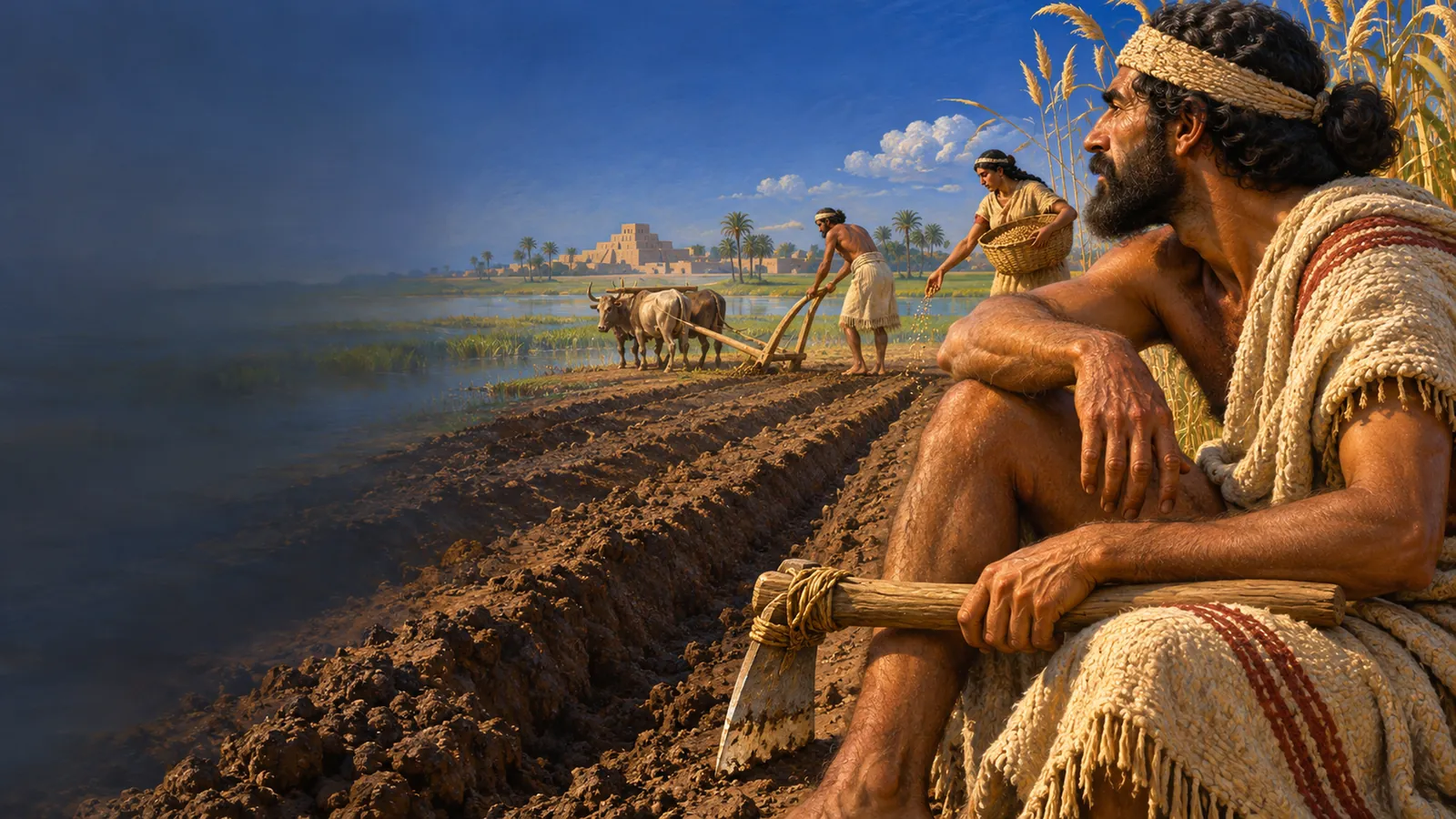
“You carve furrows and break up clods”, said the Hoe. “What do all those furrows and clods amount to beside the work I do?”
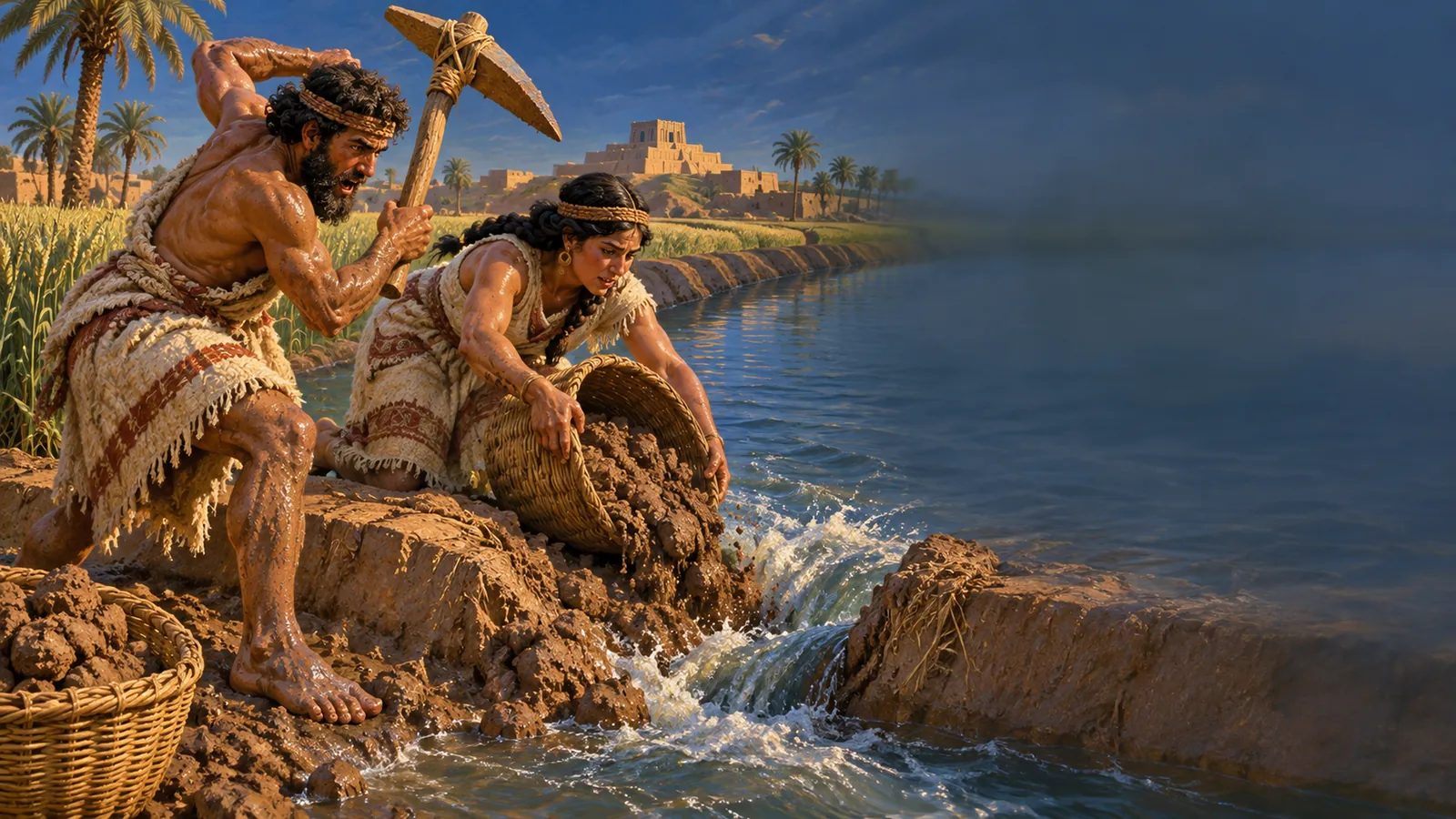
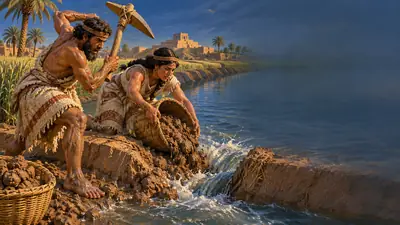
“When the water spills over, you cannot hold it back. And when the baskets need filling with earth, what good are you then?”
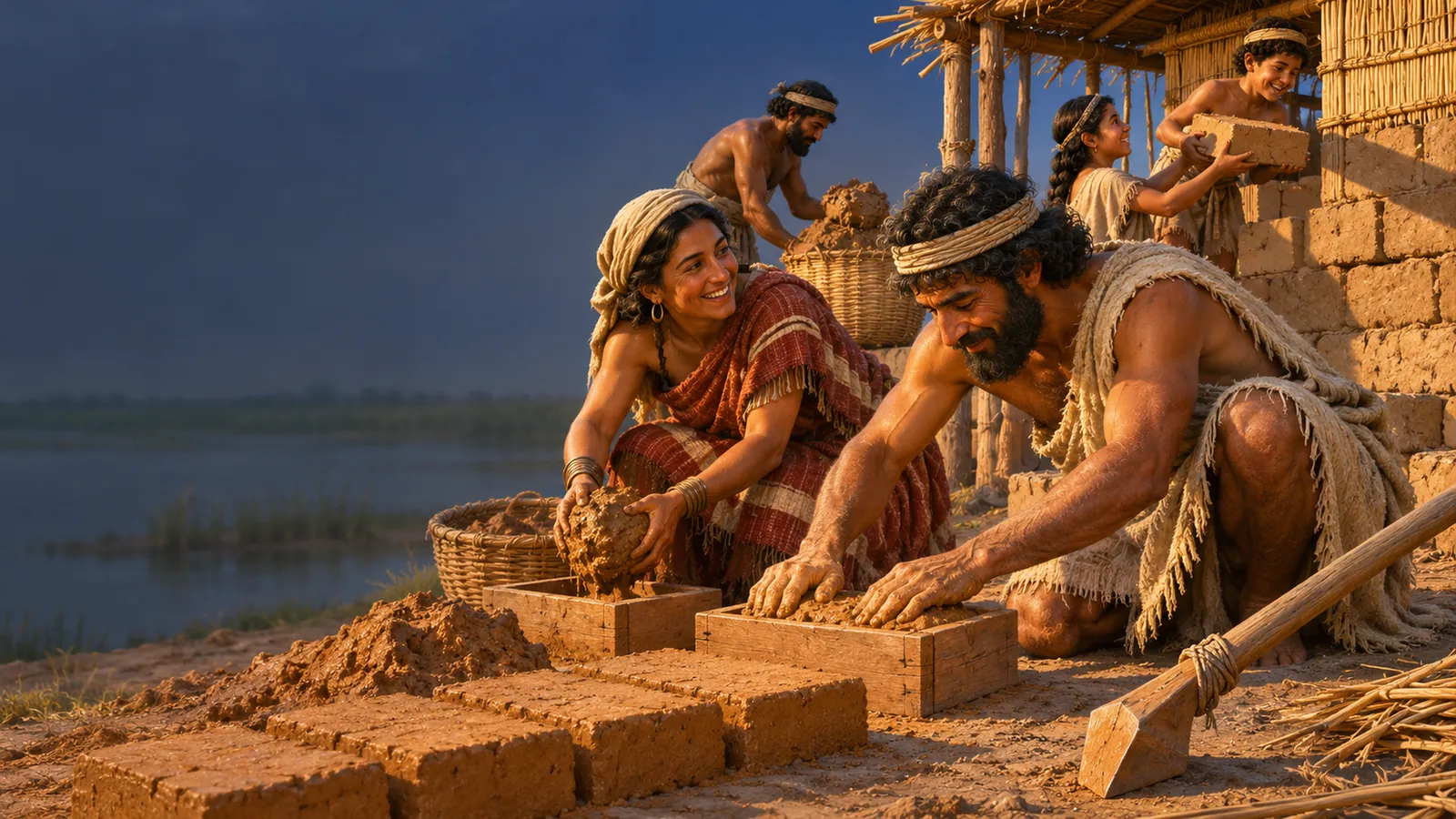
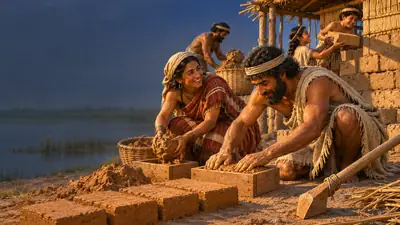
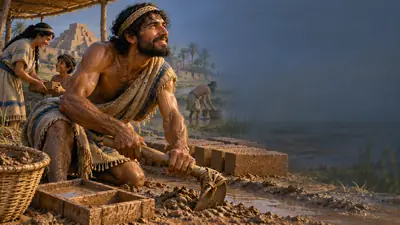
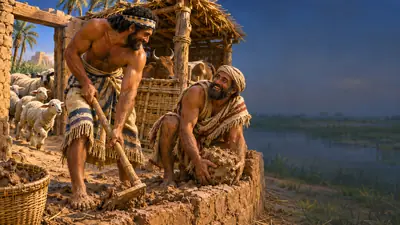
“You cannot work the clay for bricks”, the Hoe went on. “You cannot lay a foundation or build somebody a home.”
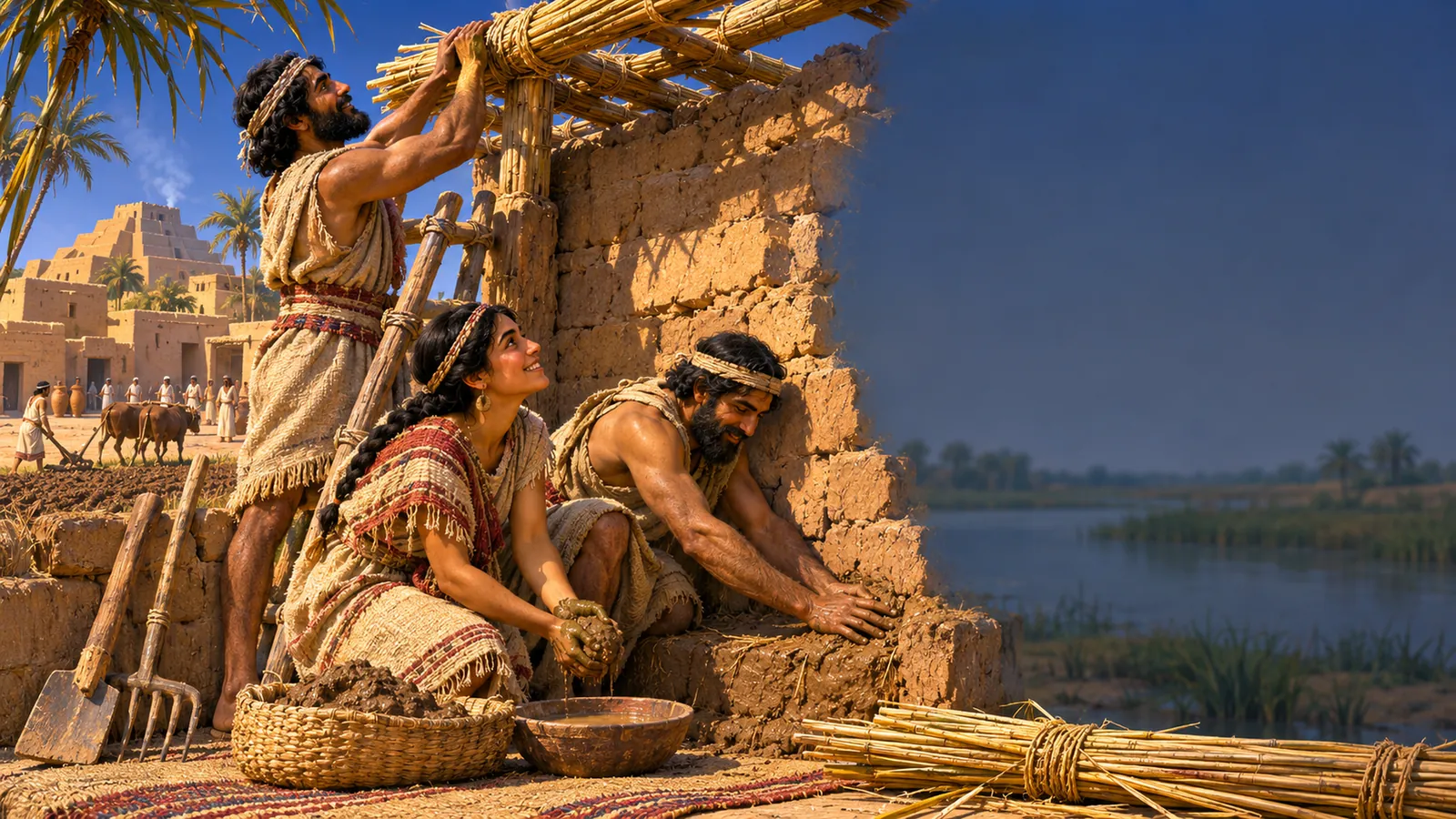
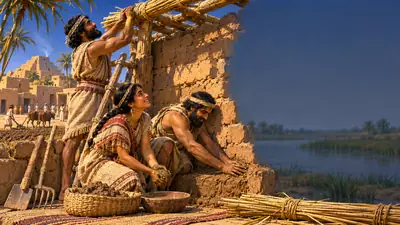
“Could you shore up an old wall, put a roof over a good man’s house, or level the town square?” asked the Hoe.
THE PLOUGH
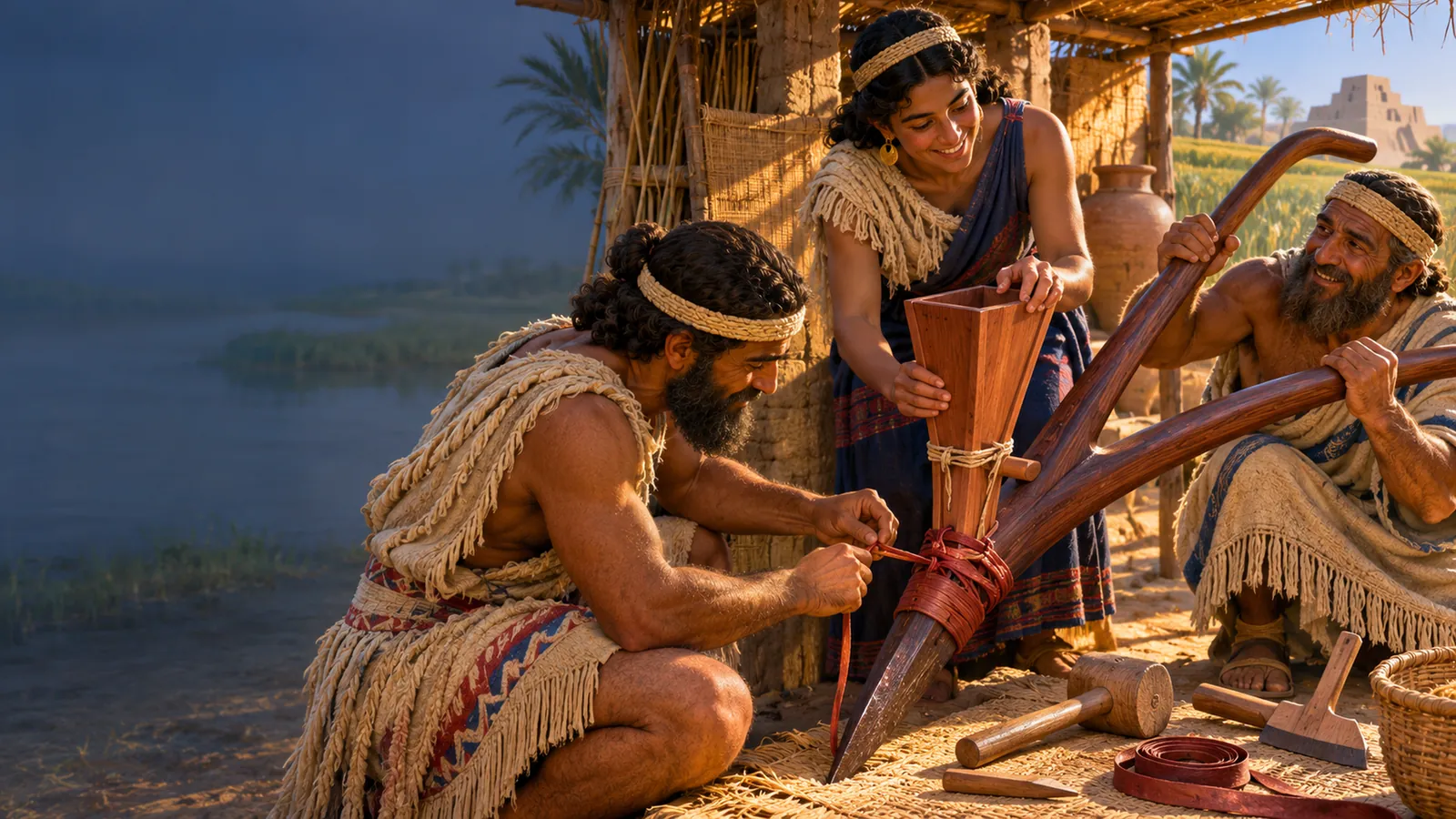
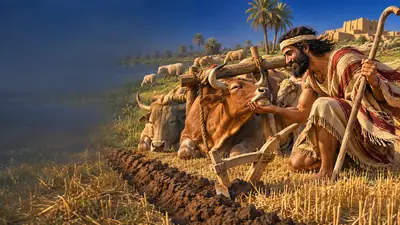
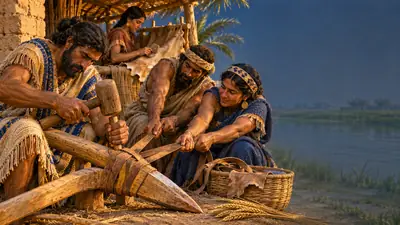
The Plough replied, “Strong hands put me together. I am the faithful farmer of humankind, and I serve the great Enlil himself.”
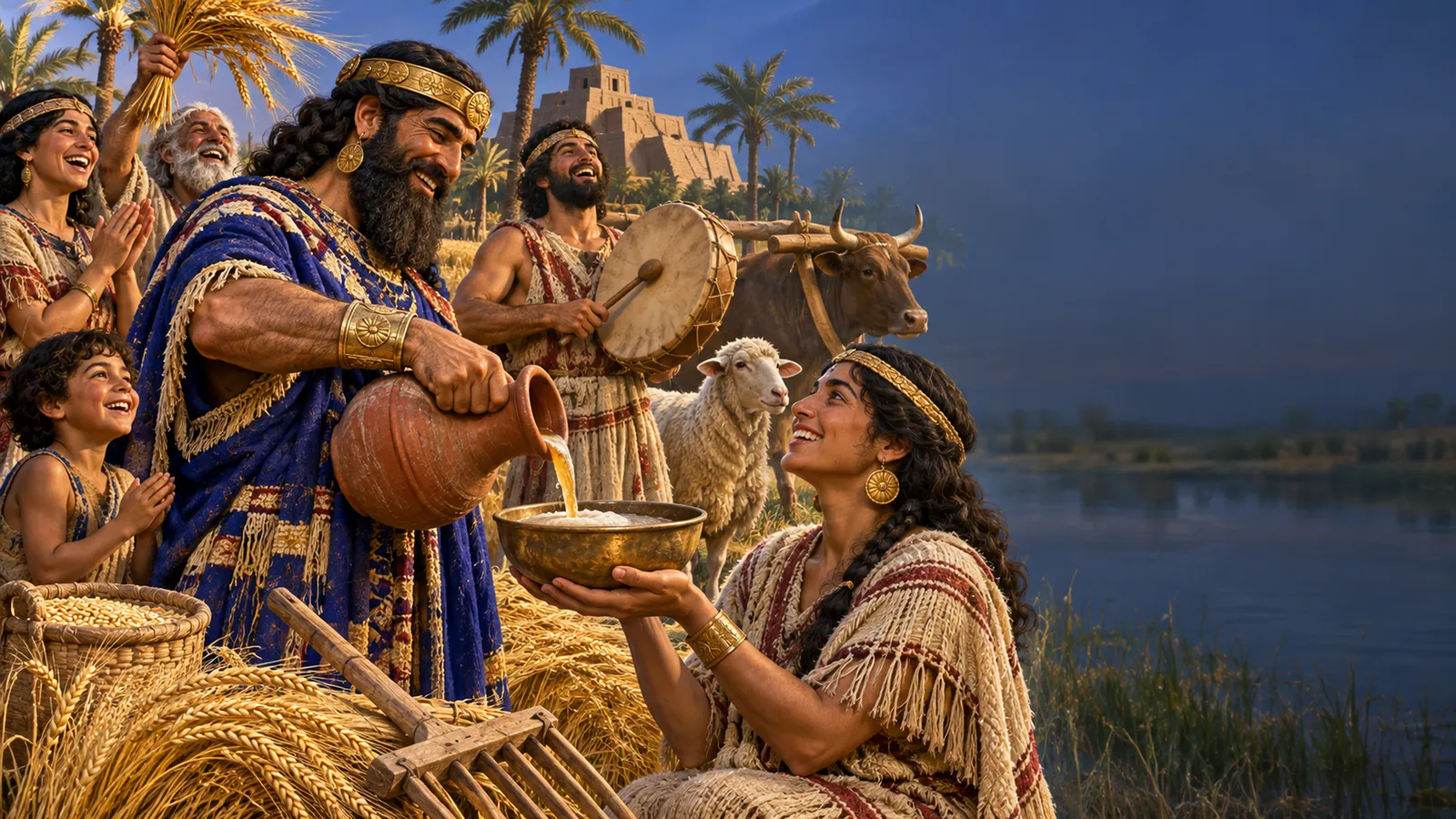
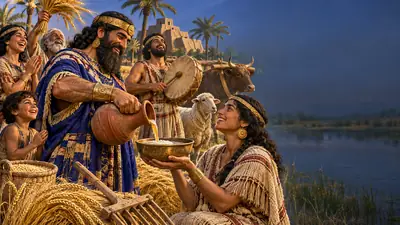
“At my harvest festival, the king sacrifices cattle and sheep. He pours out beer as an offering, and the drums sound across the field.”
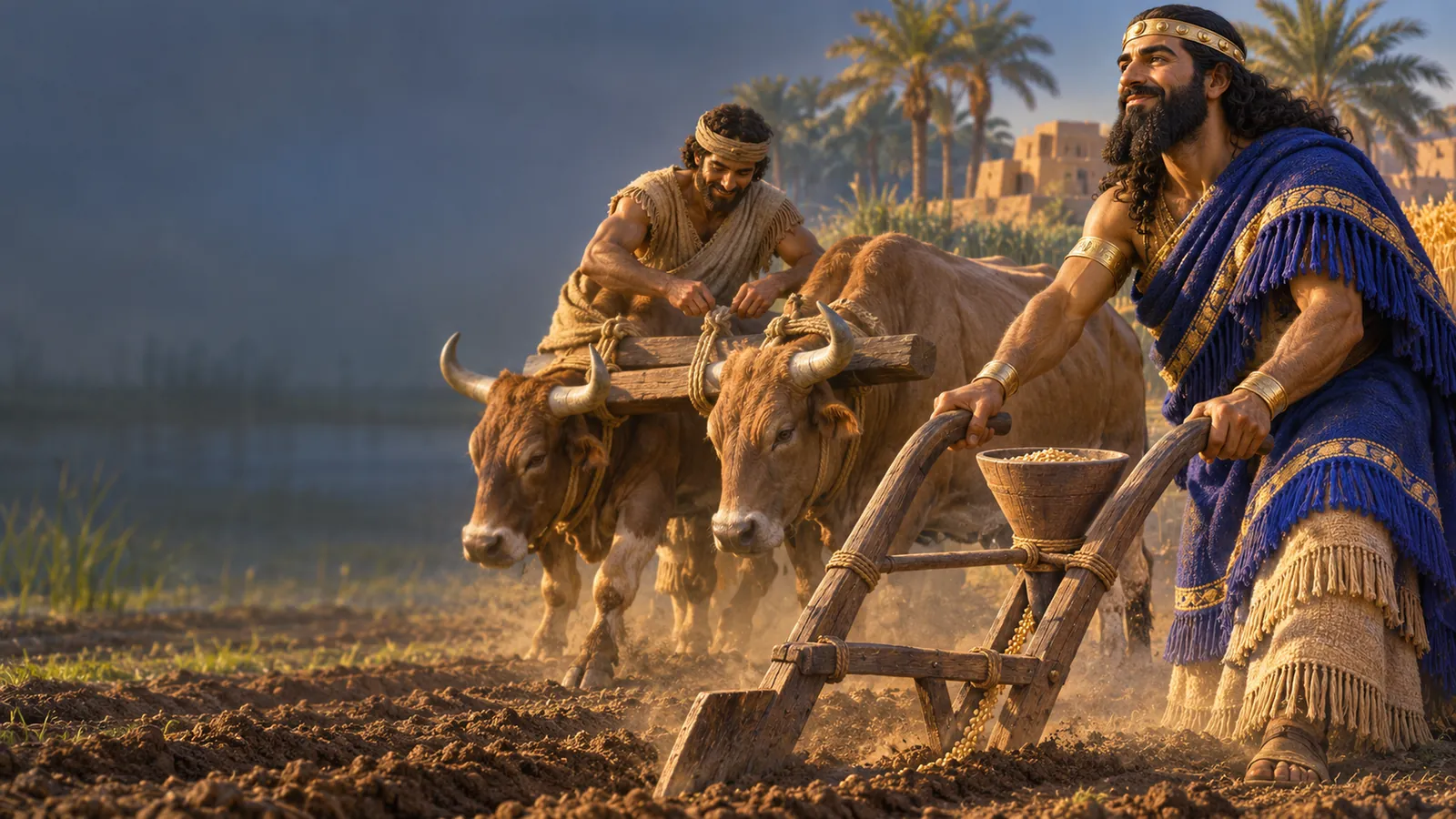
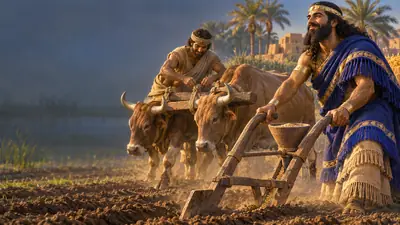
“The king lays his own hands on my handles”, said the Plough. “It is he who puts my oxen under the yoke.”
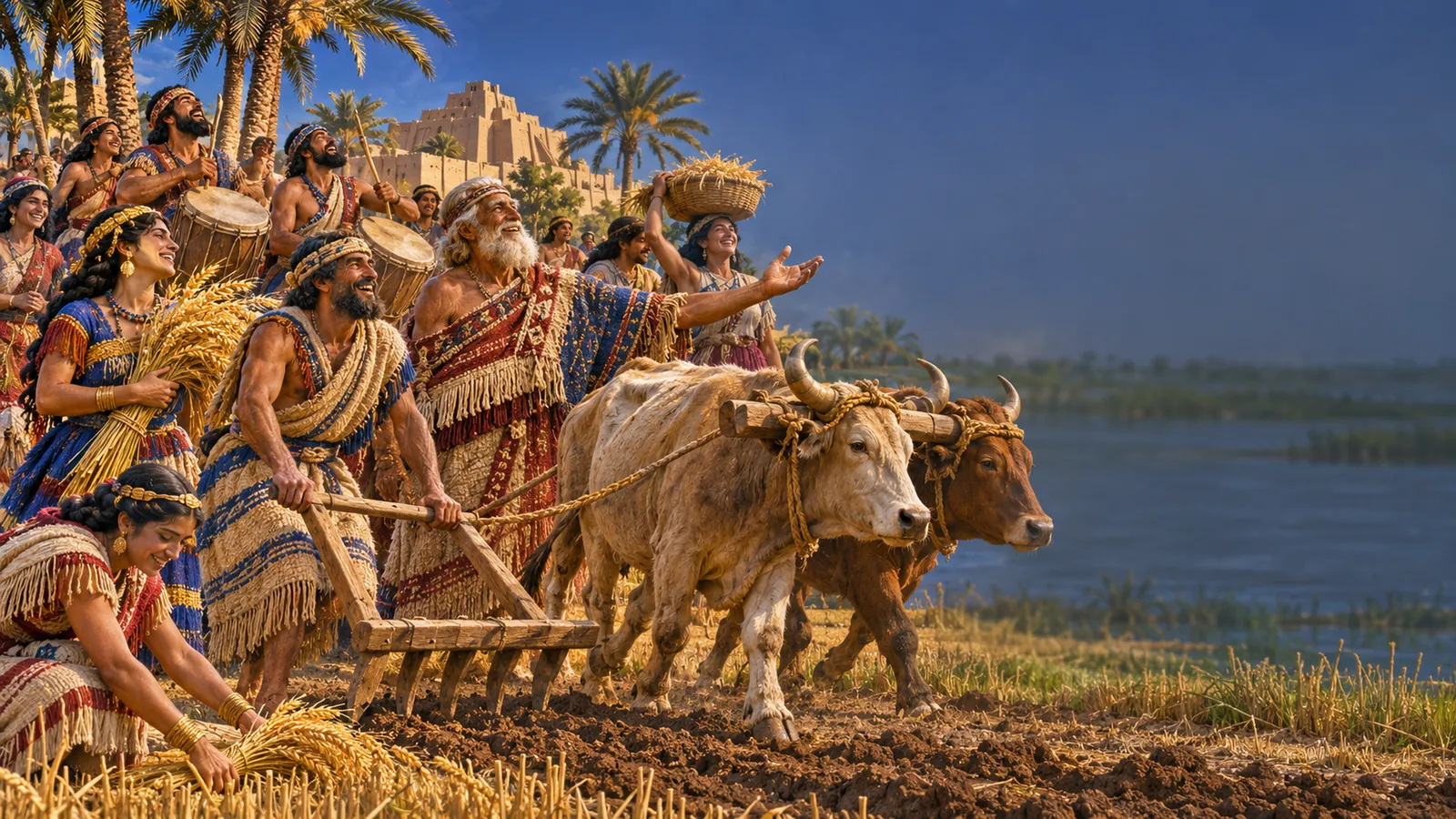
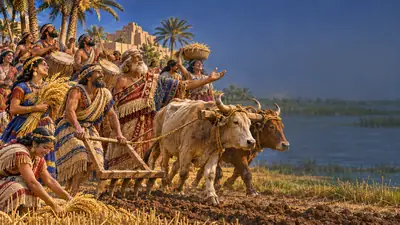
“The highest in the land walk by my side. From all the lands people look on in wonder, and my own people watch with joy.”
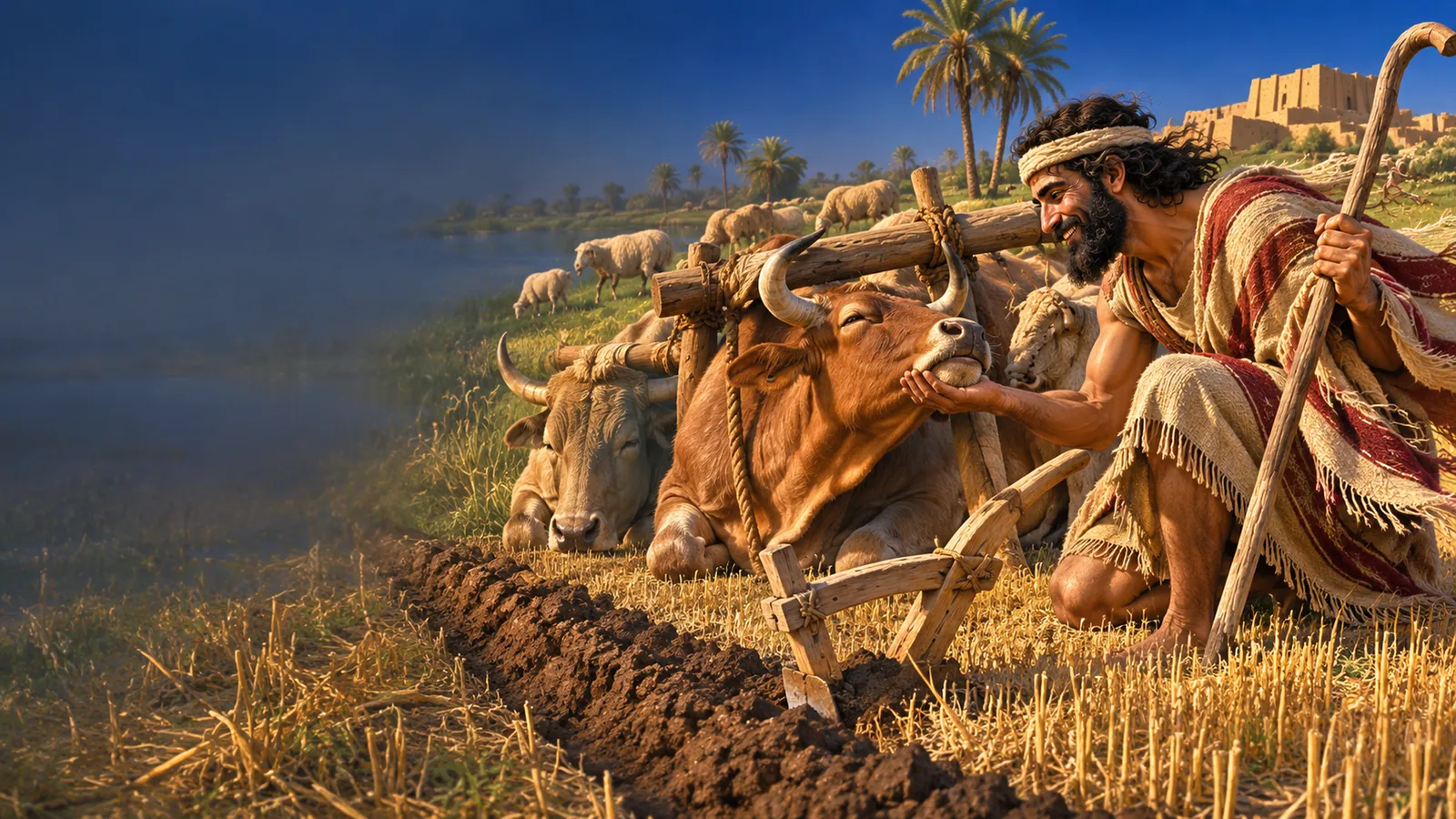
“My furrow adorns the plain”, said the Plough. “When my grain stands high in the fields, even the herds of Shakkan kneel before it.”
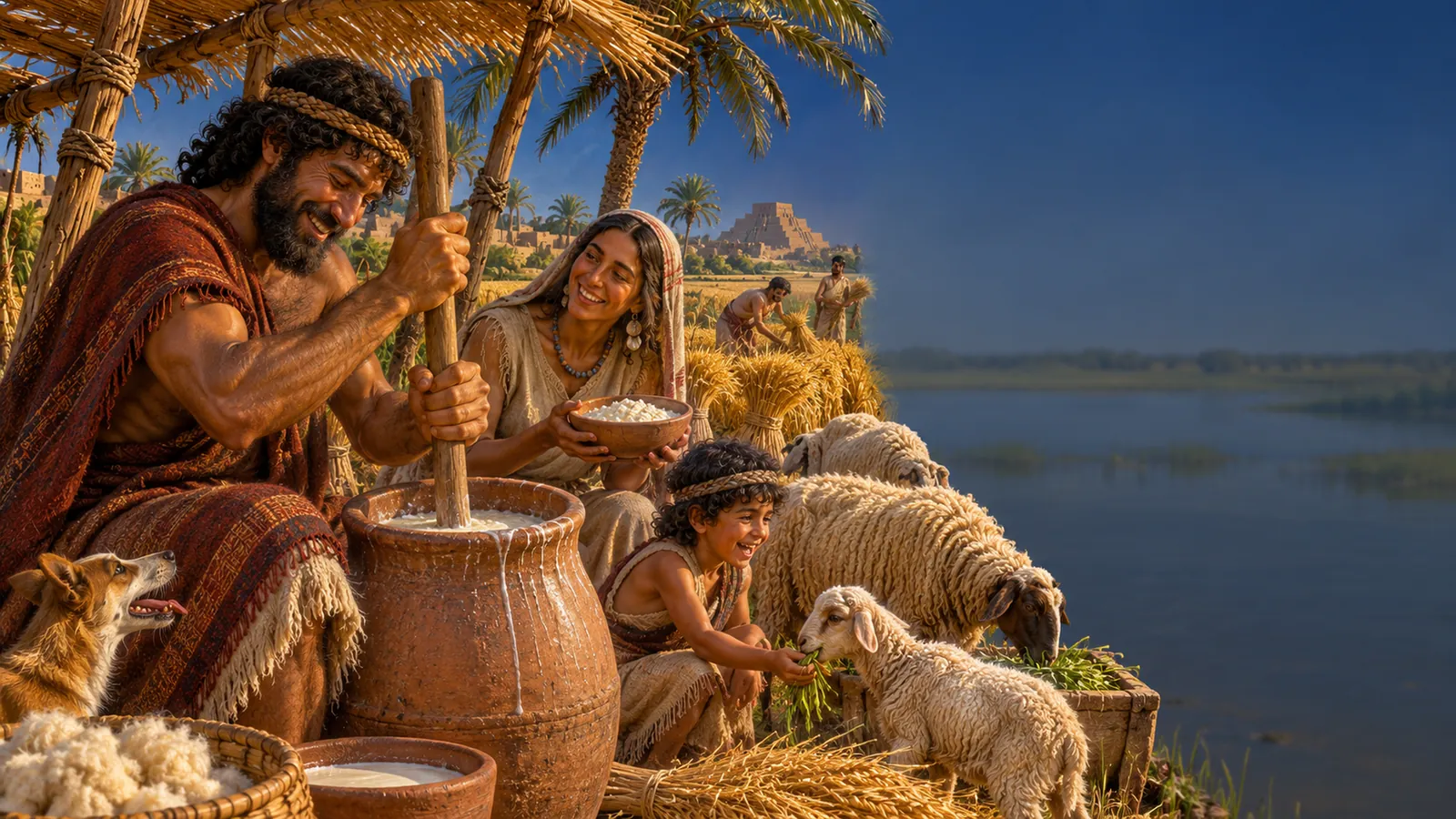
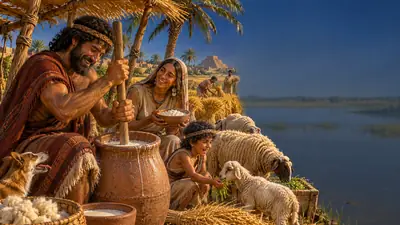
“Among the ripe barley, my labour brings more to the shepherd’s churn. Where my sheaves lie in the meadows, Dumuzi’s sheep thrive.”
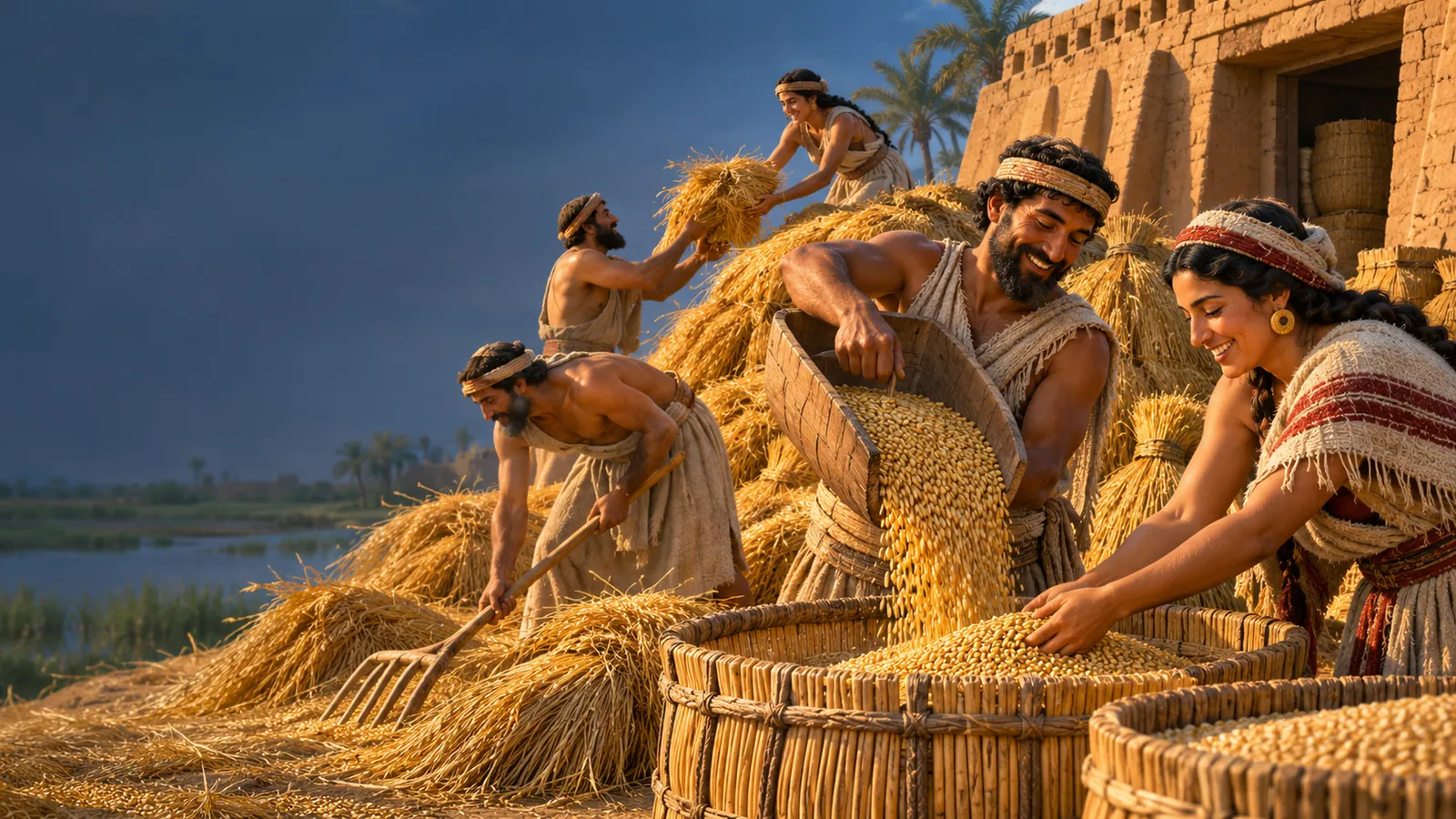
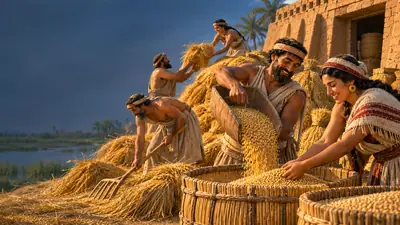
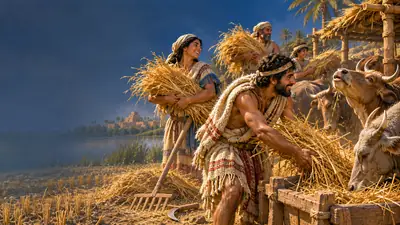
“See my threshing floors. I raise golden heaps for Enlil, gather wheat and emmer for him, and fill the people’s storehouses with barley.”
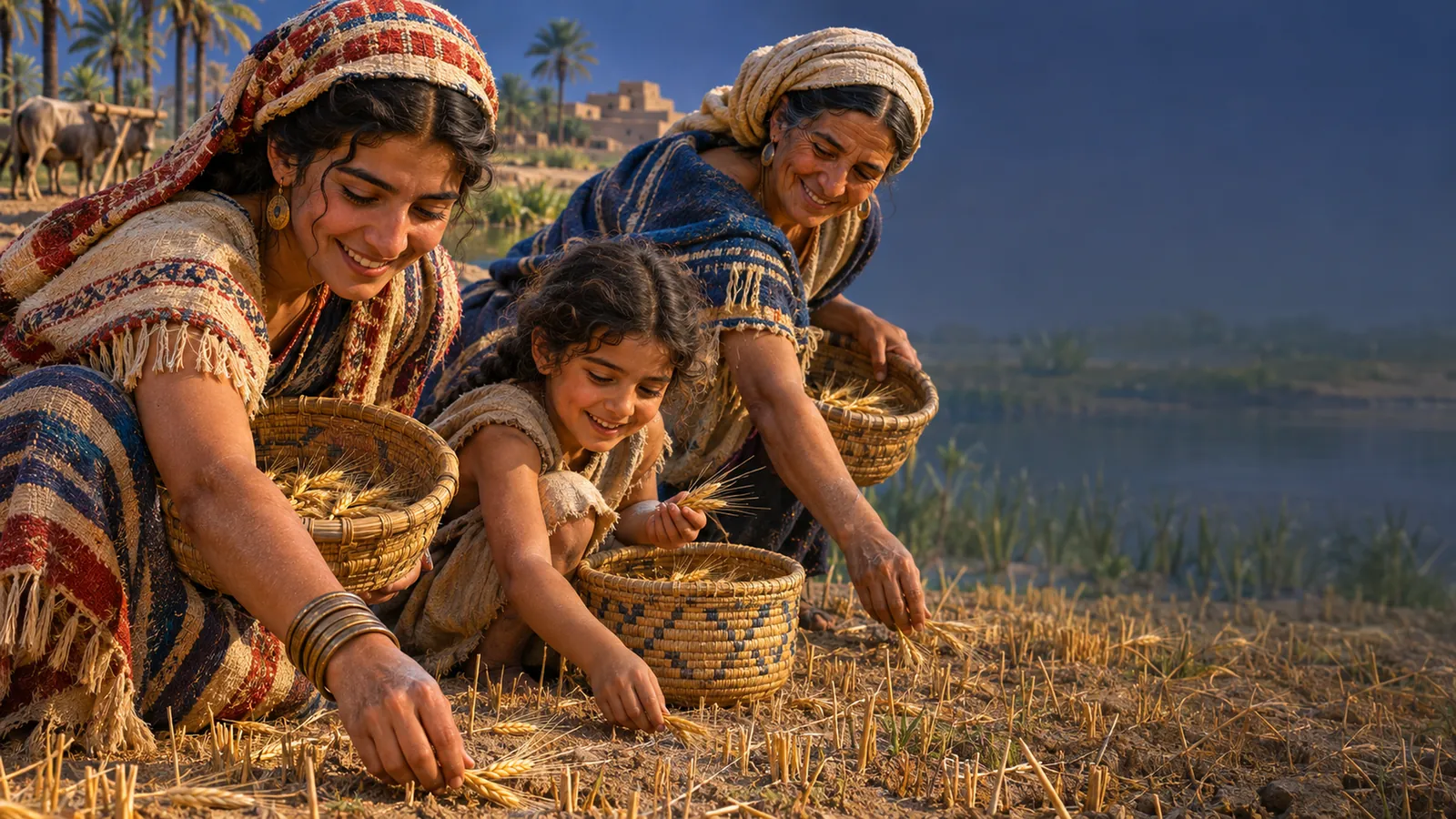
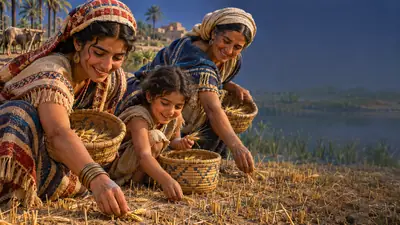
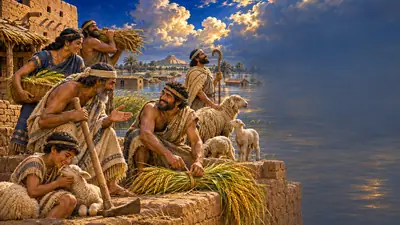
“Even the widows, the orphans and the poorest come with their reed baskets. They gather the ears of grain scattered across the ground.”
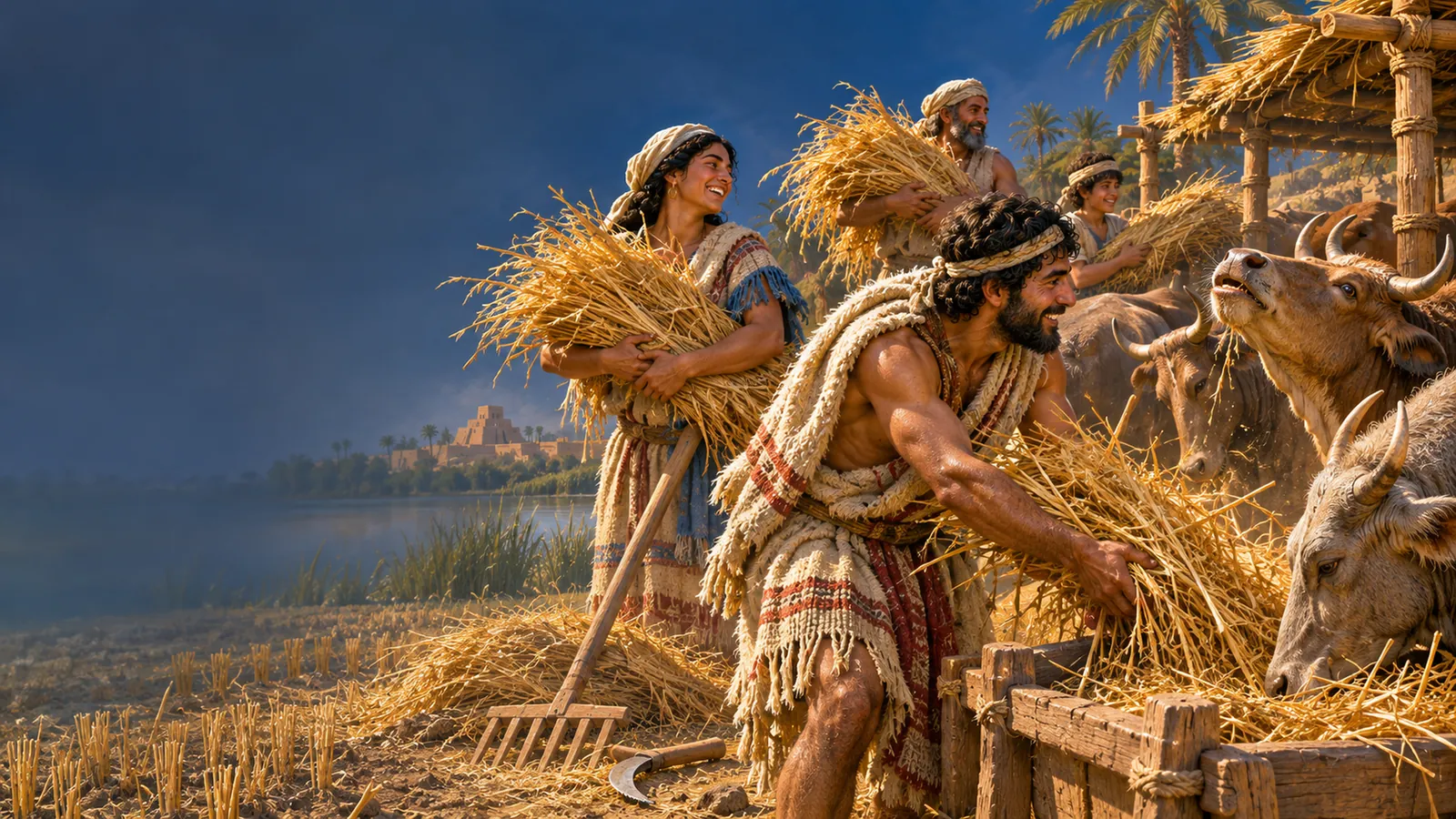
“People carry away the straw I leave in the fields. Even the great herds of Shakkan grow strong on what my harvest provides.”
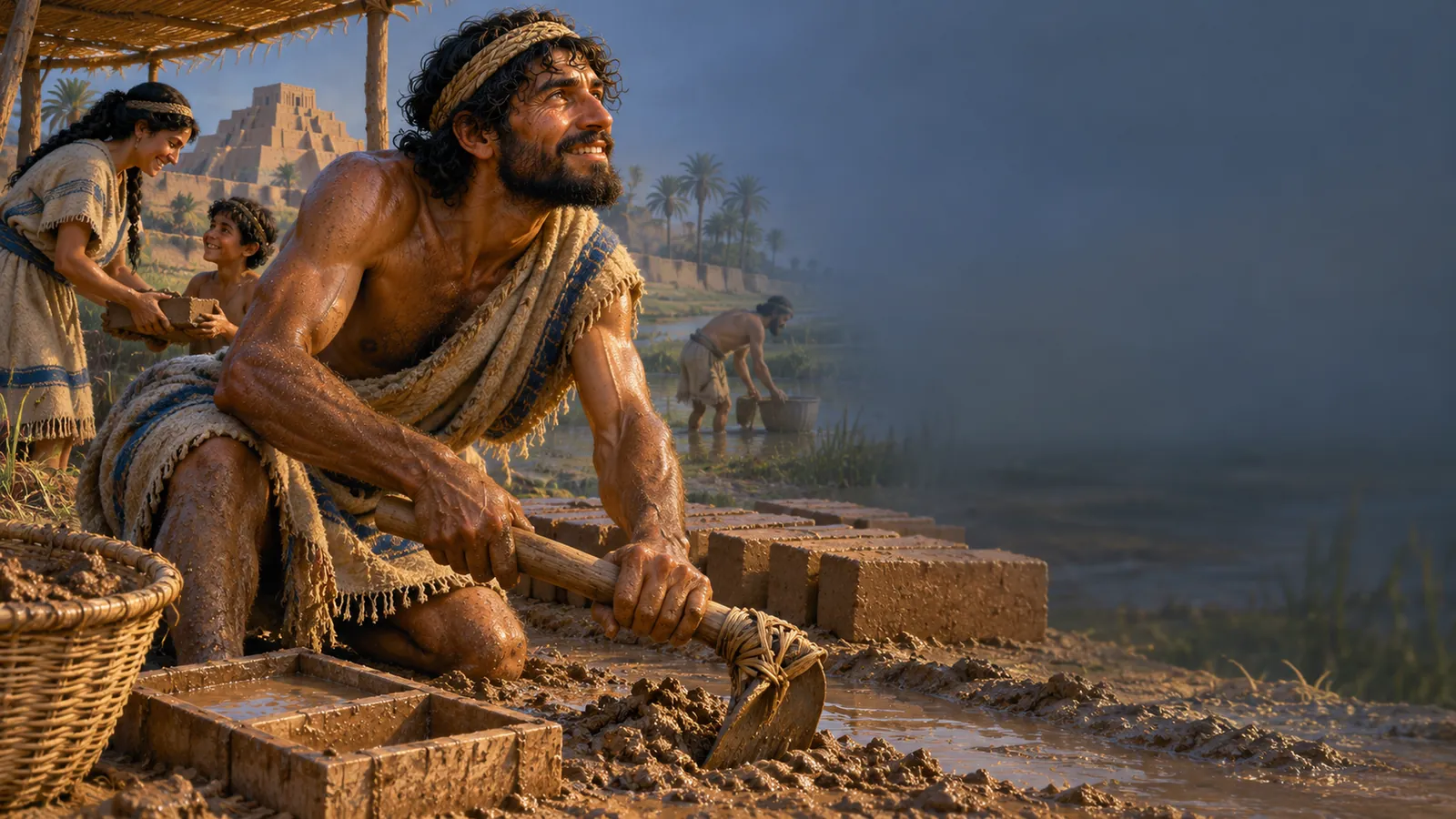
Then came the taunt. “Hoe, you grub in the mud. An enslaved worker’s hand is your only adornment, yet you call me a ditch-digger.”
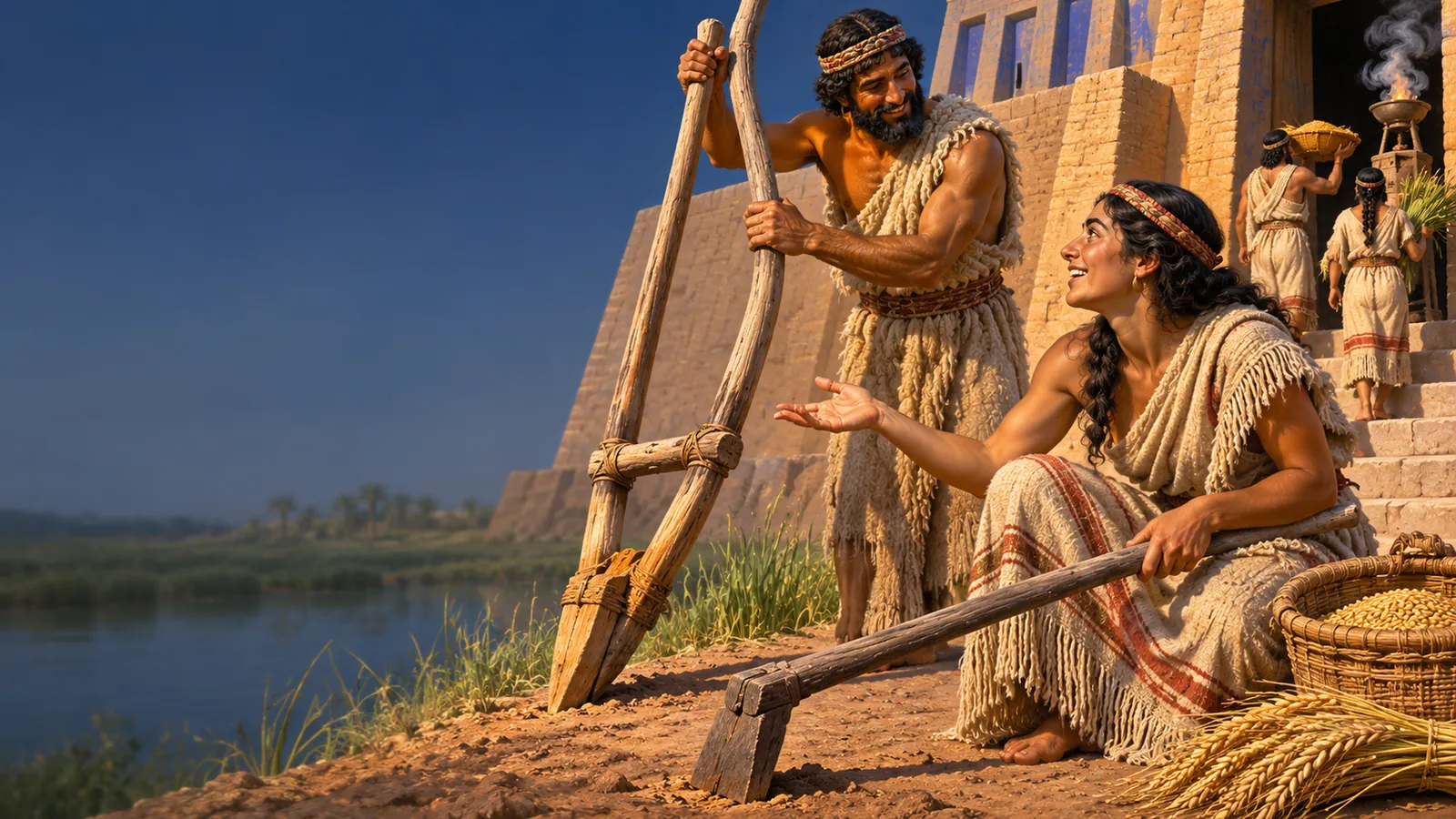
THE HOE
“What does it matter how small I am?” the Hoe replied. “In Enlil’s temple I stand before you, however well you carry yourself.”
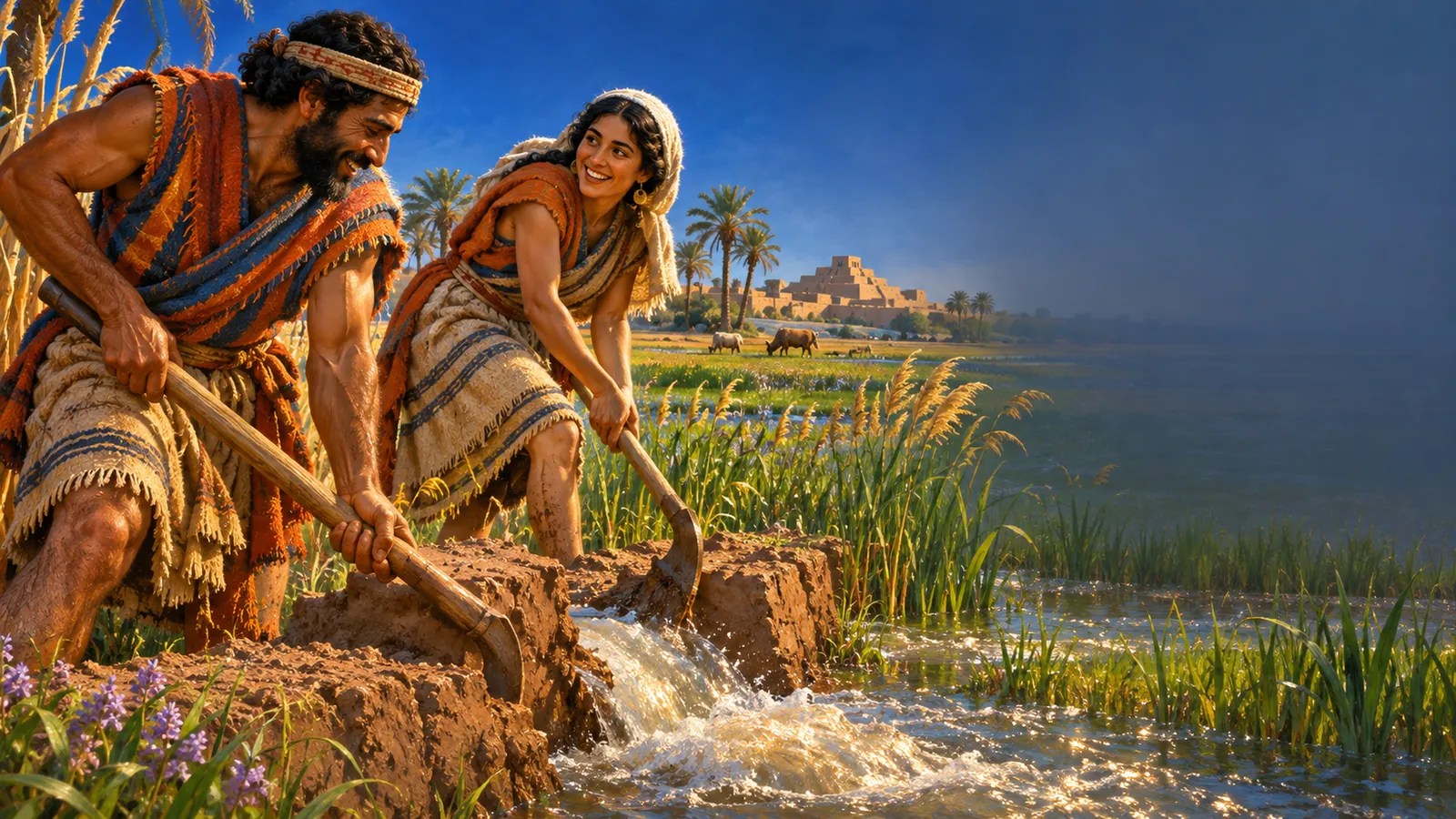
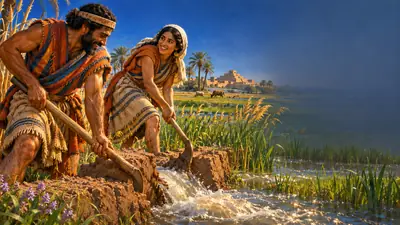
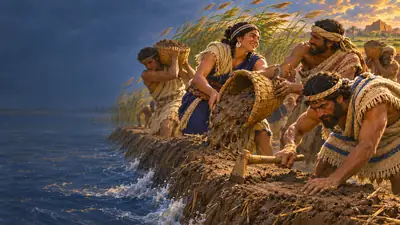
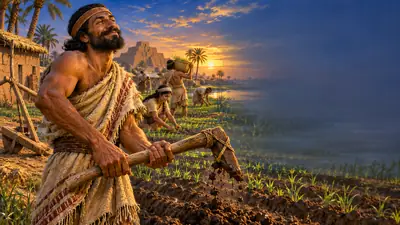
“I raise the banks and dig the channels. I send water into the meadows and among the reeds, where the little baskets go to work.”
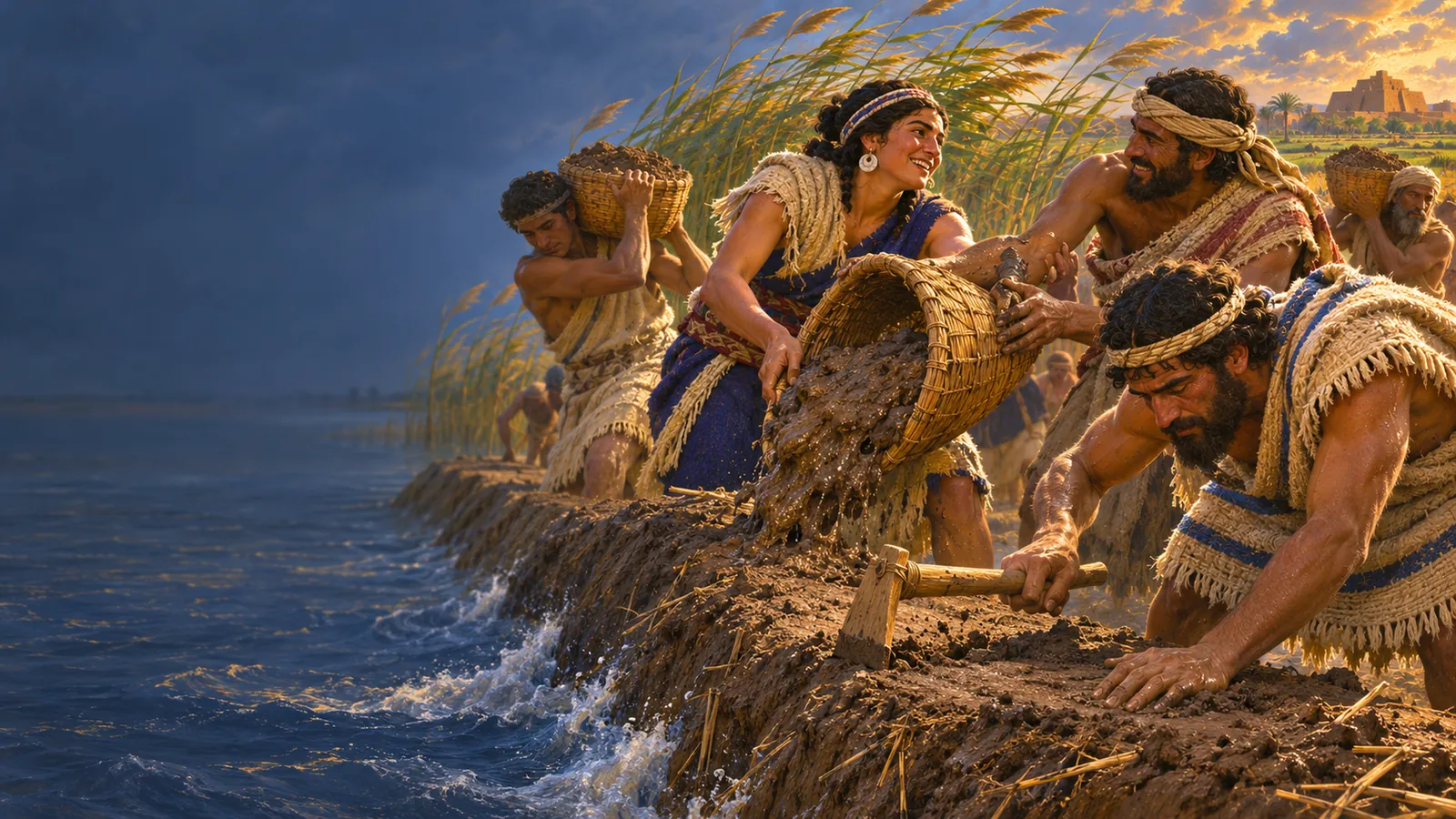
“When the mighty river swells and spills out on every side, I hold it in. The north wind and south wind cannot tear my work apart.”
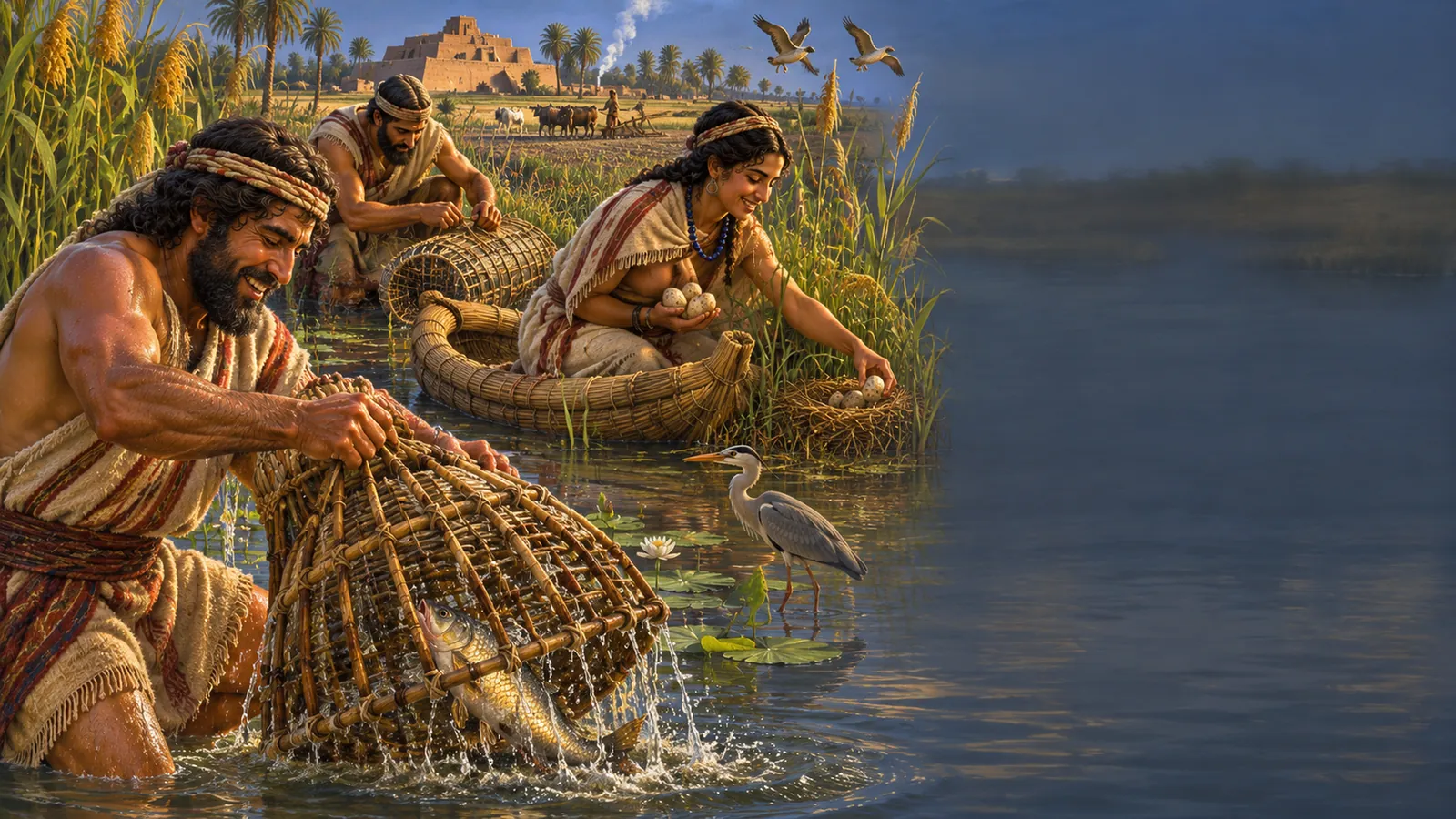
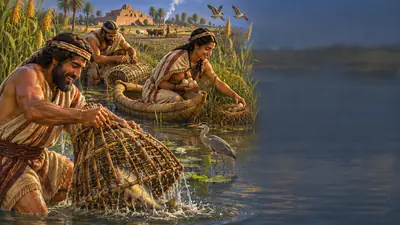
“The fowler gathers eggs, the fisherman lands his catch, and people empty their bird traps. That is how my plenty reaches all the lands.”
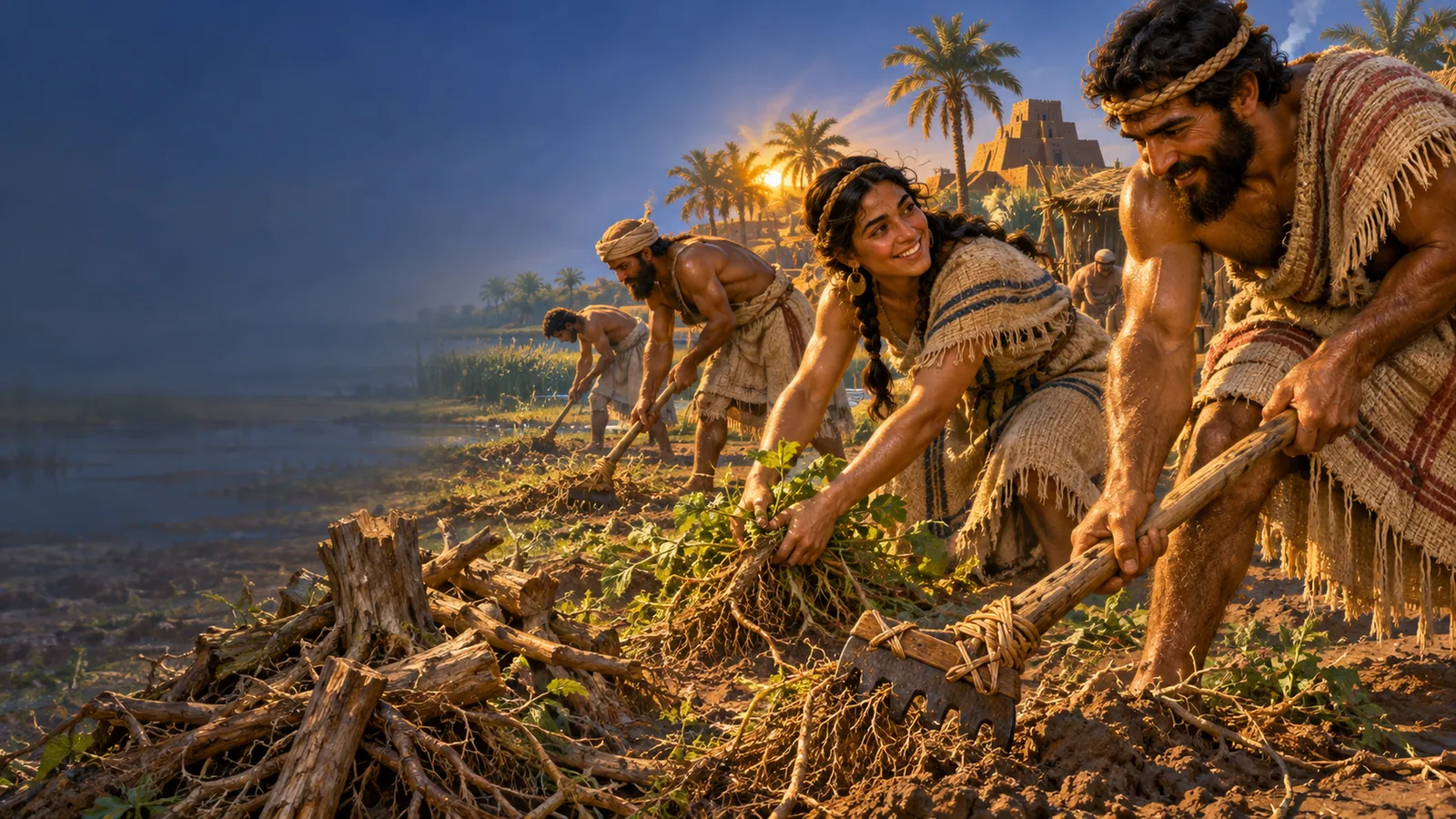
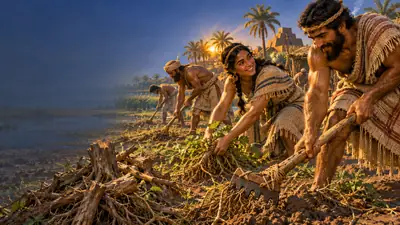
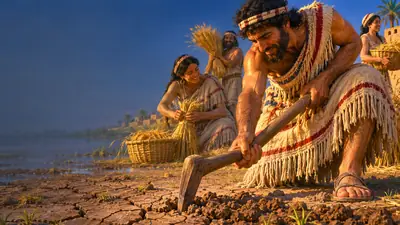
“After the water is led off, I reach the field before you. I clean the banks, take out the weeds and pile the roots aside.”
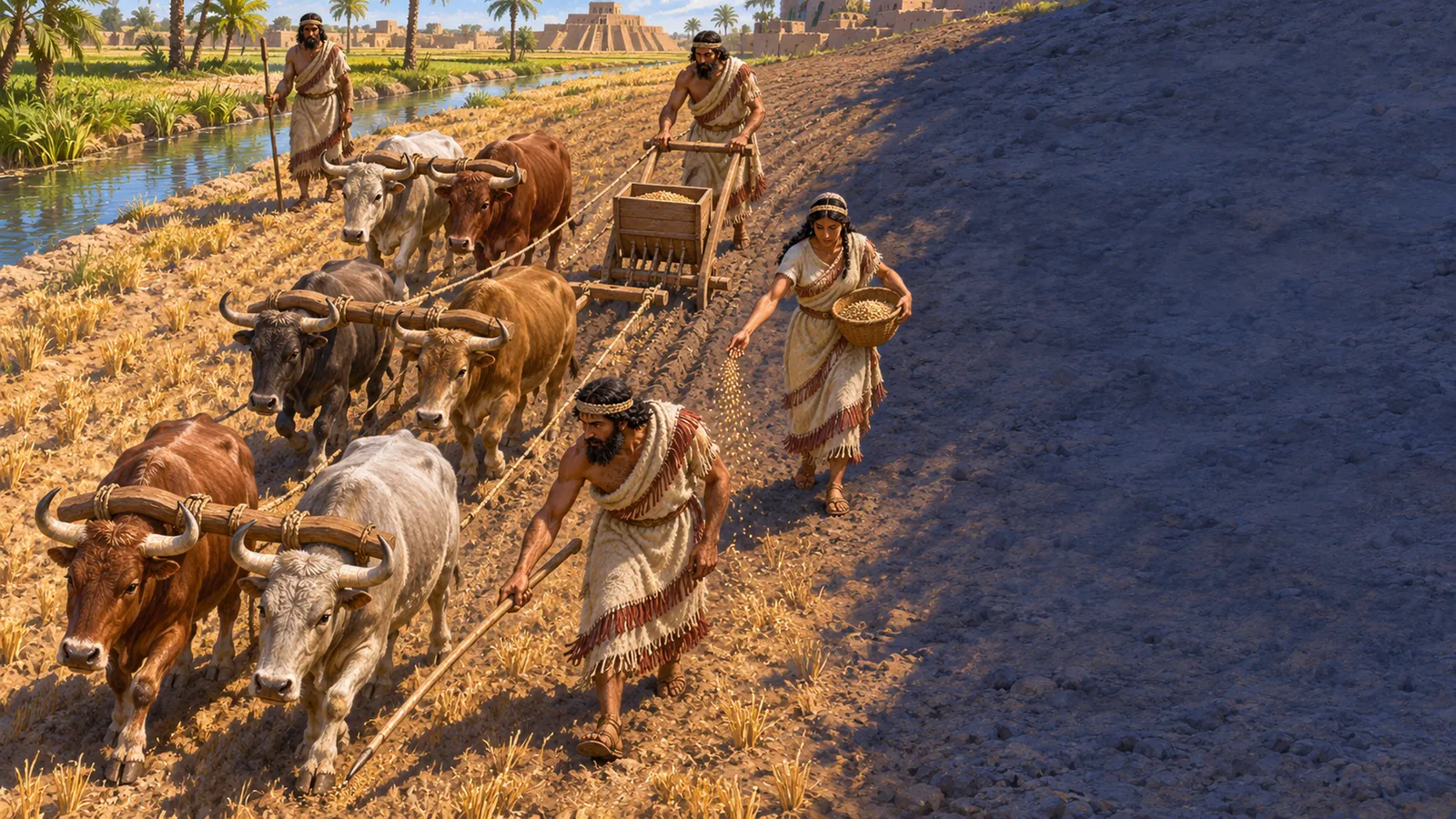
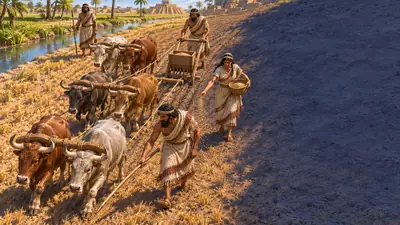
“Then comes your grand procession. Six oxen and four people, and you bring the number to eleven. And you would compare yourself with me?”
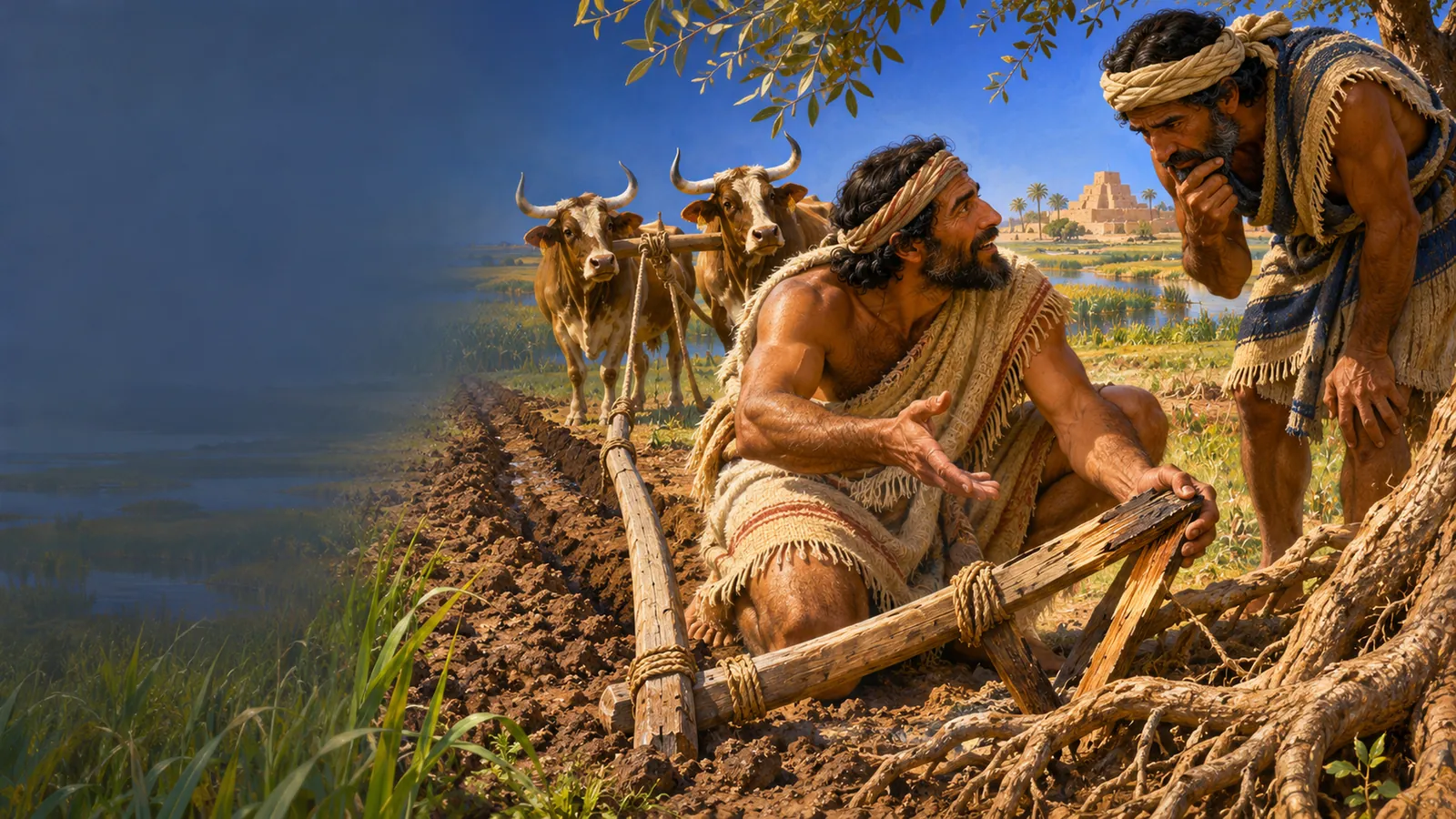
“One furrow and already you are pleased with yourself. Then your tooth catches in roots and thorns and breaks. Even your farmer gives up on you.”
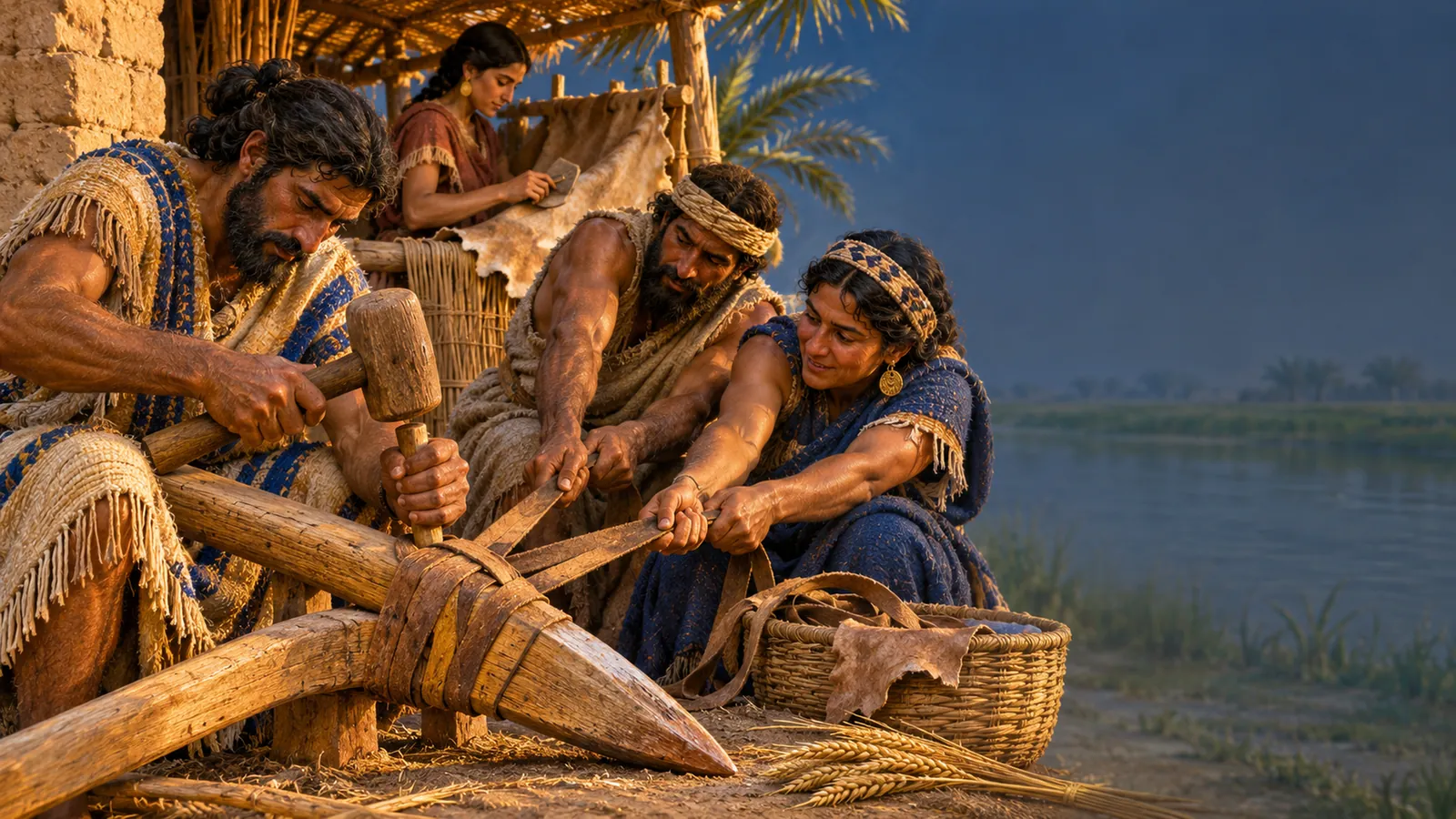
“Back come the carpenters. A whole workshop gathers around you. The leatherworkers labour over your straps, and you end up crowned with a foul hide.”
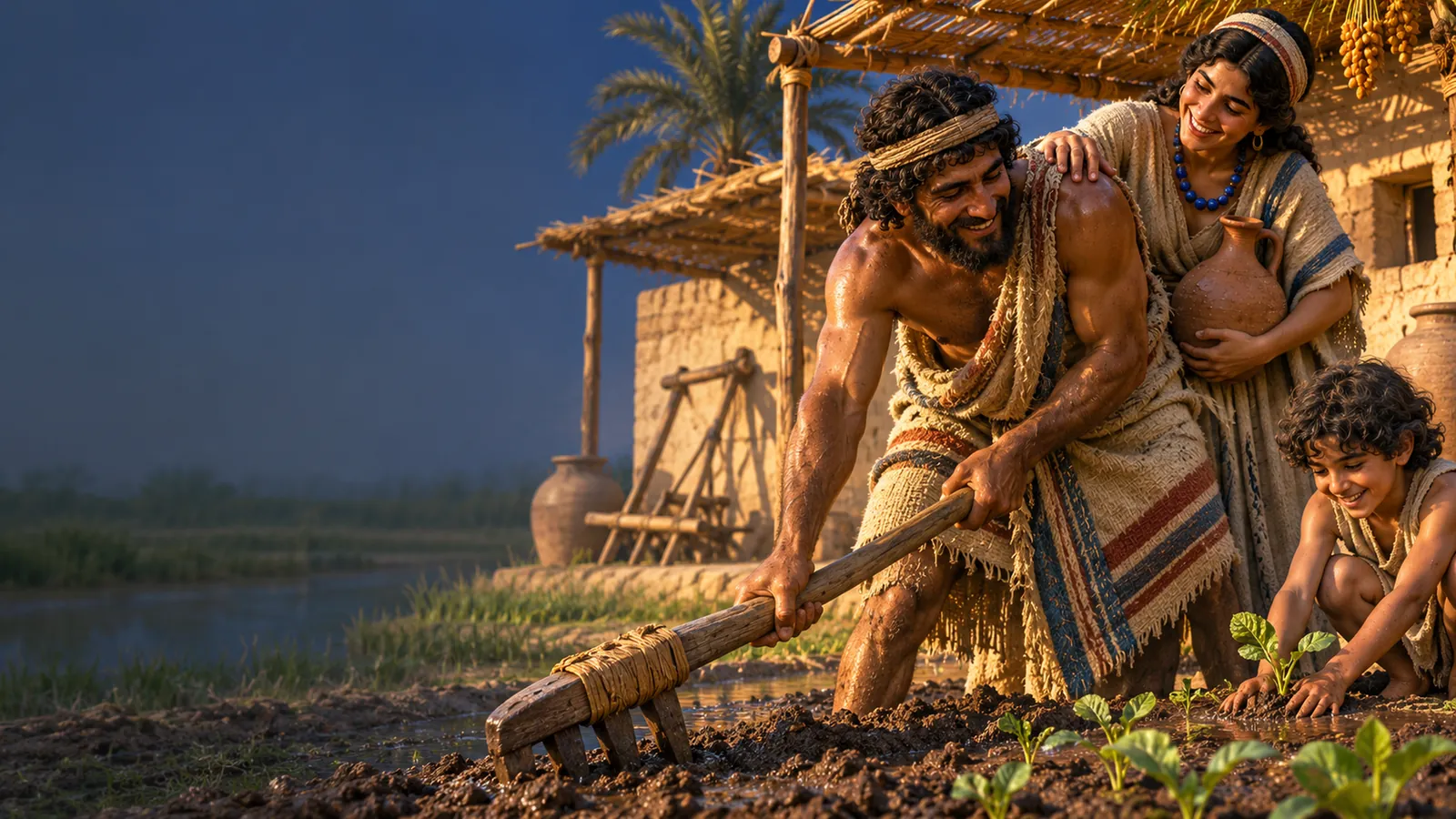
The Hoe counted the months. “I am at work for twelve. You work for four and are gone for eight, twice as long as you are here.”

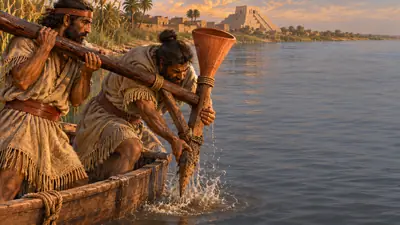
“Put you aboard a boat and your handles tear out the beams. Your face has to be hauled out of the water like a wine jar.”
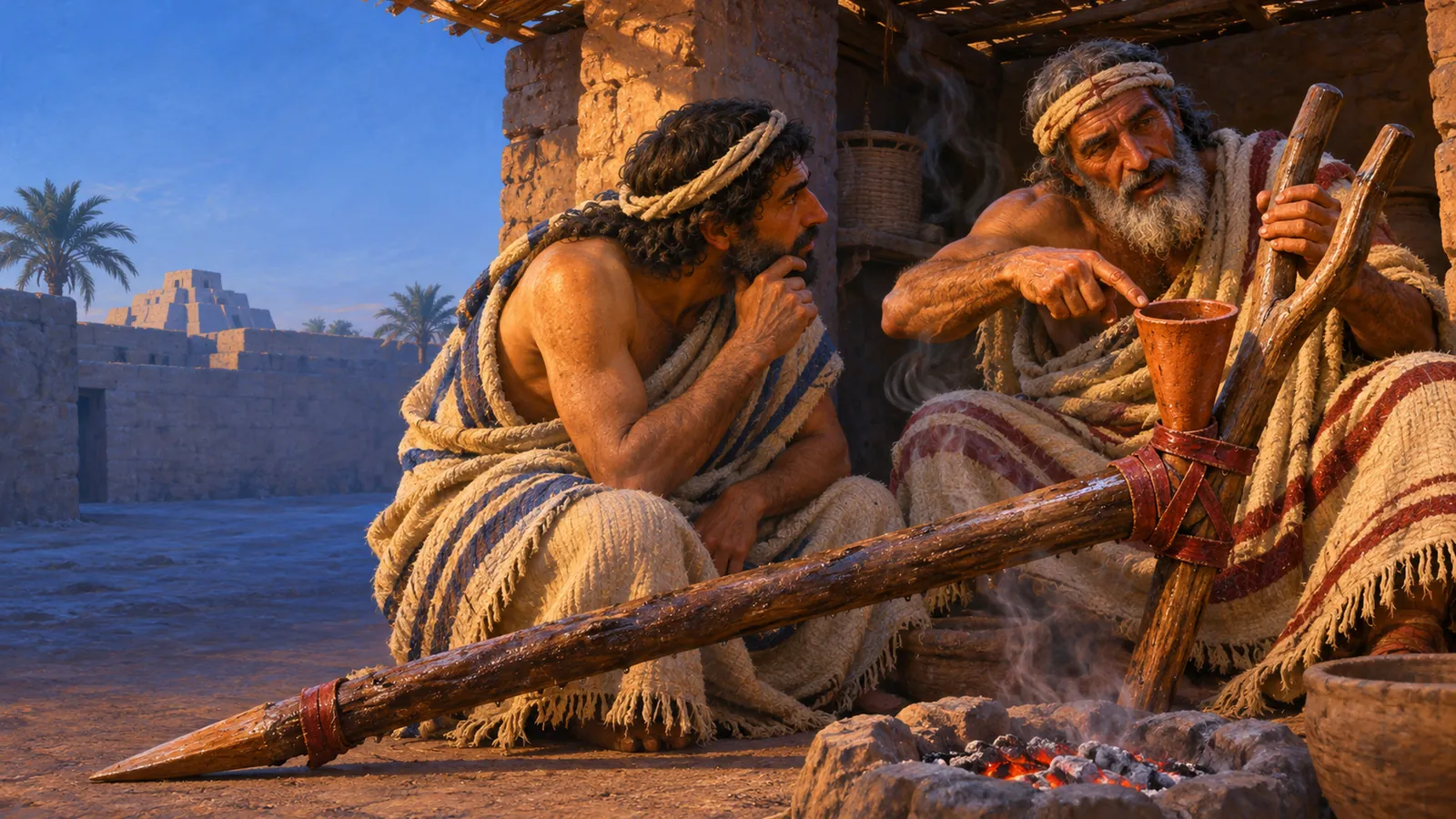
“My fire dries you out indoors”, the Hoe continued. “And if someone drops you and smashes your seed funnel, you are ruined altogether.”
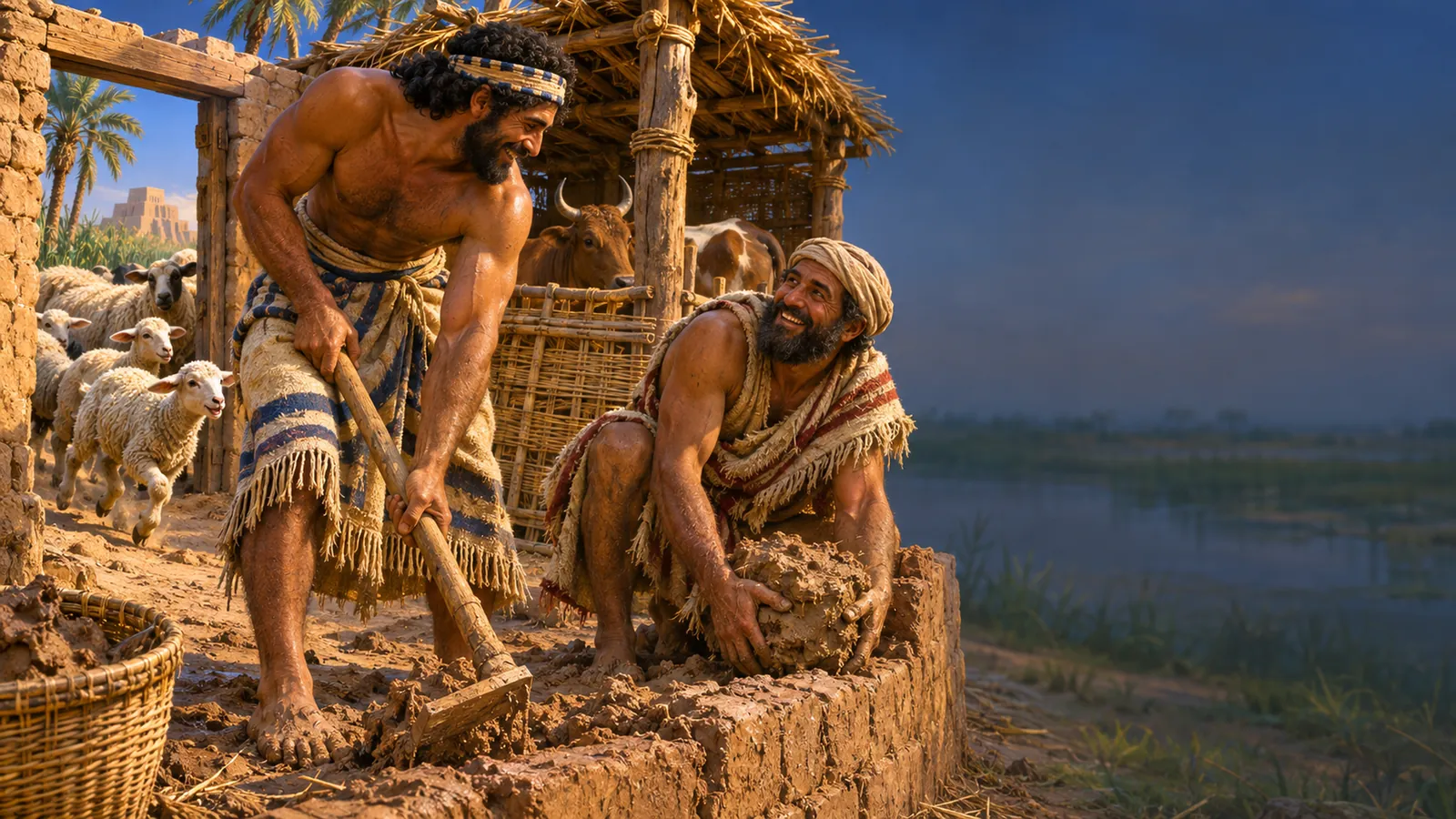
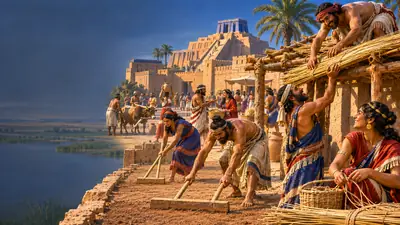
“I live in the city too. I serve the people who put me to work. I build their houses, widen their stalls and enlarge their sheepfolds.”
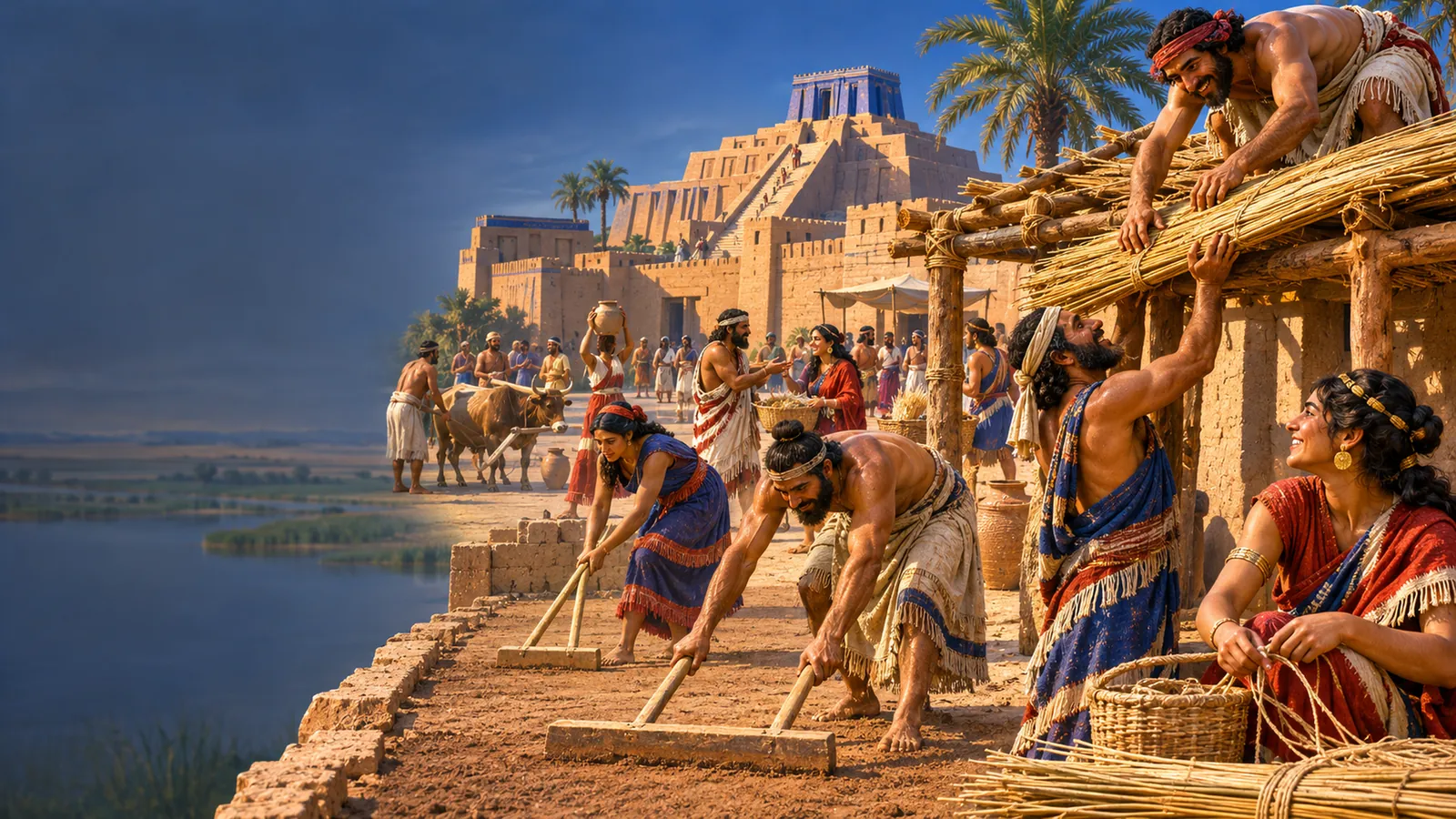
“I prepare the clay for bricks, shore up old walls and set roofs on houses. Even the town squares are levelled by my work.”
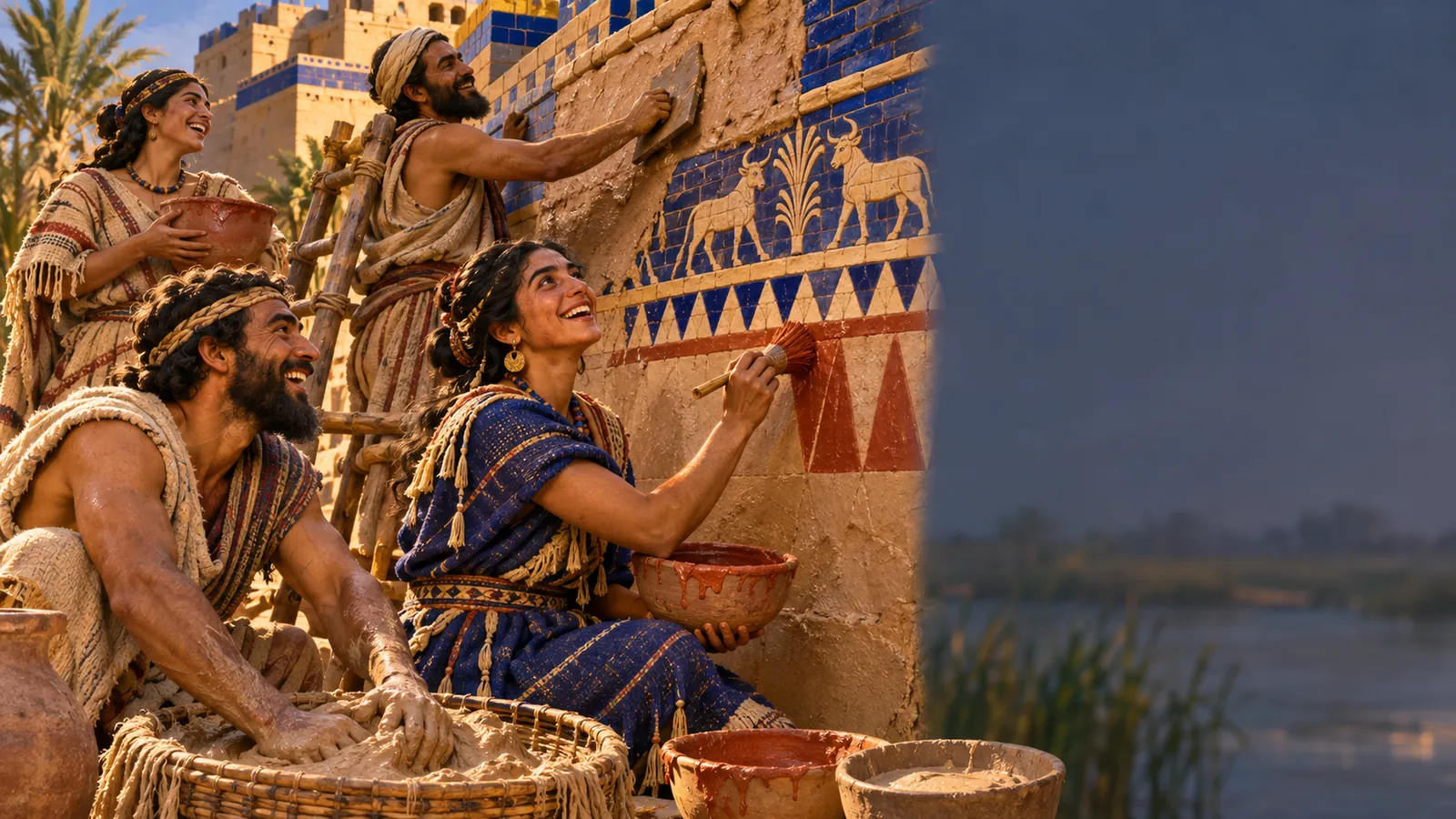
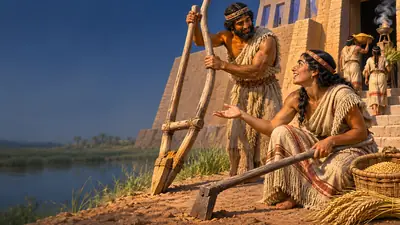
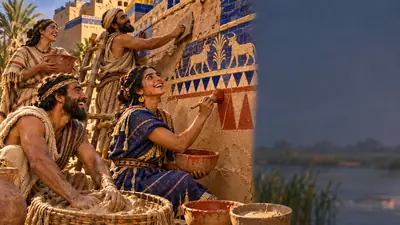
“I build the city’s strong walls. I finish the great gods’ temples in brown and yellow clay. My work reaches the palace and its overseers.”
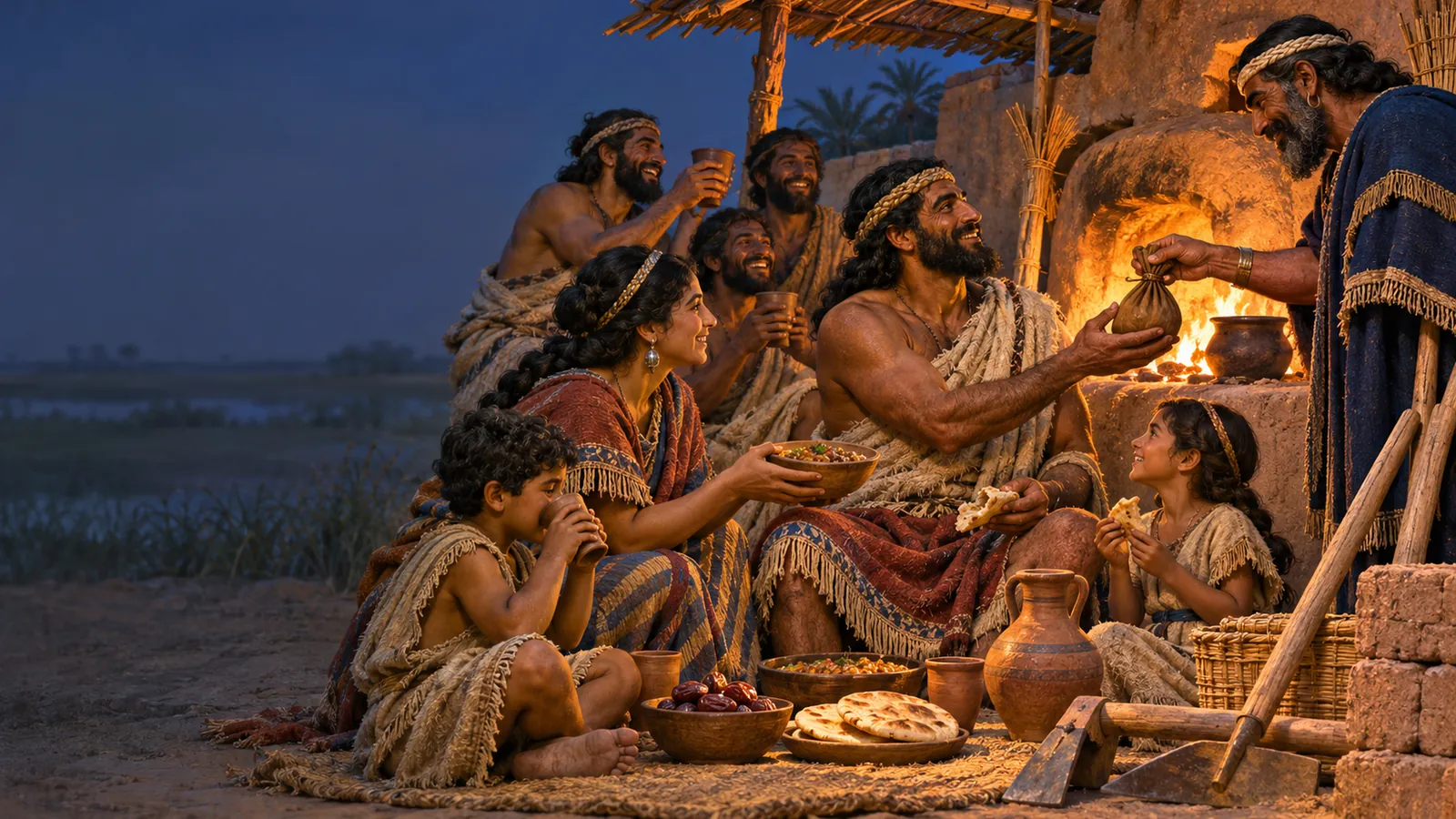
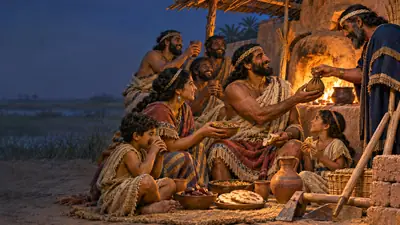
“When evening cools, the builders rest by a fire I helped tend. The worker is fed and paid, and through that wage his family has a living.”
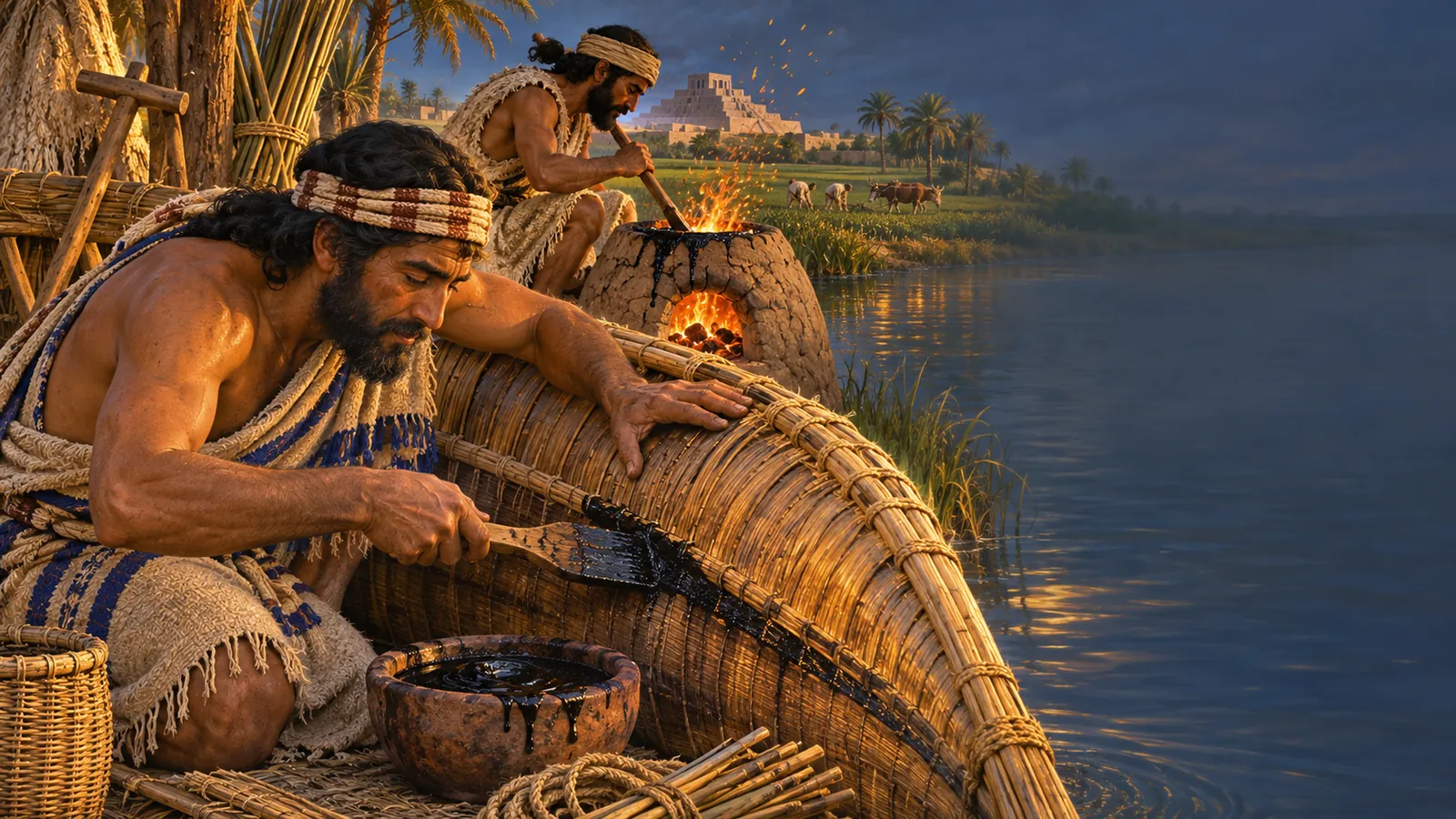
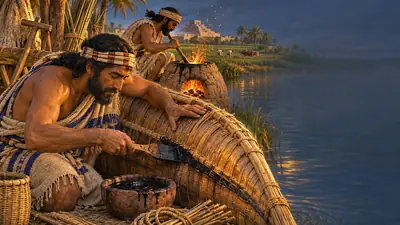
“For the boatman I build a kiln and heat the pitch. I help fashion his boats, and the work lets him provide for his family.”

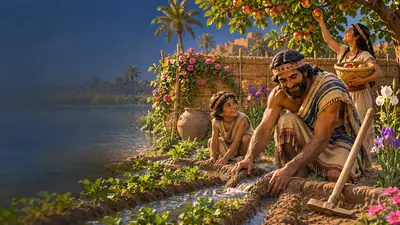
“I lay out the garden plots and bring water to the trees. The apples go to the temples, and from my work the gardener feeds his family.”
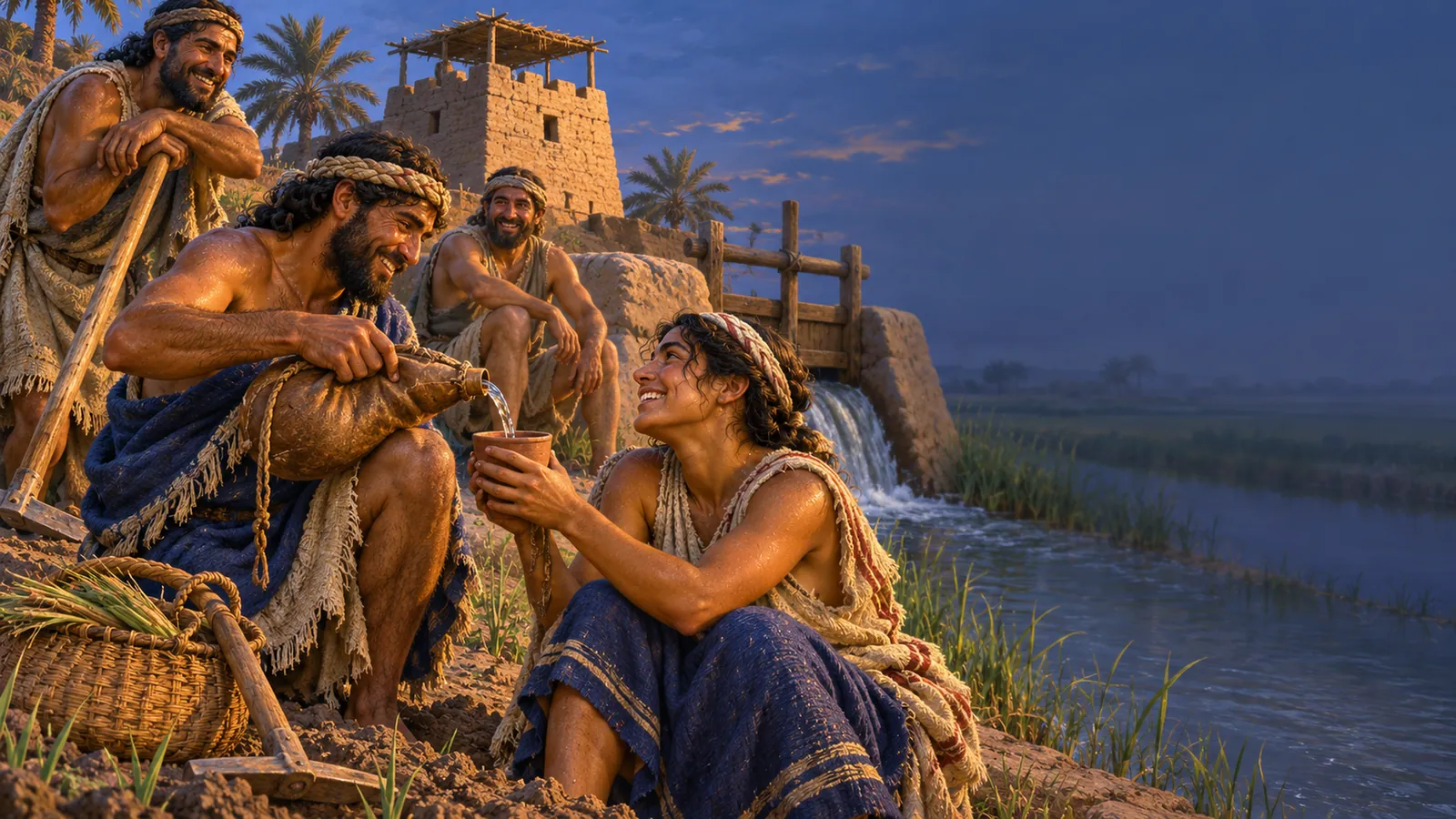
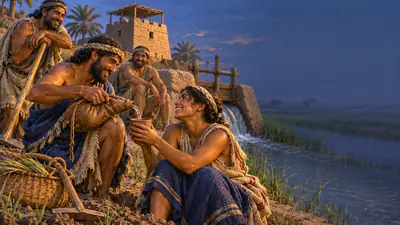
“I tend the sluices, clear the path and build a tower by the canal. Workers come there by day and night, and water gives them strength again.”
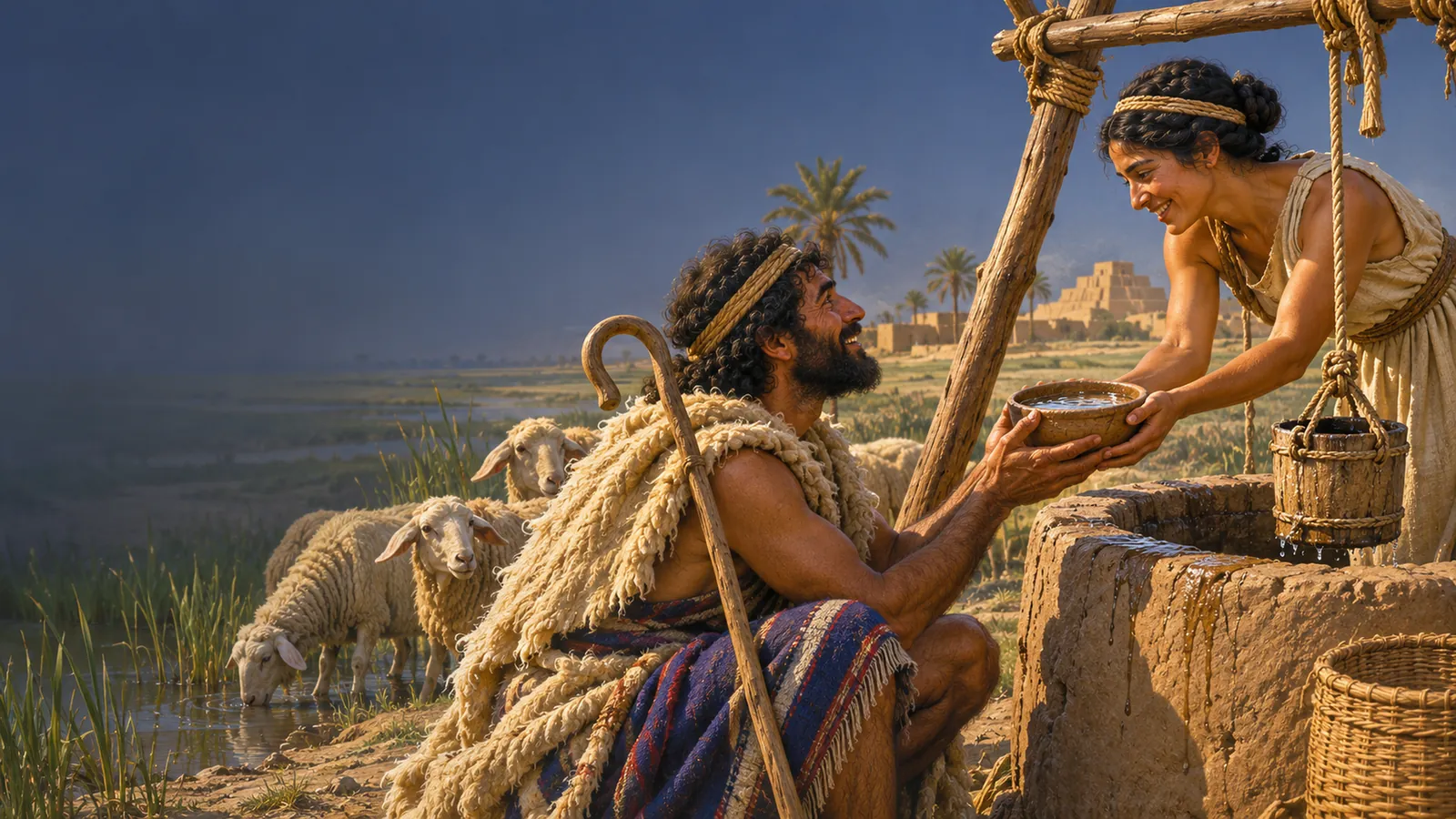
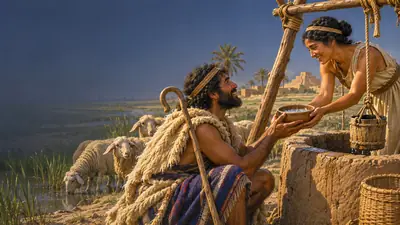
“You turn ditch-digging into an insult. Out on the dry plain, though, thirsty people find fresh water in the well I dug.”
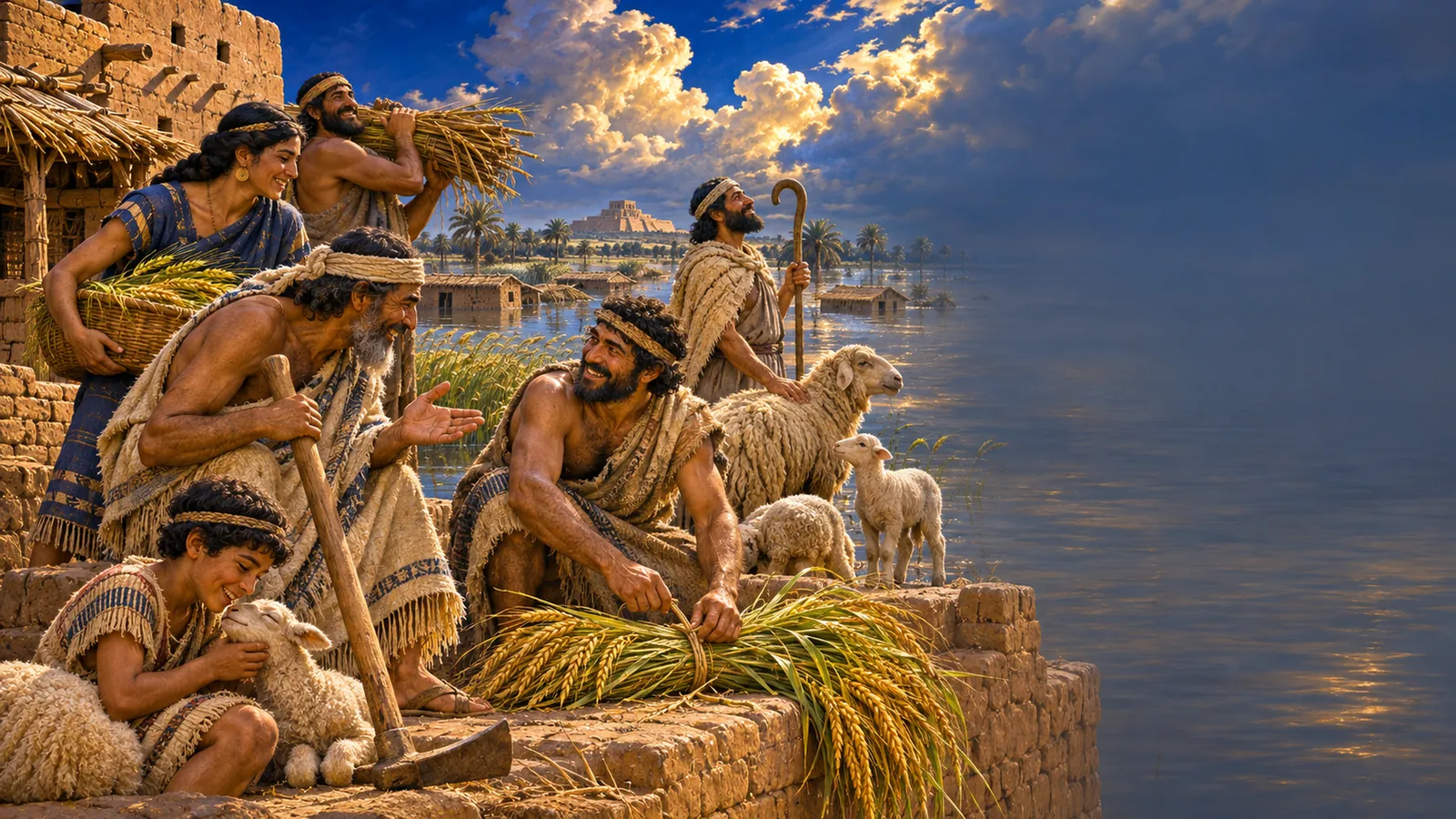
The Hoe recalled what people said among themselves. Enlil once grew angry with Sumer. Rivers engulfed houses, and the floods drowned the harvest.
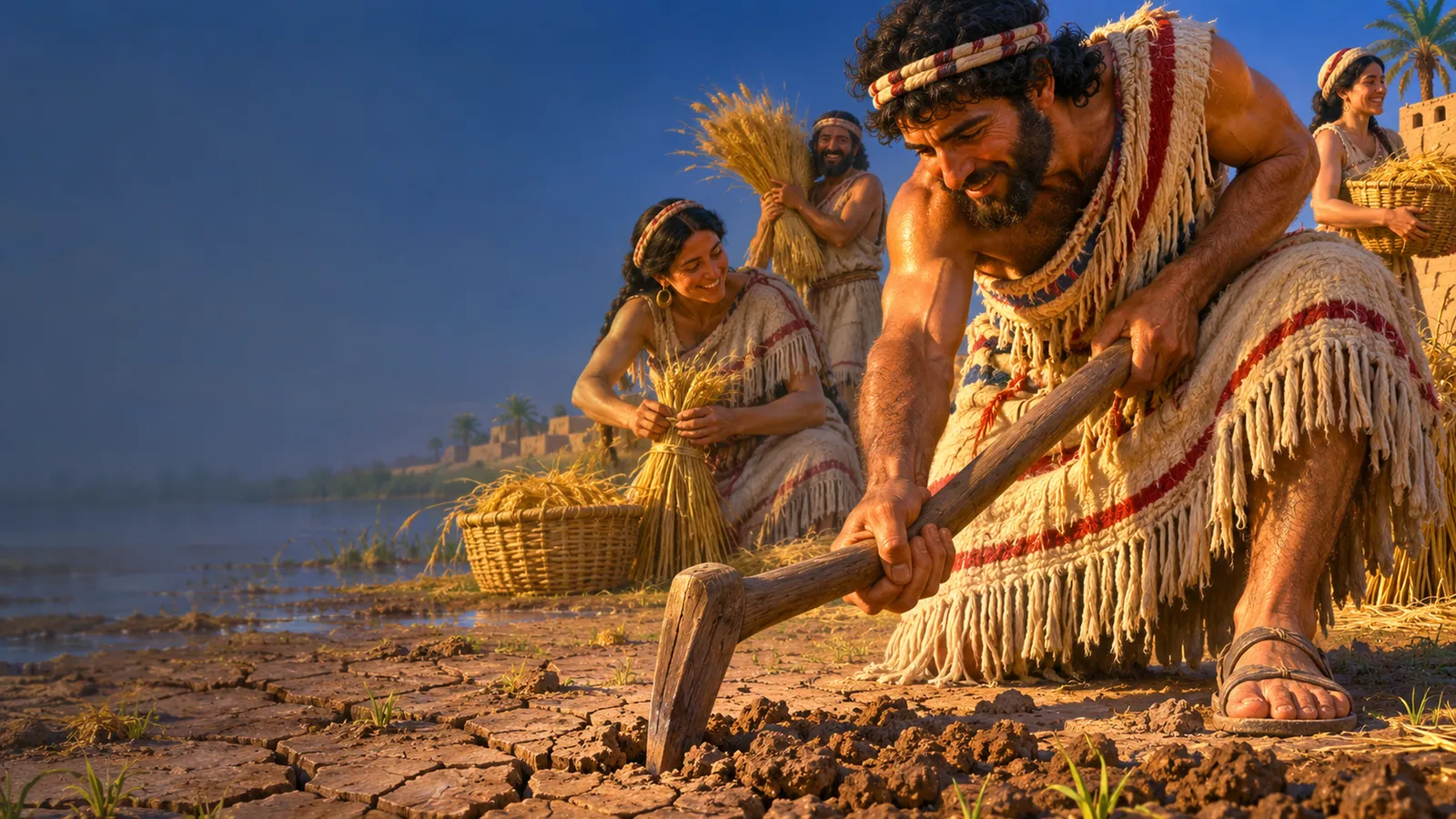
But Enlil did not abandon them. A single-toothed hoe struck the dry earth. The tool helped bind sheaves, traps and baskets, and sustained the poorest.
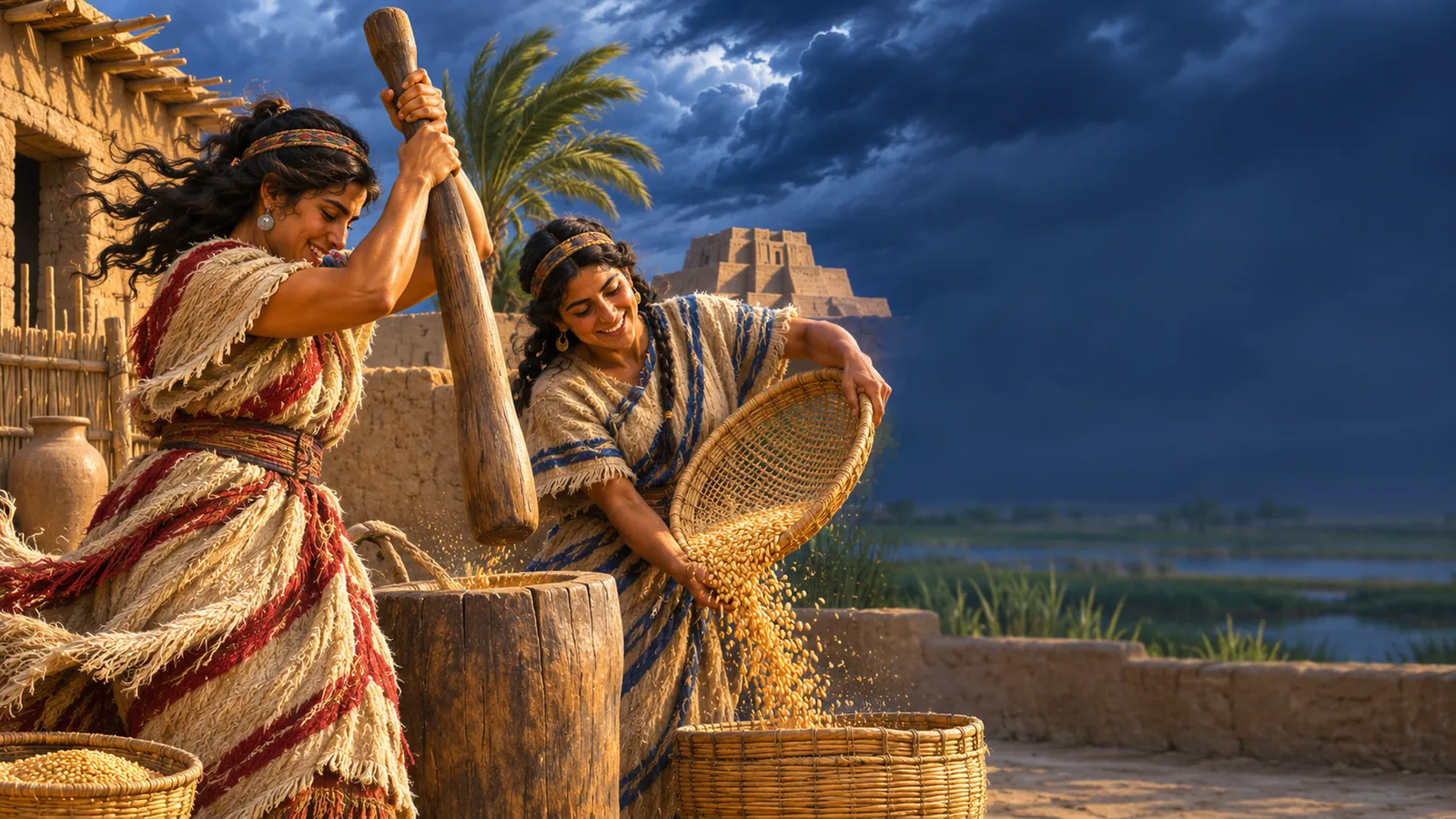
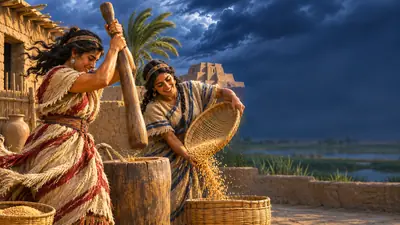
Then the Storm spoke of the mortar and pestle, of sieves that quarrel, and of contempt for Ezina, the goddess of grain.
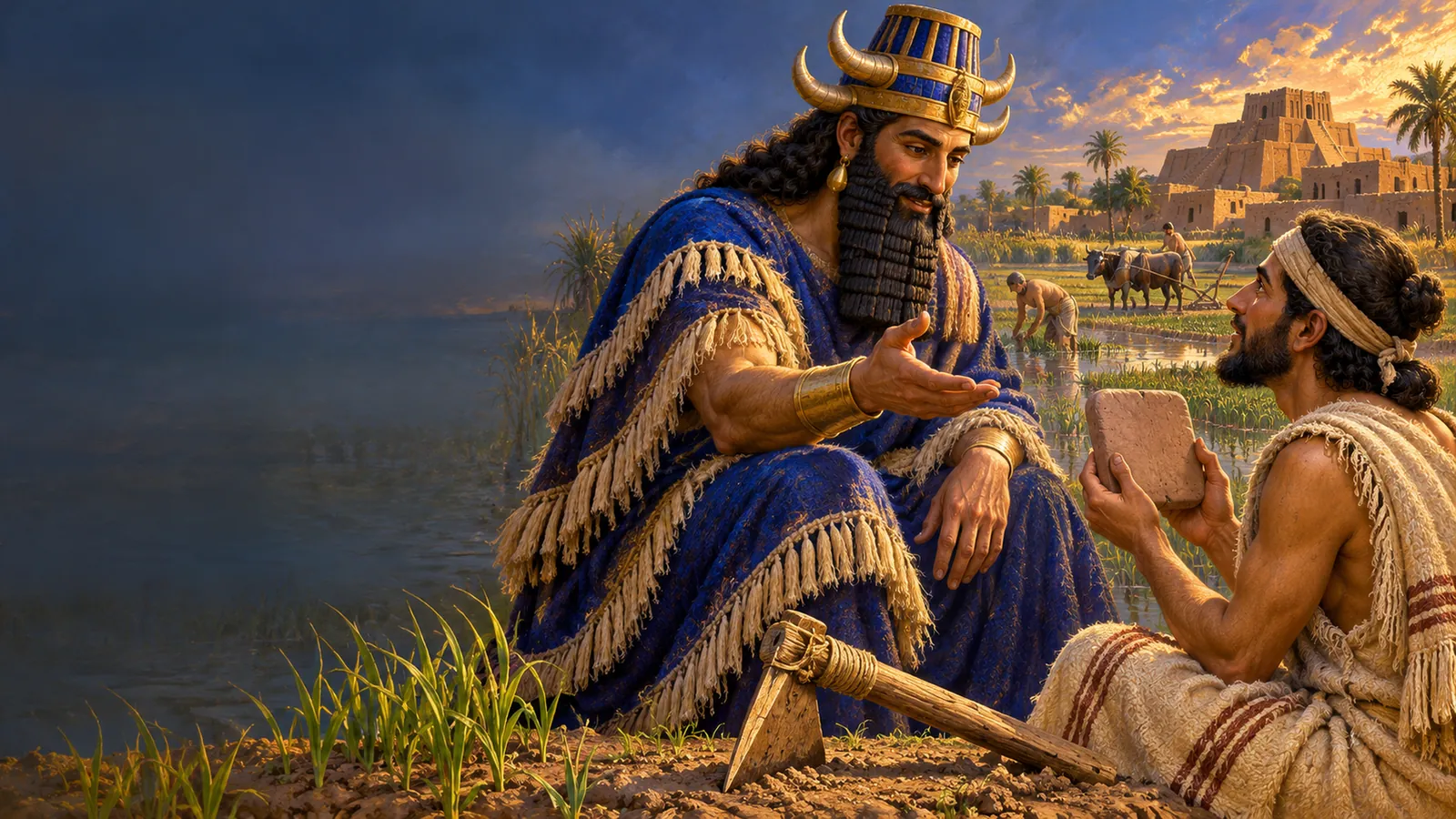
THE VERDICT
Enlil warned the Hoe against anger and scorn. Nisaba oversaw its work, he said. However much the scribe entered, the Hoe would be ready for its task.
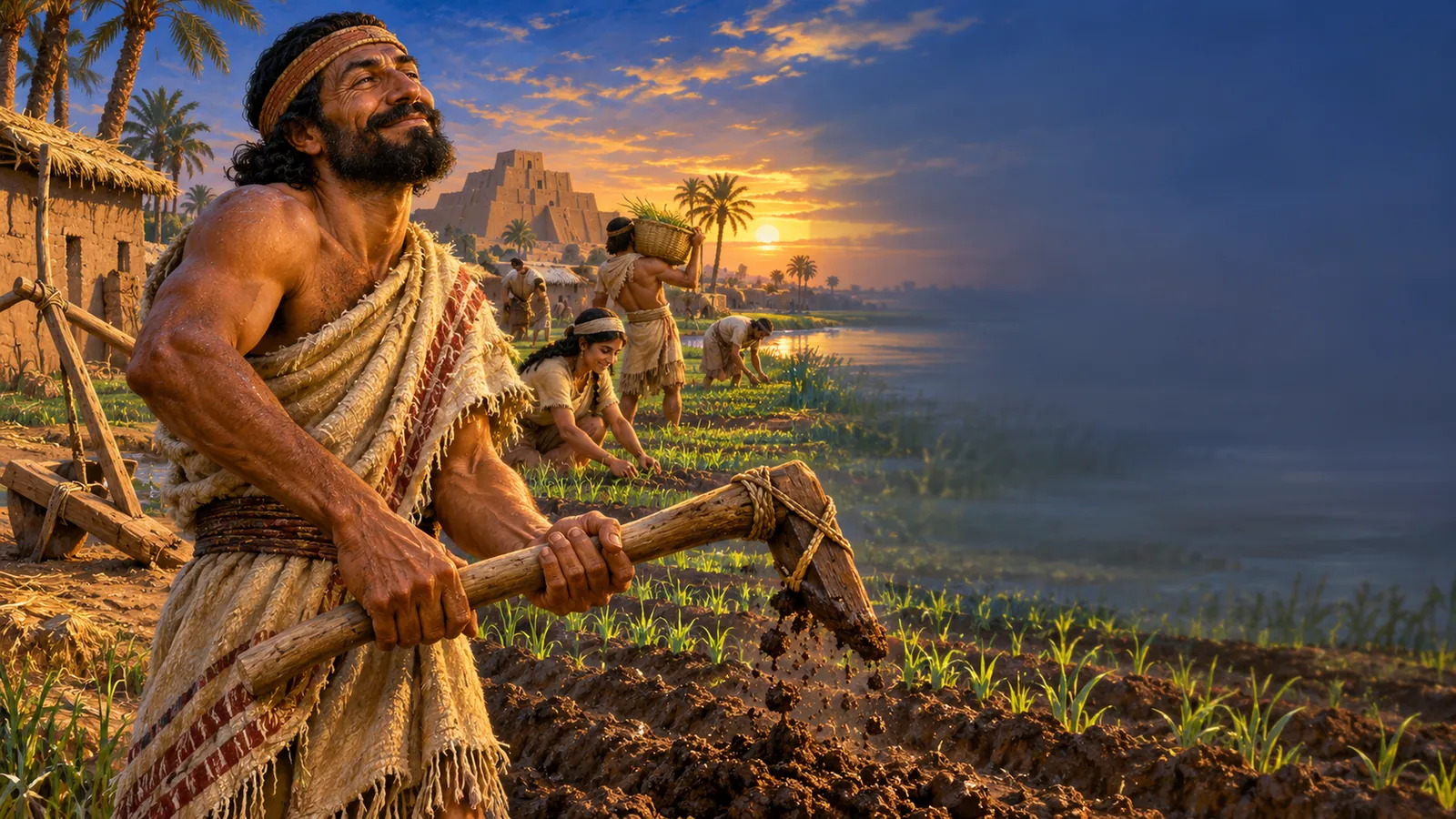
So the small Hoe won its dispute with the Plough. The poem gives its closing praise to Nisaba, who watches over the work.
End of chapter 1
All pages
Sources
Editions consulted
- Oxford ETCSL 5.3.1, English translation
- Oxford ETCSL 5.3.1, Sumerian transliteration
- CDLI Q000760, composite and tablet witnesses
- CDLI P343706, Old Babylonian manuscript from Nippur
- Vanstiphout, On the Sumerian Disputation between the Hoe and the Plough
Ancient lines behind each page
- Page 1: Oxford ETCSL 5.3.1, lines 1–6
- Page 2: Oxford ETCSL 5.3.1, lines 1–6
- Page 3: Oxford ETCSL 5.3.1, lines 7–19
- Page 4: Oxford ETCSL 5.3.1, lines 7–19
- Page 5: Oxford ETCSL 5.3.1, lines 7–19
- Page 6: Oxford ETCSL 5.3.1, lines 7–19
- Page 7: Oxford ETCSL 5.3.1, lines 20–33
- Page 8: Oxford ETCSL 5.3.1, lines 20–33
- Page 9: Oxford ETCSL 5.3.1, lines 20–33
- Page 10: Oxford ETCSL 5.3.1, lines 20–33
- Page 11: Oxford ETCSL 5.3.1, lines 34–40
- Page 12: Oxford ETCSL 5.3.1, lines 34–40
- Page 13: Oxford ETCSL 5.3.1, lines 41–51
- Page 14: Oxford ETCSL 5.3.1, lines 41–51
- Page 15: Oxford ETCSL 5.3.1, lines 41–51
- Page 16: Oxford ETCSL 5.3.1, lines 52–62
- Page 17: Oxford ETCSL 5.3.1, lines 63–66
- Page 18: Oxford ETCSL 5.3.1, lines 67–75
- Page 19: Oxford ETCSL 5.3.1, lines 67–75
- Page 20: Oxford ETCSL 5.3.1, lines 76–79
- Page 21: Oxford ETCSL 5.3.1, lines 80–90
- Page 22: Oxford ETCSL 5.3.1, lines 80–90
- Page 23: Oxford ETCSL 5.3.1, lines 91–103
- Page 24: Oxford ETCSL 5.3.1, lines 91–103
- Page 25: Oxford ETCSL 5.3.1, lines 104–108
- Page 26: Oxford ETCSL 5.3.1, lines 109–116
- Page 27: Oxford ETCSL 5.3.1, lines 109–116
- Page 28: Oxford ETCSL 5.3.1, lines 117–126
- Page 29: Oxford ETCSL 5.3.1, lines 122–126
- Page 30: Oxford ETCSL 5.3.1, lines 127–131
- Page 31: Oxford ETCSL 5.3.1, lines 132–138
- Page 32: Oxford ETCSL 5.3.1, lines 139–141
- Page 33: Oxford ETCSL 5.3.1, lines 142–150
- Page 34: Oxford ETCSL 5.3.1, lines 151–158
- Page 35: Oxford ETCSL 5.3.1, lines 159–162
- Page 36: Oxford ETCSL 5.3.1, lines 163–173
- Page 37: Oxford ETCSL 5.3.1, lines 163–178A
- Page 38: Oxford ETCSL 5.3.1, lines 179–185
- Page 39: Oxford ETCSL 5.3.1, lines 186–193
- Page 40: Oxford ETCSL 5.3.1, lines 194–196
Illustrations made with AI tools by IL Archive; the text is based on the ancient sources (see the sources at the end of each chapter).