Entity · Deity
Enlil
A reference page linking a name, group, or concept to the materials that discuss it.
- Names
- Ellil · Enlil · Nunamnir
- Region
- Mesopotamia — Nippur (Nuffar, present-day Iraq)
Enlil was a major Mesopotamian god linked to Nippur and Ekur, kingship and decreeing destinies. Third-millennium BCE lists and royal inscriptions attest him; his name’s etymology and earliest cult remain under study.
Estimated reading time: 6 min Published Last reviewed:
Share article
Video
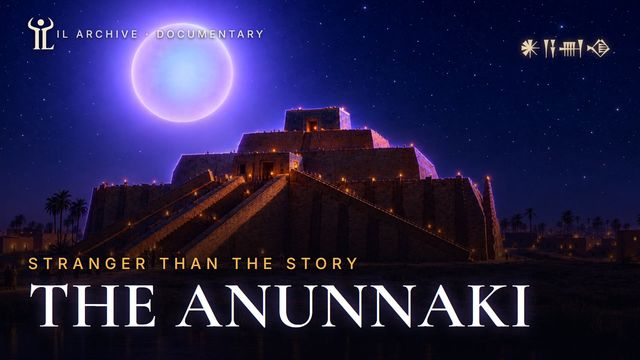
The Anunnaki: Stranger Than the Story
Our second documentary places the popular Anunnaki story beside the clay tablets, line by line, to see what the ancient texts actually say. Some scenes are AI-generated illustrations.
The YouTube player loads only when you press play. Watch on YouTube
Text
Introduction
How did Enlil become one of MesopotamiaMesopotamiaHistorical region associated with the Tigris and Euphrates: Uruk, Ur, Eridu, cuneiform, Sumer, Akkad, Babylon and Assyria, their languages and cults, and the limits of archaeological evidence.Glossary · Click to read the explanation's most authoritative gods, and what can tablets, sanctuaries, and poetry tell us about his worship? This entry follows his name, early attestations, association with Nippur, and role in kingship. It separates dated material evidence from hymns praising the deity and myths telling stories about him: the earliest surviving writing is not the date a cult began.
A god of destinies and authority
Enlil, also called Ellil in AkkadianAkkadianAn ancient East Semitic language written in cuneiform from the third millennium BCE; its varieties include Babylonian and Assyrian, and it served in international diplomacy.Glossary · Click to read the explanation, was central to Sumerian, Babylonian, and Assyrian religious traditions. Texts attribute to him decisions about destinies and a capacity to authorize kingship. His literary epithets include Nunamnir and Great Mountain. Yet reducing him to a straightforward “god of the air” obscures his roles. The element líl and the early written forms of his name are disputed; “wind” may reflect a later interpretation rather than a secure original etymology. Similarly, placing him neatly between An, the sky godAn / AnuAn is the Sumerian sky god, called Anu in Akkadian. The sign AN by itself does not identify him: it also denotes sky or divinity.Glossary · Click to read the explanation, and EnkiEnkiMesopotamian deity also known as Ea, linked with Eridu and the Abzu (deep fresh waters), wisdom, incantations, and narratives of creation and cosmic order. Later written attestations do not identify the deity of Eridu’s earliest layers.Glossary · Click to read the explanation as the atmosphere is not a universally established map of divine functions. [1]
Early records: names before narratives
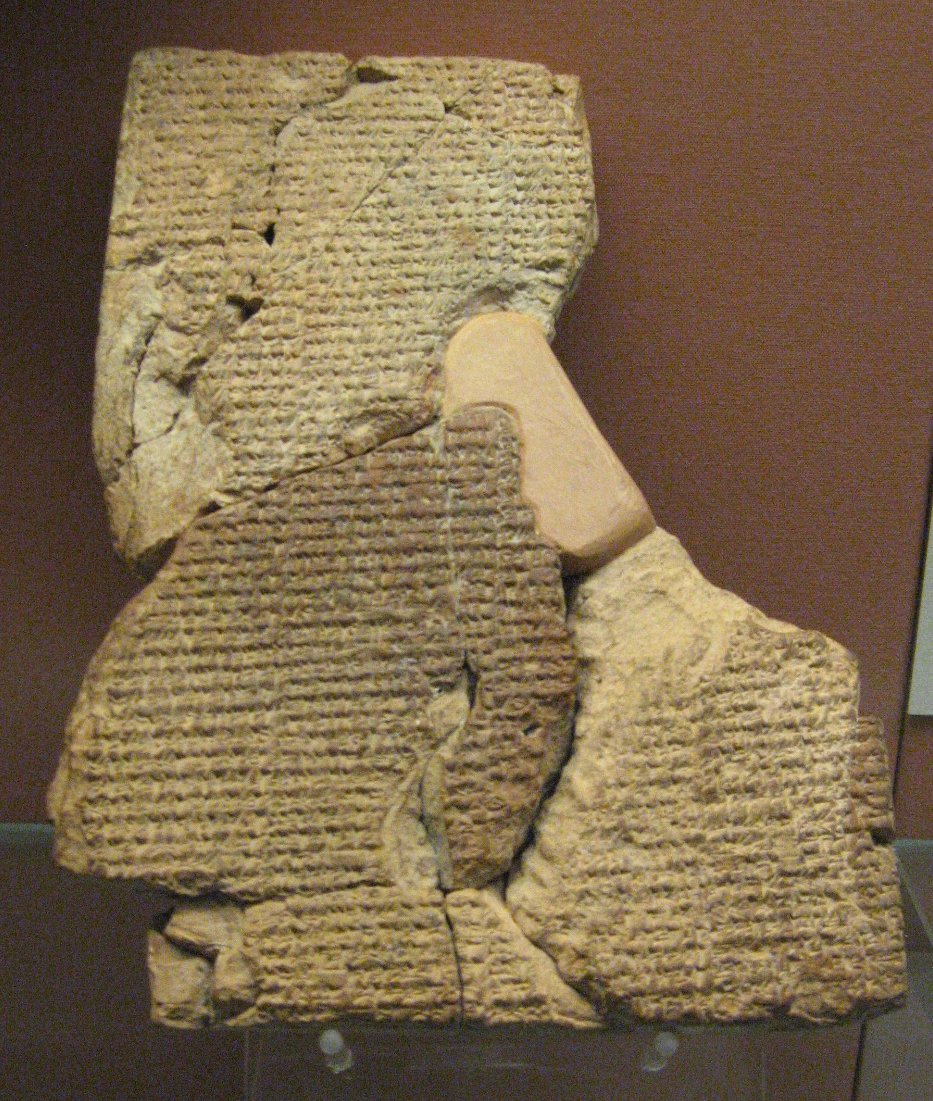
The Fara god listGod ListsTexts collecting divine names for preservation, teaching and classification, with varying theological organization.Glossary · Click to read the explanation from Shuruppak, tablet P010566 / SF 001, is assigned to Early Dynastic IIIa (approximately 2600–2500 BCE). Its first column begins with An, Enlil, InannaInanna / IshtarA prominent Mesopotamian goddess whose Sumerian name Inanna became associated with Akkadian Ishtar across diverse traditions. She was associated with desire, war, royal authority and Venus, while local forms and genealogies varied among texts.Glossary · Click to read the explanation, and Enki, followed by Nanna and Utu. The artifact catalogue provides its chronology and provenance, while the published transliteration allows the first six entries to be checked directly. Enlil's second position indicates prominence in this particular learned list, not the moment of his imagined origin or an invariable ranking across every city. [2][3]
Still earlier sign combinations resembling later spellings of Enlil occur in fourth-millennium documents. Some researchers interpret them as the place-name subsequently associated with Nippur; the transition to a divine name remains debated. Not every early appearance of those signs can safely be counted as a reference to the god, nor can an absence of an unequivocal written name establish that he was not worshipped. [1]
Nippur and Ekur: a center, not the limit of a cult
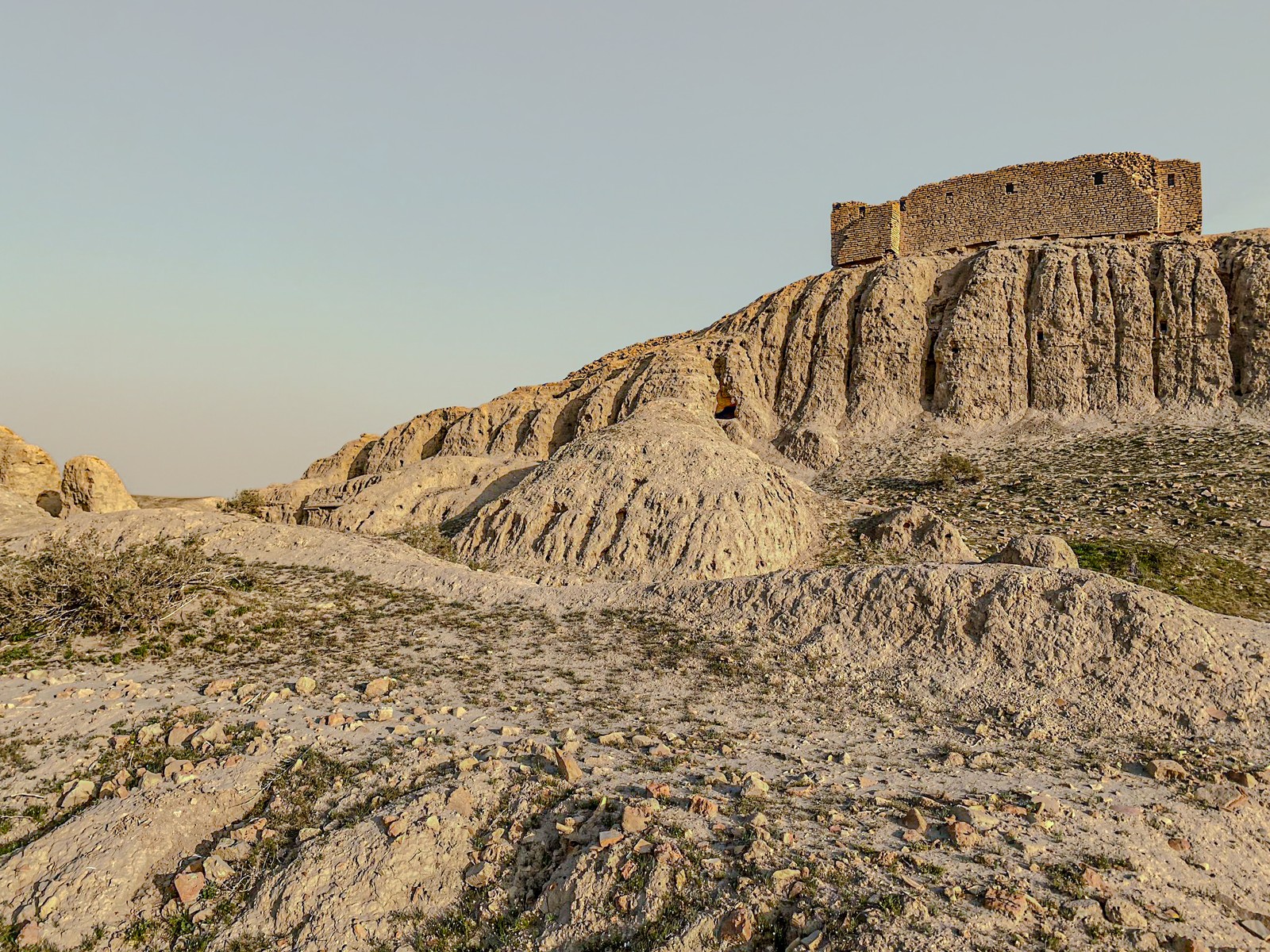
NippurNippur / NuffarAncient Nippur (modern Nuffar, Iraq), major cult centre of Enlil and Ekur; excavations revealed sanctuaries, houses and thousands of cuneiform tablets across many periods.Glossary · Click to read the explanation, now the Nuffar archaeological site in IraqIraqIraq is a modern country encompassing much of ancient MesopotamiaGlossary · Click to read the explanation, lay in south-central Mesopotamia and became a religious center important to rulers of different cities. EkurEkur: Enlil’s Temple at NippurEkur (“Mountain House”) was Enlil’s chief sanctuary at Nippur, present-day Iraq; the name may extend to its precinct. Hymns and royal inscriptions attest to its prestige and rebuilding across periods; it is not simply the ziggurat.Glossary · Click to read the explanation, the “Mountain House,” was Enlil's principal sanctuary there. The hymn Enlil in the Ekur describes the city precinct, the deity's seat, and the awe surrounding ritualRitualAn organised or distinguished practice meaningful to a community; it may leave traces, but its form alone does not reveal an associated doctrine.Glossary · Click to read the explanation activity. It connects agricultural abundance, living creatures, and royal success to his favor. Such praise is religious poetry, not a measured architectural description of buildings now excavated. The complex was associated with a zigguratZigguratZiggurat: a monumental stepped or terraced cult structure of ancient Mesopotamia. Not every raised temple platform was a ziggurat, and the form and specific use of lost upper stages often remain uncertain.Glossary · Click to read the explanation, a stepped temple tower, rebuilt or refurbished at different periods. Enlil was also worshipped elsewhere, including Assur, BabylonBabylonBabylon is an ancient city in central present-day Iraq, south of BaghdadGlossary · Click to read the explanation, and Dur-Kurigalzu. [1][4]
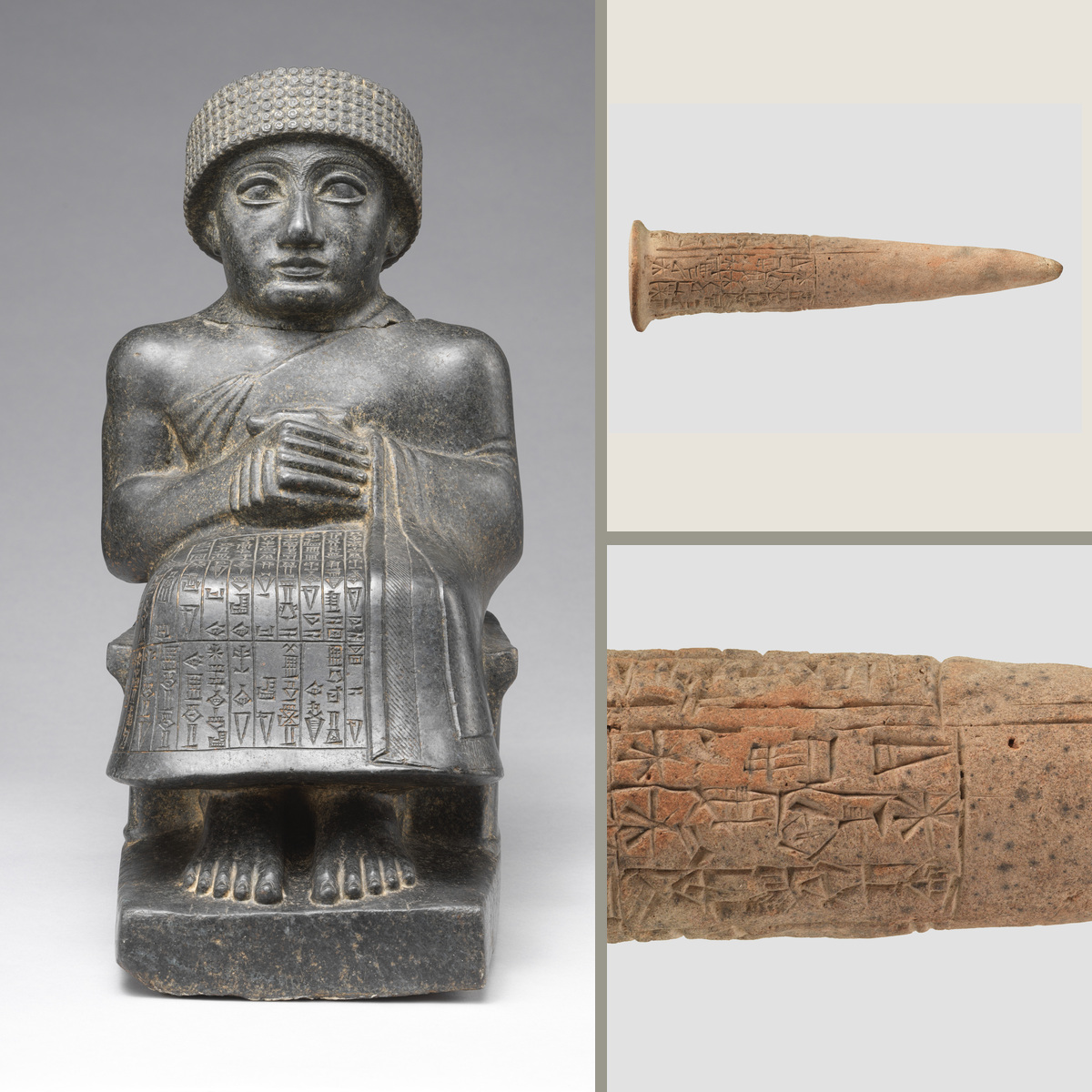
Archaeology provides a more specific witness. A brick from Nippur in the Metropolitan Museum of Art bears a Sumerian building inscription naming King Ur-Nammu (approximately 2112–2095 BCE by the museum's dating) as builder of Enlil's temple; its inventory number is 59.41.86. This is material evidence that a king commemorated himself as builder of the god's house. It does not, by itself, reconstruct the appearance of Ekur in every phase or establish that Ur-Nammu originated its sanctity. [5]
Kingship, offerings, and destinies
In Enlil in the Ekur, the god's pronouncements cannot be reversed, and his favorable regard enables a ruler's elevation. Lands bring wealth and offerings to his shrine; the poem also portrays justice and plenty. These are claims made within a hymn about divine and political order, not administrative records proving that every coronation took place in Nippur or that all political decisions came from its temple. [4]
Kinship and myth: no single family tree
Many traditions describe An as Enlil's father, while other learned lists preserve different genealogies. Divine kinship cannot be reduced to one internally consistent family tree. NinlilNinlilMesopotamian goddess and consort of Enlil, associated with Nippur, Tummal, destinies and royal ritual. Identified with Sud in literary tradition and known as Mulliltu/Mullissu in Akkadian and Assyrian contexts; her genealogies and roles vary by text and period.Glossary · Click to read the explanation appears as his wife and, in some compositions, his partner in determining fates. The poem Enlil and Ninlil begins near a canal in Nippur. Ninlil initially rejects Enlil's advances; the narrative then relates intercourse and the gods' expulsion of Enlil as ritually impure. In this story the children include the moon god Suen/Nanna and deities associated with the netherworld and waterways. It would be misleading to conceal Ninlil's initial refusal or present the narrative as evidence for a historical incident. [1][6]
Enlil and Sud offers a different narrative of courtship, involving a messenger, marriage gifts, and the mother's consent, and culminates in the goddess Sud being named Ninlil. It offers a literary way of bringing divine and civic traditions together, not the record of a wedding on a datable day. The poems survive in different recensions and incomplete sections; they should not be silently combined into one seamless account. [7]
The AnunnaAnunna / AnunnakiAnunna/Anunnaki is a collective designation for Mesopotamian gods whose scope varies by text and period; it is not a group with one fixed membership or number.Glossary · Click to read the explanation also appear in Enlil hymns. However, the earliest currently known attestations of this collective name postdate the Fara list. This does not make Enlil the historical “founder of the Anunnaki,” or the father of every deity counted among them. The collective's membership and meaning vary by period and text. [8]
Provider and destructive authority
Poetic portrayals of Enlil are not limited to prosperity. While the Ekur hymn praises his role in fertility and justice, The Lament for Sumer and Ur describes a divine decree, involving An and Enlil among others, that brings the end of kingship and a devastating storm upon cities. It also depicts the grief of Ur and the moon god Nanna's protest at his city's fate. A hymn of praise and a lament for disaster use distinct literary settings to make sense of divine authority. Neither, on its own, certifies a natural catastrophe as the historical execution of a god's command. [9]
Continuity and changing divine prominence
Enlil's cult did not stop with early Sumer. Later rulers maintained Ekur and dedicated building inscriptions, including a Kassite brick described by the Metropolitan Museum that invokes Enlil as “king of all the lands.” As MardukMardukBabylon’s leading god, worshipped at Esagil and elevated in the Akkadian Enūma eliš. His symbols include a spade and mušḫuššu dragon. His earliest origins remain obscure; Nibiru is no evidence of a planetary homeland.Glossary · Click to read the explanation grew in importance at Babylon, claims of religious and political primacy evolved; there was no single universal date on which Enlil worship simply ended. The abstract of Jonathan S. Tenney's study of Kassite Nippur reports thirteenth-century BCE celebrations associated with Marduk and Babylon in Nippur. This indicates changes and coexistence within religious institutions, not Enlil's disappearance. The full article was not consulted for this review. [10][11]
What the evidence permits
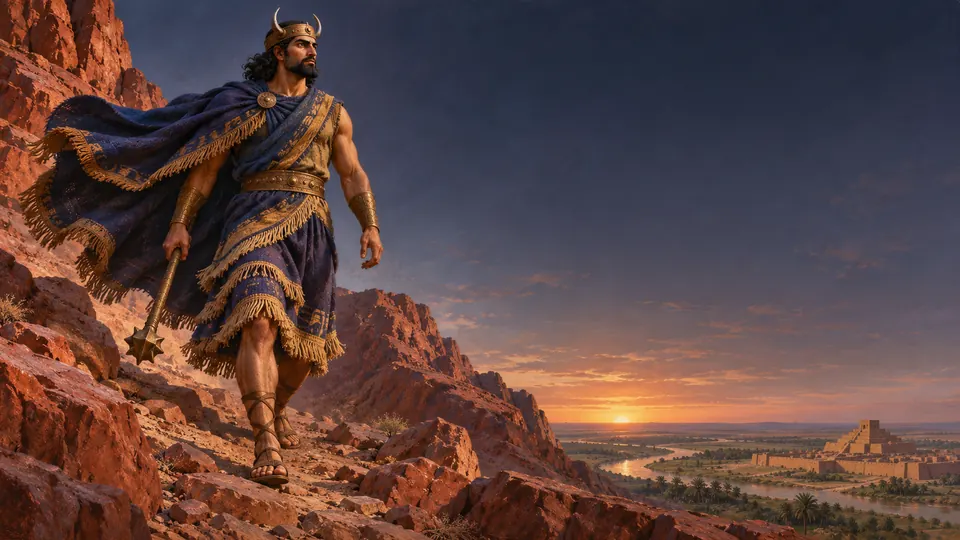
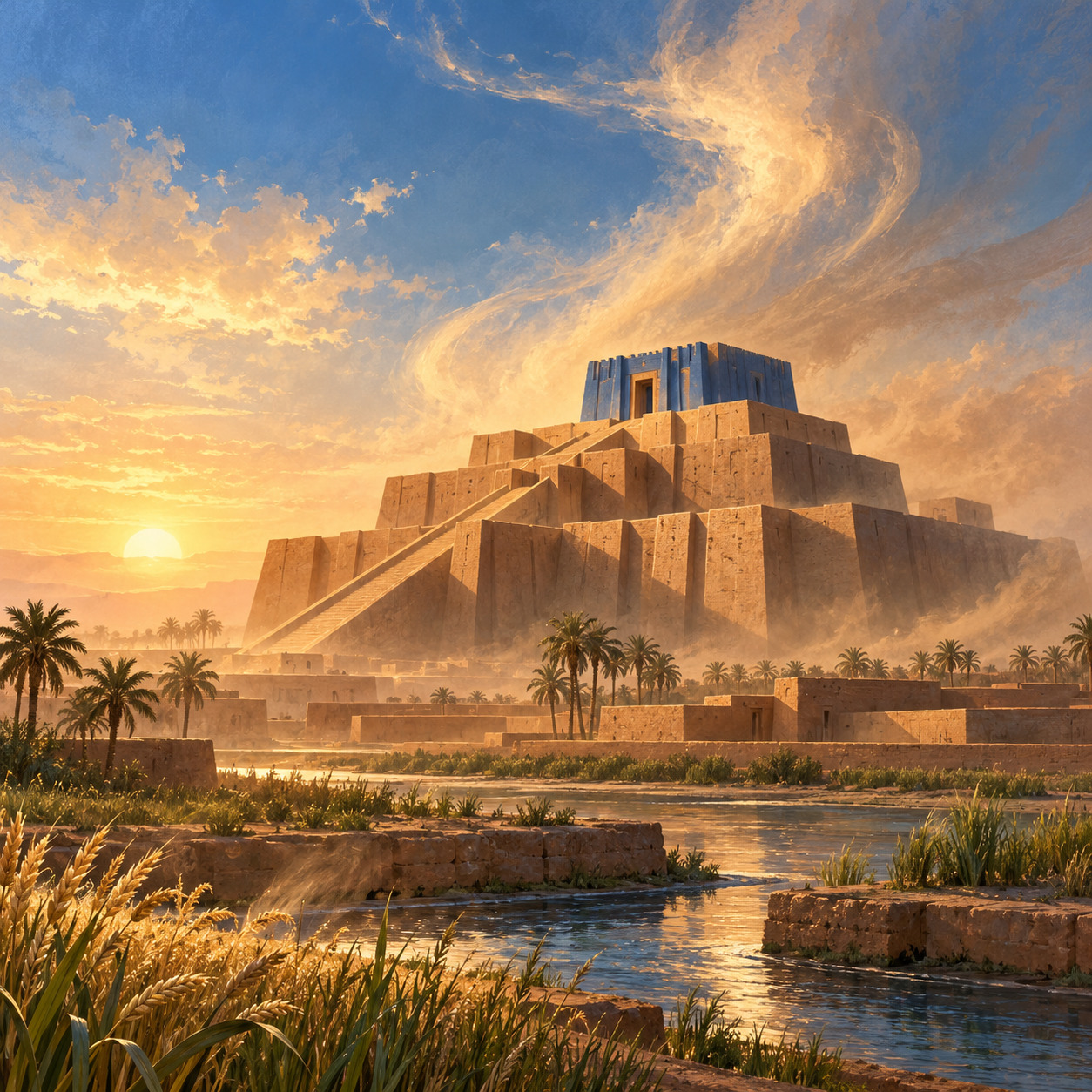
The strongest historical picture is of a god highly ranked in third-millennium lists, with a major Nippur cult center and enduring links to kingship, offerings, and construction. Hymns and myths add representations of fate, fertility, destruction, and changing kinship. The beginning of his worship, the certain etymology of his name, and the appearance of his temple at every stage remain less secure. The cover is modern AI-generated imaginative artwork suggesting terraced architecture and a riverine landscape. It is neither a photograph of the Nippur ziggurat nor an archaeologically established reconstruction, and it does not depict an authenticated likeness of Enlil.
References and notes (11)
- Adam Stone, “Enlil/Ellil (god),” Ancient Mesopotamian Gods and Goddesses (AMGG), ORACC, University of Pennsylvania. Search-indexed detailed excerpts of Functions, Genealogy, Cult Places, Attestations, and Name and Spellings; full page inaccessible (HTTP 502). Return to the text ↑
- Cuneiform Digital Library Initiative (CDLI), SF 001 (P010566), god list from Fara, VAT 12760+. Artifact catalogue: genre, provenance, inventory, and Early Dynastic IIIa date, c. 2600–2500 BCE; not a reading of the complete tablet. Return to the text ↑
- Digital Corpus of Cuneiform Lexical Texts (DCCLT/ORACC), “SF 001,” P010566. Indexed transliteration: obverse column i, lines 1–6; entire list not checked, direct page returned HTTP 502. Return to the text ↑
- ETCSL, “Enlil in the E-kur (Enlil A),” composite Sumerian literary text 4.05.1, University of Oxford. English translation read in full, numbered lines 1–171; individual manuscript witnesses and critical apparatus not collated. Return to the text ↑
- The Metropolitan Museum of Art, “Inscribed brick,” Ur-Nammu, object 59.41.86. Full object catalogue and displayed five-line English rendering read; not the entire cited Cuneiform Texts edition. Return to the text ↑
- ETCSL, “Enlil and Ninlil,” composite literary text 1.2.1. Full displayed English translation, lines 1–154; no individual cuneiform witness collated. Return to the text ↑
- ETCSL, “Enlil and Sud,” composite literary text 1.2.2, versions A and B. Displayed English translation of versions A and B, including gaps and variants; original individual tablets not collated. Return to the text ↑
- ORACC AMGG, “Anunna (Anunnaku, Anunnaki): a group of gods.” Indexed excerpts: Attestations, Genealogy, and functions; complete page not available. Return to the text ↑
- ETCSL, “The Lament for Sumer and Urim,” composite text 2.2.3. Read English translation in lines 1–111 and 340–377 and adjacent selected passages; no complete manuscript collation. Return to the text ↑
- Metropolitan Museum of Art, “Inscribed brick: dedicatory inscription of Adad-shuma-usur,” object 59.41.82. Object catalogue and displayed translation of inscription, including bracketed restoration, read. Return to the text ↑
- Jonathan S. Tenney, “The Elevation of Marduk Revisited: Festivals and Sacrifices at Nippur during the High Kassite Period,” Journal of Cuneiform Studies 68 (2016), 153–180, doi:10.5615/jcunestud.68.2016.0153. Publisher abstract and bibliographic details only; full article pp. 153–180 not accessed. Return to the text ↑
Suggest a correction · Suggest a source for this record
Cite this record
IL Archive, «Enlil», https://ilarchive.com/en/entities/enlil
Continue reading
Related readings