Entity · Concept
Anunna / Anunnaki
A reference page linking a name, group, or concept to the materials that discuss it.
- Names
- Anuna · Anunna · Anunnaki · Anunnaku
A collective designation for Mesopotamian gods in Sumerian and Akkadian evidence, varying between local pantheons, judgment, and the underworld. Seven and six hundred are text-specific counts, not a fixed roster.
Estimated reading time: 5 min Published Last reviewed:
Share article
Video
The Anunnaki: Stranger Than the Story
Our second documentary places the popular Anunnaki story beside the clay tablets, line by line, to see what the ancient texts actually say. Some scenes are AI-generated illustrations.
The YouTube player loads only when you press play. Watch on YouTube
Text
Introduction
Anunna, also encountered as Anunnaki, is a collective designation for divine groups in Mesopotamian traditions, not the name of a single god or a historical people. What does it mean in Sumerian and AkkadianAkkadianAn ancient East Semitic language written in cuneiform from the third millennium BCE; its varieties include Babylonian and Assyrian, and it served in international diplomacy.Glossary · Click to read the explanation evidence, and why do some texts mention seven judges while others count hundreds of gods? This entry follows royal inscriptions, Sumerian compositions, and Babylonian narratives, distinguishing the ancient evidence from later interpretation.
Forms and proposed meaning
Sumerian sources use forms such as Anuna and Anunna; Akkadian sources include Anunnaku and Anunnaki. In cuneiformCuneiformWriting with wedge-shaped signs, developed from Mesopotamian recording traditions and used for several languages from the third millennium BCE.Glossary · Click to read the explanation spelling, some forms carry an unpronounced divine determinativeThe divine determinative in cuneiformA cuneiform sign used mostly before a divine name to classify it without being spoken independently; shown as raised d or {d} in transliteration. Usage depends on language and context.Glossary · Click to read the explanation. Renderings along the lines of “those of princely descent” remain scholarly etymological proposals, not an agreed literal translation. The sky god An is sometimes presented as the group’s father, but this does not turn all its possible members into a single fixed family. Breaking the modern spelling “Anunnaki” into supposed references to planet Earth is not an established reading of the cuneiform name. [1]
Early evidence: Gudea and the gods of Lagash
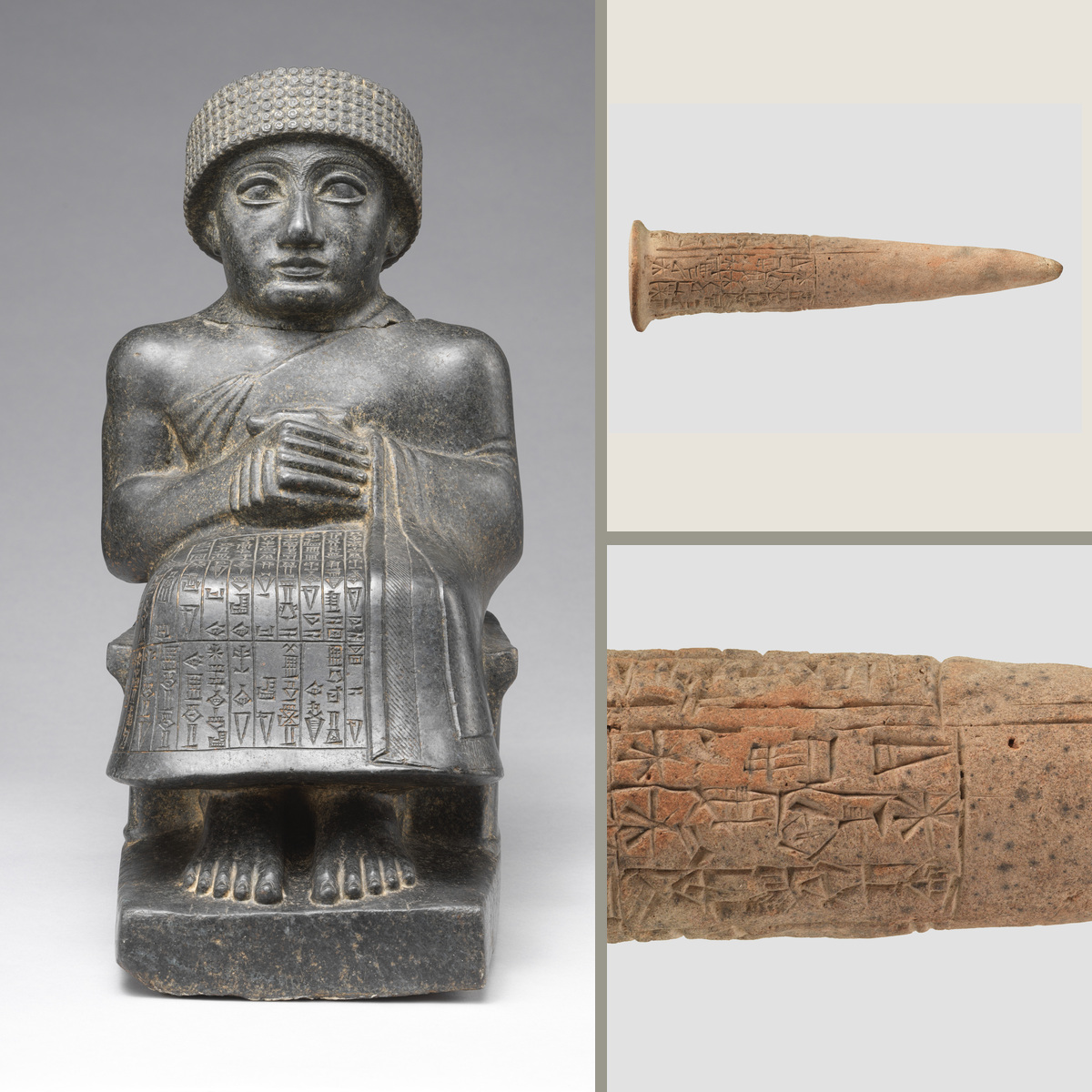
Among the earliest known attestations are inscriptions of GudeaGudeaRuler of Lagash in the late third millennium BCE, whose inscriptions document temple construction and the name Anunna.Glossary · Click to read the explanation, ruler of the Sumerian state of LagashLagash, Sumerian city-stateCity-state in present-day southern Iraq; Girsu was one of its centers associated with royal inscriptions.Glossary · Click to read the explanation in the late third millennium BCE. Cylinder A, lines 353–364, mentions the “Anuna of the land of Lagash” in prayers surrounding construction of the temple of NingirsuNingirsuA major god of the Sumerian state of Lagash, invoked in Urukagina’s reform undertaking.Glossary · Click to read the explanation. The modern edition partially restores the name at Sumerian line 359; Cylinder B provides further evidence in Gudea’s prayer to the Anuna (lines 834–841) and in their gathering around Ningirsu (lines 929–933).
This is a local divine grouping in royal cultic discourse, not a category confined to the heavens or the underworld. The specialist overview also reports a very small number of Ur III administrative records that appear to document offerings to the Anuna, while emphasizing the evidence’s scarcity and identifying no dedicated group temple. The inscription’s date does not establish when the religious conception first arose. [2]
Authority without a fixed roster
In the Sumerian composition EnkiEnkiMesopotamian deity also known as Ea, linked with Eridu and the Abzu (deep fresh waters), wisdom, incantations, and narratives of creation and cosmic order. Later written attestations do not identify the deity of Eridu’s earliest layers.Glossary · Click to read the explanation and the World Order, Enki is praised as foremost among the Anuna; the group appears in scenes of praise and the ordering of divine responsibilities. Lines 368–380 describe Enki assigning them dwellings in cities and allocating farmland. Elsewhere, divine decision-making and the decreeing of fates are among the group’s associations. Depending on the context, the name may refer broadly to major gods or to the gods of a particular city, such as Lagash or EriduEriduEridu (Abu Shahrain), a multi-mound site in southern Iraq occupied since the Ubaid, later home to a religious precinct associated with Enki. Its eighteen sounding levels are not proof that every early building was a temple.Glossary · Click to read the explanation. These uses cannot be consolidated into a universal membership list. [3]
Seven judges in Inanna’s Descent
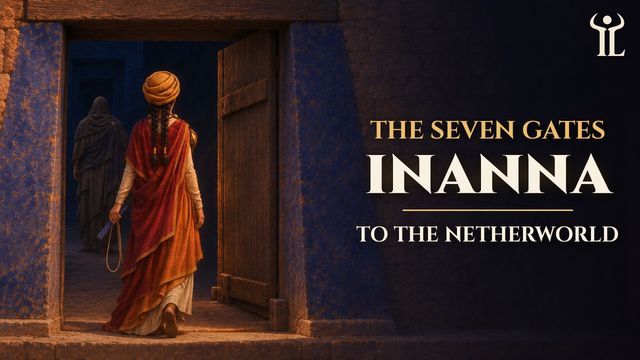
In The Descent of InannaInanna / IshtarA prominent Mesopotamian goddess whose Sumerian name Inanna became associated with Akkadian Ishtar across diverse traditions. She was associated with desire, war, royal authority and Venus, while local forms and genealogies varied among texts.Glossary · Click to read the explanation to the Netherworld, lines 164–172, seven Anuna act as judges and decide against Inanna after she sits on the throne of her sister EreshkigalEreshkigalMesopotamian goddess ruling the netherworld; Inanna’s sister in descent texts, with varying accounts of her relationship with Nergal.Glossary · Click to read the explanation. In lines 282–289, the Anuna stop her as she attempts to leave and require a substitute. Here “seven” belongs to a specific judicial scene in a Sumerian composition; it is not a census of every Anunna in all periods. The poem should also not be silently conflated with the separate Akkadian story of Ishtar’s descent. [4]
Anunna and Igigi in Babylonian traditions
The IgigiIgigiCollective of deities called Igigi or Igigū in Akkadian sources from the Old Babylonian period onward. They labour and rebel in Atrahasis; their numbers and relation to the Anunnaki vary by text.Glossary · Click to read the explanation (Igigu) are another named divine collective whose relationship with the Anunna changes across works and periods. According to Nicole Brisch’s discussion of the opening of the Akkadian AtrahasisAtrahasis: Epic and HeroAkkadian narrative on human creation, relations with the gods and the flood, named for its survivor warned by Enki. Its surviving manuscripts differ in date and preservation; its hero must not be equated uncritically with every Utnapishtim version.Glossary · Click to read the explanation, drawing on the edition by Lambert and Millard, seven great Anunnaki impose arduous labour on the Igigi, eventually provoking revolt. Other, later Babylonian settings sometimes contrast heavenly gods with gods of the underworld. Such oppositions are textual patterns, not a uniform taxonomy shared by all ancient authors. The printed critical edition of Atrahasis was not read in full for this review; the episode is used through Brisch’s account. [5]
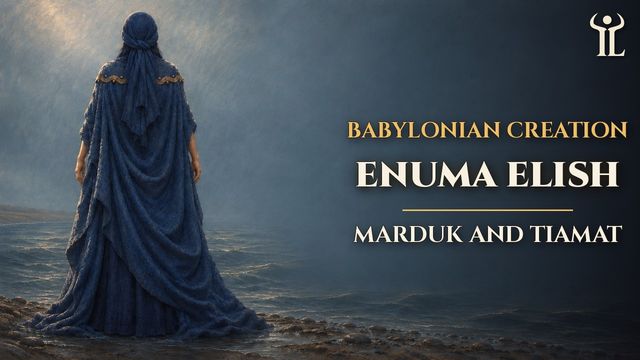
In Enuma ElishEnuma ElishA seven-tablet Babylonian creation poem in Akkadian, recounting Marduk’s rise, victory over Tiamat, cosmic ordering and human creation, and culminating in praise through fifty names. Its composition date is debated; later manuscripts and recitation traditions preserve it.Glossary · Click to read the explanation, Tablet VI, lines 39–46, MardukMardukBabylon’s leading god, worshipped at Esagil and elevated in the Akkadian Enūma eliš. His symbols include a spade and mušḫuššu dragon. His earliest origins remain obscure; Nibiru is no evidence of a planetary homeland.Glossary · Click to read the explanation apportions the Anunnaki above and below, placing three hundred in heaven and six hundred altogether in heaven and the netherworld; another three hundred in the lower group follows from that account. These figures describe an arrangement within this particular composition. They cannot simply be combined with the seven judges of Inanna’s Descent or with the Igigi numbers found later in the same tablet to produce one universal roster. [6]
Worship, visual evidence, and limits of depiction
The specialist deity catalogue identifies no securely known ancient depiction of the Anunna as a collective, though individual gods certainly have iconographies; it also records no known sanctuary devoted to the collective alone. That distinction matters when assessing an identified god’s statue, an interpreted scene of divine assembly, and a modern image designed to evoke the subject. A collective word does not furnish a reliable common appearance, costume, or portrait. [1]
How to read the evidence
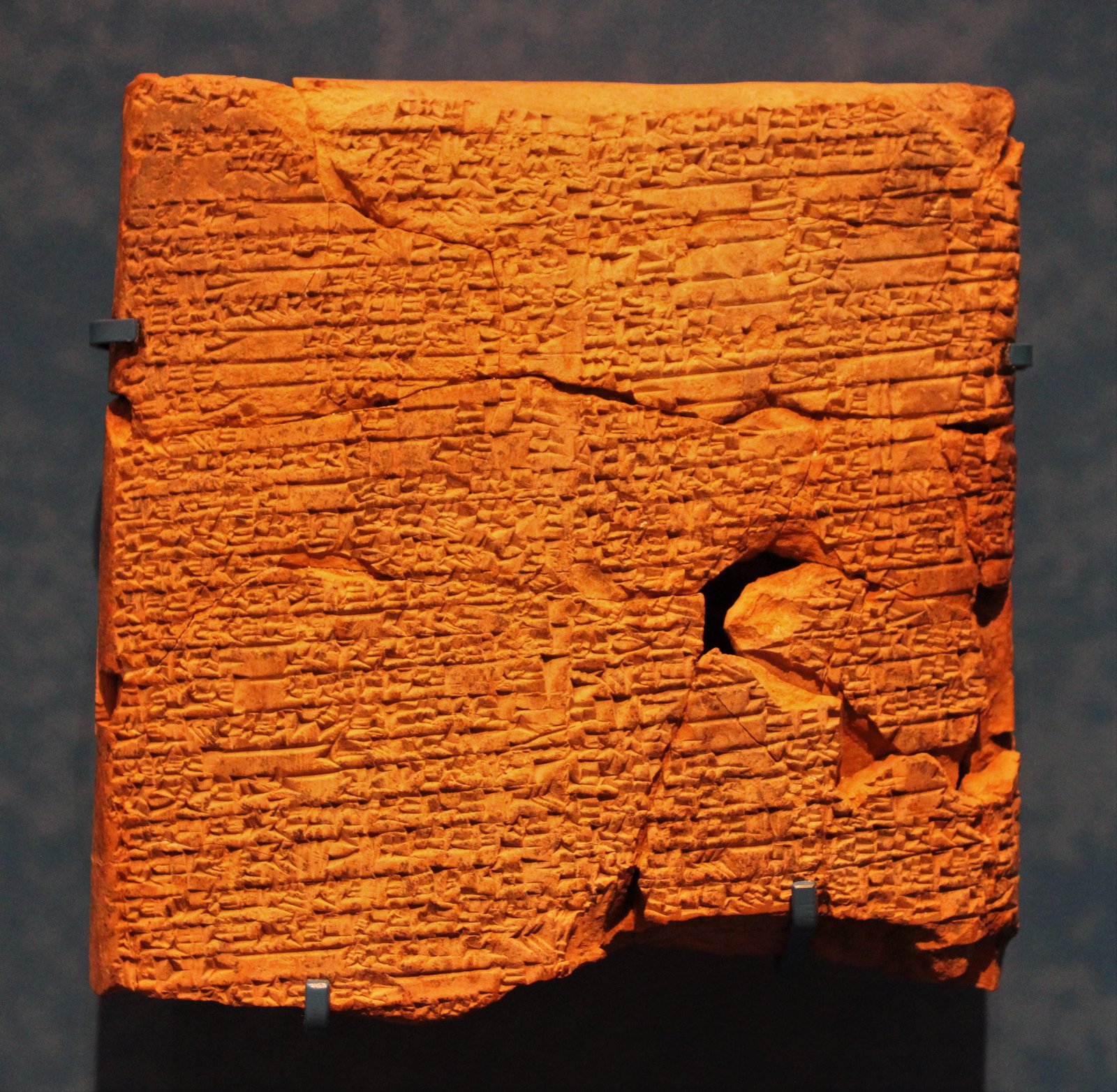
Gudea’s contemporary royal inscription belongs to a different evidentiary layer from Sumerian poems often surviving through later school tablets and literary copies, or Babylonian works composed in Akkadian. The University of Oxford corpus provides edited Sumerian composite texts drawn from multiple witnesses alongside editorial English translations; not every published line can therefore be assigned to one intact tablet, nor does a mythical event date the origin of a belief. [7]
Modern claims sometimes present the Anunnaki as visitors from space or as bearers of advanced technology. Such reconstructions differ in kind from the words and actions documented in the cited cuneiform evidence, which concerns gods, responsibilities, offerings, and judgments. The more useful historical question is what the collective name does in each text, in which place and period, and at what level of textual transmission.
Quick answers
What does the name Anunna or Anunnaki actually refer to?
It is a collective name for groups of gods in Mesopotamian traditions, not one god or a real people. A rendering like "those of princely descent" is only a scholarly proposal, not an agreed translation. [1]
Where does the earliest evidence for the Anuna come from?
Among the earliest known mentions are inscriptions of Gudea, ruler of Lagash in the late third millennium BCE. They name the "Anuna of the land of Lagash" in prayers around building Ningirsu's temple. [2]
Why do some texts mention seven Anunna and others hundreds?
The numbers belong to particular texts. Seven Anuna act as judges in one Sumerian poem about Inanna, while Enuma Elish counts three hundred in heaven and six hundred in all. They cannot be merged into one roster. [6]
Is there a known picture or temple of the Anunna as a group?
No securely known ancient depiction of the Anunna as a collective is identified, and no sanctuary devoted to the group alone is known. Individual gods do have their own imagery. [1]
References and notes (7)
- Nicole Brisch, “Anunna (Anunnaku, Anunnaki) (a group of gods),” Ancient Mesopotamian Gods and Goddesses, Oracc, 2019. Indexed detailed text from “Name and Spellings,” “Functions,” “Divine Genealogy,” “Cult Places,” “Time Periods,” and “Iconography”; direct page opening failed (502). No separate full-source reading is claimed. Return to the text ↑
- University of Oxford, “The Building of Ningirsu’s Temple (Gudea Cylinders A and B),” Electronic Text Corpus of Sumerian Literature (ETCSL), 2.1.7, English translation and composite Sumerian text. Directly read: translation of Cylinder A 353–364; Cylinder B 824–841 and 929–933; checked composite Sumerian A 359 (partly restored a-[nun-na]) and B 834–841, 931. Not the full cylinders. Return to the text ↑
- University of Oxford, “Enki and the World Order,” Electronic Text Corpus of Sumerian Literature (ETCSL), 1.1.3, English translation of a Sumerian composite. Directly read translated passages 1–16, 61–85, 134–139, and 368–380; not the whole composition or individual manuscripts. Return to the text ↑
- University of Oxford, “Inana’s Descent to the Nether World,” Electronic Text Corpus of Sumerian Literature (ETCSL), 1.4.1, English translation and composite Sumerian text. Directly read English translation 159–175 and 282–289 and composite Sumerian 164–172 (especially 167), 282–289 (especially 286); not the entire poem. Return to the text ↑
- Nicole Brisch, “Igigi/Igigu (a group of gods),” Ancient Mesopotamian Gods and Goddesses, Oracc, 2019; discusses the opening of Atrahasis through W. G. Lambert and A. R. Millard’s edition (1969; 1999 reprint). Detailed indexed excerpts of “Functions,” “Time Periods,” and “Name”; Atrahasis lines 1–6 are mediated by Brisch, not checked in the full edition; direct Oracc page failed (502). Return to the text ↑
- W. G. Lambert, translation of Enuma Elish, Tablet VI, reproduced in “Enuma Elish – The Babylonian Epic of Creation – Full Text,” World History Encyclopedia, via the Etana site; compared with Brisch’s Oracc overview. Directly read Lambert translation, Tablet VI lines 20–46 and 59–69, not the whole epic or Akkadian original; 300 heavenly and 600 total come from 39–44; the second 300 is contextual arithmetic. Return to the text ↑
- University of Oxford, ETCSL Manual, §1.1 “About the Corpus,” and ETCSL General Information: explanation of composite editions and source dates. Directly read Oxford project overview and Manual §1.1 on composite editions and dates of textual witnesses; not the whole manual. Return to the text ↑
Suggest a correction · Suggest a source for this record
Cite this record
IL Archive, «Anunna / Anunnaki», https://ilarchive.com/en/entities/anunna
Continue reading
Related readings