Site
Eridu
Abu Shahrain in southern Iraq, with a long architectural sequence beginning before writing. Associated with Enki in historical times, which does not establish the sacred being’s identity in its earliest layers.
Text
A place continuing and changing
The Temple Sounding’s eighteen architectural levels contributed to UbaidUbaid cultureAn archaeological designation for material traditions originating in southern Mesopotamia with regional diffusion. Broad southern frame c. 6500–3800 BCE; not a known linguistic people, with limits varying by region and phase.Glossary · Click to read the explanation periodization. A modern expedition re-examines the complex and landscape; each level’s function requires its own evidence.[1]
Place and name
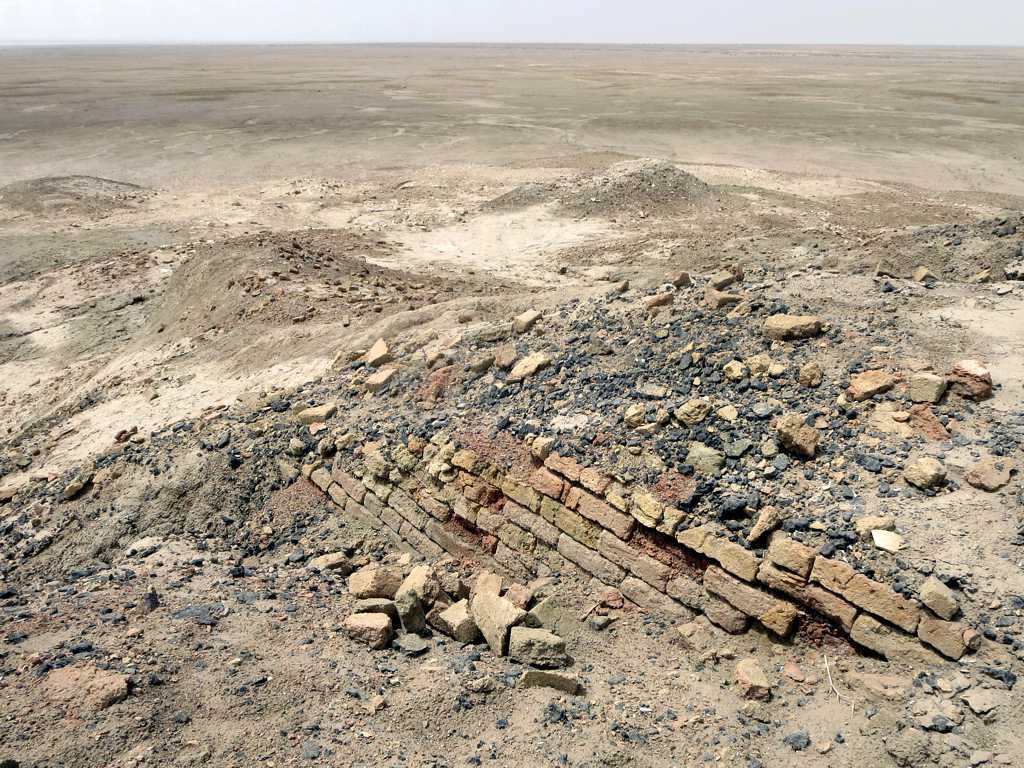
Historical Eridu was associated with EnkiEnkiMesopotamian deity associated with deep fresh water, wisdom and Eridu, known as Ea in Akkadian tradition. The earliest preserved written mention does not date his cult’s origin or identify Ubaid Eridu’s deity.Glossary · Click to read the explanation and E-AbzuAbzuDeep fresh waters in historical Mesopotamian conceptions, associated with Enki/Ea. The name occurs in E-abzu, “House of the Abzu”. It cannot automatically identify an Ubaid platform or a water basin.Glossary · Click to read the explanation. This does not make every earlier structure his temple under the same name. The photograph shows a zigguratZigguratElevated temple tower of terraces in historical Mesopotamian architecture. Not every temple platform is a ziggurat; similar elevation does not establish one developmental route for all early structures.Glossary · Click to read the explanation later than the Ubaid, not the earliest building at the site.
References and notes
- Philippe Quenet et al. (2025). Archaeological Mission at Eridu: The 2022 Campaign of the University of Strasbourg at Abu Shahrayn. Preliminary Report Part 1: Off-Site Studies and Site 1, the E-Abzu Monumental Complex Reconsidered. Iraq 87, 263–312. DOI: 10.1017/irq.2025.10035. Abstract and selected landscape, sounding, terrace and conclusion passages; eighteen levels. Does not establish every early level as house or temple, or Enki in the Ubaid. Return to the text ↑
Research history
Substantive changes are retained here. Minor copy edits remain in the internal operational log.
-
Substantive record update
Suggest a correction · Suggest a source for this record
Cite this record
IL Archive, «Eridu», Edition 2, https://ilarchive.com/en/sites/eridu