Entity · Concept
Abzu
A reference page linking a name, group, or concept to the materials that discuss it.
Deep fresh waters in historical Mesopotamian conceptions, associated with Enki/Ea. The name occurs in E-abzu, “House of the Abzu”. It cannot automatically identify an Ubaid platform or a water basin.
Text
Water in historical conceptions
The Abzu is linked to EnkiEnkiMesopotamian deity associated with deep fresh water, wisdom and Eridu, known as Ea in Akkadian tradition. The earliest preserved written mention does not date his cult’s origin or identify Ubaid Eridu’s deity.Glossary · Click to read the explanation and the name of his EriduEriduAbu Shahrain in southern Iraq, with a long architectural sequence beginning before writing. Associated with Enki in historical times, which does not establish the sacred being’s identity in its earliest layers.Glossary · Click to read the explanation complex. This evidence belongs to traditions documented in texts, not the words spoken there before writing.[1]
What does the image show?
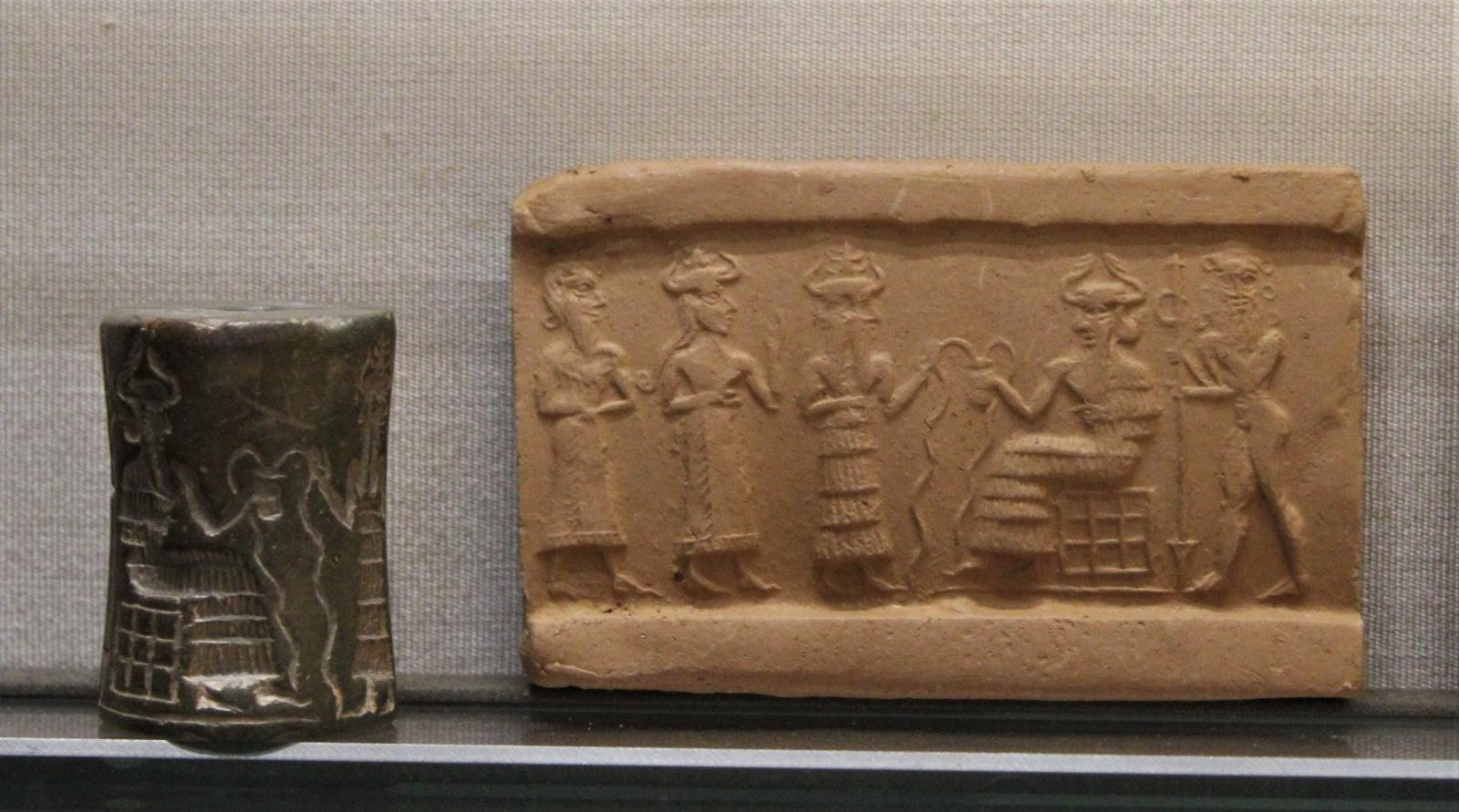
The AkkadianAkkadianAn ancient East Semitic language written in cuneiform in Mesopotamia.Glossary · Click to read the explanation seal depicts Enki/Ea within a world of water and symbolism, according to the Louvre catalogue. It illustrates the concept’s religious context, not the Abzu itself or an object from UbaidUbaid cultureAn archaeological designation for material traditions originating in southern Mesopotamia with regional diffusion. Broad southern frame c. 6500–3800 BCE; not a known linguistic people, with limits varying by region and phase.Glossary · Click to read the explanation Eridu.[2]
References and notes
- Ruth Horry (2019). Enki/Ea (god). Ancient Mesopotamian Gods and Goddesses, ORACC. Author’s entry: Eridu, E-abzu and first attestations in ED IIIa Fara texts, from indexed page text; direct access failed during this review. First surviving evidence is not the deity’s origin. Name not projected into Ubaid layers. Return to the text ↑
- Musée du Louvre. Sceau-cylindre : scène d’intercession, MNB 1905 / CCO A.161. Object catalogue: Enki/Ea and presentation scene, Akkadian, 2340–2200 BCE. Description, date and identifier checked. Used photograph of object and modern impression is independently licensed by its Commons photographer; not Ubaid imagery. Return to the text ↑
Research history
Substantive changes are retained here. Minor copy edits remain in the internal operational log.
-
Substantive record update
Suggest a correction · Suggest a source for this record
Cite this record
IL Archive, «Abzu», Edition 2, https://ilarchive.com/en/entities/abzu