Page
About the Archive
An independent research project tracing the history of religions and ideas of divinity through evidence readers can follow for themselves.
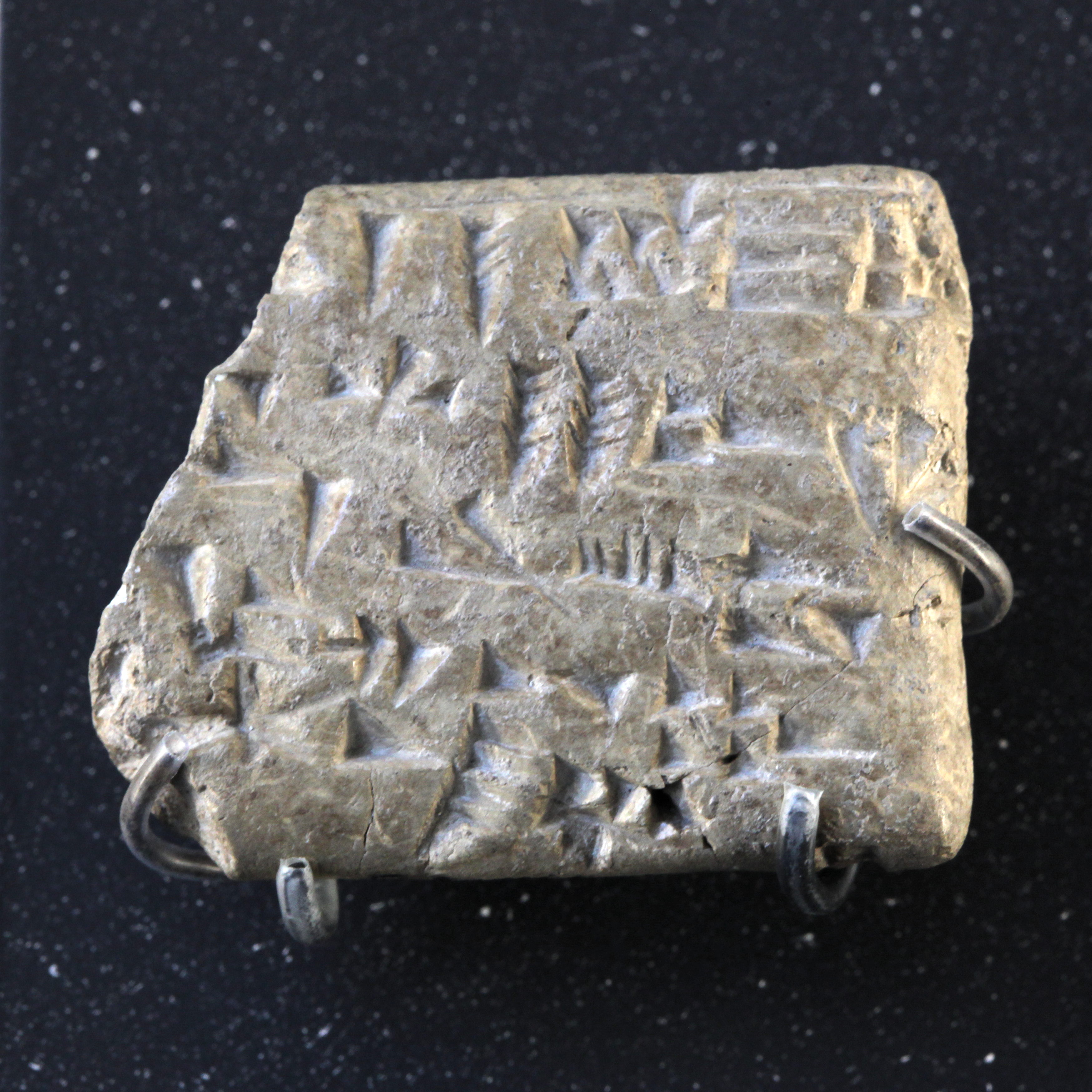
IL Archive is an independent research project tracing the history of religions and ideas of divinity, from societies before writing through MesopotamiaMesopotamiaA historical region associated with the Tigris and Euphrates, home to many societies and civilisations.Glossary · Click to read the explanation, the LevantThe LevantThe Levant is a regional name for lands along the eastern MediterraneanGlossary · Click to read the explanation and the ancient world, to Judaism, Christianity and Islam.
What do we study?
The archive examines ancient texts, objects, languages, gods and divine councilsDivine councilA representation of divine beings acting as an assembly with authority and differentiated roles.Glossary · Click to read the explanation, alongside changes in concepts of divinity, ritualsRitualAn organised or distinguished practice meaningful to a community; it may leave traces, but its form alone does not reveal an associated doctrine.Glossary · Click to read the explanation and beliefs over thousands of years. We place this evidence in context: when and where it appeared, in which language, and what it meant to the community that used it.
How do we read the evidence?
The archive starts with no predetermined religious or philosophical conclusion. It does not set out to prove that all beliefs are solely the product of human development, or to establish the opposite in advance. Its aim is to gather evidence and connect it chronologically, linguistically and culturally, distinguishing what texts and objects show explicitly, what strong evidence allows us to infer, and what remains an open possibility requiring further evidence.
We distinguish three levels: what an ancient source explicitly says, a modern scholar’s interpretation, and IL Archive’s own inference or hypothesis. Where appropriate, statements carry one of four assessments — confirmed, probable, possible or unproven — together with supporting, opposing and contextual evidence. A similarity of names or symbols alone does not establish identical beliefs or demonstrate historical transmission.
Histories that intersect
The project seeks a connected understanding of what people considered sacred in the earliest societies: how named gods, divine councils and city gods emerged; how names, symbols and attributes moved between cultures; and how ideas of a supreme god, exclusive worshipMonolatryWorship of one deity without necessarily denying others; variable analytical term, not one uniform doctrine of all Israelites.Glossary · Click to read the explanation and monotheismMonotheismBelief in a single God as the only deity, rather than merely the highest among several gods.Glossary · Click to read the explanation later took shape.
We therefore approach civilizations and religions through their intersecting histories, where language, politics, migration, mythology, ritual and religious memory meet. These are research questions. They do not assume that every society followed the same sequence, or that all beliefs can be traced with certainty to a single origin.
Why “El”?
The project takes its name from ElSemitic ilAn ancient Semitic word for a deity; its linguistic use does not alone identify a particular divine figure.Glossary · Click to read the explanation, a word that offers one of the earliest linguistic points of entry into the study of how Semitic-speaking peoples named divinity. Its traces persisted in different forms across languages, personal names and religious traditions for thousands of years.
Yet “El” does not limit the project’s subject, or imply that the god El in one particular tradition was the origin of all gods. It marks the beginning of a broader journey through gods, religions, civilizations, texts and objects, seeking to approach the earliest accessible history of religious belief as closely as the evidence permits.
An archive whose evidence can be followed
We connect studies and research files to the texts, objects and sources on which they rely, and explain why materials are related. Text segments and records have permanent links. Significant research changes remain visible in revision history; earlier views are not silently erased. Catalog information can be reviewed and refined as better evidence or sources become available.
Begin with the exploration paths, consult the glossary while reading, or learn about the archive’s method. The aim is to let readers follow the evidence, understand its context and develop their own reading.
Official profiles
The website is the primary reference. These publishing channels complement the archive.
Contribution
The archive is an independent research project. It welcomes feedback, studies, sources and collaboration proposals, which the team reviews before adding material. The website remains the reference; submission does not mean publication.