Entity · Concept
Divine council
A reference page linking a name, group, or concept to the materials that discuss it.
How Ugaritic, Babylonian and Hebrew biblical texts portray divine assemblies and heavenly courts, distinguishing a council from a pantheon and weighing authority, justice and the limits of comparison.
Estimated reading time: 8 min Published Last reviewed:
Share article

Video
The Night the Gods Closed the Sky: Balaam and the Council of the Gods
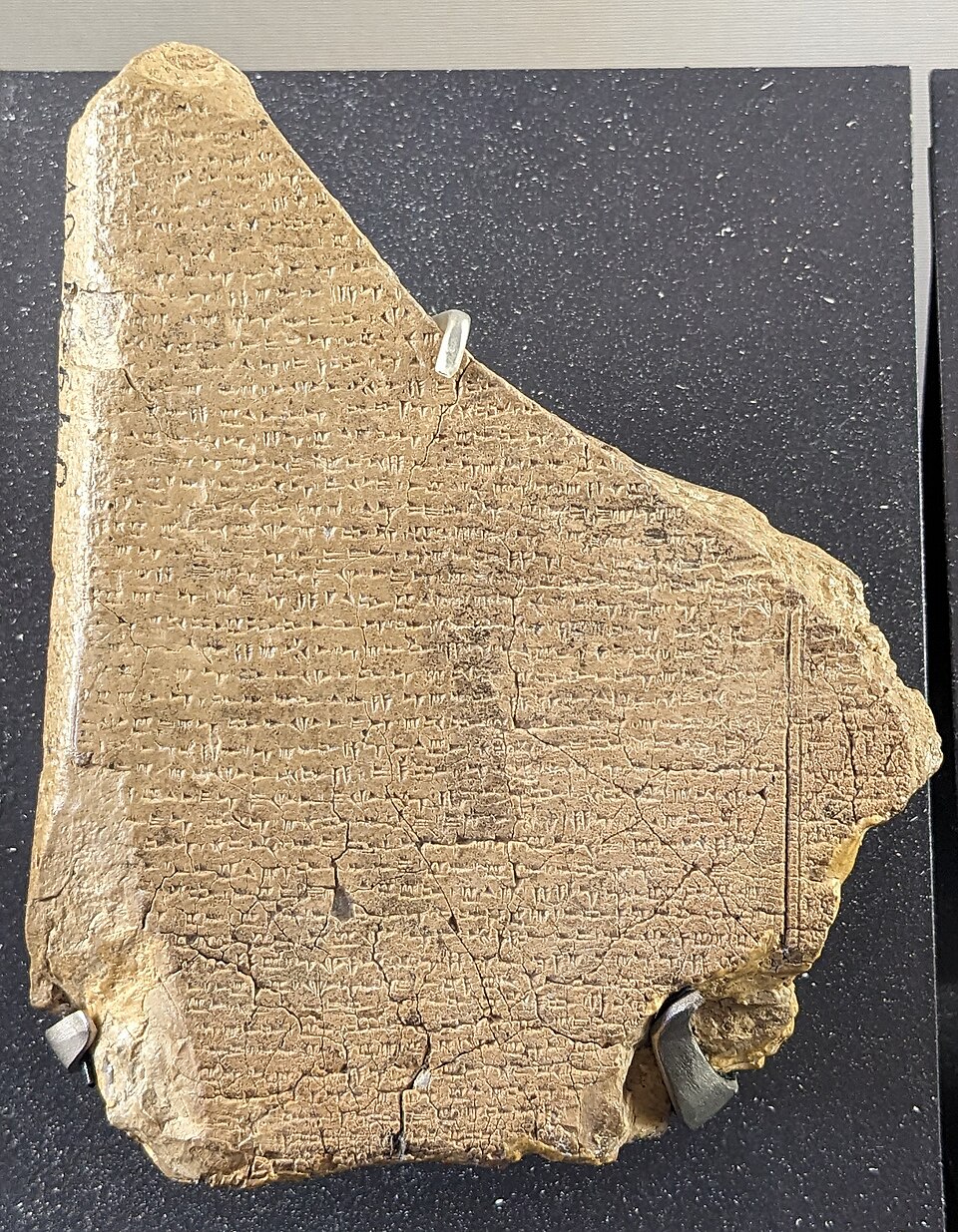
More than twenty-seven centuries ago, someone wrote a vision on a plastered wall at Deir ʿAlla: the gods come to Balaam son of Beor at night, and a council orders the sky shut. We read the wall line by line, then set it beside Ugarit, the Book of Numbers and later traditions, and settle neither reading. Some scenes are AI-generated illustrations.
The YouTube player loads only when you press play. Watch on YouTube
Text
Introduction
How did ancient Near Eastern texts imagine the gods gathering to discuss authority or pronounce a decision affecting a person or a kingdom? This entry examines the divine council as a literary and religious scene with actions and roles, rather than simply a list of deities. It considers assemblies at UgaritUgaritAncient city and kingdom at Ras Shamra on the Syrian coast, flourishing between the fourteenth and early twelfth centuries BCE and preserving multilingual archives.Glossary · Click to read the explanation and in Babylonia before comparing them with scenes of the heavenly court in selected books of the HebrewHebrewA Northwest Semitic language of the Canaanite group, encompassing Iron Age epigraphy, Biblical, Rabbinic, medieval and Modern Hebrew; its scripts and pronunciations changed over time.Glossary · Click to read the explanation Bible.
The contrast matters because a gathering can receive envoys, confer supremacy on a god, hear proposals or judge failures of justice. Such narratives are not transcripts of historical meetings. Nor do they all express the same theology or establish a direct path of literary borrowingLiterary borrowingUse of verbal or narrative material from an earlier text or tradition in a later work, distinguishing evidence of transfer from mere resemblance.Glossary · Click to read the explanation.
Divine council and pantheon: two different questions
A pantheonPantheonThe deities recognized within a given religious tradition, city or period, as reflected in texts and cult. Broader than a divine council, an assembly within a narrative.Glossary · Click to read the explanation is the circle of gods recognized in a particular tradition, city or period, including major divinities, local deities, and names or attributes that may change over time. A divine council, by contrast, foregrounds an assembly in action: who presides, who speaks or listens, and who gives judgment or grants authority? An assembly may include only some members of the wider pantheon. Mark S. SmithMark S. SmithScholar of the Hebrew Bible and Ugaritic religion whose work examines the divine family and biblical monotheism.Glossary · Click to read the explanation studies this image as one way in which Ugaritic and ancient Israelite texts organize the divine world. [1]
The term does not identify an institution governed by one fixed constitution across cultures. A father presiding over a divine family is not the same figure as a king listening to courtiers; neither scene is identical to a court delivering a verdict. Names and positions can shift even within a single tradition, according to the genre, date and purpose of the text. [2]
How do we recognize a council scene?
Narrative actions provide the strongest clues: messengers arrive, participants are summoned, members sit or stand before a throne, suggestions are exchanged, rank is conferred, or a decision is announced. Many offering records and lists of gods contain none of this sequence, however long the lists may be. The Babylonian list An = Anum arranges divine names and Sumerian–Akkadian correspondences; the ordering of its entries does not itself narrate a meeting in the mythological world. Its opening gives equivalences for An/Anu and other names, not deliberations among assembled participants. [3]
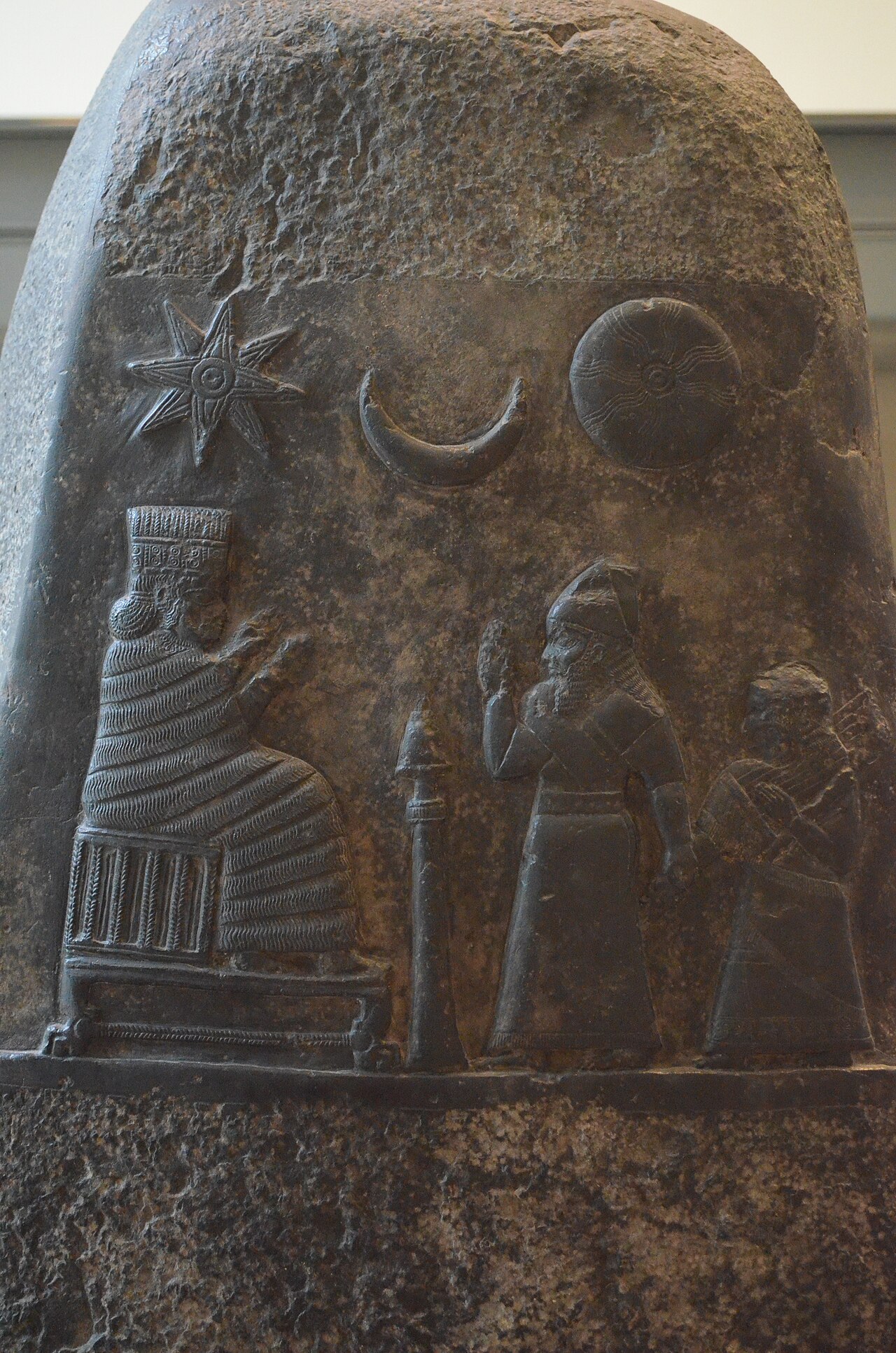
Accordingly, the number of names in a religious catalogue is not a count of “council members.” Nor does an image showing several divine figures on a seal or relief by itself prove collective decision-making. A narrated meeting reveals relations of authority within a dramatic context; an image first attests a visual convention that requires its own interpretation.
Ugarit: El and the messengers of Yamm
At UgaritUgaritAncient city and kingdom at Ras Shamra on the Syrian coast, flourishing between the fourteenth and early twelfth centuries BCE and preserving multilingual archives.Glossary · Click to read the explanation, on the Syrian coast, second-millennium BCE texts preserve episodes of the Baal CycleBaal CycleA group of Late Bronze Age Ugaritic religious texts recounting Baal’s conflicts, relationships with the gods and the building of his palace.Glossary · Click to read the explanation. In the passage conventionally designated KTU 1.2 I, Yamm, the sea god also called “Judge River,” sends envoys to the assembled gods in the presence of ElElEl is a senior deity in Late Bronze Age Ugaritic texts, portrayed as father of the divine family and a council authority, alongside his consort Athirat. This entry does not cover every linguistic use of El.Glossary · Click to read the explanation. They demand the surrender of BaalBaalUgaritic storm god and warrior king who defeats Yamm, builds his palace with El’s consent and confronts Mot. References to El and Dagan as fathers do not define a single genealogy.Glossary · Click to read the explanation and his followers. The gods bow their heads in fear when the envoys appear; Baal protests their response. El seems ready to comply, provoking Baal's anger, and two goddesses restrain him from attacking the envoys. Parts of the tablet are damaged or restored in editions, so uncertain details must not be treated as unambiguous. [4]
The episode distinguishes positions within a divine family. El holds senior authority, but Baal is no silent executor of his decision; the envoys, the gathered gods and the intervening goddesses all play roles in the encounter. There is no majority vote in the passage. Instead, it dramatizes kingship, threats, rank, negotiation and conflict.
Babylonia: the assembly that elevated Marduk
In the Babylonian Enūma elišEnuma ElishA seven-tablet Babylonian creation poem in Akkadian, recounting Marduk’s rise, victory over Tiamat, cosmic ordering and human creation, and culminating in praise through fifty names. Its composition date is debated; later manuscripts and recitation traditions preserve it.Glossary · Click to read the explanation, MardukMardukBabylon’s leading god, worshipped at Esagil and elevated in the Akkadian Enūma eliš. His symbols include a spade and mušḫuššu dragon. His earliest origins remain obscure; Nibiru is no evidence of a planetary homeland.Glossary · Click to read the explanation makes his confrontation with TiamatTiamatTiamat is a primeval divine mother and watery figure in Enūma eliš who later opposes Marduk; he divides her body in making the cosmos. No Babylonian portrait of her is securely identified.Glossary · Click to read the explanation conditional on the great gods convening an assembly and conferring irreversible authority on his word. Tablet III narrates the summons and the gods' banquet; the opening of Tablet IV presents their proclamation of Marduk's supremacy. The narrative connects the gathering to the legitimacy of divine kingship, while his subsequent victory over Tiamat vindicates that status. This summary follows passages discussed by Wayne Horowitz, who cites selections translated by Stephanie Dalley; the AkkadianAkkadianAn ancient East Semitic language written in cuneiform from the third millennium BCE; its varieties include Babylonian and Assyrian, and it served in international diplomacy.Glossary · Click to read the explanation has not been collated here. [5]
The Babylonian scene differs from El's council: its central action is the conferral of new authority on a particular deity, not the proposed handing over of a god to an adversary's envoys. ORACC's discussion of Marduk places his increasing prominence in the changing religious and political position of BabylonBabylonBabylon is an ancient city in central present-day Iraq, south of BaghdadGlossary · Click to read the explanation. One cannot project a single unchanging divine leadership onto every Mesopotamian century. [6]
The Anunna: a divine group, not a permanent committee
Collective names such as the Anunna or AnunnakiAnunna / AnunnakiAnunna/Anunnaki is a collective designation for Mesopotamian gods whose scope varies by text and period; it is not a group with one fixed membership or number.Glossary · Click to read the explanation occur in Sumerian and Akkadian sources. “Anunna” can refer to major gods or the gods of a particular city, while in some later contexts the group is associated with the underworld. Certain narratives assign the determination of fates to such beings; the collective label alone, however, does not prove a permanent council with a fixed membership. ORACC notes that the number and reference of the group vary by text and period. [7]
It is therefore essential to distinguish three forms of evidence: a god listGod ListsTexts collecting divine names for preservation, teaching and classification, with varying theological organization.Glossary · Click to read the explanation that organizes names, a cultic document that records recipients of offerings, and a literary scene that stages a conversation or meeting. These categories can overlap, but they do not perform the same function.
Micaiah's vision: heavenly court, proposals and commission
In 1 KingsBooks of KingsBiblical books narrating the kingdoms' history, including the campaign against Mesha in 2 Kings 3.Glossary · Click to read the explanation 22:19–23, the prophet Micaiah reports a vision in which the Lord sits on a throne with the host of heavenHeavenly HostA heavenly group whose meaning varies: celestial bodies in some texts, attendants around the throne deliberating in 1 Kings 22.Glossary · Click to read the explanation to his right and left. A question is put about enticing King Ahab into battle, different answers are voiced, and a spirit offers to act as a deceptive influence in the mouths of his prophets. The enthroned figure then authorizes the plan. The vision belongs to a prophetic dispute over what the king is being told, not to an independently documented meeting of historical officials. [8]
This episode has recognizable courtly features: throne, retinue, question, response and authorization. Yet it differs from the Marduk narrative. Here the assembly does not confer sovereignty on the figure enthroned; the latter retains the final word after hearing proposals. This distinction warns against inferring an identical distribution of power whenever we encounter a “council.”
Job and Psalm 89: gathering need not mean deliberation
At the start of the Book of JobBook of JobHebrew wisdom text exploring suffering, justice and the limits of human knowledge through dialogue and poetry.Glossary · Click to read the explanation (1:6–12), the “sons of God” present themselves before the Lord, among them ha-satan, the adversary or accuser in the Hebrew expression. Their encounter turns into a discussion of Job's integrity, and permission is given to test him under stated limits. Translations differ: some retain “sons of God,” while others interpret the expression as “heavenly beings” or “angels.” These are interpretive renderings, not evidence for different surviving rosters of named participants. [9] [10]
Psalm 89Book of PsalmsCollection of ancient Hebrew poems and prayers; Leviathan has different roles in Psalms 74 and 104.Glossary · Click to read the explanation:5–8, following common English verse numbering, evokes an assembly of “holy ones” or heavenly beings before whom the Lord's incomparable power is praised. Gathering and acclamation are foregrounded, but the passage does not recount proposals or a verdict in the way Micaiah's vision does. Using “council” as a general analytical category should not conceal the literary difference. [11]
Psalm 82: judgment on the gods and the demand for justice
Psalm 82 opens with God taking his stand in an assembly and judging “among the gods,” a rendering of Hebrew elohimElohimA Hebrew word with plural morphology, used for “gods” or for a singular deity according to context.Glossary · Click to read the explanation in this setting. The addressees are rebuked for unjust judgments and for failing the weak, poor and fatherless; they are told that they will die like mortals. The psalm closes with a call for God to judge all the earth. Here justice becomes a criterion of legitimate authority within the courtroom imagery, not merely a struggle over rank. [12]
The notes in the Bible issued by the United States Conference of Catholic Bishops interpret this as a judgment on divine beings associated with the nations. An ancient and continuing alternative understands the addressees as human judges or rulers who have abused their office; other interpretations stress the literary or theological force of calling them “gods.” Both principal readings deserve to be considered alongside the scene's language, rather than passing one off as the only possible literal meaning. [13] [14]
From family to court and tribunal
The examples trace shifts of emphasis: kinship and rank in El's gathering, investiture in Babylonia, consultation and authorization in Kings, accusation and testing in Job, and accountability for injustice in Psalm 82. Beings appear before a superior authority in all these episodes, but the speakers, reasons for gathering and outcomes differ appreciably.
The biblical passages should not be flattened into exact replicas of Ugaritic or Babylonian scenes. The meanings of “god,” the roles of attendant beings, and later religious interpretations change in different settings. Historical comparison can identify shared imagery and its transformations; a claim of direct textual borrowing requires narrower evidence than a resemblance between thrones and assemblies.
Reading the evidence and its limits
Begin by identifying the witness: are we dealing with a Late Bronze AgeLate Bronze AgeAn archaeological period around 1600–1200 BCE in much of the Near East, with international diplomacy, exchange and religious diversity; its endpoints vary by region.Glossary · Click to read the explanation Ugaritic tablet, a Babylonian narrative preserved in later manuscripts, or a Hebrew biblical book whose date of composition must be distinguished from the time pictured in its story? Then examine the action actually narrated, keeping the extant text distinct from restoration, translation and later interpretation. Assembling examples in a modern article does not bring their dates together or establish one “celestial constitution.”
The cover of this entry is a modern imaginative illustration of a fictional meeting chamber. It is neither an ancient artifact nor a documented reconstruction of El's, Marduk's or the biblical divine council. It evokes the idea of assembling; the specific texts remain the evidence for what is said or done within each narrative.
References and notes (14)
- Mark S. Smith, “The Divine Council,” in The Origins of Biblical Monotheism (2001), pp. 41–53; chapter abstract consulted, not the gated chapter text. Chapter abstract; pp. 41–53 not read Return to the text ↑
- ORACC, Ancient Mesopotamian Gods and Goddesses, “Technical terms,” especially “An = Anum” and the nature of god lists. “An = Anum” entry Return to the text ↑
- ORACC/DCCLT, “An Anum 1,” Q000264; catalogue and opening correspondences examined, not interpreted as minutes of a council. Tablet 1, lines 1–3 and following Return to the text ↑
- John Day, God’s Conflict with the Dragon and the Sea (1985; 2020 reprint), pp. 8–9, on Yamm’s envoys in KTU 1.2 I and damaged passages; only the publisher’s excerpt was read. Printed pp. 8–9; preview PDF pp. 18–19 Return to the text ↑
- Wayne Horowitz, “Enuma Elish: Babylonia’s Creation Myth and the Enthronement of Marduk,” TheTorah.com; sections on the assembly, quoting selections from Stephanie Dalley (2000), not a fresh collation of Akkadian. Tablets II–IV, “Marduk to the Rescue” Return to the text ↑
- Nicole Brisch, “Marduk (god),” ORACC/AMGG; functions and history of Marduk’s rise and Babylonian context. The cited books were not read. Functions and history sections Return to the text ↑
- Nicole Brisch, “Anunna (Anunnaku, Anunnaki),” ORACC/AMGG; changing usage by period, city and role in determining fates. Definition, functions and history Return to the text ↑
- 1 Kings 22:19–23, public-domain King James Version on BibleGateway; examined as a biblical narrative, not as independent court minutes. 1 Kings 22:19–23 Return to the text ↑
- Job 1:6–12 in the public-domain King James Version; the heavenly encounter and limits of the test were read. Job 1:6–12 Return to the text ↑
- NABRE study note on Job 1:6 via BibleGateway; identifies “sons of God” as divine-council members and the accuser as a court figure; this is an interpretive note. Note on Job 1:6 Return to the text ↑
- Psalm 89:5–8, public-domain King James Version; the heavenly assembly and praise scene were examined. Psalm 89:5–8 (KJV numbering) Return to the text ↑
- Psalm 82, public-domain King James Version; judgment, injustice, the mortality verdict and the closing petition. Psalm 82:1–8 Return to the text ↑
- USCCB Bible, “Psalm 82,” text and annotations; explains a reading involving subordinate divine beings judged for injustice, which remains an interpretation. Annotations to Psalm 82 Return to the text ↑
- R. W. L. Moberly, “Justice and the Recognition of the True God: A Reading of Psalm 82,” Revue Biblique 127/2 (2020), pp. 215–236; publisher abstract only, not the full article. Publisher abstract; pp. 215–236 not read Return to the text ↑
Suggest a correction · Suggest a source for this record
Cite this record
IL Archive, «Divine council», https://ilarchive.com/en/entities/divine-council
Continue reading