Entity · Concept
Pantheon
A reference page linking a name, group, or concept to the materials that discuss it.
A critical introduction to ancient Near Eastern pantheons: pantheon versus divine council, evidence from god lists, personal names and cult records, changing divine hierarchies, and the cases of Mari, Ugarit and Babylonia.
Estimated reading time: 7 min Published Last reviewed:
Share article
Text
Introduction
What do we mean by the “pantheon” of an ancient city? Was it a fixed roster of all its gods, or a picture that changed from temple to temple, text to text, and one political period to another? This entry explains the term through evidence from MesopotamiaMesopotamiaHistorical region associated with the Tigris and Euphrates: Uruk, Ur, Eridu, cuneiform, Sumer, Akkad, Babylon and Assyria, their languages and cults, and the limits of archaeological evidence.Glossary · Click to read the explanation, Mari, and UgaritUgaritAncient city and kingdom at Ras Shamra on the Syrian coast, flourishing between the fourteenth and early twelfth centuries BCE and preserving multilingual archives.Glossary · Click to read the explanation, while distinguishing a broad group of deities from a scene in which they meet as a council.
CuneiformCuneiformWriting with wedge-shaped signs, developed from Mesopotamian recording traditions and used for several languages from the third millennium BCE.Glossary · Click to read the explanation lists, cult records, personal names, and carved monuments reveal different aspects of ancient religion, but they do not all answer the same question. We will examine the relationships constructed by scribes, the shifting priorities of cities and rulers, and the limits of what one ancient image can show.
Pantheon and divine council: two different ideas
A pantheon is a scholarly term for the gods and goddesses recognized within a particular tradition, city, or period, together with the functions, genealogies, ranks, and relationships attributed to them. A city might have its patron deity and gods associated with different districts, occupations, or temples, while also recognizing deities whose local cult was less prominent. It is therefore more precise to speak of “the pantheon of BabylonBabylonBabylon is an ancient city in central present-day Iraq, south of BaghdadGlossary · Click to read the explanation in a given period” than to imagine a definitive and timeless list for all of Mesopotamia.
The divine councilDivine councilA divine council is a religious and literary scene in which divine beings gather before a superior authority for discussion, commissioning or judgment; it is not identical to a pantheon list.Glossary · Click to read the explanation is a narrower concept: a gathering of gods in a narrative or poem, or an image of an assembly debating and reaching a decision. The council might involve only some members of a pantheon; belonging to a pantheon does not mean that every deity attends the same meeting. Mark S. Smith's work on the divine council and divine family in Ugaritic literature is an important study of this distinction. The reference here is to the published chapter abstract, not to a reading of the complete chapter. [1]
How do we recover the names and ranks of gods?
Different kinds of sources preserve different information. Scholarly lists arrange divine names and their associations; temple accounts record offerings; hymns and myths describe acts, commands, and responses; and human names reveal divine elements employed in naming. Seals and reliefs preserve symbols whose identification may be checked against texts. None of these sources is a poll of which gods were “most widely believed in.” At MariMariMari at Tell Hariri on the Syrian Euphrates was founded around 2900 BCE and rebuilt through three major urban phases. Its palace and cuneiform archives illuminate trade, royal government and religious practice, especially in the eighteenth century BCE.Glossary · Click to read the explanation, for example, Ichiro Nakata compared the order of deities in official cultic evidence with the divine names found in personal names and observed significant differences. That is his comparison of two bodies of evidence, not a verbatim assertion on an ancient tablet. [2]
Across MesopotamiaMesopotamiaHistorical region associated with the Tigris and Euphrates: Uruk, Ur, Eridu, cuneiform, Sumer, Akkad, Babylon and Assyria, their languages and cults, and the limits of archaeological evidence.Glossary · Click to read the explanation, hundreds of divine names are attested over millennia. Any reconstruction must therefore specify the document's place, period, and genre. Oracc's Ancient Mesopotamian Gods and Goddesses project offers specialized entries on selected deities; it is not an exhaustive roll of every god worshipped in every period. [3]
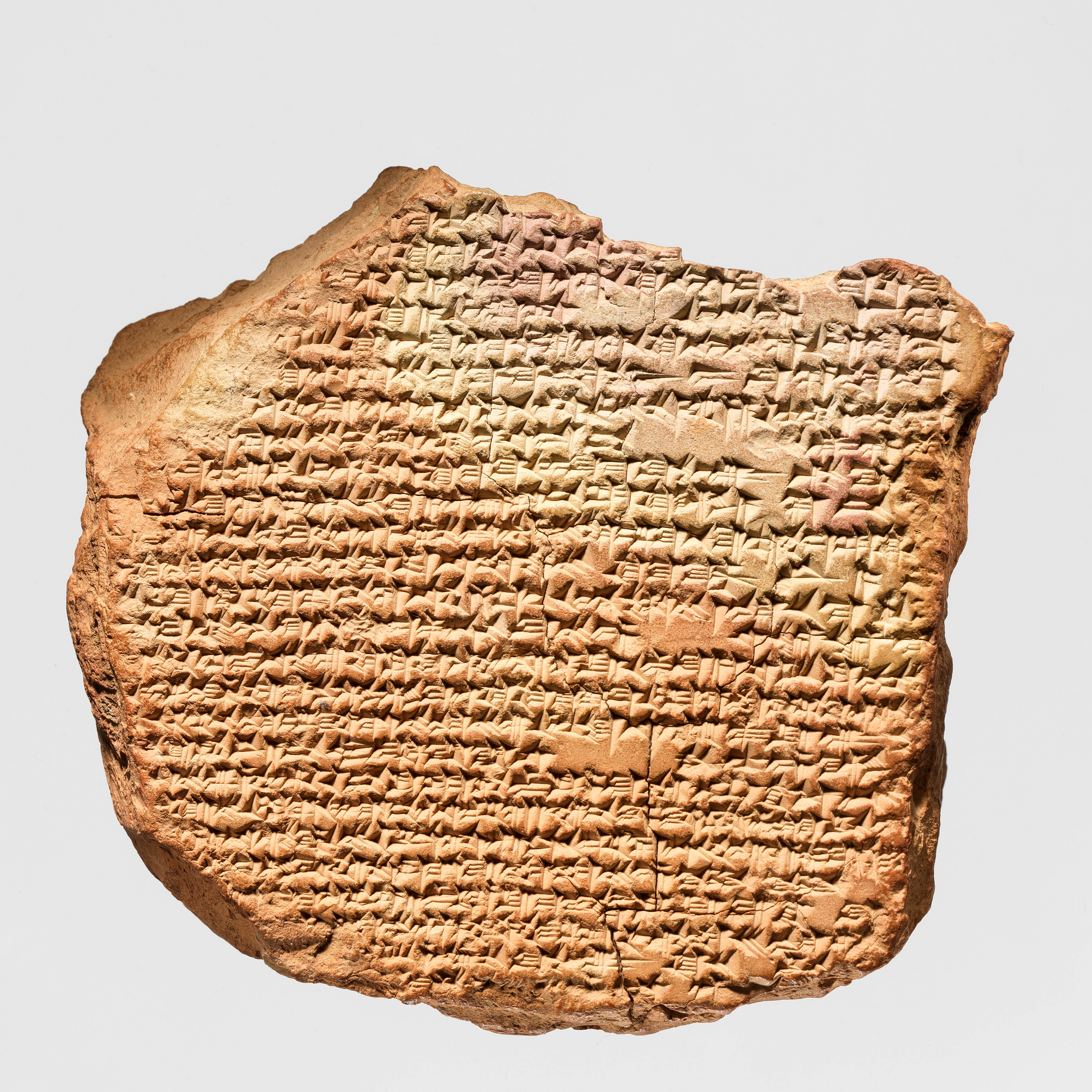
An especially important source is the corpus of god listsGod ListsTexts collecting divine names for preservation, teaching and classification, with varying theological organization.Glossary · Click to read the explanation, including the scholarly compilation known as An = Anum. It organizes Sumerian names, AkkadianAkkadianAn ancient East Semitic language written in cuneiform from the third millennium BCE; its varieties include Babylonian and Assyrian, and it served in international diplomacy.Glossary · Click to read the explanation equivalents, and the relationships of deities within their circles. Oracc's glossary describes the major compilation as a seven-tablet work first assembled in the Middle Babylonian period. This does not mean that every tablet was written at one moment or that one intact physical artifact preserves the entire work. [4]
In the digital text of tablet I, the opening entries pair An with Anum; later passages arrange names associated with EnlilEnlilEnlil/Ellil: a major Mesopotamian god associated with destinies, kingship, and Ekur at Nippur, already prominent in third-millennium god lists. His name’s origin and cult beginnings remain debated.Glossary · Click to read the explanation, NinlilNinlilMesopotamian goddess and consort of Enlil, associated with Nippur, Tummal, destinies and royal ritual. Identified with Sud in literary tradition and known as Mulliltu/Mullissu in Akkadian and Assyrian contexts; her genealogies and roles vary by text and period.Glossary · Click to read the explanation, and their divine circles. This is an inspection of the ordering visible in a published digital transcription, not a re-examination of the artifacts or a new translation of the whole ancient text. [5] A critical edition announced in 2023 describes approximately two thousand entries in the major list. Entries can include names, titles, and equivalences: the figure should not automatically be treated as a count of two thousand distinct gods receiving worship. Only the publisher's description, not the complete edition, was consulted here. [6]
Who stands at the top? An and Enlil
Sumerian and Akkadian traditions portray An, or AnuAn / AnuAn is the Sumerian sky god, called Anu in Akkadian. The sign AN by itself does not identify him: it also denotes sky or divinity.Glossary · Click to read the explanation, as the sky god and, in many texts, a father or authoritative source for other gods. He assigns status and authority in those narratives. But the epithet “father of the gods” tells us neither how prominent his cult was in every city nor whether his position remained unchanged from the third through the first millennium BCE. [7]
EnlilEnlilEnlil/Ellil: a major Mesopotamian god associated with destinies, kingship, and Ekur at Nippur, already prominent in third-millennium god lists. His name’s origin and cult beginnings remain debated.Glossary · Click to read the explanation was likewise central to divine authority and the granting of kingship. His EkurEkur: Enlil’s Temple at NippurEkur (“Mountain House”) was Enlil’s chief sanctuary at Nippur, present-day Iraq; the name may extend to its precinct. Hymns and royal inscriptions attest to its prestige and rebuilding across periods; it is not simply the ziggurat.Glossary · Click to read the explanation temple stood at Nippur, and inscriptions, lists, and offering accounts attest to his particularly high standing in southern Mesopotamian traditions. Other major deities held different domains and cult centres, including Enki/EaEnkiMesopotamian deity also known as Ea, linked with Eridu and the Abzu (deep fresh waters), wisdom, incantations, and narratives of creation and cosmic order. Later written attestations do not identify the deity of Eridu’s earliest layers.Glossary · Click to read the explanation, associated with wisdom and the deep waters, and Inana/IshtarInanna / IshtarA prominent Mesopotamian goddess whose Sumerian name Inanna became associated with Akkadian Ishtar across diverse traditions. She was associated with desire, war, royal authority and Venus, while local forms and genealogies varied among texts.Glossary · Click to read the explanation, whose functions varied by context. These relationships do not produce one simple vertical scheme of a “sky god,” an “air god,” and an “earth god.” Such a diagram would flatten considerably more varied evidence. [8]
How does precedence change? The rise of Marduk
MardukMardukBabylon’s leading god, worshipped at Esagil and elevated in the Akkadian Enūma eliš. His symbols include a spade and mušḫuššu dragon. His earliest origins remain obscure; Nibiru is no evidence of a planetary homeland.Glossary · Click to read the explanation, patron deity of BabylonBabylonBabylon is an ancient city in central present-day Iraq, south of BaghdadGlossary · Click to read the explanation, became the pre-eminent figure in important strands of later Babylonian theology and literature. In Enūma elišEnuma ElishA seven-tablet Babylonian creation poem in Akkadian, recounting Marduk’s rise, victory over Tiamat, cosmic ordering and human creation, and culminating in praise through fifty names. Its composition date is debated; later manuscripts and recitation traditions preserve it.Glossary · Click to read the explanation, he defeats TiamatTiamatTiamat is a primeval divine mother and watery figure in Enūma eliš who later opposes Marduk; he divides her body in making the cosmos. No Babylonian portrait of her is securely identified.Glossary · Click to read the explanation, and the other gods acclaim him and give him numerous names. The prologue to Hammurabi's law collectionLaws of HammurabiAn eighteenth-century BCE Babylonian legal text in Akkadian, presenting property, family, labor and injury provisions within Hammurabi’s account of justice.Glossary · Click to read the explanation presents Anu and Enlil as conferring a commanding rank on Marduk. That is a royal statement legitimizing his position within its particular religious and political setting. [9]
Yet literary elevation or a royal prologue does not prove that Enlil's worship ceased, or that all inhabitants of every city held an identical theology. The relationship between Babylon's political prominence and Marduk's ascendancy matters, but its stages and timing remain subjects of study. Each document offers a view from its own place and date, not a rule for all ages. [9]
Mari: official worship and people's names
The Old Babylonian records of Mari on the Euphrates illustrate the gap between temple institutions and the wider practice of naming. Nakata compared a list associated with official cult with personal names containing divine elements, often called theophoric namesTheophoric nameA personal name including a deity’s name or another divine element, often as part of a short sentence or invocation, interpreted in its original language and context.Glossary · Click to read the explanation. In his analysis, Addu/Adad, DaganDaganA god worshipped in Syria and Mesopotamia, especially at Tuttul and Terqa on the Euphrates, and associated with royal authority. His name appears as Dagon in the Hebrew Bible; no ancient image of him is securely identified.Glossary · Click to read the explanation, ShamashShamashMesopotamian god of the sun and justice, shown before Hammurabi on an eighteenth-century BCE stele preserved in the Louvre.Glossary · Click to read the explanation, and Ea were prominent in both sets of evidence. Diritum and Itur-Mer stood out on the official side, while El/Il, Sin, and Ishtar featured more strongly in the personal-name evidence. [2]
This interpretation dates to a 1976 article, draws on the documents published at that time, and depends on a particular method of classifying names. It makes an important contrast visible but cannot measure directly what every inhabitant of Mari believed; nor does each name prove a particular act of household worship. The comparison concerns two types of evidence, not necessarily two separate religions.
The Anunna are not another name for every god
Some divine groups have distinctive names. One is the Anunna/AnunnakiAnunna / AnunnakiAnunna/Anunnaki is a collective designation for Mesopotamian gods whose scope varies by text and period; it is not a group with one fixed membership or number.Glossary · Click to read the explanation. In Sumerian material, the name can refer to a group of major deities or to the gods of a particular city. Elsewhere its association with the underworld becomes stronger, while its relationship to another group, the IgigiIgigiCollective of deities called Igigi or Igigū in Akkadian sources from the Old Babylonian period onward. They labour and rebel in Atrahasis; their numbers and relation to the Anunnaki vary by text.Glossary · Click to read the explanation, changes across texts and periods. The Anunnaki should therefore not be treated as an unchanging name for all Mesopotamian deities or as an institution with a permanently fixed membership list. [10]
Ugarit: divine family and council scenes
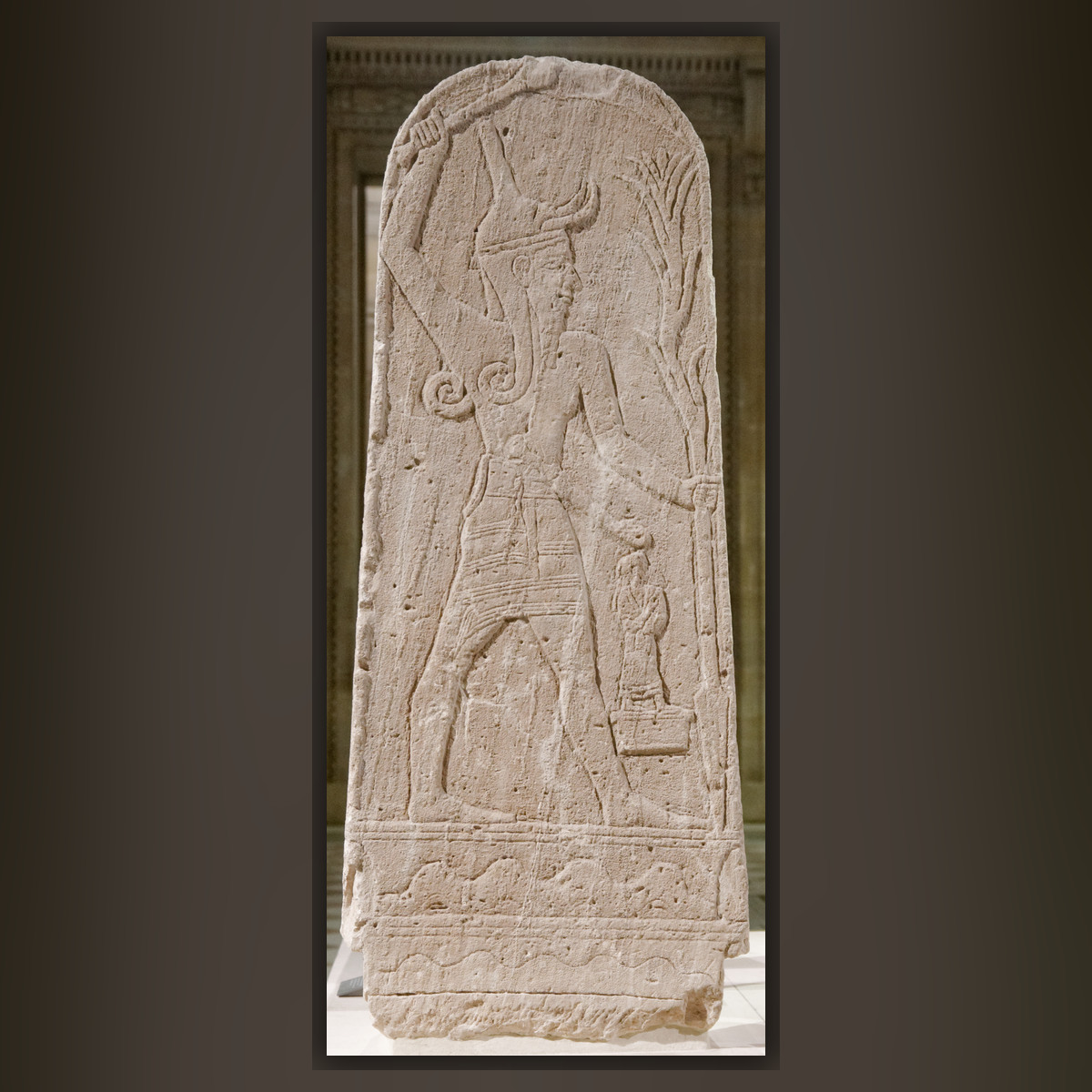
At UgaritUgaritAncient city and kingdom at Ras Shamra on the Syrian coast, flourishing between the fourteenth and early twelfth centuries BCE and preserving multilingual archives.Glossary · Click to read the explanation on the Syrian coast, Late Bronze AgeLate Bronze AgeAn archaeological period around 1600–1200 BCE in much of the Near East, with international diplomacy, exchange and religious diversity; its endpoints vary by region.Glossary · Click to read the explanation tablets preserve stories and ritualsRitualAn organised or distinguished practice meaningful to a community; it may leave traces, but its form alone does not reveal an associated doctrine.Glossary · Click to read the explanation mentioning ElElEl is a senior deity in Late Bronze Age Ugaritic texts, portrayed as father of the divine family and a council authority, alongside his consort Athirat. This entry does not cover every linguistic use of El.Glossary · Click to read the explanation, Athirat/AsherahAthiratA prominent goddess commonly understood as El’s consort in Ugaritic texts; she bears the progenitress epithet and intercedes for Baal’s palace.Glossary · Click to read the explanation, BaalBaalUgaritic storm god and warrior king who defeats Yamm, builds his palace with El’s consent and confronts Mot. References to El and Dagan as fathers do not define a single genealogy.Glossary · Click to read the explanation, and other deities. Literary compositions describe relationships of kinship, rank, and council scenes, while archaeology documents prominent temples to Baal and Dagan. We should not equate the cast of literary narratives with a complete roster of the city's cult: poems and excavated sanctuaries answer different questions. [11]
Scholars speak of an “assembly of El” where a narrative actually stages collective divine action, whereas “the Ugaritic pantheon” includes much more than that single scene. Comparison with ancient Israelite traditions can illuminate changing ways of speaking about divine authority. Resemblance between council scenes alone, however, does not establish the identity of every figure or a specific route by which an idea was transmitted. [1]
What does the cover image actually show?
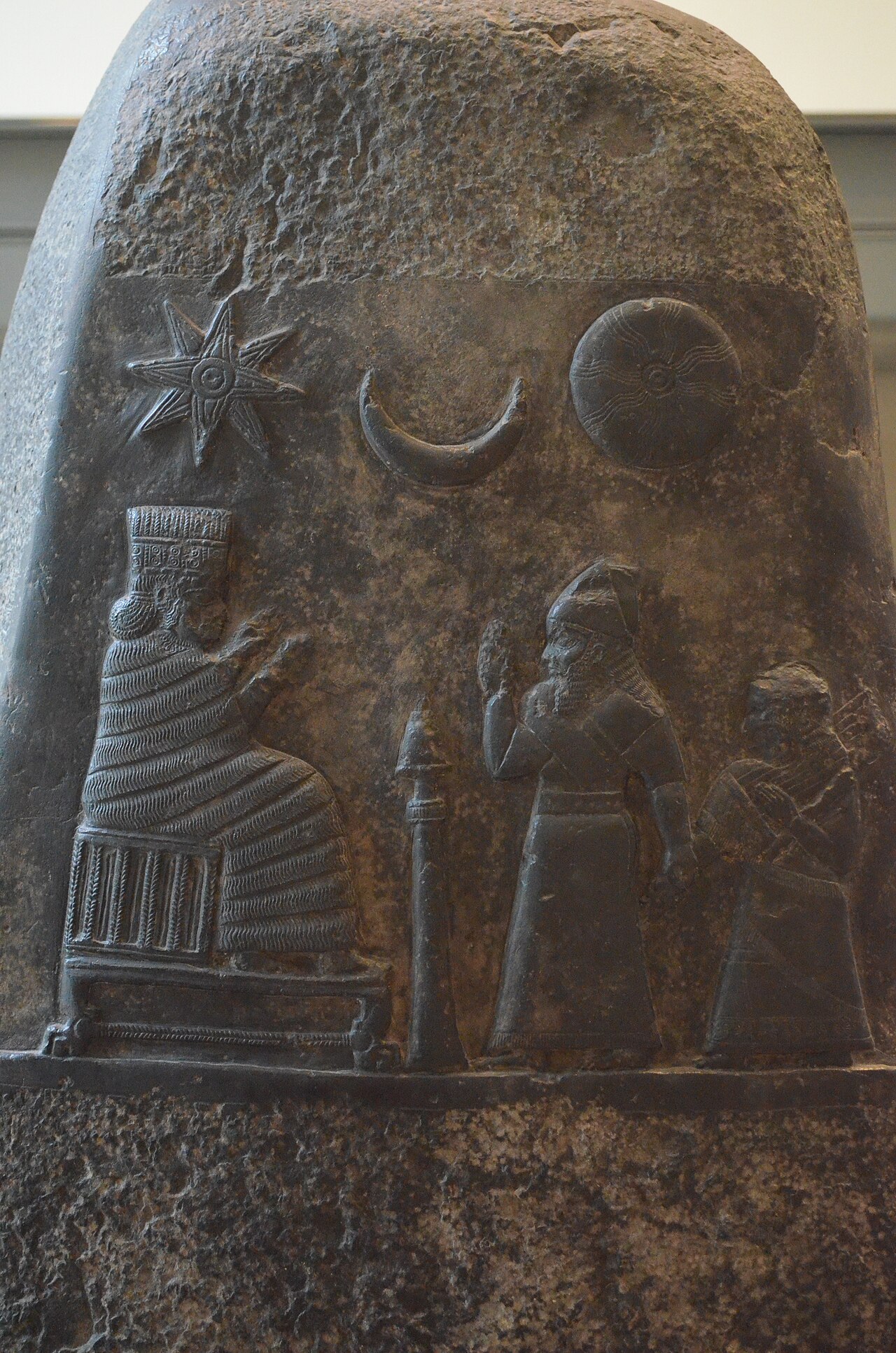
The cover depicts part of a kudurru, a Babylonian monument recording a land grant from the reign of King Meli-Shipak II, kept at the Louvre as SB 23. According to the museum's catalogue, the king presents his daughter Hunnubat-Nanaya to the seated goddess Nanaya. Above them appear Ishtar's star, Sin's crescent moon, and Shamash's solar disc. The Akkadian inscription concerns the land grant and repairs to irrigation canals. [12]
This modern photograph shows a genuine ancient object with several divine symbols around a royal action. It does not depict the council of Ugarit or every member of the Babylonian pantheon. The visible iconography, the inscription's account of the grant, and our interpretation of their juxtaposition are three distinct kinds of information.
What can the comparison tell us?
“Pantheon” helps us organize the names and relationships of deities as they change with locality, date, and genre. No single timeless pantheon can be inferred from a later scholarly list, a royal poem, personal names, or a relief bearing three divine emblems. Sound comparison begins by identifying the text, object, and date, then places scribal and royal models alongside evidence from cult practice and naming. The goal is to understand ancient divine worlds through their surviving evidence rather than impose one diagram upon them.
References and notes (12)
- Mark S. Smith, “The Divine Council,” chapter 2 in The Origins of Biblical Monotheism: Israel’s Polytheistic Background and the Ugaritic Texts, Oxford University Press, 2001, pp. 41–53. Publisher’s chapter abstract, bibliographic details, and contents only; neither the full chapter nor the complete book was read. Return to the text ↑
- Ichiro Nakata, “Official Pantheon and Popular Pantheon of Mari,” Orient 19, no. 1 (1976), pp. 1–15, 103. English abstract and bibliographic record on J-STAGE only; the complete Japanese article and its underlying textual sample were not critically read. Return to the text ↑
- ORACC, Ancient Mesopotamian Gods and Goddesses (AMGG), project introduction. Project homepage introduction concerning hundreds or thousands of deities and the selection of approximately fifty principal entries; not a comprehensive census. Return to the text ↑
- ORACC/AMGG, “Technical terms,” entries “An = Anum” and “Divine genealogy.” Read the relevant glossary entries on the seven-tablet god list and divine genealogy as a form of ranking. Return to the text ↑
- ORACC/DCCLT, An = Anum, Tablet I, digital edition Q000264 (after R. Litke). Direct inspection of the digital transliteration, lines 1–3 and 147–180 (with adjacent context); not direct examination of an ancient tablet or a full translation. Return to the text ↑
- W. G. Lambert and Ryan D. Winters, An = Anum and Related Lists, edited by Andrew George and Manfred Krebernik, Mohr Siebeck, 2023. Publisher’s description and bibliographic details only, specifically the phrase “ca. 2000 entries”; the 768-page scholarly edition was not read. Return to the text ↑
- Kathryn Stevens, “An/Anu (god),” Ancient Mesopotamian Gods and Goddesses, ORACC/AMGG, 2019. Read the online article, especially sections on functions, genealogy, chronological standing, and cult. Return to the text ↑
- Adam Stone, “Enlil/Ellil (god),” Ancient Mesopotamian Gods and Goddesses, ORACC/AMGG, 2019. Read the online article, including divine authority, offerings and the Nippur cult, and its warning against oversimplified sky/air/earth hierarchies. Return to the text ↑
- Nicole Brisch, “Marduk (god),” Ancient Mesopotamian Gods and Goddesses, ORACC/AMGG, 2019. Read the online article on Enūma eliš, the Hammurabi prologue, Enlil, Babylon, and changes in Marduk’s standing. Return to the text ↑
- ORACC/AMGG, “Anunna (Anunnaku, Anunnaki) (a group of gods),” Ancient Mesopotamian Gods and Goddesses. Read its opening and treatment of period-dependent Anunna/Igigi usage, including underworld associations. Return to the text ↑
- Department of Ancient Near Eastern Art, The Metropolitan Museum of Art, “Ugarit,” Heilbrunn Timeline of Art History, 2004. Read the complete accessible museum essay, especially the Baal and Dagan temples, the tablet archives, and the Late Bronze Age context. Return to the text ↑
- Musée du Louvre, “Kudurru du roi Melishipak II,” collections catalogue, inventory SB 23. Read the collection entry on iconography, persons, Akkadian inscription and land gift, provenance, and inventory; no full critical edition of the inscription was read. Return to the text ↑
Suggest a correction · Suggest a source for this record
Cite this record
IL Archive, «Pantheon», https://ilarchive.com/en/entities/pantheon
Continue reading