Entity
Tiamat
A reference page linking a name, group, or concept to the materials that discuss it.
Primordial watery divine figure in Enūma Eliš, later Marduk’s opponent; her defeated body provides material for cosmic arrangement.
Text
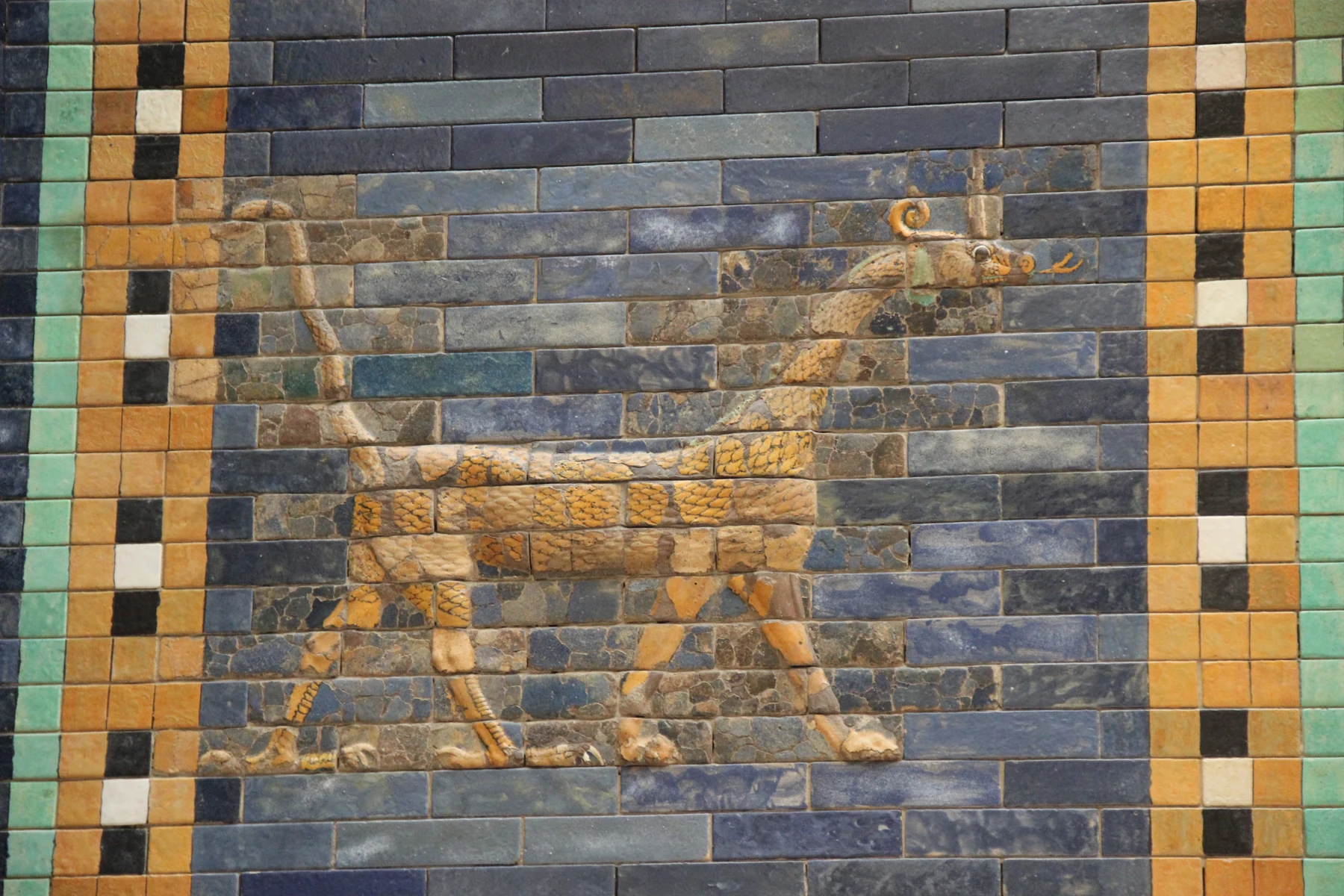
Tiamat’s role develops within divine generations; “evil monster” is an incomplete description. The illustrated dragon is associated with MardukMardukBabylon’s god, elevated with the city’s history. Enuma Elish celebrates his rise and cosmic ordering; sources associate him with Nibiru and Jupiter. Earliest origins and functions remain uncertain.Glossary · Click to read the explanation and does not identify Tiamat archaeologically.[1][3]
References and notes
- Ancient text in King’s historical public-domain translation; used for narrative structure, not to settle modern philological readings or passages then missing. Enūma Eliš, tablets II–IV, VI–VII; L. W. King, 1902 Return to the text ↑
- Metropolitan Museum explanation: the gate’s dragon is associated with Marduk, while the lion is associated with Ishtar. Glazed-brick panels from Babylon Return to the text ↑
Research history
Substantive changes are retained here. Minor copy edits remain in the internal operational log.
-
Substantive record update
Suggest a correction · Suggest a source for this record
Cite this record
IL Archive, «Tiamat», Edition 2, https://ilarchive.com/en/entities/tiamat