Entity · Deity
An / Anu
A reference page linking a name, group, or concept to the materials that discuss it.
- Names
- An · Anu
An is the Sumerian sky deity, called Anu in Akkadian. This entry traces his securely identifiable evidence from the third millennium BCE and distinguishes his name from the multifunctional cuneiform sign AN.
Estimated reading time: 6 min Published Last reviewed:
Share article
Video
Enuma Elish: The first waters, the storm and the fifty names
The first waters, the storm and the fifty names. The whole story in four illustrated chapters, told from the ancient clay tablets; where the tablets are broken, the narration says so. Illustrations, narration voice and visual effects were created with AI tools by IL Archive; the text is a faithful retelling based on the ancient tablets.
The YouTube player loads only when you press play. Watch on YouTube
Text
Introduction
How can we distinguish the sky god An—Anu in Akkadian—from the cuneiformCuneiformWriting with wedge-shaped signs, developed from Mesopotamian recording traditions and used for several languages from the third millennium BCE.Glossary · Click to read the explanation sign read AN? And why did his name remain a marker of divine sovereignty while EnlilEnlilEnlil/Ellil: a major Mesopotamian god associated with destinies, kingship, and Ekur at Nippur, already prominent in third-millennium god lists. His name’s origin and cult beginnings remain debated.Glossary · Click to read the explanation and MardukMardukBabylon’s leading god, worshipped at Esagil and elevated in the Akkadian Enūma eliš. His symbols include a spade and mušḫuššu dragon. His earliest origins remain obscure; Nibiru is no evidence of a planetary homeland.Glossary · Click to read the explanation assumed more prominent roles in different periods? This entry traces securely identifiable attestations, then examines literary scenes, royal prayer, cult centres, and visual emblems. Its goal is to establish what the surviving evidence actually documents, not to impose one timeless system on all Mesopotamian texts.
A divine name is not every occurrence of a sign
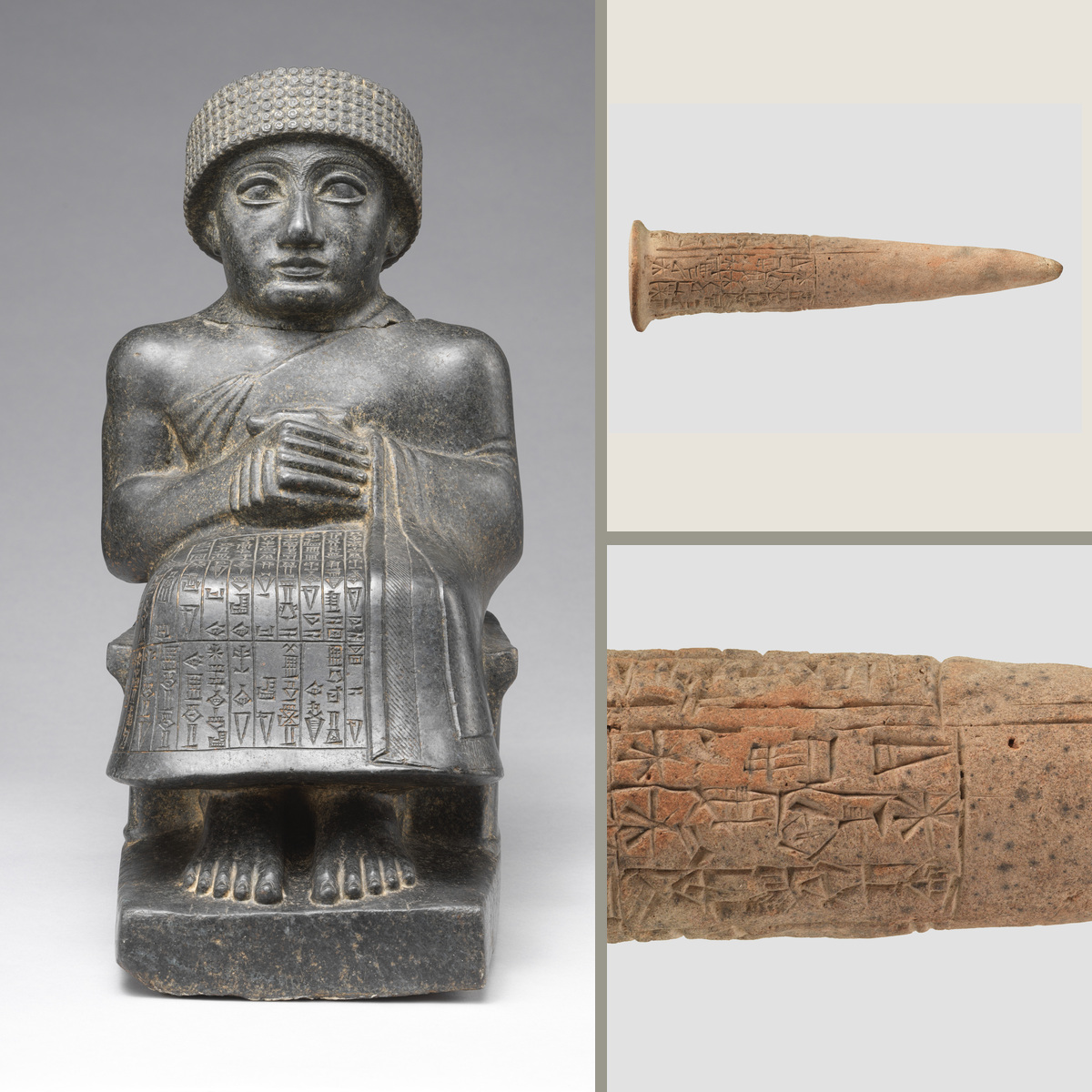
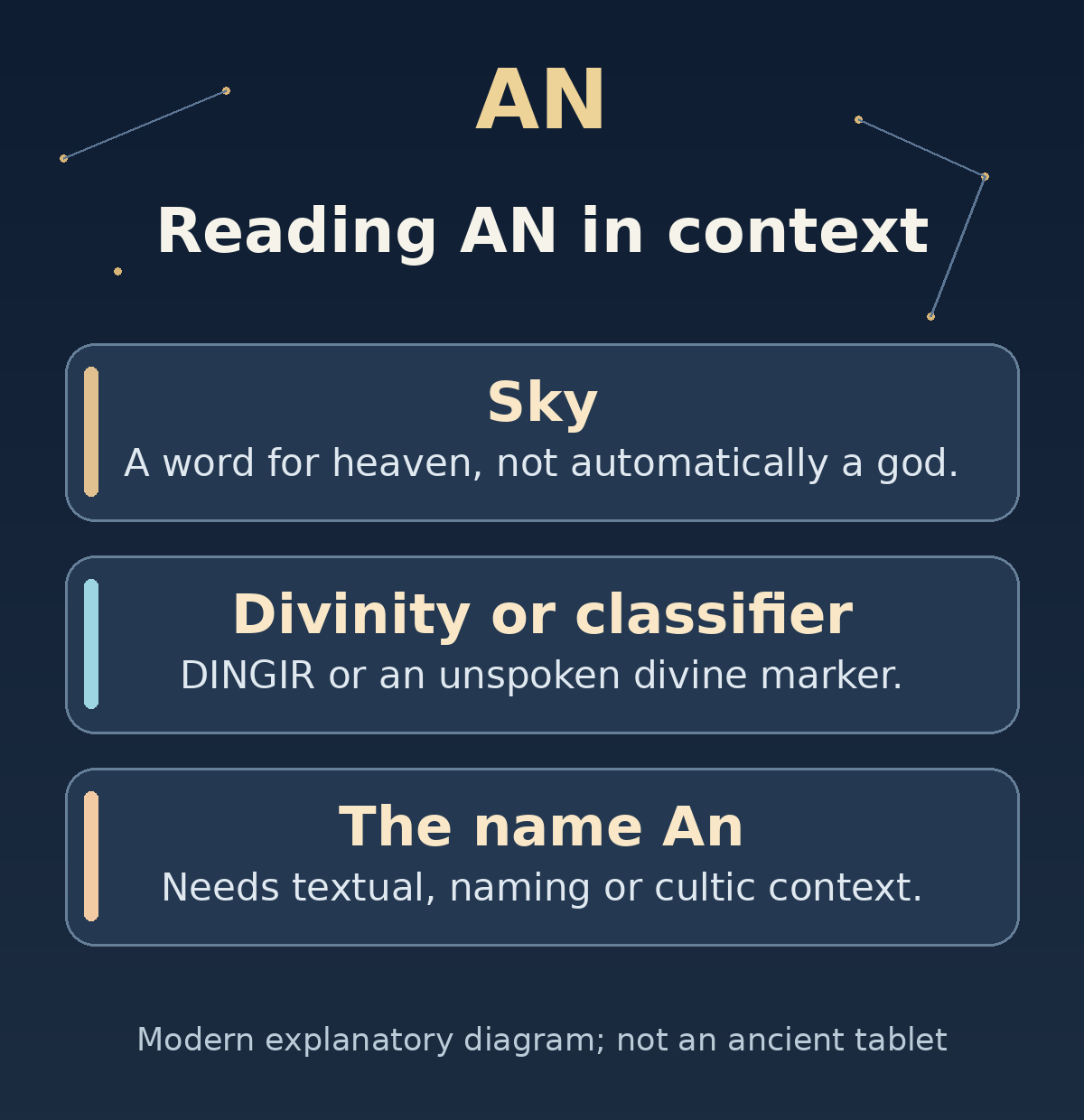
An is the Sumerian name of a deity associated with heaven; Anu (also Anum) is the AkkadianAkkadianAn ancient East Semitic language written in cuneiform from the third millennium BCE; its varieties include Babylonian and Assyrian, and it served in international diplomacy.Glossary · Click to read the explanation form. The cuneiform sign AN, however, serves more than one purpose. It can mean “sky,” have the reading DINGIR (“god”), or act as an unpronounced divine determinativeThe divine determinative in cuneiformA cuneiform sign used mostly before a divine name to classify it without being spoken independently; shown as raised d or {d} in transliteration. Usage depends on language and context.Glossary · Click to read the explanation placed before a divine name. Context, spelling, and period govern its interpretation. In Sumerian, An's name normally appears without the determinative, a scribal convention that does not make the name non-divine.[1]
Consequently, not every AN on an early proto-cuneiformProto-cuneiformEarly southern Mesopotamian script (c. 3350–3000 BCE): clay tablets with counting systems and signs for commodities, people and offices, as well as lexical lists; not yet a full rendering of speech.Glossary · Click to read the explanation tablet can securely be identified as the personal god An. God listsGod ListsTexts collecting divine names for preservation, teaching and classification, with varying theological organization.Glossary · Click to read the explanation, personal names, dedications, and ritualRitualAn organised or distinguished practice meaningful to a community; it may leave traces, but its form alone does not reveal an associated doctrine.Glossary · Click to read the explanation context make identification firmer; an isolated sign may remain ambiguous. This distinction matters particularly when discussing religion before the texts become explicit.[1]
The early testimony from Fara
A god list known as SF 001, from Shuruppak (Fara) in present-day IraqIraqIraq is a modern country encompassing much of ancient MesopotamiaGlossary · Click to read the explanation, starts with An, followed by EnlilEnlilEnlil/Ellil: a major Mesopotamian god associated with destinies, kingship, and Ekur at Nippur, already prominent in third-millennium god lists. His name’s origin and cult beginnings remain debated.Glossary · Click to read the explanation, InannaInanna / IshtarA prominent Mesopotamian goddess whose Sumerian name Inanna became associated with Akkadian Ishtar across diverse traditions. She was associated with desire, war, royal authority and Venus, while local forms and genealogies varied among texts.Glossary · Click to read the explanation, EnkiEnkiMesopotamian deity also known as Ea, linked with Eridu and the Abzu (deep fresh waters), wisdom, incantations, and narratives of creation and cosmic order. Later written attestations do not identify the deity of Eridu’s earliest layers.Glossary · Click to read the explanation, Nanna, and Utu. The relevant location is obverse, column i, lines 1–6; the document is classified as Early Dynastic IIIa, approximately 2600–2500 BCE. This position within a list of divine names offers stronger evidence than attributing an undefined early sky sign to a personal god.[2]
The specialist survey also cites the name of Mesanepada, king of Ur, incorporating An, and a bead dedicated to “the god An, his lord.” That report relies on a royal-inscription edition by Douglas Frayne cited by Kathryn Stevens; we have not checked Frayne's full edition or the original object independently. The age of a securely identifiable reference is not the date at which a god or cult first emerged.[1]
Heaven, seniority, and divine authority
Literary An occupies heaven and enjoys high standing among the gods. At the opening of Gilgamesh, Enkidu and the Netherworld, a retrospective division of the cosmos assigns heaven to An, earth to Enlil, and the netherworld to EreshkigalEreshkigalMesopotamian goddess ruling the netherworld; Inanna’s sister in descent texts, with varying accounts of her relationship with Nergal.Glossary · Click to read the explanation. We checked the passage in the Oxford ETCSL translation and compared lines 8–12 with its published Sumerian transliteration, not the physical manuscript witnesses.[3]
Seniority need not mean active leadership in every story. Enlil takes a prominent role in other traditions; Babylonian literature subsequently elevates MardukMardukBabylon’s leading god, worshipped at Esagil and elevated in the Akkadian Enūma eliš. His symbols include a spade and mušḫuššu dragon. His earliest origins remain obscure; Nibiru is no evidence of a planetary homeland.Glossary · Click to read the explanation. An nevertheless retains the language of divine fatherhood, legitimacy, and the status termed anūtuRank of Anu — anūtuAn Akkadian term for supreme rank associated with Anu; dictionary and Enuma Elish examples clarify its attribution to other gods and its limits.Glossary · Click to read the explanation (“Anu-standing”). None of these expressions establishes a uniform chain of command across all cities and centuries.[1]
Patron of divine and royal power
In Inanna and Ebih, Inanna appeals to An as a figure who has endowed her with awe, weapons, and authority. This reading follows lines 59–80 of the published English translation. She calls An her father, even though another line of the same poem identifies her as the child of Suen: kinship language in theology is not necessarily a single internally consistent family tree.[4]
A Prayer to An for Rim-Sin connects the legitimacy of the ruler of Larsa with An's favourable decree and requests long life, justice, and continuing rule. Lines 1–28 demonstrate the importance of An in royal ideology without making him the only or chief object of worship in every local cult. This is a petitionary and laudatory composition, not the minutes of a historical coronation.[5]
A character in a narrative
In the Sumerian Gilgamesh and the Bull of Heaven, Inanna asks An for the bull to use against Gilgamesh. He initially refuses and points to the consequences of releasing it, but changes his mind under her pressure. Our account follows segment B, lines 37–55, of the Oxford translation, whose surviving manuscript versions include gaps and variant readings. In this context An is a father and decision-maker within a story, rather than just an abstract designation of the sky.[6]
The Babylonian Enūma elišEnuma ElishA seven-tablet Babylonian creation poem in Akkadian, recounting Marduk’s rise, victory over Tiamat, cosmic ordering and human creation, and culminating in praise through fifty names. Its composition date is debated; later manuscripts and recitation traditions preserve it.Glossary · Click to read the explanation offers a different genealogy: Anshar and Kishar precede Anu, who then begets Nudimmud (Ea). This is found in Tablet I, lines 11–20, as rendered in Alexander Heidel's scholarly translation; we consulted that translated passage, not every cuneiform witness to the tablet. Divergent pedigrees across compositions and times are part of the history of Mesopotamian theology, not errors to erase by selecting one canonical lineage.[7]
Uruk, temples, and historical change
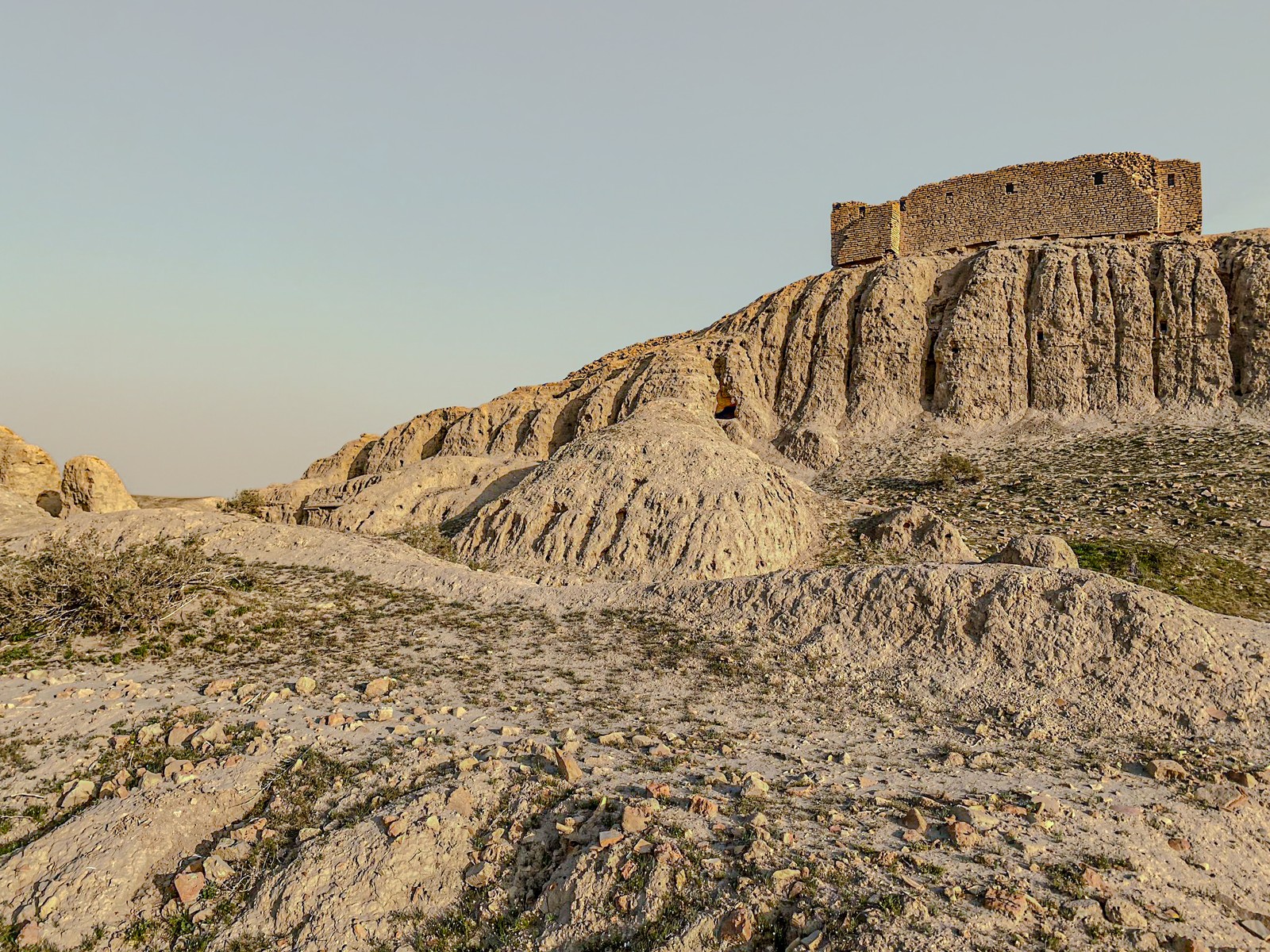
An is associated with UrukUrukAncient city at Warka in southern Iraq, a major urban centre around 3200 BCE that preserved early writing and accounting tablets.Glossary · Click to read the explanation, including the EannaEanna at UrukAn archaeological precinct and institutional centre at Uruk associated with Inanna; its name does not fix every early building’s function.Glossary · Click to read the explanation complex, also a major centre of Inanna/Ishtar. The earliest architectural phases of Uruk cannot all be assigned to An's later documented cult. Evidence for the deity's relationship to shrines varies by period and includes changes and interruptions. Sources also record sanctuaries or cultic places at Der, Lagash, Ur, Assur, and elsewhere.[1]
Anu and Antu became particularly prominent at the Reš precinct in Uruk in the Achaemenid and Seleucid eras, from which later ritual documents survive. Such changes illuminate a long and shifting cult history; Hellenistic ritual programmes should not simply be projected back onto Uruk's first written tablets.[1]
Family traditions and the problem of images
Uraš, Ki, and Antu appear as consorts in different sources. A range of deities are described as An's children in particular contexts; he can also stand at the head of the Anunna/AnunnakiAnunna / AnunnakiAnunna/Anunnaki is a collective designation for Mesopotamian gods whose scope varies by text and period; it is not a group with one fixed membership or number.Glossary · Click to read the explanation. These relationships cannot all be treated as entries in one universal family register spanning millennia.[1]
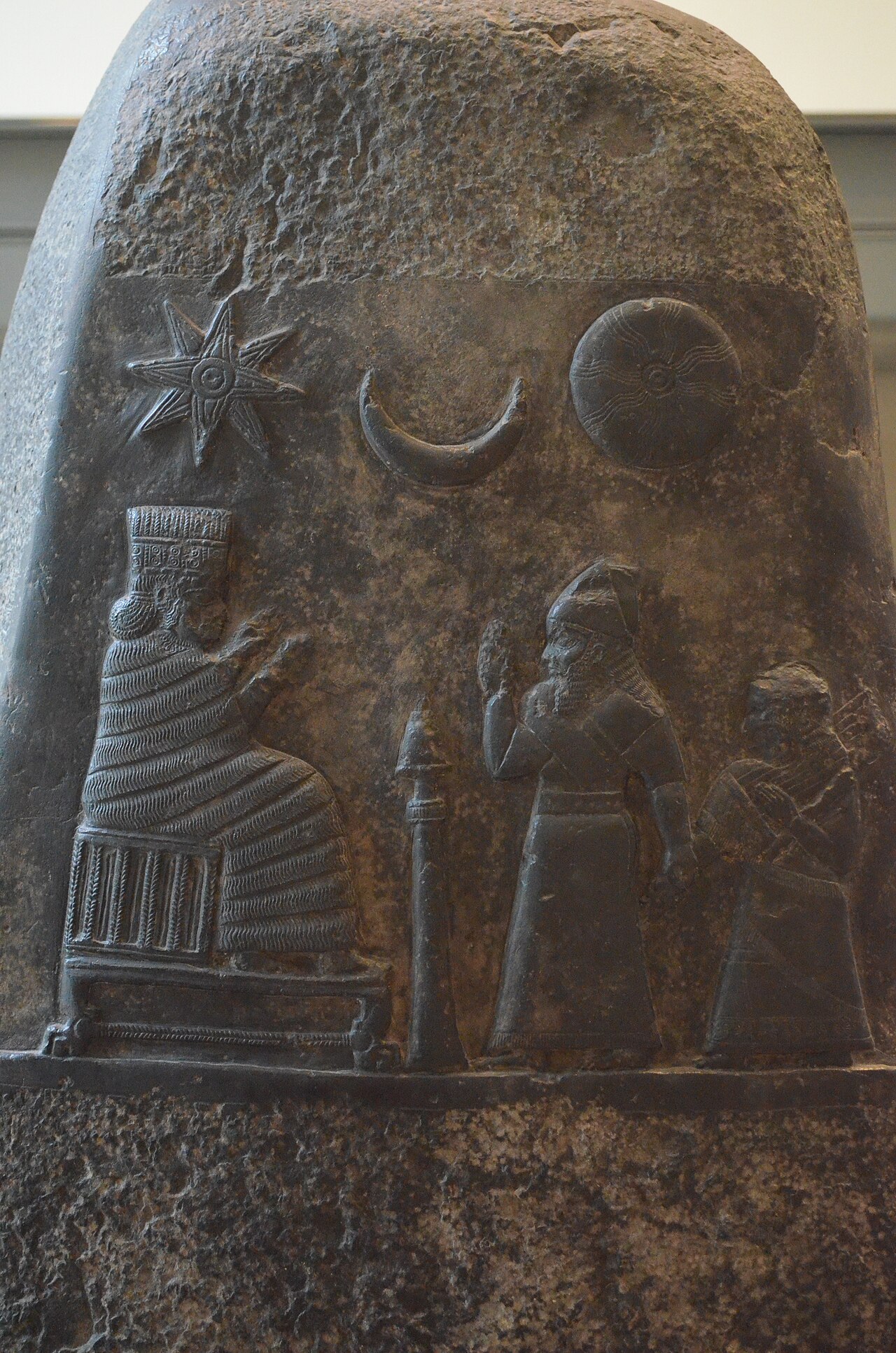
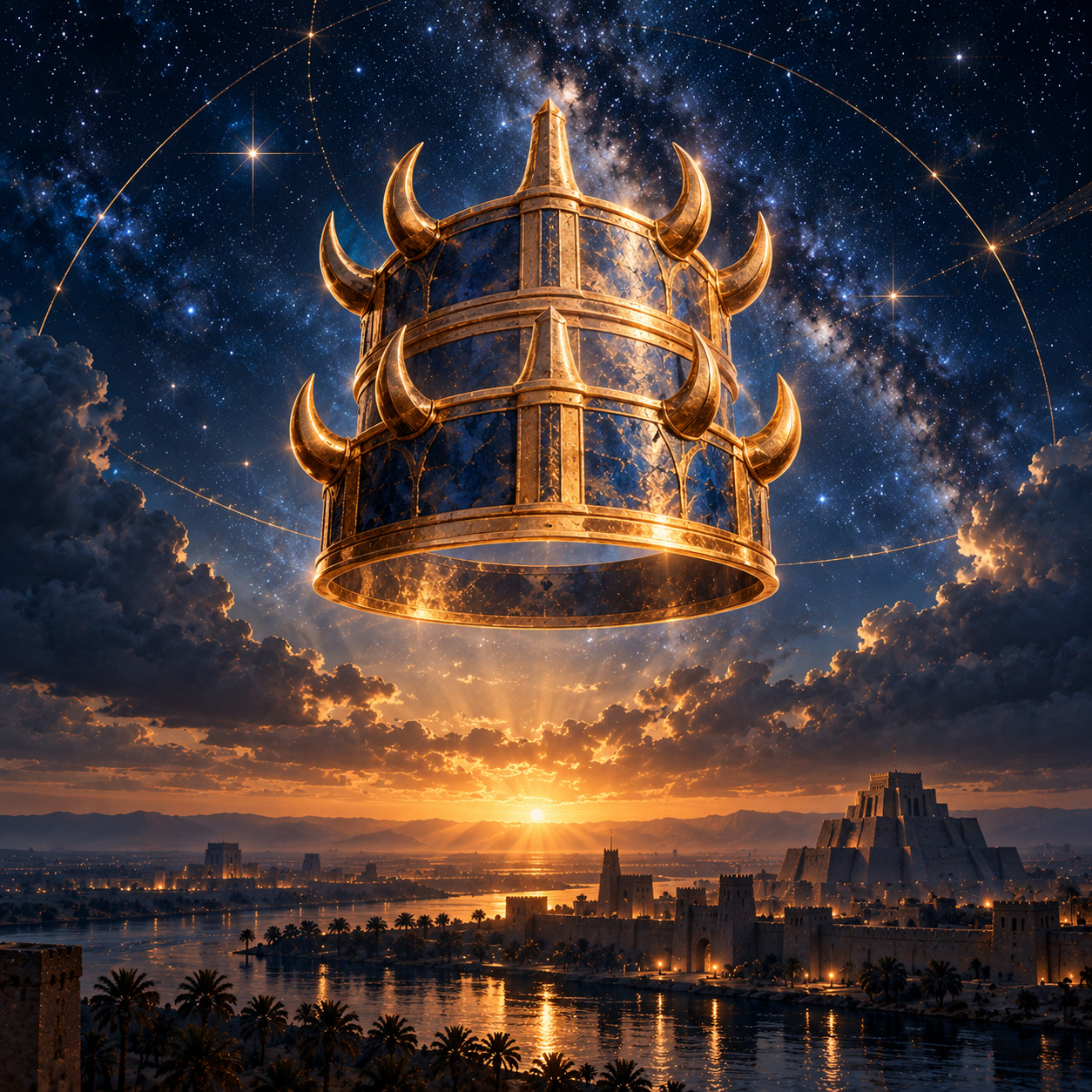
There is no securely identifiable ancient human-shaped portrait of An/Anu in the specialist survey. A horned crown is associated with him, but horned divine headgear can also represent Enlil. The Metropolitan Museum's kudurru fragment, dated about 1156–1025 BCE and catalogued as 1985.45, identifies just such a shared emblem; it is not exclusively Anu's likeness.[8] The British Museum describes a triple-horned crown as Anu's emblem on the stele of Shamshi-Adad V, 118892, rather than a portrait of the deity.[9]
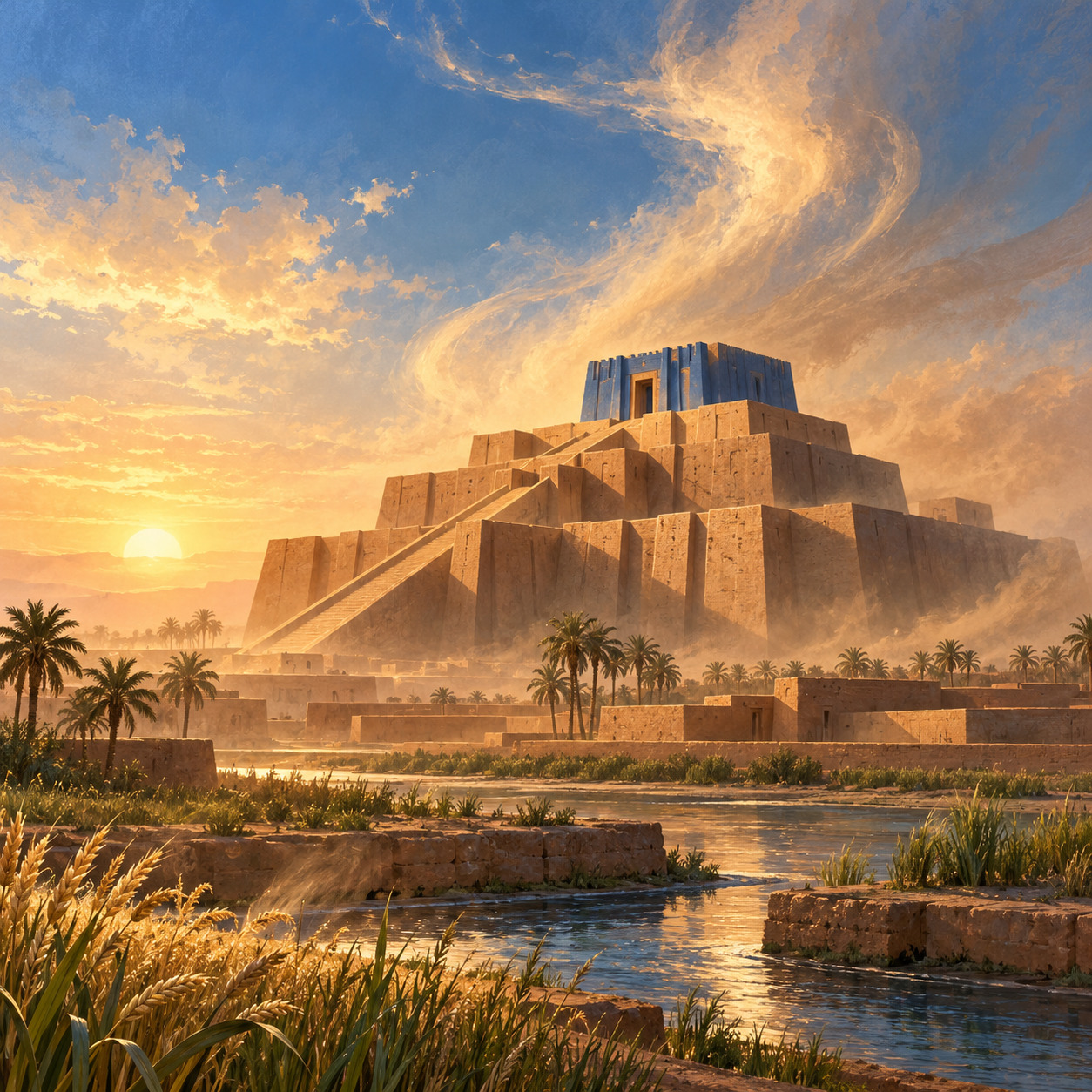
The present cover is an AI-generated modern symbolic illustration inspired by sky and rank. It is neither an artefact nor a documentary reconstruction of a historical crown, nor a photograph of either cited monument. The in-article graphic is likewise a modern guide to the three contexts of the sign AN.
What the evidence supports
We can confidently identify An as a Sumerian sky deity called Anu in Akkadian, with unambiguous named evidence in the third millennium BCE and varied later roles in divine hierarchy, genealogy, and the legitimation of power. The date of the god's actual emergence, the identity signified by every early AN, and the exercise of authority in any particular era each require their own evidence. Throughout this account, the material witness, translated literary passage, and modern historical interpretation are kept distinct.[1][2]
References and notes (9)
- Kathryn Stevens, “An/Anu (god),” Ancient Mesopotamian Gods and Goddesses, ORACC / University of Pennsylvania. Extracted article sections on names, functions, genealogy, cult places, attestation periods and iconography; underlying Frayne and Beaulieu books not fully read. Return to the text ↑
- Cuneiform Digital Library Initiative (CDLI) / ORACC, “SF 001,” Fara god list, P010566 / VAT 12760+. Catalogue and Shuruppak identification; obverse column i, lines 1–6, Early Dynastic IIIa. The full list was not independently analysed. Return to the text ↑
- Oxford Electronic Text Corpus of Sumerian Literature (ETCSL), “Gilgamesh, Enkidu and the Netherworld,” 1.8.1.4. Translation of version A, lines 1–26; compared Sumerian published transliteration, lines 8–12; no direct examination of tablets. Return to the text ↑
- Oxford ETCSL, “Inanna and Ebih,” text 1.3.2. Published English translation, lines 23–24 and 59–80 (parentage and An’s bestowal of power); original tablets not consulted. Return to the text ↑
- Oxford ETCSL, “A Prayer to An for Rim-Sin (Rim-Sin C),” 2.6.9.3. Translation, lines 1–28, and portions of the Sumerian transliteration, lines 1–14; no complete manuscript review. Return to the text ↑
- Oxford ETCSL, “Gilgamesh and the Bull of Heaven,” 1.8.1.2. English translation, segment B, lines 37–55; no exhaustive collation of variant manuscripts. Return to the text ↑
- Alexander Heidel, The Babylonian Genesis: The Story of Creation, academic translation of Enūma eliš, University of Chicago Oriental Institute. Accessible translated excerpt from PDF: Tablet I, lines 1–20, especially 11–20; not the entire edition or original tablets. Return to the text ↑
- The Metropolitan Museum of Art, “Top fragment of a kudurru with a mushhushshu dragon and divine symbols,” accession 1985.45. Online collection entry: both faces’ emblems, ca. 1156–1025 BCE, Public Domain status; image not reproduced here. Return to the text ↑
- The British Museum, “Stela of Shamshi-Adad V,” museum no. 118892, from the Temple of Nabu at Nimrud. Indexed museum catalogue description identifying Anu’s crown among five emblems; direct page access was blocked and no image file examined. Return to the text ↑
Suggest a correction · Suggest a source for this record
Cite this record
IL Archive, «An / Anu», https://ilarchive.com/en/entities/an
Continue reading
Related readings