Site
Eanna at Uruk
At Uruk, monumental buildings, clay tablets and carved objects survive from different periods. A Kassite inscription adds a later point of reference for the sanctuary.
Estimated reading time: 4 min Published Last reviewed:
Share article
Text
Introduction
Eanna is a major excavated precinct at UrukUrukAncient city at Warka in southern Iraq, a major urban centre around 3200 BCE that preserved early writing and accounting tablets.Glossary · Click to read the explanation, modern Warka in southern IraqIraqIraq is a modern country encompassing much of ancient MesopotamiaGlossary · Click to read the explanation. Later evidence associates it with the worship of InannaInanna / IshtarA prominent Mesopotamian goddess whose Sumerian name Inanna became associated with Akkadian Ishtar across diverse traditions. She was associated with desire, war, royal authority and Venus, while local forms and genealogies varied among texts.Glossary · Click to read the explanation. The earliest monumental buildings, the clay tablets and the best-known carved objects come from layers of different dates. Each can tell us something about the institutions of Uruk, though each answers a different question about how the precinct was used. [1][2][3]
Buildings in successive layers
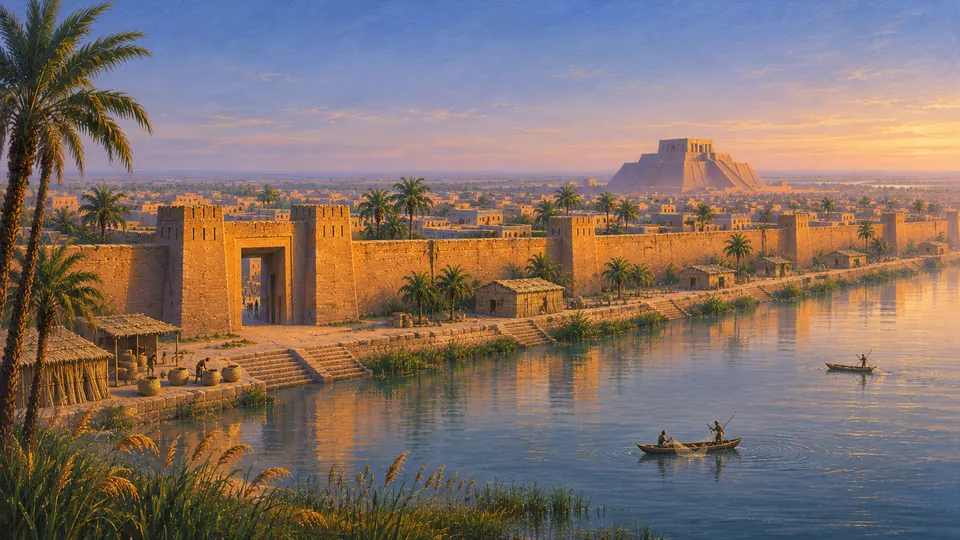
The late fourth-millennium precinct had large halls, complex floor plans and façades divided into projecting and recessed sections. Builders arranged cones to make geometric mosaics on parts of the architecture. A reconstruction of clay-cone decoration on columns at a staircase, reproduced in the Metropolitan Museum Journal, shows how the cones could make a patterned surface. The scale and finish of these buildings imply skilled work and considerable coordination. Cult, administration and gatherings could all call for large buildings. Each proposed use has to be tested against the evidence from the building and its layer. [2]
Archaeologists number layers and phases to describe the order in which buildings were made and replaced. Numbers such as Uruk IV and Uruk III are labels for stages in the site sequence, with approximate calendar ranges supplied by the specialists who use them. Using the later name Eanna for the early precinct names a part of the site. It does not show that every large early building was a temple of Inanna. A dedication to her in a later record is evidence for her worship there at that time. [1][2][3][4]
Writing and recordkeeping
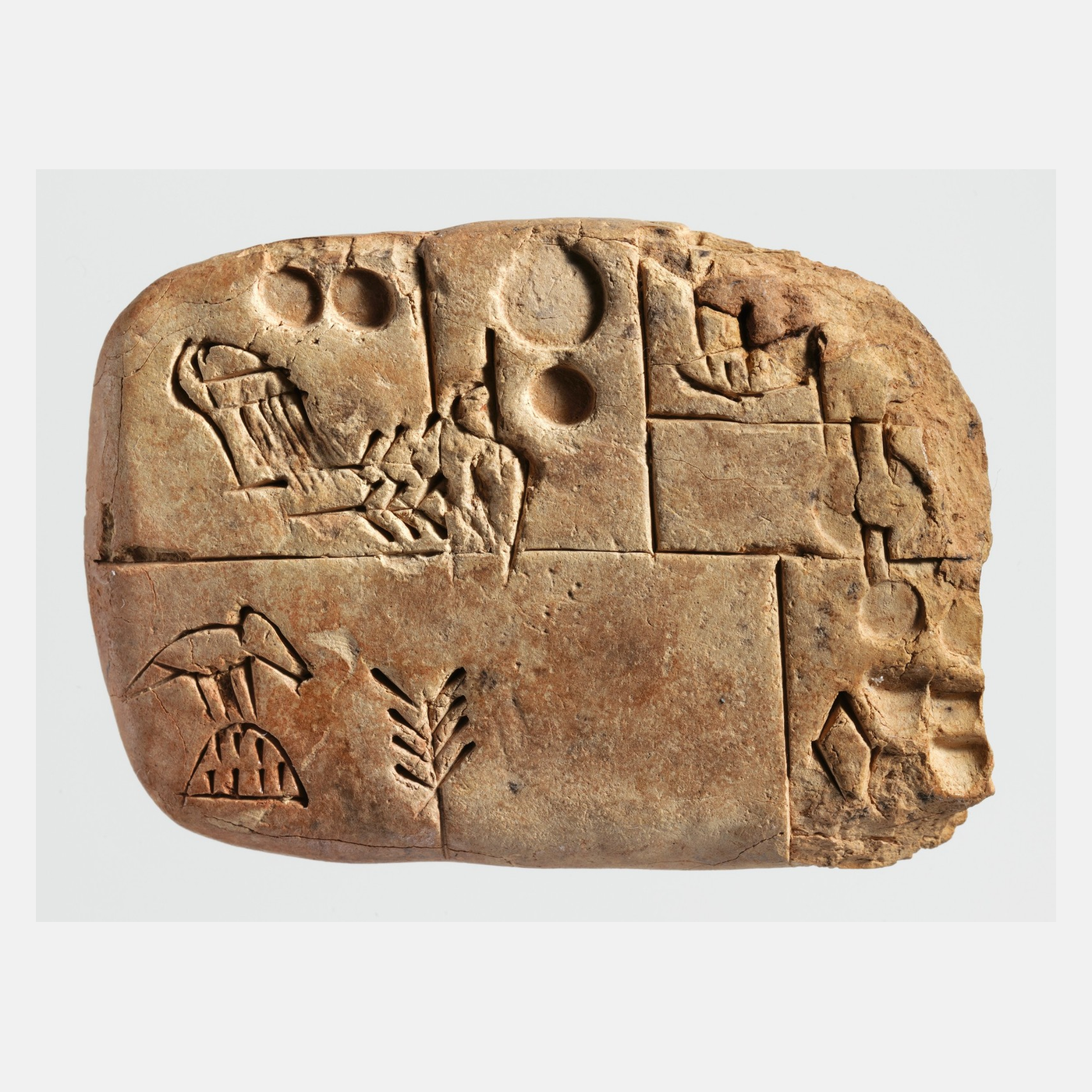
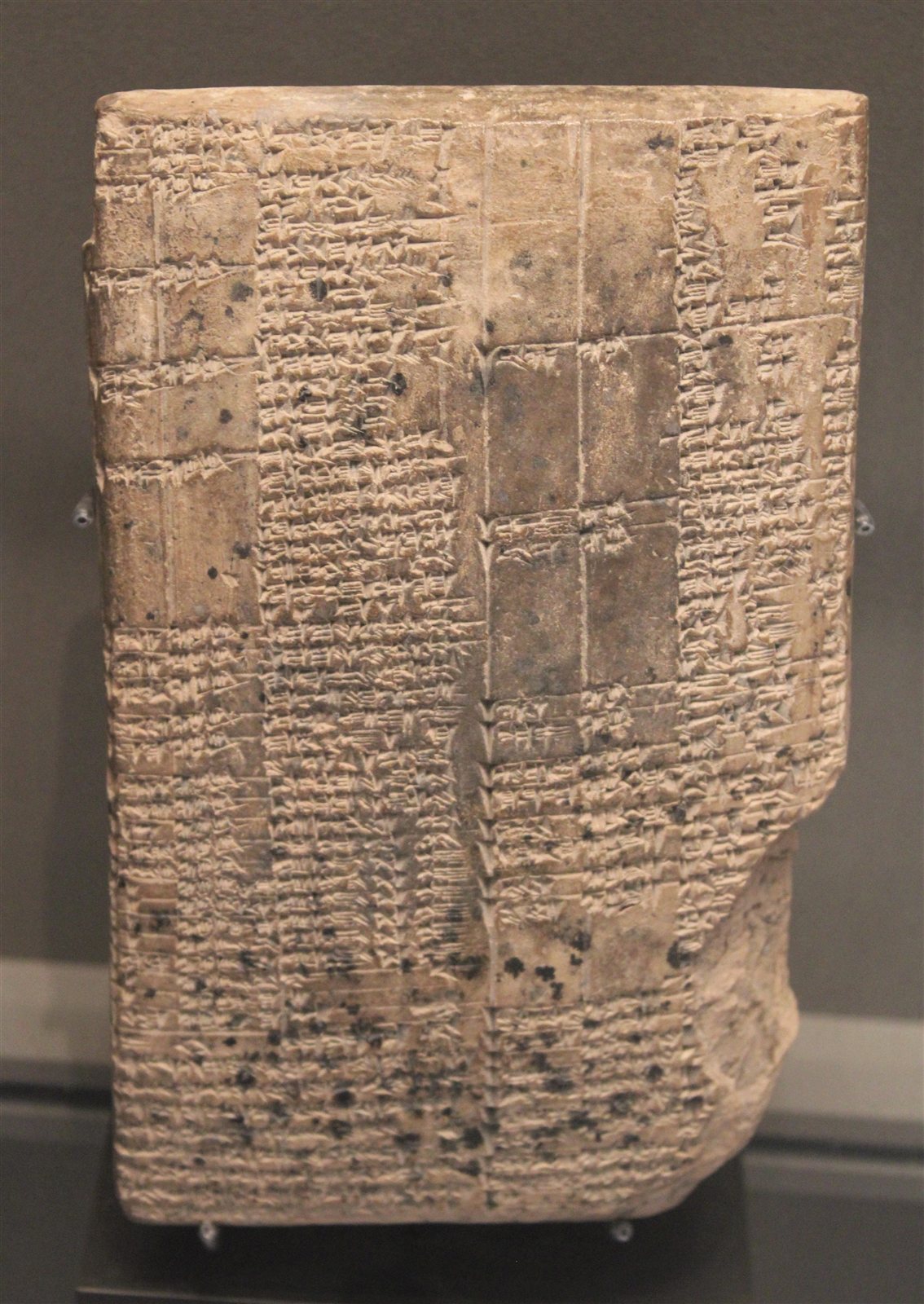
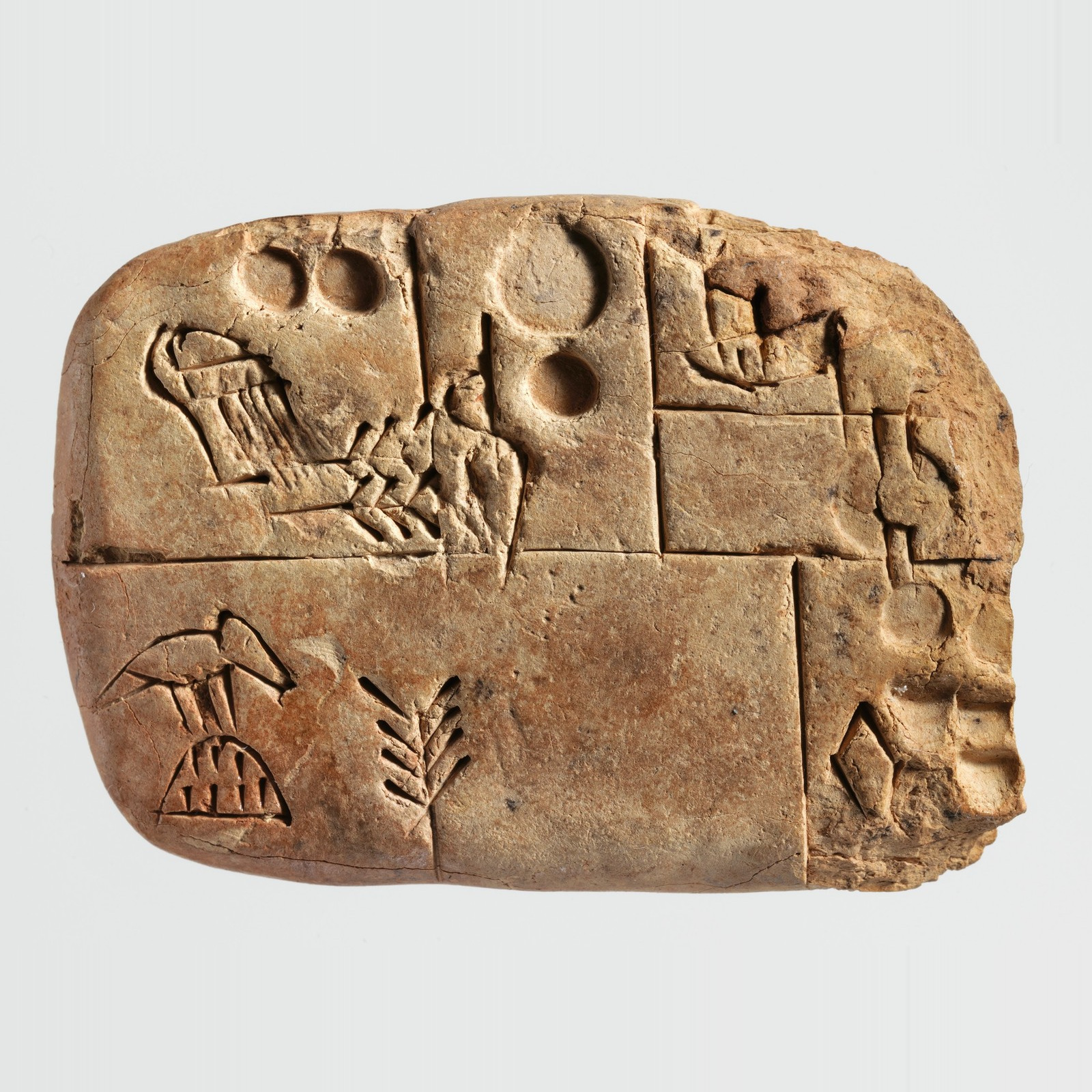
Two Uruk IV tablets catalogued by CDLI illustrate different uses of early signs. VAT 14950, catalogue number P000926, is an administrative tablet. VAT 15003, P000006, is a lexical tablet, a list of words or signs. Both come from Uruk and CDLI dates the phase to about 3350–3200 BCE. Accounts with numerical signs and lists arranged for reference show two kinds of recordkeeping. The catalogue’s language classification leaves the reading of some of the earliest writing open. Assigning each tablet to a single room or the service of a specific deity requires evidence besides its date and site of origin. [3][5]
The Warka Vase and the marble head
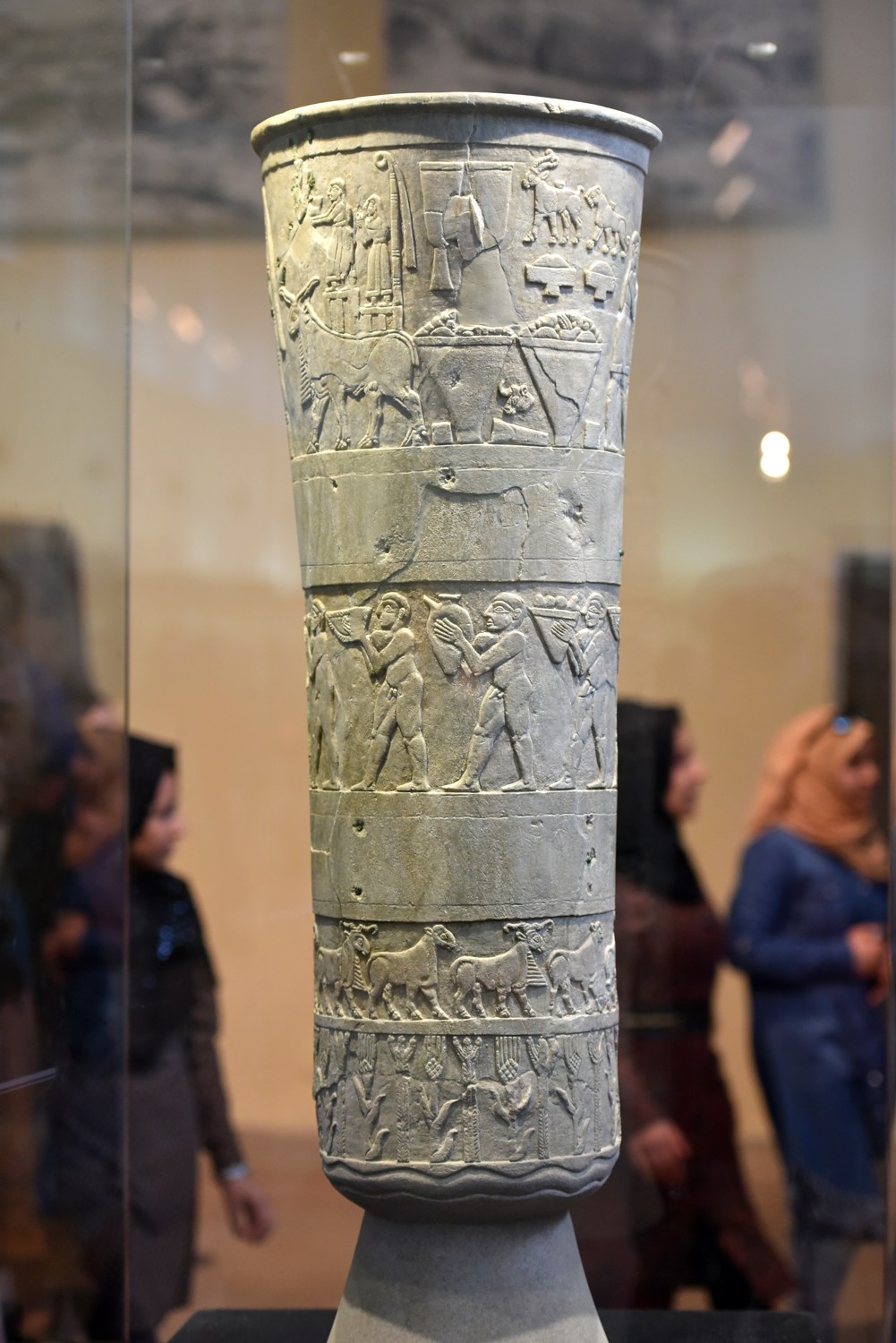
The Warka Vase, inventory IM 19606 at the Iraq Museum, shows plants, animals and people carrying offerings in bands of carving. CDLI classes it as Uruk III, about 3200–3000 BCE. Other discussions use period names such as Late Uruk or Jemdet Nasr for the vase and related images. Parts of it were damaged and have been restored. Its carved scene gives evidence of how offerings and authority could be represented. [4][6][7]
In the top band a female figure stands by a pair of ring-post standards. Their association with Inanna makes her an important clue to the scene. The upper parts of the figure and her headdress are damaged, leaving open whether she represents the goddess or a woman acting in a ritualRitualAn organised or distinguished practice meaningful to a community; it may leave traces, but its form alone does not reveal an associated doctrine.Glossary · Click to read the explanation role. The male figure has been described as a ruler or priest-king. Reading the meeting as a sacred marriage is one interpretation of the scene. The study of the standards cited here proposes that their shape has an architectural origin and compares designs on seals. [6]
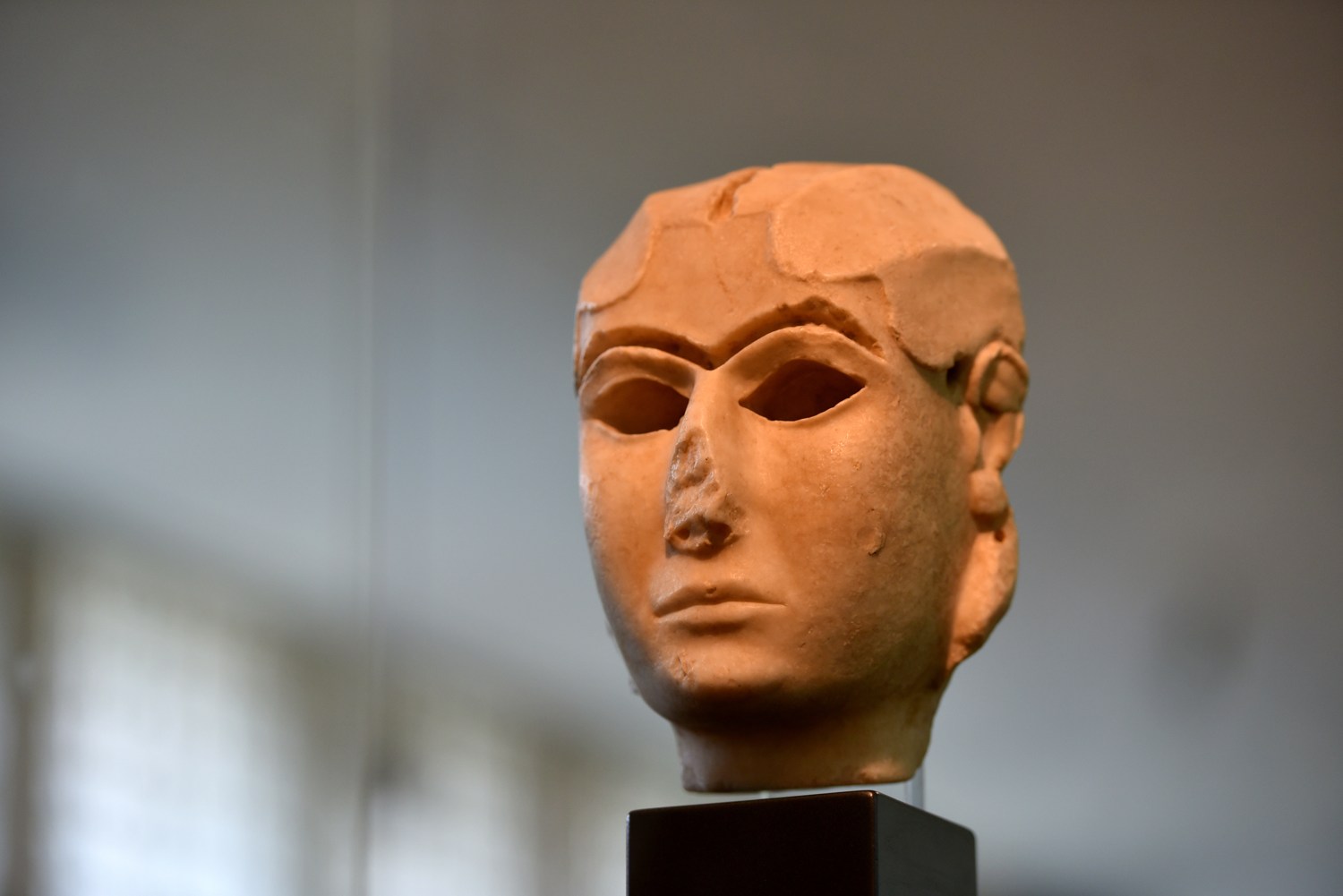
The white marble head called the Lady of Warka is a separate find, catalogued as IM 45434 in the Iraq Museum. Its recesses were made for facial inlays, and it has possible attachments for hair or a headdress. The name Head of Inanna proposes an identity for the figure. It is an interpretation, since no preserved inscription names the subject. [7][8]
A later sanctuary and a dated object
The Metropolitan Museum’s stele of Lama dates to about 1307–1282 BCE, in the Kassite period. Its pendant in Baghdad faces the other way and bears the same inscription. The museum thinks the two stelae were set up within Eanna and associates them with the renovation of the precinct. That later monument gives Eanna’s history a dated point of reference. The archaeological layers and the objects within them supply the evidence for the much earlier phases. [1]
References and notes (8)
- The Metropolitan Museum of Art, Stele of the protective goddess Lama, 61.12 Object description and dimensions, geography, Kassite date ca. 1307–1282 BCE, pairing with the Baghdad stele, text and Eanna renovation context. Return to the text ↑
- Sebastiano Soldi, “Assyrian Clay Hands” in the Architecture of the Ancient Near East, Metropolitan Museum Journal 52 (2017) Museum-hosted article excerpt, early background on Uruk Eanna cone mosaic and decorated façades, especially p. 10 and fig. 2, reconstructed columns. Return to the text ↑
- Cuneiform Digital Library Initiative, ATU 5, pl. 023, W 6984,b, VAT 14950, P000926 Catalogue fields and opening sign transcription; administrative tablet, Uruk IV, Uruk, and language field. Return to the text ↑
- Cuneiform Digital Library Initiative, Uruk Vase, P423593 Collection and archaeological fields: Uruk III, ca. 3200–3000 BCE, Warka, National Museum of Iraq. Return to the text ↑
- Cuneiform Digital Library Initiative, CDLI Lexical 000002, ex. 173, VAT 15003, P000006 Catalogue fields and opening displayed signs; lexical tablet, Uruk IV, Uruk. CDLI dating copied as printed. Return to the text ↑
- Antiguo Oriente 16 (2018), “The Architectural Origin of Mesopotamian Standards in Late Uruk/Jemdet Nasr Period Iconography,” pp. 117–146 Selected pp. 121–126 and fig. 1 caption on the upper register, ring-posts, ruler and female figure, damage to the headdress and the architectural interpretation. Return to the text ↑
- Joaquín María Córdoba, “On the Iraq Museum and Other Assaults: Brief News about the Plundering of Iraqi Museums,” Isimu Inventory extracts and descriptions for IM 19606 and IM 45434, with findspot and material. No conservation report read. Return to the text ↑
- Ann Louise Perkins, The Comparative Archeology of Early Mesopotamia, Studies in Ancient Oriental Civilization 25 (University of Chicago, 1949) Pp. 150–151 on the Warka head: marble, recesses for facial inlays, holes for hair or a headdress. Return to the text ↑
Suggest a correction · Suggest a source for this record
Cite this record
IL Archive, «Eanna at Uruk», https://ilarchive.com/en/sites/eanna
Continue reading
Related readings