Entity · Deity
Inanna / Ishtar
A reference page linking a name, group, or concept to the materials that discuss it.
Inanna/Ishtar through Mesopotamian evidence: the history of her names, desire, war and authority in hymns and myths, sanctuaries and local forms, variable kinship and astral identity.
Estimated reading time: 11 min Published Last reviewed:
Share article
Video
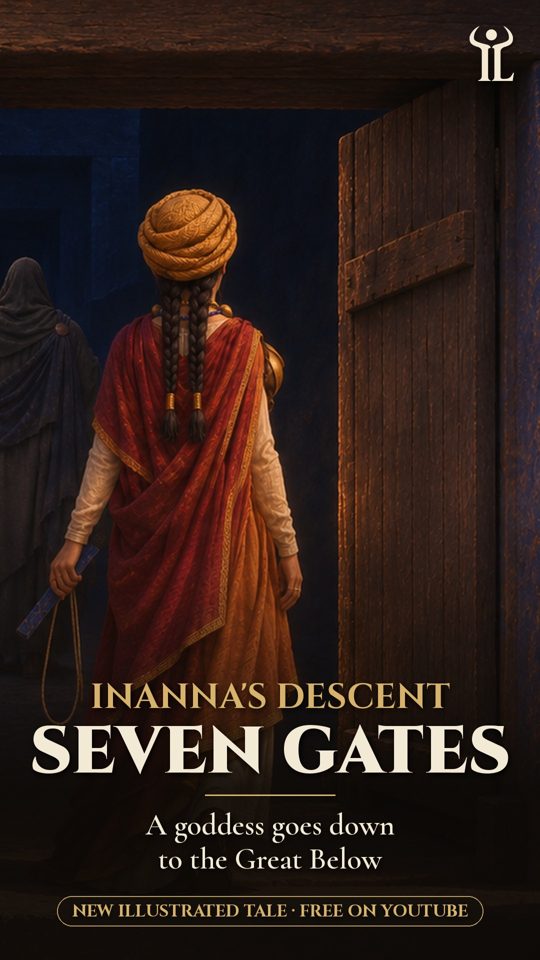
Inanna’s Descent to the Netherworld: Seven gates, a rescue and a price
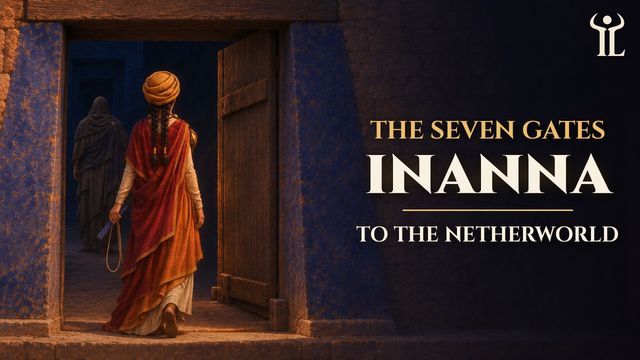
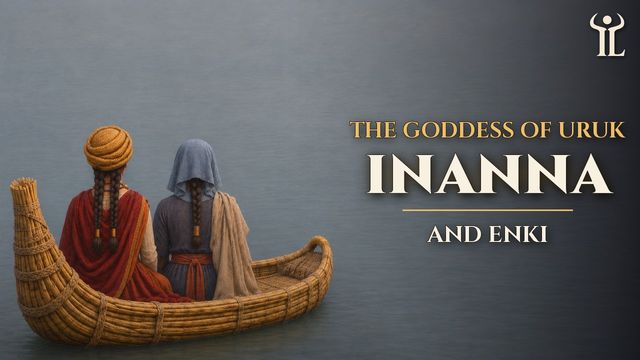
Seven gates, a rescue and a price. The whole story in two illustrated chapters, told from the ancient clay tablets; where the tablets are broken, the narration says so. Illustrations, narration voice and visual effects were created with AI tools by IL Archive; the text is a faithful retelling based on the ancient tablets.
The YouTube player loads only when you press play. Watch on YouTube
Text
Introduction
Inanna, in Sumerian, and Ishtar, in AkkadianAkkadianAn ancient East Semitic language written in cuneiform from the third millennium BCE; its varieties include Babylonian and Assyrian, and it served in international diplomacy.Glossary · Click to read the explanation, name one of MesopotamiaMesopotamiaHistorical region associated with the Tigris and Euphrates: Uruk, Ur, Eridu, cuneiform, Sumer, Akkad, Babylon and Assyria, their languages and cults, and the limits of archaeological evidence.Glossary · Click to read the explanation’s most influential divine figures. Her worship connected cities, royal courts and households; her literary character encompassed desire, warfare, sovereignty and the planet Venus. UrukUrukAncient city at Warka in southern Iraq, a major urban centre around 3200 BCE that preserved early writing and accounting tablets.Glossary · Click to read the explanation, modern Warka in southern IraqIraqIraq is a modern country encompassing much of ancient MesopotamiaGlossary · Click to read the explanation, was a major centre, but neither one city nor the label “goddess of love and war” adequately describes her. This entry follows selected, dated evidence to explain how those functions worked together, while keeping local forms and different textual traditions visible. [1]
Names and historical horizons
The paired name is a useful convention, not the record of a single, documented merger. Sumerian and Akkadian speakers lived alongside one another, and scribes could write an Akkadian divine name with a Sumerian sign. The use of the INANNA sign therefore does not by itself tell us the language in which a worshipper pronounced the name. Early evidence must also be separated from the much fuller myths surviving in later copies. [4]
A selective chronological sequence makes these differences clear:
- Around the end of the fourth millennium BCE, the sign conventionally identified with Inanna occurs in archaic writing from Uruk. Its association with the looped reed standard in contemporary imagery supports a connection with her cult. Assigning every early building in the Eanna precinctEanna at UrukAn archaeological precinct and institutional centre at Uruk associated with Inanna; its name does not fix every early building’s function.Glossary · Click to read the explanation to the goddess is a different, less secure claim: the date of architecture does not supply the missing dedicatory inscription. [4]
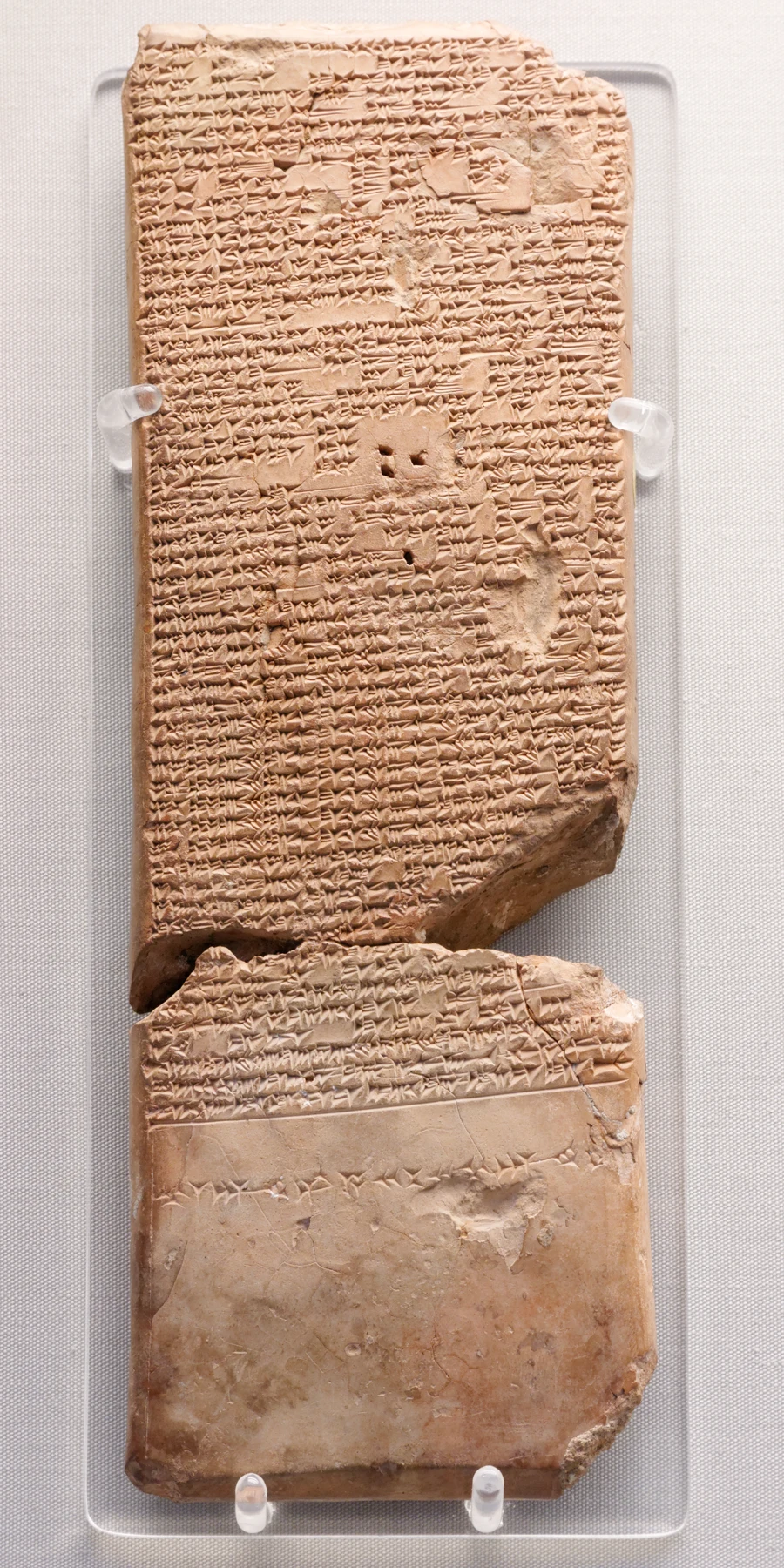
- Around 2600–2500 BCE, the Fara god-list SF 1 provides an explicit named witness. At obverse i.1–3, the edition reads the following sequence. The superscript convention is represented here by {d}, the unpronounced divine determinativeThe divine determinative in cuneiformA cuneiform sign used mostly before a divine name to classify it without being spoken independently; shown as raised d or {d} in transliteration. Usage depends on language and context.Glossary · Click to read the explanation. [2]
The names are not restored in these three lines. Inanna’s third position establishes her place in this list, not a parent–child relationship or a universal hierarchy.
- In the later third millennium BCE, dedications and royal inscriptions illuminate several cult centres. The Akkadian dynasty of SargonSargon of AkkadSargon of Akkad was a historical third-millennium BCE ruler and founder of the Akkadian dynasty; royal accounts of his campaigns must be distinguished from later stories of his birth and rise.Glossary · Click to read the explanation, the ruler who established an empire in Mesopotamia, gave Ishtar an important place in its royal ideology. Akkadian epithets accompanying the INANNA sign and third-millennium bilingual equations are stronger evidence for Sumerian–Akkadian association than a modern story about two isolated ethnic religions suddenly being united. [4]
- The late third and early second millennia furnish the royal and literary settings of many hymns. Their surviving Old Babylonian tablets, commonly dated broadly to about 1900–1600 BCE, may be later than the rulers or situations they portray. A myth’s journey to the underworld has no historical event-date. [6][8][10]
- In first-millennium Assyria, especially the seventh century BCE, Ishtar’s sanctuaries at NinevehNineveh and KuyunjikNineveh is an ancient Assyrian city near Mosul in northern Iraq; Kuyunjik is one of its archaeological moundsGlossary · Click to read the explanation and Arbela were prominent in royal protection, prophecy and victory celebrations. This is a particular institutional setting, not simply the unchanged continuation of Uruk’s earliest cult. [11]
The older hypothesis that Sargon deliberately fused Inanna and Ishtar to unite his empire draws plausibility from royal involvement in religion. Yet royal patronage does not establish a founding act of theological identification. Earlier linguistic contacts and the continuing recognition of local forms favour a history of overlapping associations rather than one datable decree. [4]
Divine authority in a hymn of crisis
The Sumerian Exaltation of Inanna presents the voice of Enheduana, a high priestess of the moon god at Ur and daughter of Sargon. She appeals to Inanna during her expulsion from office. The historical priestess belongs to the third millennium BCE; most manuscripts of the poem belong to the eighteenth century BCE. Whether its transmitted wording derives from her own composition, subsequent adaptation, or writing in her name remains disputed. Linguistic modernization can explain some late features, but the chronological gap prevents treating every scene as contemporary autobiography. [6]
In the annotated edition by Sophus HelleSophus HelleSophus Helle is a scholar and translator of ancient Mesopotamian literature.Glossary · Click to read the explanation, a scholar and translator of Mesopotamian literature, line 13 reads: [5]
No restoration is marked in this line of the edited text. The surrounding lines compare the goddess to a devastating storm and place commanding power in her hands. This is more than a generic description of “war”: the petitioner seeks an authority capable of overturning her political and personal defeat. The opening also calls Inanna mistress of the me, divine powers and normative capacities governing cosmic and social life. Violence and legitimate order thus belong to the same hymn’s account of her agency. Its extravagant praise is a persuasive appeal, not a neutral ranking of all gods. [5]
Desire, kingship and ritual performance
Another Sumerian hymn, Iddin-Dagan A, praises Inanna in relation to Iddin-Dagan, an early-second-millennium king of Isin in southern Mesopotamia. Music, processions, offerings, celestial radiance and an encounter on a prepared bed form a connected celebration. The goddess’s sexual attraction is not an isolated private trait: her acceptance of the king places royal prosperity within a divine relationship. The king is associated with Amaushumgalanna, a name linked with DumuziDumuzi / TammuzDumuzi is a deity of ancient Mesopotamian traditions associated with shepherding and Inanna; Tammuz appears as the name in later linguistic and textual traditions.Glossary · Click to read the explanation, the shepherd deity and Inanna’s lover. [7][8]
The short declaration is line 194 in the CDLI/ETCSL composite, corresponding to line 192 in the translation of the Sumerologist Pascal AttingerPascal AttingerSumerian language and literature scholar, emeritus professor at the University of Bern.Glossary · Click to read the explanation: [7][8]
The cited composite marks no restoration here. The surrounding bed scene varies between manuscripts: Attinger distinguishes a version in which Amaushumgalanna lies with her from one describing preparation of the bed. Even the direction of the preceding intimate conversation is grammatically open. The quoted address and the royal setting securely establish a bond of affection and favour; they do not identify a human woman who enacted the goddess’s role.
“Sacred marriage” is the modern label for the debated ritualRitualAn organised or distinguished practice meaningful to a community; it may leave traces, but its form alone does not reveal an associated doctrine.Glossary · Click to read the explanation interpretation. A literal enactment is conceivable, since the poem describes preparations and an erotic encounter; a literary expression of divine legitimation also fits what the text actually preserves. Mark Weeden’s specialist discussion stresses the missing evidence for who, if anyone, represented Inanna. The best-supported conclusion is the integration of desire and kingship, while the precise bodily performance remains unresolved. Neither this hymn nor erotic religious language establishes a general institution of temple prostitution. [9]
The procession also juxtaposes male and female clothing and names specialist performers. These passages show that the cult could stage gendered contrasts, but they do not provide a single modern identity category for every participant. The differences between poetic roles, ritual offices and an individual’s social life should remain visible. [7][8]
The descent: power, dependence and loss
The Sumerian Descent of Inanna explores the limits of divine ambition. Its opening leads away from her earthly sanctuaries toward the realm governed by her sister EreshkigalEreshkigalMesopotamian goddess ruling the netherworld; Inanna’s sister in descent texts, with varying accounts of her relationship with Nergal.Glossary · Click to read the explanation. The following is the opening clause of line 1 in Attinger’s reconstructed text, not an inscription copied from one complete tablet: [10]
Here “great earth” designates the underworld; the rest of the line says that she directed her attention there. Attinger’s score shows damaged witnesses alongside fuller ones. The quoted clause needs no bracketed restoration in his reconstructed reading, but that does not mean all manuscripts preserve it intact.
At seven gates, Inanna is deprived of the attributes she brought with her. Before the underworld’s rulers she is condemned and reduced to a lifeless body. Her attendant NinshuburNinshubur: Divine Messenger of Inanna and AnMesopotamian divine messenger and intermediary associated with Inanna in Sumerian narratives and with An in inscriptions and hymns; identity and gender vary by context and must not be equated automatically with Papsukkal.Glossary · Click to read the explanation seeks assistance, and EnkiEnkiMesopotamian deity also known as Ea, linked with Eridu and the Abzu (deep fresh waters), wisdom, incantations, and narratives of creation and cosmic order. Later written attestations do not identify the deity of Eridu’s earliest layers.Glossary · Click to read the explanation, the god of wisdom and fresh water, devises the rescue. Thus the goddess who commands others must herself depend on loyalty, intercession and another deity’s ingenuity. In the commonly translated sequence, three days and nights elapse before Ninshubur begins to act—not before the rescue is completed; other manuscripts give much longer intervals. [10]
Release requires a substitute. Inanna spares mourners but hands over Dumuzi, whom she encounters seated magnificently rather than mourning. The narrative later also depicts her grieving for him. Its closing settlement assigns alternating half-years to Dumuzi and his sister Geshtinanna, although the ending is damaged and varies between witnesses. The combination of anger, substitution and subsequent grief resists a portrait of either an invariably nurturing goddess or an invariably destructive lover. [10]
The throne episode has generated different readings of who rises and who takes the seat. Attinger favours Inanna displacing her sister, principally because the narrative context suits an attempted seizure of power, while acknowledging grammatical difficulties and divergent witnesses. This supports an interpretation of ambition checked by another realm’s laws; it is less secure as proof of one original motive behind every version. Nor does a half-year alternation by itself establish a universally enacted agricultural calendar. Here the explicit mechanism is the price of leaving the world of the dead. [10]
Sanctuaries, local forms and the royal household
Uruk’s Eanna was an important religious focus, but Inanna also had cults at Zabalam, Lagash and NippurNippur / NuffarAncient Nippur (modern Nuffar, Iraq), major cult centre of Enlil and Ekur; excavations revealed sanctuaries, houses and thousands of cuneiform tablets across many periods.Glossary · Click to read the explanation, modern Nuffar in southern Iraq. Building dedications and votive objects are especially valuable here: they connect a divine name to a place and an act of patronage, whereas a literary list of abandoned temples expresses a sacred geography. At Nippur, inscribed offerings in the Inanna temple include dedications by women, reminding us that her worship was not exhausted by royal ideology. The evidence for a particular building phase should not automatically be extended to every earlier layer beneath it. [4]
The Assyrian case is especially revealing. NinevehNineveh and KuyunjikNineveh is an ancient Assyrian city near Mosul in northern Iraq; Kuyunjik is one of its archaeological moundsGlossary · Click to read the explanation, beside modern Mosul, and Arbela, modern Erbil, had distinct Ishtar sanctuaries. The forms called Ishtar of Nineveh and Ishtar of Arbela could be listed separately rather than treated as interchangeable labels. Arbela’s Egašankalamma, “House of the Lady/Queen of the Land,” is attested in a rebuilding inscription of the thirteenth century BCE; much richer evidence comes from the late Neo-Assyrian kings. [1][11]
Royal inscriptions present Ishtar of Arbela as a military patron, while prophetic texts can give her a mother’s or nurse’s voice in relation to the king. Under AshurbanipalAshurbanipalAshurbanipal was an Assyrian king of the seventh century BCE, reigning about 668–631 BCEGlossary · Click to read the explanation, the seventh-century Assyrian ruler, victory celebrations brought royal warfare into the sanctuary’s ceremonial life. This motherly relationship is a political and protective role, not grounds for redefining her everywhere as primarily a mother goddess. The same institution employed ritual personnel and scribes and appears in legal and financial documents. Its economic importance is clear, even where the exact relationship between a private creditor, a debtor and the temple remains debated. [11]
Kinship and celestial identity
Different traditions associate Inanna with different parents: AnAn / AnuAn is the Sumerian sky god, called Anu in Akkadian. The sign AN by itself does not identify him: it also denotes sky or divinity.Glossary · Click to read the explanation, the sky god; Nanna/SuenNanna / Su’en / SinMesopotamian moon god known as Nanna, Su’en and Sîn/Sin. Worshipped especially at Ur and Harran, he is associated with the crescent and lunar cycle; names and myths have different histories.Glossary · Click to read the explanation, the moon god, and his wife Ningal; or Enki. These statements belong to particular compositions and theological relationships, rather than branches of one consistent family tree. Iddin-Dagan A itself calls her Suen’s great daughter near the opening and subsequently speaks of “her father Enki” giving her powers. A paternal title may therefore express authority or a relationship of benefaction as well as the genealogy a modern reader expects. Ereshkigal’s sisterhood and Dumuzi’s partnership likewise take their meaning from the story being told. [1][7][8]
The astral dimension is more than an inference from an image. Iddin-Dagan A names the planet with the expression mul dili-bad, “the star Venus” (CDLI line 135; Attinger line 133), amid praise of the goddess’s celestial appearance. Evening radiance, public celebration and royal favour are joined within the poem. Venus’s appearances as morning and evening star offered a recurrent celestial manifestation of divine presence; they need not be used as a master key that turns every myth into an astronomical diagram. [7][8]
Recognizing the goddess in images
Reed standards, stars, lions and armed female figures belong to her iconographic repertoire, but they have different evidential weights. A horned crown marks divinity broadly; female nudity alone cannot name Ishtar. The eight-pointed star is a familiar astral emblem, while weapons and lions can emphasize force. Identification is strongest when attributes converge with inscription, archaeological setting or a well-supported iconographic comparison. [1]
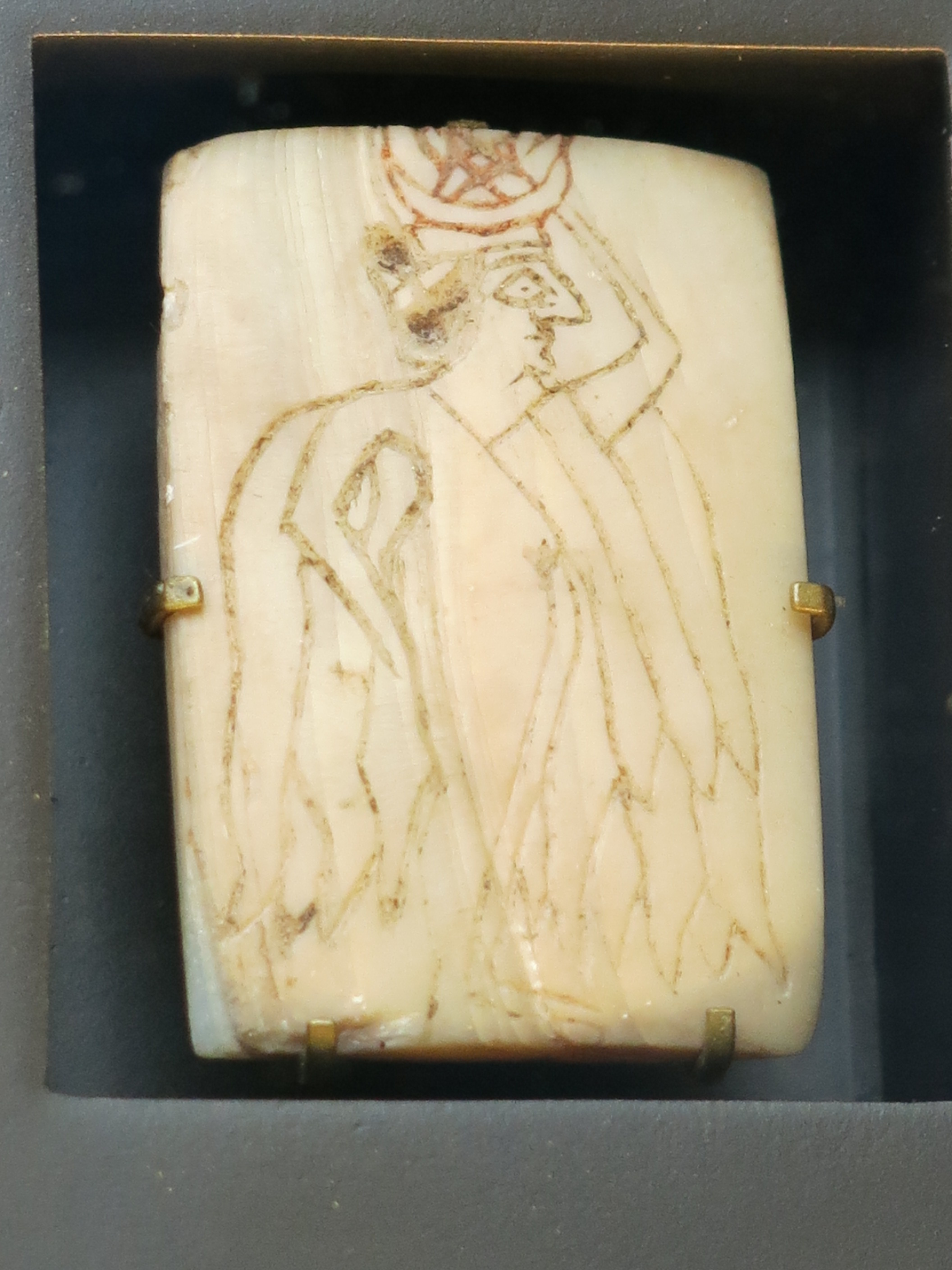
The cover offers a specific case: a shell furniture inlay from Ishtar’s temple at MariMariMari at Tell Hariri on the Syrian Euphrates was founded around 2900 BCE and rebuilt through three major urban phases. Its palace and cuneiform archives illuminate trade, royal government and religious practice, especially in the eighteenth century BCE.Glossary · Click to read the explanation, on the Euphrates in present-day Syria, now Louvre AO 18962. The museum identifies the figure holding a star and crescent as Ishtar and dates the object to about 2500–2400 BCE. The modern photograph shows this ancient object, not a reconstruction of the goddess or an illustration of the descent story. Its astral attributes and cult setting make it relevant, but the crescent should not be read as proof that Ishtar was simply a lunar goddess. The textual Venus identification and the object’s visual vocabulary answer related but different questions. [3][7][8]
Taken together, named attestations establish historical presence; hymns and narratives disclose ways of imagining divine action; dedications and administrative records locate worship in institutions; images provide a further, partly independent language. The strongest profile is therefore not a seamless biography but a historically situated account of a goddess whose power could authorize a king, inspire desire, devastate enemies, and still meet resistance and loss.
References and notes (11)
- Yağmur Heffron (2019). Inana/Ištar (goddess). Ancient Mesopotamian Gods and Goddesses, ORACC. Functions; Divine Genealogy and Syncretisms; Cult Place(s); Time Periods Attested; Iconography; Name and Spellings; read alongside the textual editions and specialist studies cited below. Return to the text ↑
- Cuneiform Digital Library Initiative. SF 001 (P010566), VAT 12760+, Shuruppak/Fara. Tablet metadata; obverse, column i, lines 1–6, especially line 3. Early Dynastic IIIa, ca. 2600–2500 BCE. Return to the text ↑
- Musée du Louvre, “Furniture inlay”, AO 18962 / M. 1027. Description, material, findspot and date. The prose gives ca. 2500–2400 BCE within the broader classification range 2500–2340 BCE. Return to the text ↑
- Paul Collins, “The Sumerian Goddess Inanna (3400–2200 BC),” Papers from the Institute of Archaeology 5 (1994), 103–118. Pp. 103–108: temples and sign; 109–112: sacred marriage and the merger hypothesis; 113–115: imagery and conclusion. Not every reconstruction or detailed date in this older study is adopted. Return to the text ↑
- Sophus Helle, “The Exaltation of Inana: Annotated Translation,” companion website for Enheduana. Lines 1–24, especially 13; 60–67; 117–132. Edited text with commentary, not a single tablet; the brief excerpt is translated from the displayed transliteration with the commentary. Return to the text ↑
- Sophus Helle, “Authorship,” Enheduana companion website. Complete discussion of the gap between Enheduana’s lifetime and manuscripts of attributed works, linguistic features and reworking. Return to the text ↑
- Pascal Attinger, Iddin-Dagan A (2.5.3.1), 2011, updated 2019, translation with notes and variants. Pp. 2–3, lines 1–26 and 60–65; p. 6, line 133; pp. 7–9, lines 167–226, especially 187–192. Line 192 here corresponds to CDLI/ETCSL 194. Return to the text ↑
- Cuneiform Digital Library Initiative, CDLI Literary 000447, Iddin-Dagan A, composite P473726. Transliteration: 9, 22–24, 60–65, 135, 169–230; quoted line 194. Old Babylonian witness list. {d} is the unpronounced divine determinative; sign numbers are transliteration conventions. The composite is not one tablet. Return to the text ↑
- Mark Weeden, “Power-Plays: Types of Lover and Types of Love in Akkadian from the Third and Second Millennia BC,” in A. Alshaer (ed.), Love and Poetry in the Middle East (2022), 12–56; author manuscript at UCL. Section 4, PDF pages 18–19, especially note 84 on the unidentified representative of Inanna and ritual versus literary readings; PDF pagination is not book pagination. Return to the text ↑
- Pascal Attinger, La descente d’Innana dans le monde infernal (1.4.1), 2019, updated 2021, Zenodo v2. P. 4: score of line 1; pp. 74–75: opening and temples; 81–84: gates, throne and interval; 87–88: rescue and substitute; 91–94: Dumuzi, grief and alternation. Only the initial clause of line 1 is quoted; the remainder uses ĝeštu to express directing attention. Return to the text ↑
- Martti Nissinen and Raija Mattila, “The Temple of Ištar of Arbela,” Advances in Ancient, Biblical, and Near Eastern Research 1/1 (2021), 149–168. Pp. 151–153: name and early attestations; 154–159: building, celebrations and royal relationship; 159–164: finance, personnel and prophecy. Specialist analysis of inscriptions and documents; not all underlying originals independently collated here. Return to the text ↑
Suggest a correction · Suggest a source for this record
Cite this record
IL Archive, «Inanna / Ishtar», https://ilarchive.com/en/entities/inanna
Continue reading
Related readings

Related posts and imagesAll videos and images