The Descent of Ishtar (Akkadian version) Chapter 1
The Seven Gates of Irkalla
Ishtar enters Irkalla through seven gates. Ea sends an envoy to Ereshkigal, and Namtar brings Ishtar back through the gates after sprinkling her with the water of life. The closing verses turn to the ransom, Dumuzi and Belili.
SourcesTurn the pages with the arrows, the arrow keys or a swipe.
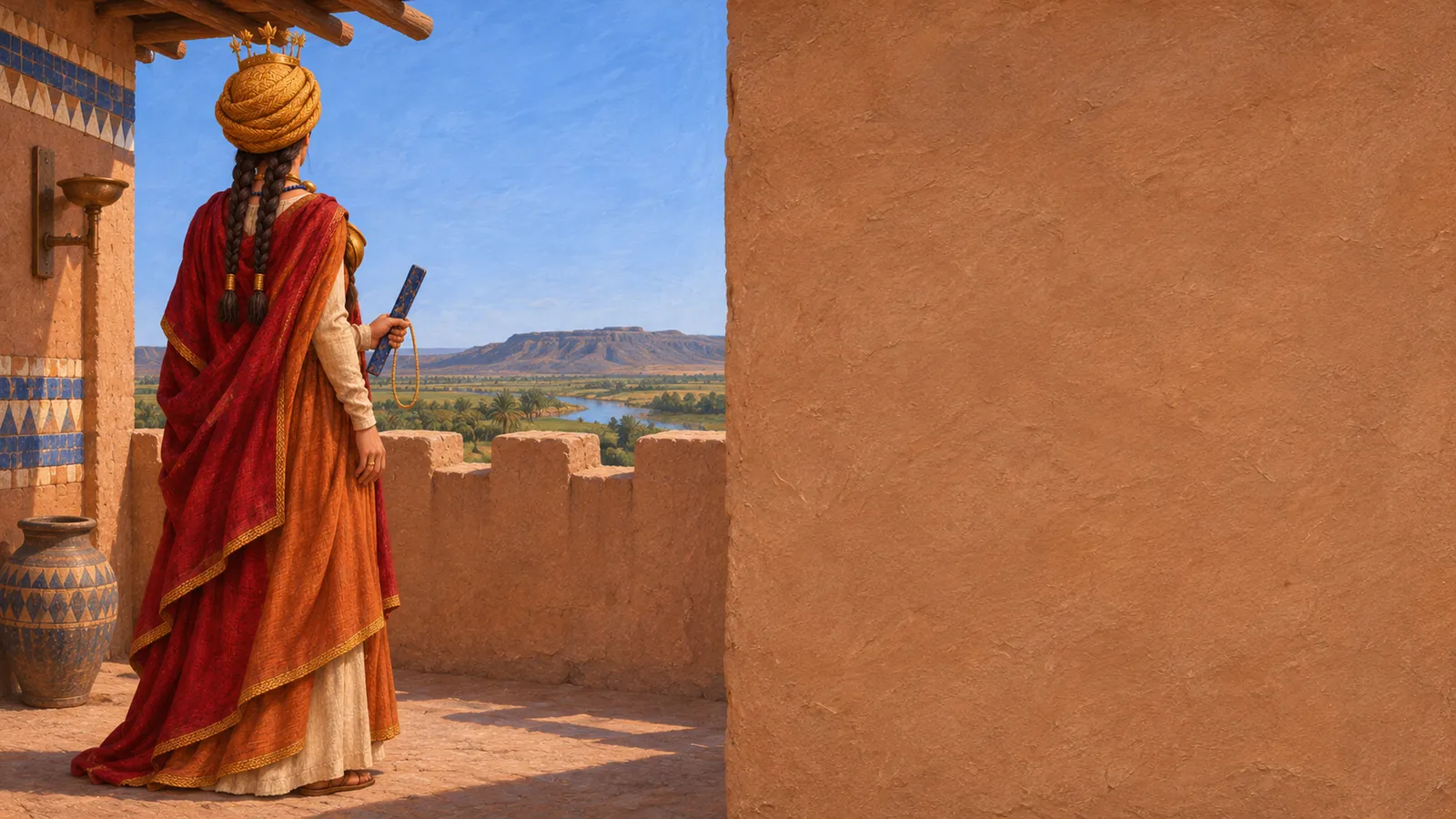
ISHTAR
Ishtar, daughter of the moon god Sîn, sets her mind on the world below. The poem calls it the land of no return.
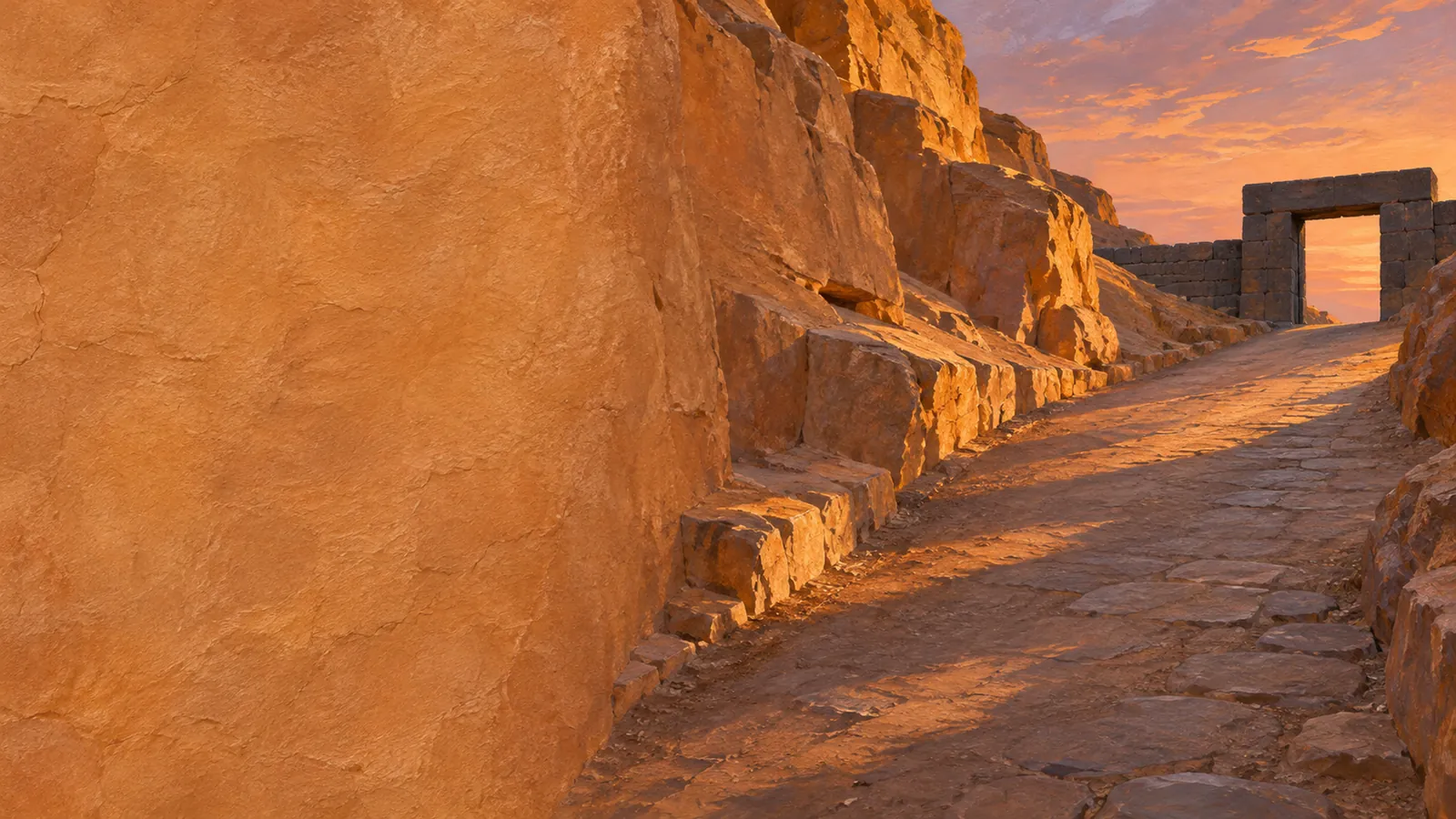
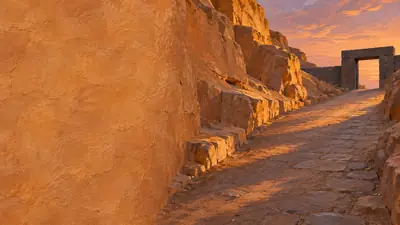
The road leads to Irkalla, a dwelling deprived of daylight. Anyone who enters that house is said to remain there.
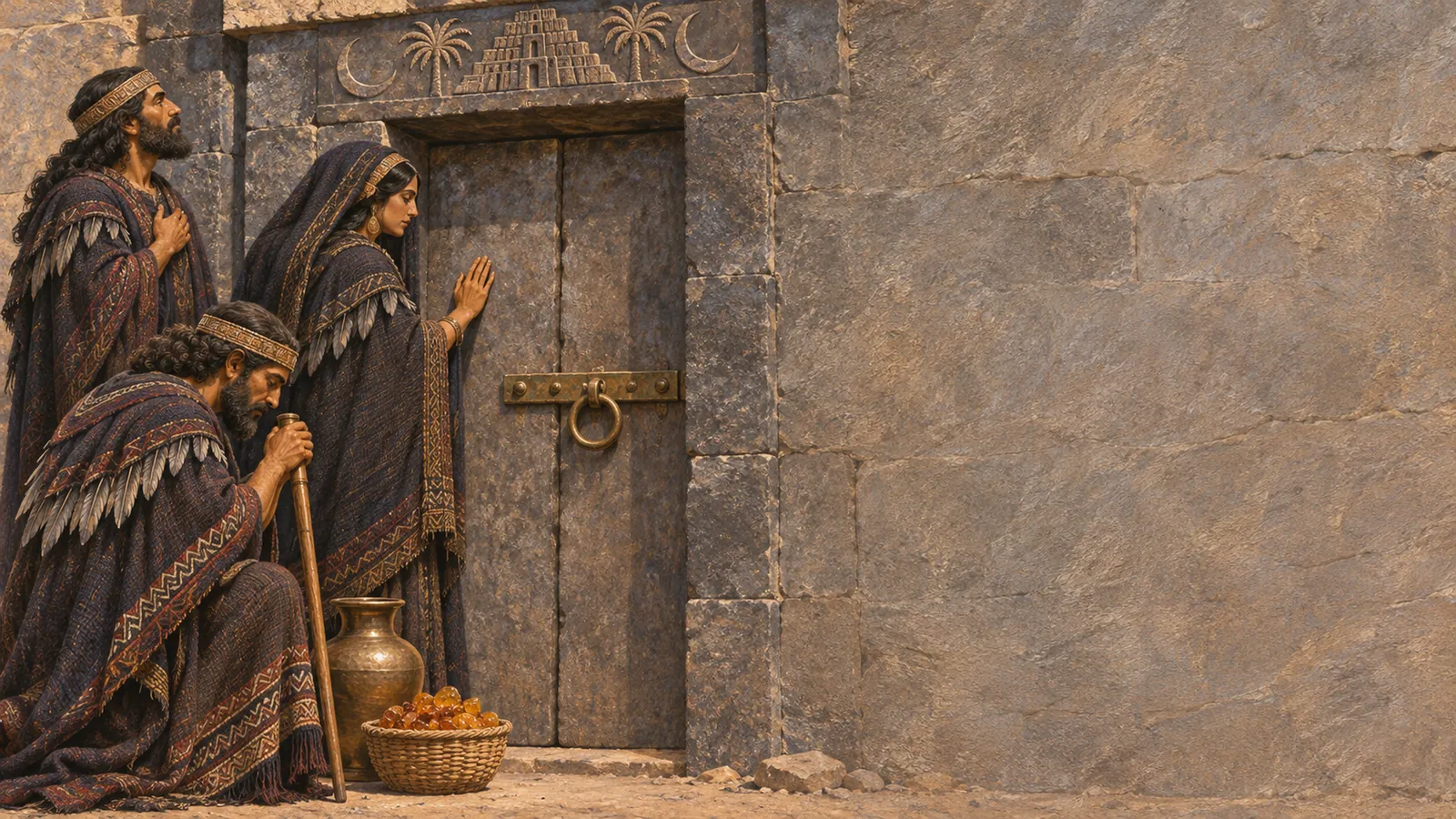
The people below live on dust and clay. Their clothes are compared to birds’ wings, and dust lies on the door and bolt.
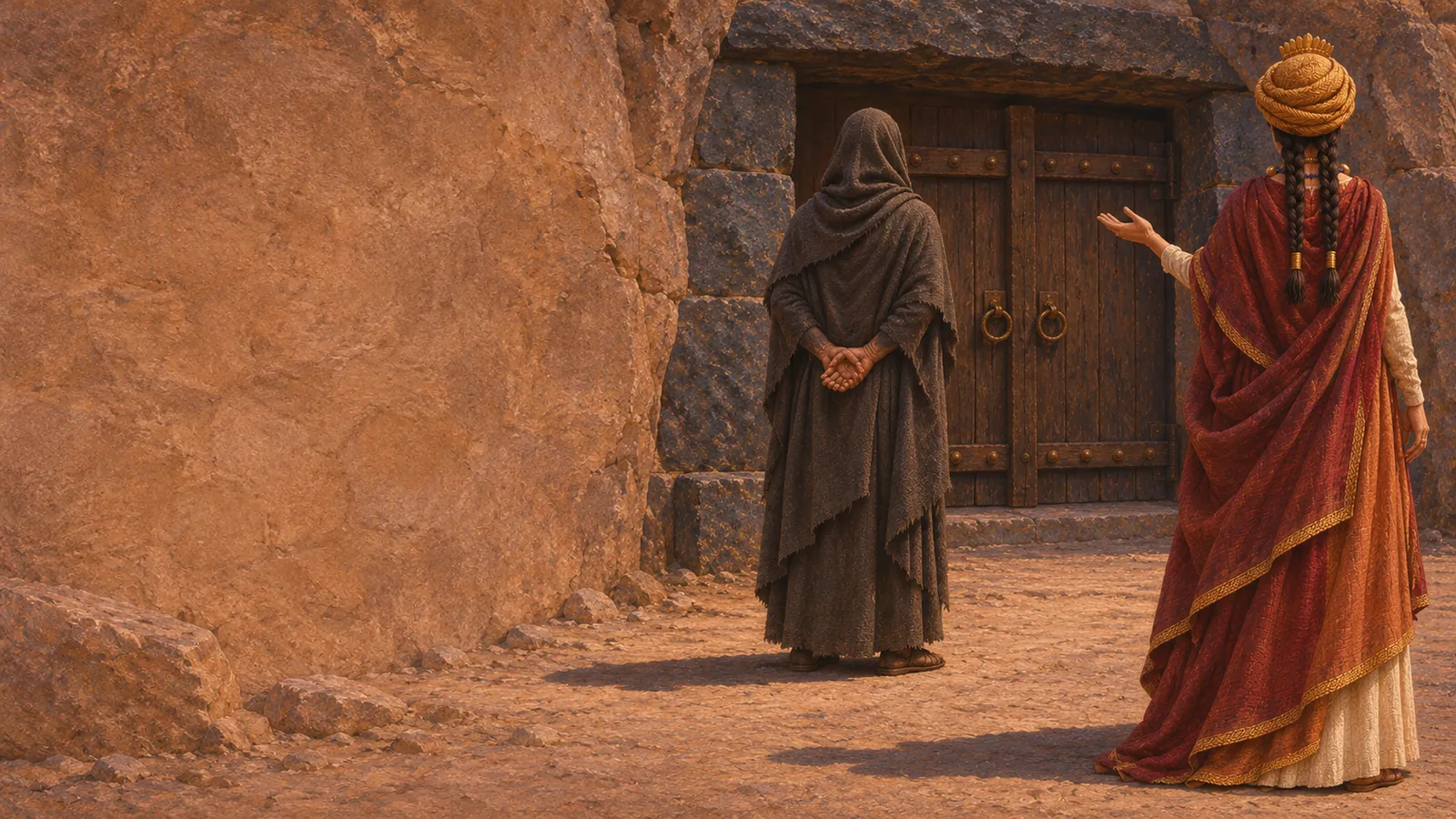
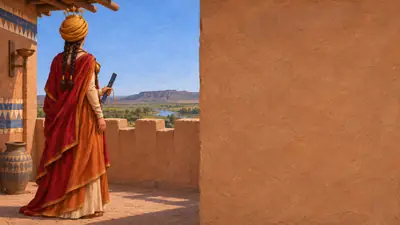
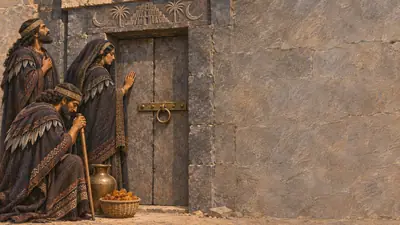
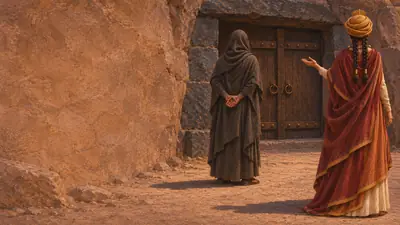
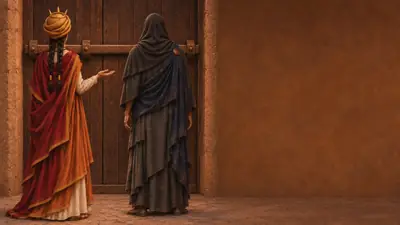
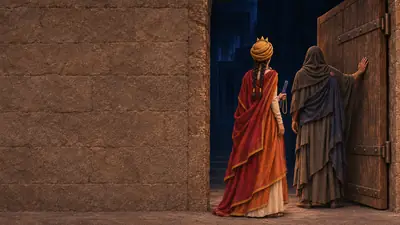
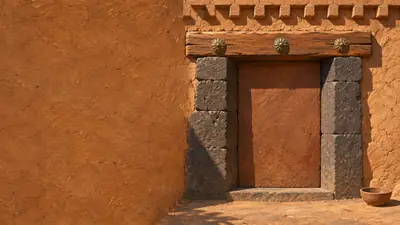
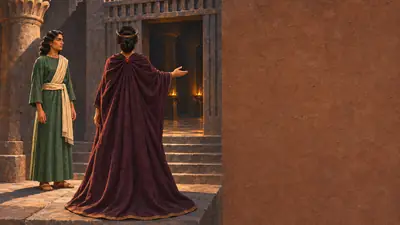
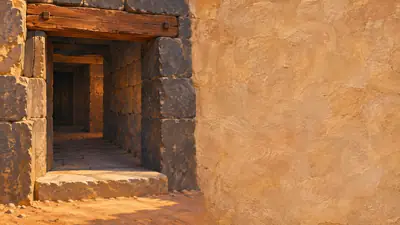
Ishtar reaches the entrance to the world below. She calls to its gatekeeper and tells him to open the door and let her enter.
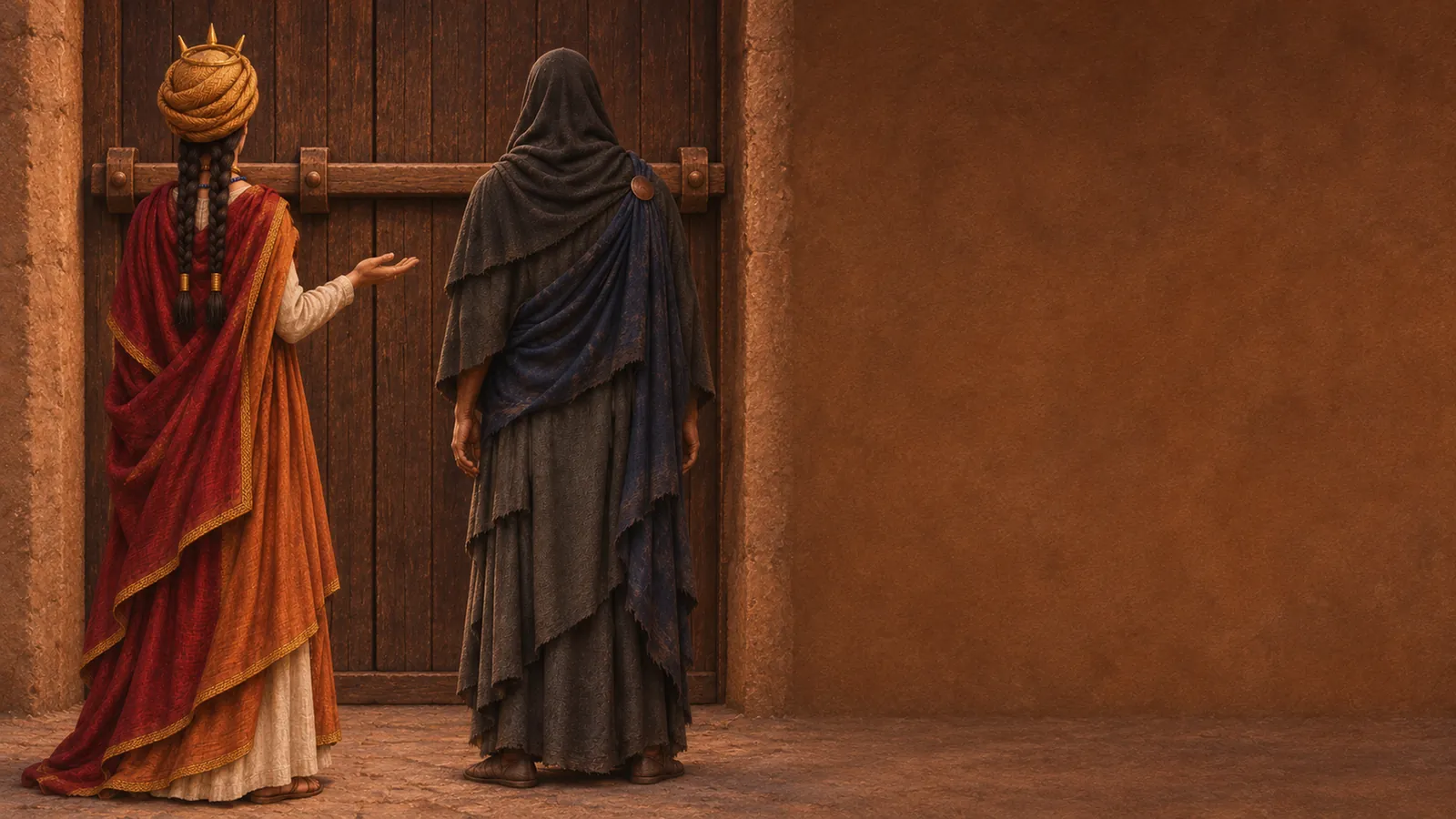
Ishtar threatens to smash the door and bolt if the gate stays shut. She says she will raise the dead until they outnumber the living.
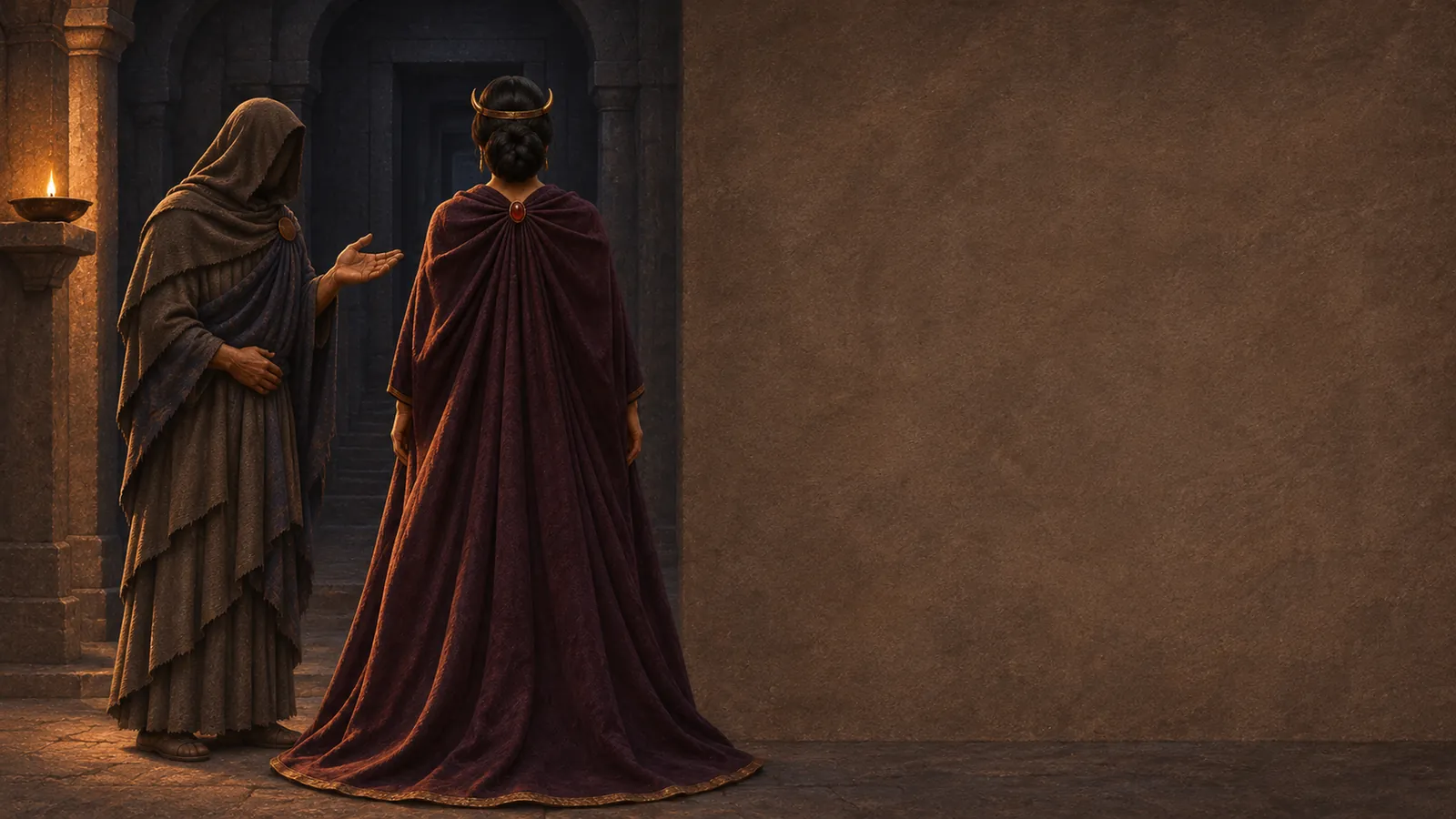
The keeper asks Ishtar to wait and goes inside to Queen Ereshkigal. He tells the queen that her sister is at the gate.
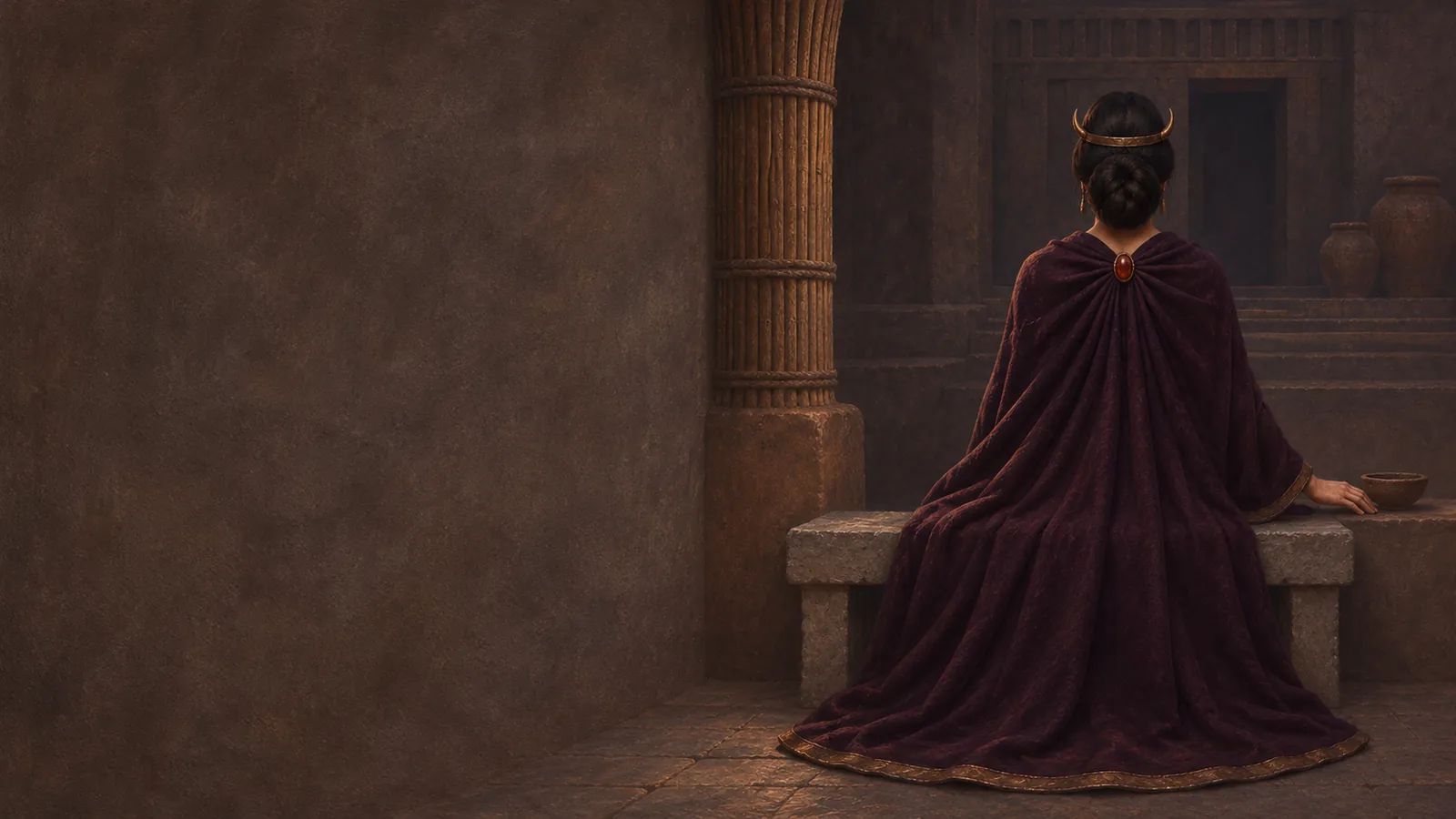
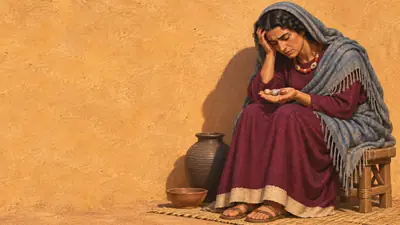
Ereshkigal goes pale and asks what has brought her sister to her. She speaks of eating clay and drinking murky water.
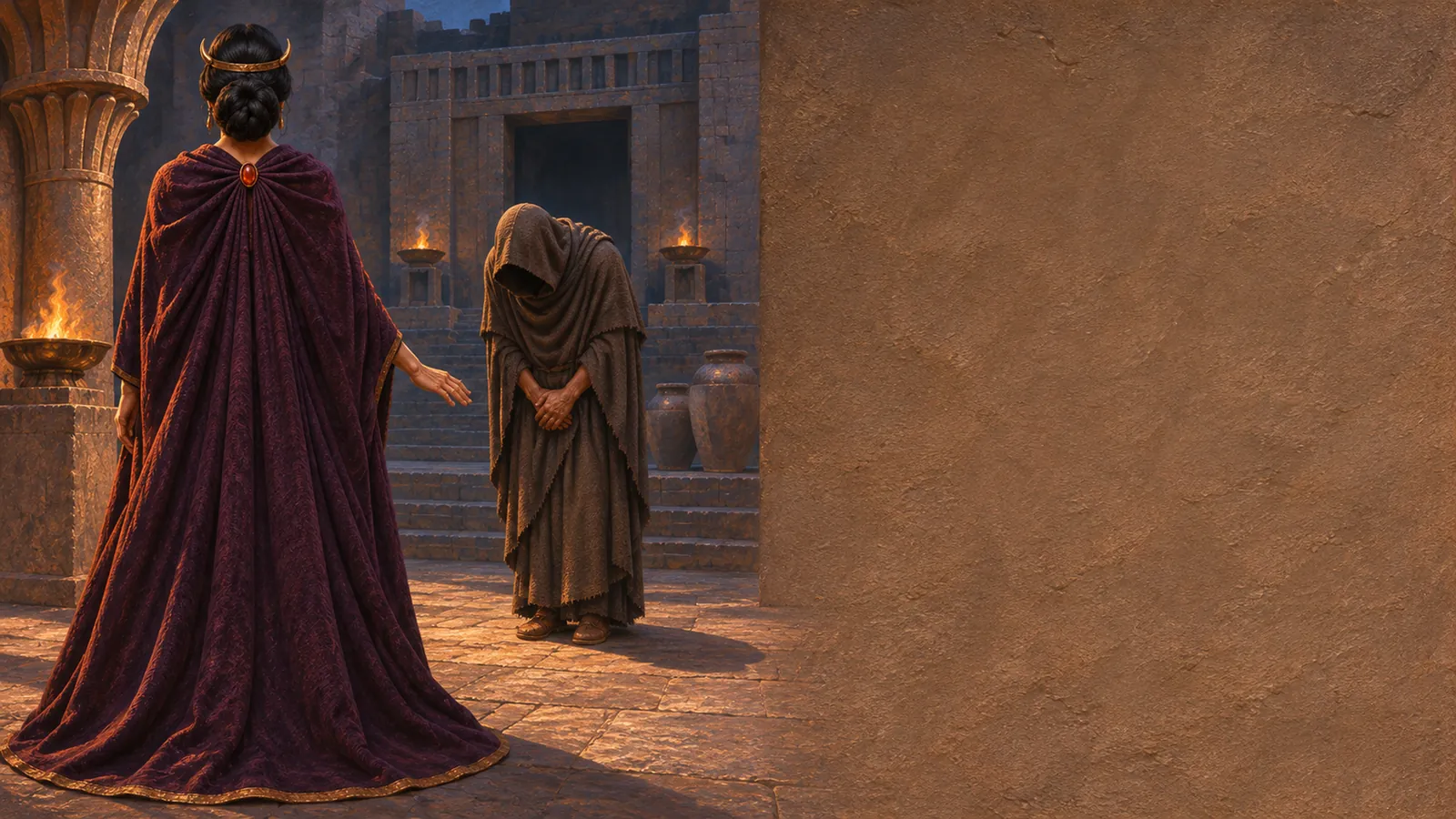
Ereshkigal speaks of weeping for parted lovers and for a child taken too soon. Then she tells the keeper to admit Ishtar according to the ancient rules.
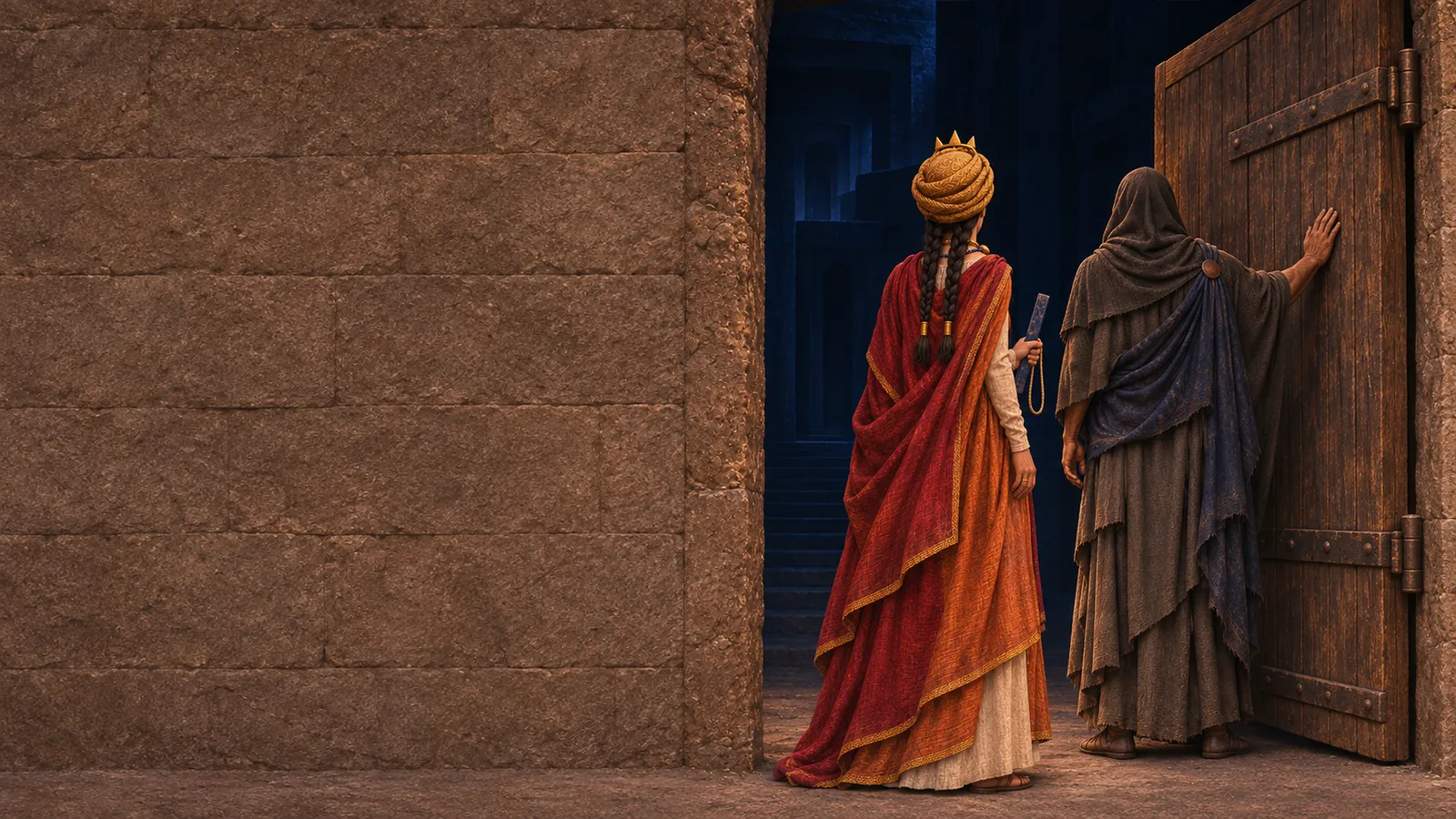
The keeper opens the outer door and tells Ishtar to enter. Kutha and the palace below, he says, greet her arrival.
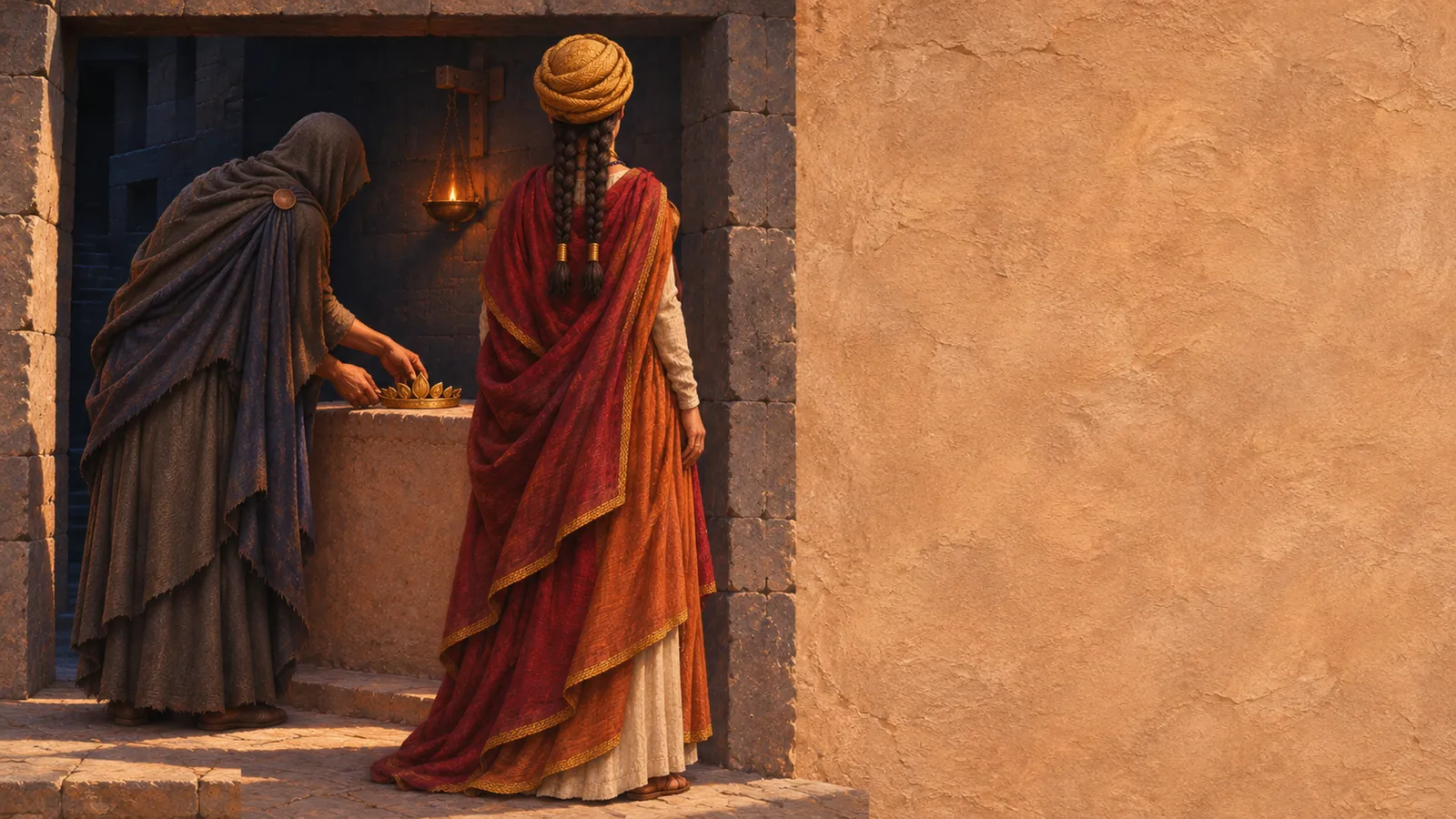
THE FIRST GATE
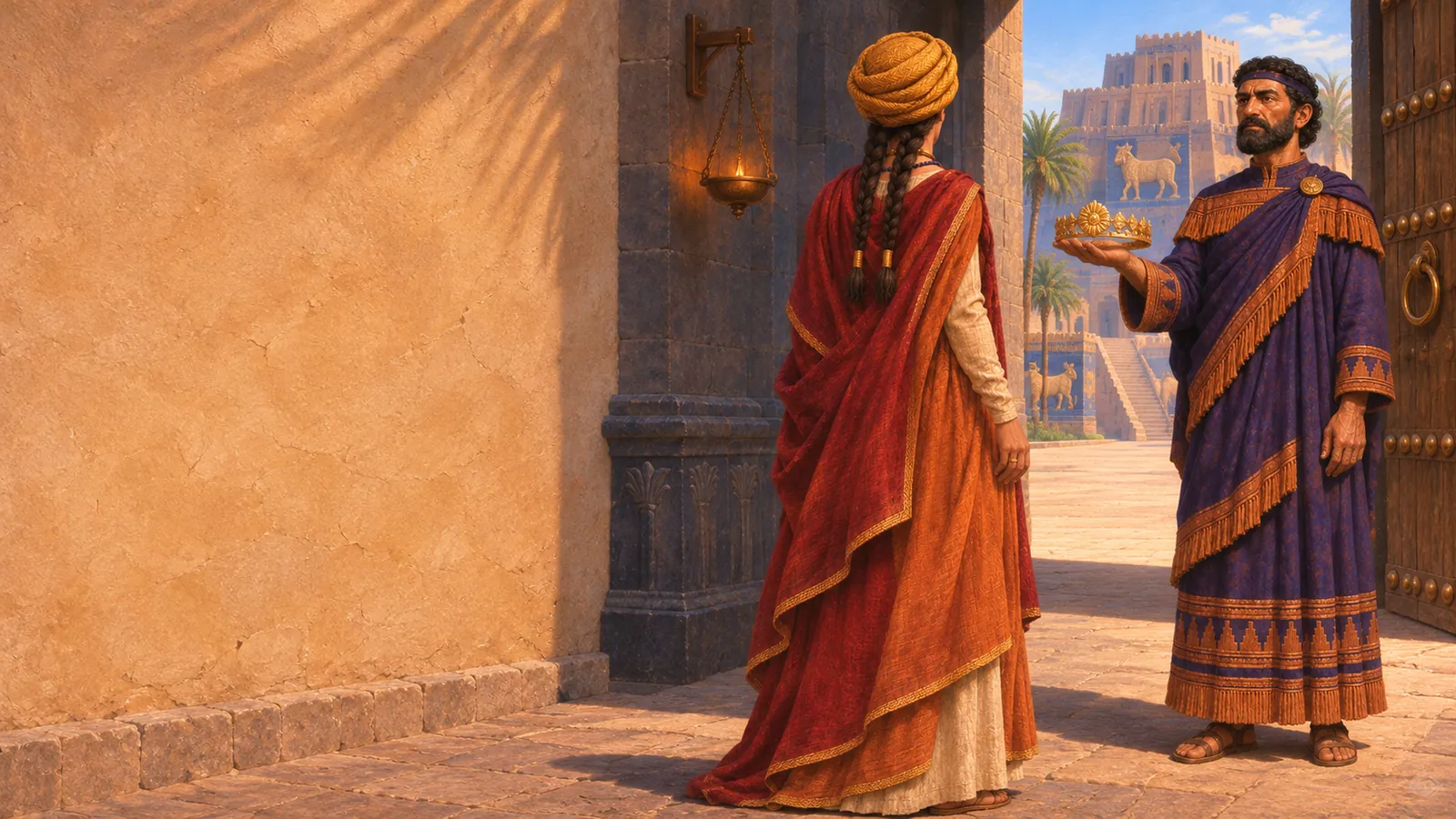
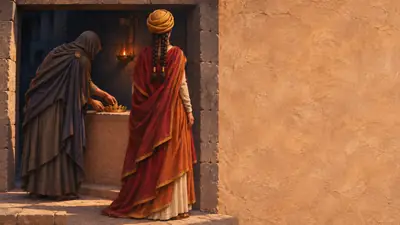
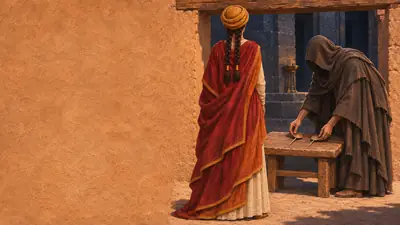
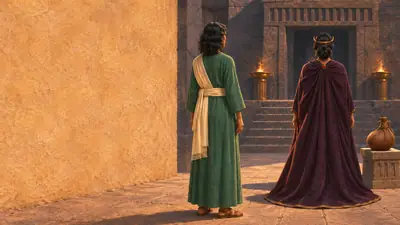
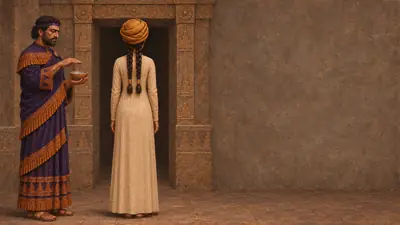
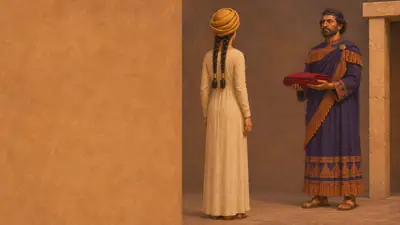
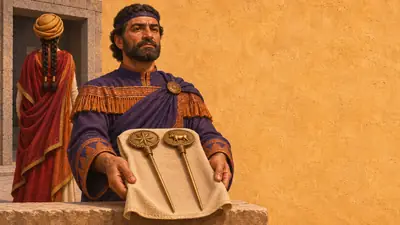
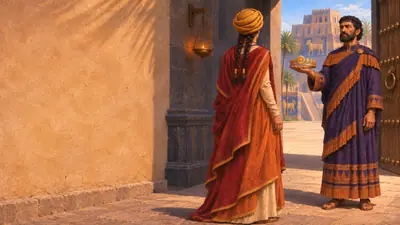
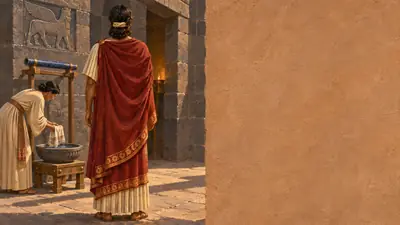
The keeper leads Ishtar through the first gate and takes her great tiara. When she asks why, he invokes the rules of the queen below.
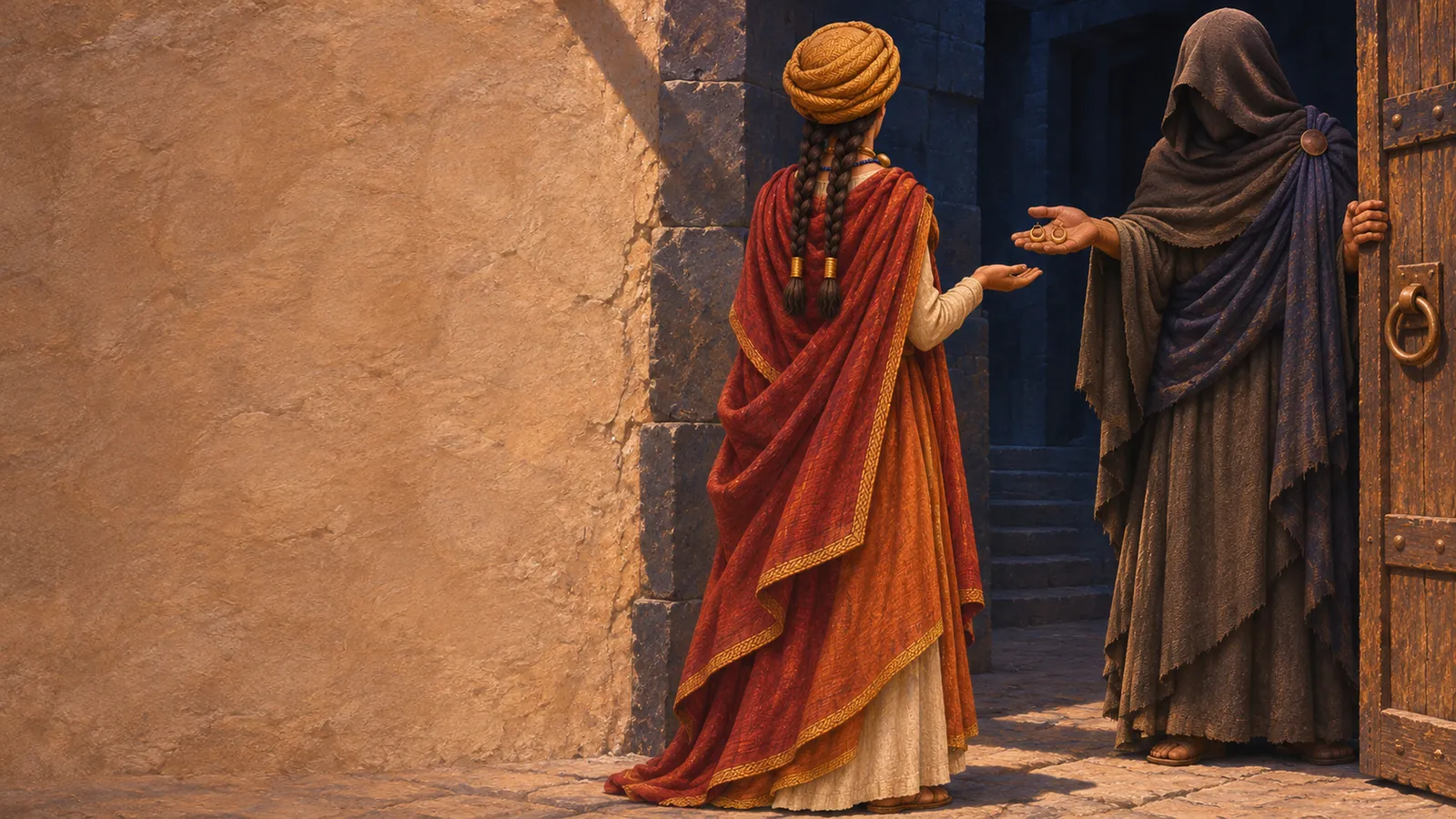
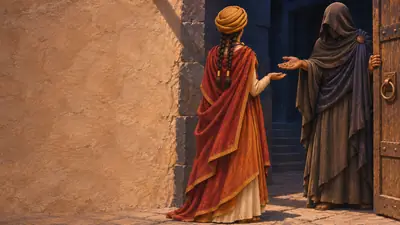
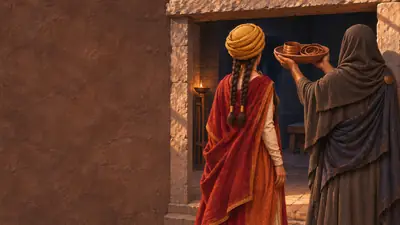
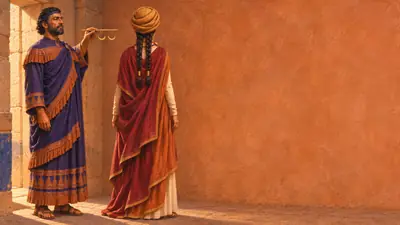
At the second gate the keeper takes the earrings from Ishtar. She asks again, and he gives the queen’s rules as his answer.
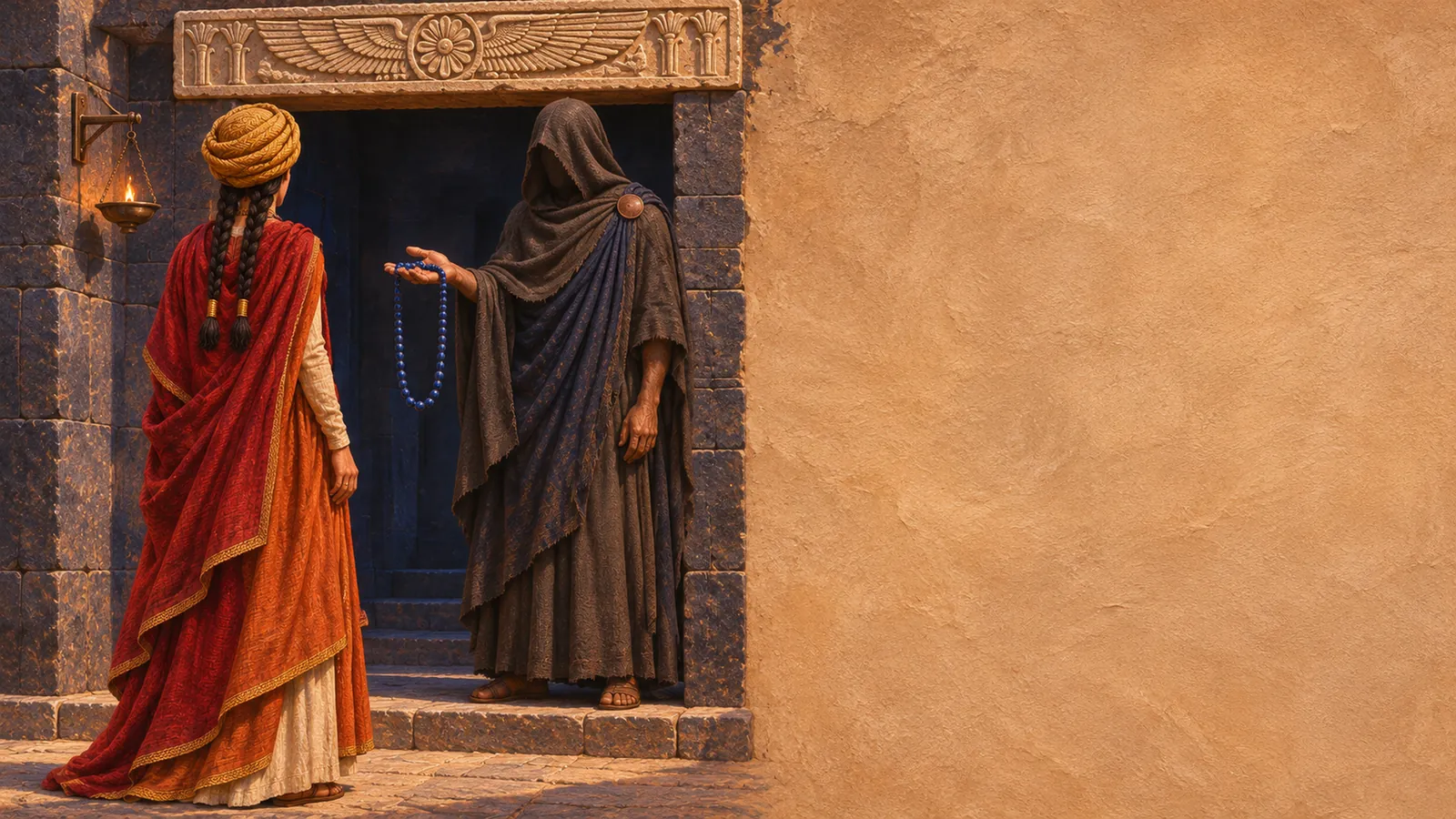
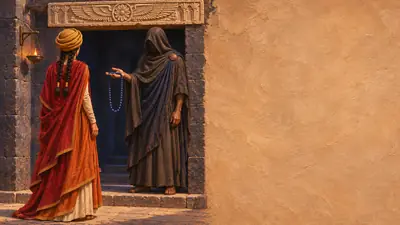
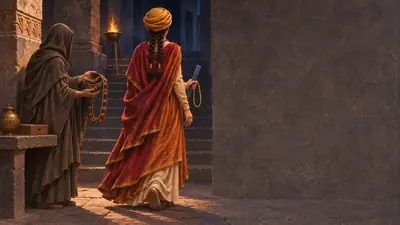
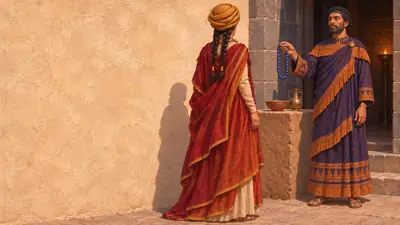
Ishtar passes through the third gate and loses the beads at her neck. The keeper gives the same answer when she asks why.
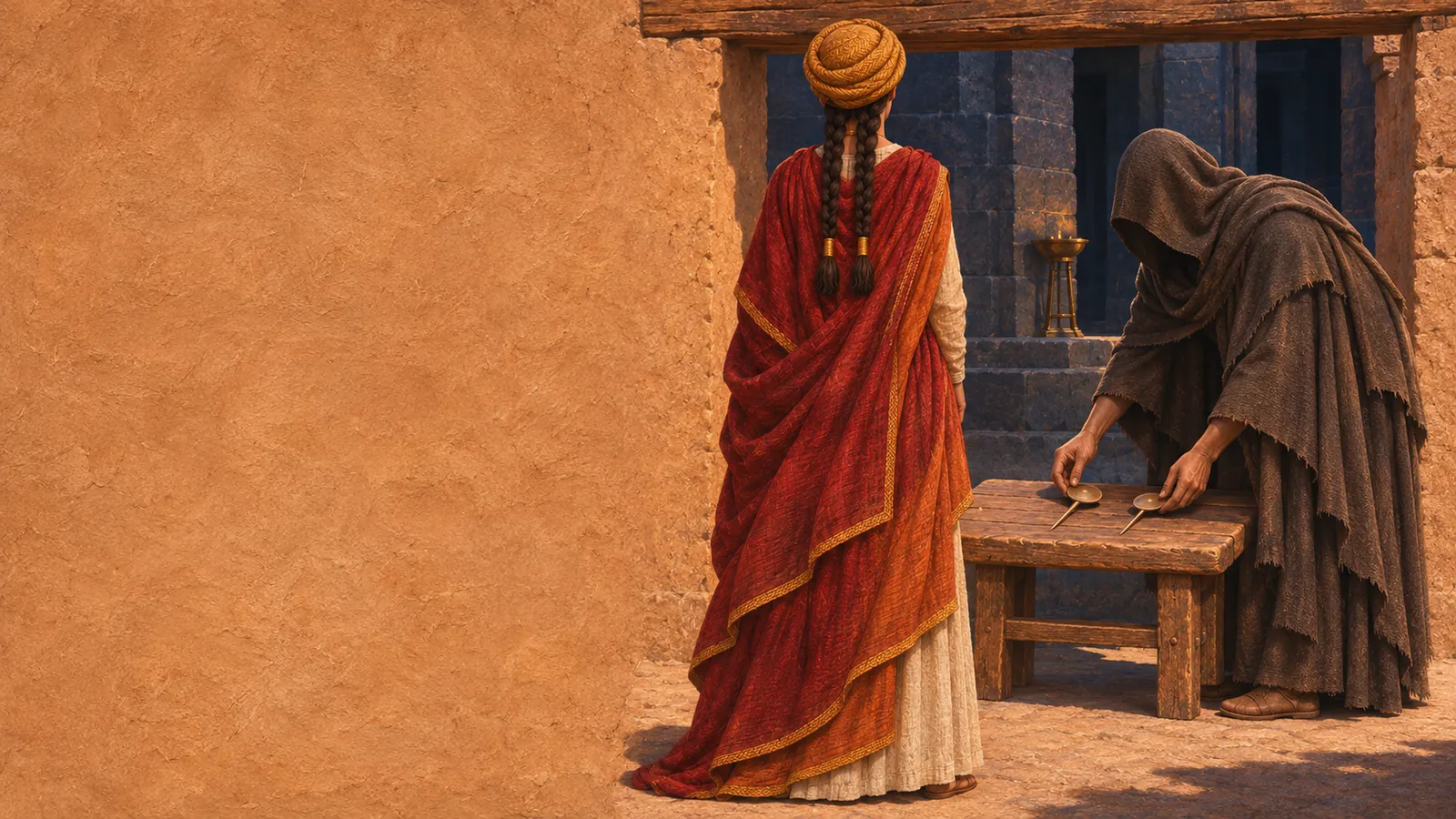
At the fourth gate the keeper takes the pins worn at Ishtar’s breast. The obligations of the palace still apply as she goes farther in.
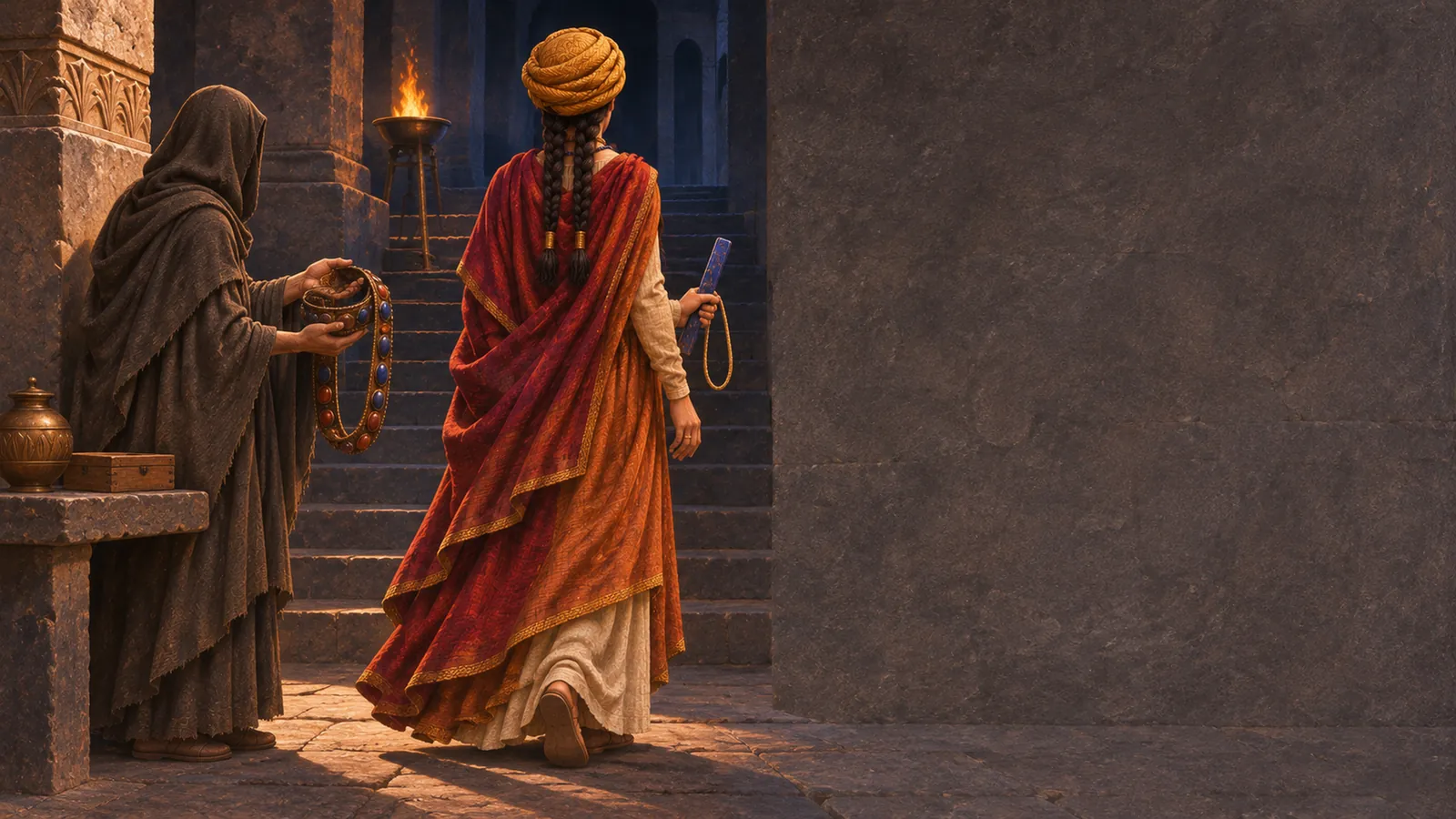
At the fifth gate Ishtar surrenders the girdle set with stones associated with childbirth. She questions the keeper, who repeats the law of the underworld.
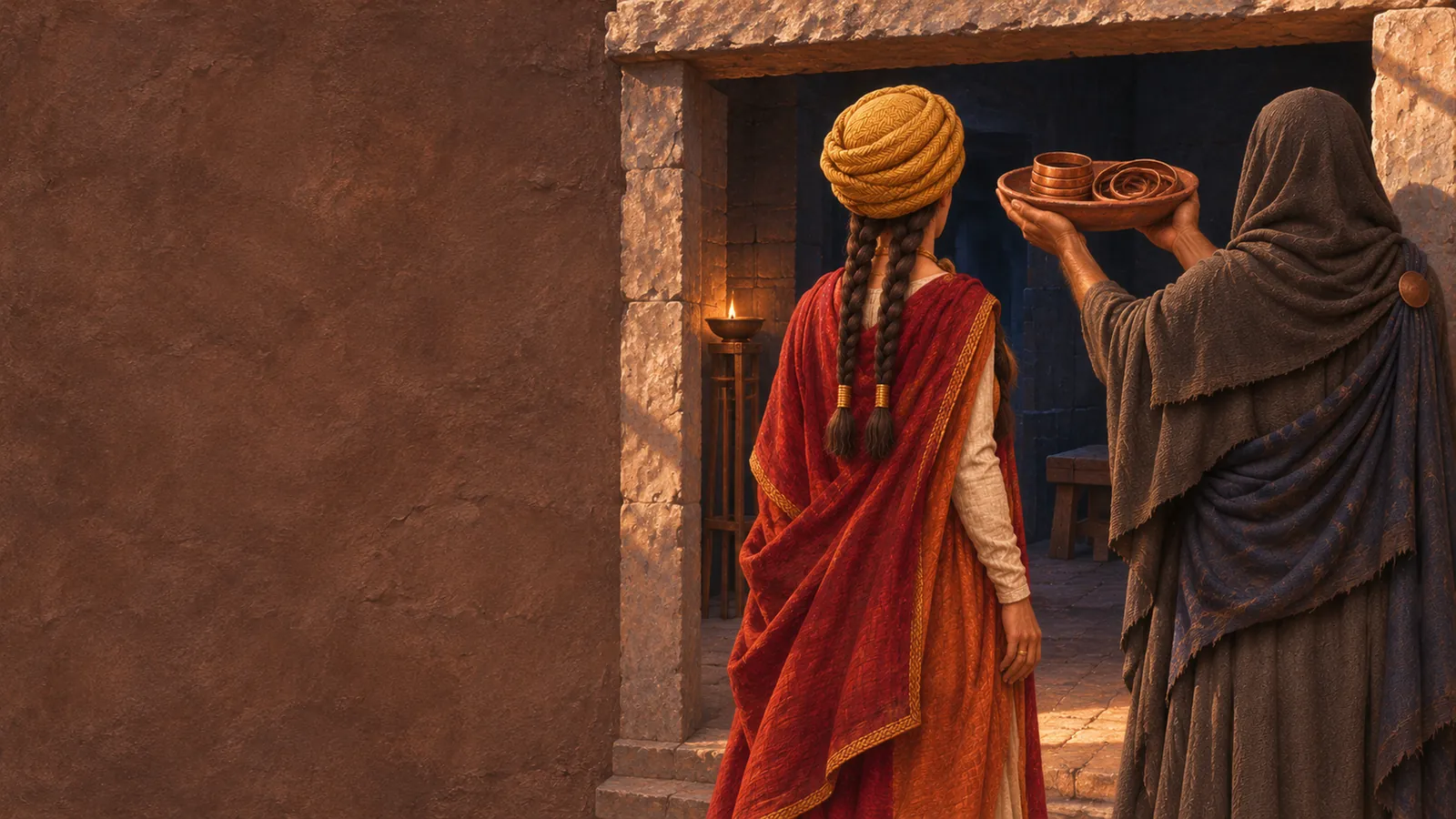
Through the sixth gate she goes without the bands from her wrists and ankles. The keeper once more invokes the queen’s rules.
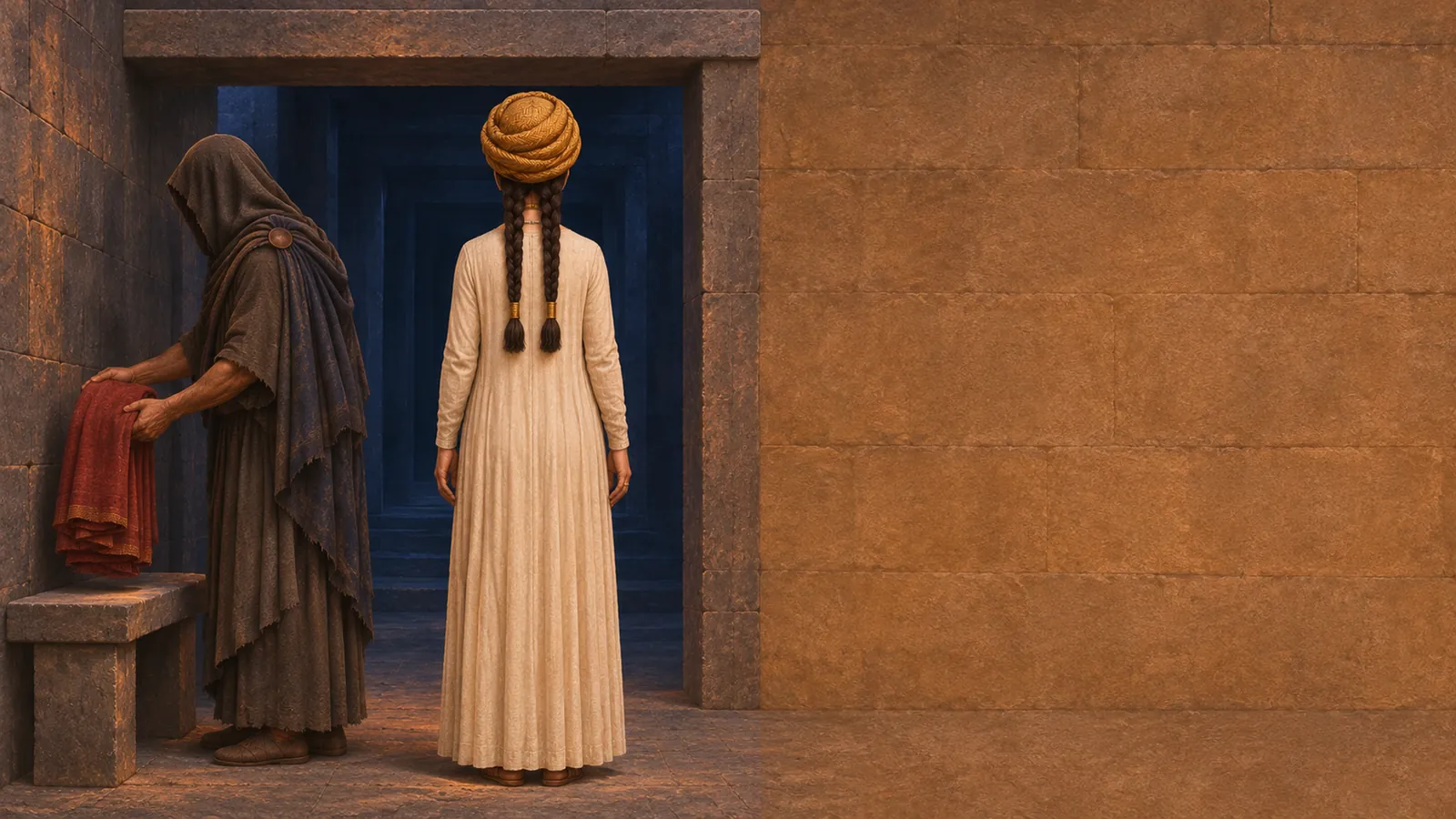
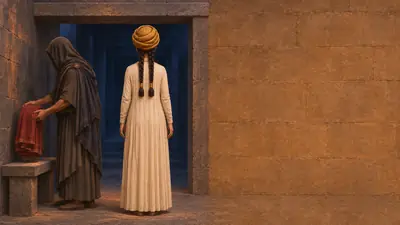
At the seventh gate the keeper takes Ishtar’s last garment. He repeats the old rule as she enters the realm of Ereshkigal.
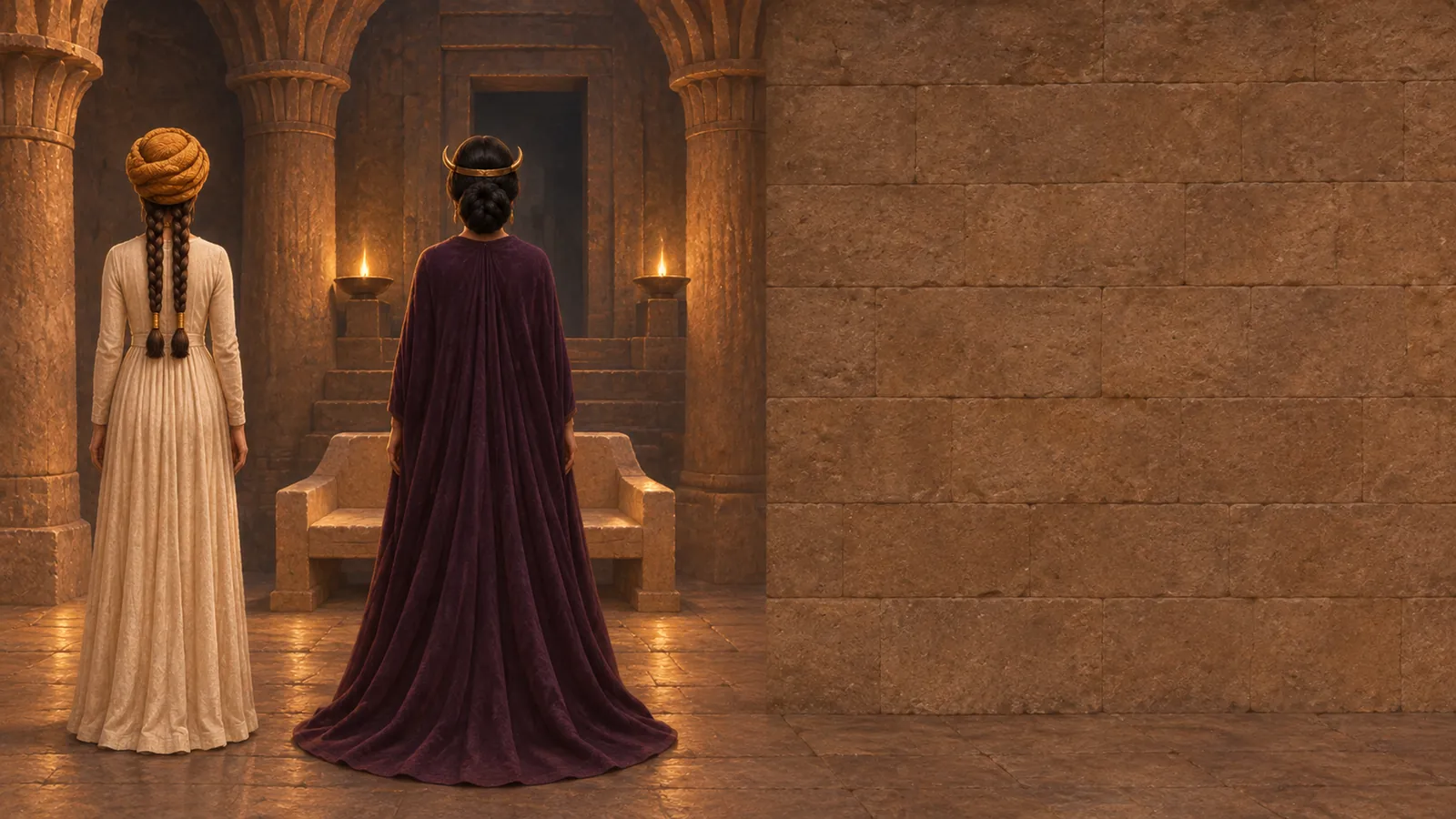
THE TWO SISTERS
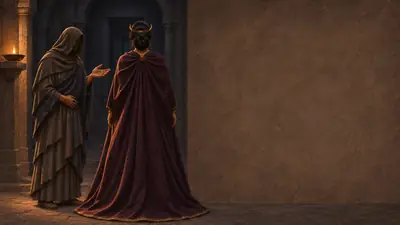
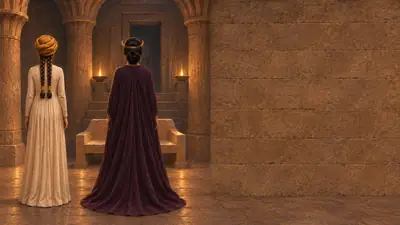
Ereshkigal sees Ishtar at last and trembles with anger. She turns to Namtar, her vizier, and begins to give him an order.
Ereshkigal commands Namtar to send sixty afflictions against Ishtar. Her list names the eyes, arms, feet, heart and head before taking in the whole body.
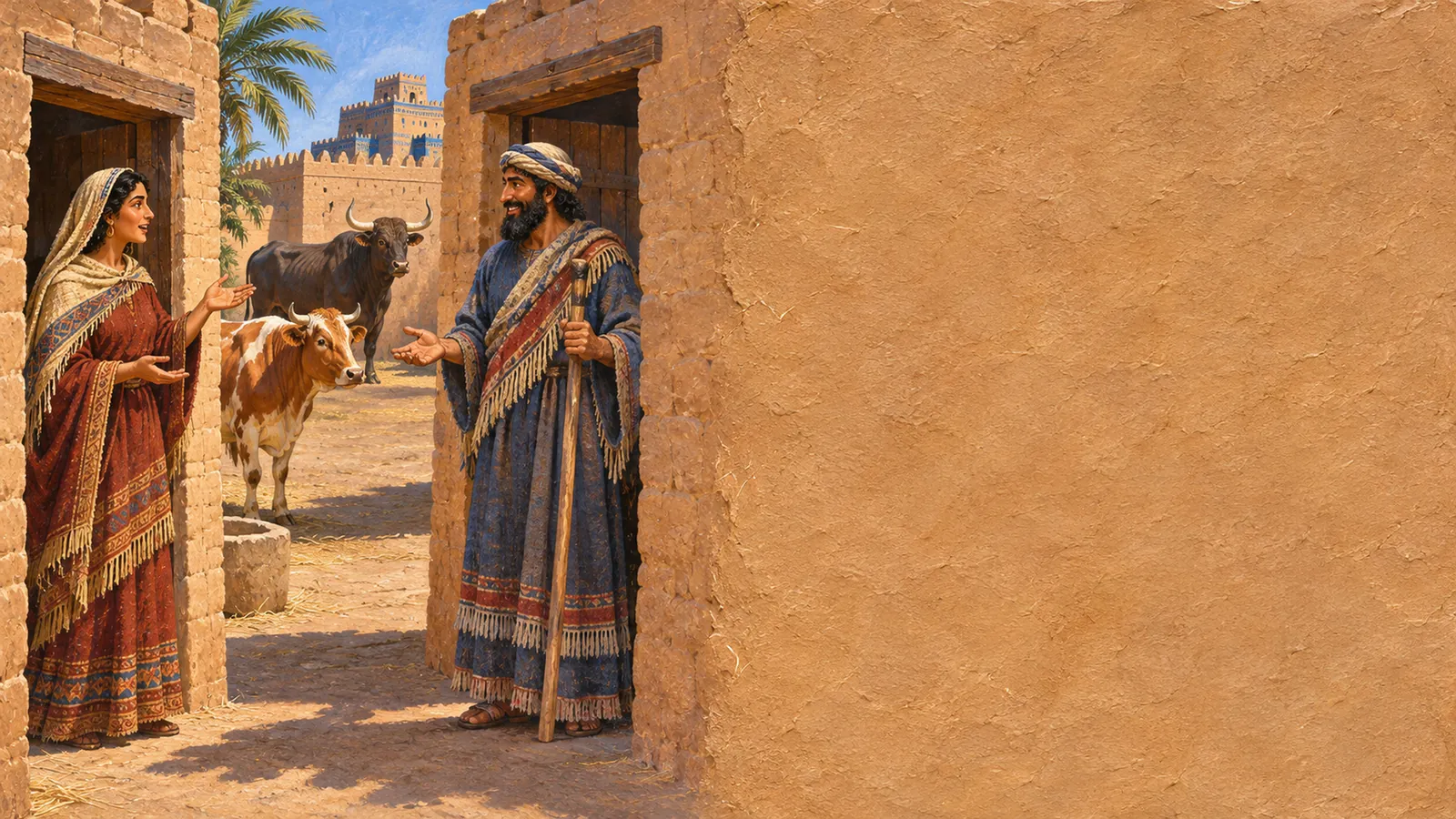
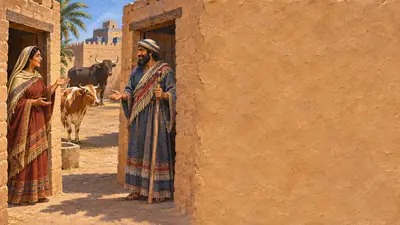
Above ground, the herds cease to mate. In the town, lovers sleep apart. Ishtar’s absence has reached the world of the living.
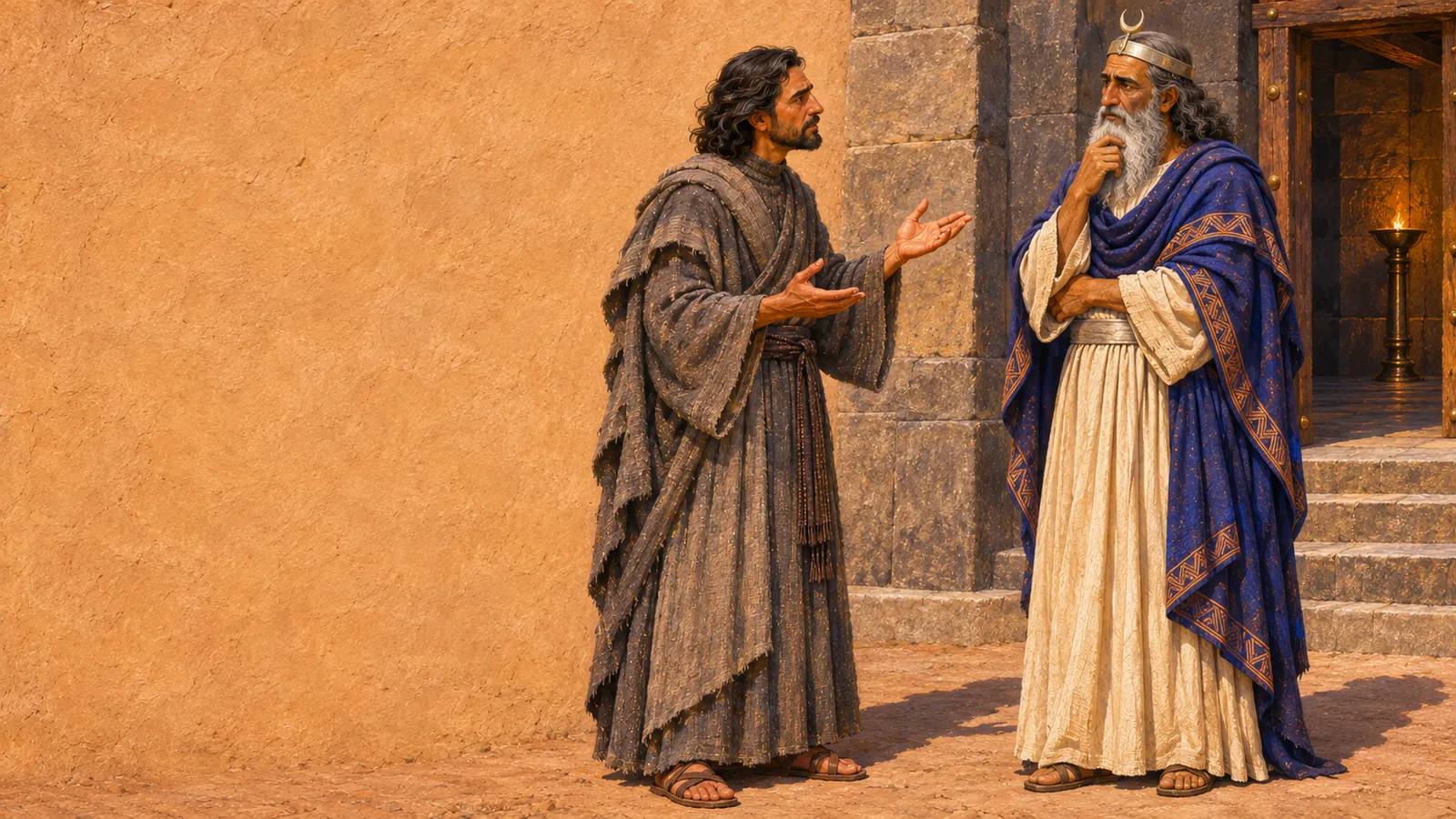
Papsukkal, the gods’ vizier, puts on mourning clothes. He goes before Sîn and Ea, and his distress is plain.
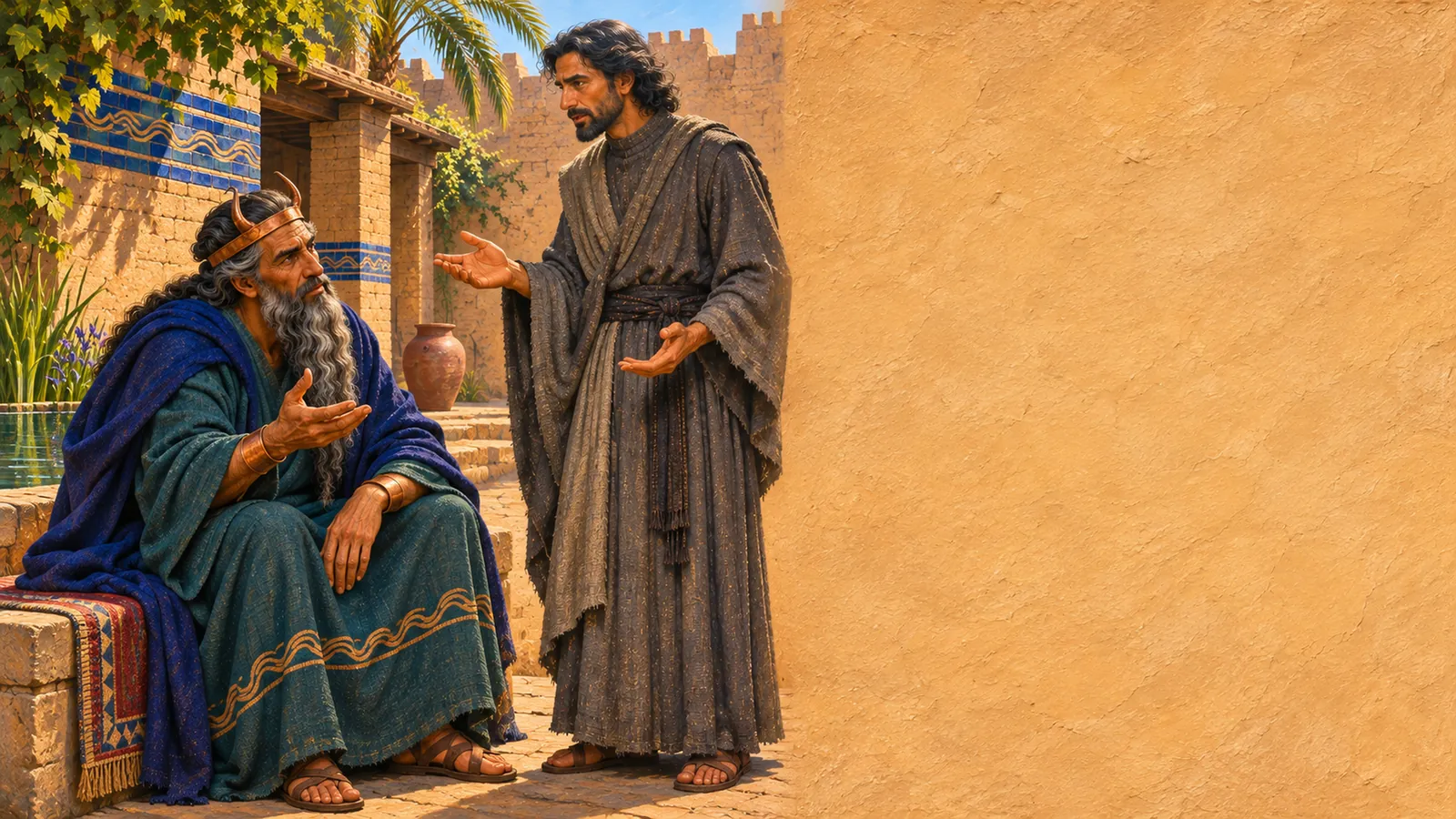
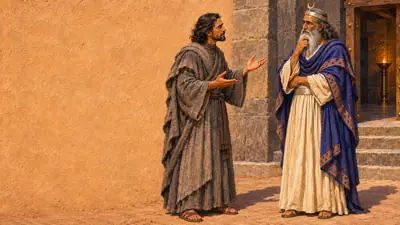
Papsukkal tells Ea that Ishtar has gone down and has yet to return. He describes the herds and the lovers who lie apart.
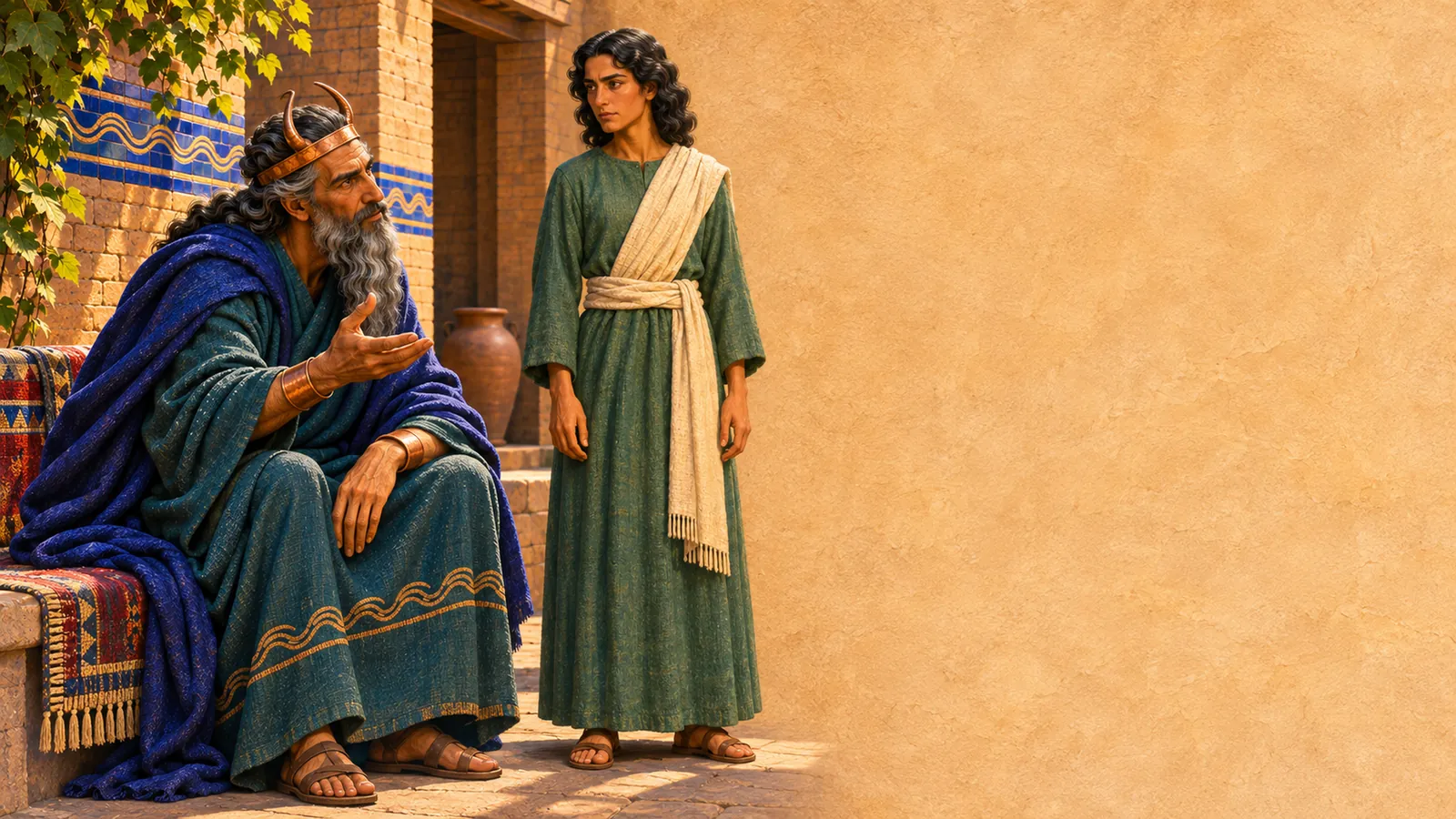
EA’S PLAN
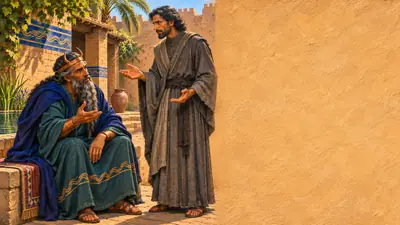
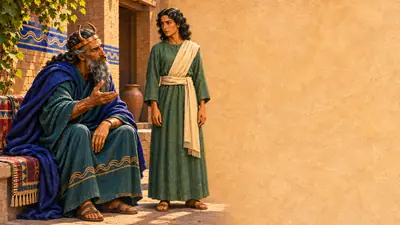
Ea devises a plan in his wisdom. He creates Asushunamir, a figure associated with Ishtar’s cult, to carry out his instructions.
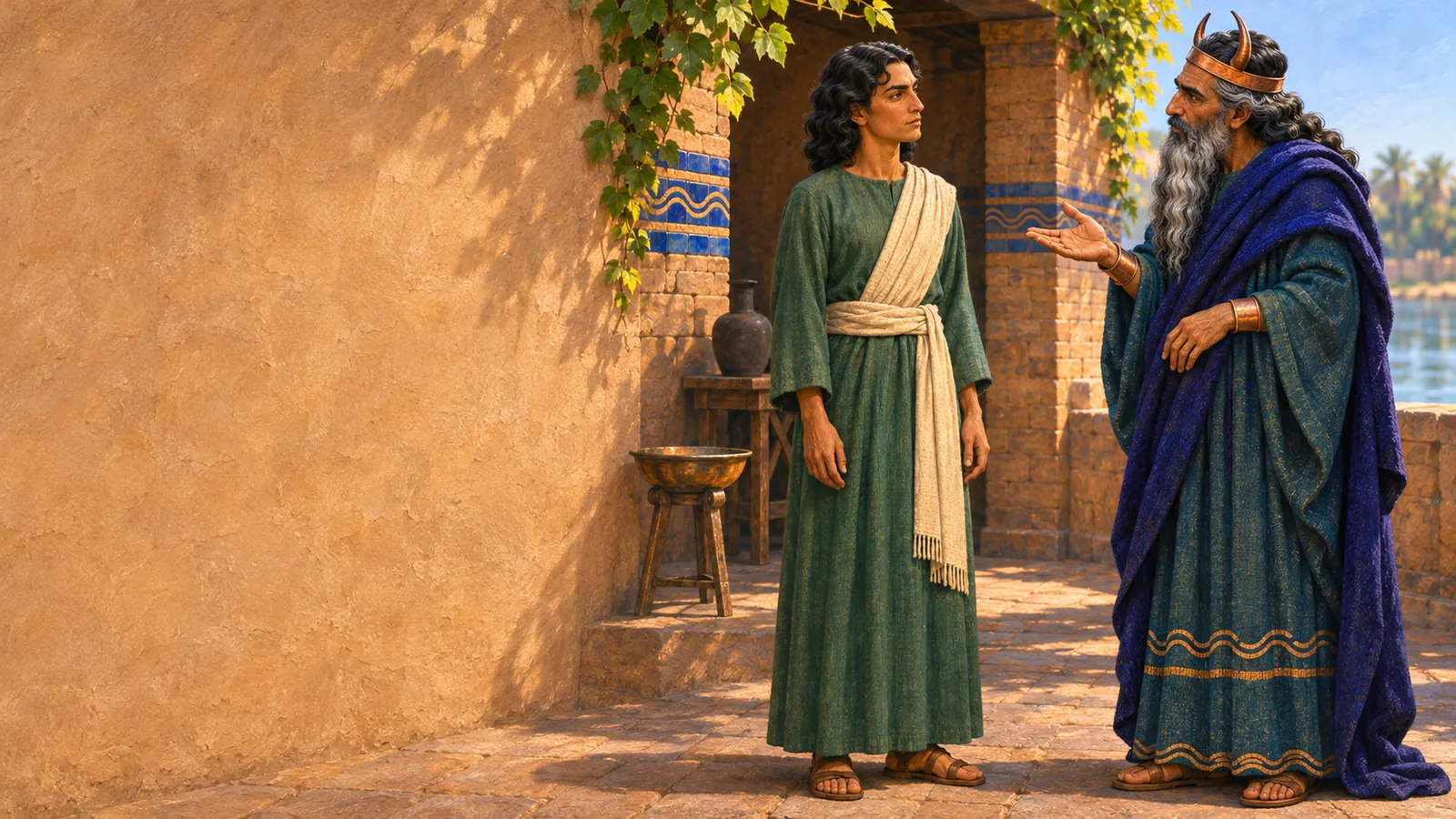
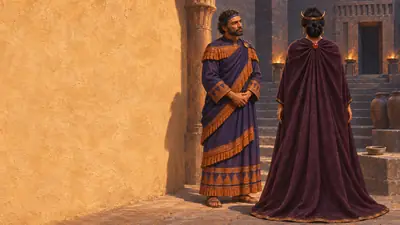
Ea sends the envoy to the seven gates. When the queen’s heart softens, the envoy is to ask her to swear by the great gods.
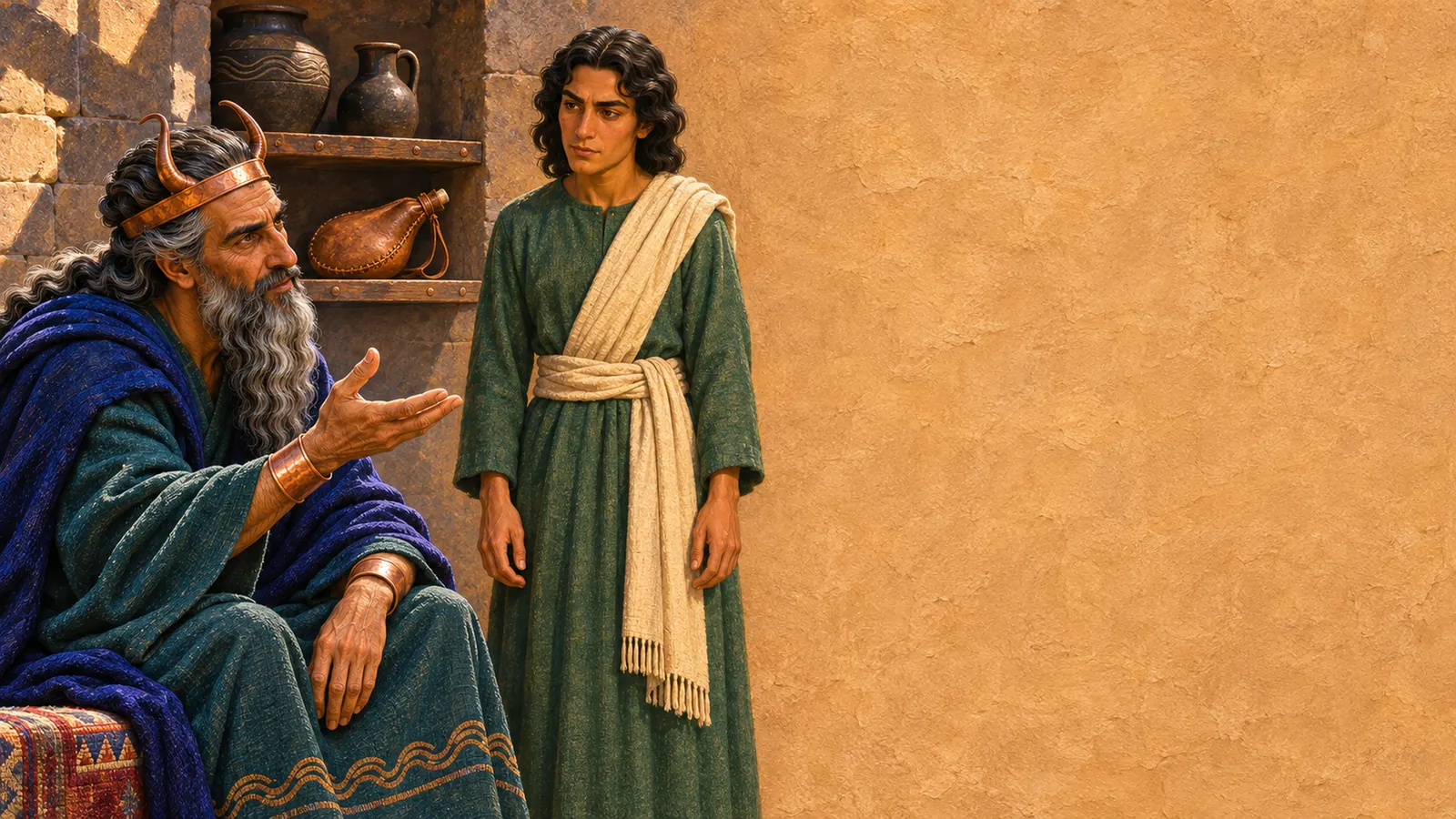
Ea tells Asushunamir what to ask of Ereshkigal. The envoy is to ask for the waterskin and a drink of water from it.
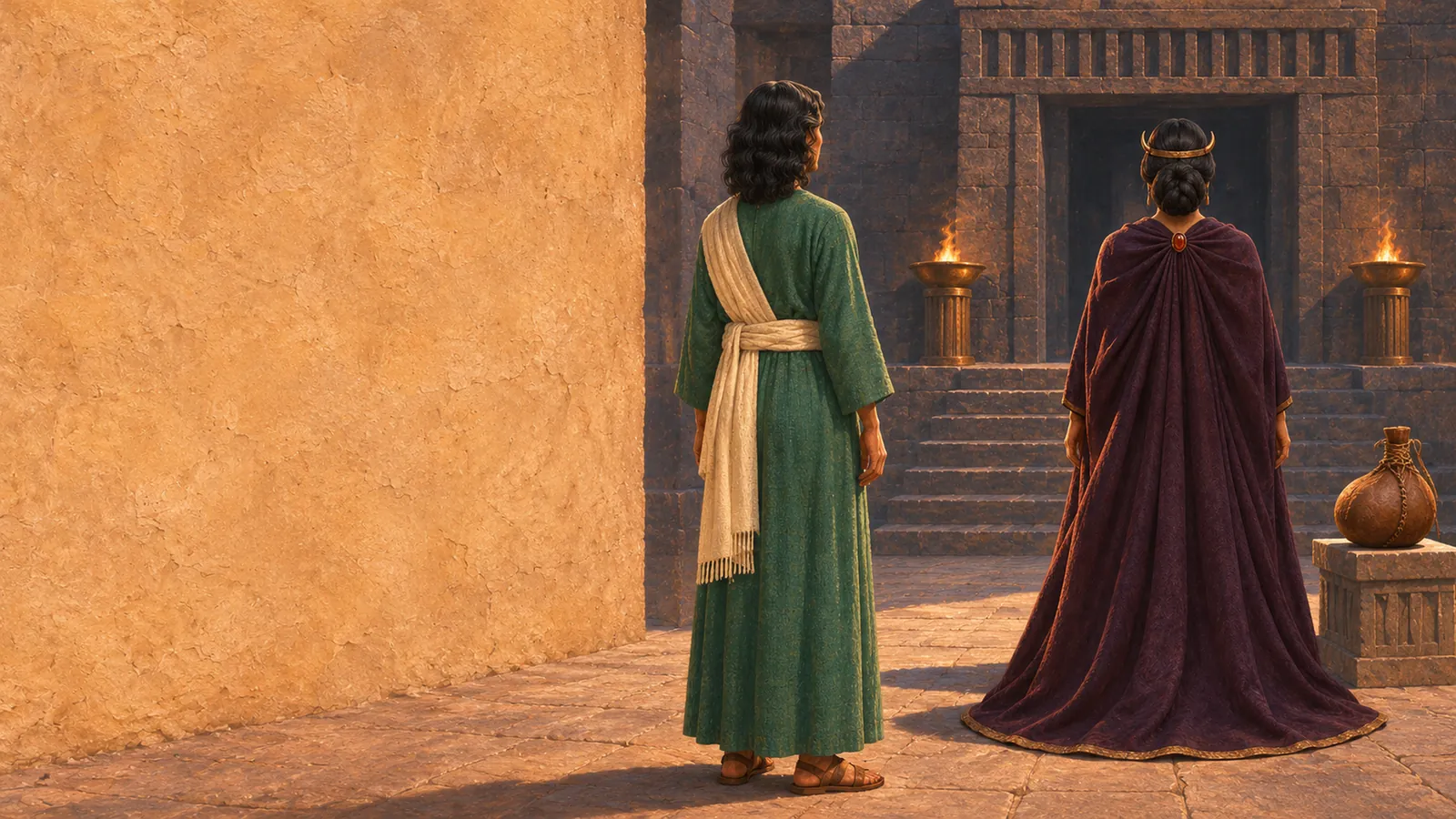
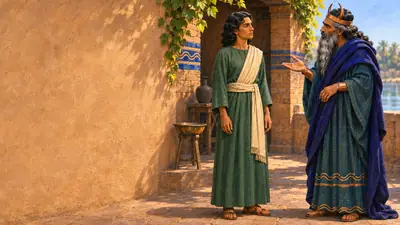
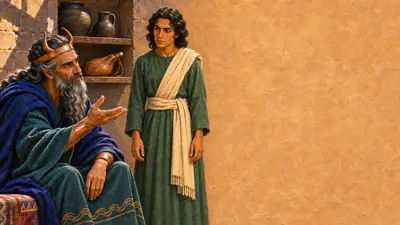
Asushunamir makes the request. Ereshkigal hears it and is greatly troubled. She says that the envoy has asked for something beyond what can be granted.
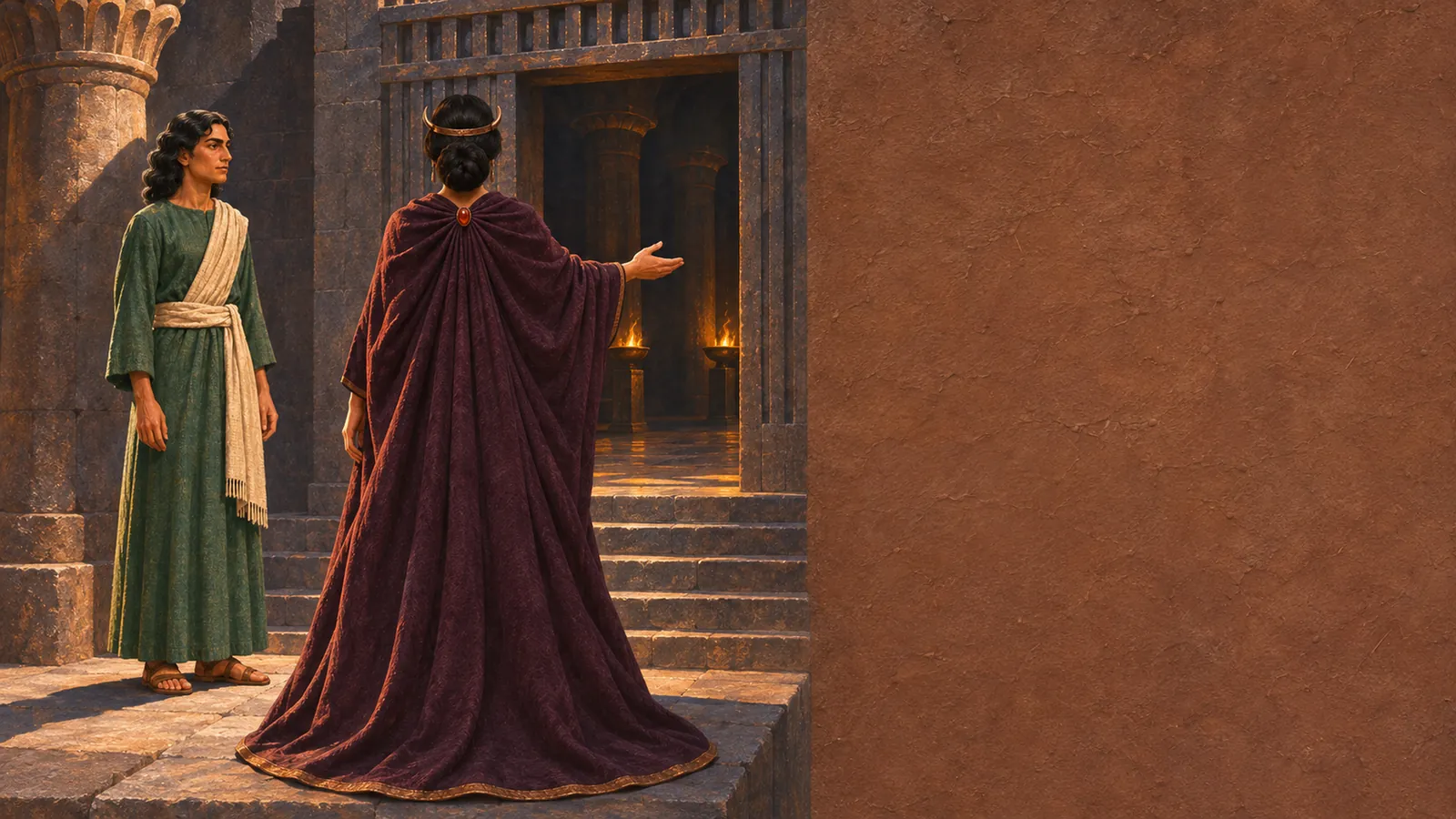
Ereshkigal curses the envoy. She assigns Asushunamir a place in the shadow of the city wall and a threshold to live on.
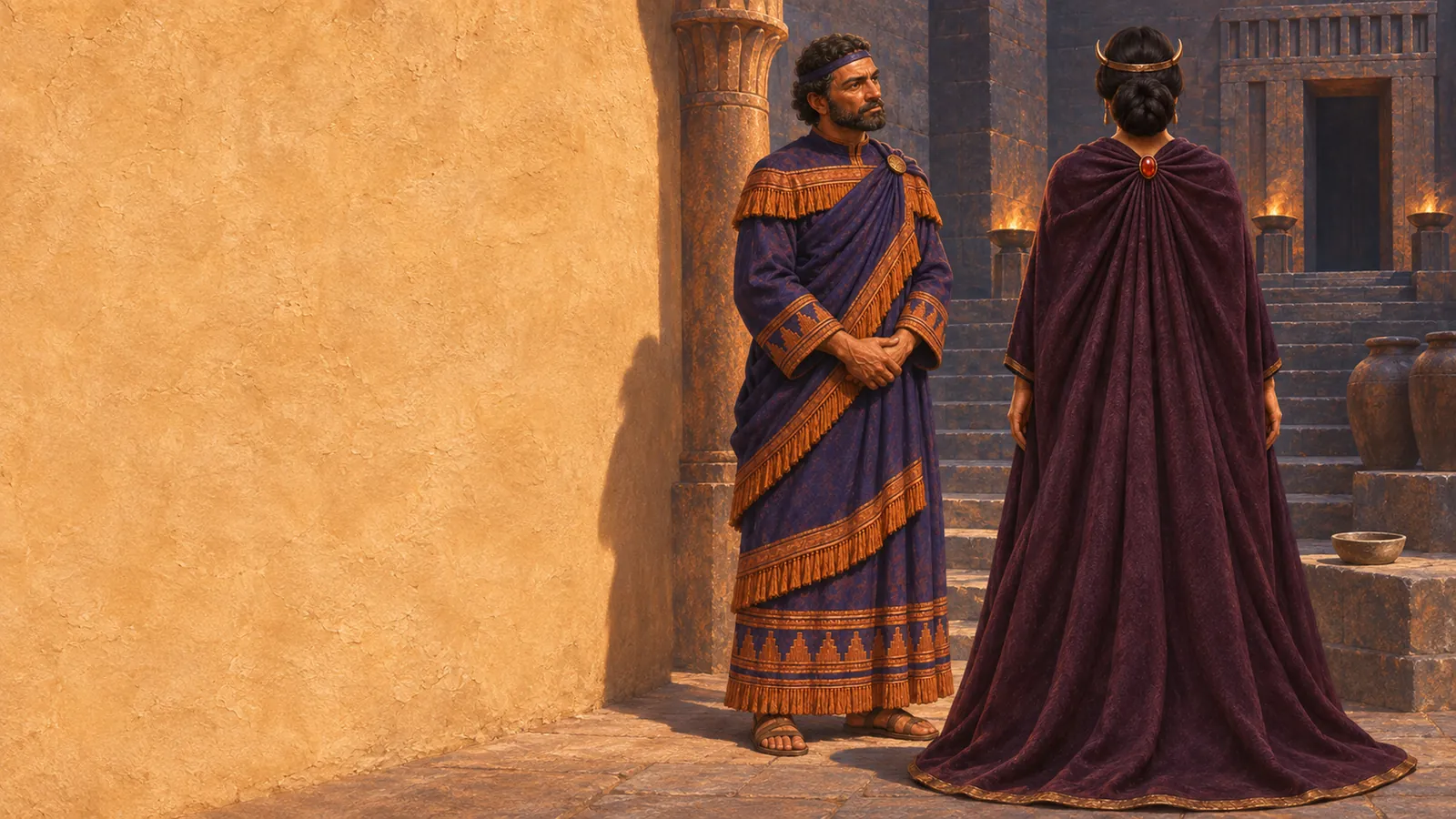
The queen tells Namtar to prepare the thresholds and seat the Anunnaki. Then he is to sprinkle Ishtar with the water of life.
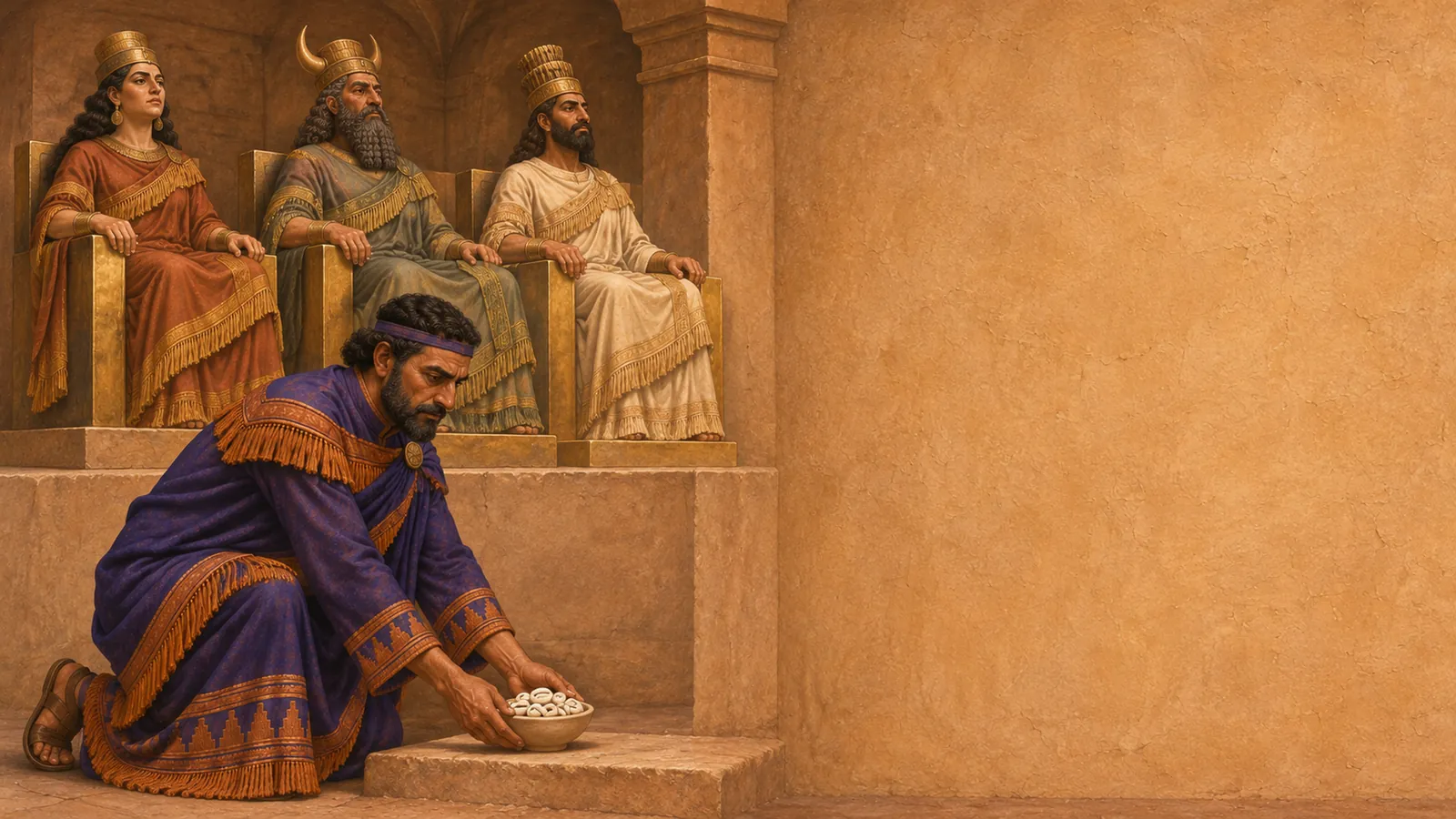
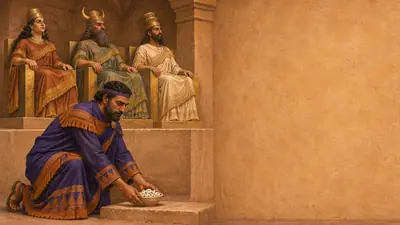
Namtar goes to Egalgina and decorates the thresholds. The Anunnaki come out at his summons, and he seats them on golden thrones.
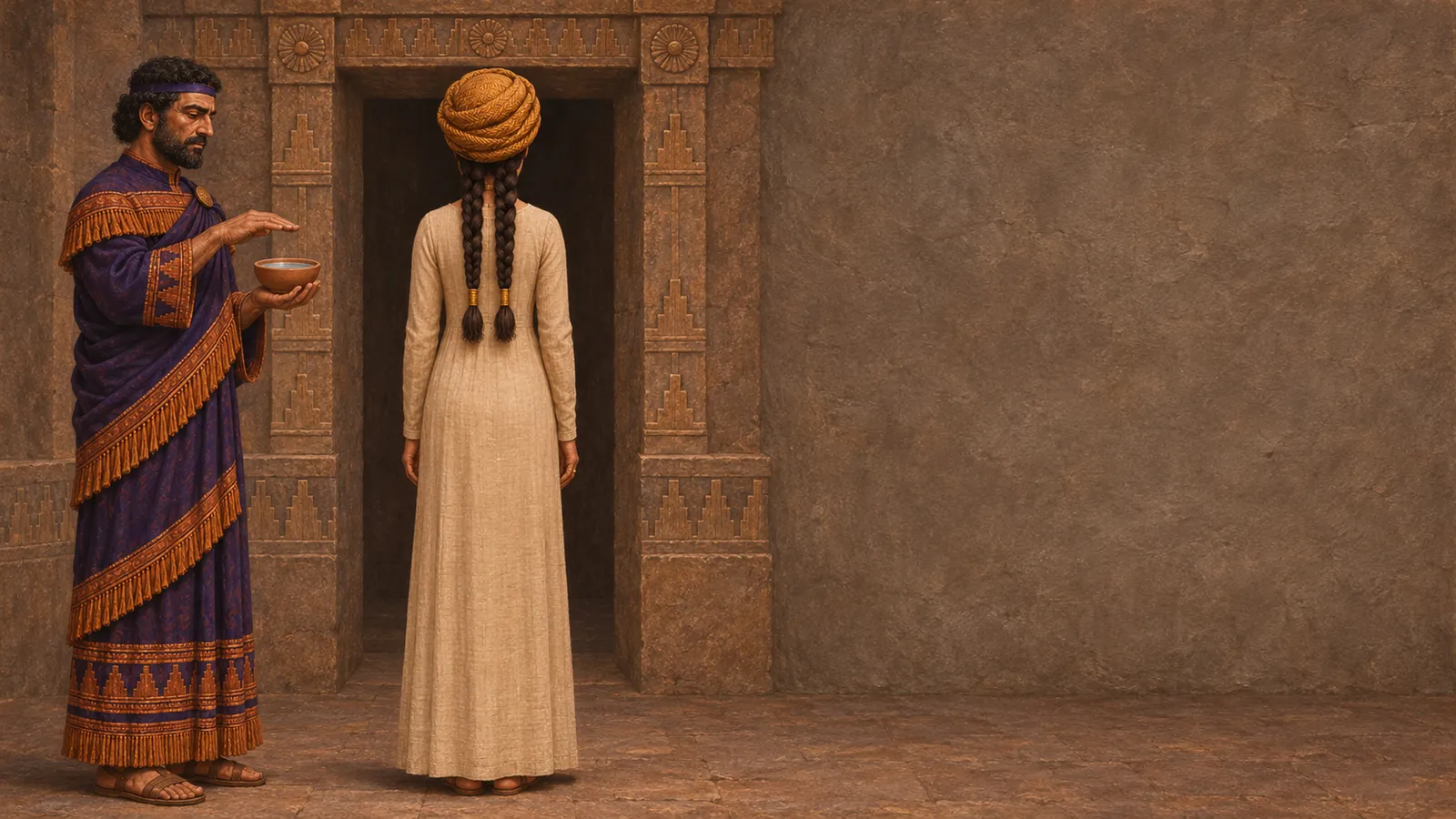
THE WATER OF LIFE
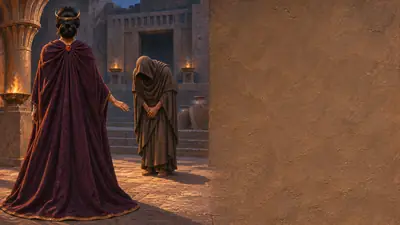
Namtar sprinkles Ishtar with the water of life. He leads her into the queen’s presence before the way upward opens.
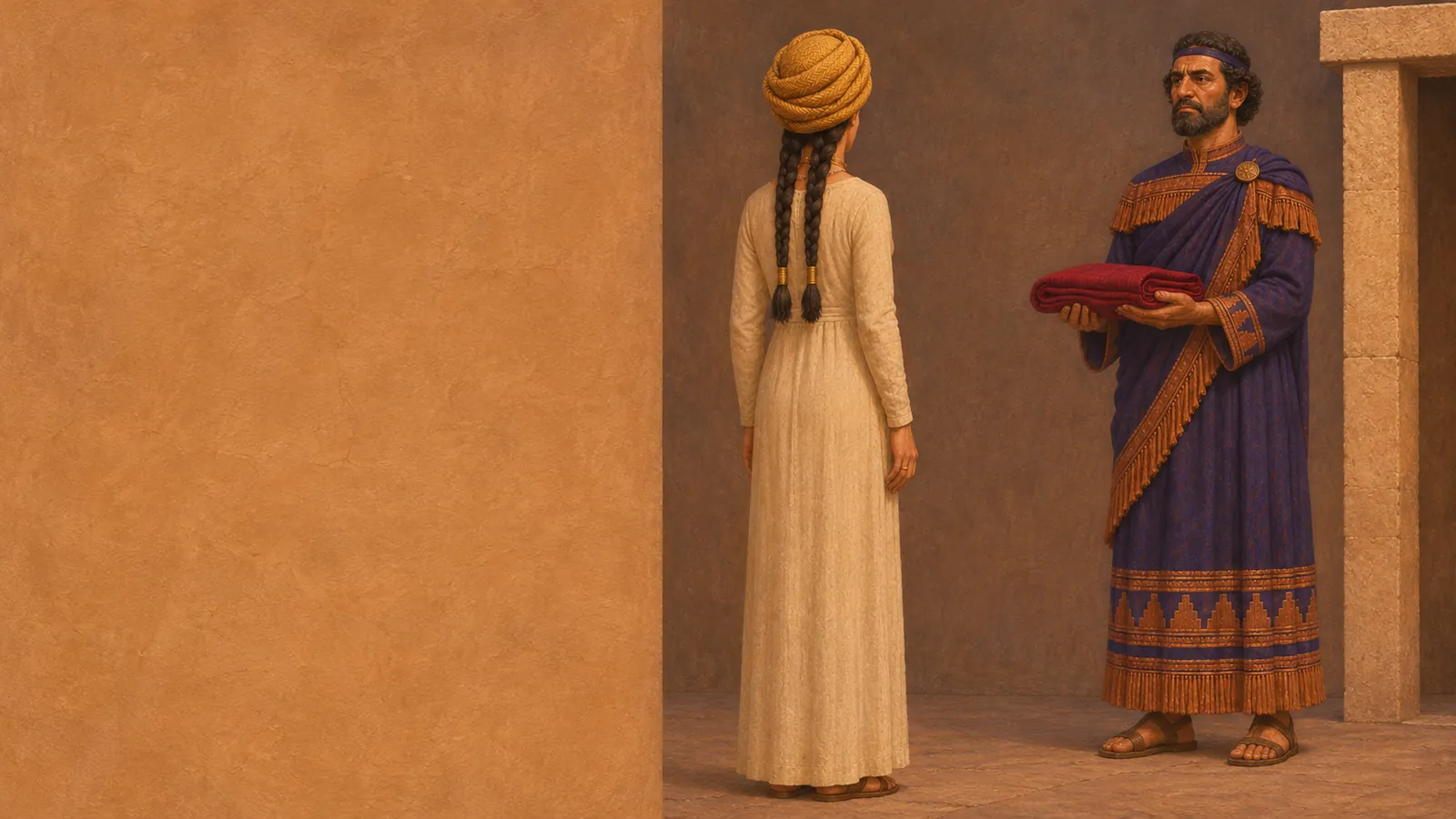
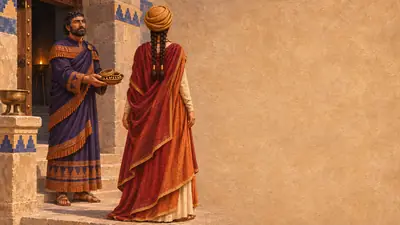
On the way up, Namtar leads Ishtar through the first gate. He returns the garment that was taken at the deepest threshold.
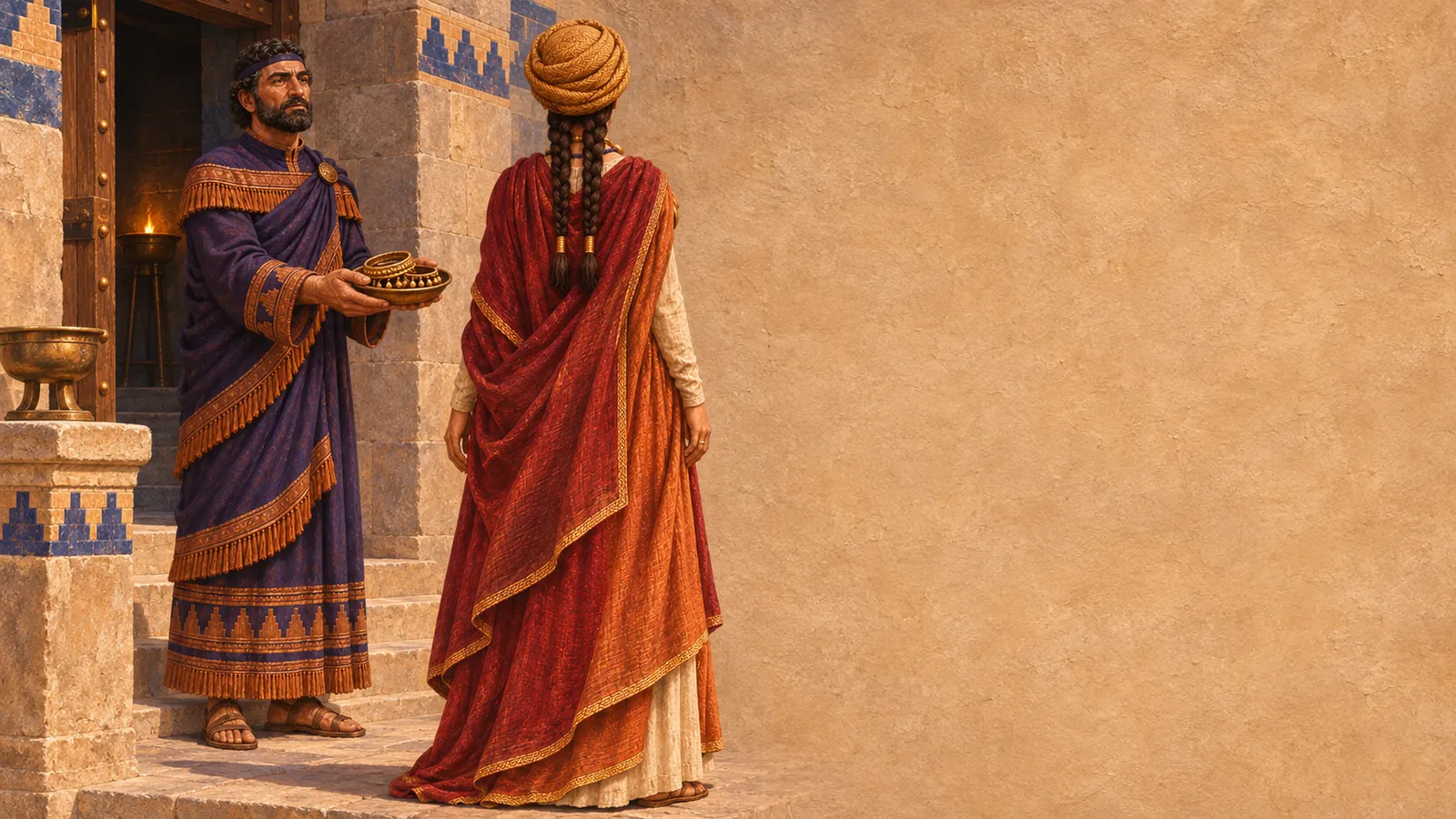
At the second gate on the way out, Namtar returns the ornaments that Ishtar wore at her wrists and ankles.
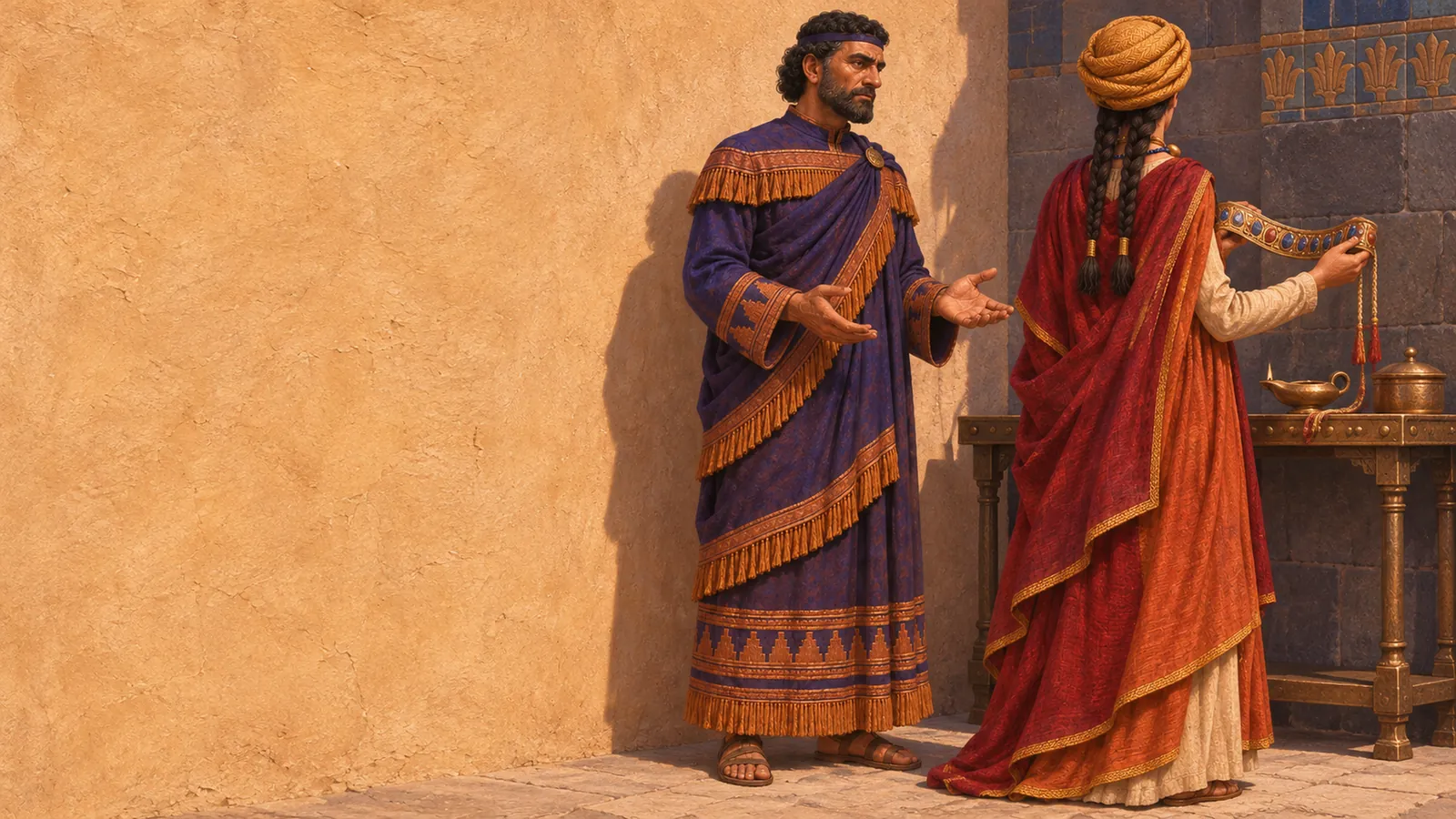
Namtar brings Ishtar through the third gate on the way up and returns the girdle set with birth stones.
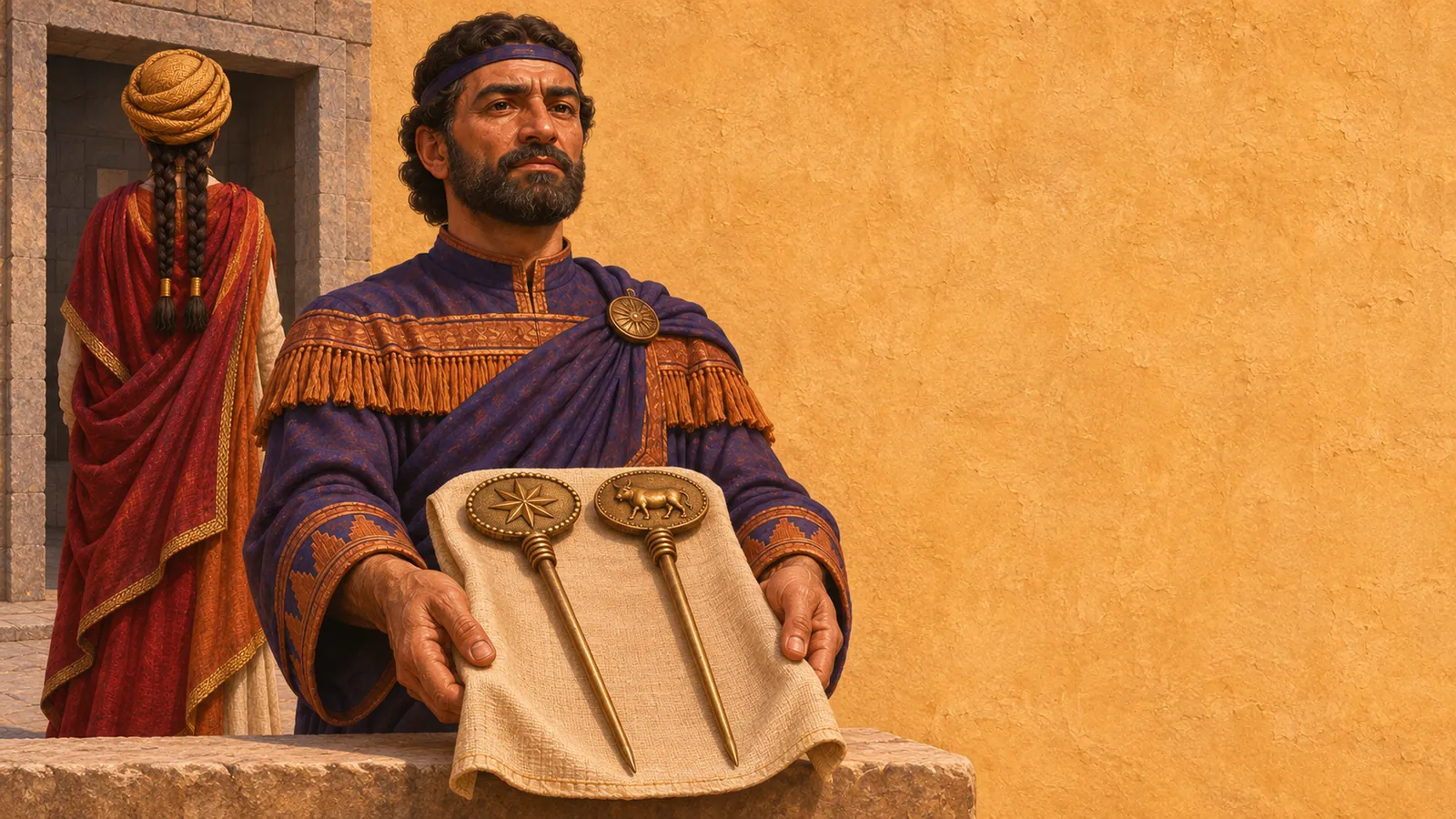
At the fourth outward gate, the vizier returns the pins that the keeper took from Ishtar at the matching threshold.
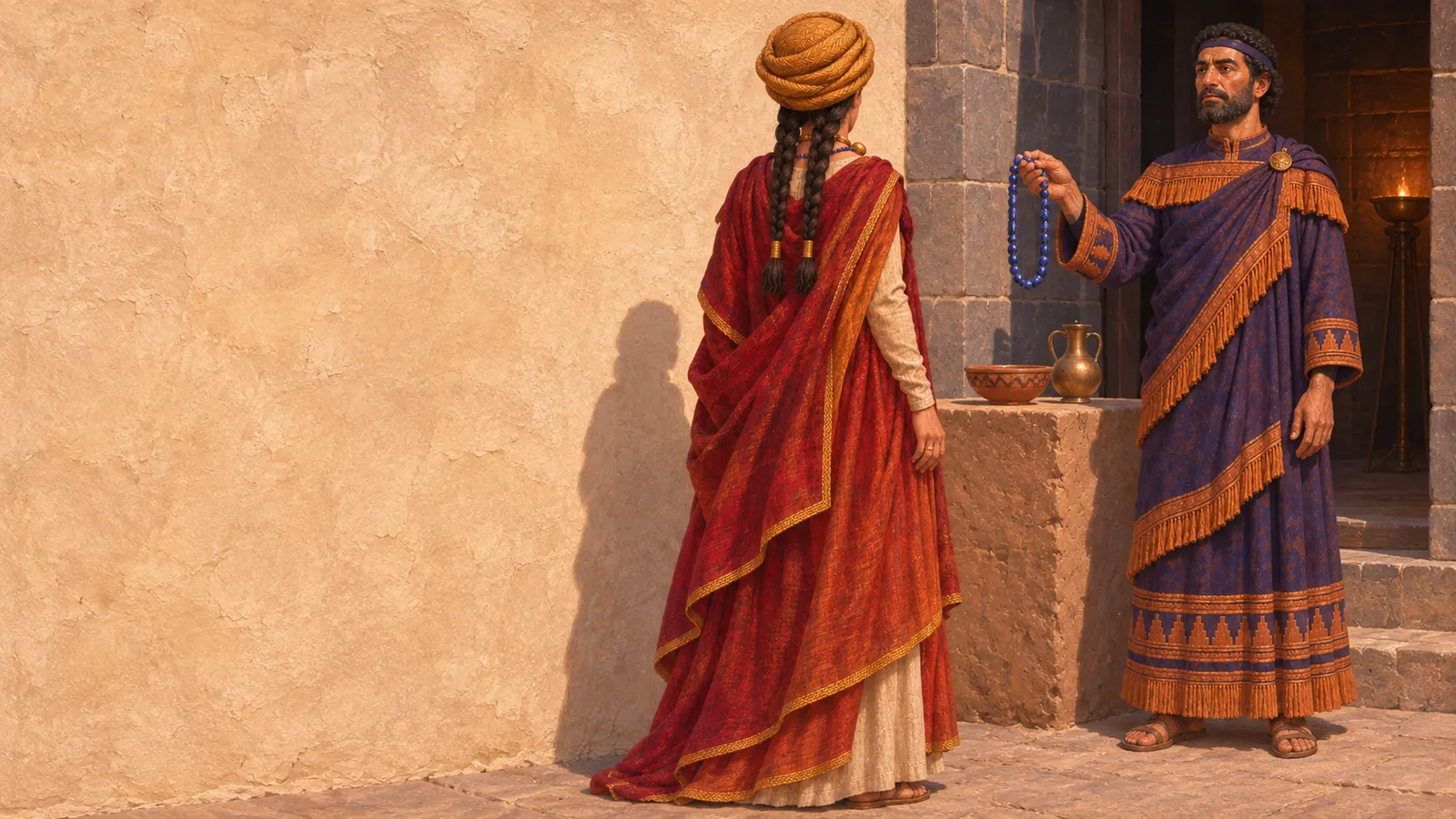
The fifth gate on the way out brings back the necklace. Namtar returns the beads once worn around Ishtar’s neck.
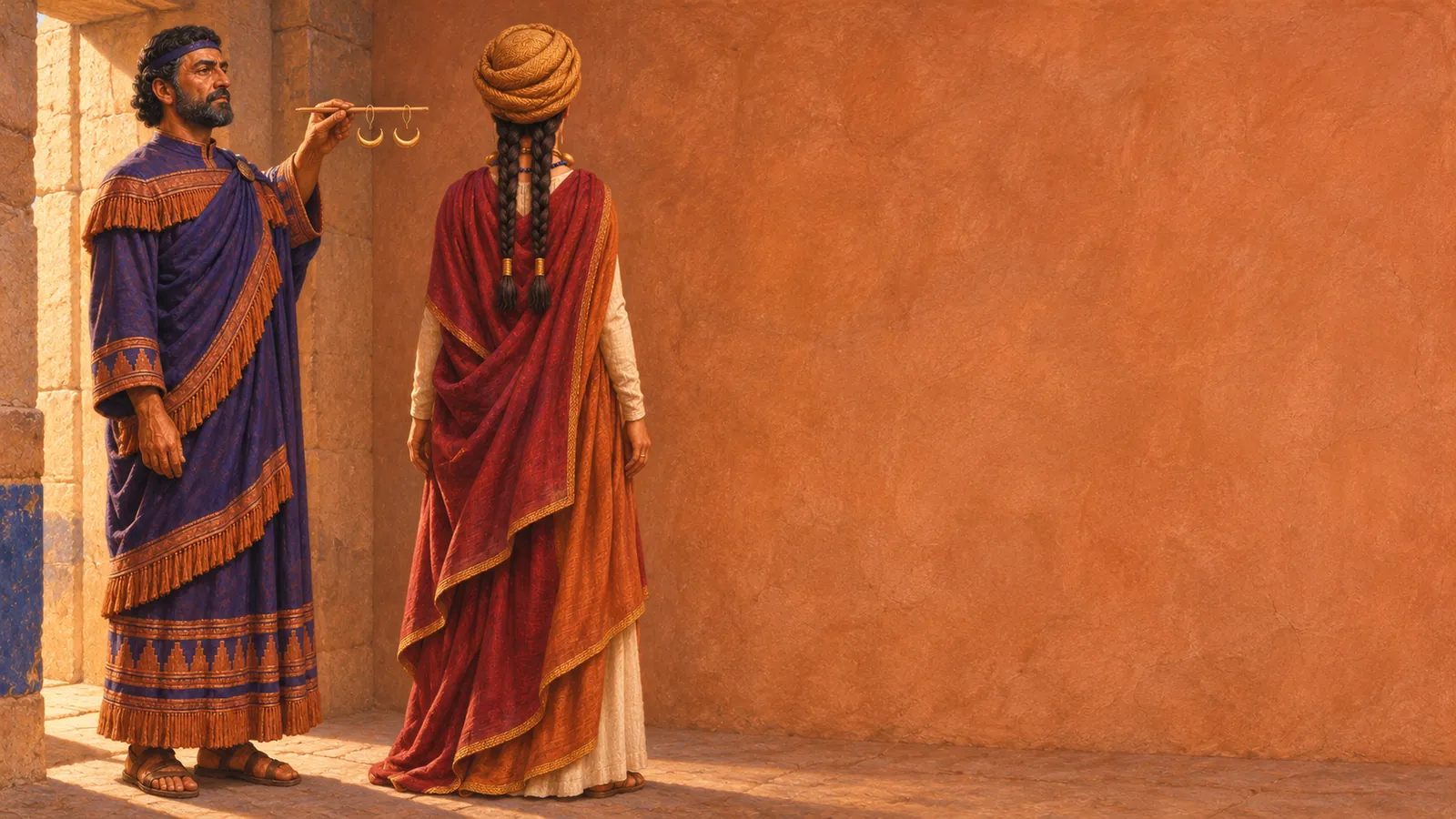
Namtar escorts Ishtar out through the sixth gate and returns the earrings. Only the final outward threshold remains.
THE LAST GATE
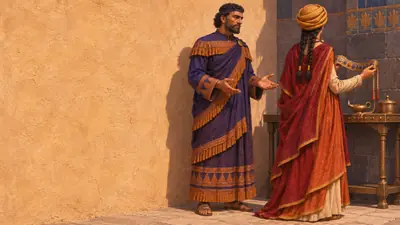
At the seventh gate, Namtar gives Ishtar back her great tiara. Its return completes the reversal of her descent through the gates.
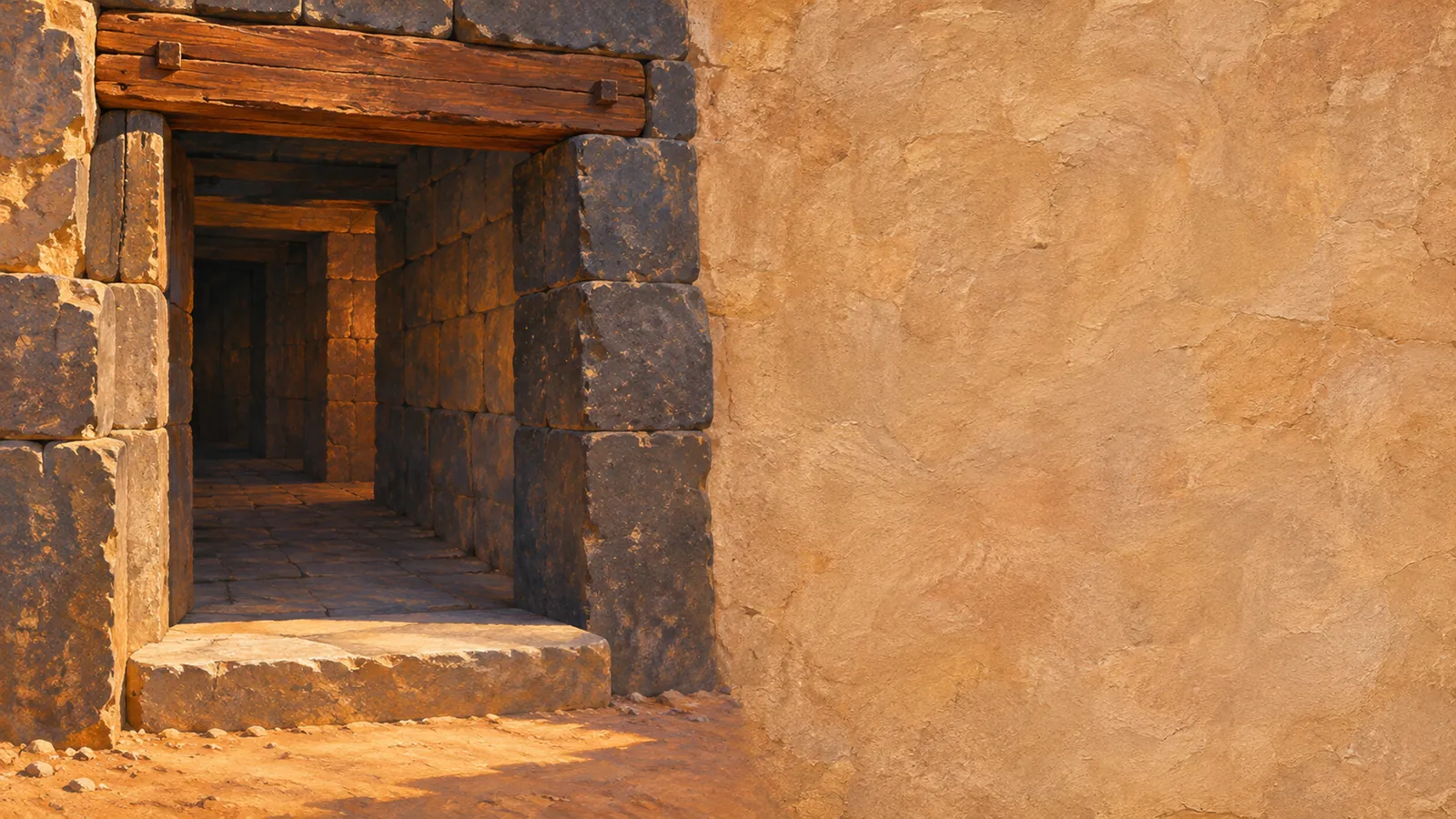
The poem gives a condition for her release. If Ishtar fails to pay the ransom, she is to be brought back inside.
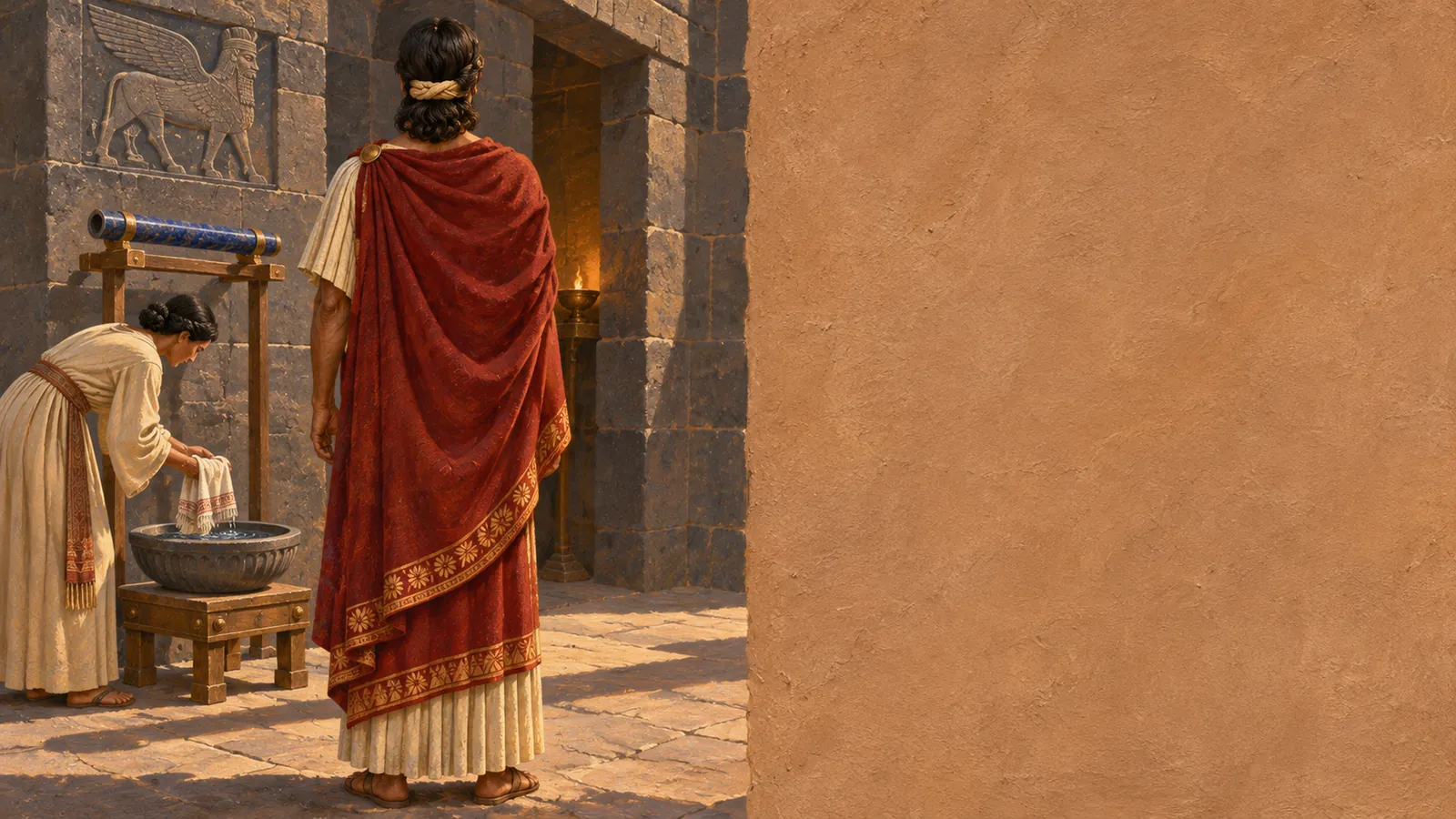
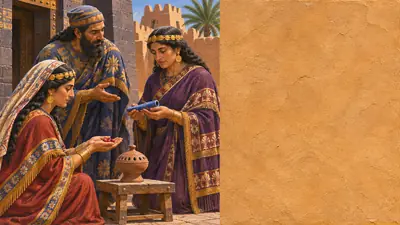
The closing verses name Dumuzi, the love of Ishtar’s youth. They call for pure water, fine oil, a red garment and a lapis flute.
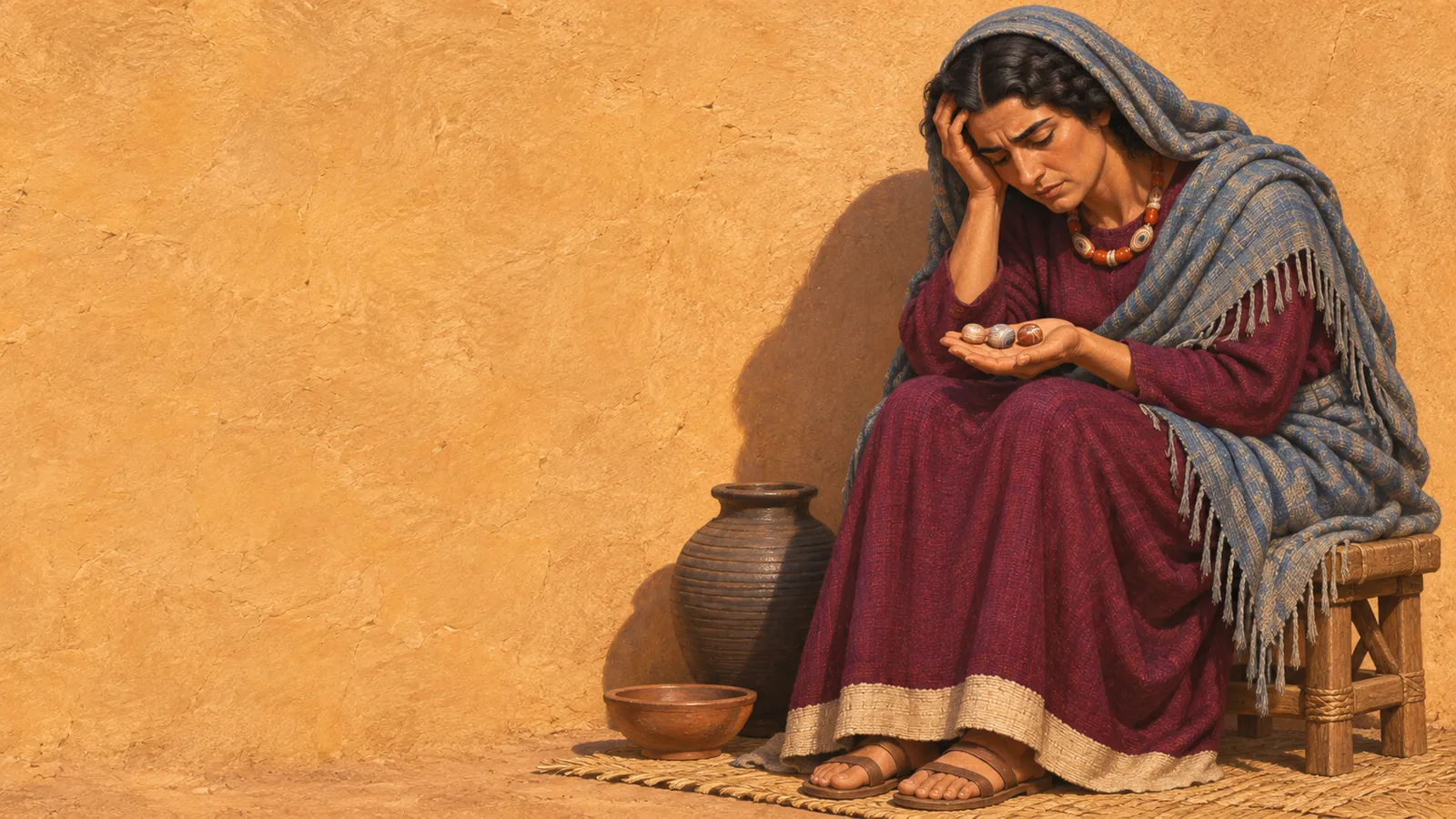
Belili hears her brother’s cry and strikes at her jewelry. In the damaged lines she pleads for her only brother.
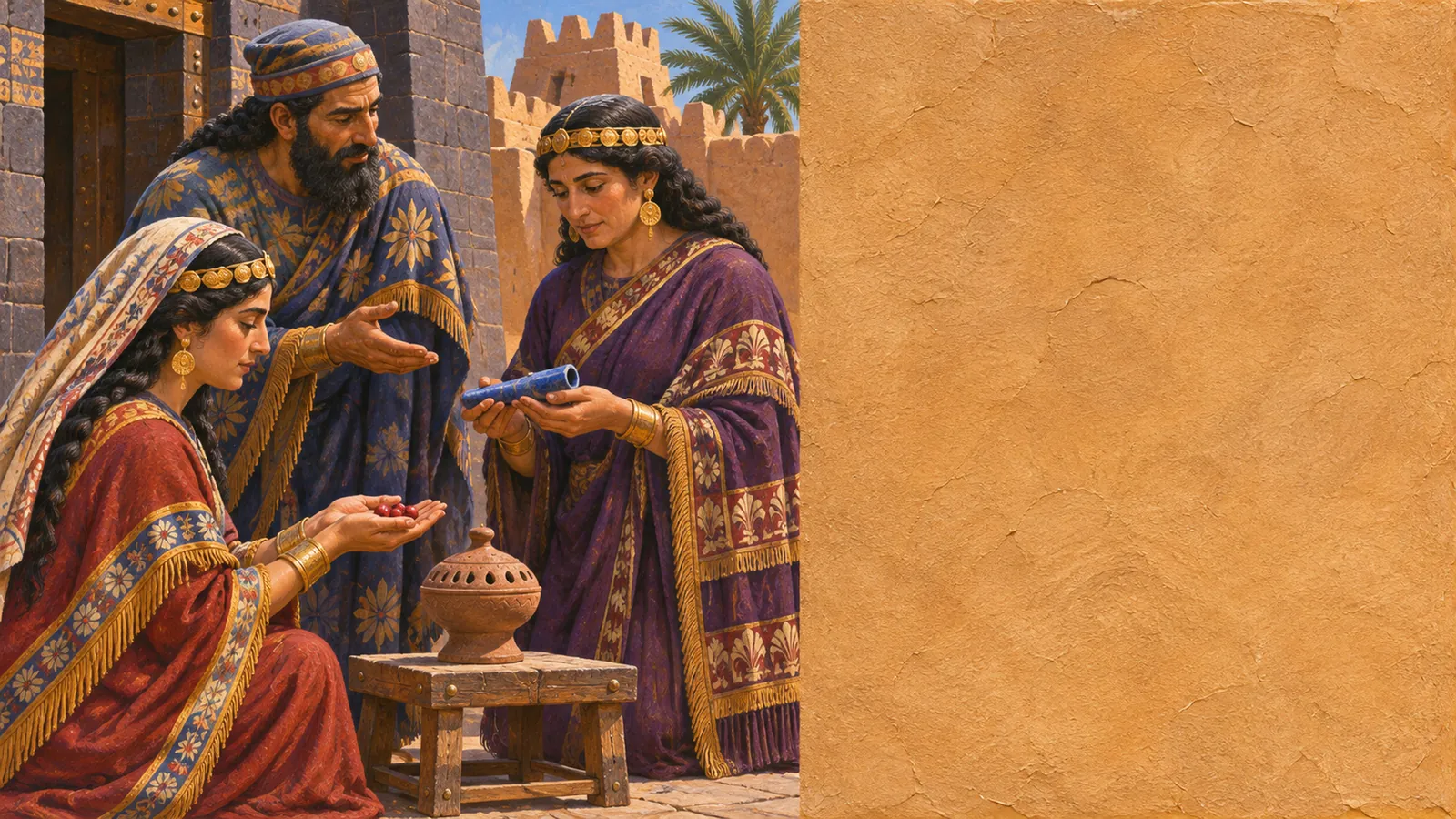
In one reading Dumuzi rises with a lapis flute, a red stone ornament and the mourners. The closing invocation asks the dead to rise and smell the incense.
End of chapter 1
All pages
Sources
Adapted from Standard Babylonian Descent of Ishtar lines 1–138. Main readings follow the SOAS presentation of Foster and Borger through line 125 and the text and translation by Feliu through the coda. Notes give selected manuscript differences and alternative readings.
Editions consulted
- SOAS, Foster translation and Borger-based transcription, lines 1–125
- Electronic Babylonian Library, Descent of Ištar L I.8
- CDLI P345482, Nineveh tablet K.162
- Lluís Feliu, El Descens d’Íštar a l’Infern, Historiae 21 (2024), 1–41
- E. A. Speiser, Descent of Ishtar, Ancient Near Eastern Texts, pp. 106–109
- Daniel Sánchez Muñoz, The destruction of the silver pipes from Ur, 2023, pp. 64–65
Ancient lines behind each page
- Page 1: Akkadian Descent of Ishtar, Standard Babylonian, 1–3
The opening names Sîn and Kurnugi. - Page 2: Akkadian Descent of Ishtar, Standard Babylonian, 4–7
Irkalla names the dark abode. - Page 3: Akkadian Descent of Ishtar, Standard Babylonian, 8–11
The poem compares the garments below to birds’ wings. - Page 4: Akkadian Descent of Ishtar, Standard Babylonian, 12–15
- Page 5: Akkadian Descent of Ishtar, Standard Babylonian, 16–20
- Page 6: Akkadian Descent of Ishtar, Standard Babylonian, 21–27
The gatekeeper remains unnamed in this version. - Page 7: Akkadian Descent of Ishtar, Standard Babylonian, 28–33
- Page 8: Akkadian Descent of Ishtar, Standard Babylonian, 34–38
The words about mourning include a child whose life ended early. - Page 9: Akkadian Descent of Ishtar, Standard Babylonian, 39–41
- Page 10: Akkadian Descent of Ishtar, Standard Babylonian, 42–44
- Page 11: Akkadian Descent of Ishtar, Standard Babylonian, 45–47
- Page 12: Akkadian Descent of Ishtar, Standard Babylonian, 48–50
- Page 13: Akkadian Descent of Ishtar, Standard Babylonian, 51–53
- Page 14: Akkadian Descent of Ishtar, Standard Babylonian, 54–56
The birth stones are named in the source. - Page 15: Akkadian Descent of Ishtar, Standard Babylonian, 57–59
- Page 16: Akkadian Descent of Ishtar, Standard Babylonian, 60–62
Foster reads loincloth at lines 60–62. - Page 17: Akkadian Descent of Ishtar, Standard Babylonian, 63–67
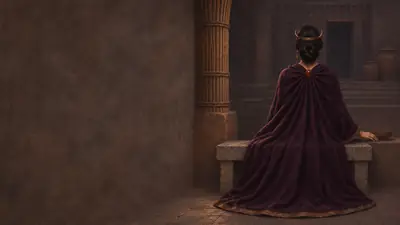
The precise action and location of Ishtar in line 65 are disputed, including the suggested reading of sitting above her. - Page 18: Akkadian Descent of Ishtar, Standard Babylonian, 68–75
- Page 19: Akkadian Descent of Ishtar, Standard Babylonian, 76–80
The Akkadian list names bulls and cows, donkeys and people. - Page 20: Akkadian Descent of Ishtar, Standard Babylonian, 81–84
The SOAS reading names Sîn and Ea. One witness reads Shamash where another has Sîn. - Page 21: Akkadian Descent of Ishtar, Standard Babylonian, 85–90
- Page 22: Akkadian Descent of Ishtar, Standard Babylonian, 91–92
The Akkadian word assinnu designates a member of Ishtar’s cult. Its social and sexual meanings are debated. - Page 23: Akkadian Descent of Ishtar, Standard Babylonian, 93–97
- Page 24: Akkadian Descent of Ishtar, Standard Babylonian, 98–99
The text later names the water of life without specifying that the waterskin was its source. - Page 25: Akkadian Descent of Ishtar, Standard Babylonian, 100–102
- Page 26: Akkadian Descent of Ishtar, Standard Babylonian, 103–108
The curse names food and drink as well as the threshold and exposure to blows. - Page 27: Akkadian Descent of Ishtar, Standard Babylonian, 109–114
The material for decorating the threshold is commonly read as cowries, with another proposed reading of a coral-like material. - Page 28: Akkadian Descent of Ishtar, Standard Babylonian, 115–117
- Page 29: Akkadian Descent of Ishtar, Standard Babylonian, 118, 118a–c
At this point an Assur witness adds three damaged lines about the ransom. - Page 30: Akkadian Descent of Ishtar, Standard Babylonian, 119
The poem counts outward gates from the inside, and each object returns in reverse order. - Page 31: Akkadian Descent of Ishtar, Standard Babylonian, 120
- Page 32: Akkadian Descent of Ishtar, Standard Babylonian, 121
- Page 33: Akkadian Descent of Ishtar, Standard Babylonian, 122
- Page 34: Akkadian Descent of Ishtar, Standard Babylonian, 123
- Page 35: Akkadian Descent of Ishtar, Standard Babylonian, 124
- Page 36: Akkadian Descent of Ishtar, Standard Babylonian, 125
- Page 37: Akkadian Descent of Ishtar, Standard Babylonian, 126, parallel at 118a–c
Some manuscripts place it after the gates and the Assur witness provides a parallel before the gates. - Page 38: Akkadian Descent of Ishtar, Standard Babylonian, 127–130
After the ransom warning the poem turns to ritual instructions for Dumuzi. The damaged last clause of the instruction mentions shamkhat women attending to him. - Page 39: Akkadian Descent of Ishtar, Standard Babylonian, 131–135
- Page 40: Akkadian Descent of Ishtar, Standard Babylonian, 136–138
Feliu and Speiser read a rising of Dumuzi in the preceding line. Sánchez Muñoz discusses the ascent reading and Frahm’s alternative reading of a cry.
Illustrations made with AI tools by IL Archive; the text is based on the ancient sources (see the sources at the end of each chapter).