Study
Anunna and Anunnaki: What Do the Texts Actually Say?
An extended study of a topic, with evidence and references.
- Timeline
- From 2200 BCE to 2015 CE
Names, membership, numbers, the underworld and human creation: Mesopotamian evidence distinguished from Sitchin’s modern orbital, gold-mining and genetic-engineering narrative.
Share article
Text
Few ancient Mesopotamian names have travelled as far from their historical setting as AnunnakiAnunna / AnunnakiCollective designation for gods in Mesopotamian texts, with variable scope and membership; earliest known attestations belong to the late third millennium BCE.Glossary · Click to read the explanation. Online, the word often introduces a complete story that appears to be a translation of Sumerian tablets: visitors from NibiruNibiru: Crossing and Astral NameAkkadian crossing-related word and astral designation, including Jupiter in some contexts and Marduk’s Nibiru. Cited sources establish no inhabited planet returning every 3,600 years.Glossary · Click to read the explanation, a planet returning every 3,600 years, arrive for gold; their workers rebel; genetic engineers create human mine labourers; the visitors establish civilizations and may promise to return.
That connected narrative is not what the cuneiformCuneiformWriting with wedge-shaped signs, developed from Mesopotamian recording traditions and used for several languages from the third millennium BCE.Glossary · Click to read the explanation sources discussed here say. Anunna and Anunnaki are genuinely ancient names. Nibiru genuinely occurs in astronomical and religious texts. Human creation to relieve divine labour is a genuine Mesopotamian theme, and divine blood does enter a creation account. But combining these elements with spacecraft, a hidden planet, gold mines and genetic engineering produces a modern narrative. To distinguish the two, we must begin with the name.[12][13]
Anunna first
The basic Sumerian form is Anunna. The mid-third-millennium god listsGod listsTexts collecting divine names for preservation, teaching and classification, with varying theological organization.Glossary · Click to read the explanation from Fara and Abu Salabikh precede the earliest attestations listed in ORACC’s entry. Major divine names were already known before this collective designation. An earliest surviving witness need not date the birth of an idea.
ORACC places the earliest attestations it discusses after the AkkadianAkkadianAn ancient East Semitic language written in cuneiform in Mesopotamia.Glossary · Click to read the explanation period, notably in inscriptions of GudeaGudeaRuler of Lagash in the late third millennium BCE, whose inscriptions document temple construction and the name Anunna.Glossary · Click to read the explanation of Lagash in the late third millennium and a few Ur III texts. The Ur III dynasty is conventionally dated about 2112–2004 BCE in the Middle Chronology; Gudea’s absolute dates remain debated. The Akkadian forms Anunnaku and Anunnaki subsequently continue into the Seleucid period.
An, EnlilEnlilProminent Mesopotamian god associated with Nippur and Ekur, highly ranked in Early Dynastic texts before the earliest known Anunna attestation.Glossary · Click to read the explanation, EnkiEnkiMesopotamian deity associated with deep fresh water, wisdom and Eridu, known as Ea in Akkadian tradition. The earliest preserved written mention does not date his cult’s origin or identify Ubaid Eridu’s deity.Glossary · Click to read the explanation, InanaInanna / IshtarProminent Mesopotamian goddess with a major centre at Uruk, whose parentage and cult traditions vary rather than forming one fixed genealogy.Glossary · Click to read the explanation, NannaNanna / Su’en / SinMoon god associated with Ur, with early name evidence that does not date every later myth.Glossary · Click to read the explanation and Utu were known in writing before this designation. Anunna therefore does not name a first generation from which Mesopotamian religion began. It is a collective classification within an existing divine world.[1]
When does “Anunnaki” appear?
A linguistic distinction should not become an invented mythological division. Anunna is Sumerian; Anunnaku and Anunnaki are Akkadian forms of the name. They do not, merely by differing in form, identify two peoples arriving at different times.
The Akkadian form is clearly attested by the Old Babylonian period. The eighteenth-century BCE prologue to Hammurabi’s lawsLaws of HammurabiAn eighteenth-century BCE Babylonian legal text in Akkadian, presenting property, family, labor and injury provisions within Hammurabi’s account of justice.Glossary · Click to read the explanation calls AnuAn / AnuSumerian/Akkadian sky god; multifunctional AN alone cannot identify him in the earliest texts.Glossary · Click to read the explanation king of the Anunnaki. CDLI provides the Akkadian wording, šar Anunnakī, at the beginning of the composite text. The name is ancient; its meaning in ancient use is the question.
Here Anunnakī is a genitive plural form following “king” in Akkadian. Its ending cannot simply be detached as the independent Sumerian word KI, “earth,” and made into a sentence about travel through space.[2]
What does the name mean?
Its derivation has been debated, so no proposal should be presented as a mathematical certainty. ORACC gives the likeliest interpretations as approximately “those of princely offspring” or “those of princely stock,” alongside Sumerian and Akkadian spellings.
This differs fundamentally from “those who came from heaven to earth,” familiar from Zecharia Sitchin and later writing inspired by him. That is not the derivation offered by the cited scholarly entry. Dividing a modern romanization into convenient pieces does not replace grammatical analysis of the ancient word.
In these sources it is a collective divine name. It is not a sentence describing an interplanetary journey.[1][13]
Was An their father?
Sometimes. An/Anu can be described as father of the Anunna; other passages speak of brotherly or sisterly relationships among members. This supplies no single family tree valid for every text.
The designation can encompass different gods according to period, place and composition. EriduEriduAbu Shahrain in southern Iraq, with a long architectural sequence beginning before writing. Associated with Enki in historical times, which does not establish the sacred being’s identity in its earliest layers.Glossary · Click to read the explanation’s pantheonPantheonThe set of deities associated with a religious tradition, including their roles and relationships.Glossary · Click to read the explanation was not identical to Lagash’s. A locally prominent god need not occupy the same position elsewhere. Expressions such as “Anunna of Eridu” and “Anunna of Lagash” therefore make sense: the collective can describe a local divine community.
A genealogy in one setting should not be turned into an official membership list for all Mesopotamian history.[1]
How many were there?
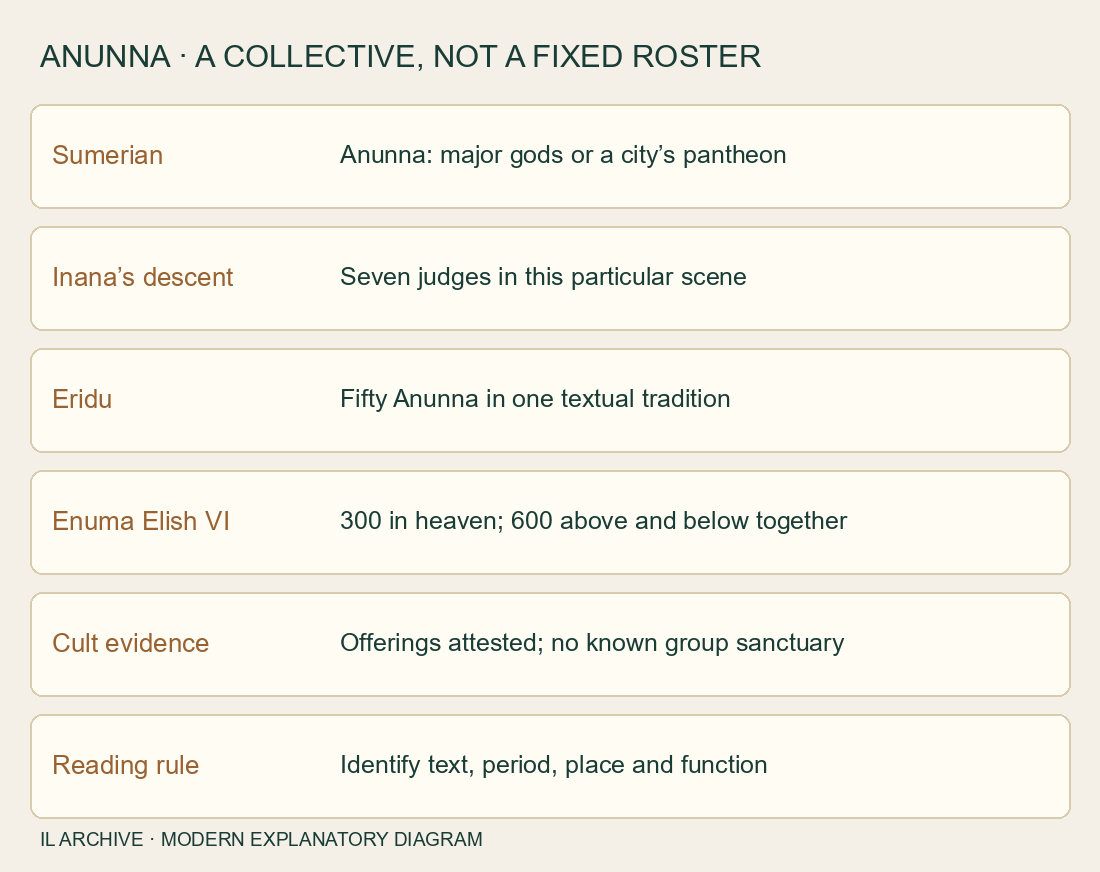
There is no universal number. Modern lists of “the twelve Anunnaki” or “the original seven” conceal this variation. ORACC cites fifty Anunna of Eridu. In Inana’s Descent, seven Anuna serve as judges; that does not establish the total membership of the collective.
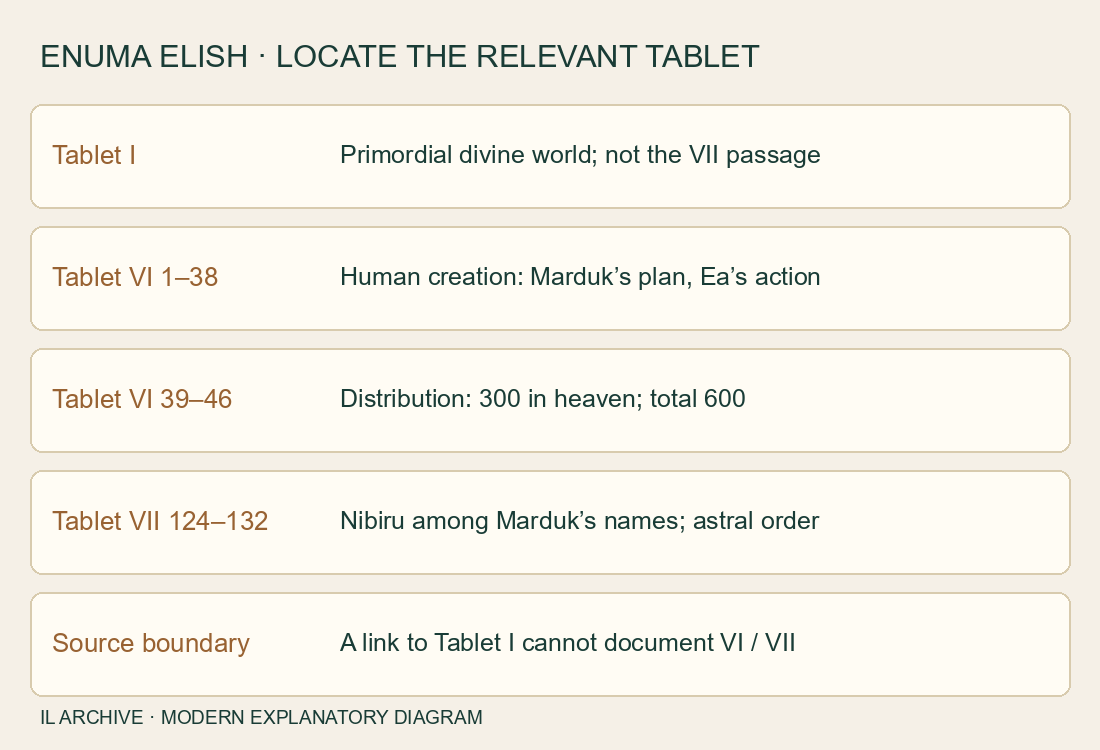
Enuma ElishEnuma ElishBabylonian Akkadian composition celebrating Marduk’s elevation and cosmic/divine ordering. Human creation is in VI, Nibiru in VII; a Tablet I reference cannot document those passages.Glossary · Click to read the explanation gives another arrangement. Tablet VI, lines 39–46, has MardukMardukBabylon’s god, elevated with the city’s history. Enuma Elish celebrates his rise and cosmic ordering; sources associate him with Nibiru and Jupiter. Earliest origins and functions remain uncertain.Glossary · Click to read the explanation distribute the Anunnaki above and below: the text names three hundred in heaven and six hundred in heaven and earth together. ORACC summarizes the division as three hundred in each domain; Heidel explains “earth” here as the underworld. The wording of a translation should be distinguished from that explanatory division.
Seven in a judgment scene, fifty in a city’s community and six hundred in a Babylonian arrangement are not failed arithmetic. The collective name does not encode a fixed number.[1][3][8]
Who were they, then?
In Sumerian sources the Anunna can designate the major gods. Enki and the World Order describes them as great gods involved in determining destinies, while Enki identifies himself as their leader in another passage.
This does not require every major god to belong in exactly the same way in every text. Anu is their king in HammurabiHammurabiKing of Babylon in Mesopotamia, reigning around 1792–1750 BCE. A celebrated legal text preserved on a stele and cuneiform copies bears his name.Glossary · Click to read the explanation’s prologue; Enlil and Enki occupy leading relationships elsewhere; a city may have its own Anunna.
“A community of major gods” is a more useful starting description than an ethnicity or biological species. The particular community must still be established from its context.[4][2]
Did they have a collective temple?
ORACC reports no known sanctuary dedicated to the Anunna as a collective. It suggests that their constituent gods already possessed temples in different cities. Enki was particularly associated with Eridu, Enlil with NippurNippur / NuffarMesopotamian city and major Enlil cult centre, connected with kings’ legitimacy beyond the city.Glossary · Click to read the explanation, Nanna with Ur, and Inana with UrukUrukAncient city at Warka in southern Iraq, a major urban centre around 3200 BCE that preserved early writing and accounting tablets.Glossary · Click to read the explanation and other centres. These were established cults, not members of a newly arrived organization sharing one headquarters.
There is likewise no securely identified collective portrait of the Anunna. Mesopotamian art certainly depicts individual gods and groups of divine figures. Identifying any such cylinder sealCylinder sealEngraved cylinder rolled over clay to produce a continuous design; used for documentation, identification and authority, without necessarily encoding language.Glossary · Click to read the explanation as “the Anunnaki” nevertheless requires evidence for that specific collective identity.
Limited evidence must not become a denial of offerings: ORACC itself notes a few Ur III administrative attestations suggesting offerings to Anunna. No known separate collective sanctuary does not mean no worship of any kind.[1]
The Anunnaki and the underworld
Calling them exclusively underworld gods removes a real associationShirkAssociating others with God in Quranic discourse; not equivalent to denying God’s existence.Glossary · Click to read the explanation from its history. Earlier Sumerian usage can refer to major gods, the determination of destinies and local pantheons. Yet an underworld role is already present in Inana’s Descent: seven Anuna judges pronounce judgment on her.
In later traditions the underworld association becomes more pronounced. ORACC describes a change after the Old Babylonian period, with Anunnaki sometimes contrasting with IgigiIgigiCollective divine name in Akkadian sources, attested from the Old Babylonian period; its relationship to Anunnaki varies by text.Glossary · Click to read the explanation associated with heaven.
This is not a rule covering every composition. Some texts distinguish the collectives clearly; others overlap their functions. Neither “gods of heaven” nor “gods of the underworld” alone defines Anunnaki throughout the third, second and first millennia BCE.[1][3][5]
Anunnaki and Igigi
Igigi occurs in Akkadian sources from the Old Babylonian period. Its relationship to Anunnaki depends on the text. AtrahasisAtrahasis: Epic and HeroAkkadian epic: humans created for divine labor, multiplication, noise and flood. Atrahasis, “exceedingly wise,” survives through Enki’s warning; human reproduction is regulated afterward.Glossary · Click to read the explanation opens before humans exist, when gods bear heavy labour. Seven great Anunnaki impose the work on the Igigi, who eventually rebel. Human creation answers that crisis by transferring the burden.
Online retellings often turn this into Anunnaki gold miners revolting against their commanders. But the labouring collective at the beginning of Atrahasis is the Igigi, under the senior Anunnaki. The work belongs to irrigation, waterways and the burdens of maintaining the world, not an expedition to extract African gold for a distant planet.
Divine work, a labour revolt and humans created to take over the task are ancient elements. Their presence does not make the modern connected narrative an ancient translation.[5]
Humans really are created for work
This genuine theme helps explain the modern story’s appeal. In Atrahasis, humanity is created to relieve divine labour. The mother goddess fashions humans from clay mixed with a slain god’s blood; the resulting workers take over the burden.
Enuma Elish presents a different version. In Tablet VI, lines 1–8 and 29–38, Marduk plans human creation and Ea carries it out using KinguQinguTiamat’s commander, whose blood forms humanity in Enuma Elish.Glossary · Click to read the explanation’s blood, assigning divine service to humanity. Heidel’s translation provides these passages directly; a link to Tablet I cannot document them.
“Humans were created to work in place of gods in some Mesopotamian myths” is supported. Adding “in gold mines” changes the claim. That purpose is not described in the cited creation episode of Atrahasis.[5][6][7][8]
Divine blood is also genuine
Nor did modern writers invent every idea of a divine ingredient in humanity. Atrahasis describes a god’s slaughter and the mixing of blood and clay. In the narrative’s logic, humanity combines an earthly material with something from a god.
The passage does not describe DNA, chromosomes, genes, a laboratory, artificial insemination or an Anunnaki–Homo erectus genetic mixture. Reading divine blood as a symbol for DNA is a modern interpretation; it is not a translation of an Akkadian word meaning DNA.
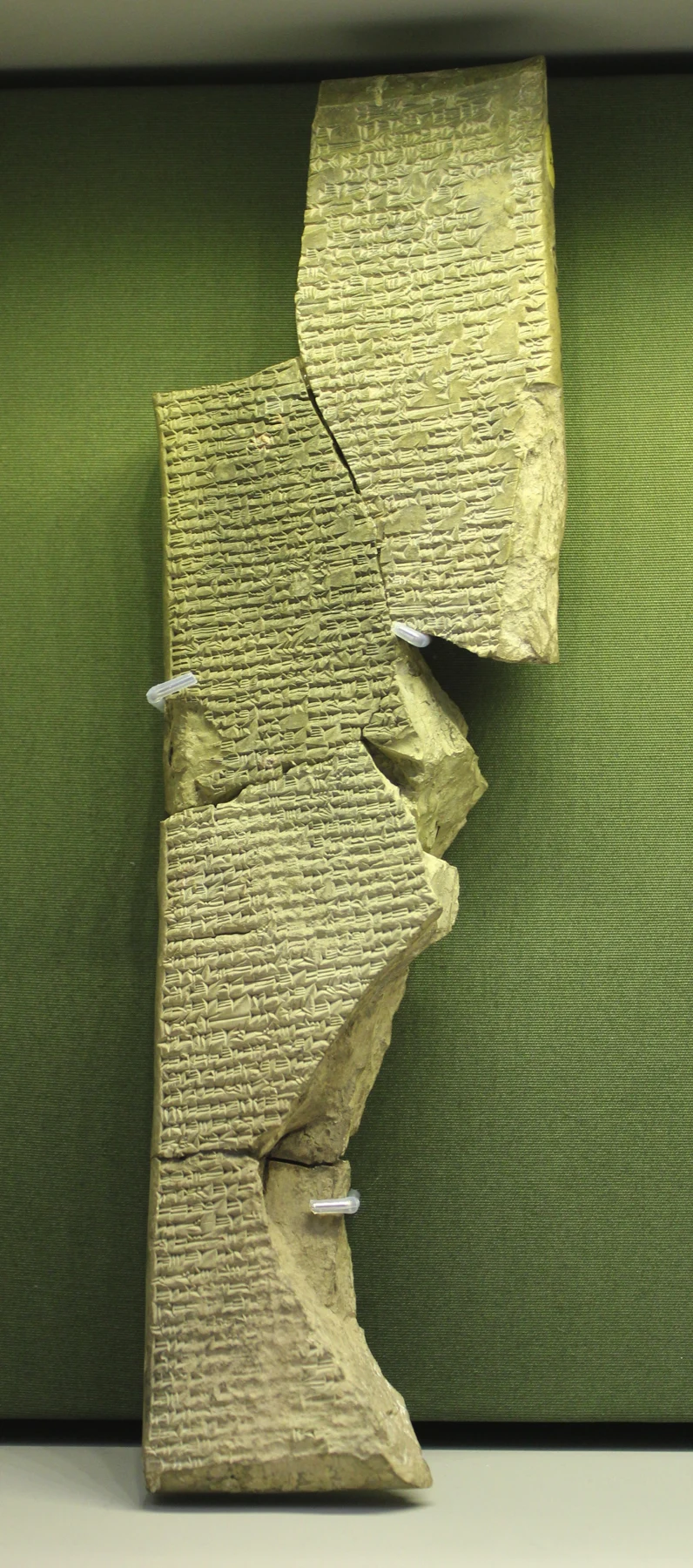
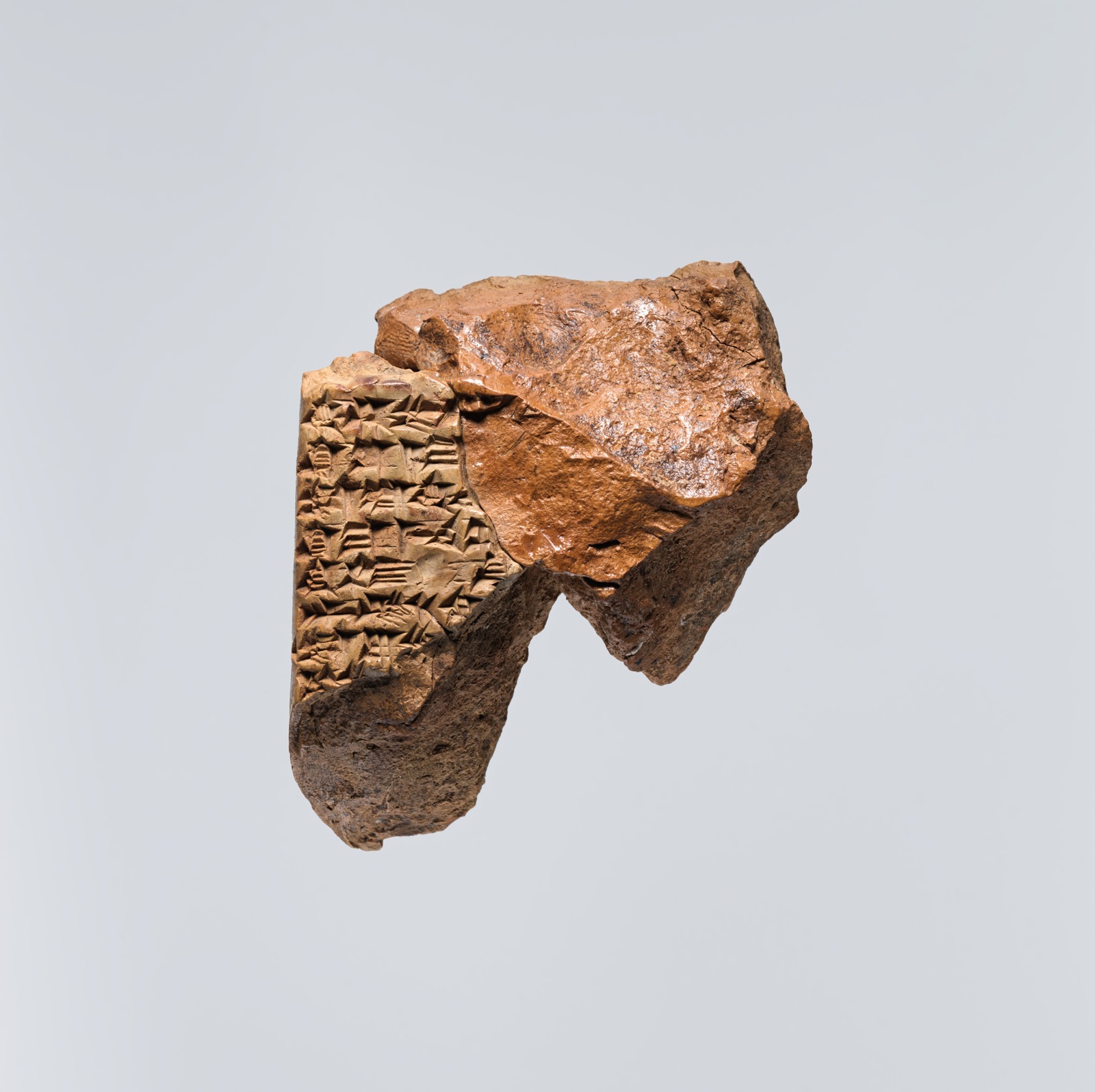
The photograph below documents the circulation of the Atrahasis tradition: Met 86.11.378a, approximately seventh–sixth centuries BCE. It is a later manuscript fragment, does not show the creation passage discussed here, and is not a portrait of the Anunnaki.[15][6][7]
Where does Nibiru enter?
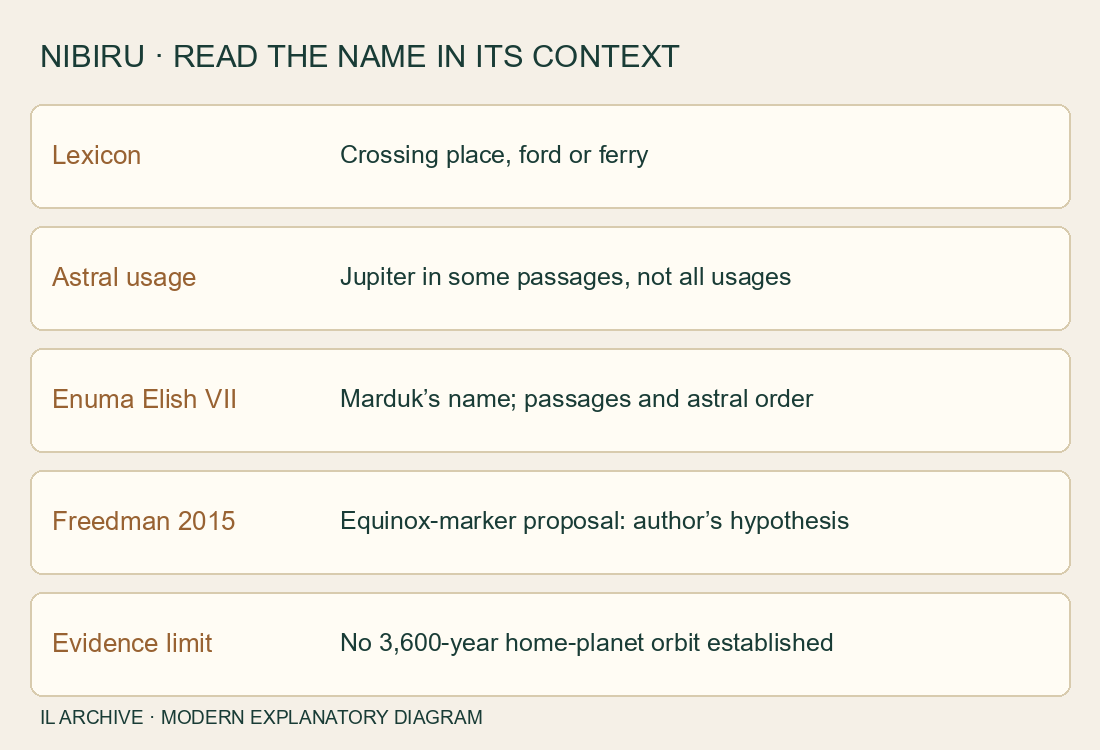
Nēbiru/Nēberu is a real Akkadian word. Its lexical meanings concern crossing: a crossing place, ford or ferry. It can also function as an astronomical name, including Jupiter in some contexts. It does not lexically mean “the Anunnaki’s planet.”
An astral designation must be interpreted in its particular usage. A celestial body associated with a crossing or a particular position can receive the name without every occurrence having the identical astronomical referent.
The lexical and astronomical complexity is precisely what disappears when a popular narrative treats Nibiru as one uniformly defined hidden planet.[9]
Nibiru, Jupiter and Marduk
Immanuel Freedman’s “The Marduk Star Nēbiru,” published in Cuneiform Digital Library Bulletin 2015:3, addresses that complexity. The paper presents an interpretive hypothesis, not a final scholarly consensus.
The sources it discusses connect Nibiru with Marduk and, in some passages, with Jupiter in a particular celestial position. Freedman specifically proposes that any visible object marking an equinox could be designated Nibiru in the appropriate setting. That broader proposal must remain attributed to him; the individual textual associations can be checked independently.
This is a Babylonian religious and astronomical problem. A remote inhabited planet returning near Earth every 3,600 years is a different proposition, requiring its own evidence.[10][16]
Nibiru in Enuma Elish
The name also occurs in the Babylonian composition celebrating Marduk’s rise. In Tablet VII it appears among Marduk’s names and titles, with language concerning passages and the regulation of the stars. Here it does not describe his home planet.
It belongs to the religious and astral presentation of Marduk within the Babylonian cosmic order. Other astronomical sources provide additional associations among Marduk, Jupiter and Nibiru. Reading the name therefore requires a text, period and context, not automatic substitution of “alien planet.”
The passage can be checked in Tablet VII, lines 124–132, Heidel p.59. A precise locator keeps the name’s textual setting distinct from later interpretations.[8][10]
What about 3,600?
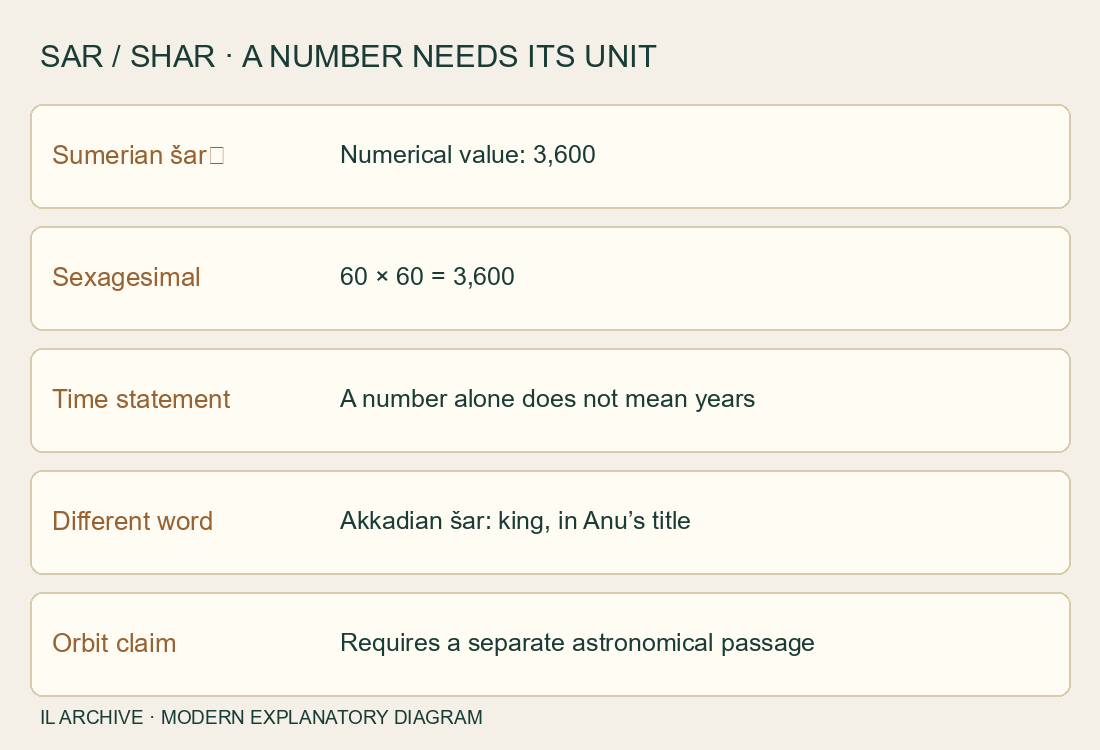
The number is genuinely present in Sumerian mathematics. The numerical term šar₂šar₂: The Numerical Value 3,600Sumerian numerical term valued at 3,600, or 60×60. Alone it specifies neither years nor a planet’s orbit; distinct from Akkadian šar, king.Glossary · Click to read the explanation can have the value 3,600, or 60 × 60, within the broadly sexagesimal numerical system. ORACC’s ePSD2 records that value.
In this use it is a number, not automatically a period of 3,600 years. It should also be distinguished from Akkadian šar, “king,” in Anu’s title. The existence of a number establishes neither an orbital period nor a hidden astronomical object.
To establish the claimed orbit, we would need an astronomical passage actually connecting Nibiru’s recurrence to 3,600 years. The lexical and astronomical evidence cited here does not supply it. A genuine name plus a genuine number does not authenticate the equation “Nibiru is a planet with a 3,600-year orbit.”[11]
Where did the long-orbit planet story come from?
Its best-known formulation is associated with Zecharia Sitchin, especially The 12th Planet, first published in 1976. A later edition’s book description presents Nibiru as the Anunnaki’s home and connects their terrestrial visits with a 3,600-year cycle.
This gives us two distinguishable source types: ancient tablets and a twentieth-century book interpreting them. Sitchin’s work can be studied as a modern cultural phenomenon. But asking whether something is written on a tablet requires examining that tablet and the dictionaries of its language.
A retelling thousands of years later cannot itself serve as the ancient passage it claims to explain.[12]
Where did the gold story come from?
Gold is central to Sitchin’s account. Visitors from Nibiru seek it on Earth; mining begins; humans are created to provide labour. The publisher’s introduction to The Lost Book of Enki describes this modern framework and presents the book as a recreated Enki autobiography.
Returning to Atrahasis changes the purpose and setting. Humans take over burdens connected with divine service and the maintenance of Mesopotamian life, including waterways and agriculture. The creation episode cited here does not describe mining gold to repair another planet’s atmosphere.
Sitchin explicitly relates gold to shielding Nibiru’s atmosphere in an article on his own website. That is a primary source for his modern claim, not an ancient cuneiform witness. Gold itself was known in MesopotamiaMesopotamiaA historical region associated with the Tigris and Euphrates, home to many societies and civilisations.Glossary · Click to read the explanation; the issue is the specific reason for human creation. The modern story changes that reason and the surrounding cosmos.[13][7][14]
And genetic engineering?
The same transformation occurs here. Sitchin gives creation a technical interpretation and proposes a genetic relationship between humans and the Anunnaki. The publisher’s description of The Lost Book of Enki explicitly describes genetic engineering of Homo sapiens. This documents the modern book’s content.
The ancient account uses clay, a slain god’s blood, the mother goddess, birth and labour. A modern reader can interpret blood as genes or a divine creator as a laboratory scientist, but that conceptual substitution is not stated by the passage.
We are not choosing between two translations of one Akkadian technical term. We are distinguishing the text’s language from the modern explanatory model placed over it.[13][6][7]
Do the myths never describe gods descending from heaven?
They certainly associate gods with heaven. An is a sky god; divine beings and celestial bodies inhabit a cosmos in which movement between heaven, earth and the underworld is possible. Descent and ascent are unsurprising within such narratives.
That does not determine the etymology of Anunnaki. A story containing heavenly gods is one claim; an assertion that their collective name literally means biological visitors descending from a planet is another.
The scholarly derivation discussed above concerns princely offspring. Descriptions of divine movement cannot replace linguistic analysis of the name.[1]
Were they “beings” or “gods”?
The textual classification is clear: Anunna/Anunnaki are gods within Mesopotamian religious traditions. Spellings can include the divine determinativeDivine determinativeA usually unspoken sign classifying a name as divine; usage differs by language, period and name.Glossary · Click to read the explanation before the name. They appear with An, Enlil, Enki and Marduk, receive offerings in some sources, determine destinies and serve as underworld judges.
This does not resolve every modern philosophical question about divine materiality. These texts present gods as agents with presence, intention and power; that is insufficient to reconstruct one physical theory shared by every inhabitant and period.
Turning the general word “being” into “a biological extraterrestrial from another planet” requires a different kind of evidence. The divine classification in these texts does not supply it.[1][3]
Did the Anunnaki create humanity?
Even this familiar sentence needs qualification. Mesopotamia preserves several creation accounts: Enki and NinmahEnki and NinmahA Sumerian composition preserved in Old Babylonian copies: human creation relieves divine labor, followed by scenes about bodies and fates.Glossary · Click to read the explanation, Atrahasis and Enuma Elish do not assign identical roles to identical gods.
In Atrahasis the Anunnaki and Igigi participate in the crisis leading to creation, while Enki/Ea, the mother goddess and the slain deity’s blood are central to the act. In Enuma Elish human creation occurs within Marduk’s reordering of the world and provides servants for the gods.
“The Anunnaki created humans” may be a very broad summary of a divine community’s involvement. It hides the differing agents and narratives. No cited ancient account describes an Anunnaki genetic-engineering project for human gold miners.[6][7][8]
Were they all good or evil?
Mesopotamian literature does not consistently divide gods into two simple moral camps. Enlil can send a flood; Enki can preserve humans; Ishtar combines love and war; Nergal, associated with death and disease, nevertheless possesses legitimate cults.
The Anunnaki form part of the divine order. They can judge, determine destinies and be associated with the underworld. This does not turn them into one demonic species opposed to benevolent gods.
Such a universal division adds another modern framework to traditions that distribute divine powers and actions in more complicated ways.[1][4][8]
Why did the meaning change?
Mesopotamian religious history spans millennia. We would not expect a religious word used from the Roman period to the present to retain precisely the same application in every century and city.
Likewise Anunna may identify major gods, a city’s pantheon, judges in a particular scene or a later underworld collective. Enuma Elish can arrange six hundred across cosmic domains. Differences should be investigated, not repaired into a uniform roster.
Changing use is part of the name’s history, not evidence that all the authors secretly described one fixed extraterrestrial organization.[1][5]
Were there seven?
Seven Anuna act as judges in Inana’s Descent. This is different from claiming the total number of Anunnaki was seven. Other evidence mentions fifty of Eridu or a division of six hundred.
A modern image of seven figures captioned “the original seven Anunnaki” therefore needs a particular textual justification: which composition, period and city? Even a securely attested number cannot be detached from its function.
Without that context, the image has converted a genuine local or narrative detail into a universal rule.[1][3][8]
Were there six hundred?
The same caution applies. Enuma Elish divides the Anunnaki above and below, naming three hundred in heaven and six hundred in heaven and earth together. The familiar three-hundred-per-domain summary explains that arrangement.
It does not establish exactly six hundred members in all Mesopotamian beliefs. This is a particular Babylonian composition with a theological purpose: Marduk reorganizes the world and its divine society following his victory.
The number belongs to that narrative ordering, not a statistical census of every tradition.[8]
Ancient text and modern narrative
The ancient sources contain divine collectives, gods’ labour, rebellion, humanity serving gods, clay and blood, the name Nibiru and the numerical value 3,600.
The modern story makes the collective an extraterrestrial species, Nibiru its long-orbit home, work gold extraction, blood genetic material and creation a technical intervention. It did not arise without ancient ingredients. Its persuasive force comes partly from recognizable names and themes.
But altering their connections and adding a technological and astronomical framework makes another story. Its apparent antiquity should not be confused with a literal translation.[1][7][8][12][13]
How can we test a claim?
If someone says “a Sumerian tablet states…,” ask for the artifact or composition identifier, the line, the original wording, dictionary support and independent translations.
Three layers must remain distinguishable: the ancient text, a scholar’s interpretation and a modern story inspired by it. All can be studied; the problem arises when the third is presented as a literal version of the first.
A claim becomes assessable when a reader can inspect its actual wording and context, rather than only a modern label attached to an image.[2][3][9][11]
What is established, and what is not?
Established: Anunna is ancient. ORACC’s entry identifies surviving post-Akkadian attestations, including Gudea and Ur III. Akkadian Anunnaku/Anunnaki are also ancient, documented in the Old Babylonian period and later.
Likely: the derivation concerns princely offspring, with details debated. Unsupported by the cited linguistic analysis: “those who came from heaven to earth.”
Established: membership and numbers vary. Seven judges, fifty of Eridu and six hundred in Enuma Elish concern different contexts. The term can cover major gods or a local pantheon; underworld associations become particularly prominent in some later traditions.
Established: Nibiru is an ancient religious and astronomical name with crossing-related meanings and links to Marduk and, in particular passages, Jupiter. The numerical value šar₂ = 3,600 is genuine. The cited cuneiform evidence does not establish a hidden home planet returning every 3,600 years.
Established: some myths create humans to relieve gods’ work; Atrahasis combines clay and a slain god’s blood. The creation passages examined here do not describe genetic engineering or human creation for gold mining to shield Nibiru’s atmosphere.[1][3][8][9][11][13]
The ancient Anunnaki remain worth studying
Removing spacecraft does not remove the subject’s interest. A divine collective changes across cities, languages and centuries. Major gods determine destinies; seven judges confront Inana; Eridu has its local Anunna; Marduk rearranges hundreds; Anu is king of the Anunnaki in Hammurabi’s prologue. Igigi and Anunnaki can be distinguished differently in different compositions.
Nibiru opens a question about Babylonian astral terminology and Marduk’s cosmic position. Atrahasis offers a striking account of humans made from earthly material and divine blood to shoulder gods’ burden, without requiring an imagined laboratory.
The long-orbit planet, atmospheric gold and genetic mine workers belong to a later chapter in the history of these ideas. The useful question is therefore: which part is actually present in the ancient passage, and which part was supplied by a reader thousands of years later?[1][4][7][8][12][13]
References and notes
- Nicole Brisch, Anunna / Anunnaku / Anunnaki, ORACC, updated entry 2024. Indexed entry: functions, genealogy, cult places, attestation, iconography and name; direct access failed. First surviving attestation is not the idea’s birth date. Return to the text ↑
- CDLI, P464358, Laws of Hammurapi composite. Prologue, column i, lines 1–19; especially i 2, šar anunnakī. Passage read, not all laws. Return to the text ↑
- ETCSL, Inana’s Descent to the Netherworld, 1.4.1, Oxford. Lines 164–172: seven Anuna judges in this scene, not a census of the collective. Return to the text ↑
- ETCSL, Enki and the World Order, 1.1.3, Oxford. Lines 61–80, 192–209, 368–380, 391–394: Enki’s leadership, great gods, destinies, places and functions. Return to the text ↑
- Nicole Brisch, Igigi/Igigu, ORACC, updated entry 2024. Indexed entry; especially cited Atrahasis I 1–6: senior Anunnaki impose labour on Igigi. The groups’ roles vary by text. Return to the text ↑
- ORACC, Mother Goddess: Ninmah, Nintud/r, Belet-ili. Indexed creation-functions passage: clay and slain god’s blood in Atrahasis; clay in Enki and Ninmah. Listed studies not all read. Return to the text ↑
- Piotr Michalowski, Presence at the Creation, 1990. Indexed p.388: human labour, clay and blood; Atrahasis I 237–241 cited from Lambert and Millard. Full PDF download failed; entire essay not read. Return to the text ↑
- Alexander Heidel, The Babylonian Genesis, second edition, Chicago, 1951. University PDF read: p.44, V 1–14; pp.46–49, VI 1–87; p.59, VII 118–142. VI 39–46 has 300 in heaven, total 600; note 122 interprets earth as underworld. Rest of book not read. Return to the text ↑
- ORACC/ARMep, nēberu lexical entry. Indexed entry: crossing, ford, ferry and Jupiter among senses. Not every occurrence has one astronomical identity. Return to the text ↑
- Immanuel Freedman, The Marduk Star Nēbiru, CDLB 2015:3. Indexed text/PDF §§1.1–1.3, 2.1–2.3, 2.16–2.19. Equinox-marker proposal is the author’s hypothesis, not consensus; establishes no 3,600-year orbit. Return to the text ↑
- ORACC/ePSD2, šar₂, numerical value 3,600. Indexed lexical entry and numerical attestations. A numerical value alone specifies neither years nor an orbit. Return to the text ↑
- Zecharia Sitchin, The 12th Planet; edition metadata and description, Google Books. 1991-edition description: Nibiru home and 3,600-year cycle. Stein and Day 1976 edition checked in Google Books 1NAYAAAAYAAJ. Modern narrative evidence, not tablet translation; whole book not read. Return to the text ↑
- Zecharia Sitchin, The Lost Book of Enki, publisher description and available introduction. About the Book, introduction and synopsis: gold, astronauts, genetic engineering and recreated Enki autobiography. Evidence for Sitchin’s content only; promotional praise establishes no scholarly or historical validity. Return to the text ↑
- Zecharia Sitchin’s website, Back to the Anunnaki passage. Two paragraphs interpreting gold as a shield in Nibiru’s atmosphere. Selected passage read; primary source for the modern claim, not ancient religion. Return to the text ↑
- The Met, 86.11.378a, Atrahasis-tradition fragment. Catalogue and Open Access metadata: c.seventh–sixth centuries BCE; public domain. Contextual image of circulation, not the creation passage. Return to the text ↑
- Nicole Brisch, Marduk, ORACC, 2019. Indexed entry: Babylon, Esagil, elevation in Enuma Elish, first-millennium Jupiter association. Origins and earliest function remain uncertain. Return to the text ↑
Suggest a correction · Suggest a source for this record
Cite this record
IL Archive, «Anunna and Anunnaki: What Do the Texts Actually Say?», Edition 1, https://ilarchive.com/en/studies/anunna-anunnaki-texts
Continue reading