Entity · Concept
šar₂: The Numerical Value 3,600
A reference page linking a name, group, or concept to the materials that discuss it.
Sumerian šar₂ denotes 3,600 (60×60), catalogued with the sign 𒊹. It can count years where a text supplies that unit, but does not by itself describe an orbit; Akkadian šar meaning “king” is distinct.
Estimated reading time: 4 min Published Last reviewed:
Share article
Text
Introduction
What does the Sumerian šar₂ mean when it denotes the number 3,600? This entry distinguishes its numerical value and cuneiformCuneiformWriting with wedge-shaped signs, developed from Mesopotamian recording traditions and used for several languages from the third millennium BCE.Glossary · Click to read the explanation sign from other readings, then uses actual texts to ask why a shared spelling or a very large number does not establish an astronomical period. The subject is a numerical concept, not the name of a deity or a celestial body.
Value and notation
The Sumerian dictionary ePSD2 records šar₂, in its numerical use, with the value 3,600 = 60 × 60. The subscript “₂” in scholarly transliteration conventionally distinguishes readings and signs; it is not an ancient exponent. The sign catalogued as ŠAR₂ can be typeset as 𒊹 and has the modern Unicode designation U+122B9.[1][3]
Does a sign have only one meaning?
A written sign is not identical with a word in every occurrence. ORACC's sign list records non-numerical uses of ŠAR₂, including readings associated with mixing and slaughter, alongside the numerical reading. Accordingly, the value “3,600” cannot be assigned mechanically to every lookalike sign or Latin spelling. Language, reading, grammar and the edition of the text must all be checked.[3]
A counting system is not a unit of time
The value belongs to sexagesimally organised counting traditions encompassing such quantities as 1, 10, 60, 600, 3,600 and 36,000. Yet early discrete counting signs were not historically or functionally identical to the later sexagesimal place-value notation employed in scribal calculations and astronomy. Jöran Friberg distinguishes counting, metrology and positional computation, noting the development of numerical practices over many centuries.[4]
On its own, 3,600 does not say what is being counted: persons, objects, an area or a span of time. The accompanying phrase and metrological system supply that information. Thus šar₂ means 3,600 years only in a passage that supplies “years”; the numeral by itself does not state the period of a planet's orbit.[1][4]
A direct example: the Sumerian King List
In the edited Sumerian King List composite available through CDLI, Alulim is said to have ruled at EriduEriduEridu (Abu Shahrain), a multi-mound site in southern Iraq occupied since the Ubaid, later home to a religious precinct associated with Enki. Its eighteen sounding levels are not proof that every early building was a temple.Glossary · Click to read the explanation. The transliterated phrase mu 8(szar2) i3-ak represents a reported reign of 28,800 years: eight times 3,600. The term mu (“year”) establishes the unit. This is a statement about a reign in a literary king list, not an astronomical observation.[5]
Such enormous numbers do not establish that the reigns occurred at those lengths. The Ashmolean Museum describes the King List as a combination of mythic, legendary and historical material with a political and literary purpose. Moreover, the CDLI page cited here presents an editorial composite, not a transcription that can automatically be attributed in every detail to any one surviving physical tablet.[6]
Related numbers and deceptively similar words
The sign lists also give šargal the value 216,000 = 60 × 3,600. Line 38 of the composite King List uses 1(szargal) 7(szar2) for a reported total of 241,200 years. This illustrates numerical scaling, not independent evidence that such reigns actually lasted that long. Bilingual lexical attestations associate numerical Sumerian šar with an AkkadianAkkadianAn ancient East Semitic language written in cuneiform from the third millennium BCE; its varieties include Babylonian and Assyrian, and it served in international diplomacy.Glossary · Click to read the explanation numerical šār (“3,600”). Therefore it would be as misleading to claim that every Akkadian-sounding “shar” necessarily means “king” as to conflate the numerical expression with the royal title.[7]
“King of the Anunnaki” in Hammurabi's prologue
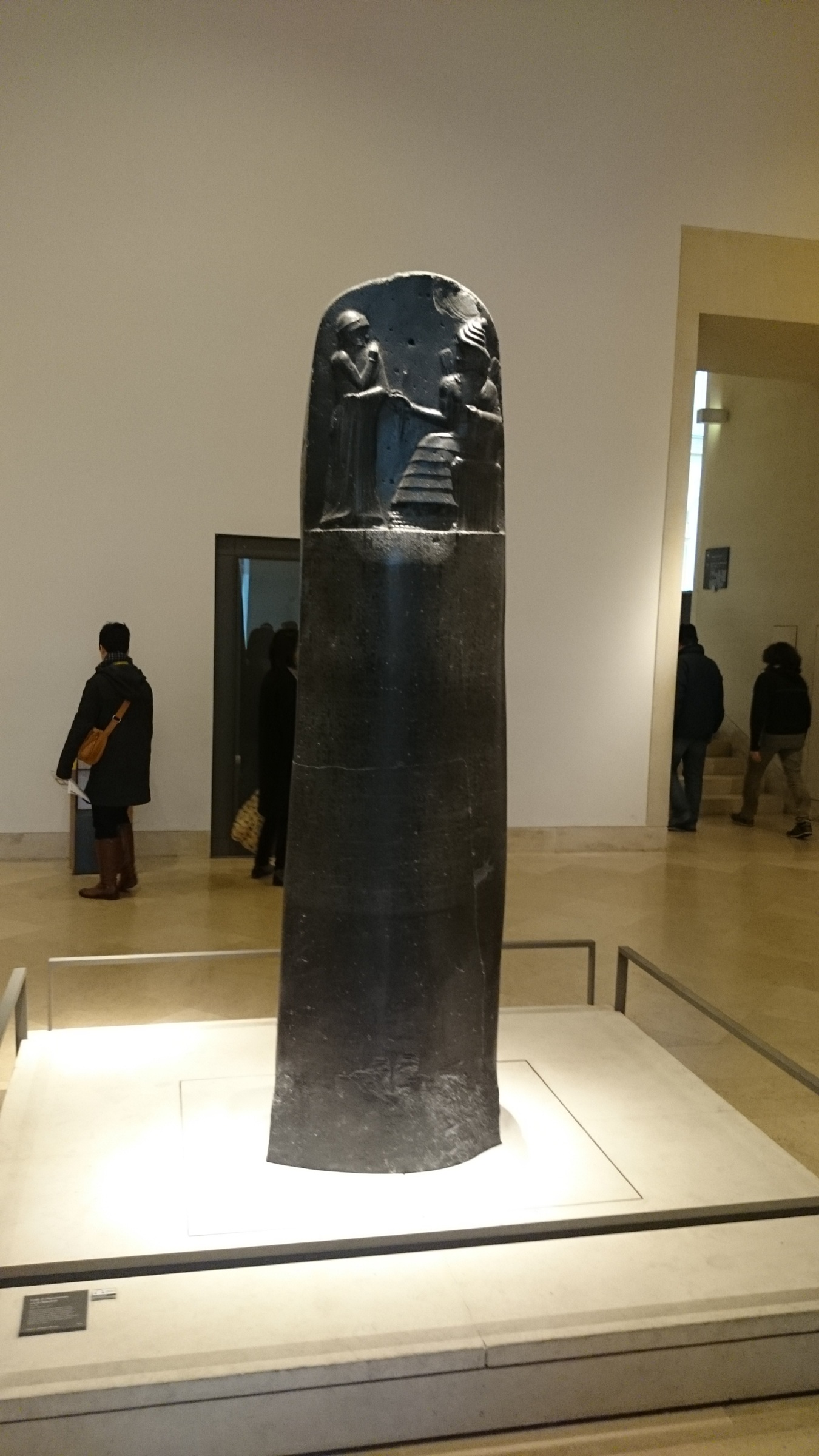
The prologue of the Laws of HammurabiLaws of HammurabiAn eighteenth-century BCE Babylonian legal text in Akkadian, presenting property, family, labor and injury provisions within Hammurabi’s account of justice.Glossary · Click to read the explanation calls the god AnuAn / AnuAn is the Sumerian sky god, called Anu in Akkadian. The sign AN by itself does not identify him: it also denotes sky or divinity.Glossary · Click to read the explanation šar Anunnakī, “king of the AnunnakiAnunna / AnunnakiAnunna/Anunnaki is a collective designation for Mesopotamian gods whose scope varies by text and period; it is not a group with one fixed membership or number.Glossary · Click to read the explanation.” In line 2 of CDLI's composite text, the written Sumerogram is transliterated lugal while the normalized Akkadian reads šar, translated “king.” This is a form of Akkadian šarru (“king”), not the numerical Sumerian šar₂. The comparison demands attention to two languages, two forms and two distinct uses.[2]
What about Nibiru?
NibiruNibiru: Crossing and Astral NameAn Akkadian word for a crossing, ford or ferry, also a celestial name associated with Marduk and applied to Jupiter or Mercury in particular contexts; it does not identify one body in every use.Glossary · Click to read the explanation occurs in Babylonian astronomical literature with celestial uses separate from this Sumerian numeral. A study in the CDLI Bulletin examines texts associating the name with Jupiter in particular contexts and advances a debated interpretation of the name's function. Neither šar₂ = 3,600 nor šar Anunnakī = king of the Anunnaki supplies an equation between 3,600 and an orbital period for Nibiru. Such a claim would require a specific astronomical text identifying the body, temporal unit and motion.[8]
How to evaluate a claim about “shar”
First establish the language (Sumerian or AkkadianAkkadianAn ancient East Semitic language written in cuneiform from the third millennium BCE; its varieties include Babylonian and Assyrian, and it served in international diplomacy.Glossary · Click to read the explanation), the sign and reading, the genre of the document and its unit of measure. The secure result is a numerical value of 3,600 in one use, and separate testimonies to that value being used in reported regnal years. A connection to kingship, a divine assembly or a celestial body cannot be inferred from similar letters alone.
References and notes (8)
- ORACC, Electronic Pennsylvania Sumerian Dictionary (ePSD2), “šar[3600]NU,” online lexical entry. Entry o0038872: search-indexed excerpts and corroborating sign-list data examined; the full entry page could not be opened. Only the numerical value “3,600” is used. Return to the text ↑
- CDLI, Laws of Hammurabi, editorial composite P464358. Prologue, column i, lines 1–19; line 2: lugal / šar anunnakī. The opening 19 lines were read in transliteration, normalization and translation, not the entire law collection. Return to the text ↑
- ORACC, Oracc Sign List, “ŠAR₂” (U+122B9). Indexed entry o0002827; the indexed material identifying the Unicode sign and its different readings was examined; the full page was not directly accessible. Return to the text ↑
- Jöran Friberg, “Three thousand years of sexagesimal numbers in Mesopotamian mathematical texts,” Archive for History of Exact Sciences 73 (2019), pp. 183–216. Abstract, Section 12 on metrological tables and place-value computation, and conclusion in Section 14; the entire article, figures and notes were not read. Return to the text ↑
- CDLI, Sumerian King List composite P479895, Robert K. Englund revision, 20 August 2016. Lines 1–15, especially 3–5: mu 8(szar2) i3-ak = 28,800 years, with line 38 also checked for compound numerals. Editorial composite, not a physical-tablet inspection. Return to the text ↑
- Ashmolean Museum, University of Oxford, “Sumerian King List,” catalog commentary on prism AN1923.444. Museum page, “Ancient political spin” and the paragraphs describing genre and object; not a full reading of the cuneiform prism or all associated scholarship. Return to the text ↑
- ORACC, DCCLT/ePSD2 lexical indexes “šargal[216000]” and “šar[3600]” with Akkadian numerical equivalents; Sumerian King List composite, line 38. Search-indexed lexical excerpts for šar/šargal and Akkadian numeral šār; corroborated by CDLI P479895 line 38, 1(szargal) 7(szar2) = 241,200. No claim to reading the entire lexicon. Return to the text ↑
- I. Freedman, “The Marduk Star Nēbiru,” Cuneiform Digital Library Bulletin 2015:3 (8 November 2015). Sections 1.1–1.3 and 2.1–2.2 on the name and Jupiter; the author’s astronomical explanation is a hypothesis, and the article’s full calculations were not checked. Return to the text ↑
Suggest a correction · Suggest a source for this record
Cite this record
IL Archive, «šar₂: The Numerical Value 3,600», https://ilarchive.com/en/entities/shar
Continue reading