Study
Sabbath and Šapattu: Similar Names, Different Calendars
An extended study of a topic, with evidence and references.
- Timeline
- 1300 BCE
- Region
- Mesopotamia and the Levant
Did the Hebrew Sabbath come from a Babylonian full-moon day? A comparison of Enūma Eliš, Mesopotamian calendars and Hebrew inscriptions that distinguishes hypotheses from evidence.
Share article
Text
# Sabbath and Šapattu: Similar Names, Different Calendars
The resemblance is striking: HebrewHebrewA Northwest Semitic language in the Canaanite group, with ancient and modern forms.Glossary · Click to read the explanation šabbāt and AkkadianAkkadianAn ancient East Semitic language written in cuneiform in Mesopotamia.Glossary · Click to read the explanation šapattu / šabattu. If MesopotamiaMesopotamiaA historical region associated with the Tigris and Euphrates, home to many societies and civilisations.Glossary · Click to read the explanation used such a name before the Jewish Sabbath acquired its familiar shape, was the holy day borrowed? Sound alone cannot decide. We need to ask when the day fell, what people did, when the evidence appears and whether transmission between communities can be traced. [1][13][14]
Three claims must be kept apart: a possible linguistic relationshipLinguistic relatednessA relationship through shared linguistic ancestry, distinct from direct borrowing or identical beliefs.Glossary · Click to read the explanation, a resemblance between marked calendar days, and the borrowing of an entire weekly institution. The first is debated, the second is real, and the third still lacks a direct documentary chain. [11][12][14]
What is Akkadian šapattu?
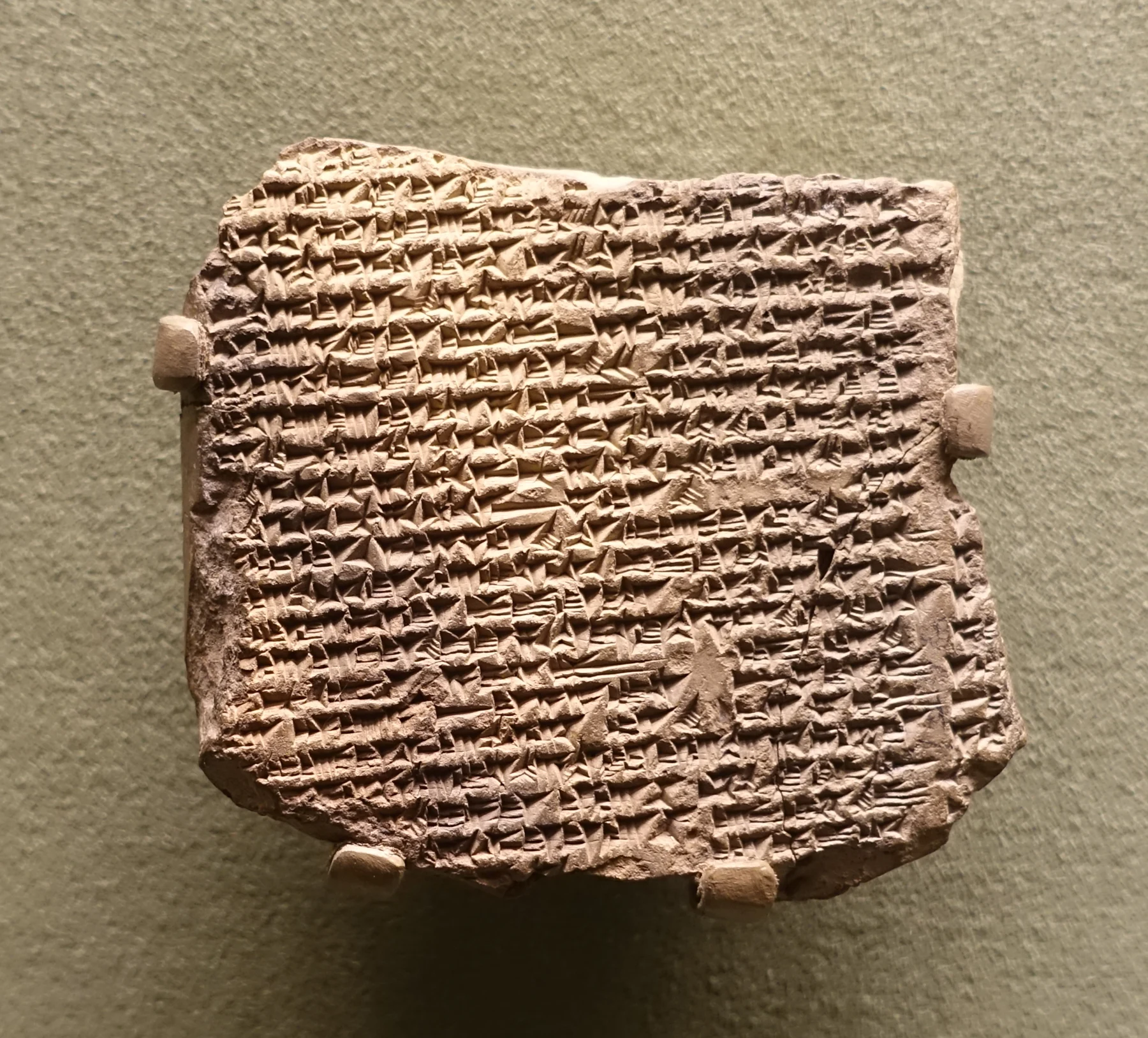
An indexed Akkadian entry in ORACC glosses šapattu as the fifteenth day of the month. Modern philological reviews likewise attest a mid-month day or a fifteen-day span, usually associated with the full moon. That is not a definition of every seventh day of a continuous week. A gloss about calming the heart may concern ritualRitualAn organised or distinguished practice meaningful to a community; it may leave traces, but its form alone does not reveal an associated doctrine.Glossary · Click to read the explanation appeasement of gods, rather than a general holiday for all workers. [1][13][14]
Enūma Eliš: lunar days, not a human holiday
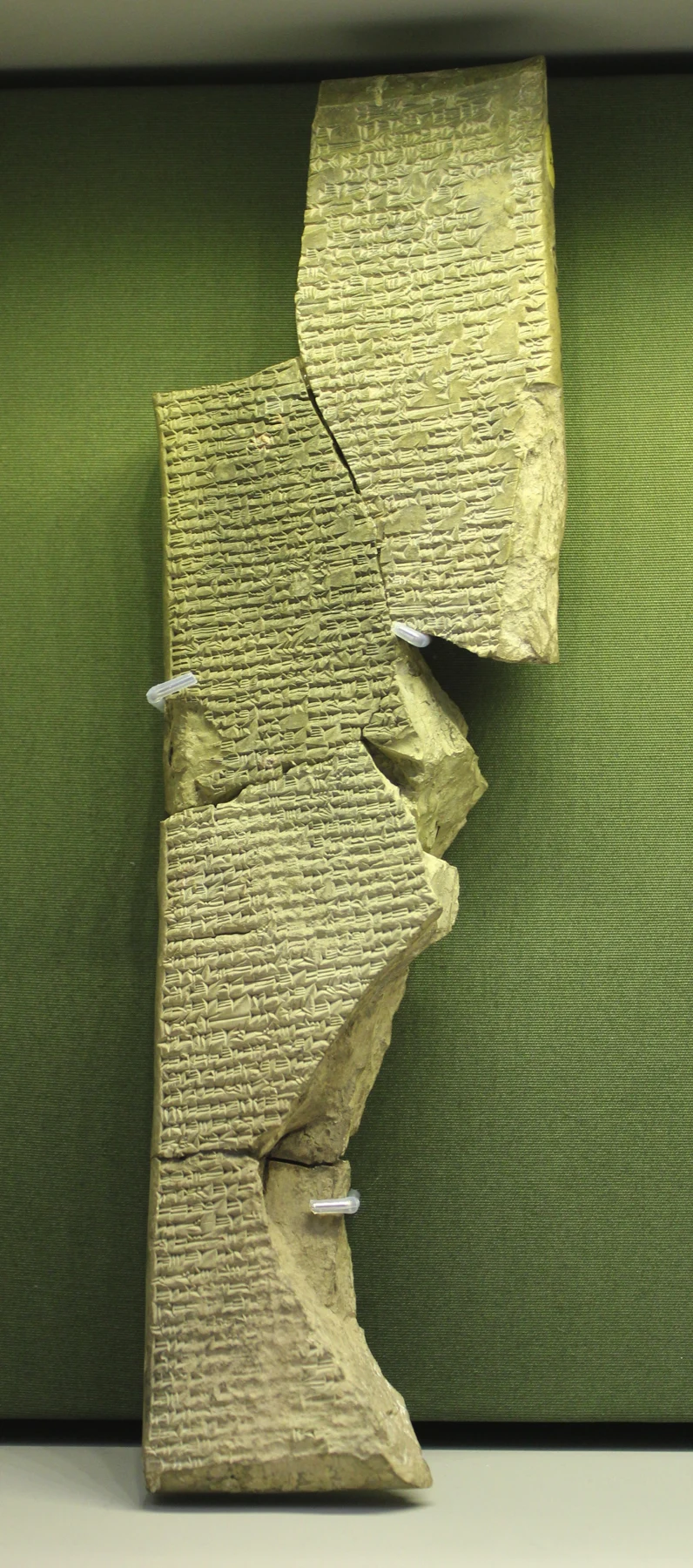
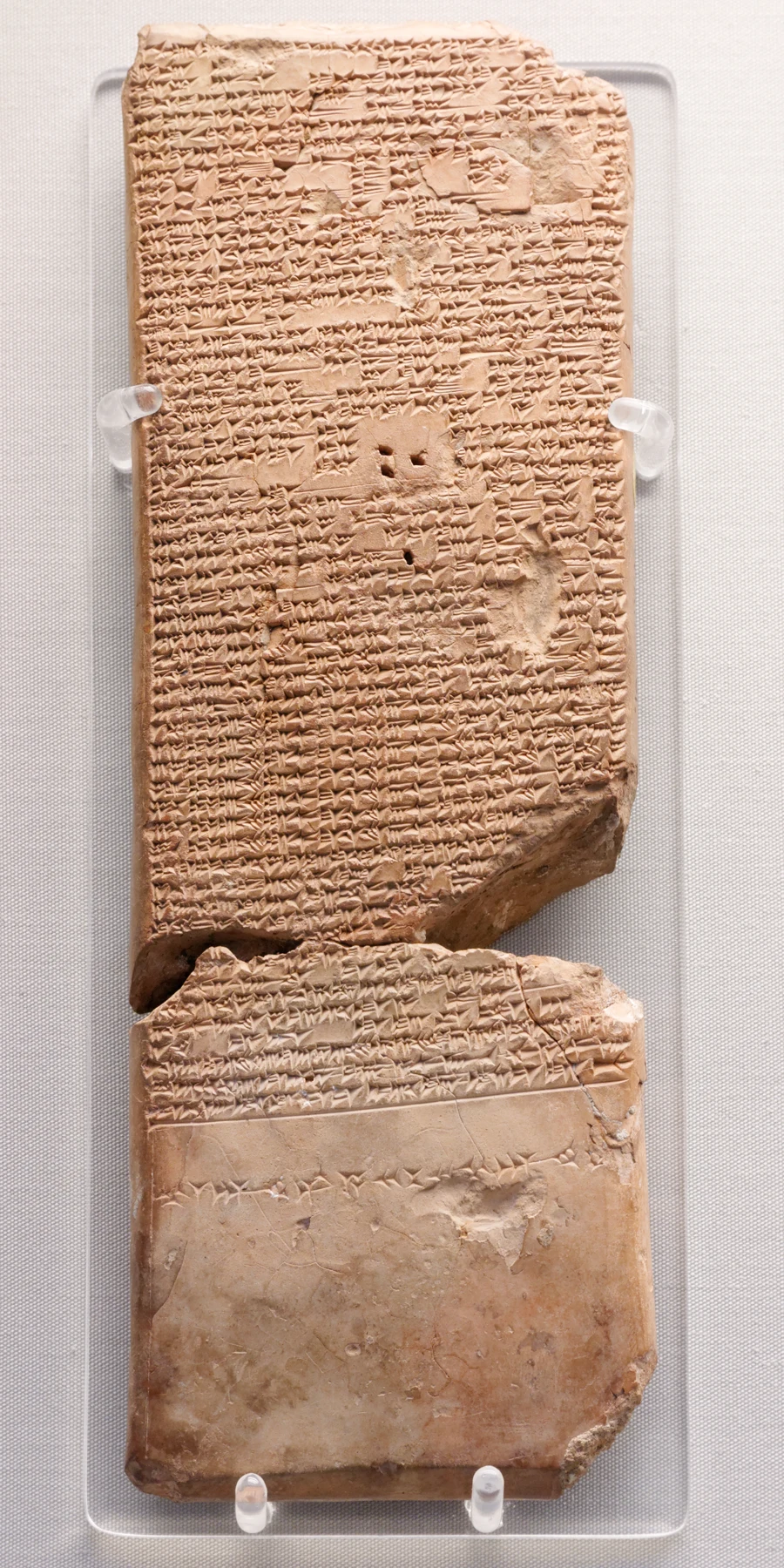
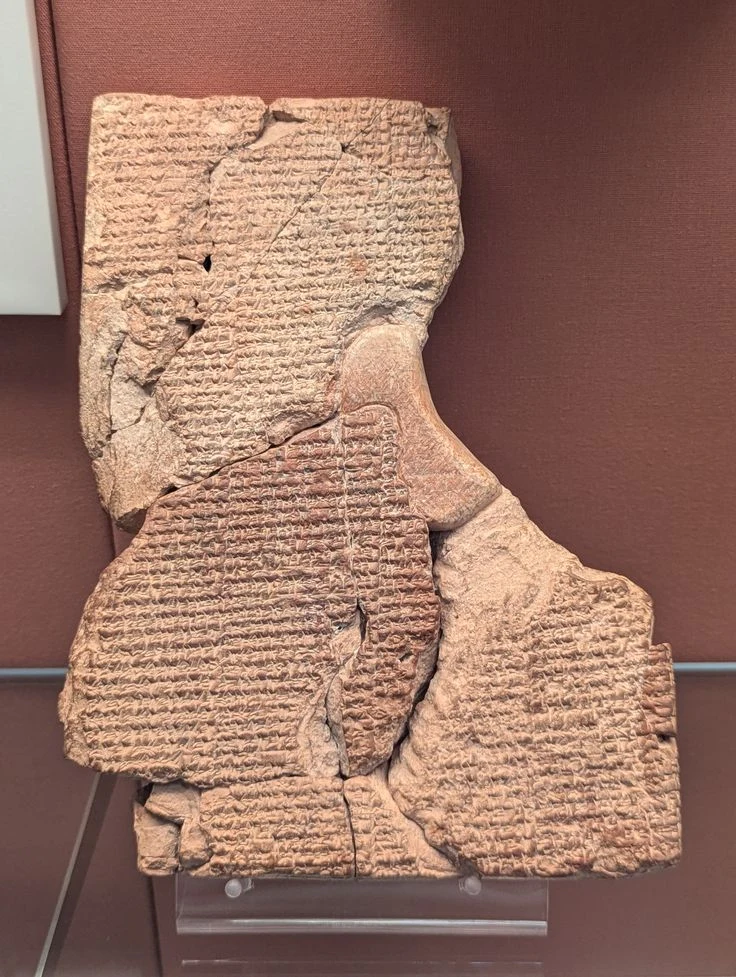
In tablet V of Enūma ElišEnuma ElishBabylonian Akkadian composition celebrating Marduk’s elevation and cosmic/divine ordering. Human creation is in VI, Nibiru in VII; a Tablet I reference cannot document those passages.Glossary · Click to read the explanation, MardukMardukBabylon’s god, elevated with the city’s history. Enuma Elish celebrates his rise and cosmic ordering; sources associate him with Nibiru and Jupiter. Earliest origins and functions remain uncertain.Glossary · Click to read the explanation arranges the moon to mark the month’s days. In W. G. Lambert’s translation, line 17 describes the moon on day seven, and line 18 places it opposite the sun on day fifteen. This is clear evidence for lunar quarters and the full moon within a lunar month. It commands no human being to stop work every seven days. [2]
A textual caution matters: some modern presentations insert šapattu into line 18 in brackets or as a possible restoration. The Lambert translation checked here says “fifteenth day” and does not print the word there. The line supports mid-month timing; it should not be quoted as an unambiguous preserved occurrence of “šapattu.” [2][12]
What about the seventh, fourteenth and twenty-first?
Later Assyrian hemerologies mark some dates as unfavorable for particular acts; certain lists include days 7, 14, 19, 21 and 28 of a month. The nineteenth in that sequence already shows that these are not simply successive seven-day weeks. Warnings for a king or ritual specialist are not a general labor law for an entire population. Lists and periods vary and cannot stand for all Mesopotamia across two millennia. [12][14]
The comparison prevents opposite overstatements: Mesopotamians did mark some dates associated with seven, yet not every ominous day or full moon becomes a “Babylonian Sabbath” equivalent to the Jewish one. [2][12][14]
In the Hebrew texts: a seventh day and several idioms
Exodus 23:12 gives a practical rule: work six days and cease on the seventh so the ox, donkey, a female slave’s son and resident alienGēr: the Resident Outsider in Hebrew TextsA person living within an Israelite community; neither every foreigner nor a modern legal refugee category.Glossary · Click to read the explanation may rest. The verse uses the Hebrew verb tišbot but does not name that day šabbāt. This does not prove that the rule historically preceded the name, but it lets us distinguish a social-rest formulation from other formulations. [6][11]
Genesis 2:1–3 blesses and sanctifies the seventh day because God ceased from work. It uses the verb “ceased” without the noun Sabbath. This is a literary and theological account of the day’s holiness, not a document dated to creation or sufficient evidence for when people began observing the practice. [7]
Full moon in Amos and Hosea: a testable hypothesis
In Amos 8:5, grain sellers wait for new moon and Sabbath to pass before reopening trade. Hosea 2:13 lists new moon and Sabbath among festivals. Jacob Wright proposes that the pair once marked opposite lunar occasions: the month’s beginning and its full moon. André Lemaire also favors an early full-moon feast. It is an intelligible reading, but an inference from festival names and sequence, not a sentence explicitly saying “Sabbath is the fifteenth.” [3][4][5][11]
A monthly occasion and a weekly day could instead be listed together because both interrupted trade or prompted gathering. Ottilia Lukács’s survey and Ganzel and Safford’s article remind us that the word’s derivation and an original lunar Sabbath remain unsettled. Short prophetic passages cannot alone provide a complete history of the week’s origin. [13][14]
An ostracon saying “before Sabbath”
An ostracon from Meṣad Ḥashavyahu, dated to the late First Temple period, preserves a harvester’s complaint about his confiscated cloak; he says he finished his work “before Sabbath” (lpny šbt). It is evidence outside the Bible that the name was known in Judah before the Babylonian exileBabylonian exileJudean deportations to Babylonia and the kingdom’s collapse in the early sixth century BCE; several phases, not everyone removed or returned at once.Glossary · Click to read the explanation. Yet the brief text says neither that the day recurred seven days after the last Sabbath nor that it was full moon. Lemaire, although favoring the lunar hypothesis, stresses that the inscription cannot settle the choice. [3]
Why do the two commandments give different reasons?
In Exodus 20:8–11, the seventh day is explicitly called Sabbath; work stops for household, servants, animals and resident foreigner because God made heaven and earth in six days and then rested. Deuteronomy 5:12–15 repeats the pattern, highlights servants resting “as you do,” and grounds the rule in the memory of slavery and departure from Egypt. These are not two versions of a Babylonian calendar; they are different Hebrew explanations of a practice that had become central. [8][9]
The different rationales do not independently date the composition of each version. They show, however, that Sabbath in these texts is more than a count of lunar phases: it has become a sign of creation and a right to rest grounded in a community’s liberation. [7][8][9]
Did the exile bring Sabbath to Judah?
Cultural contact is not in doubt: Assyria and Babylonia ruled the region, and Judeans lived in Babylonia. A word, counting practice or custom could have circulated. But the Meṣad Ḥashavyahu ostracon makes it hard to claim the very name Sabbath reached Judah only after exile. We have neither a Babylonian text prescribing an unbroken weekly rest for all nor a Judean document recording adoption of that rule. [3][12][14]
Wright reconstructs a gradual convergence of an older full-moon feast, a seven-day labor pause and Mesopotamian inauspicious daysMesopotamian HemerologyTexts assessing which days of a month suit particular actions, including warnings for some dates such as the seventh and fourteenth.Glossary · Click to read the explanation into a single day independent of the lunar month, particularly amid defeat and diaspora. A competing account places the sacred week’s formation within Israelite tradition and regards the Akkadian link as uncertain. Both confront a thin documentary record of transition. [11][12][13][14]
What Persian-period records reveal
Nehemiah 13:15–22 depicts an attempt to stop carrying and selling goods on Sabbath by closing JerusalemJerusalemJerusalem is a city of religious importance in Judaism, Christianity and IslamGlossary · Click to read the explanation’s gates. Ganzel and Safford trace Shabbat-derived personal names in Persian-period Judean records from Babylonia and Egypt and note variation in commerce among communities. These sources show Sabbath becoming more conspicuous as a social marker, not that it suddenly originated in the fifth century BCE. [10][13]
What can we conclude?
Textually secure: Akkadian šapattu denotes mid-month; a Babylonian poem marks days seven and fifteen in the lunar cycle; Hebrew texts know the seventh day and Sabbath; a late First Temple Judean ostracon says “before Sabbath.” Likely: Mesopotamian and Hebrew traditions occupied a world of possible interaction. Disputed: whether the earliest Sabbath was a full-moon festival, and whether the words are linked by cognacy or loan. Unproved: that Israel received the entire weekly rest institution from a documented Babylonian rule, or that ominous-day calendars were identical to Jewish Sabbath. [1][2][3][8][11][13][14]
References and notes
- ORACC Akkadian glossary; indexed šapattu entry only, not the full page Akkadian glossary, šapattu entry Return to the text ↑
- W. G. Lambert, Enūma Eliš V:12–22; passage only W. G. Lambert, Enūma Eliš, Tablet V:12–22, PDF p. 22 Return to the text ↑
- André Lemaire (2024), Sabbath and inscriptions, pp. 62–64, with conclusion André Lemaire, Jerusalem Journal of Archaeology 7 (2024), pp. 62–64, especially §5.3 Return to the text ↑
- Amos 8:4–6 in Hebrew and older JPS; relevant verses Amos 8:4–6, Hebrew and JPS 1917 Return to the text ↑
- Hosea 2:13 in Hebrew numbering and JPS; surrounding passage Hosea 2:13 in Hebrew numbering, Hebrew and JPS 1917 Return to the text ↑
- Exodus 23:10–12 in Hebrew and JPS; relevant passage Exodus 23:10–12, Hebrew and JPS 1917 Return to the text ↑
- Genesis 2:1–3 in Hebrew and JPS; complete pericope Genesis 2:1–3, Hebrew and JPS 1917 Return to the text ↑
- Exodus 20:8–11 in Hebrew and JPS; Sabbath commandment Exodus 20:8–11, Hebrew and JPS 1917 Return to the text ↑
- Deuteronomy 5:12–15 in Hebrew and JPS; Sabbath commandment Deuteronomy 5:12–15, Hebrew and JPS 1917 Return to the text ↑
- Nehemiah 13:15–22 in Hebrew and JPS; marketplace reform Nehemiah 13:15–22, Hebrew and JPS 1917 Return to the text ↑
- Jacob L. Wright (2015), “Shabbat of the Full Moon”; full essay and main notes Jacob L. Wright, 2015, part 1, main argument and notes Return to the text ↑
- Jacob L. Wright (2015), “How and When the Seventh Day Became Shabbat”; full essay Jacob L. Wright, 2015, part 2, main argument Return to the text ↑
- Tova Ganzel and Jan Safford (2026); full article and relevant footnotes Tova Ganzel and Jan Safford, 2026, text and notes Return to the text ↑
- Ottilia Lukács (2020), publisher preview; chapter 1 pp. 6–11 only Ottilia Lukács, Sabbath in the Making (2020), preview pp. 6–11 of chapter 1 Return to the text ↑
Suggest a correction · Suggest a source for this record
Cite this record
IL Archive, «Sabbath and Šapattu: Similar Names, Different Calendars», Edition 1, https://ilarchive.com/en/studies/sabbath-and-mesopotamian-calendars
Continue reading