Study
Adapa and Adam: wisdom, the food of life, and the limits of comparison
An extended study of a topic, with evidence and references.
- Timeline
- From 1800 BCE to 700 CE
Is Adapa the source of Adam’s story? Sumerian and Akkadian witnesses, Genesis’ two trees, Qur’anic promise and repentance, and the different roles of obedience examined.
Share article
Text
A human endowed with wisdom, food associated with life, divine instructions, and an unrealized opportunity to live forever: these convergences make the Mesopotamian story of AdapaAdapaWise figure of Eridu associated with Ea; multiple texts recount his ascent to Anu and refusal of offered food.Glossary · Click to read the explanation a compelling comparison with Adam in Genesis. Yet resemblance does not establish a single story with renamed characters. The function of food, the meaning of obedience, the protagonist’s identity, and the scene’s structure differ substantially.
This study examines surviving Adapa traditions, particularly the AkkadianAkkadianAn ancient East Semitic language written in cuneiform in Mesopotamia.Glossary · Click to read the explanation witness from AmarnaAmarna / AkhetatenSite of Akhenaten’s capital in Middle Egypt; boundary stelae record successive proclamations and reaffirmation.Glossary · Click to read the explanation, then Genesis 2:4–3:24, with a limited comparison to Qur’anic passages. We distinguish each text’s statements from modern interpretation. A possible connection neither adjudicates religious belief nor demonstrates a transmission route that the evidence does not preserve.
Adapa is not necessarily the first human
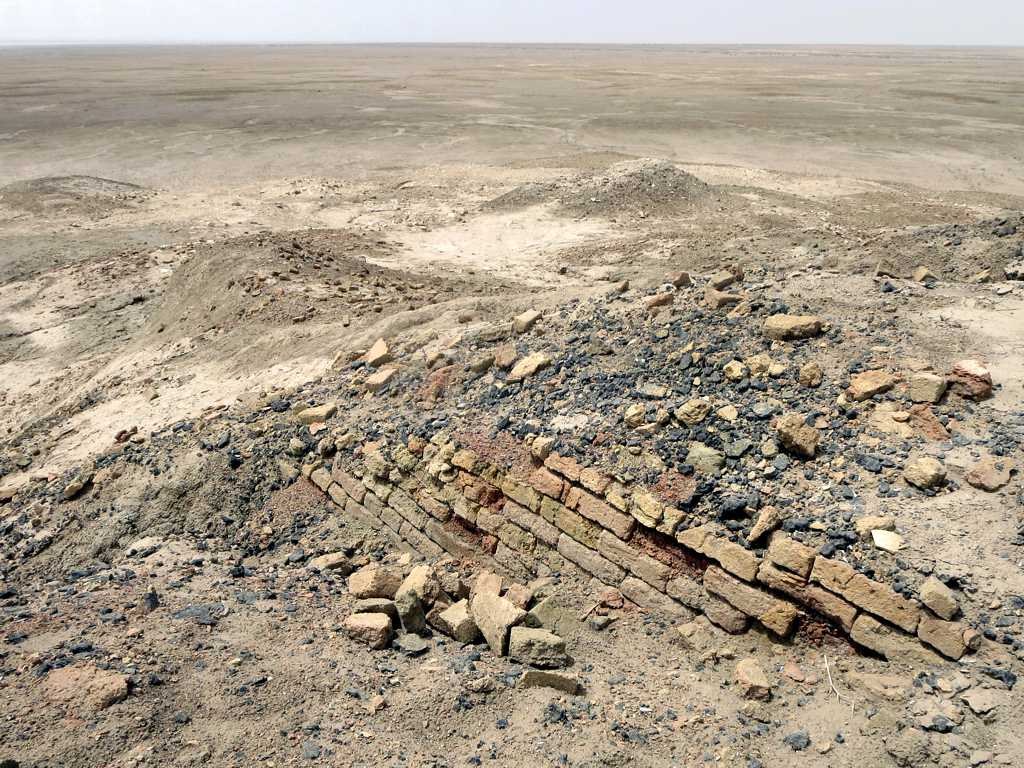
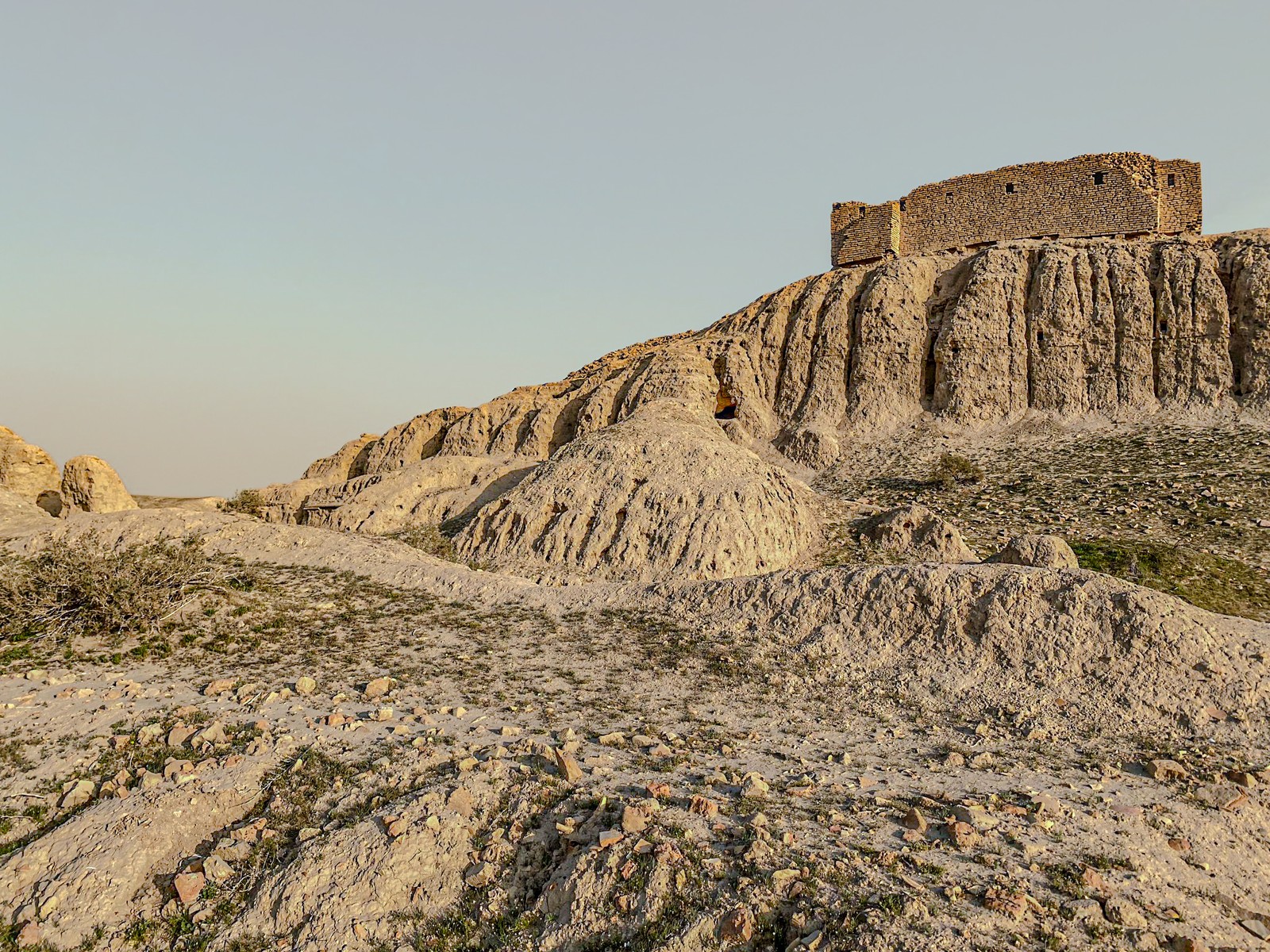
An Akkadian fragment introduces Adapa as a wise figure associated with EaEnkiMesopotamian deity associated with deep fresh water, wisdom and Eridu, known as Ea in Akkadian tradition. The earliest preserved written mention does not date his cult’s origin or identify Ubaid Eridu’s deity.Glossary · Click to read the explanation and EriduEriduAbu Shahrain in southern Iraq, with a long architectural sequence beginning before writing. Associated with Enki in historical times, which does not establish the sacred being’s identity in its earliest layers.Glossary · Click to read the explanation. He receives wisdom but not eternal life. He makes bread, prepares food, and catches fish in the service of the divine household. His world already contains a city, worship, and organized labour. It is not an explicit scene in which a solitary human is created on an otherwise empty earth. [1]
The description “Adapa is the Sumerian Adam” therefore requires caution. Scholars sometimes compare him with a primordial or representative human, but that is a comparative category, not an agreed statement that he was the first individual created by the gods. Dexter Callender distinguishes the category of primal humanity from chronological priority. [7]
Nor does the resemblance between the names Adapa and Adam establish an etymological relationship. Literary comparison requires texts and contexts. A few similar letters cannot demonstrate that one name developed into the other.
Which account survives?
Adapa and the South WindAdapa and the South WindMesopotamian tradition in Sumerian and Akkadian about wisdom, wind and heavenly ascent; its differing witnesses are not one tablet.Glossary · Click to read the explanation names a tradition with multiple witnesses, rather than a complete book transmitted without variation. EA 356, found at Amarna in Egypt and now in Berlin, preserves an important Akkadian section. CDLI places it within the Middle Babylonian period; the publisher’s description of Shlomo Izre’el’s edition dates this witness to the fourteenth century BCE. [2][8]
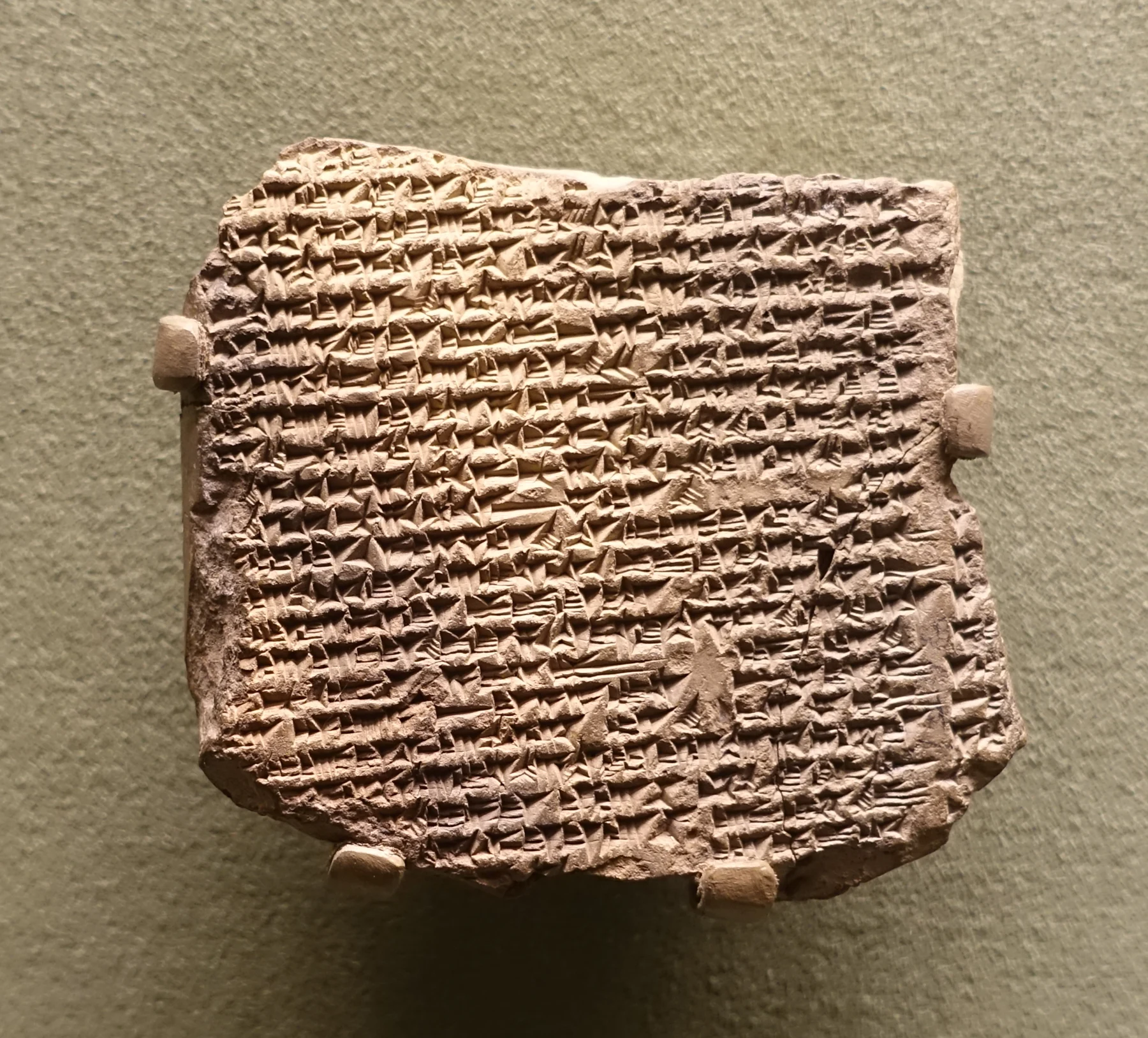
The cover photograph shows a different witness: MLC 1296Adapa fragment MLC 1296Neo-Assyrian clay fragment written in Akkadian, preserving the beginning of Adapa’s story in the Morgan Library & Museum.Glossary · Click to read the explanation, a Neo-Assyrian fragment in the Morgan collection. Albert Clay’s catalogue identifies it as the opening part of the account and distinguishes it from the Egyptian witness. Place, version, and date belong to our knowledge of the text; they cannot be discarded from the image caption. [12][13]
An earlier Sumerian account from Old Babylonian Tell Haddad differs in some gifts and in its ritualRitualAn organised or distinguished practice meaningful to a community; it may leave traces, but its form alone does not reveal an associated doctrine.Glossary · Click to read the explanation framing. Seth Sanders presents it using Antoine Cavigneaux’s edition. [3] We must not fill one version’s gaps with another version’s details and present the resulting reconstruction as the contents of one tablet. A surviving copy’s date does not, by itself, date the entire tradition’s beginnings.
How did Adapa reach heaven?
Adapa fishes at sea for his lordRabbTitle of lordship, ownership or care by context; applied to God in Lord of worlds.Glossary · Click to read the explanation’s household. The South Wind catches him and throws him into the water. Angered, he speaks words that break its wing, and the wind ceases to blow for seven days. AnuAn / AnuSumerian/Akkadian sky god; multifunctional AN alone cannot identify him in the earliest texts.Glossary · Click to read the explanation notices, questions his messenger, learns what Adapa has done, and orders his appearance. [1][2]
The protagonist has exceptional power: his speech affects a natural force and brings him before a heavenly authority. The action begins with fishing and a disruption of the wind, rather than a prohibition concerning fruit in a garden. This beginning matters. The reason for Adapa’s appearance before Anu differs from the reason Adam is placed in the garden.
Before the ascent, Ea prepares him for the encounter. He dresses Adapa in mourning and explains that Dumuzi and Gizzida will stand at the gate. Adapa should say that he mourns these two gods’ disappearance from his country, thereby gaining their advocacy before Anu. Instructions about food, water, clothing, and oil follow. [1][2]
The food warned against and the food offered
In the familiar reading of the Akkadian witness, Ea warns Adapa to refuse the food and water of death. He nevertheless allows him to wear the garment and use the oil that will be offered. Adapa reaches Anu, explains his attack on the wind, and benefits from the two gate gods’ intervention. [1][2]
Anu then calls for the food and water of life. Adapa neither eats nor drinks, while accepting the garment and oil. Questioned about his refusal, he cites Ea’s instruction and is returned to his earth. The discrepancy between warning and offer drives the scene, but it does not automatically settle each deity’s hidden intention. [1][2]
In this account, Adapa refuses food by following instructions. If eternal life is thereby missed, its loss is not simply punishment for eating forbidden food. Clothing and oil matter: accepting them shows that Ea’s instructions did not require an indiscriminate rejection of everything from heaven.
Did Ea deceive Adapa?
A well-known interpretation holds that Ea knew the food would confer immortality but prevented its consumption to preserve the boundary between humans and gods. The text can be read this way. It does not, however, provide an explicit statement conclusively identifying deception as Ea’s intention.
Giorgio Buccellati emphasizes trust in Ea and leaves room for protective instructions in a world whose dangers Adapa cannot judge. William Hallo examines the story through life and death while discussing divergent interpretations. [5][6] These are modern readings, attributable to their authors; Ea’s motive cannot be presented as an established fact outside the debate.
The expression “food of life” should also be distinguished from a complete reconstructed Mesopotamian philosophy of immortality. The familiar reading identifies an opportunity for eternal life, but the offer’s details, the refusal’s cause, and the story’s purpose remain interpretive questions. Multiple possibilities do not permit arbitrary claims. They require us to show where the witness allows interpretation without deciding it.
Genesis contains two trees
Genesis has a different structure. YHWHYahwehThe divine proper name written YHWH in the Hebrew Bible.Glossary · Click to read the explanation God forms the human from the ground’s dust, makes him a living being, and places him in a garden to work and keep it. The account names the tree of lifeTree of Life in GenesisA tree distinct from the knowledge tree in Genesis 2–3; after the other tree is eaten, the way to it is guarded lest humans eat and live forever.Glossary · Click to read the explanation and the tree of the knowledge of good and evilTree of the Knowledge of Good and EvilThe tree forbidden in Genesis 2:17 and discussed by the serpent before the eating in Genesis 3; it is not the tree of life.Glossary · Click to read the explanation. The prohibition in 2:16–17 concerns the second. Exclusion from the tree of life comes after eating, in 3:22–24. [4]
The serpent addresses the woman. She eats and gives to the man, who also eats. They become aware of nakedness and make coverings from fig leaves. Questioning and pronouncements concerning pain, labour, and death follow. God makes skin garments, and the human is prevented from eating from the tree of life and living forever. CherubimCherubimBeings or figures with guarding and sacred functions in Hebrew texts, at the tree-of-life access and on the ark; not equivalent to every heavenly messenger.Glossary · Click to read the explanation guard access to it. [4]
This passage does not identify the fruit as an apple or call the serpent Satan. Those identifications belong to reception and interpretation, and cannot be inserted into Genesis’ wording when comparing it with an Akkadian tablet. Nor should the knowledge tree be called “the tree of death” as though that were its textual name, even when a scholar uses the phrase interpretively.
Obedience works in different directions
The clearest difference is that Adapa does not eat in obedience to instructions, whereas the Genesis couple eat contrary to a prohibition. The shared concern with food and the boundary of eternal life accompanies a different action producing the outcome. This is a difference in narrative logic, not merely in characters’ names.
There is also a distinction between never possessing immortality and losing it after possessing it. Adapa’s opening separates granted wisdom from ungranted eternal life. Genesis 3:22 concerns preventing an act of eating that could produce life forever. That verse alone does not explicitly declare an intrinsically immortal human condition before eating; the issue belongs to a wider interpretive debate. [1][4]
Comparison can examine how both texts relate knowledge, human limits, and divine instructions. It should not erase their differences to manufacture a single pattern of “the first human’s sin.” Differences likewise should not become a hierarchy ranking one religious tradition above another. The subject is narrative function, not an evaluation of believers.
Clothing and serpents: where does matching stop?
Both stories contain clothing, but its position and function differ. Adapa’s mourning garment prepares his meeting with the gate gods, while clothing offered in heaven belongs to hospitality. In Genesis, covering first follows awareness of nakedness; God’s garments then precede departure from the garden. [1][4]
The Akkadian food scene contains no woman persuading Adapa to eat, no serpent offering fruit, and no knowledge tree beside a life tree. A deity’s associationShirkAssociating others with God in Quranic discourse; not equivalent to denying God’s existence.Glossary · Click to read the explanation with snakes in other traditions cannot automatically turn Gizzida into EdenEden: The Setting of Genesis’s GardenThe place in which the garden of Genesis 2–3 is planted; the story describes rivers, trees and a human test, while its archaeological location and name’s derivation remain unsettled.Glossary · Click to read the explanation’s serpent. Evidence must concern that figure’s role within the compared account itself.
If rewriting occurred, it could have changed the elements’ functions. Yet declaring every divergence evidence of rewriting makes borrowing impossible to test. A hypothesis must explain specific features and remain open to resemblance arising from wider traditions or comparable human questions.
The Egyptian witness proves circulation, not a route to Genesis
An Akkadian Adapa text at Amarna is important evidence that Mesopotamian literature circulated outside its homeland in the literate world of the Late Bronze AgeLate Bronze AgeAn archaeological period conventionally around 1600–1200 BCE in much of the Near East, with regional variation.Glossary · Click to read the explanation. It does not establish that a Genesis author read EA 356 or supply a chain of copies linking that tablet to the garden passage. [2]
Political and scribal contacts between MesopotamiaMesopotamiaA historical region associated with the Tigris and Euphrates, home to many societies and civilisations.Glossary · Click to read the explanation and the LevantThe LevantThe Levant is a regional name for lands along the eastern MediterraneanGlossary · Click to read the explanation could provide a context for knowing shared traditions. The composition and editorial layers of Genesis, however, cannot be derived from the age of an Adapa tablet alone. Each witness must be dated separately and possible intermediaries examined, rather than drawing a direct arrow from an older text to a later one.
The Sumerian version’s ritual frame also reminds us that Adapa traditions served purposes beyond today’s comparison about missed immortality. [3] Not every version is simply a single explanatory story about why humans die in the sense modern readers might expect.
Qur’anic Adam: Satan’s promise and repentance
Taha 20:115–123 mentions a prior charge to Adam, Iblis’ refusal to prostrate, and a warning about the enemy. Satan promises Adam a tree of immortality and unfailing kingship. This is Satan’s promise, not the narrator’s confirmation that the tree actually grants immortality. Both eat, their nakedness becomes apparent, and they use garden leaves. Adam’s disobedience is followed by his being chosen, his accepted repentance, and guidance. [9]
Al-A‘raf 7:19–22 directs the prohibition to both and presents Satan’s claim about angelic status or immortality, followed by their eating and exposed nakedness. In 7:23 both ask for forgiveness and mercy. [10][11] These verses do not name the woman Eve or describe Satan as a serpent. Nor do they repeat Genesis’ named pair of trees.
These are comparisons between specified texts, not evidence of a direct Adapa-to-Qur’an line. Even if a scholar favours a relationship between a Mesopotamian tradition and Genesis, the Qur’an’s relationship to earlier traditions remains a separate question requiring its own witnesses, dates, and intermediaries. One transmission hypothesis cannot pass its degree of certainty automatically to every later text.
Six checks on a transmission claim
- Chronology: distinguish Sumerian and Akkadian Adapa copies, a proposed origin of the tradition, Genesis’ layers, and the later Qur’anic text.
- Contact: Akkadian at Amarna proves circulation into other environments, not an identified author’s reading of the account.
- Specificity: wisdom, food, prolonged life, and instructions merit comparison, but their details do not all match.
- Structure: compare fishing, summons, and hospitality with garden, prohibition, serpent, and questioning, then examine obedience and disobedience.
- Transmission route: this study identifies no intermediary manuscript or explicit statement linking Adapa’s scene to a Genesis or Qur’anic author.
- Alternatives: shared cultural traditions, independent developmentIndependent developmentSimilar elements arising without historical transmission between them.Glossary · Click to read the explanation of some images, and reinterpretation remain possibilities to assess rather than dismiss.
What does comparison establish?
Confirmed: knowledge, food, life, and human limits feature in the compared texts, alongside fundamental differences in obedience, eating, and protagonist. Adapa also survives in multiple witnesses rather than a single fixed account.
Possible: the garden tradition encountered images or questions circulating in the ancient environment that included Adapa. Cultural and literary connections can be investigated, but direct borrowing requires more specific evidence.
Not demonstrated by these witnesses: Adapa and Adam name the same character; Ea certainly deceived Adapa; EA 356 was a Genesis author’s source; or the Qur’anic narrative came directly from a Mesopotamian tablet.
Comparison’s value does not depend upon proving one source. It reveals different formulations of related questions: what can humans know, what remains beyond their capacity, and how do trust, food, and divine limits relate to their lives? Answers become more precise when each text retains its voice and history.
Reading scope: Rogers’ historical translation of the fragments, the Genesis passage, and the specified Arabic Qur’anic verses were read. EA 356 metadata and relevant lines, Clay’s catalogue pages, Buccellati’s article, selected Hallo and Callender pages, and Sanders’ introduction and part of his translation were consulted. Izre’el’s publisher description is not the full book; Cavigneaux’s complete edition was not read. The notes specify the actual extent of consultation.
Related readings
References and notes
- All reproduced fragments read; the page’s introductory summary is distinct. Rogers is a historical translation, not a current critical edition. Food, clothing and oil checked against EA 356 and Callender. R. W. Rogers, Cuneiform Parallels to the Old Testament (1912); three preserved fragments reproduced Return to the text ↑
- Metadata and specified scene lines consulted. CDLI gives a broad period; Izre’el’s description dates this witness to the fourteenth century. This Berlin/Amarna tablet differs from the photographed Morgan fragment. CDLI P270855; EA 356 / VAT 00348; obverse 20′–36′, reverse 1–34; object metadata Return to the text ↑
- Introduction and part of the translation read, not all notes or Sanders’ book. This version’s refusal of clothing is not mixed with Akkadian acceptance; Cavigneaux’s full edition was not read. Seth L. Sanders (2020), introduction and selected Sumerian translation; based on Cavigneaux 2014 Return to the text ↑
- Both chapters read in full. Two trees, prohibition, clothing and exclusion from eternal life are textual features; apple and identification of the serpent as Satan are absent from this passage. Genesis 2–3; public-domain KJV; comparison focuses on 2:4–3:24 Return to the text ↑
- Complete six-page article read. Trust and possible protection are attributed interpretations, not certainty about Ea’s motive. No hierarchy of religions is adopted. Giorgio Buccellati, Ugarit-Forschungen 5 (1973), pp. 61–66, Adapa, Genesis, and the Notion of Faith Return to the text ↑
- Specified pages read, without claiming complete article consultation. Readings are attributed to Hallo. His “tree of death” is interpretation, not Genesis’ name; his evaluative ranking is not adopted. William W. Hallo, Scriptura 87 (2004), pp. 267–277; consulted pp. 267–269 and 271–277 Return to the text ↑
- Selected pages in the Hutton/Rubin volume read: primal versus chronologically first human, scene details and interpretive disagreements. Neither complete chapter nor complete volume was read. Dexter E. Callender Jr., “Biblical ʾādām and Mesopotamian Adapa as ‘Primal Human’” (2015), pp. 343–372; consulted 343–345, 353–358 Return to the text ↑
- Publisher description and contents only, for the Amarna witness’s date and multiple fragments. Discussion of Ea’s motive does not claim full consultation of this book. Shlomo Izre’el, Adapa and the South Wind (2001); publisher description and contents only Return to the text ↑
- Complete Arabic verses read. Immortality and kingship are Satan’s promise; repentance and guidance follow disobedience. Genesis’ two trees and serpent are not imported. Qur’an, Taha 20:115–123; Arabic original Return to the text ↑
- Arabic verses 19–22 read on the range page. Verse 20 gives Satan’s claim about angels or immortals, not two kings. Verse 23 was read at its separate link below. Qur’an, al-A‘raf 7:19–22; Arabic original; range page delivered 19–22 Return to the text ↑
- Individual verse read: both ask forgiveness and mercy. Later commentary is not used to add Eve’s name or a serpent to these verses. Qur’an, al-A‘raf 7:23; Arabic original Return to the text ↑
- Contents and item 3 description on the specified pages read; PDF pages 6–7 inspected. Identifies MLC 1296 and the opening. The entire 112-page volume and its old theories about other texts are not adopted. Albert T. Clay, Babylonian Records in the Library of J. Pierpont Morgan IV (1923), contents and pp. 10–11, item 3 Return to the text ↑
- Search-indexed museum metadata excerpt consulted; direct access returned 403. Identity cross-checked with Clay and photograph description; full museum page not claimed as read. Morgan Library & Museum; MLC 1296; search-indexed catalogue excerpt Return to the text ↑
Suggest a correction · Suggest a source for this record
Cite this record
IL Archive, «Adapa and Adam: wisdom, the food of life, and the limits of comparison», Edition 1, https://ilarchive.com/en/studies/adapa-and-eden
Continue reading