Artifact
Adapa fragment MLC 1296
An object record bringing together its image, metadata, rights, and context.
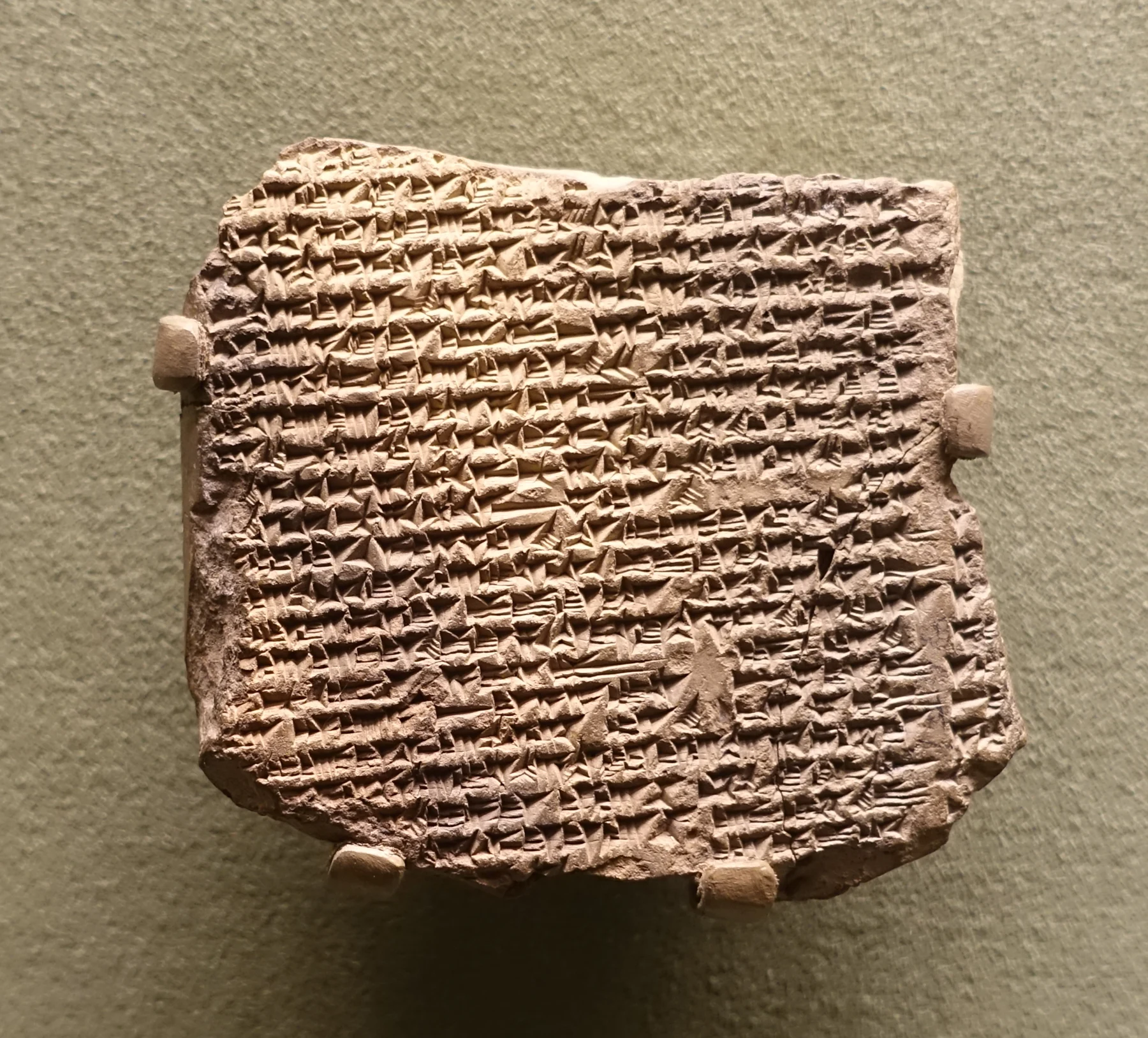
Neo-Assyrian clay fragment written in Akkadian, preserving the beginning of Adapa’s story in the Morgan Library & Museum.
Original photograph
CC0 · Daderot / Wikimedia Commons / CC0 1.0
Adapa fragment A, MLC 1296, Neo-Assyrian, about the seventh century BCE, Morgan Library & Museum. Preserves the opening; not Amarna EA 356 or a portrait of Adapa or Adam. Photograph: Daderot, 2020; CC0 1.0
License · Image sourceObject details
- Title
- Adapa fragment MLC 1296
- Rights
- CC0
Metadata
These are descriptive fields, not conclusions.
- Edition
- 4
Text
A fragment of a clay tablet written in AkkadianAkkadianAn ancient East Semitic language written in cuneiform in Mesopotamia.Glossary · Click to read the explanation, preserving the beginning of the story of AdapaAdapaWise figure of Eridu associated with Ea; multiple texts recount his ascent to Anu and refusal of offered food.Glossary · Click to read the explanation, a figure of Mesopotamian literature. It belongs to the Neo-Assyrian period; the image record dates it to about the seventh century BCE. Numbered MLC 1296, it is held in the Morgan Library & Museum in New YorkNew York CityNew York City is in the United States and houses the Metropolitan Museum of ArtGlossary · Click to read the explanation. [12][13]
The fragment helps compare the copies preserving the story. The catalogue connects its opening with fragments from AshurbanipalAshurbanipalAshurbanipal was an Assyrian king of the seventh century BCE, reigning about 668–631 BCEGlossary · Click to read the explanation’s library. It differs from another copy found at AmarnaAmarna / AkhetatenSite of Akhenaten’s capital in Middle Egypt; boundary stelae record successive proclamations and reaffirmation.Glossary · Click to read the explanation in Egypt and held in Berlin. Dating the object establishes the time of this copy, while the story may be older. [12]
The photograph shows the actual object. Daderot took it in 2020 and made it available under the CC0 public-domain dedication.
References and notes
- Contents and item 3 description on the specified pages read; PDF pages 6–7 inspected. Identifies MLC 1296 and the opening. The entire 112-page volume and its old theories about other texts are not adopted. Albert T. Clay, Babylonian Records in the Library of J. Pierpont Morgan IV (1923), contents and pp. 10–11, item 3 Return to the text ↑
- Search-indexed museum metadata excerpt consulted; direct access returned 403. Identity cross-checked with Clay and photograph description; full museum page not claimed as read. Morgan Library & Museum; MLC 1296; search-indexed catalogue excerpt Return to the text ↑
Research history
Substantive changes are retained here. Minor copy edits remain in the internal operational log.
-
Substantive record update
-
Substantive record update
-
Substantive record update
Archive records may be reviewed and refined as better evidence or sources become available. Suggest a correction
Suggest a correction · Suggest a source for this record
Cite this record
IL Archive, «Adapa fragment MLC 1296», Edition 4, https://ilarchive.com/en/artifacts/adapa-fragment-mlc1296