Entity
Adapa
A reference page linking a name, group, or concept to the materials that discuss it.
Wise figure of Eridu associated with Ea; multiple texts recount his ascent to Anu and refusal of offered food.
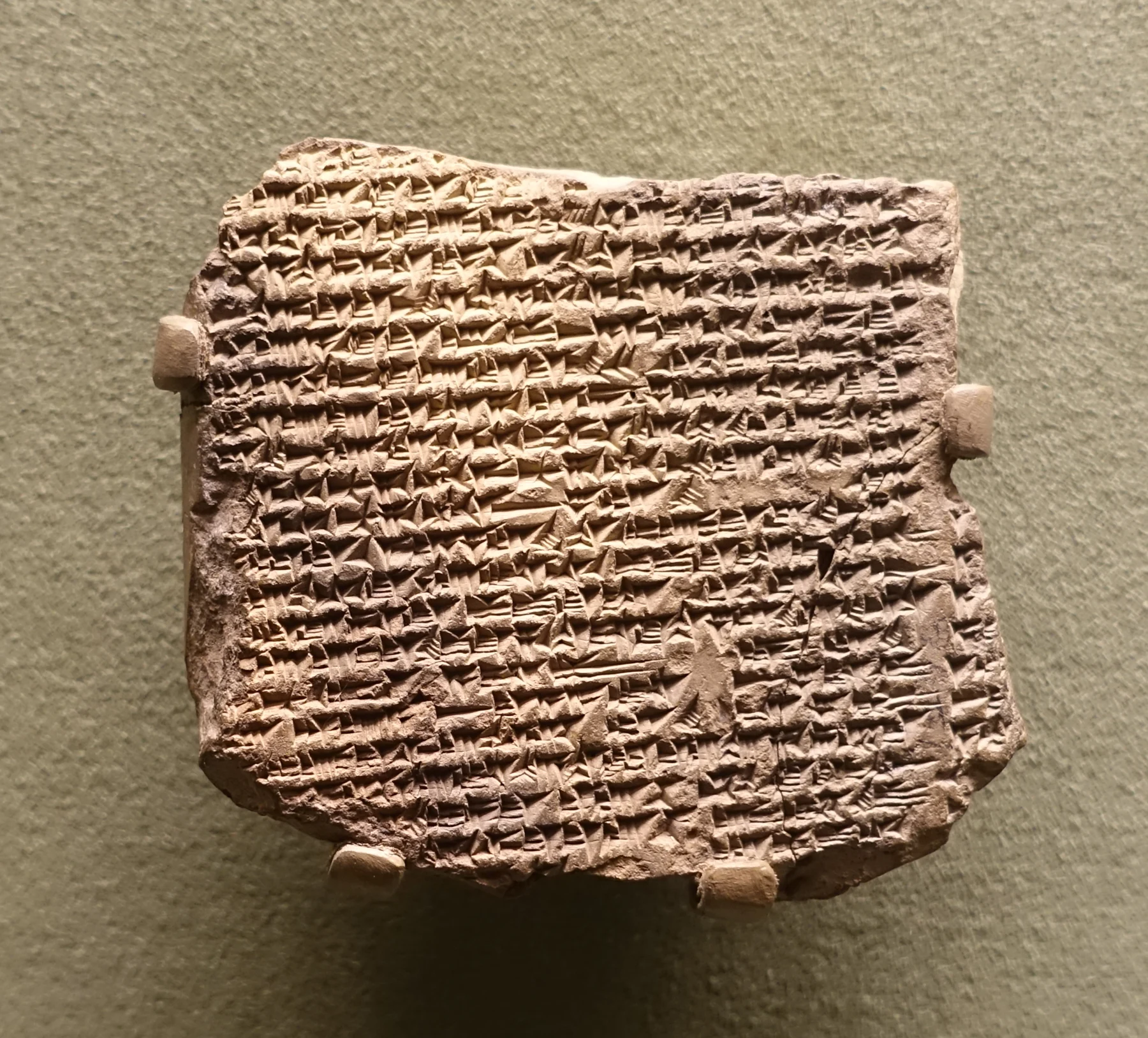
Text
AkkadianAkkadianAn ancient East Semitic language written in cuneiform in Mesopotamia.Glossary · Click to read the explanation fragments depict Adapa’s wisdom and ritualRitualAn organised or distinguished practice meaningful to a community; it may leave traces, but its form alone does not reveal an associated doctrine.Glossary · Click to read the explanation service at EriduEriduAbu Shahrain in southern Iraq, with a long architectural sequence beginning before writing. Associated with Enki in historical times, which does not establish the sacred being’s identity in its earliest layers.Glossary · Click to read the explanation, without unequivocally identifying him as the first human. In AmarnaAmarna / AkhetatenSite of Akhenaten’s capital in Middle Egypt; boundary stelae record successive proclamations and reaffirmation.Glossary · Click to read the explanation he refuses food and water following EaEnkiMesopotamian deity associated with deep fresh water, wisdom and Eridu, known as Ea in Akkadian tradition. The earliest preserved written mention does not date his cult’s origin or identify Ubaid Eridu’s deity.Glossary · Click to read the explanation, accepting garment and oil. [1][2]
Comparison with Adam concerns knowledge, food and limits of life, alongside differing obedience and narrative structure. Resemblance does not establish identical figures or name derivation. [4][7]
The image is a textual witness to his tradition’s opening, not his portrait.
References and notes
- All reproduced fragments read; the page’s introductory summary is distinct. Rogers is a historical translation, not a current critical edition. Food, clothing and oil checked against EA 356 and Callender. R. W. Rogers, Cuneiform Parallels to the Old Testament (1912); three preserved fragments reproduced Return to the text ↑
- Metadata and specified scene lines consulted. CDLI gives a broad period; Izre’el’s description dates this witness to the fourteenth century. This Berlin/Amarna tablet differs from the photographed Morgan fragment. CDLI P270855; EA 356 / VAT 00348; obverse 20′–36′, reverse 1–34; object metadata Return to the text ↑
- Both chapters read in full. Two trees, prohibition, clothing and exclusion from eternal life are textual features; apple and identification of the serpent as Satan are absent from this passage. Genesis 2–3; public-domain KJV; comparison focuses on 2:4–3:24 Return to the text ↑
- Selected pages in the Hutton/Rubin volume read: primal versus chronologically first human, scene details and interpretive disagreements. Neither complete chapter nor complete volume was read. Dexter E. Callender Jr., “Biblical ʾādām and Mesopotamian Adapa as ‘Primal Human’” (2015), pp. 343–372; consulted 343–345, 353–358 Return to the text ↑
Research history
Substantive changes are retained here. Minor copy edits remain in the internal operational log.
-
Substantive record update
Suggest a correction · Suggest a source for this record
Cite this record
IL Archive, «Adapa», Edition 2, https://ilarchive.com/en/entities/adapa