Entity
Tree of Life in Genesis
A reference page linking a name, group, or concept to the materials that discuss it.
The tree of life in Genesis 2–3 is distinct from the tree of the knowledge of good and evil; after the command about the other tree is broken, the way to it is guarded to prevent eating from it and living forever.
Estimated reading time: 7 min Published Last reviewed:
Share article
Text
Introduction
The tree of life in Genesis stands in the Garden of EdenEden: The Setting of Genesis’s GardenThe place in which the garden of Genesis 2–3 is planted; the story describes rivers, trees and a human test, while its archaeological location and name’s derivation remain unsettled.Glossary · Click to read the explanation alongside the tree of the knowledge of good and evilTree of the Knowledge of Good and EvilThe tree prohibited in Genesis 2:17 and eaten from in Genesis 3, narratively distinct from the tree of life; its fruit is unidentified.Glossary · Click to read the explanation, but it serves a different purpose. The narrative does not conclude with a new command against eating from the tree of life. Instead, after humans eat from the other tree, access to it is guarded. Keeping these trees distinct clarifies how Genesis 2–3 relates knowledge, mortality, and the limits of the human condition, without assuming that every ancient Near Eastern sacred-tree image represents the Genesis tree.
Two trees in the garden, one explicit prohibition
Genesis 2:9 introduces the two trees among those caused to grow by the Lord God in the Garden of EdenEden: The Setting of Genesis’s GardenThe place in which the garden of Genesis 2–3 is planted; the story describes rivers, trees and a human test, while its archaeological location and name’s derivation remain unsettled.Glossary · Click to read the explanation. The decisive HebrewHebrewA Northwest Semitic language of the Canaanite group, encompassing Iron Age epigraphy, Biblical, Rabbinic, medieval and Modern Hebrew; its scripts and pronunciations changed over time.Glossary · Click to read the explanation wording reads [2]:
The two names are coordinated, not presented as alternative names for one tree. The verse places the tree of life in the garden's midst and then mentions the knowledge tree, without supplying a precise map for both. In Genesis 2:16–17, the command generally permits eating from the garden's trees but singles out the tree of the knowledge of good and evilTree of the Knowledge of Good and EvilThe tree prohibited in Genesis 2:17 and eaten from in Genesis 3, narratively distinct from the tree of life; its fruit is unidentified.Glossary · Click to read the explanation as forbidden. It does not single out the tree of life [2].
In her response to the serpent, the woman calls the prohibited tree “the tree in the midst of the garden” without naming it; she also includes a prohibition on touching its fruit, absent from the earlier command (Genesis 3:3). That creates a difficulty about the description of the tree's location, but does not erase the different names or the explicit object of the command in Genesis 2:17. Narrative analysis can investigate the role of such differences without supplying a botanical identity or naming a fruit the text never identifies [3][4].
Eating, enduring life, and the guarded way
Following the eating of the knowledge tree's fruit, the divine speech of Genesis 3:22 joins the humans' newly acquired knowledge to the possibility of taking from the tree of life as well. Genesis 3:24 states why the way is guarded [3].
The human is consequently expelled and cherubimCherubimCherubim as Eden’s guardians, Ark and Temple figures, and beings in Ezekiel’s vision: a plural name, varying descriptions, and the limits of ancient visual comparisons.Glossary · Click to read the explanation, together with a flaming, turning sword, guard the route to the tree of life, not merely the knowledge tree. Earlier the human is told of returning to dust (Genesis 3:19), so the loss of access is bound up with mortal human existence. The most immediate reading of the final narrative is that living “forever” becomes an option denied after the transgression; the story has not clearly stated that this permanence was already possessed. Yet these verses give no botanical description, no required quantity or frequency of eating, and no explicit report that the human ate from the life tree before expulsion [3][5].
Thus the immediate transgression—the breach of the command concerning the knowledge tree—must be distinguished from the stated purpose of guarding the way: preventing subsequent access to the tree of life. Genesis does not say that the serpent stole that tree or its fruit; that motif must not be imported from another narrative.
Reading the finished story and proposing its formation
Read as a literary whole, the narrative explains how humans came to possess knowledge of good and evil without securing unending life. The opening mention of both trees, the reappearance of the life tree at the close, and the recurring action of eating support this reading. Yairah Amit's examination of the Eden story's exposition illuminates how information and dialogue are organized to produce narrative tension [4].
Some scholars nevertheless understand the varying references to a tree at the center in Genesis 2:9 and 3:3, and the prominence of the life tree near the conclusion, as potential traces of earlier compositions or editing. David M. Carr discusses the Eden narrative's precursors and the integration of its components within the formation of Genesis 1–11. Peter Thacher Lanfer approaches Genesis 3:22–24 as a significant passage for questions of redaction and reception. Walter Bührer offers a relative-dating argument in the debate over priestly and other material. These are debated reconstructions, not surviving manuscripts preserving a demonstrably original “single-tree” version [7][8][9].
Jack M. SassonJack M. SassonHebrew Bible and ancient Near Eastern cultures scholar, Vanderbilt professor emeritus, also specializing in Mari’s archives.Glossary · Click to read the explanation also proposes a different interpretation involving the life tree's effects and reproduction or the continuity of humankind. Such an interpretation is not the same as an explicit statement in Genesis that Adam actually ate from the tree or that procreation defines “living forever.” The more direct final-text reading, in which two trees have distinct roles and the guard prevents enduring individual life, therefore has stronger immediate textual support. The tree's precise mechanism and the narrative's compositional history remain unsettled [5][6].
A short chronology of text and witnesses
- Narrated time: The story is placed in a primeval, undated world. It yields no historical year for a botanical specimen or an excavated garden.
- Composition and editing: The Eden narrative is commonly discussed in relation to the literary history of first-millennium BCE Genesis traditions, but the sequence and dates of its proposed layers remain disputed. A dating proposal for one passage cannot automatically date the whole book [7][8][9].
- Ancient Greek translation: Translation of the Pentateuch into Greek began around the third century BCE. This witnesses the text's transmission, not the date of its original composition; the Greek rendering in Genesis 3:22 includes “τοῦ ξύλου τῆς ζωῆς,” “of the tree of life” [10][15].
- Medieval Hebrew witness: The Leningrad Codex, an important Masoretic witness, is dated approximately 1008–1009 CE. Its copy date does not date the authorship of Genesis, and its wording should not be attributed to an earlier manuscript without inspecting the relevant passage [11].
Later usage and Mesopotamian comparisons
The Book of ProverbsBook of ProverbsThe Book of Proverbs collects wisdom texts in the Hebrew Bible on learning, conduct and social relationships.Glossary · Click to read the explanation employs “tree of life” for a different, sapiential purpose. In Proverbs 3:18 it is wisdom that is a tree of life to those who hold fast to her. The verse does not identify a material tree in Eden, even though it reuses vivid arboreal imagery [12].
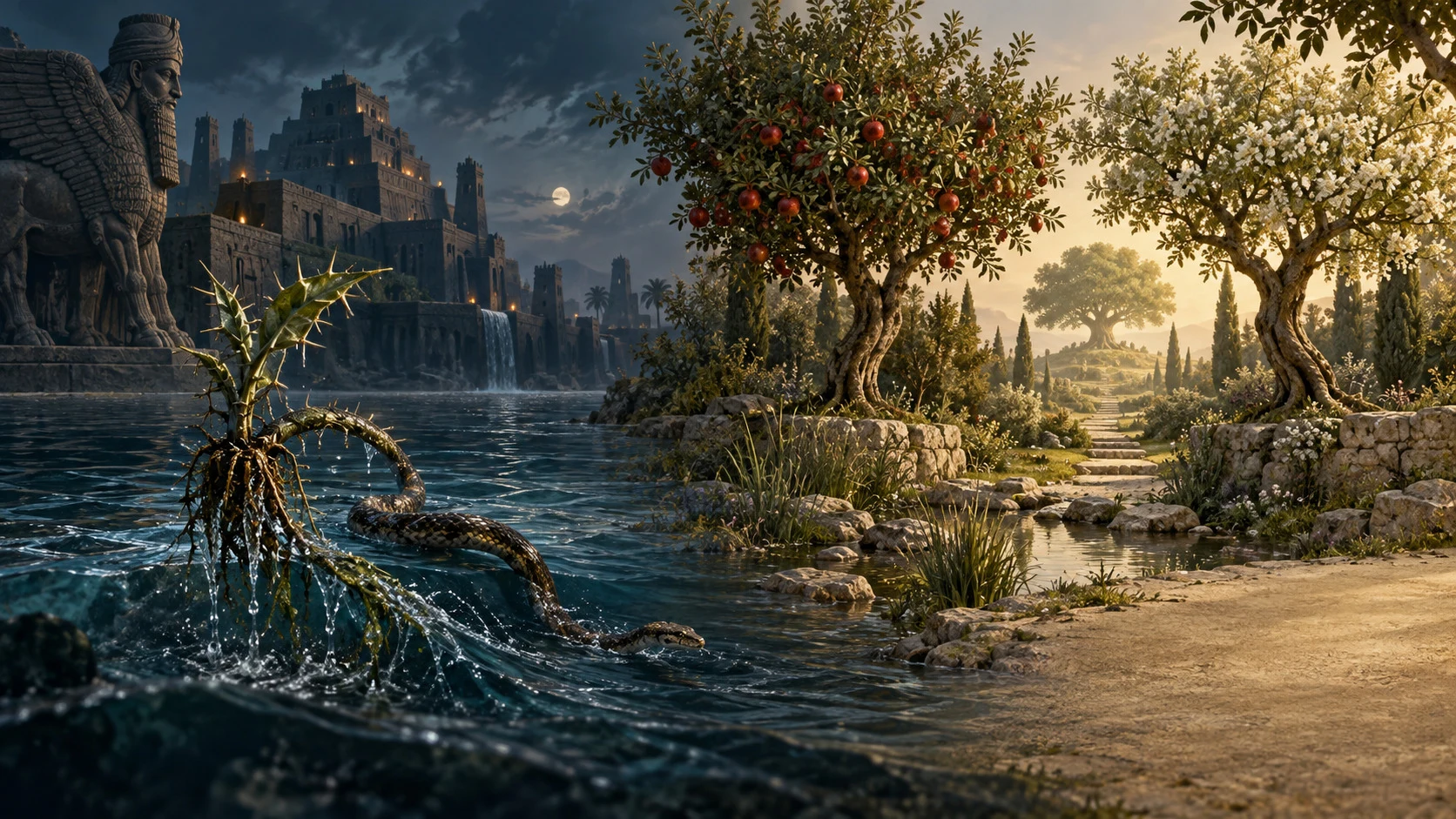
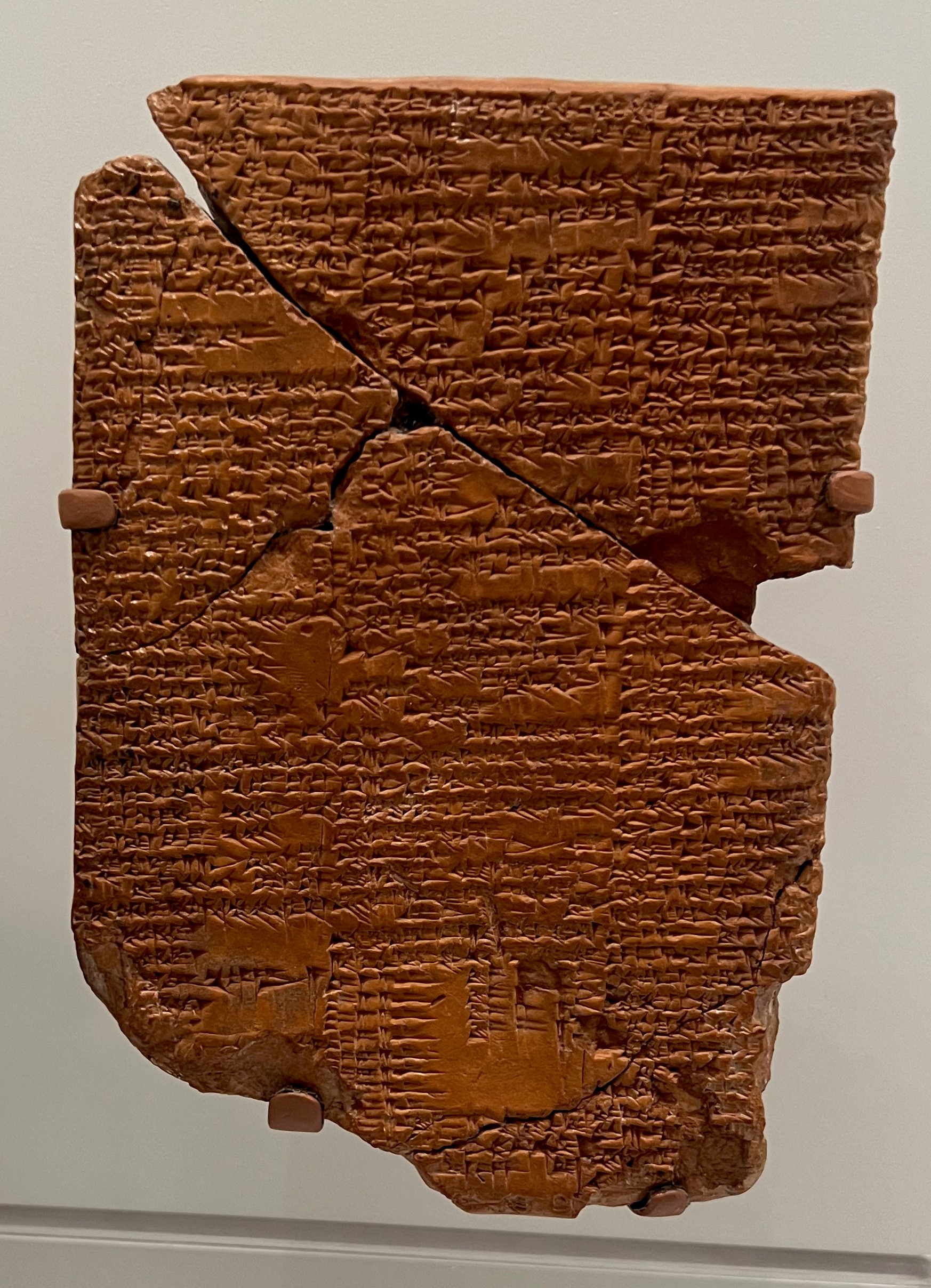
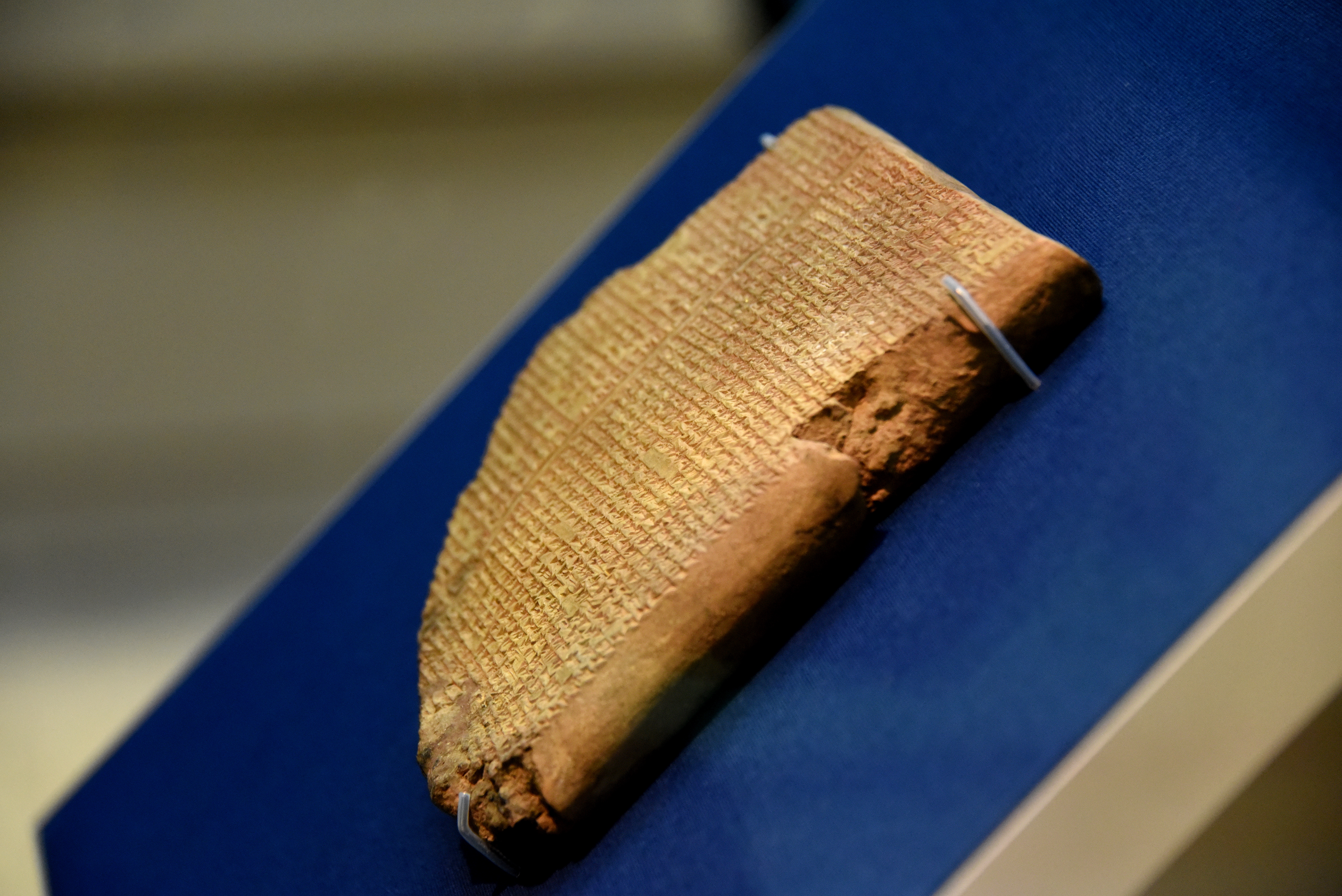
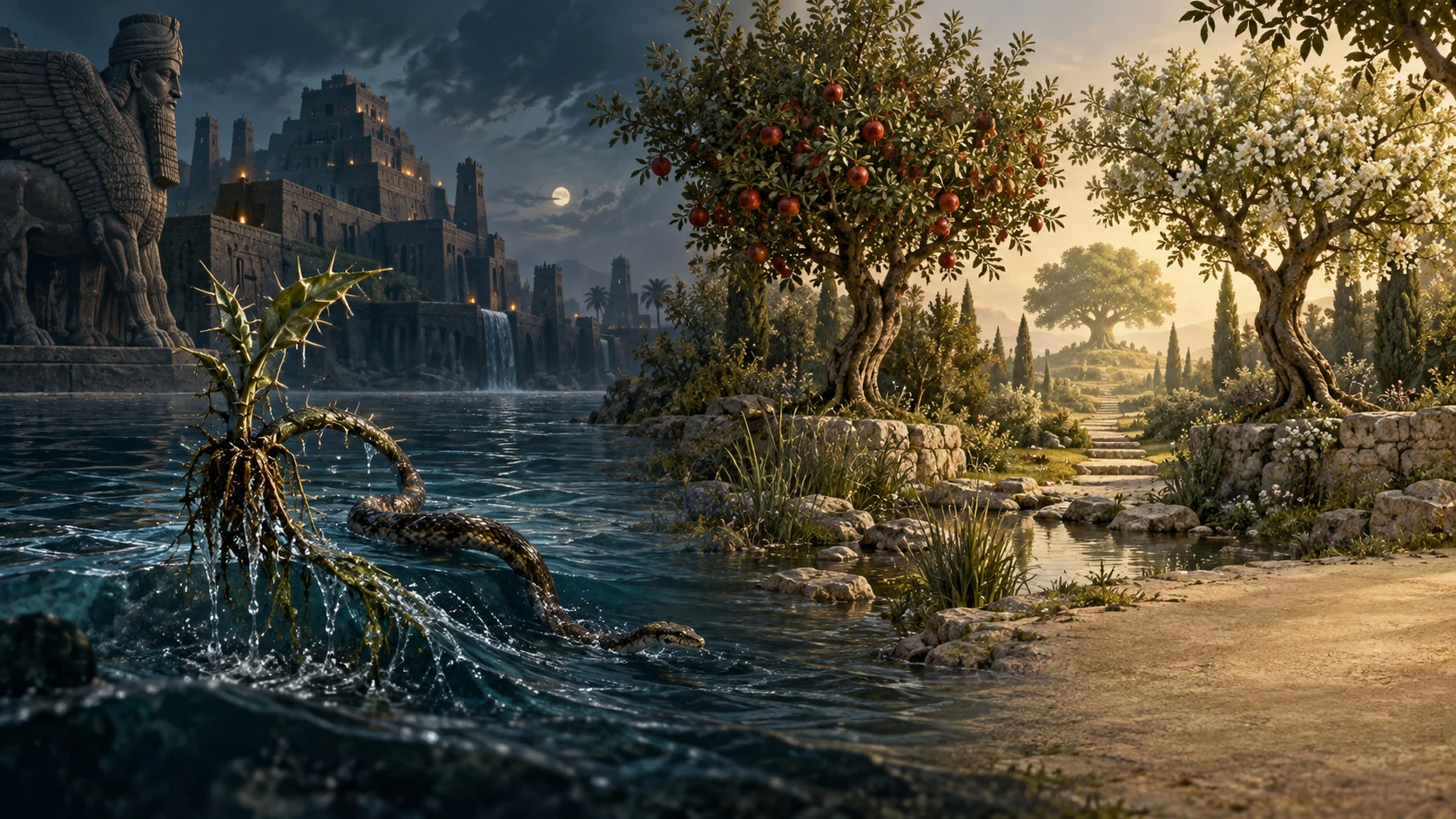
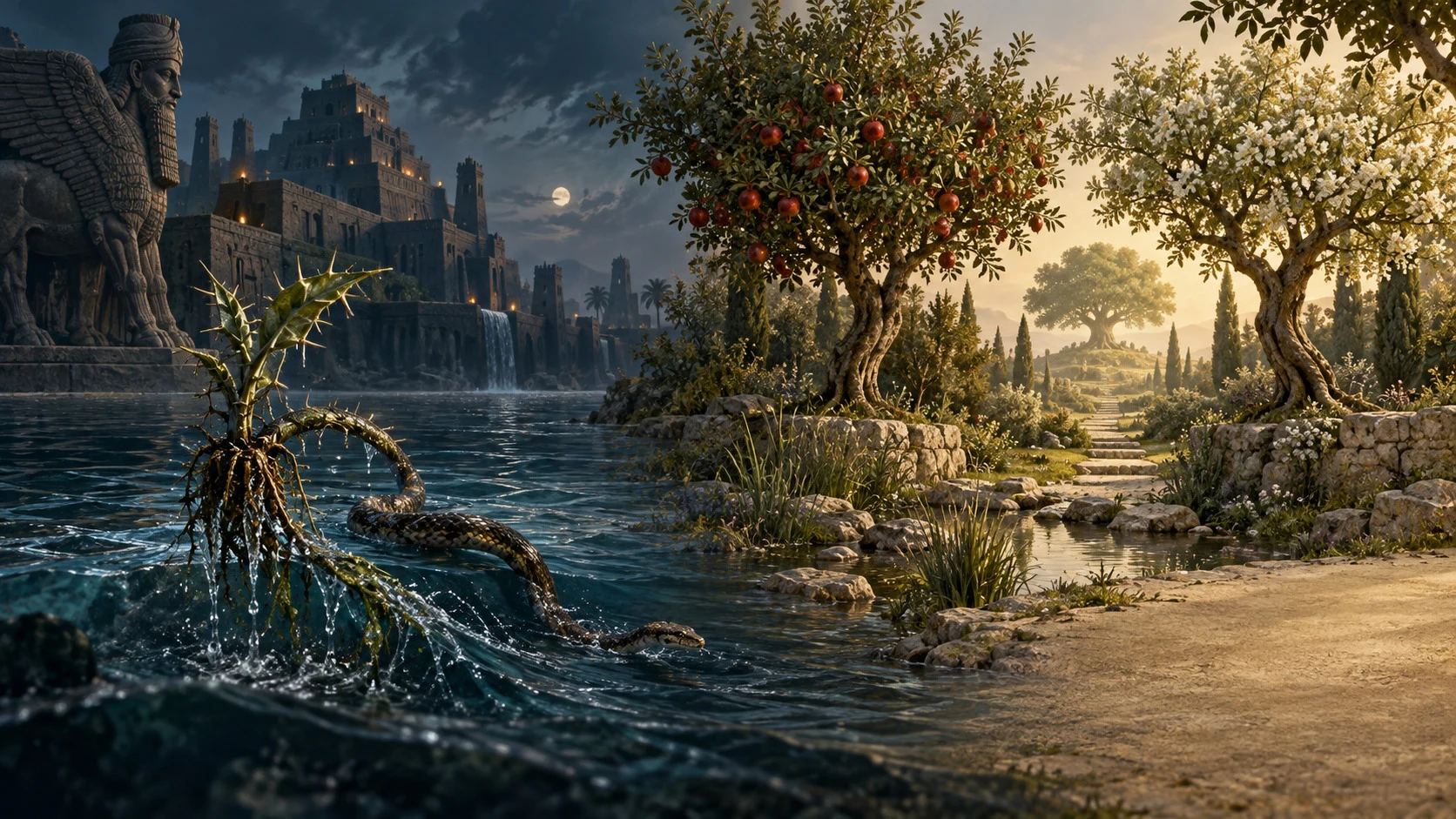
The Epic of GilgameshEpic of GilgameshA Babylonian literary work with multiple recensions, preceded by separate Sumerian poems on Uruk’s king and Enkidu. Its standard form explores friendship, death, the flood and the limits of seeking eternal life.Glossary · Click to read the explanation offers a limited literary comparison rather than a ready-made identification. In Tablet XI, Gilgamesh obtains a plant associated with restored youth, then loses it when a snake carries it away, as described in the modern English translation consulted for this passage. Both narratives explore human limits and a remarkable plant, but the rejuvenating plant in the Gilgamesh episodeGilgamesh’s Rejuvenating PlantA thorny plant that Gilgamesh retrieves in Tablet XI and plans to test for rejuvenation, before a snake carries it away and sheds its skin. The account separates the narrative from interpretations of eating and immortality and cautiously compares the trees of Eden.Glossary · Click to read the explanation is not the tree described in the Genesis garden, nor does Genesis depict a snake stealing that plant. AkkadianAkkadianAn ancient East Semitic language written in cuneiform from the third millennium BCE; its varieties include Babylonian and Assyrian, and it served in international diplomacy.Glossary · Click to read the explanation tablets and cuneiformCuneiformWriting with wedge-shaped signs, developed from Mesopotamian recording traditions and used for several languages from the third millennium BCE.Glossary · Click to read the explanation readings were not independently collated for this entry [13].
Stylized sacred-tree motifs also appear in Neo-Assyrian visual culture, sometimes beside winged or protective figures. Ninth-century BCE reliefs from Nimrud provide material context for that art, but calling every stylized tree a “tree of life” reflects interpretation rather than a securely fixed ancient label. Visual resemblance alone cannot establish that an Assyrian artist portrayed the Genesis tree or that Genesis borrowed a specific depiction [14].
The tree of life is therefore treated here first as a particular literary element of Genesis 2–3, defined by the distinct prohibition and by the closing barrier to unending life; cross-cultural comparisons must remain proportionate to the surviving evidence and its dates.
References and notes (14)
- Genesis 2 in Hebrew with parallel JPS translation; the chapter was read, especially verses 9 and 16–17. Genesis 2, Hebrew/JPS parallel, especially 2:9 and 2:16–17 Return to the text ↑
- Genesis 3 in Hebrew with parallel JPS translation; the chapter was read, especially verses 1–7 and 22–24. Genesis 3, especially 3:1–7, 3:19 and 3:22–24, Hebrew/JPS parallel. Return to the text ↑
- Yairah Amit, “The Exposition of the Garden of Eden Story,” TheTorah.com, 5 October 2018, updated 7 October 2026; accessible article read for its narrative-exposition argument. Sections on the exposition of Genesis 2:4b–3:24 and the ordering of information and dialogue. Return to the text ↑
- Joseph Ryan Kelly, “The Secret of the Garden of Eden: Knowledge or Immortality,” TheTorah.com, 26 October 2022, updated 7 October 2026; relevant accessible passages on knowledge, immortality, and Genesis 3:22–24 read. Sections on the two garden trees, eating, and the guarded way in Genesis 2–3. Return to the text ↑
- Jack M. Sasson, “What Really Happened in the Garden of Eden,” TheTorah.com, 2022; accessible argument about the life tree and the species’ continuity read, and treated as an alternative interpretation. Sections proposing that the life-giving tree was eaten and connecting procreation to human continuity. Return to the text ↑
- David M. Carr, “Precursors to the Eden Narrative (Gen 2:4b–3:24),” in The Formation of Genesis 1–11, Oxford University Press, 2020, pp. 30–65. Publisher abstract only; the paywalled chapter was not read. Online chapter abstract; pp. 30–65 are the published chapter span, not pages inspected. Return to the text ↑
- Peter Thacher Lanfer, Remembering Eden: The Reception History of Genesis 3:22–24, Oxford University Press, 2012. Book and chapters 1–2 abstracts only; inaccessible main text not read. Book abstract; chapters 1 (pp. 3–32) and 2 (pp. 33–66) abstracts only; page spans not inspected. Return to the text ↑
- Walter Bührer, “The Relative Dating of the Eden Narrative Gen 2–3,” Vetus Testamentum 65/3 (2015), pp. 365–376, DOI:10.1163/15685330-12301206. Publisher abstract only*; relative-dating argument taken only from that abstract. Study abstract; pp. 365–376 is the published extent, not the extent read. Return to the text ↑
- Leonard J. Greenspoon, revised by William A. Ross, “Septuagint,” Oxford Bibliographies in Biblical Studies, version of 24 October 2024; accessible introduction read for dating the Greek Pentateuch to the third century BCE. Public introductory extract, dating the Greek Pentateuch to the middle or later third century BCE. Return to the text ↑
- National Library of Israel, Hebrew Manuscripts catalogue entry for the Leningrad Codex, National Library of Russia, Ms. EVR I B 19a; date, shelfmark and scribe metadata read, not the photographed manuscript leaves. Ktiv catalogue entry: 1008–1009 CE, shelfmark Ms. EVR I B 19a, scribe Shemuel ben Yaakov. Return to the text ↑
- Proverbs 3:18, Hebrew verse as displayed by Bible Hub, read with the wisdom context of Proverbs 3; this is a verse-specific reading, not a survey of all biblical occurrences. Hebrew text of Proverbs 3:18 in the immediate context concerning wisdom. Return to the text ↑
- Epic of Gilgamesh, Tablet XI, English translation by Maureen Gallery Kovacs, electronic edition by Wolf Carnahan (1998), AncientTexts.org; the plant-and-snake episode was read through a modern English translation, not independently from Akkadian tablets. Tablet XI, Utanapishtim revealing the plant, Gilgamesh retrieving it, and the snake taking it and shedding its skin. Return to the text ↑
- The Metropolitan Museum of Art, “Relief panel,” accession 17.190.2079, Ashurnasirpal II’s palace at Nimrud, ca. 883–859 BCE; museum catalogue text and sacred-tree identification read; no museum image reproduced. Object catalogue no. 17.190.2079, non-botanical stylized tree, proposed agricultural-abundance symbolism. Return to the text ↑
- Septuagint, Genesis 3:22–24, Greek digital transcription of Alfred Rahlfs’s 1935 text on OpenScriptorium; relevant verses and “τοῦ ξύλου τῆς ζωῆς” inspected, not a Greek manuscript image. Genesis 3:22–24 in the digitally presented printed Greek text of Rahlfs. Return to the text ↑
Suggest a correction · Suggest a source for this record
Cite this record
IL Archive, «Tree of Life in Genesis», https://ilarchive.com/en/entities/tree-of-life-genesis
Continue reading