Study
Dilmun and Eden: Was the “Sumerian Paradise” the Source of Genesis’s Garden?
An extended study of a topic, with evidence and references.
- Region
- The Near East
Dilmun in Enki and Ninhursaga and Eden in Genesis: water, plants, eating, rib and life, distinguishing literary comparison from etymology and geographical identification.
Estimated reading time: 8 min Published Last reviewed:
Share article
Text
Introduction
Was DilmunDilmun: Ancient Gulf Land and Literary SettingDilmun was an ancient Gulf trading land with a major archaeological centre in Bahrain and connections to eastern Arabia and Failaka. This entry separates boats, burials and kings from the literary purity and fresh water of Enki and Ninhursaga, and tests the limits of comparison with Eden.Glossary · Click to read the explanation in the Sumerian poem Enki and NinhursagaEnki and Ninhursaga, Sumerian poemSumerian poem preserved in Old Babylonian copies, concerning Dilmun, water, birth and Enki’s illness and healing.Glossary · Click to read the explanation the source of the garden of EdenEden: The Setting of Genesis’s GardenThe place in which the garden of Genesis 2–3 is planted; the story describes rivers, trees and a human test, while its archaeological location and name’s derivation remain unsettled.Glossary · Click to read the explanation in Genesis? The comparison begins with striking images: water, plants and eating, followed by a connection between the rib and life in the goddess NintiNinti, rib and life in Sumerian wordplayGoddess appearing in the healing of Enki’s ribs, whose name permits wordplay involving rib and life.Glossary · Click to read the explanation’s name. This study asks what those images do in each story and distinguishes that question from two others: Eden’s geographical location and the linguistic origin of its name.
The poem describes a world shaped through water, fertility, birth and healing. Genesis explores human knowledge, a divine command and the limits of life. We compare their similarities and differences alongside the dates of surviving copies and contacts between MesopotamiaMesopotamiaHistorical region associated with the Tigris and Euphrates: Uruk, Ur, Eridu, cuneiform, Sumer, Akkad, Babylon and Assyria, their languages and cults, and the limits of archaeological evidence.Glossary · Click to read the explanation and the LevantThe LevantThe Levant is a regional name for lands along the eastern MediterraneanGlossary · Click to read the explanation, to investigate shared traditions or reworking rather than treating “the Sumerian paradise” as an established conclusion. [1][2][3][4][5]
A land awaiting water
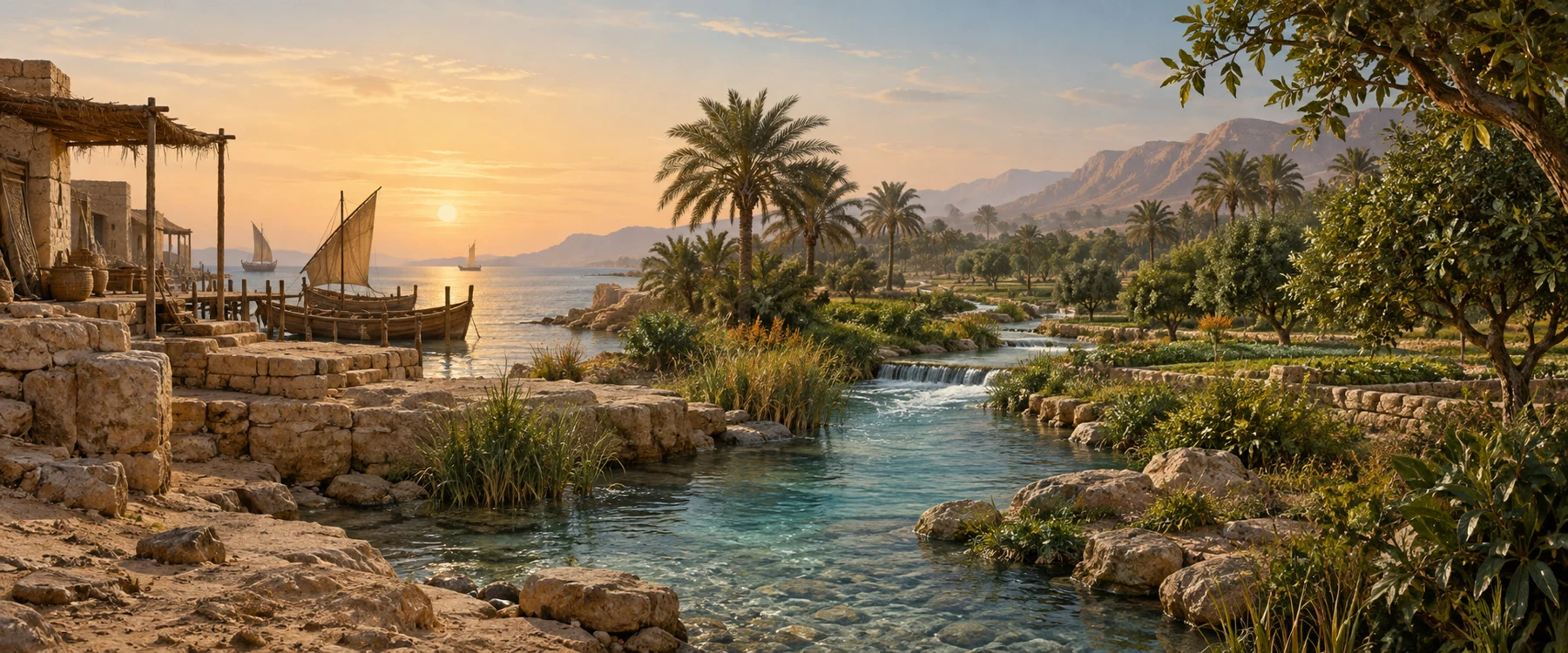
The story opens by praising DilmunDilmun: Ancient Gulf Land and Literary SettingDilmun was an ancient Gulf trading land with a major archaeological centre in Bahrain and connections to eastern Arabia and Failaka. This entry separates boats, burials and kings from the literary purity and fresh water of Enki and Ninhursaga, and tests the limits of comparison with Eden.Glossary · Click to read the explanation: lions do not kill their prey and old people do not complain of age. Then comes a complaint about inadequate water. EnkiEnkiMesopotamian deity also known as Ea, linked with Eridu and the Abzu (deep fresh waters), wisdom, incantations, and narratives of creation and cosmic order. Later written attestations do not identify the deity of Eridu’s earliest layers.Glossary · Click to read the explanation, the god associated with water and wisdom, responds. Salty wells become fresh, fields produce crops and the city becomes a trading harbour. Reading the whole movement changes the opening’s significance: an inactive land becomes productive and inhabited. [1][2]
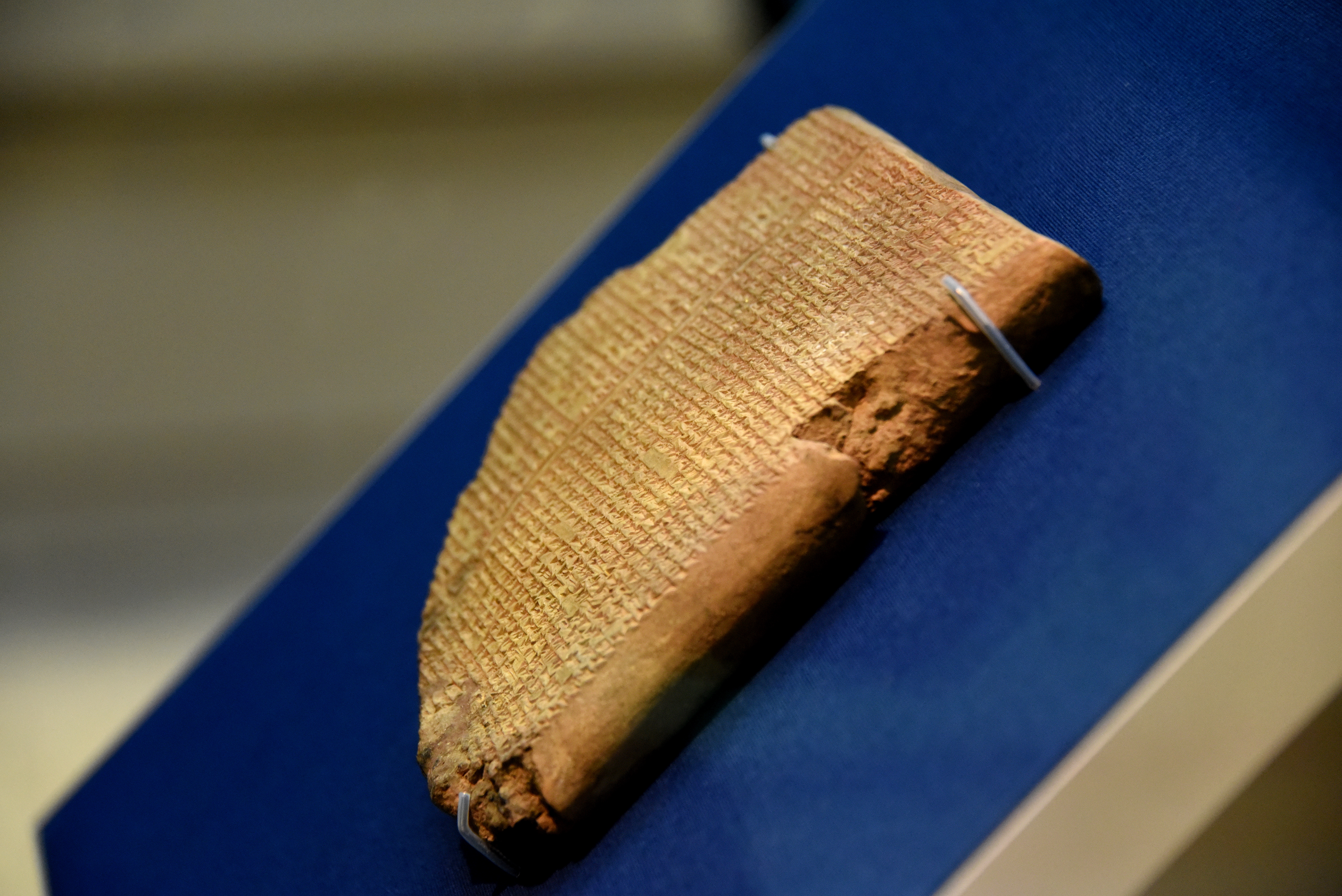
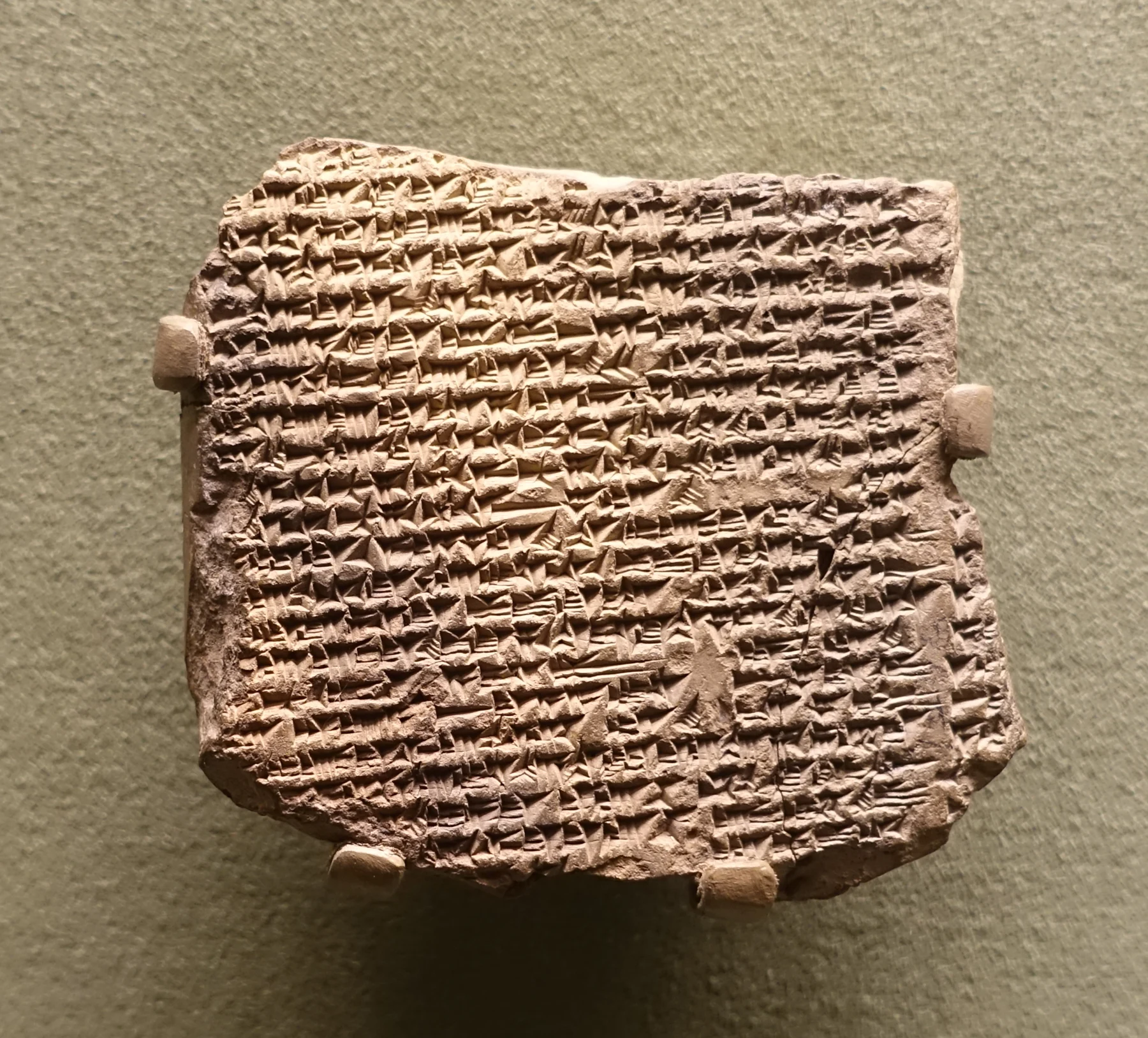
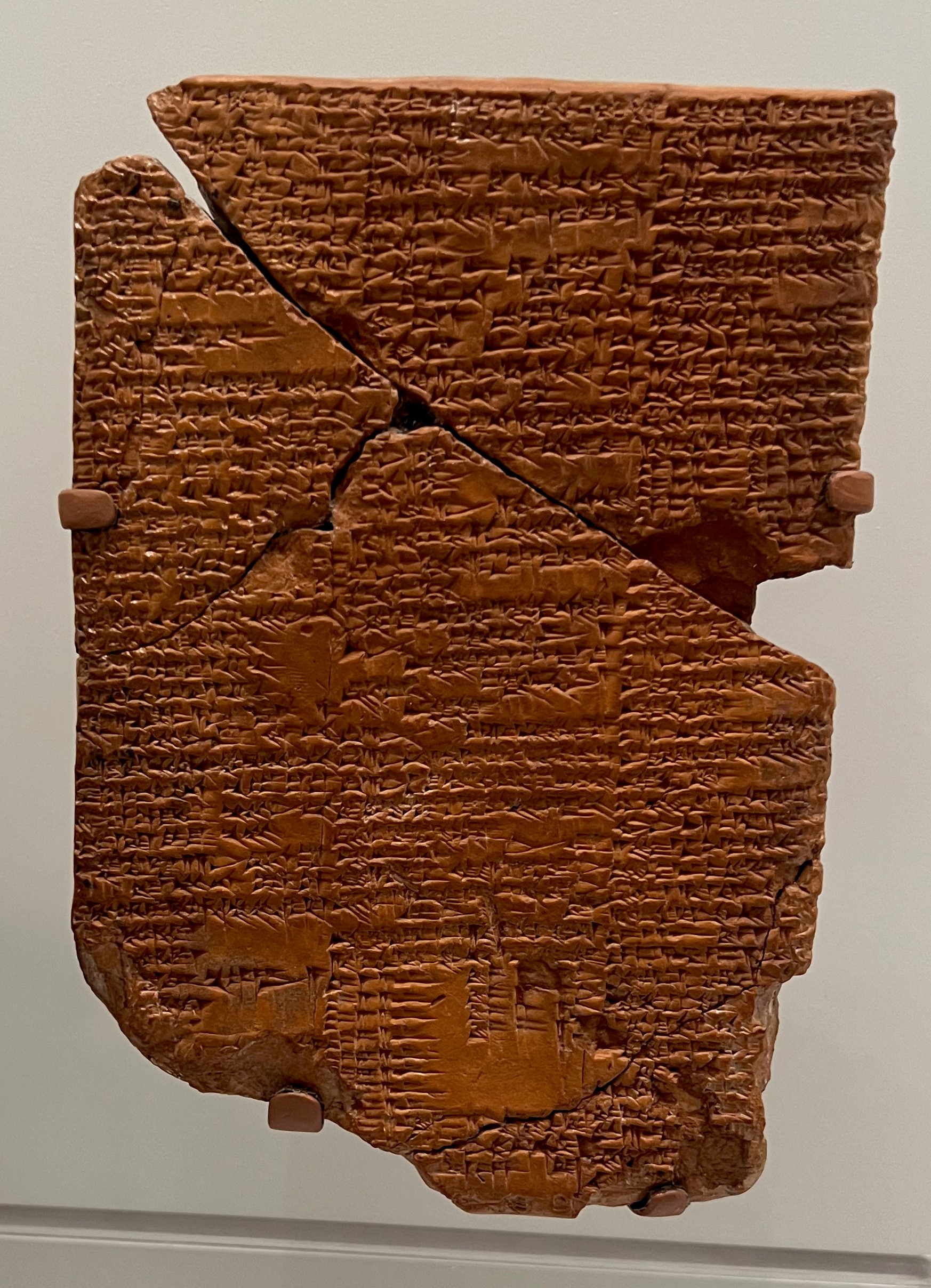
The text survives in Old Babylonian witnesses, including tablet CBS 4561 from NippurNippur / NuffarAncient Nippur (modern Nuffar, Iraq), major cult centre of Enlil and Ekur; excavations revealed sanctuaries, houses and thousands of cuneiform tablets across many periods.Glossary · Click to read the explanation, dated about 1900–1600 BCE, and a copy from UrUr of the ChaldeansCity named in Genesis’s account of Abraham’s family, commonly associated with archaeological Ur near Nasiriyah in southern Iraq.Glossary · Click to read the explanation assigned by Dina KatzDina KatzScholar of Sumerian literature and conceptions of death who studied Dilmun in Enki and Ninhursaga.Glossary · Click to read the explanation’s study to the reign of Rim-Sin IRim-Sin I, king of LarsaEighteenth-century BCE king in southern Mesopotamia, whose reign helps date the Ur copy of the poem.Glossary · Click to read the explanation, around 1800 BCE. Modern editions bring the copies together while marking their differences; the long merchandise list comes from the Ur copy. These are dates of surviving witnesses, while the formation of the poem’s parts remains a broader question. [1][2][4][12]
What is Dilmun in the Sumerian text?
Some scholars propose that the Dilmun opening and the later Enki-and-plants account did not originate as a simple, unified plot. The copies’ differences and additions help investigate how the poem was assembled, rather than assuming that the modern composite represents one compositional stage. [2][4]
The opening describes Dilmun as pure and virginal, or splendid in some translation choices. Disease, predation and old age are absent, but a particular form of song, the herald’s rounds and activities of city life are absent too. NinsikilaNinsikila, Dilmun’s lady in the poemGoddess who asks Enki for the water needed by Dilmun’s city in the poem’s opening.Glossary · Click to read the explanation asks Enki for what would make the city habitable. Water transforms fields, wells and harbour; scholars differ over how to understand that transformation. [1][2]
Dina Katz and Keith DicksonKeith DicksonPurdue professor of Classics, Religious Studies and Comparative Literature, studying ancient myth and literature.Glossary · Click to read the explanation see the initial picture as inactive potential awaiting fulfilment, rather than an already complete paradise whose inhabitants lose their happiness. Markham GellerMarkham GellerScholar of Semitic languages, cuneiform and Mesopotamian medicine who discussed Dilmun and paradise.Glossary · Click to read the explanation accepts a broader comparison with a distant, ideal earthly place: Dilmun’s trading prosperity gave it a distinctive place in Mesopotamian imagination. The disagreement concerns both the text’s details and what “paradise” is taken to mean. [4][5][6]
Dilmun also has a history outside the poem. Documents and archaeology connect its centre with Bahrain; UNESCO presents Qal’at al-BahrainQal’at al-Bahrain, harbour and archaeological tellNorthern Bahrain site with Dilmun-period layers and a much later Portuguese fort, inscribed by UNESCO in 2005.Glossary · Click to read the explanation as its ancient harbour and archaeological capital. The site contains successive layers from the third millennium BCE and much later structures, including a Portuguese fort. This establishes a location and history for archaeological Dilmun. EdenEden: The Setting of Genesis’s GardenThe place in which the garden of Genesis 2–3 is planted; the story describes rivers, trees and a human test, while its archaeological location and name’s derivation remain unsettled.Glossary · Click to read the explanation belongs to a different literary account, and locating it requires its own argument. [7]
What happens after water and vegetation?
The poem moves through Enki’s relations with goddesses descended from him and the births that follow. Later he approaches UttuUttu, divine figure in Enki’s poemGoddess whose encounter with Enki belongs to the sequence of births and plants in Enki and Ninhursaga.Glossary · Click to read the explanation carrying garden produce. Pascal AttingerPascal AttingerSumerian language and literature scholar, emeritus professor at the University of Bern.Glossary · Click to read the explanation interprets this episode as forced intercourse, referring to her subsequent complaint. NinhursagaNinhursaga, birth and healing goddessMesopotamian goddess central to the births and Enki’s healing in Enki and Ninhursaga.Glossary · Click to read the explanation removes his semen from her body, after which eight plants grow. Details vary between copies and translations; the episode belongs to the story’s pattern of fertility and bodily processes. [1][2]
Enki asks his attendant for the plants’ names. The attendant cuts or uproots them and presents them, and Enki eats them. The text connects eating with determining their destinies and knowing their nature. Ninhursaga then withholds her life-giving gaze and he falls ill. A fox mediates her return; she asks where he hurts, and a god or goddess is born for each body part, with a name echoing its word. Healing and the allocation of the newborn deities’ functions resolve the crisis. [1][2][5]
This explains both the appeal of comparing the plants with Genesis and the importance of following the whole story. The eater is a god, whose illness leads to healing and divine births. Genesis centres on human eaters, a command concerning a particular tree, new knowledge and expulsion. The Sumerian poem has no corresponding exchange between a snake and a human couple or prior prohibition concerning a tree of knowledge. [1][2][3]
What distinguishes Eden?
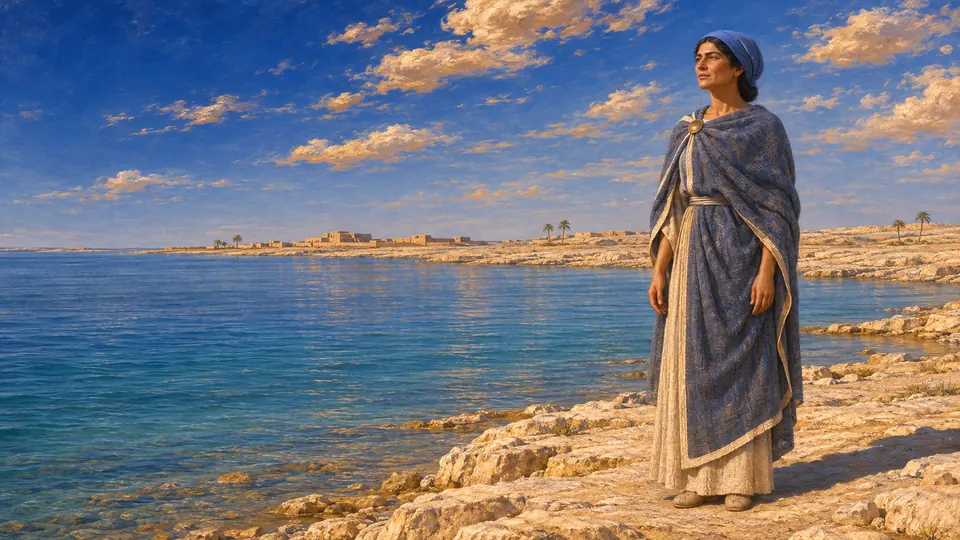
In Genesis 2 the Lord God plants a garden in Eden and places the human there to work and keep it. A river branches into four heads; the text names the Tigris and Euphrates among them. Eating from the garden’s trees is permitted, with the exception of the tree of the knowledge of good and evilTree of the Knowledge of Good and EvilThe tree prohibited in Genesis 2:17 and eaten from in Genesis 3, narratively distinct from the tree of life; its fruit is unidentified.Glossary · Click to read the explanation. Work precedes the transgression; the later judgements associate working the soil and childbirth with hardship. [3]
In Genesis 3 the snake addresses the woman and the couple eat, acquiring changed knowledge. Access to the tree of lifeTree of Life in GenesisA tree in the garden of Genesis 2–3, distinct from the tree of knowledge. After the forbidden fruit is eaten, the way to the tree of life is guarded lest humans eat from it and live forever. The text does not identify its fruit or explain precisely how it works.Glossary · Click to read the explanation is then closed. The plot explores the limits of human life and relations to command and knowledge. The Sumerian poem instead concerns making the world productive and explaining divine births, names and functions. The two configurations can be compared historically while each retains its own plot. [1][2][3][9]
The rivers have another role in the debate. Naming the Tigris and Euphrates places Mesopotamia within the narrative’s geographical horizon, but identifying the other rivers and their common source is disputed. Neither a name nor a river alone locates an archaeological garden in Bahrain. [3][8]
The rib and Ninti: two languages to consider
When Ninhursaga asks Enki where he hurts and he names his ribs, Ninti appears. Attinger explains Sumerian wordplay involving ti, “rib,” and til₃, “life,” linking her name with both “lady of the ribs” and a lady who gives life. The allocation of functions adds another link, “lady of the months.” This is one of eight names connecting a body part with a divine name, rather than a solitary figure in a human creation scene. [1][2]
Genesis has the woman built from AdamAdamAdam is a figure in Genesis’s narratives of beginnings, linked with Cain, Seth and Abel.Glossary · Click to read the explanation’s rib or side and later names her EveEve, figure in GenesisFirst woman in Genesis, whose making is linked to the human’s rib or side and whose name to mother of all the living.Glossary · Click to read the explanation as mother of all the living. The combination of rib and life makes the comparison substantial, especially alongside knowledge of Mesopotamian creation traditions. Yet its linguistic form changes: HebrewHebrewA Northwest Semitic language of the Canaanite group, encompassing Iron Age epigraphy, Biblical, Rabbinic, medieval and Modern Hebrew; its scripts and pronunciations changed over time.Glossary · Click to read the explanation ṣēlāʿ, rib or side, and Eve’s name do not reproduce the Sumerian wordplay. A goddess’s birth in a healing scene also differs from a human woman’s construction from a man’s body. [2][3][5]
An image can travel and be reshaped without its wordplay being translated literally. The linguistic difference therefore identifies something an influence argument must explain; it does not by itself rule out influence. A complete equation of Ninti with Eve nevertheless goes beyond the witnesses examined here. [1][2][3][5]
Is Eden the Sumerian word edin?
In SumerianSumerian languageAncient language of southern Mesopotamia, clearly attested in third-millennium BCE texts and maintained in learning and ritual after its spoken use declined.Glossary · Click to read the explanation, edin means plain or steppe. Some scholars have proposed that Eden’s name came from it through AkkadianAkkadianAn ancient East Semitic language written in cuneiform from the third millennium BCE; its varieties include Babylonian and Assyrian, and it served in international diplomacy.Glossary · Click to read the explanation edinu. In his 1984 article Alan R. MillardAlan Ralph Millard, 1937–2024Scholar of Hebrew and ancient Semitic languages, formerly a Liverpool professor, who studied Eden’s etymology.Glossary · Click to read the explanation examines this proposal and favours the West Semitic root ʿdn, connected with abundance and delight. [8]
His discussion concerns two clear problems: the Hebrew name begins with ayin, absent from the Sumerian form, and edinu is known from a lexical list, whereas the ordinary Akkadian word for open country is ṣēru. An Aramaic witness from Tell FekheriyehTell Fekheriyeh, bilingual inscription siteSyrian site where a statue with Akkadian and Aramaic inscriptions, usually dated to the ninth century BCE, was found in 1979.Glossary · Click to read the explanation strengthens the Semitic alternative in his argument. This is a comparison of sounds and usage, rather than similar-looking Latin spellings. [8][13]
Edin remains a common nounCommon nounA noun referring to a member of a class, such as “city” or “god”, unlike a proper name designating a particular entity. Semitic il/El may fulfill either function in context.Glossary · Click to read the explanation for open country, Dilmun the name of a historical land and literary setting, and Eden the place-name in Genesis. Distinguishing them separates etymology from the transmission of a story and from geographical identification. [1][3][8]
What connection can be argued?
The earlier Sumerian witnesses and centuries of contact between Mesopotamia and the Levant make written and oral transmissionOral transmissionThe passing-on of words, narratives or knowledge through hearing, performance and learning, sometimes alongside writing; degrees of stability vary with genre, setting and controls.Glossary · Click to read the explanation worth investigating. The abstract of William M. SchniedewindWilliam M. SchniedewindUCLA professor of Biblical Studies and Northwest Semitic Languages and author of The Finger of the Scribe.Glossary · Click to read the explanation’s 2019 chapter discusses overlaps between cuneiformCuneiformWriting with wedge-shaped signs, developed from Mesopotamian recording traditions and used for several languages from the third millennium BCE.Glossary · Click to read the explanation education and early alphabetic instruction in the southern Levant. This concerns environments in which knowledge could travel, rather than identifying the source of Eden’s story. [11]
The composition of Eden itself remains debated. Walter BührerWalter BührerOld Testament and Genesis-composition scholar, professor of Old Testament theology at Ruhr University Bochum.Glossary · Click to read the explanation’s 2015 article argues for its relative priority to the Priestly material in Genesis; “pre-Priestly” does not supply an agreed absolute date. Tryggve MettingerTryggve N. D. MettingerTryggve N. D. Mettinger (1940–2023) was a Swedish Old Testament scholar and professor of Old Testament exegesis at Lund from 1978 to 2003.Glossary · Click to read the explanation distinguishes similarities involving wisdom, immortality and plants from the identification of a particular earlier text as the direct model for Eden’s plot. [9][10]
The comparison reveals specific connections: water that makes a place live, eating that changes the eater, and the pairing of rib and life. It also shows how those images serve different stories. Shared traditionShared traditionAn explanatory model in which several texts draw on circulating stories or imagery; it proves neither direct copying nor a particular lost original on its own.Glossary · Click to read the explanation or reworking deserves testing through converging evidence. Direct borrowing from a particular copy, a Sumerian derivation of the name, and a garden located in Bahrain are separate propositions, each requiring an argument that shared imagery alone cannot settle. [1][2][3][4][5][8][9][11]
Related readings
References and notes (13)
- Oxford ETCSL 1.1.1, Enki and Ninhursanga, lines 1–281 and manuscript additions: whole composite English translation read, not independent reading of every cuneiform sign. Oxford ETCSL 1.1.1, Enki and Ninhursanga, lines 1–281 and manuscript additions: whole composite English translation read, not independent reading of every cuneiform sign. Return to the text ↑
- Pascal Attinger, Enki et Ninhursaga, 2011, updated 2015: pp. 1–3, 5 and 9–12 visually read, including notes 55, 58, 62, 76, 80 and 85. Corrupted PDF extraction is not counted as reading. Pascal Attinger, Enki et Ninhursaga, 2011, updated 2015: pp. 1–3, 5 and 9–12 visually read, including notes 55, 58, 62, 76, 80 and 85. Corrupted PDF extraction is not counted as reading. Return to the text ↑
- Genesis 2–3: both chapters read in Hebrew and JPS English, reusing the saved earlier NRSVUE check; not a full manuscript collation. Genesis 2–3: both chapters read in Hebrew and JPS English, reusing the saved earlier NRSVUE check; not a full manuscript collation. Return to the text ↑
- Dina Katz, Enki and Ninhursaga, Part One: The Story of Dilmun, Bibliotheca Orientalis 64, 2007, pp. 567–590: saved 12 October readings of opening, water, trade and copy dates, not the entire article; fresh PDF retrieval failed. Dina Katz, Enki and Ninhursaga, Part One: The Story of Dilmun, Bibliotheca Orientalis 64, 2007, pp. 567–590: saved 12 October readings of opening, water, trade and copy dates, not the entire article; fresh PDF retrieval failed. Return to the text ↑
- Keith Dickson, Enki and Ninhursag: The Trickster in Paradise, Journal of Near Eastern Studies 66/1, 2007, pp. 1–32: opening and commentary pp. 1–10 reread, with previous selective reading of pp. 24–32, not the whole article. Keith Dickson, Enki and Ninhursag: The Trickster in Paradise, Journal of Near Eastern Studies 66/1, 2007, pp. 1–32: opening and commentary pp. 1–10 reread, with previous selective reading of pp. 24–32, not the whole article. Return to the text ↑
- Markham J. Geller, Sumerian Paradise Lost, UCL repository: pp. 1–3 only, on Dilmun and defining paradise, not the remaining paper. Markham J. Geller, Sumerian Paradise Lost, UCL repository: pp. 1–3 only, on Dilmun and defining paradise, not the remaining paper. Return to the text ↑
- UNESCO, Qal’at al-Bahrain: description, synthesis, Outstanding Universal Value, location, chronology and inscription date, not a full excavation report. UNESCO, Qal’at al-Bahrain: description, synthesis, Outstanding Universal Value, location, chronology and inscription date, not a full excavation report. Return to the text ↑
- Alan R. Millard, The Etymology of Eden, Vetus Testamentum 34/1, 1984, pp. 103–106: OCR pp. 103–104 reread with earlier selective reading through p. 105. Original page images unavailable; host’s automated summary not used. Alan R. Millard, The Etymology of Eden, Vetus Testamentum 34/1, 1984, pp. 103–106: OCR pp. 103–104 reread with earlier selective reading through p. 105. Original page images unavailable; host’s automated summary not used. Return to the text ↑
- Tryggve N. D. Mettinger, The Eden Narrative, 2007: publisher description and chapter 6 opening in saved earlier reading, not the entire book. Tryggve N. D. Mettinger, The Eden Narrative, 2007: publisher description and chapter 6 opening in saved earlier reading, not the entire book. Return to the text ↑
- Walter Bührer, The Relative Dating of the Eden Narrative Gen *2–3, Vetus Testamentum 65/3, 2015, pp. 365–376: publisher abstract and metadata only, not the whole article. Walter Bührer, The Relative Dating of the Eden Narrative Gen *2–3, Vetus Testamentum 65/3, 2015, pp. 365–376: publisher abstract and metadata only, not the whole article. Return to the text ↑
- William M. Schniedewind, The Finger of the Scribe: How Scribes Learned to Write the Bible, 2019, chapter 1, The Emergence of Scribal Education in Ancient Israel, pp. 1–22: book metadata and chapter abstract only. Earlier attribution to David M. Carr corrected with revision history preserved. William M. Schniedewind, The Finger of the Scribe: How Scribes Learned to Write the Bible, 2019, chapter 1, The Emergence of Scribal Education in Ancient Israel, pp. 1–22: book metadata and chapter abstract only. Earlier attribution to David M. Carr corrected with revision history preserved. Return to the text ↑
- CDLI P260875, CBS 04561: full metadata on identity, Nippur and Old Babylonian dating, about 1900–1600 BCE. Penn Museum page unavailable; no claim of independent reading of every sign. CDLI P260875, CBS 04561: full metadata on identity, Nippur and Old Babylonian dating, about 1900–1600 BCE. Penn Museum page unavailable; no claim of independent reading of every sign. Return to the text ↑
- Richard S. Hess, Eden: A Well-Watered Place, Bible Review, December 1991: accessible opening and public endnote 5 read, not the paywalled full article. Richard S. Hess, Eden: A Well-Watered Place, Bible Review, December 1991: accessible opening and public endnote 5 read, not the paywalled full article. Return to the text ↑
Suggest a correction · Suggest a source for this record
Cite this record
IL Archive, «Dilmun and Eden: Was the “Sumerian Paradise” the Source of Genesis’s Garden?», https://ilarchive.com/en/studies/dilmun-and-eden
Continue reading
Related readings