Study
Manu and the Fish: Did the Flood Story Travel from Mesopotamia to India?
An extended study of a topic, with evidence and references.
- Region
- Ancient India and Mesopotamia
Vedic, epic and Purāṇic Manu stories beside the Mesopotamian flood: the fish’s identity, passengers, renewal, and the proposed transmission of “seeds” and its evidence.
Estimated reading time: 8 min Published Last reviewed:
Share article
Video
The Flood Before Noah: What the Clay Tablets Say
Our third documentary reads the oldest flood stories on clay: Ziusudra, Atrahasis and Gilgamesh, then sets them beside Noah in the Abrahamic scriptures. Some scenes are AI-generated illustrations.
The YouTube player loads only when you press play. Watch on YouTube
Text
Introduction
Did the flood story travel from MesopotamiaMesopotamiaHistorical region associated with the Tigris and Euphrates: Uruk, Ur, Eridu, cuneiform, Sumer, Akkad, Babylon and Assyria, their languages and cults, and the limits of archaeological evidence.Glossary · Click to read the explanation to India? This study compares ManuManu, Survivor in Indian Flood TraditionsA central human figure in several Sanskrit accounts of the flood and human renewal; his position and role differ across the Śatapatha Brāhmaṇa, Mahābhārata and Purāṇas.Glossary · Click to read the explanation’s rescue by a fish and boat with AtrahasisAtrahasis: Epic and HeroAkkadian narrative on human creation, relations with the gods and the flood, named for its survivor warned by Enki. Its surviving manuscripts differ in date and preservation; its hero must not be equated uncritically with every Utnapishtim version.Glossary · Click to read the explanation, Uta-napishtiUtnapishtimThe flood hero of Standard Babylonian Gilgamesh, granted exceptional life with his wife by the gods. He tells Gilgamesh how he survived; his name overlaps with Atrahasis and Ziusudra traditions without making their narratives identical.Glossary · Click to read the explanation and NoahNoahNoah is the flood-story figure in Genesis and a prophet in the Qur’anGlossary · Click to read the explanation. We examine warning and the preservation of life, then test a more specific proposal: did a Mesopotamian expression for the “seed of all living creatures” become seeds carried by Manu in an Indian telling?
We begin with three Indian texts that differ in the boat’s passengers, the fish’s identity and the renewal of the world. Following those differences clarifies the story’s history and helps assess transmission or reworking, rather than combining distant versions into a single “Indian Noah.” [1][2][3][5][8]
A small rescue before the greater one
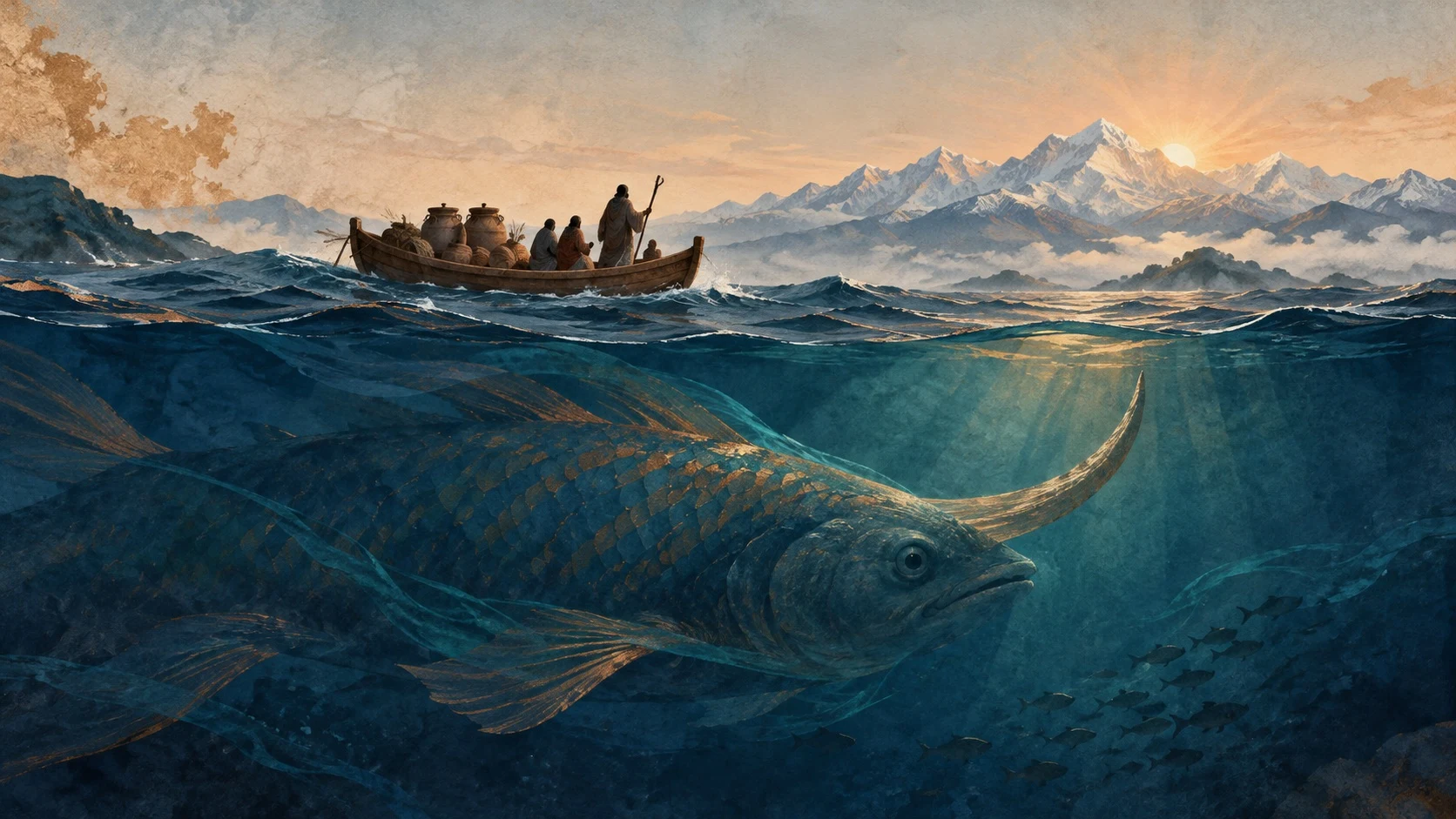
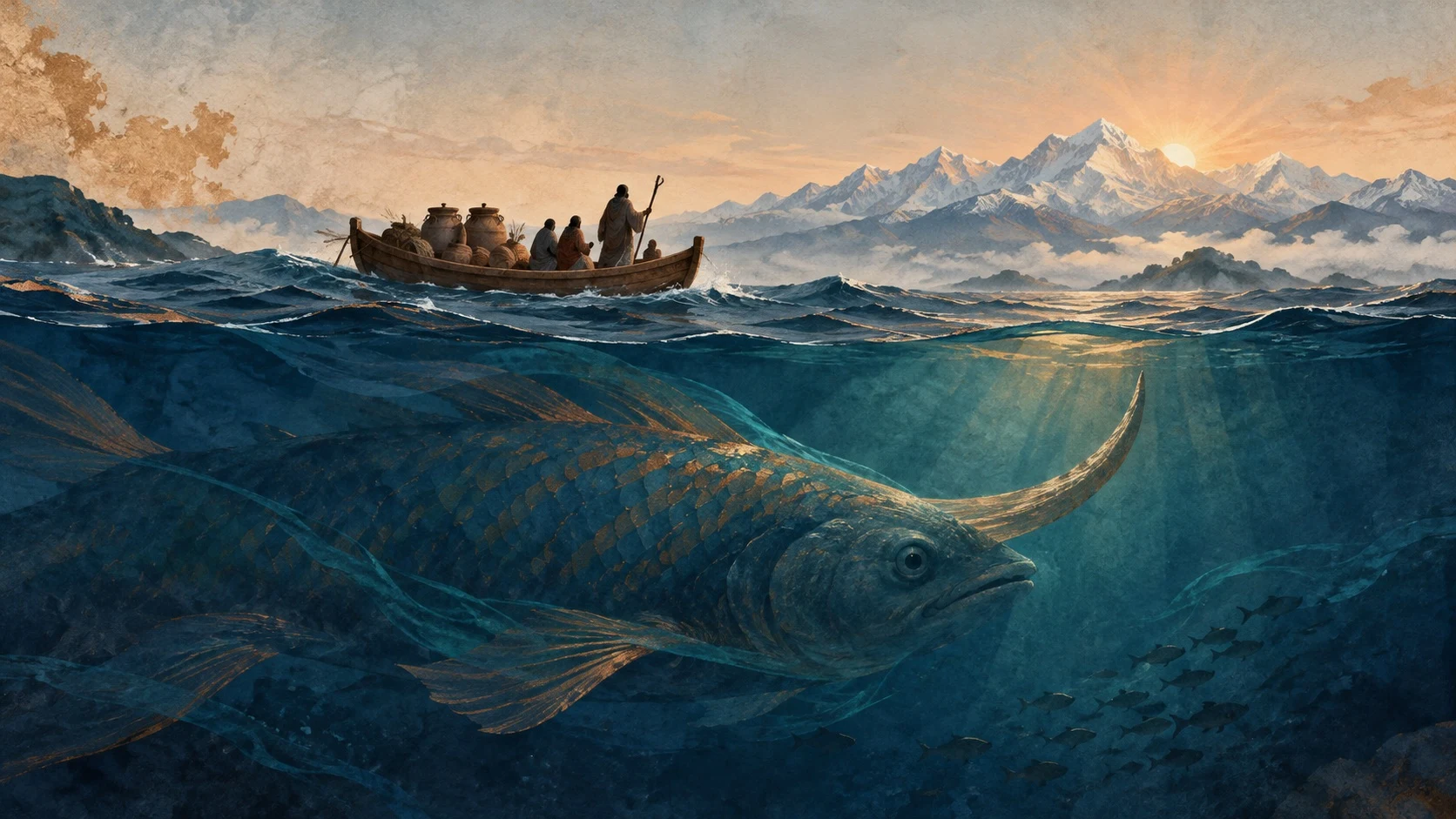
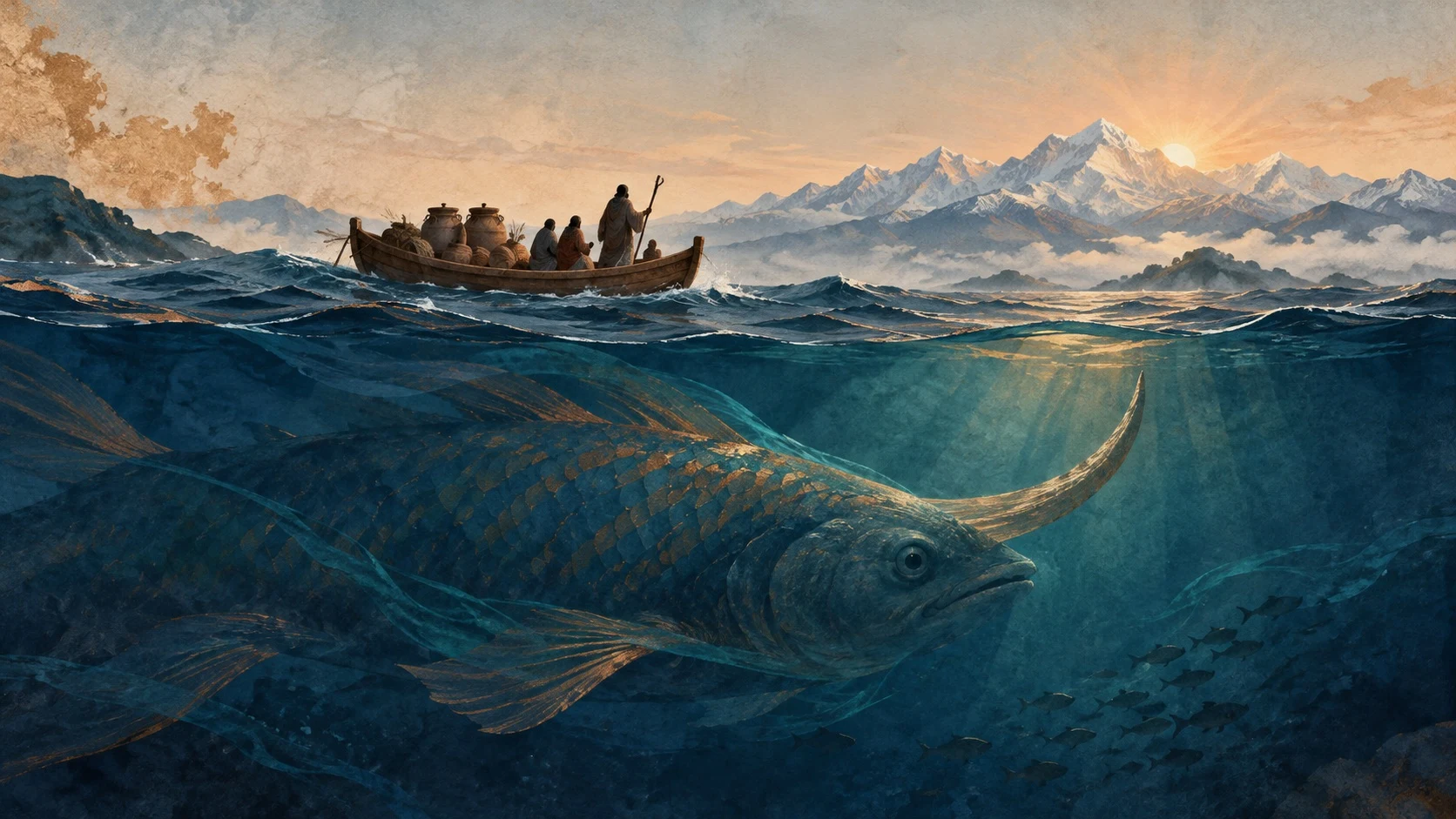
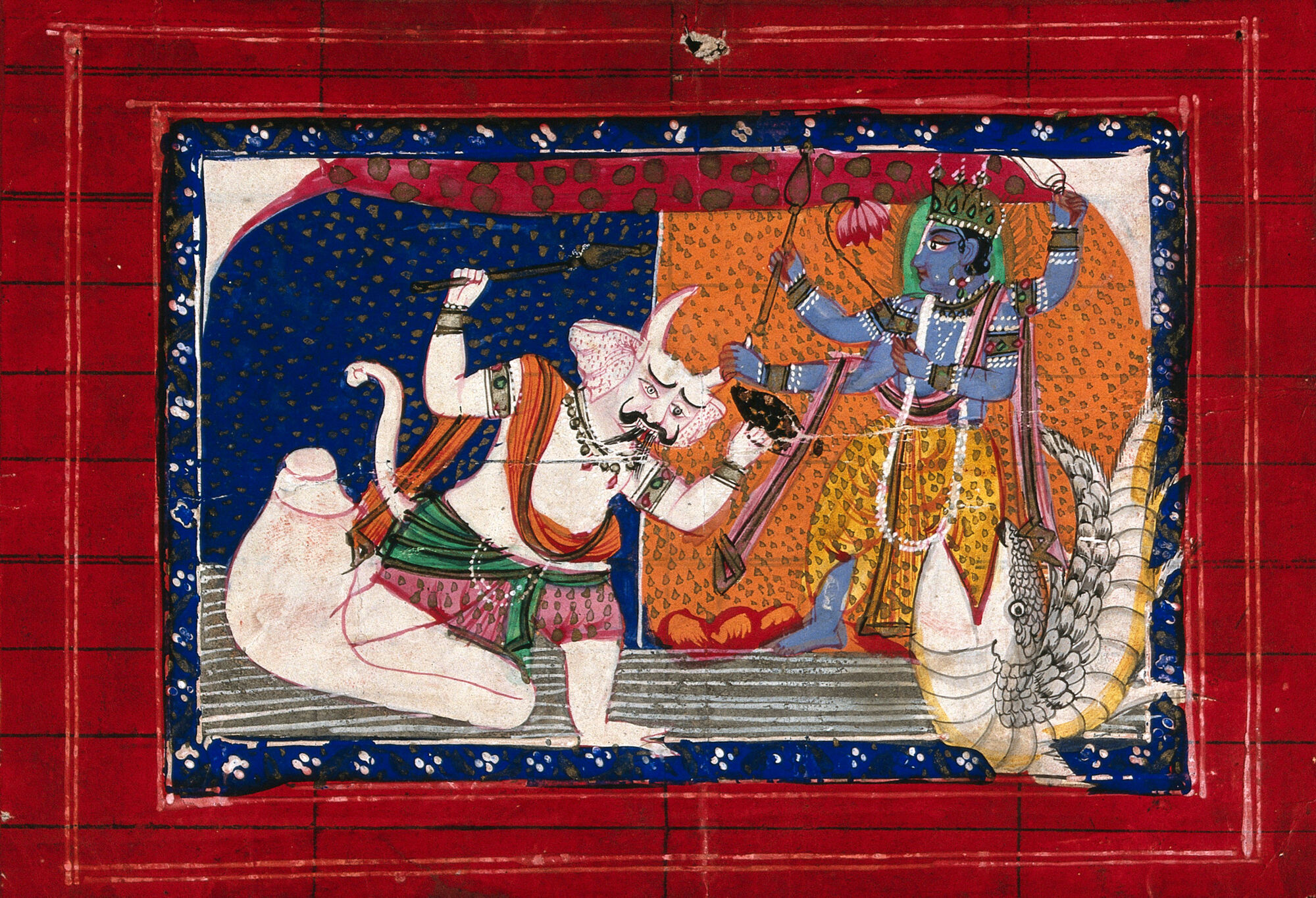
A small fish falls into Manu’s hands as he washes them and asks him to rear it: big fish eat smaller ones. It promises to save him from a coming flood. He first keeps it in a vessel, then moves it into a pit as it grows, and finally takes it to the sea. Their relationship begins with human care, repaid when the fish saves him. [1][2]
This opening belongs to Śatapatha BrāhmaṇaŚatapatha BrāhmaṇaVedic Brāhmaṇa prose associated with the White Yajurveda, explaining sacrifices and their symbolism in differing school recensions. Includes the account of Manu’s flood rescue and Idā as a ritual explanation.Glossary · Click to read the explanation 1.8.1, a work explaining ritualsRitualAn organised or distinguished practice meaningful to a community; it may leave traces, but its form alone does not reveal an associated doctrine.Glossary · Click to read the explanation in the later Vedic tradition. Its textual layers belong to the first millennium BCE; the Sanskrit Reading Room account suggests about the seventh century BCE as an approximate setting for the text, without assigning the flood passage a precise year. This is the earliest surviving detailed Indian account, rather than a dated event at humanity’s beginning. [1][2][10]
The fish in the earliest text: no declared divine name
The fish warns Manu which year the flood will come and asks him to prepare a boat. He boards it as the waters rise, and ties its rope to the approaching fish’s horn. The fish draws him to a “northern mountain” and tells him to fasten the boat to a tree and descend gradually as the waters fall. This stage ends with Manu alone remaining after the flood sweeps away the other creatures. [1][2]
The rescuer has no declared divine name here. The passage does not identify a god who sent the flood or call the fish ViṣṇuViṣṇuHindu deity with whom the saving fish is identified in later Vaiṣṇava versions.Glossary · Click to read the explanation or BrahmāBrahmāCreator deity in Indian traditions, named as the fish’s identity in Mahābhārata 3.185.Glossary · Click to read the explanation; nor does it mention seven sages or animal pairs on the boat. Some of those elements appear in later works, helping us follow the story’s changes. [1][2]
Why does the account end with an offering?
Wanting descendants, Manu worships, practises austerities and offers milk products into the water. A year later a woman arises from the offering and calls herself his daughter, since he generated her through his gifts. She teaches him to employ her in the ritual; through her his lineage continues and he receives the blessings he requests. The work associates the woman with IḍāIdā, sacrifice and human renewalFemale figure arising from Manu’s post-flood offering in the Śatapatha Brāhmaṇa.Glossary · Click to read the explanation and a particular part of the sacrificial rite. [1][2]
Survival thus leads into an explanation of human continuation and ritual efficacy. Iḍā is not a wife accompanying the survivor aboard: she appears after the water recedes, emerging from the offering itself. Noah’s offering in Genesis, by contrast, comes from a family that has already survived and is followed by promises concerning earth and life. [1][2][12]
The Mahābhārata: seven sages and the seeds of life
MahābhārataMahābhārataSanskrit epic formed over centuries, preserving a version of Manu, the fish and the seeds.Glossary · Click to read the explanation 3.185 offers a fuller narrative. This Sanskrit epic took shape over centuries. An Oxford study summarizes a commonly used framework for the whole compilation of about 400 BCE–400 CE, while distinguishing estimates of its stages. That framework concerns the epic’s development, not a particular year for Manu’s episode. [11]
Manu is an ascetic descended from VivasvatVivasvat, Manu’s solar fatherSolar figure in Manu’s genealogy; the epic flood account calls Manu his son.Glossary · Click to read the explanation, the solar name in his genealogy. He cares for the fish seeking protection until it grows. It then warns of approaching destruction and asks for a strong boat, which he must board with the Seven SagesSeven sages in Manu’s flood storySages accompanying Manu aboard the boat in the Mahābhārata version, Sanskrit saptarṣi.Glossary · Click to read the explanation and preserve “seeds” inside. As water fills every direction, he ties the boat to its horn. It draws them to a HimalayanHimalaya mountain rangeMountain range separating the Tibetan Plateau from parts of the Indian subcontinent, named in Manu’s epic story.Glossary · Click to read the explanation peak called the “boat-fastening” place. [3][4]
After their rescue the fish identifies itself as Brahmā, lord of creatures. It commissions Manu to create living beings anew, which he undertakes through austerity and divine assistance. Renewal now involves sages, a supply of seeds and re-creation, rather than Manu alone and Iḍā’s offering. “Seeds” remains the passage’s word; pairs of animals are not named as cargo as they are in Genesis. [3][4][12]
In the Matsya Purāṇa the fish becomes explicitly Vaiṣṇava
The Matsya PurāṇaMatsya PurāṇaSanskrit Purāṇic text framing religious instruction through the divine fish’s dialogue with Manu.Glossary · Click to read the explanation reshapes the story within later Purāṇic literature. Such works contain layers from different periods, so we follow the sequence of versions without assuming one date for every verse. Manu is a king and ascetic, and the fish he nurtures grows miraculously. He recognizes it through Vaiṣṇava names such as Vāsudeva, Keśava and Janārdana; it confirms his recognition. [5]
The catastrophe expands into a cosmic cycle: drought, heat and destruction, then world-covering waters. The fish describes the vessel as the gods’ work for preserving creatures. Manu gathers life through yogic power, the power connected with his spiritual discipline, and brings it aboard. A serpent becomes the rope joining boat and horn, while dialogue supplies a frame for religious instruction. [5]
The changing interpretation of the rescuing fishMatsya: The Saving Fish in Indian TraditionsThe fish saves Manu from a flood. The Śatapatha Brāhmaṇa does not name its deity; the Mahābhārata calls it Brahmā, while the Purāṇic versions examined identify Viṣṇu and vary in survivors and renewal.Glossary · Click to read the explanation is now clear: no declared divine identity in the Vedic passage, Brahmā in the selected epic account, and an explicitly Vaiṣṇava setting in the Purāṇic work. Later readers may recognize Matsya as Viṣṇu’s form in all of them. That belongs to the tradition’s reception and differs from the names each text expressly gives. [1][3][5]
What resembles the Mesopotamian flood?
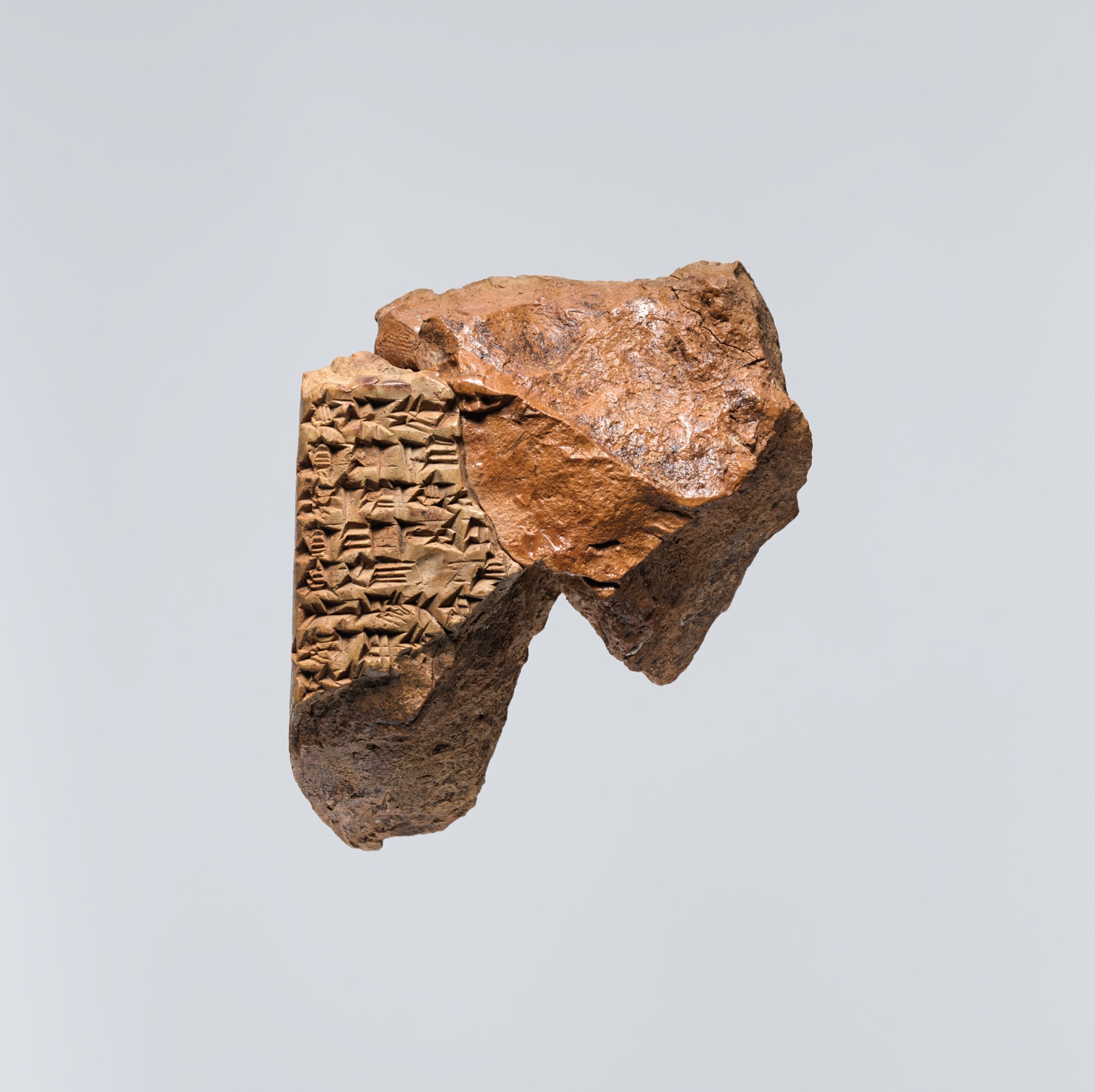
In tablet XI of the Epic of GilgameshEpic of GilgameshA Babylonian literary work with multiple recensions, preceded by separate Sumerian poems on Uruk’s king and Enkidu. Its standard form explores friendship, death, the flood and the limits of seeking eternal life.Glossary · Click to read the explanation, EaEnkiMesopotamian deity also known as Ea, linked with Eridu and the Abzu (deep fresh waters), wisdom, incantations, and narratives of creation and cosmic order. Later written attestations do not identify the deity of Eridu’s earliest layers.Glossary · Click to read the explanation, the AkkadianAkkadianAn ancient East Semitic language written in cuneiform from the third millennium BCE; its varieties include Babylonian and Assyrian, and it served in international diplomacy.Glossary · Click to read the explanation name of EnkiEnkiMesopotamian deity also known as Ea, linked with Eridu and the Abzu (deep fresh waters), wisdom, incantations, and narratives of creation and cosmic order. Later written attestations do not identify the deity of Eridu’s earliest layers.Glossary · Click to read the explanation, warns Uta-napishti and orders a boat carrying the “seed of all living creatures.” The narrator lists kin, animals and craftspeople among those aboard; the expression preserves living beings rather than botanical seed alone. The examined Atrahasis fragment names barley, family and wild herds. [6][7]
Genesis 6–9 saves Noah’s family and animals, followed by offering and covenant with all life. These details allow substantial comparison of warning, vessel, preservation and the new beginning. Following the Indian versions also reveals elements with particular functions: saving the fish before it saves Manu, Iḍā’s offering, sages, austerities and cosmic cycles. Those transformations belong within the comparison. [1][3][5][6][7][12]
Were the “seeds” a mistaken translation?
In 2020 Tzvi AbuschTzvi AbuschAssyriologist and scholar of Mesopotamian religion, emeritus professor at Brandeis University.Glossary · Click to read the explanation and Emily Blanchard WestEmily Blanchard WestScholar of Greek and Sanskrit epics and professor of History and Classics at St. Catherine University.Glossary · Click to read the explanation proposed a linguistic explanation. Gilgamesh uses zēr napšāti, “seed of living creatures,” while the Mahābhārata names bījāni, “seeds.” They interpret the Indian word as a literal understanding of a Mesopotamian expression for preserving creatures, turning the image into a cargo of seeds. This is the argument outlined in their published abstract; its full demonstration lies outside the accessible reading here. [3][6][8]
The hypothesis identifies something testable in language, cargo and the sequence of versions, beyond the presence of a flood in two regions. The seeds’ chronological position matters: they occur in the later epic, not in the earliest Vedic Manu story examined. The argument therefore first concerns the epic version and its history; its relation to the Vedic account’s origin requires further investigation. [1][3][4][8]
Historical contact and each narrative’s setting
Actual evidence documents connections between ancient regions. The Metropolitan Museum discusses the Indus ValleyIndus Valley, historical regionSouth Asian region associated with the Indus civilization, connected with the Near East in the third millennium BCE.Glossary · Click to read the explanation’s interaction with the Near East in the third millennium BCE, including merchant activity. This establishes early opportunities for exchange between distant communities. Identifying a route for a first-millennium BCE Sanskrit account or a later epic stage also requires evidence relevant to those periods and texts. [13]
Guillaume DucœurGuillaume DucœurHistorian of religions specializing in Indian traditions, professor at Strasbourg since 2019.Glossary · Click to read the explanation’s 2018 book traces the history of comparisons and criticizes proposed transmission routes lacking sufficient historical evidence for their stages. He calls for reading Indian versions in ritual, epic and Purāṇic contexts. This is a specific caution about the strength of transmission arguments; converging chronological, linguistic and narrative evidence can support influence even without a named intermediary. [9]
The earlier Mesopotamian written witnesses give influence a possible chronological direction. They do not encompass the history of oral traditions or, alone, reveal a copy read by an Indian author. An argument becomes stronger when it explains connected details and their changed meanings after transmission, alongside alternatives of local reworking or independent developmentIndependent developmentSimilar narrative or cultural elements arising in different settings without historical transmission of the specific feature between them; a testable explanation, not a default assumption when records of borrowing are absent.Glossary · Click to read the explanation of some motifs. [6][8][9][11]
What does the evidence establish, and what remains open?
Three different Indian versions reveal transformations: Manu, fish and Iḍā’s offering in the Vedic text; sages, seeds and Brahmā in the epic; Viṣṇu, cosmic dissolution and instruction in the Purāṇic account. Earlier Mesopotamian witnesses likewise combine warning, vessel and preservation. These form a serious historical comparison, with the seeds proposal offering a more specific linguistic indication of contact. [1][3][5][6][7][8]
Direct derivation of the Indian version from a particular Gilgamesh text or Genesis exceeds the evidence read here; textual comparison also cannot settle whether one worldwide flood occurred. The endings illuminate another part of the story’s history: sacrifice explains human continuation in the Vedic work, rescue opens re-creation in the epic, and the Purāṇa embeds it in a Vaiṣṇava cosmic cycle. What each tradition does with the story also helps explain their resemblance. [1][3][5][8][9][12]
Related readings
References and notes (13)
- Śatapatha Brāhmaṇa 1.8.1.1–11, Julius Eggeling translation, 1882: complete English passage on Manu, fish and Idā, not the entire work. Śatapatha Brāhmaṇa 1.8.1.1–11, Julius Eggeling translation, 1882: complete English passage on Manu, fish and Idā, not the entire work. Return to the text ↑
- Guillaume Ducœur, Les mythes du déluge de l’Inde ancienne, 2018, appendix pp. 331–334, PDF pages 374–377: complete French translation of Śatapatha Brāhmaṇa 1.8.1.1–11. Guillaume Ducœur, Les mythes du déluge de l’Inde ancienne, 2018, appendix pp. 331–334, PDF pages 374–377: complete French translation of Śatapatha Brāhmaṇa 1.8.1.1–11. Return to the text ↑
- Ducœur, 2018, appendix pp. 335–341, PDF pages 378–384: Mahābhārata 3.185.1–54, complete French translation and selected Sanskrit wording, not the whole epic. Ducœur, 2018, appendix pp. 335–341, PDF pages 378–384: Mahābhārata 3.185.1–54, complete French translation and selected Sanskrit wording, not the whole epic. Return to the text ↑
- University of Göttingen, GRETIL, Mahābhārata book 3: 1999 electronic critical-edition text, based on Tokunaga, revised by John Smith and others. Checked 3.185.29–30 and 48–50: sages, seeds, Brahmā and renewal. University of Göttingen, GRETIL, Mahābhārata book 3: 1999 electronic critical-edition text, based on Tokunaga, revised by John Smith and others. Checked 3.185.29–30 and 48–50: sages, seeds, Brahmā and renewal. Return to the text ↑
- Ducœur, 2018, appendix pp. 341–347, PDF pages 384–390: Matsya Purāṇa 1.10–34 and 2.1–20, complete French translation, not the entire Purāṇa. Ducœur, 2018, appendix pp. 341–347, PDF pages 384–390: Matsya Purāṇa 1.10–34 and 2.1–20, complete French translation, not the entire Purāṇa. Return to the text ↑
- Gilgamesh XI 14–31 and 82–96, Akkadian and Andrew R. George’s English translation hosted by SOAS: warning, seed of living beings and passengers, not the entire epic. Gilgamesh XI 14–31 and 82–96, Akkadian and Andrew R. George’s English translation hosted by SOAS: warning, seed of living beings and passengers, not the entire epic. Return to the text ↑
- SEAL, Atraḫasīs Standard Babylonian fragment W 1′–17′, particularly 5′–10′, Nathan Wasserman edition: saved reading of text, transliteration and translation from 12 October 2026. The page did not display the text on reopening. SEAL, Atraḫasīs Standard Babylonian fragment W 1′–17′, particularly 5′–10′, Nathan Wasserman edition: saved reading of text, transliteration and translation from 12 October 2026. The page did not display the text on reopening. Return to the text ↑
- Tzvi Abusch and Emily Blanchard West, Sowing the Seeds of Uncertainty: The Transmutation of the Mesopotamian Flood Myth in India, Iran, and the Classical World, Journal of Indo-European Studies 48/3–4, 2020, pp. 325–351: public abstract and metadata only. Tzvi Abusch and Emily Blanchard West, Sowing the Seeds of Uncertainty: The Transmutation of the Mesopotamian Flood Myth in India, Iran, and the Classical World, Journal of Indo-European Studies 48/3–4, 2020, pp. 325–351: public abstract and metadata only. Return to the text ↑
- Ducœur, 2018: conclusion pp. 328–330, PDF pages 371–373, read in full, with saved earlier selected introduction passages reused; not the whole book. Ducœur, 2018: conclusion pp. 328–330, PDF pages 371–373, read in full, with saved earlier selected introduction passages reused; not the whole book. Return to the text ↑
- Lidia Wojtczak, Sanskrit Reading Room, 4 June 2018: report of Yūto Kawamura’s session on Śatapatha Brāhmaṇa 1.8.1.1–5 and approximate dating; published report only, not the complete recording. Lidia Wojtczak, Sanskrit Reading Room, 4 June 2018: report of Yūto Kawamura’s session on Śatapatha Brāhmaṇa 1.8.1.1–5 and approximate dating; published report only, not the complete recording. Return to the text ↑
- Naama Shalom, Ends of the Mahābhārata, Oxford DPhil, 2012: title, abstract and pp. 39–41 visually read, particularly §§1.4–1.5 on formation; not the entire thesis. Naama Shalom, Ends of the Mahābhārata, Oxford DPhil, 2012: title, abstract and pp. 39–41 visually read, particularly §§1.4–1.5 on formation; not the entire thesis. Return to the text ↑
- Genesis 6–9, Hebrew and JPS 1917: saved reading of family, animals, offering and covenant reused, not an exhaustive manuscript collation. Genesis 6–9, Hebrew and JPS 1917: saved reading of family, animals, offering and covenant reused, not an exhaustive manuscript collation. Return to the text ↑
- Department of Ancient Near Eastern Art, The Metropolitan Museum of Art, Art of the First Cities in the Third Millennium B.C., 1 October 2004: essay, especially Indus interaction and merchants, not the associated full catalogue. Department of Ancient Near Eastern Art, The Metropolitan Museum of Art, Art of the First Cities in the Third Millennium B.C., 1 October 2004: essay, especially Indus interaction and merchants, not the associated full catalogue. Return to the text ↑
Suggest a correction · Suggest a source for this record
Cite this record
IL Archive, «Manu and the Fish: Did the Flood Story Travel from Mesopotamia to India?», https://ilarchive.com/en/studies/manu-and-the-fish-flood
Continue reading