Entity · person
Utnapishtim
A reference page linking a name, group, or concept to the materials that discuss it.
Gilgamesh’s flood hero narrates survival to a king seeking immortality. Ea warns him; life is preserved; hero and wife receive exceptional life. Literary character, not an archaeologically established person.
Text
Role in the epic
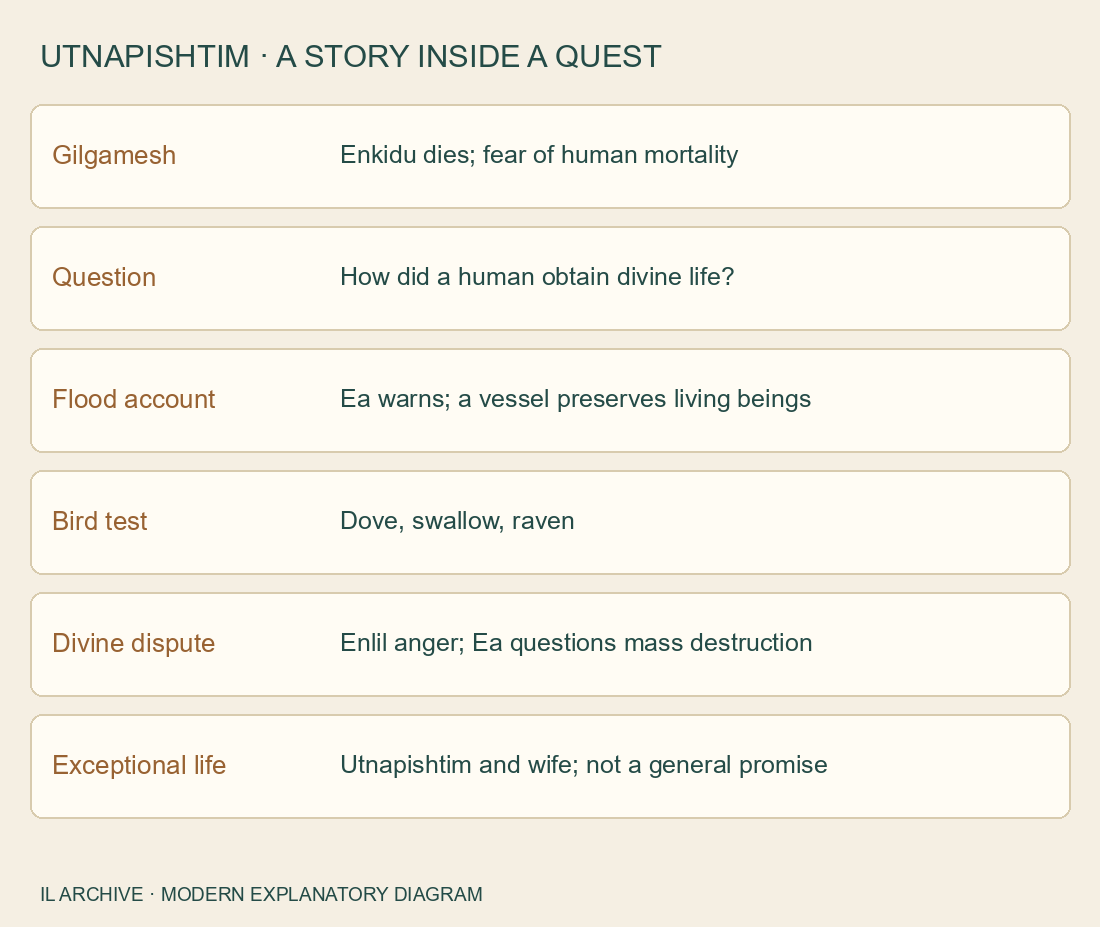
Tablet XI answers Gilgamesh’s question: how did a human enter the gods’ assembly and obtain life? Warning, vessel, Nimuš, dove, swallow, raven and sacrifice follow.[1]
Ending and limits
EaEnkiMesopotamian deity associated with deep fresh water, wisdom and Eridu, known as Ea in Akkadian tradition. The earliest preserved written mention does not date his cult’s origin or identify Ubaid Eridu’s deity.Glossary · Click to read the explanation criticizes mass destruction; EnlilEnlilProminent Mesopotamian god associated with Nippur and Ekur, highly ranked in Early Dynastic texts before the earliest known Anunna attestation.Glossary · Click to read the explanation blesses hero and wife with life like the gods’. This is their exception, not a promise to humanity. Heidel provides the ending with numbering different from George’s.[2] A different hero name is no independent witness to another flood. Image: modern explanation of his role in the quest.
References and notes
- Andrew George, Gilgamesh XI, lines 1–163, SOAS project. Published Akkadian and translation read; based on Oxford 2003 with minor modifications. Excludes later Enlil anger and immortality after line 163. Return to the text ↑
- Alexander Heidel, The Gilgamesh Epic and Old Testament Parallels, Chicago, 1949. University PDF, pp.78–88; especially XI pp.87–88: Enlil’s anger, Ea’s protest, Atrahasis’s dream, hero and wife’s life. Numbering differs from George; rest of book not read. Return to the text ↑
Research history
Substantive changes are retained here. Minor copy edits remain in the internal operational log.
-
Substantive record update
Suggest a correction · Suggest a source for this record
Cite this record
IL Archive, «Utnapishtim», Edition 2, https://ilarchive.com/en/entities/utnapishtim