Ancient text
Mahābhārata
A text for line-by-line reading, with transliteration, translation, and resources.
Sanskrit epic formed over centuries, preserving a version of Manu, the fish and the seeds.
Last reviewed:
Text
The Mahābhārata is a Sanskrit epic combining stories and teachings within the conflict between the Pāṇḍava and Kaurava families. Its formation had several stages; an Oxford study presents about 400 BCE–400 CE as a common broad framework, not a precise date for each episode. [1]
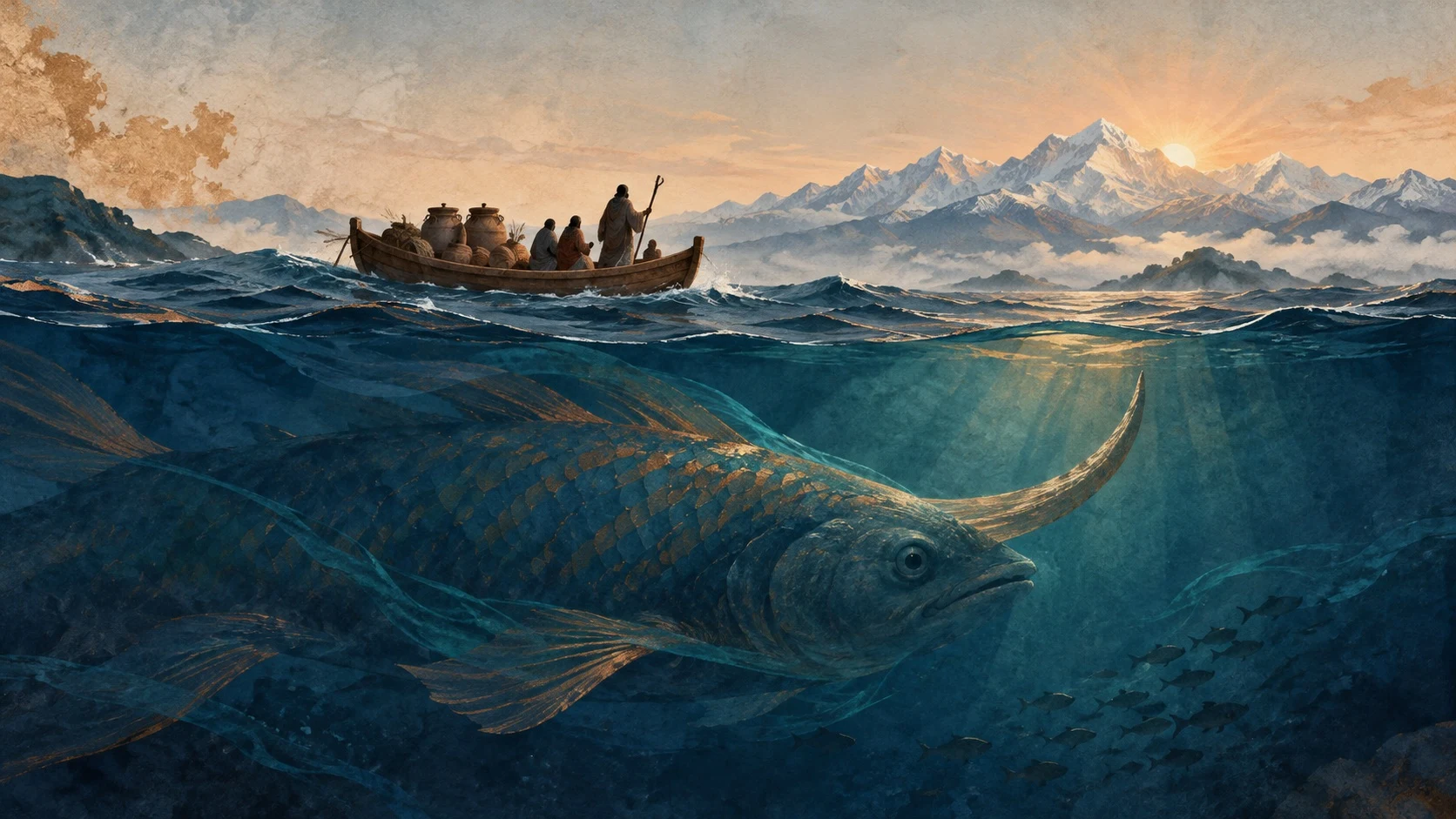
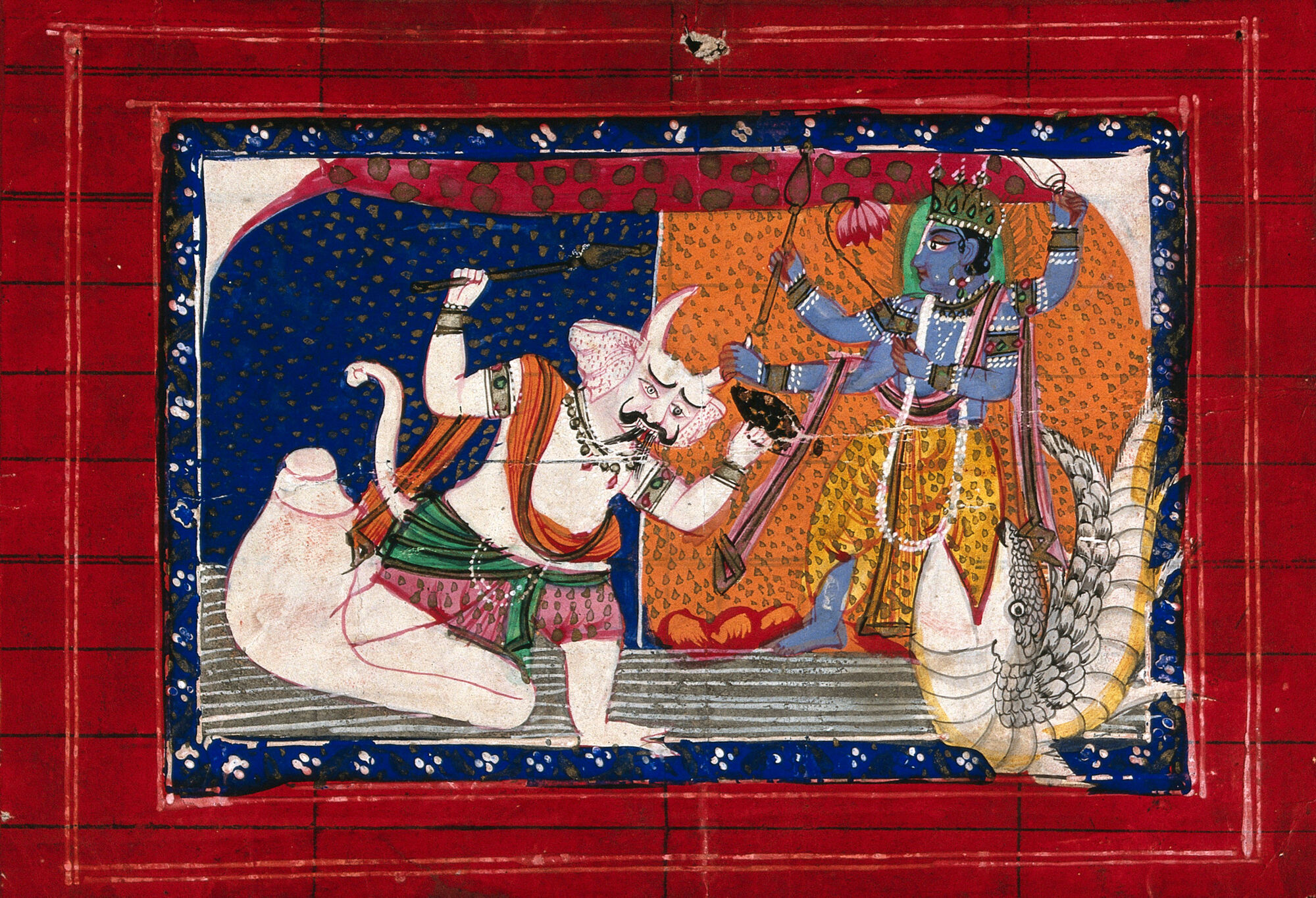
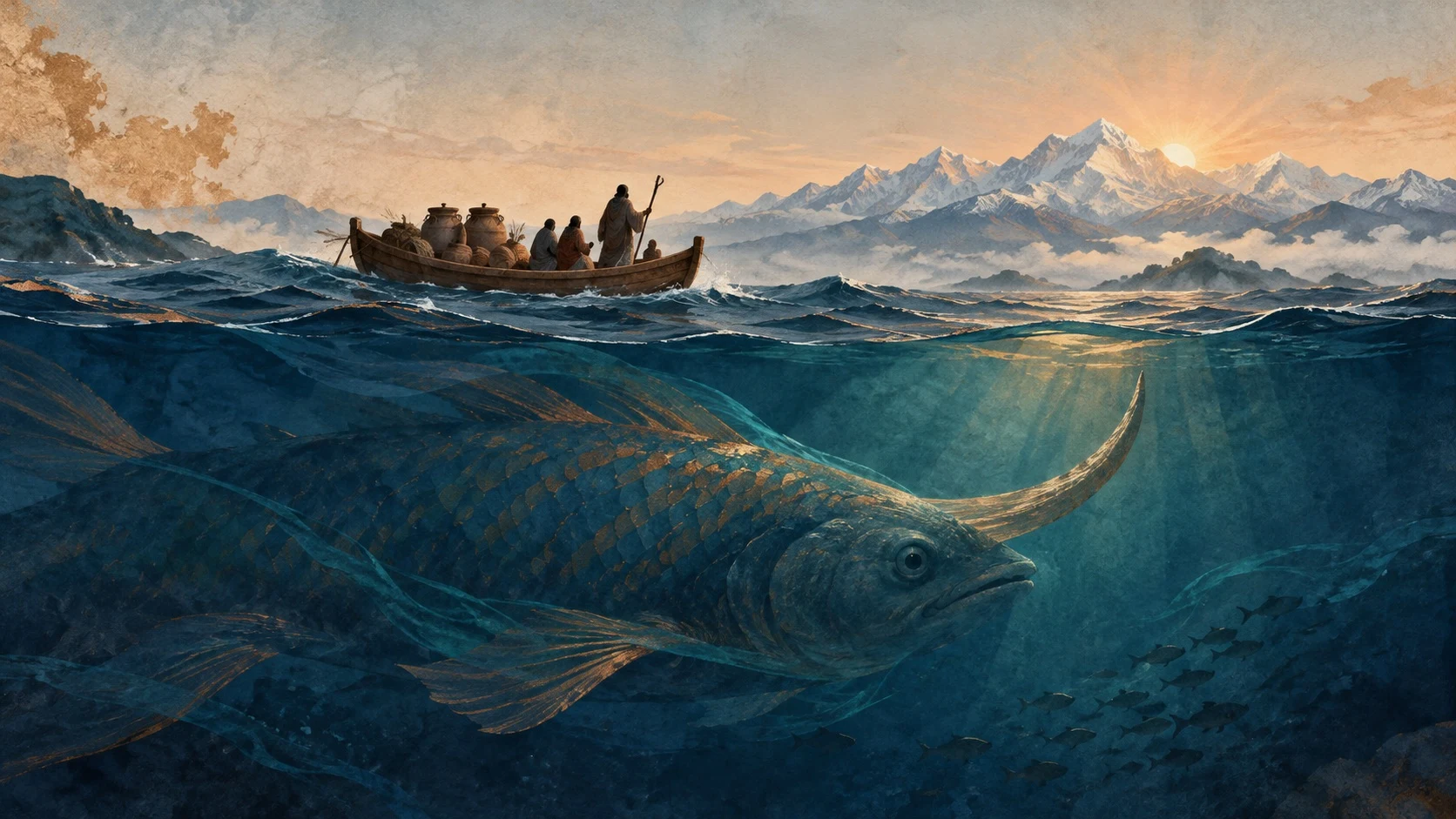
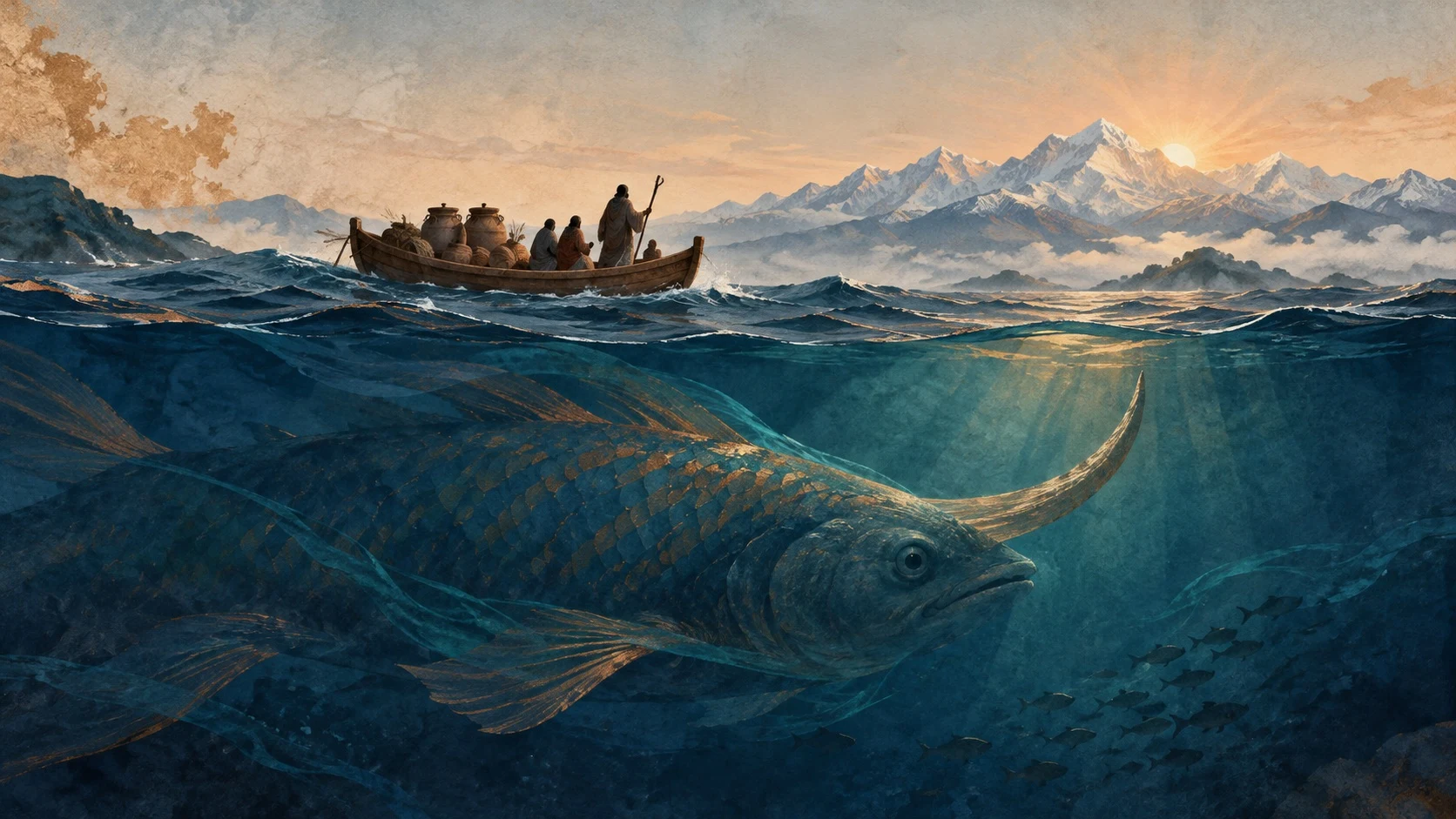
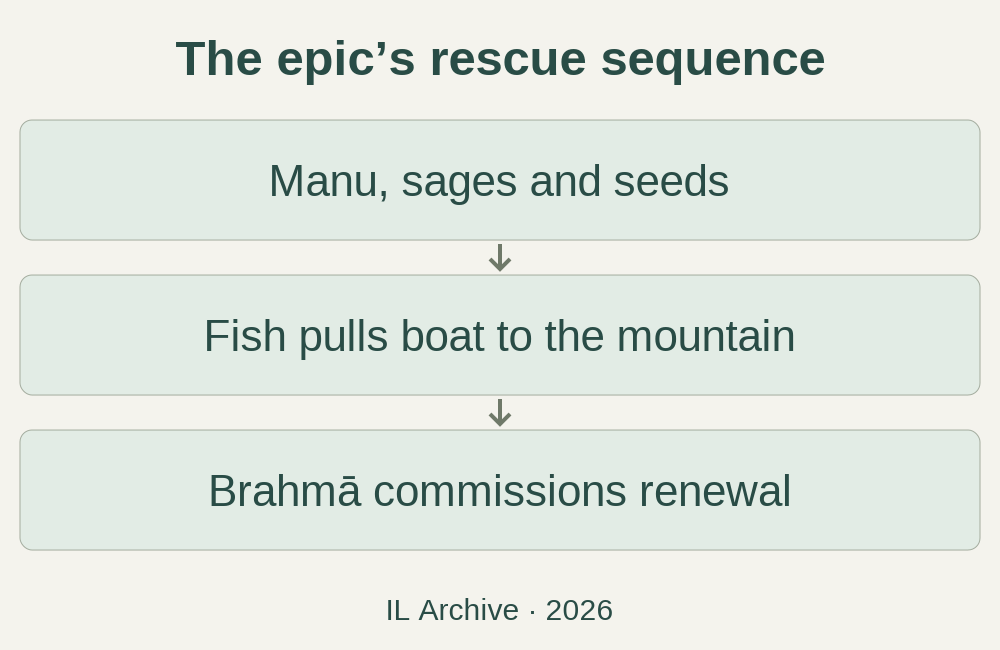
Section 3.185 tells how ManuManu, Survivor in Indian Flood TraditionsA central human figure in several Sanskrit accounts of the flood and human renewal; his position and role differ across the Śatapatha Brāhmaṇa, Mahābhārata and Purāṇas.Glossary · Click to read the explanation, seven sages and seeds survive in a boat pulled by a fish. The fish identifies itself as Brahmā and commissions Manu to recreate living beings. Passengers, rescuer and renewal differ from the earlier Vedic version. [2]
References and notes
- Naama Shalom, Ends of the Mahābhārata, Oxford DPhil, 2012: title, abstract and pp. 39–41 visually read, not the entire thesis. Naama Shalom, Ends of the Mahābhārata, Oxford DPhil, 2012: title, abstract and pp. 39–41 visually read, not the entire thesis. Return to the text ↑
- Ducœur, 2018, pp. 335–341, PDF pages 378–384: Mahābhārata 3.185.1–54, complete French translation, with selected Sanskrit wording checked in GRETIL. Ducœur, 2018, pp. 335–341, PDF pages 378–384: Mahābhārata 3.185.1–54, complete French translation, with selected Sanskrit wording checked in GRETIL. Return to the text ↑
Archive records may be reviewed and refined as better evidence or sources become available. Suggest a correction
Suggest a correction · Suggest a source for this record
Cite this record
IL Archive, «Mahābhārata», https://ilarchive.com/en/texts/mahabharata-sanskrit-epic
Continue reading