Site
Himalaya mountain range
Mountain range separating the Tibetan Plateau from parts of the Indian subcontinent, named in Manu’s epic story.
Last reviewed:
Text
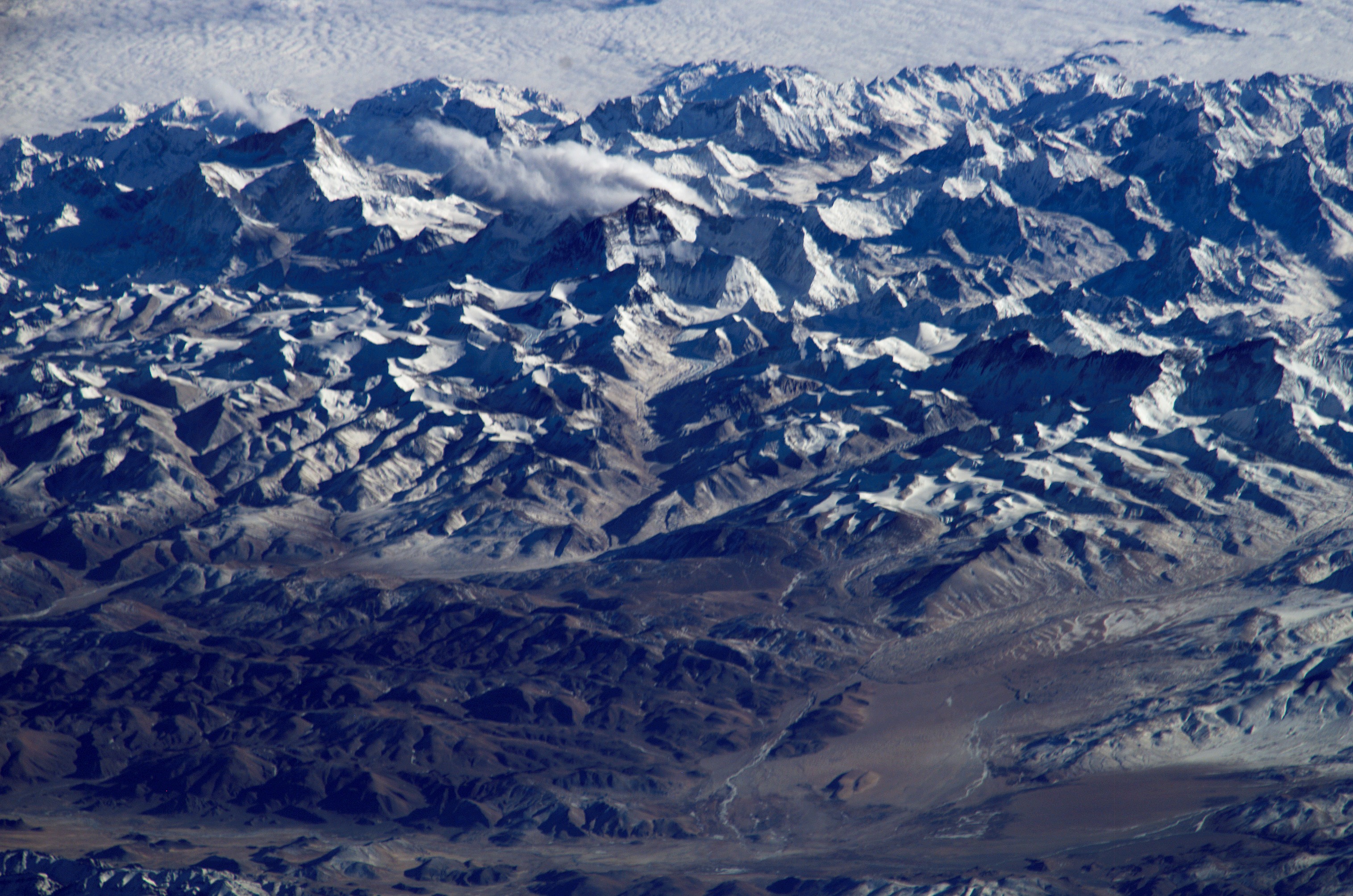
The Himalaya is an Asian mountain range separating the Tibetan Plateau from parts of the Indian subcontinent, including India, Nepal, Bhutan and Pakistan. Space photography shows its present geographical extent. [1]
In the Mahābhārata, ManuManu, Survivor in Indian Flood TraditionsA central human figure in several Sanskrit accounts of the flood and human renewal; his position and role differ across the Śatapatha Brāhmaṇa, Mahābhārata and Purāṇas.Glossary · Click to read the explanation’s boat reaches a Himalayan summit called the place of “boat-fastening.” This establishes the narrative’s mountain setting, not an archaeological location of the boat or an automatic identification with the Vedic account’s “northern mountain.” [2]
References and notes
- NASA, The Himalayas separate the Tibetan Plateau from the Indian subcontinent: geographical caption read. NASA, The Himalayas separate the Tibetan Plateau from the Indian subcontinent: geographical caption read. Return to the text ↑
- Ducœur, 2018, pp. 335–341, PDF pages 378–384: Mahābhārata 3.185.1–54, complete French translation, with selected Sanskrit wording checked in GRETIL. Ducœur, 2018, pp. 335–341, PDF pages 378–384: Mahābhārata 3.185.1–54, complete French translation, with selected Sanskrit wording checked in GRETIL. Return to the text ↑
Suggest a correction · Suggest a source for this record
Cite this record
IL Archive, «Himalaya mountain range», https://ilarchive.com/en/sites/himalaya-mountain-range