Entity · Text or methodological concept
Independent development
A reference page linking a name, group, or concept to the materials that discuss it.
Independent development explains a similar cultural or narrative element arising without historical transmission between the settings studied, tested against direct borrowing, common ancestry and mediated transmission.
Estimated reading time: 7 min Published Last reviewed:
Share article
Text
Introduction
When two stories resemble one another, or two societies develop means of fulfilling a similar purpose, did one borrow from the other? Independent development is one possible answer: the comparable element may have arisen in each setting without its historical transmission between them. But a possibility is not proof that independence occurred in a particular case. This entry tests how to distinguish similarities explained by shared circumstances from those better explained by common tradition or direct or indirect transmission, using flood stories, the origins of writing, and comparative folktale research.
Independent in what sense, and at what level?
The first question is what is said to have developed independently: a broad idea, a narrative detail, a verbal formulation, or an entire technology. A boat in two water-rescue stories may simply be the obvious means of survival. A matching sequence of unexpected details requires a different inquiry. A general idea could be independently conceived while its particular literary expression was borrowed; two accounts can also reach similar endings by different routes.
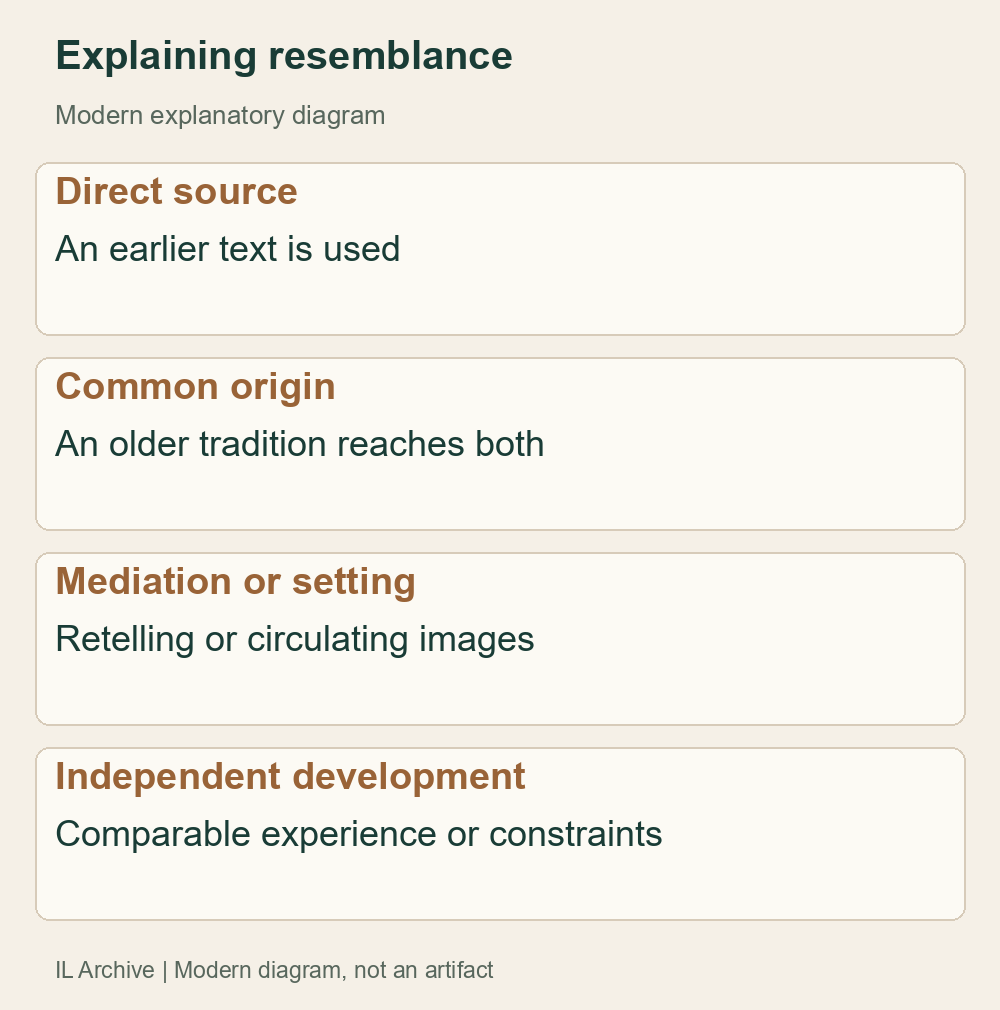
Alternatives include direct use of an earlier text, common ancestry from an older tradition, and mediated transmission through tellers, translations, or retellings. These routes are not necessarily mutually exclusive. Independence does not imply that two societies had no dealings of any kind; it concerns the historical relationship, or lack of one, between the specific elements being compared. Thus the absence of a document recording borrowing does not establish independence, just as thematic resemblance does not establish borrowing. In a study of transformations of the Sanskrit Cyavana story, Emily West calls for testing the criteria used to identify narrative kinship rather than relying only on scholarly impressions. [1]
Weighing competing explanations
First we describe both agreements and differences without already calling either account the source of the other. We then ask how distinctive each feature is. A boat in a deluge is predictable; a similarly ordered cluster of unlikely actions, or an uncommon expression in the same context, is more discriminating. Similarities cannot simply be counted: several may be generated by one narrative constraint and therefore fail to constitute independent evidence. Conversely, changed names, divine characters, or episode order need not erase the possibility that a transmitted tradition was adapted.
Chronology and distribution matter too. Is one proposed source demonstrably earlier? Were there trading, linguistic, or educational contacts through which a story could travel? Can we observe a succession of copies or local transformations? Could social and religious functions, conventional formulas, or shared constraints generate the parallels without borrowing? Possible contact is not actual contact, yet a specific identifiable intermediary is not always required when converging evidence favours transmission. Independence gains support where a local developmental sequence is documented, divergences are systematic, and a plausible route of contact remains unsupported after suitable investigation. It remains a revisable historical judgment.
Finally, the time of events inside a story, the proposed time of composition and redaction, and the date of a surviving manuscript or translation are different things. A late copy can preserve older tradition without dating every stage of that tradition. We also distinguish the interpretation of a text in its received form from hypothetical reconstructions of earlier sources.
A literary test: flood boats and birds seeking land
In MesopotamiaMesopotamiaHistorical region associated with the Tigris and Euphrates: Uruk, Ur, Eridu, cuneiform, Sumer, Akkad, Babylon and Assyria, their languages and cults, and the limits of archaeological evidence.Glossary · Click to read the explanation, Tablet XI of the Epic of GilgameshEpic of GilgameshA Babylonian literary work with multiple recensions, preceded by separate Sumerian poems on Uruk’s king and Enkidu. Its standard form explores friendship, death, the flood and the limits of seeking eternal life.Glossary · Click to read the explanation depicts the survivor UtnapishtimUtnapishtimThe flood hero of Standard Babylonian Gilgamesh, granted exceptional life with his wife by the gods. He tells Gilgamesh how he survived; his name overlaps with Atrahasis and Ziusudra traditions without making their narratives identical.Glossary · Click to read the explanation sending out a dove, a swallow, and a raven after his boat has grounded; in the Book of GenesisBook of GenesisHebrew book of the Torah containing Noah’s flood, survival offering and covenant with living creatures.Glossary · Click to read the explanation, NoahNoahNoah is the flood-story figure in Genesis and a prophet in the Qur’anGlossary · Click to read the explanation sends a raven and then repeatedly sends a dove. The accounts share more than a flood: chosen survival on a vessel, birds sent to test whether water has receded, and a sacrifice after disembarkation. Yet the birds' sequence and the theological roles are not identical. Earlier Mesopotamian AtrahasisAtrahasis: Epic and HeroAkkadian narrative on human creation, relations with the gods and the flood, named for its survivor warned by Enki. Its surviving manuscripts differ in date and preservation; its hero must not be equated uncritically with every Utnapishtim version.Glossary · Click to read the explanation traditions preserve other components of the flood story; the comparison therefore cannot be reduced to just two texts as though these were the only witnesses. [2]
For the Standard Babylonian AkkadianAkkadianAn ancient East Semitic language written in cuneiform from the third millennium BCE; its varieties include Babylonian and Assyrian, and it served in international diplomacy.Glossary · Click to read the explanation text of Gilgamesh, Tablet XI, line 148, the School of Oriental and African Studies in London publishes a Latin-script transliteration based on Andrew George's edition. The original-language excerpt is followed by an English rendering based on the English translation available there: [3]
The HebrewHebrewA Northwest Semitic language of the Canaanite group, encompassing Iron Age epigraphy, Biblical, Rabbinic, medieval and Modern Hebrew; its scripts and pronunciations changed over time.Glossary · Click to read the explanation text of Genesis 8:8 contains this short clause, followed here by an English rendering: [4]
The Akkadian is a transliteration of an edited text, not a claim that we independently deciphered the signs on a particular tablet. The Hebrew is a short extract from the published verse, not an image of a dated manuscript. Sending out a dove is a weak match by itself; taken within the larger pattern of linked scenes, in an environment where flood stories and channels of transmission were known, it gives greater weight to a relationship between traditions. John Day assesses evidence for direct and indirect dependence across several flood versions, while David M. Carr argues that the reconstructed layers of Genesis 6–9 drew on older Mesopotamian traditions. Neither scholarly interpretation establishes that someone copied the surviving Tablet XI, nor does it identify the exact route of transmission. [5] [6]
A short chronology keeps different kinds of dating apart:
- Narrated event: a deluge set in primordial story-time; it has no independently established archaeological date.
- Second millennium BCE: Old Babylonian witnesses to Atrahasis; the growth of Mesopotamian flood tradition and the editing of Gilgamesh involved multiple stages. [2]
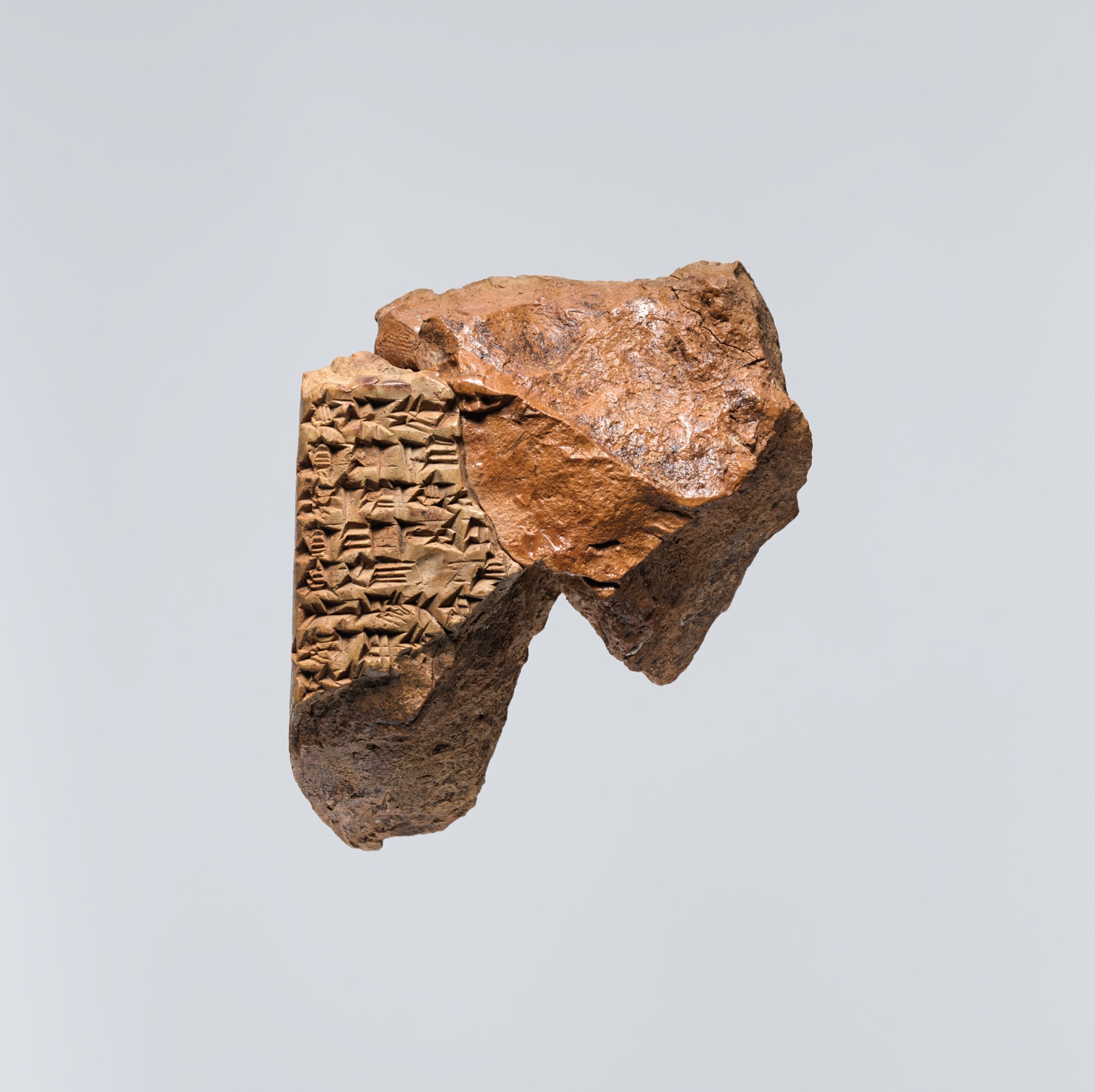
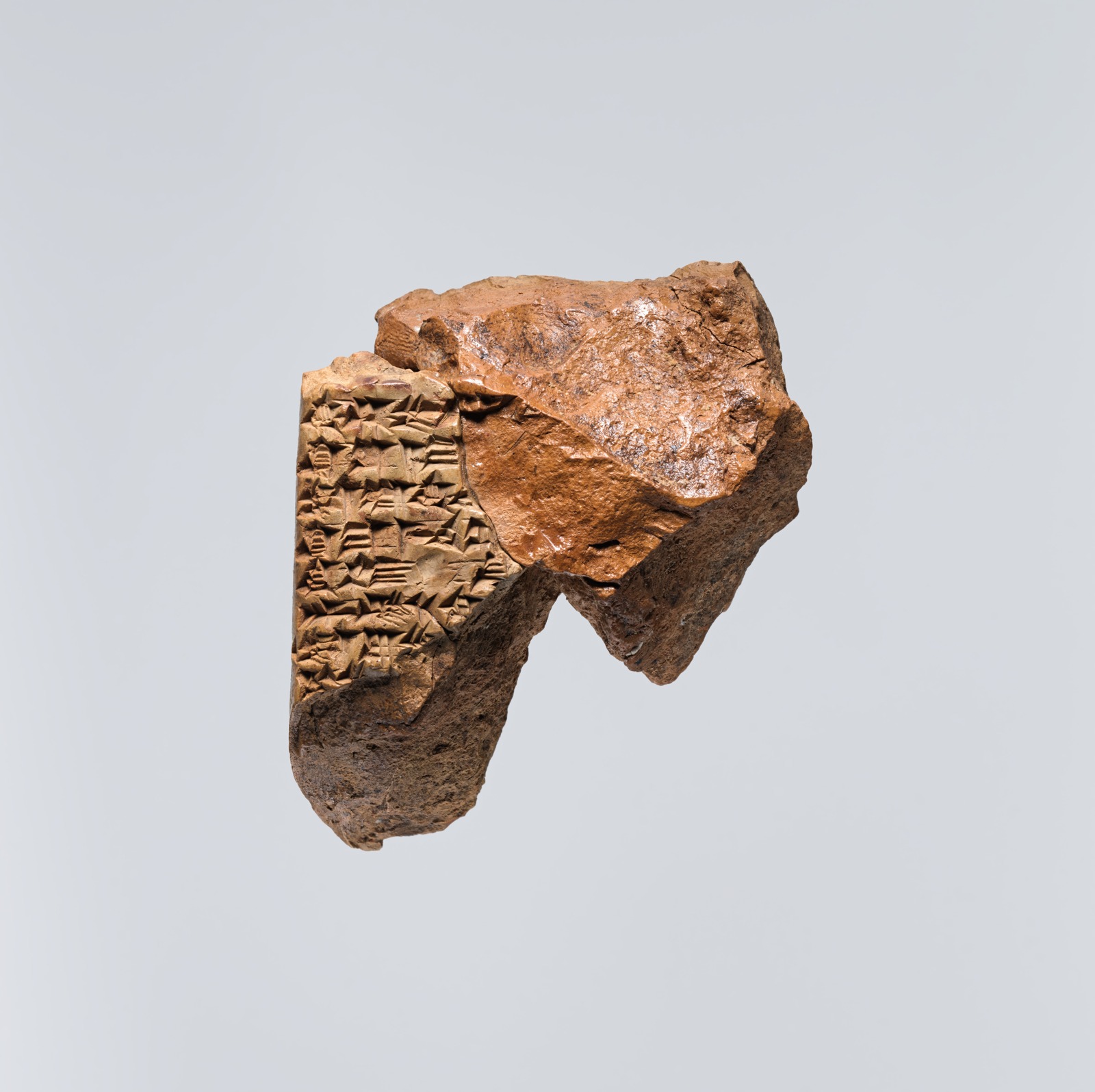
- Seventh century BCE: the cuneiformCuneiformWriting with wedge-shaped signs, developed from Mesopotamian recording traditions and used for several languages from the third millennium BCE.Glossary · Click to read the explanation tablet catalogued as K.3375, from NinevehNineveh and KuyunjikNineveh is an ancient Assyrian city near Mosul in northern Iraq; Kuyunjik is one of its archaeological moundsGlossary · Click to read the explanation, is a physical witness to part of the Gilgamesh flood account, not the date when the story was first composed. [7]
- Genesis: the formation of its flood narrative and proposed compositional layers remain debated; extant Hebrew manuscript witnesses are later than the traditions scholars reconstruct. The date of a copy is not the date of the text's composition. [6]
A stronger case for independence: the invention of writing
Looking beyond literary plots to a cultural invention offers a clearer case for independent development. Early cuneiformCuneiformWriting with wedge-shaped signs, developed from Mesopotamian recording traditions and used for several languages from the third millennium BCE.Glossary · Click to read the explanation at UrukUrukAncient city at Warka in southern Iraq, a major urban centre around 3200 BCE that preserved early writing and accounting tablets.Glossary · Click to read the explanation in Mesopotamia is dated to around 3200 BCE and developed in a setting of accounting and commodity registration. In Mesoamerica, systems of writing arose much later, with early evidence broadly dated around 1200–600 BCE. Their forms and local trajectories differ, and there is no accepted historical evidence for transmission of the invention from Mesopotamia to Mesoamerica before modern transatlantic contact. Independent invention is therefore strongly favoured at the level of creating a system for representing language in signs, not at the level of every feature of every script in either region. [8] [9]
This is an instance of cultural history, not a biological claim: it does not imply that both developments obeyed a single law, nor does it settle whether each writing system within Mesoamerica arose without influence from neighbouring scripts. Its evidentiary strength rests on archaeology, geographical separation, and local sequences—not merely on the common usefulness of writing.
Folktales: testing models rather than presuming independence
Jamshid J. Tehrani compared 58 narratives associated with “Little Red Riding Hood,” “The Wolf and the Kids,” and related stories from Europe, Africa, and East Asia. Applying statistical methods to patterns of tale characteristics, he found evidence distinguishing the two better-known tale groups and relating many African versions more closely to “The Wolf and the Kids.” East Asian tales presented a more complex picture, potentially involving blended elements. This is not proof that the East Asian narratives arose independently: rather, it shows how shared descent, blending, and repeated convergence can be assessed with contestable results. Tehrani also cautions that borrowing may matter more than some of the branching diagrams suggest. [10]
The same questions apply to any pair of narratives: which details are predictable from their subject, and which demand a stronger historical account? Do dated witnesses reveal gradual change or transmission, or two locally traceable innovations? The accompanying modern diagram depicts rival explanations, not a proven family tree for any particular story. The methodological aim is to prefer the account that best explains both similarities and differences, and to state what remains unsettled. Independence should not become the automatic fallback whenever a mediator is unnamed; transmission should not become a fact whenever a familiar scene recurs.
References and notes (10)
- Emily West, “The Transformation of Cyavana: A Case Study in Narrative Evolution,” Oral Tradition 31, no. 1 (2017), pp. 77–122. Journal-archive abstract only; the article’s full pages were not read, and no page-specific argument is attributed to it. Return to the text ↑
- Ira Spar, “Flood Stories,” The Metropolitan Museum of Art, Heilbrunn Timeline of Art History (2009). Online essay, paragraphs on the Sumerian flood account, Atrahasis, Gilgamesh XI and the sequence of birds. Return to the text ↑
- SOAS University of London, “The Epic of Gilgameš, Standard Version, Tablet XI, lines 1–163,” read by Karl Hecker; transliteration and translation from Andrew R. George, The Babylonian Gilgamesh Epic (2003). Tablet XI, lines 142–163, especially 148 (dove), 151 (swallow) and 154 (raven). Published transliteration and English translation examined, not an independent reading of a cuneiform artifact. Return to the text ↑
- Genesis 8:7–12, Masoretic Hebrew text, Mechon-Mamre online edition. Genesis 8:7–12, especially 8:8; the displayed Hebrew text and English translation were examined, with a short excerpt quoted in Hebrew. Return to the text ↑
- John Day, “Comparative Ancient Near Eastern Study: The Genesis Flood Narrative in Relation to Ancient Near Eastern Flood Accounts,” in Biblical Interpretation and Method: Essays in Honour of John Barton (Oxford University Press, 2013), pp. 74–88. Publisher abstract only, not the chapter itself; the abstract discusses four flood traditions and criteria for distinguishing direct from indirect dependence. Return to the text ↑
- David M. Carr, “Precursors to the Flood Narrative (Gen 6:5–9:17),” chapter 6 of The Formation of Genesis 1–11: Biblical and Other Precursors (Oxford University Press, 2020), pp. 141–177. Publisher abstract only; Carr’s position on Priestly and non-Priestly compositions and their Mesopotamian models is reported without claiming the full chapter was read. Return to the text ↑
- Getty Research Institute, Cultural Objects Name Authority (CONA), “The Flood Tablet,” record 700009476; British Museum tablet K.3375, Nineveh, seventh century BCE. Object record: identity, repository, flood narrative and physical dating; no claim that the quoted line 148 was transcribed from this single tablet. Return to the text ↑
- Denise Schmandt-Besserat, “The Evolution of Writing,” International Encyclopedia of the Social and Behavioral Sciences (2014), author-hosted HTML at the University of Texas. Abstract, introduction, section 1 and passages on commodity records, the date around 3200 BCE and comparative independent origins of writing. Return to the text ↑
- Ruth E. Kott, “The origins of writing,” University of Chicago Magazine (2011), report on the Oriental Institute exhibition Visible Language. Online feature, paragraphs on Uruk around 3200 BCE and Mesoamerica around 1200–600 BCE; a museum exhibition report rather than a primary excavation study. Return to the text ↑
- Jamshid J. Tehrani, “The Phylogeny of Little Red Riding Hood,” PLOS ONE 8, no. 11 (2013): e78871, doi:10.1371/journal.pone.0078871. Full published HTML article: abstract, introduction, results, discussion and methods, especially the 58-tale sample, regional findings and qualifications about borrowing. Return to the text ↑
Suggest a correction · Suggest a source for this record
Cite this record
IL Archive, «Independent development», https://ilarchive.com/en/entities/independent-development
Continue reading