Ancient text
Book of Genesis
A text for line-by-line reading, with transliteration, translation, and resources.
Genesis opens the Torah with accounts of creation and Noah’s flood, then follows Abraham, Sarah and their descendants. An early scroll and a medieval Bible preserve different parts of the Hebrew text.
Estimated reading time: 4 min Published Last reviewed:
Share article
Text
Introduction
Genesis is the first book of the Torah, known in HebrewHebrewA Northwest Semitic language of the Canaanite group, encompassing Iron Age epigraphy, Biblical, Rabbinic, medieval and Modern Hebrew; its scripts and pronunciations changed over time.Glossary · Click to read the explanation as Bereshit after its opening word. Its fifty chapters move from the creation of the world and the early generations of humanity to the stories of Abraham and Sarah, Isaac and Rebekah, Jacob, and Joseph. In the book, the family settles in Egypt near the end, setting the scene for the opening of Exodus. [1][2][9]
Creation, flood and Babel
Genesis 1–11 ranges across the beginnings of human life and society. In the account in Genesis 1:1–2:3, the sequence of creation culminates in the seventh day, which, the text says, God blesses and makes holy. The account that follows places the first humans in the garden of EdenEden: The Setting of Genesis’s GardenThe place in which the garden of Genesis 2–3 is planted; the story describes rivers, trees and a human test, while its archaeological location and name’s derivation remain unsettled.Glossary · Click to read the explanation. Genealogies connect the generations between Adam and NoahNoahNoah is the flood-story figure in Genesis and a prophet in the Qur’anGlossary · Click to read the explanation and, later, the line from Shem to Abram’s family. The story of Babel in Genesis 11:1–9 describes a city and tower built by people who share one language. Their speech is confounded and they are scattered. [1][2]
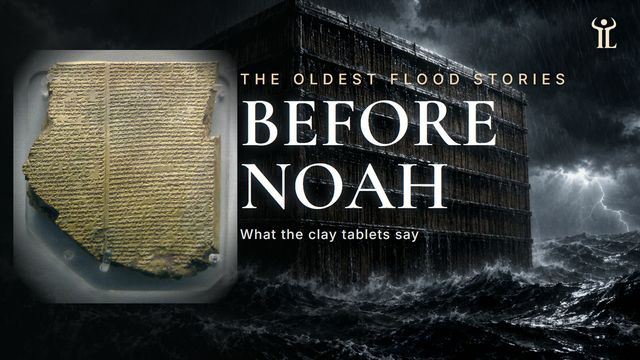
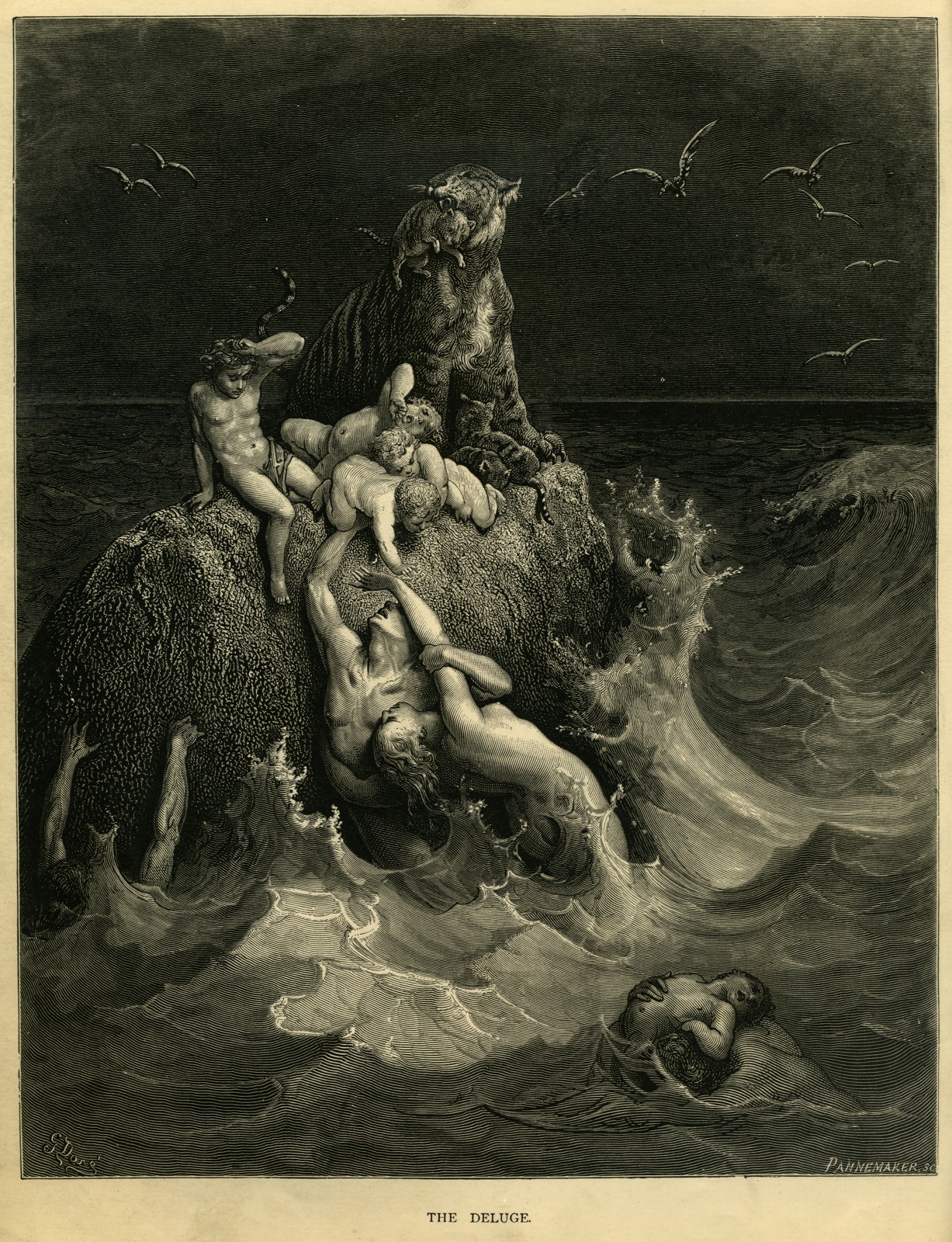
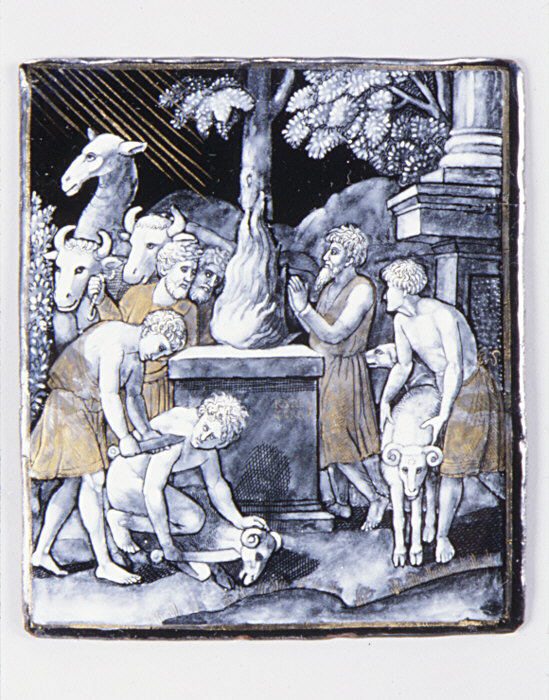
In the book’s flood account (Genesis 6–9), as the waters recede, NoahNoahNoah is the flood-story figure in Genesis and a prophet in the Qur’anGlossary · Click to read the explanation sends out a raven and then a dove. When the dove returns with a freshly plucked olive leaf, the text says he knows that the waters have fallen. After leaving the ark, he builds an altar and makes an offering. The account closes with a divine promise that the seasons and the cycle of day and night will continue (Genesis 8:7–22). In the following chapter, the text says God establishes a covenant with NoahThe Noahic Covenant in GenesisGenesis’s covenant with Noah, descendants and animals: promised in 6:18 and proclaimed in 9:8–17, assuring no flood will again destroy all flesh, with the cloud-bow as its sign.Glossary · Click to read the explanation, his descendants and every living creature. The bow in the clouds is its sign (Genesis 9:8–17). [3][4]
Abraham and Sarah’s family
In the book, Genesis 12 follows Abram and Sarai from Haran to Canaan. The call to Abram ties the journey to a promise of descendants, blessing and land (Genesis 12:1–7). In chapter 17, the account says the covenant is renewed and Abram and Sarai receive the names Abraham and Sarah. The text names circumcision as a sign of this covenant. The promises remain central in the stories of Isaac and Rebekah and of Jacob and his family. In the account of Jacob wrestling through the night, he is given the name Israel (Genesis 32:25–29 in the Hebrew numbering). [1][5]
The final chapters focus on Joseph and his brothers. In the story, the brothers sell Joseph, who is taken to Egypt. When Pharaoh dreams of cattle and ears of grain, Joseph interprets the dreams as seven years of abundance followed by seven years of famine and proposes storing grain in the good years (Genesis 41:25–36). During the famine, the book says, he makes himself known to his brothers and arranges for his father’s household to come to Egypt. The book ends with Joseph’s death and his request that his bones be taken from Egypt when his people leave (Genesis 50:24–26). [1][2][6]
Manuscripts and public reading
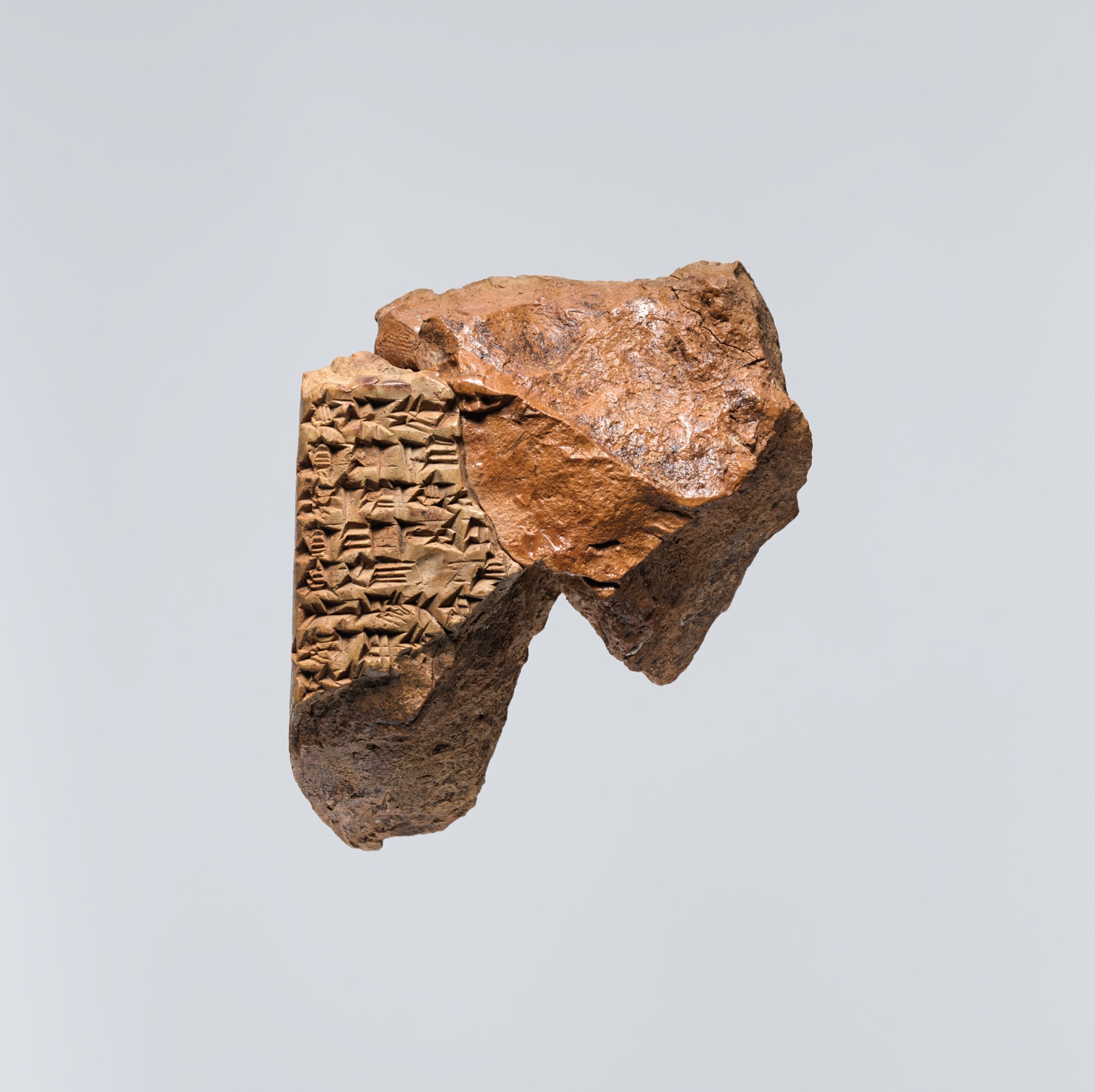
A Hebrew fragment from QumranQumranArchaeological site northwest of the Dead Sea near manuscript caves; its settlement and the groups who deposited the scrolls are studied together but not assumed identical. It is not synonymous with all Dead Sea Scrolls.Glossary · Click to read the explanation, 4Q Genesis g (4Q7), is dated to 100–1 BCE in the Leon Levy Dead Sea ScrollsDead Sea ScrollsManuscript collections from the Judaean Desert, best known through Qumran: diverse works, languages and textual forms, with copying distinguished from composition.Glossary · Click to read the explanation Digital Library. It preserves part of the opening creation account. In the much later Damascus Pentateuch, copied around the year 1000 CE, the surviving text begins at Genesis 9:26. Its margins preserve Masoretic notes, which guide the transmission of the written text. [7][8]
In the weekly cycle of public Torah reading, the first portion, Bereshit, extends from Genesis 1:1 to 6:8. The next, Noach, begins at 6:9 and continues through the end of chapter 11. These divisions group several modern chapters into a single reading. [10]
Quick answers
What is the Hebrew name of Genesis? It is Bereshit, the opening word of Genesis 1:1 and the name of the first weekly reading. [1][10]
Where is the covenant after the flood? Genesis 9:8–17 describes the covenant with Noah, his descendants and every living creature, with the bow in the clouds as its sign. [4]
How does Genesis lead into Exodus? In the book, Genesis ends with Joseph’s death in Egypt. Exodus 1:1–8 opens with Jacob’s family in Egypt and then introduces a new king. [1][9]
References and notes
- Mechon-Mamre, “Genesis,” Hebrew–English Bible Genesis 1:1–2:3, 2:4–3:24, 5, 11:1–32, 12:1–7, 15:18, 17:1–16, 32:25–29 (Hebrew verse numbering), 37:23–28 and 36, 45:1–18, 46:1–7, 47:11–12 and 50:24–26. Hebrew text with English translation. Return to the text ↑
- Yale Bible Study, “Genesis Introduction,” Introduction to the Course – Study Guide Opening paragraphs under Genesis Introduction. Creation and early humanity in chapters 1–11, Abraham through Jacob in 12–36, and Joseph and the move to Egypt in 37–50. Return to the text ↑
- Mechon-Mamre, “Genesis Chapter 8,” Hebrew Bible in English Genesis 8:7–22. The raven and dove, the olive leaf, departure from the ark, the altar and the promise concerning the cycles of life. Return to the text ↑
- Mechon-Mamre, “Genesis Chapter 9,” Hebrew Bible in English Genesis 9:8–17. The covenant with Noah, his descendants and living creatures, and the bow as the sign. Return to the text ↑
- Christine Hayes, “Biblical Narrative: The Stories of the Patriarchs (Genesis 12–36),” Open Yale Courses, RLST 145, lecture 6 Transcript, sections 2, 3 and 5. The call, the promises and covenant in the Abraham cycle, and Jacob’s name Israel. Return to the text ↑
- Mechon-Mamre, “Genesis Chapter 41,” Hebrew Bible in English Genesis 41:1–7, 25–36 and 46–49. Pharaoh’s paired dreams, Joseph’s interpretation and the plan to store grain. Return to the text ↑
- Israel Antiquities Authority, Leon Levy Dead Sea Scrolls Digital Library, “Featured Scrolls” Biblical Scrolls, subsection “Genesis.” Manuscript 4Q Genesisᵍ, dated 100–1 BCE, Hebrew, and the creation passage. Return to the text ↑
- The Posen Library of Jewish Culture and Civilization, “Damascus Pentateuch with Masorah,” vol. 3, Encountering Christianity and Islam First surviving leaf, Genesis 9:26. Date around 1000 CE, marginal notes, and National Library of Israel shelfmark MS Heb. 24°5702. Return to the text ↑
- Mechon-Mamre, “Exodus Chapter 1,” Hebrew Bible in English Exodus 1:1–8. Jacob’s family in Egypt, Joseph’s death and the accession of a new king. Return to the text ↑
- Mechon-Mamre, “Regular Public Torah Readings” Table of Weekly Parashiyot, Bereishit and Noach. The portions are Genesis 1:1–6:8 and 6:9–11:32, respectively. Return to the text ↑
Archive records may be reviewed and refined as better evidence or sources become available. Suggest a correction
Suggest a correction · Suggest a source for this record
Cite this record
IL Archive, «Book of Genesis», https://ilarchive.com/en/texts/genesis-hebrew-book
Continue reading