Site · site
Qumran
Site near the northwestern Dead Sea; neighboring caves preserve ancient Jewish textual finds, not one complete Bible.
Text
Scroll discoveries began in 1947; later investigations identified eleven caves with written remains. QumranDead Sea ScrollsJudaean Desert manuscripts, especially Qumran cave finds. Biblical copies and other works reveal textual diversity; a copy’s age is not the work’s initial date.Glossary · Click to read the explanation is a site and associated find contexts; Dead Sea Scrolls is broader and includes other sites. [1][2]
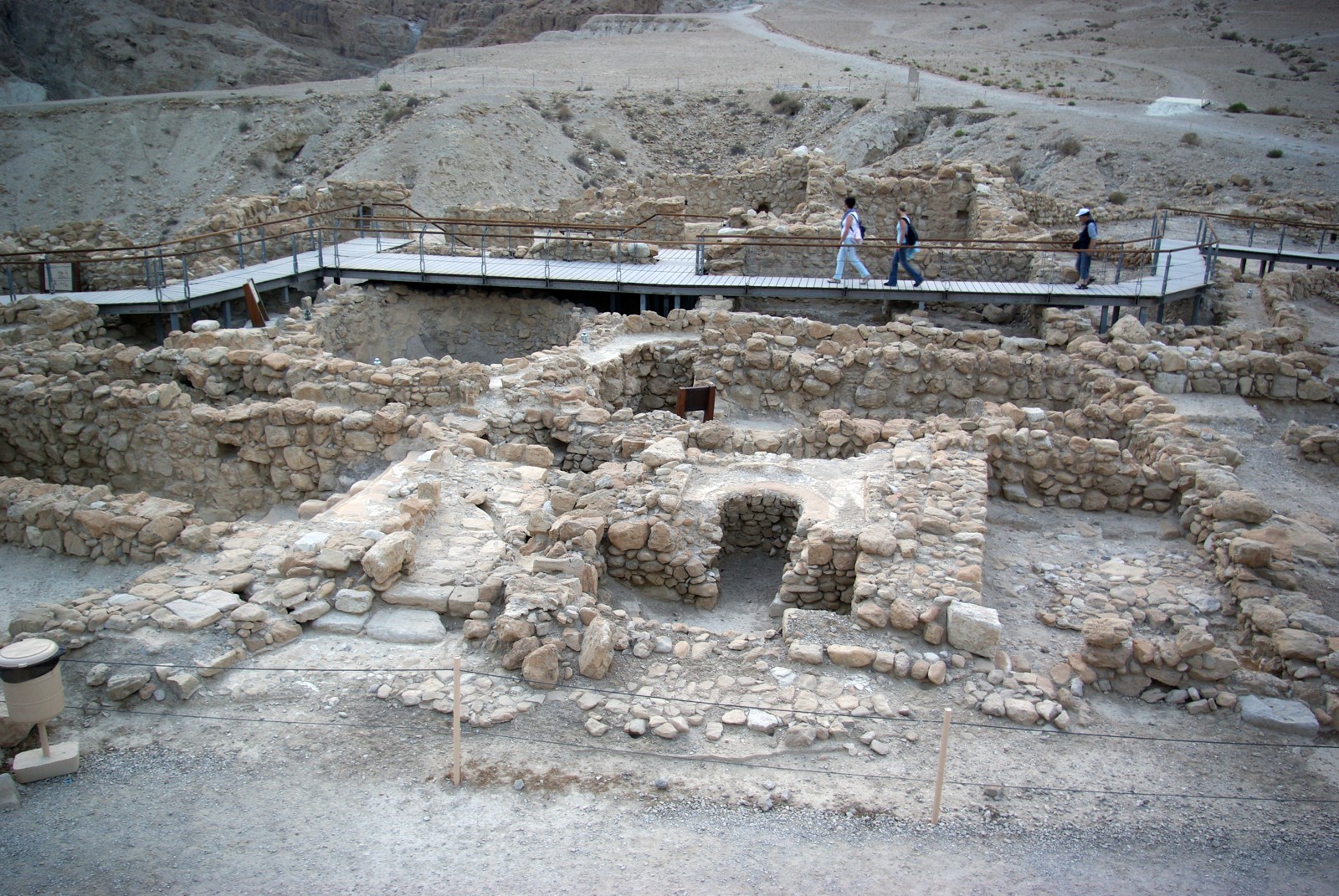
The collection has diverse works, languages and textual forms. Presence here does not prove local composition or copying by one community. The photograph shows site remains, not an identified cave or biblical fragment. [3]
References and notes
- Israel Antiquities Authority. “Discovery and Publication.” 1947 discovery, 1949–1956 investigations, eleven caves and remains of over 900 manuscripts; Dead Sea Scrolls also encompasses other sites. Return to the text ↑
- Israel Antiquities Authority. “Discovery Sites.” Qumran caves and Masada: fragments of seven biblical scrolls, close to the proto-Masoretic tradition. Does not establish universal standardization on one date. Return to the text ↑
- Israel Antiquities Authority. “Introduction.” Leon Levy Dead Sea Scrolls Digital Library. Qumran and biblical manuscripts sections: dates, languages, approximately 230 witnesses, Esther unattested, agreement and variation. Approximate counts; not an independent reading of all fragments. Return to the text ↑
Research history
Substantive changes are retained here. Minor copy edits remain in the internal operational log.
-
Substantive record update
Suggest a correction · Suggest a source for this record
Cite this record
IL Archive, «Qumran», Edition 2, https://ilarchive.com/en/sites/qumran