Entity · Manuscript
Dead Sea Scrolls
A reference page linking a name, group, or concept to the materials that discuss it.
- Timeline
- From 300 BCE to 70 CE
Manuscript collections from the Judaean Desert, best known through Qumran: diverse works, languages and textual forms, with copying distinguished from composition.
Estimated reading time: 9 min Published Last reviewed:
Share article
Reading path
Links recorded in this entry.
Periods
When does it appear?
- From 300 BCE to 70 CE
Dates
Dates have distinct roles. The timeline uses creation, composition or historical coverage, rather than publication or discovery dates.
- Historical coverage
- Approximately From 300 BCE to 70 CE
Text
Introduction
The Dead SeaDead SeaThe Dead Sea is a salt lake in the Jordan Rift Valley, near sites where ancient manuscripts were foundGlossary · Click to read the explanation Scrolls are not a single book but material witnesses to different works and settings in the Judaean Desert. The Qumran cave collection is the best known. These witnesses reveal how texts were transmitted and varied, while allowing us to distinguish the date of a surviving copy from the composition of the work it preserves.
What does the name include?
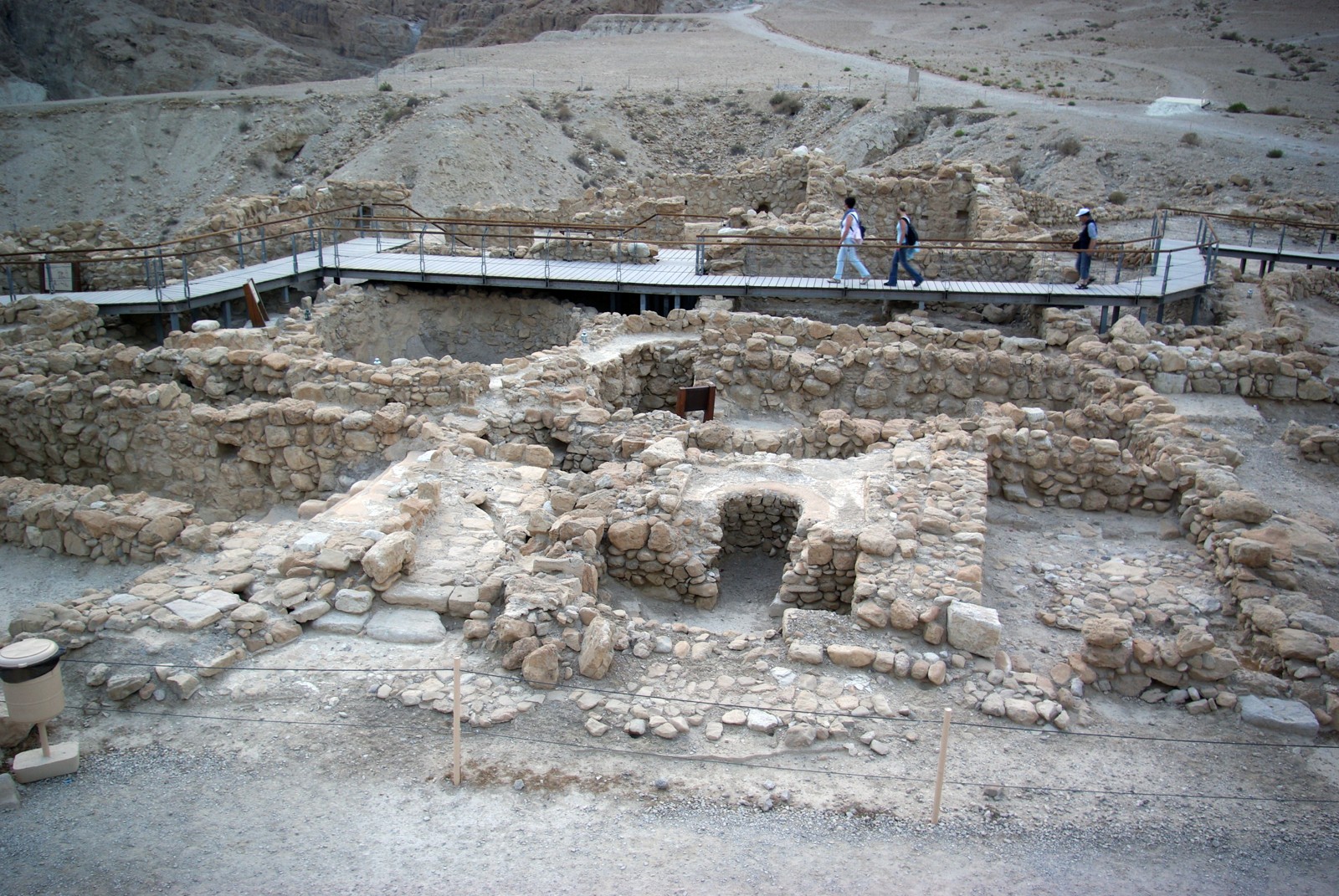
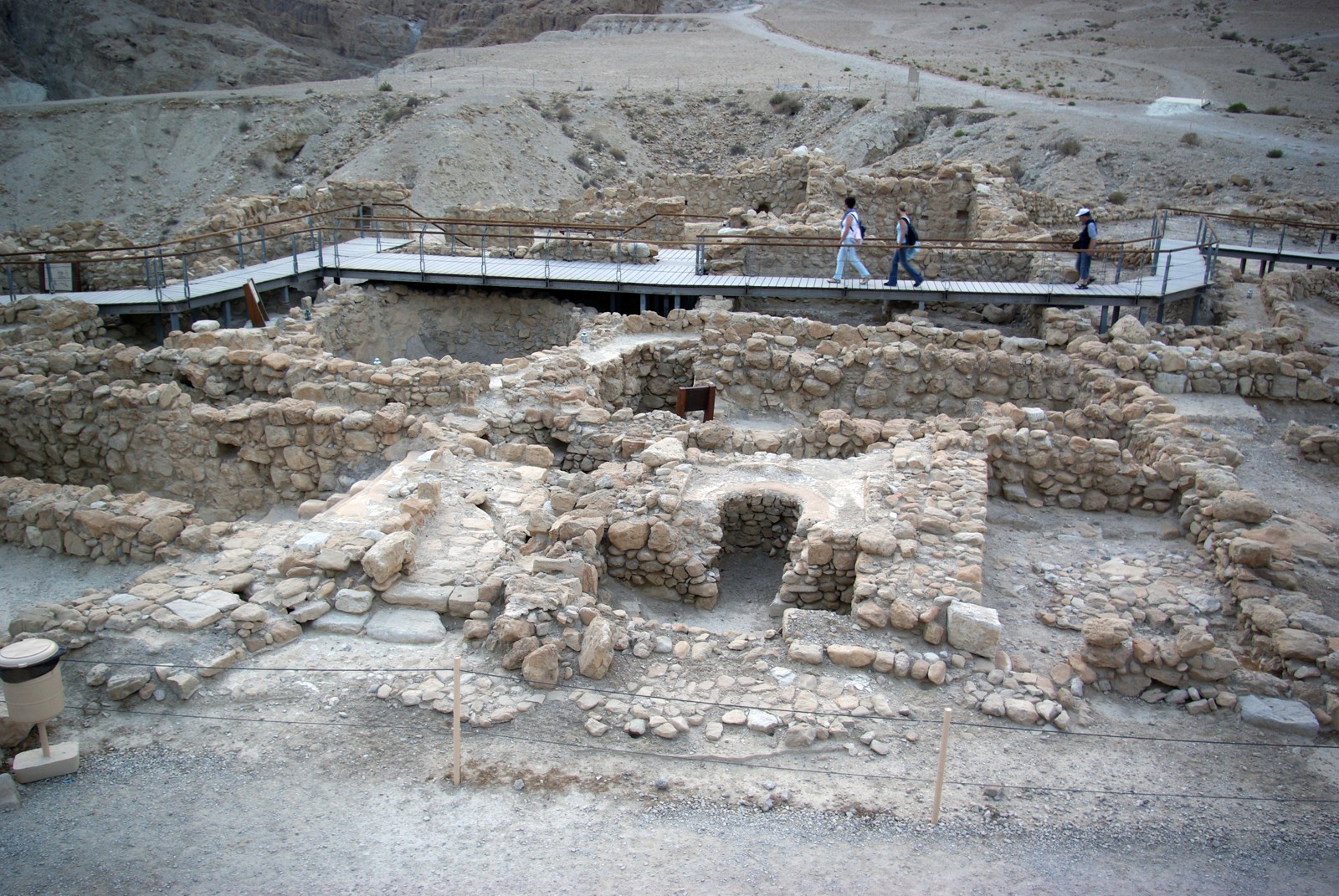
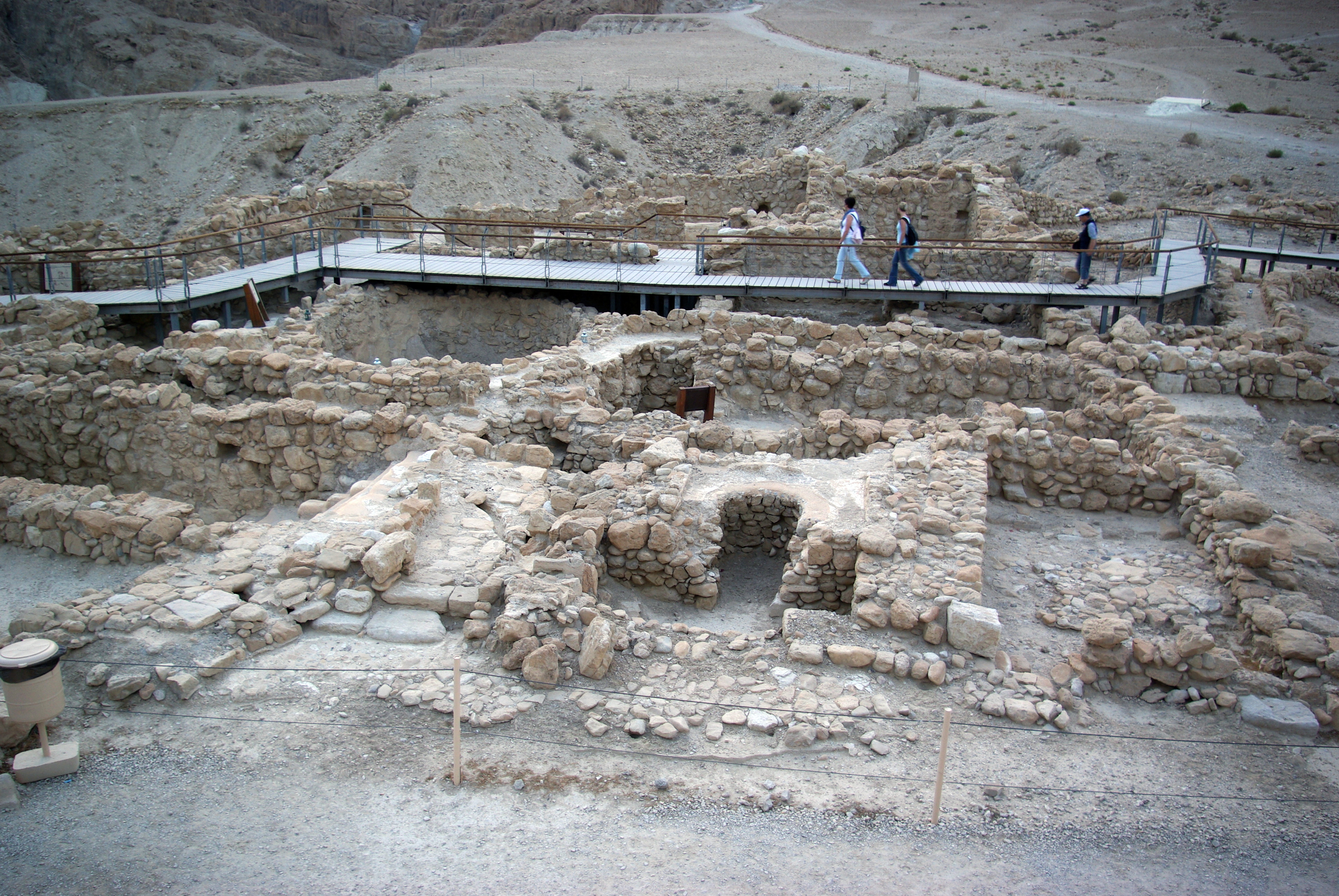
The discovery of the QumranQumranArchaeological site northwest of the Dead Sea near manuscript caves; its settlement and the groups who deposited the scrolls are studied together but not assumed identical. It is not synonymous with all Dead Sea Scrolls.Glossary · Click to read the explanation manuscripts began in 1947. Qumran here means the site and nearby caves on the northwestern side of the Dead Sea. The established collection came from eleven caves: some scrolls survived relatively well, but many survive as fragments.[6] The broader name also includes discoveries from other Judaean Desert sites, including documents and letters from different periods, rather than Qumran alone.[1]
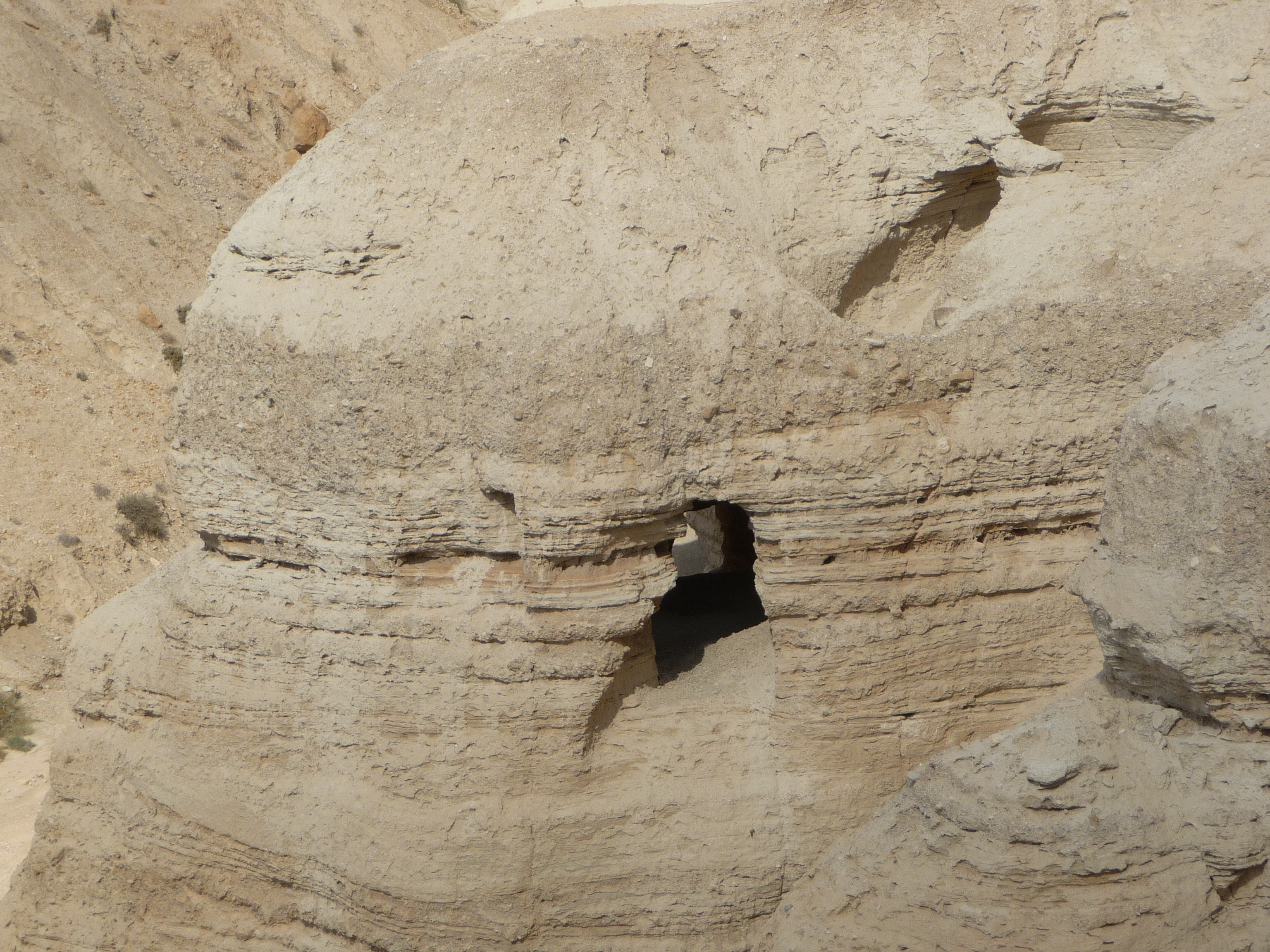
The eleven manuscript-bearing caves were identified between 1947 and 1956 through both Bedouin discoveries and archaeological investigation. Many pieces passed through the antiquities market, so their find contexts are not uniformly documented. The Qumran finds represent remains of more than 900 manuscripts, not 900 complete books; Cave 4 supplied an especially large, fragmentary collection. Publication was a separate, much longer process: access and editorial work were initially concentrated in a small team; the expansion of the team in the 1990s accelerated publication, and most official editions were available by 2001. Discovery, decipherment and publication are therefore different dates.[7]
The broader desert archive includes Masada, Wadi Murabbaʿat and Naḥal Ḥever. Documents associated with the Bar Kokhba revolt of 132–135 CE include legal transactions, personal records and military correspondence. They illuminate people and institutions rather than simply adding copies of religious books. They should not be assigned the dates or community identity of the Qumran collection.[1]
Qumran copies are generally dated from the third century BCE to the first century CE. This is an approximate range for the collection, not a single date for every scroll or all desert finds.[1] HebrewHebrewA Northwest Semitic language of the Canaanite group, encompassing Iron Age epigraphy, Biblical, Rabbinic, medieval and Modern Hebrew; its scripts and pronunciations changed over time.Glossary · Click to read the explanation predominates, alongside Aramaic and Greek. Language and script are distinct: Hebrew texts employ both square and ancient Hebrew scripts, and the ancient script sometimes marks the divine name within a text otherwise written in square script.[3]
Materials, languages and scribal work
Most scrolls were written on prepared animal skin; others on papyrus, while the Copper Scroll is an exceptional engraved metal document. Fragmentation matters: identifying pieces of one manuscript involves writing, material and layout, not just similar wording. Modern handling also altered the evidence. Early adhesive tape and glass mounting damaged fragments; conservation and imaging now help document fragile surfaces without repeated handling.[1][8]
A concrete example is the Cave 1 Community RuleCommunity RuleHebrew text among the Dead Sea Scrolls; the copy designated 1QS includes teaching on the spirits of truth and perversity and conflict within the human heart.Glossary · Click to read the explanation, 1QS: five stitched leather sheets carry eleven columns. Sarianna Metso's critical edition describes corrections, marginal marks and blank spaces, some caused by defects in the leather rather than missing words in an exemplar. These features reveal decisions made during copying and reading.[9] A different case, the Great Isaiah Scroll (1QIsaᵃ), contains 54 columns. A 2021 handwriting study by Mladen PopovićMladen PopovićMladen Popović studies the Hebrew Bible, ancient Judaism and the Dead Sea Scrolls.Glossary · Click to read the explanation and colleagues argues for two principal scribes, responsible for columns 1–27 and 28–54, despite their similar script. This is evidence about the production of that copy, not about two authors of the book of Isaiah.[13]
Books, works and communities
Calling manuscripts “biblical” means that they preserve works included in the Hebrew Bible today. Alongside them are prayers, commentaries, calendars and communal regulations: the Community Rule, for example, regulates a religious group's life. “Non-biblical” does not necessarily mean that ancient readers regarded a work as non-sacred.[4]
The range includes rewritten ancestral narratives, wisdom instruction, hymns, legal interpretation and expectations of a final conflict. A pesher is an interpretation that relates a scriptural passage to the interpreter's own historical world; a communal rule prescribes membership and conduct. These genres answer different questions and need not have identical audiences. Calendrical works likewise concern the ordering of sacred time, not merely a list of dates.[4]
The physical arrangement can cross modern genre boundaries. In 4Q259, a copy related to the Community Rule, calendrical material called Otot follows the rule text without the clear break expected between separate works. Metso uses this to question how sharply ancient scribes distinguished works that modern editors print separately. The association is real evidence for the interests of that manuscript's producers, but it does not make every Qumran text a community calendar.[9]
Some texts reflect particular communities' beliefs, but attributing the whole library to one author or uniform creed erases its diversity. Many scholars connect some Qumran evidence with the EssenesEssenesA Second Temple Jewish movement known especially through Josephus and Philo; evidence supports a Qumran connection without identifying every Essene or manuscript with one uniform community.Glossary · Click to read the explanation, a Jewish group known from ancient sources; the communities' identities and connections with the site remain debated.[1]
A community's programme—and more than one version
The label 1QS identifies the Community Rule from Qumran Cave 1. Metso gives its handwriting a conventional date of approximately 100–75 BCE; this dates the copy, not the beginning of all its constituent traditions. In column I, lines 11–12, those entering the covenant are to commit themselves to communal life. The following continuous Hebrew phrase crosses the line break; the quoted words are preserved, not supplied in a lacuna:[9]
“They shall bring all their knowledge, their strength and their wealth into the community of God.” This translation follows the Hebrew wording; yaḥad, rendered “community”, also expresses joining together. The sequence places intellectual, practical and material resources under a shared religious discipline. It is a normative programme: the rule tells us what its formulators demanded, not how consistently every member complied.
Nor is 1QS the sole form of the Rule. In Metso's reconstruction, 4Q258 apparently began with material parallel to column V of 1QS, without its first four columns: the unusually broad initial margin lacks stitching, supporting an original beginning rather than an accidental loss. Other copies also differ in extent and arrangement. A physically later copy can preserve an earlier literary form. This supports a history of compilation and adaptation rather than a single constitution unchanged throughout the settlement's life. Exactly how those forms map onto successive phases or different groups remains a further historical question.[9]
Why compare the copies?
Some copies closely resemble the consonants later preserved in the Masoretic TextMasoretic TextThe Hebrew Bible’s transmission tradition combining its consonantal text, transmitted vocalization and accentuation, and Masorah notes. The consonantal text has ancient roots; surviving codices that bring these layers together in their Masoretic form are medieval.Glossary · Click to read the explanation, the tradition transmitting the Hebrew Bible and regulating its reading. Others differ in spelling, wording or textual extent. Dead Sea Scrolls scholar Eibert J. C. TigchelaarEibert J. C. TigchelaarScholar of the Hebrew Bible, ancient Judaism and the Dead Sea Scrolls; professor at KU Leuven from 2009 to 2024, with research on Jubilees’ textual growth.Glossary · Click to read the explanation explains that some Qumran witnesses share readings with the ancient Greek translation or Samaritan Torah, while an individual manuscript can combine different characteristics. The collection therefore cannot be reduced to three closed textual families.[2]
The difference becomes visible in Deuteronomy 32:8, where the poem describes the allocation of peoples. The medieval Masoretic wording reads בני ישראל, “sons of Israel”. By contrast, the Cave 4 manuscript 4Q37 (4QDeutʲ), column XII, line 14, preserves:[10]
“sons of God”, or, contextually, “divine beings”. These words are not a modern restoration. The difference concerns who provides the number by which the peoples' boundaries are set; it is not merely an alternative spelling. The ancient Greek tradition's heavenly beings furnish another comparative witness. Tigchelaar discusses why such agreements can point to Hebrew textual forms behind the Greek, rather than innovations by a translator alone.[2]
The safest conclusion here is the existence of distinct ancient readings. Reconstructing the earliest wording and explaining a change requires the poem's context and the other witnesses; the age of one surviving copy does not decide the question automatically. Michael Langlois dates 4Q37 palaeographically to the first half of the first century CE, preferably its second quarter. This is not the first-century BCE dating he gives another Deuteronomy manuscript, 4Q41. Neither date is the composition date of Deuteronomy's poem.[14]
Variation also operates at a larger scale. Tigchelaar discusses 4QJerᵇ as evidence for a Hebrew literary edition related to the shorter form known through Greek Jeremiah. Thus spelling variants, alternative words and differences between literary editions must be distinguished. No single example establishes that every biblical book circulated in the same way; substantial agreement with the later Masoretic consonants remains part of the evidence.[2]
How strong is the Essene connection?
The case is cumulative, not an inscription naming all the cave owners. Archaeologist Jodi Magness points to the caves' proximity—especially Cave 4—and related pottery at the caves and settlement, together with facilities for collective activity and ritualRitualAn organised or distinguished practice meaningful to a community; it may leave traces, but its form alone does not reveal an associated doctrine.Glossary · Click to read the explanation immersion. Such evidence makes a connection between the site and deposits more persuasive than treating their proximity as accidental. It does not identify the author or copying place of each work. In her argument against the villa interpretation, the relative absence of fine tableware also matters, not merely the presence of an impressive building.[11]
Comparison with ancient descriptions of the Essenes is a second step. Communal discipline and the commitment of resources in 1QS offer a meaningful parallel, but a rule's self-presentation is not the same kind of source as an outsider's description. Greg Doudna's discussion, engaging Joan Taylor and others, stresses that classical accounts place Essenes in a wider social and geographical setting; Pliny's description need not designate one specific settlement. Legal affinities with traditions called SadduceanSadduceesThe Sadducees were a Second Temple Jewish current, known mainly from external or rival accounts such as Josephus, the Mishnah and the New Testament rather than any surviving doctrinal writings of their own.Glossary · Click to read the explanation further complicate a simple label.[12]
Accordingly, an Essene relationship remains a strong working explanation for part of the evidence, while “one isolated Essene monastery wrote the entire library” exceeds it. The more secure site–cave relationship, the probable affiliations of particular rule texts, and the origin of every manuscript are three distinct claims. Textual diversity does not by itself disprove a community collection: a group can collect works it did not compose. Conversely, shared purity concerns alone cannot establish a uniquely Essene identity.[1][9][11][12]
Dating a manuscript and dating a work
Copies are dated using evidence such as handwriting and radiocarbon. Radiocarbon measures the organic writing support, not the wording or the moment when ink was applied; comparison with handwriting helps interpret its historical range. A study published in 2025 combined radiocarbon measurements with handwriting analysis to propose earlier estimates for a number of manuscripts. These are probabilistic ranges, not certain years of copying.[5]
A dated copy establishes that its text was circulating by that time. It cannot by itself establish when composition began or how many editorial stages preceded it.
A specific result shows why the distinctions matter. For 4Q114, a fragmentary Daniel manuscript preserving parts of chapters 8–11, the 2025 study reports two calibrated 2σ intervals: 355–285 BCE (49.5%) and 230–160 BCE (45.9%). The authors reject the older branch through comparison with dated Aramaic handwriting and use the younger branch as the accepted interval. It is therefore not the whole radiocarbon distribution or a date obtained independently of palaeographic judgment. The proposed proximity to the literary-historical dating of Daniel 8–11 in the 160s BCE is significant, but remains an interpretation of intersecting evidence, not proof of an autograph or of the scribe's personal acquaintance with the author.[5]
The chronological layers can be kept separate:
- Composition and revision: traditions and literary arrangements may precede the surviving copies; each work requires its own argument.
- Surviving copies: for example, the conventional 100–75 BCE estimate for 1QS and Langlois's first-century CE estimate for 4Q37 refer to different physical manuscripts.[9][14]
- Deposit and survival: a findspot records where an object survived, not necessarily where it was written.
- Modern recovery: 1947–1956 marks discovery of the established Qumran cave corpus; publication and new scientific analysis continued much later.[7]
The scrolls are therefore indispensable for Jewish literary, linguistic and social history in the Second Temple periodSecond Temple JudaismDiverse Jewish traditions between the rebuilding of Jerusalem’s temple around 515 BCE and its destruction in 70 CE: institutions, diaspora, groups and texts, with distinctions between events, composition, manuscripts and the limits of evidence.Glossary · Click to read the explanation, and for the textual history of scripture. Their greatest contribution is not a single recovered “original Bible”, but the possibility of testing transmission, authority and communal interpretation against identifiable material witnesses.
References and notes (14)
- Israel Antiquities Authority, “Introduction”, Leon Levy Dead Sea Scrolls Digital Library. Sections “Qumran Caves Scrolls”, “Sectarian Manuscripts” and “Scrolls from Additional Sites”: Qumran scope and dates, and limits of assigning texts to one community. Return to the text ↑
- Eibert Tigchelaar, “Editing the Hebrew Bible: An Overview of Some Problems”, in Editing the Bible: Assessing the Task Past and Present (2012), pp. 41–65. P. 44 n. 14 and pp. 46–47, especially n. 25: Masoretic consonants, diversity and non-exclusive classifications. Read pp. 41–47, not the entire chapter or volume. Also used the discussions of Jeremiah and Deut 32:8 on those same pages. Return to the text ↑
- Israel Antiquities Authority, “Languages and Scripts”, Leon Levy Digital Library. Opening and “Hebrew”, especially the paragraph on square and paleo-Hebrew scripts; also “Aramaic” and “Greek”. Return to the text ↑
- Israel Antiquities Authority, “Scrolls Content”, Leon Levy Digital Library. “Manuscript Types”, “Biblical Compositions” and “Non-Biblical Compositions”, especially legal and sectarian texts: classification and the Community Rule. Return to the text ↑
- Mladen Popović et al., “Dating ancient manuscripts using radiocarbon and AI-based writing style analysis”, PLOS One 20(6) (2025), e0323185. Abstract, §§1, 2.1–2.2 and 3, Fig. 1; S4 Appendix pp. 7 and 9–10, especially 4Q114 and palaeographic exclusion of the older branch. Intervals 355–285 BCE (49.5%) and 230–160 BCE (45.9%); the latter is the authors’ accepted interval, not the full distribution. Appendices not read in full. Return to the text ↑
- Library of Congress, “Introduction: The World of the Scrolls”, Scrolls from the Dead Sea exhibition (1993). “The World of the Scrolls”, opening paragraphs: 1947 discovery, eleven caves, setting and fragments. Return to the text ↑
- Israel Antiquities Authority, “Discovery and Publication”, Leon Levy Digital Library. Sections Discovery, The First Seven Scrolls, Aftermath of Initial Discovery and Publication; webpage read, not the original excavation reports. Return to the text ↑
- Israel Antiquities Authority, “Conservation”, Leon Levy Digital Library. About, Early Efforts and opening of Present-day: materials, damage from tape and glass, and documentation. Return to the text ↑
- Sarianna Metso, The Community Rule: A Critical Edition with Translation, with a contribution by Michael A. Knibb (SBL Press, 2019). Pp. 2–7: 1QS material and dating, variant versions, especially 4Q258 and 4Q259; pp. 16–17: I11–12, Hebrew and English. Actual page images checked; excerpt translations here follow the Hebrew. Not a reading of the entire volume. Return to the text ↑
- Eugene Ulrich, ed., The Biblical Qumran Scrolls: Transcriptions and Textual Variants (Brill, 2010). Printed p. 240, PDF page 257: 4QDeutʲ XII14 and apparatus for Deut 32:8; witness and apparatus visually read, not the whole book. Also checked Qumran-Digital transcription dated 2024-04-29. Return to the text ↑
- Jodi Magness, “The Archaeology of Qumran and the Dead Sea Scrolls (Grand Rapids, MI: Eerdmans, 2002)”, Bible and Interpretation (June 2003). Complete article, especially ritual baths, communal facilities, pottery, critique of the villa interpretation and Cave 4 connection; not the entire 2002 book. Return to the text ↑
- Greg Doudna, “Probing the Essene Question …”, Bible and Interpretation (October 2014). Passages discussing Joan Taylor’s reading of classical sources, Sadducean legal affinities and Pliny’s geography. Specific qualifications used, not the article’s wider hypothesis about Essene origins under Herod. Return to the text ↑
- Mladen Popović, Maruf A. Dhali and Lambert Schomaker, “Artificial intelligence based writer identification generates new evidence for the unknown scribes of the Dead Sea Scrolls exemplified by the Great Isaiah Scroll (1QIsaᵃ)”, PLOS One 16(4) (2021), e0249769. Abstract, introduction paragraphs on the manuscript and earlier views, and discussion of the two manuscript halves; no claim to rerun the model or inspect every test. Return to the text ↑
- Michael Langlois, “The Dead Sea Scrolls, Palaeography and the Samaritan Pentateuch” (2019). P. 258: 4Q37 in the first half of the first century CE, preferably second quarter; p. 259 compared for 4Q41 BCE. Specified paragraphs read, not the whole study. Return to the text ↑
Suggest a correction · Suggest a source for this record
Cite this record
IL Archive, «Dead Sea Scrolls», https://ilarchive.com/en/entities/dead-sea-scrolls
Continue reading