Entity · Concept
Masoretic Text
A reference page linking a name, group, or concept to the materials that discuss it.
The Hebrew Bible’s consonantal, reading and Masorah tradition: ancient roots, medieval witnesses, and what Deuteronomy 32:8 variants can establish.
Estimated reading time: 6 min Published Last reviewed:
Share article
Text
Introduction
The Masoretic Text is the tradition in which the HebrewHebrewA Northwest Semitic language of the Canaanite group, encompassing Iron Age epigraphy, Biblical, Rabbinic, medieval and Modern Hebrew; its scripts and pronunciations changed over time.Glossary · Click to read the explanation Bible has been transmitted with its consonants, reading signs and scribal notes. Its historical value becomes clearer when we distinguish the age of the consonantal text, the notation of its reading, and the date of a surviving manuscript. A variant in Deuteronomy illustrates why these distinctions matter.
Consonants, reading and Masorah
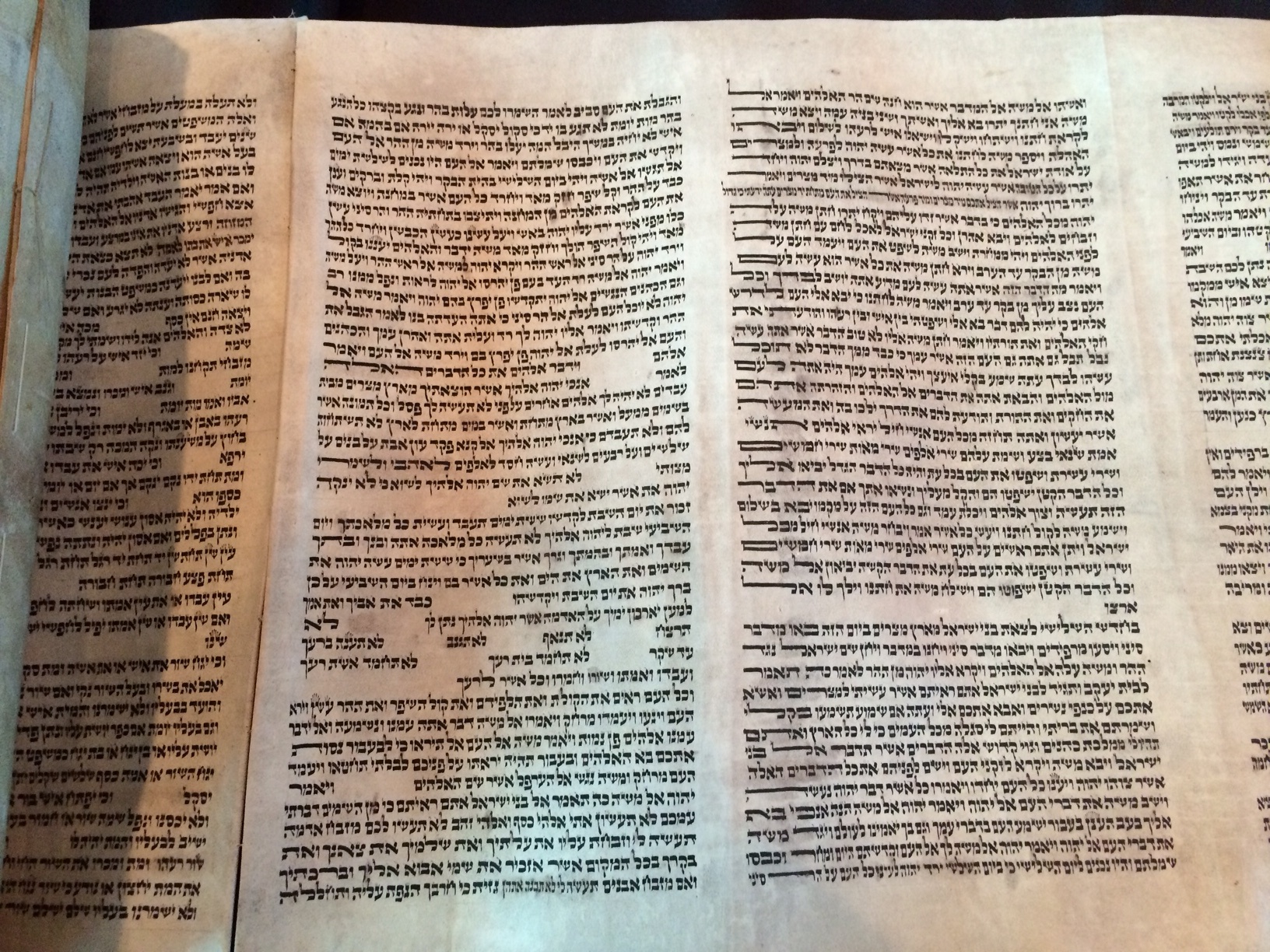
The Masoretes were Jewish specialists in transmitting and reading Scripture. They preserved an inherited text, adding vowel and accent signs and notes called the Masorah, which record spelling features and word frequencies. A manuscript thus combines text with instructions for reading and safeguarding it; the Masorah is not a translation.[3]
The Tiberian tradition developed at Tiberias, on the western shore of the Sea of Galilee, during the early Islamic centuries down to the tenth century CE. Its signs record an oral tradition with older roots: the date of notation is not the date when every pronunciation represented was invented.[4] Another device distinguishes the written form, ketiv, from the prescribed reading, qere: an alternative can be indicated without erasing the written word.[8]
Reading a particular witness
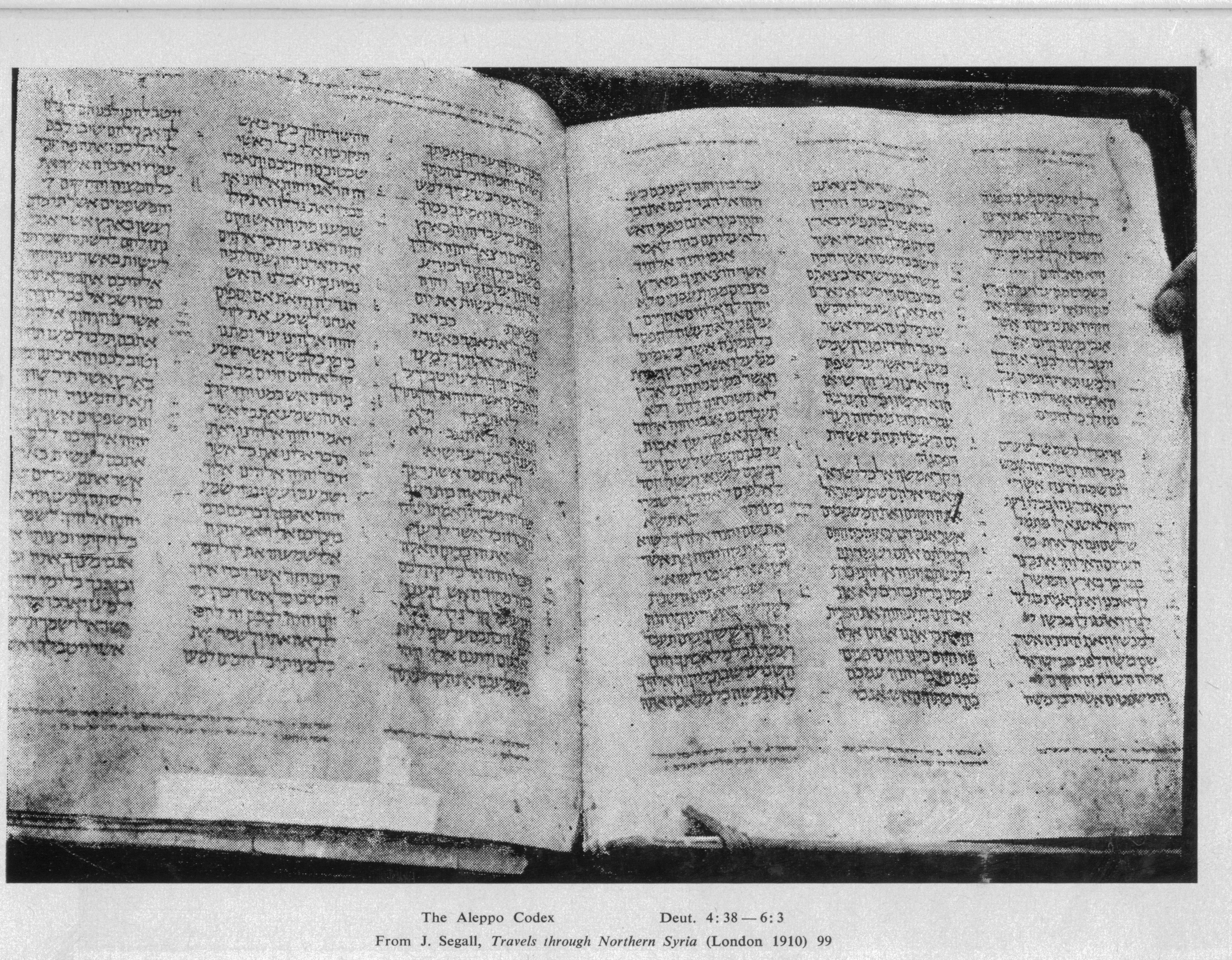
The retained photograph is not a generic “Masoretic Bible”: it is Segall’s 1910 plate of the Aleppo Codex, Deuteronomy 4:38–6:3. Each page has three columns of relatively large biblical text; smaller notes occupy the intercolumn spaces and upper and lower margins. The points accompanying the letters belong to the notation of reading, while the marginal writing belongs to the Masorah. The small Masorah records concise observations; the large Masorah expands them with cross-references. At phone width the layout, not individual Hebrew notes, is the useful evidence: enlargement is needed for the lettering. These particular leaves were subsequently lost; neither this photograph nor Aleppo alone represents every Masoretic witness.[3][5]
A separate, concrete example of ketiv/qere occurs in Isaiah 36:12. The written form שיניהם means “their urine”; the prescribed reading מימי רגליהם means “water of their feet,” a euphemism. Both belong to the transmitted apparatus, rather than one being silently erased. Hornkohl points out that Jerome’s Latin rendering, “urine of their feet,” combines elements of both. This supports antiquity for the divergence behind the medieval notation, not a claim that every qere is older or a correction of an error. Written and oral transmissionOral transmissionThe passing-on of words, narratives or knowledge through hearing, performance and learning, sometimes alongside writing; degrees of stability vary with genre, setting and controls.Glossary · Click to read the explanation can preserve different, intelligible forms.[9]
A chronology of transmission, not composition
- In the last centuries BCE and first century CE, consonantal witnesses close to the later Masoretic tradition coexist with other textual forms. Their relation must be assessed book by book and reading by reading.[1][8]
- During the early centuries CE, the consonantal tradition becomes dominant in rabbinic transmission. This is a history of reception and increasing uniformity, not evidence for one surviving decree that created the text overnight.[3][8]
- In the early medieval period, Babylonian and Palestinian systems coexist with Tiberian vocalization. Within Tiberian scholarship, Ben Asher and Ben Naphtali are associated with differences in reading notation; they are not authors of alternative biblical compositions. Nor should all nonstandard Tiberian manuscripts be assigned to Ben Naphtali: Khan shows that their features exceed those attributed to him in the Masoretic lists.[4][8]
- Aleppo, around 930, and Leningrad, 1008–1009, are medieval copies of this inheritance. Printing and modern critical editions give selected witnesses a wider circulation; they do not turn their copying dates into the composition dates of Genesis, Isaiah or Deuteronomy.[5][6]
Older than the medieval codices
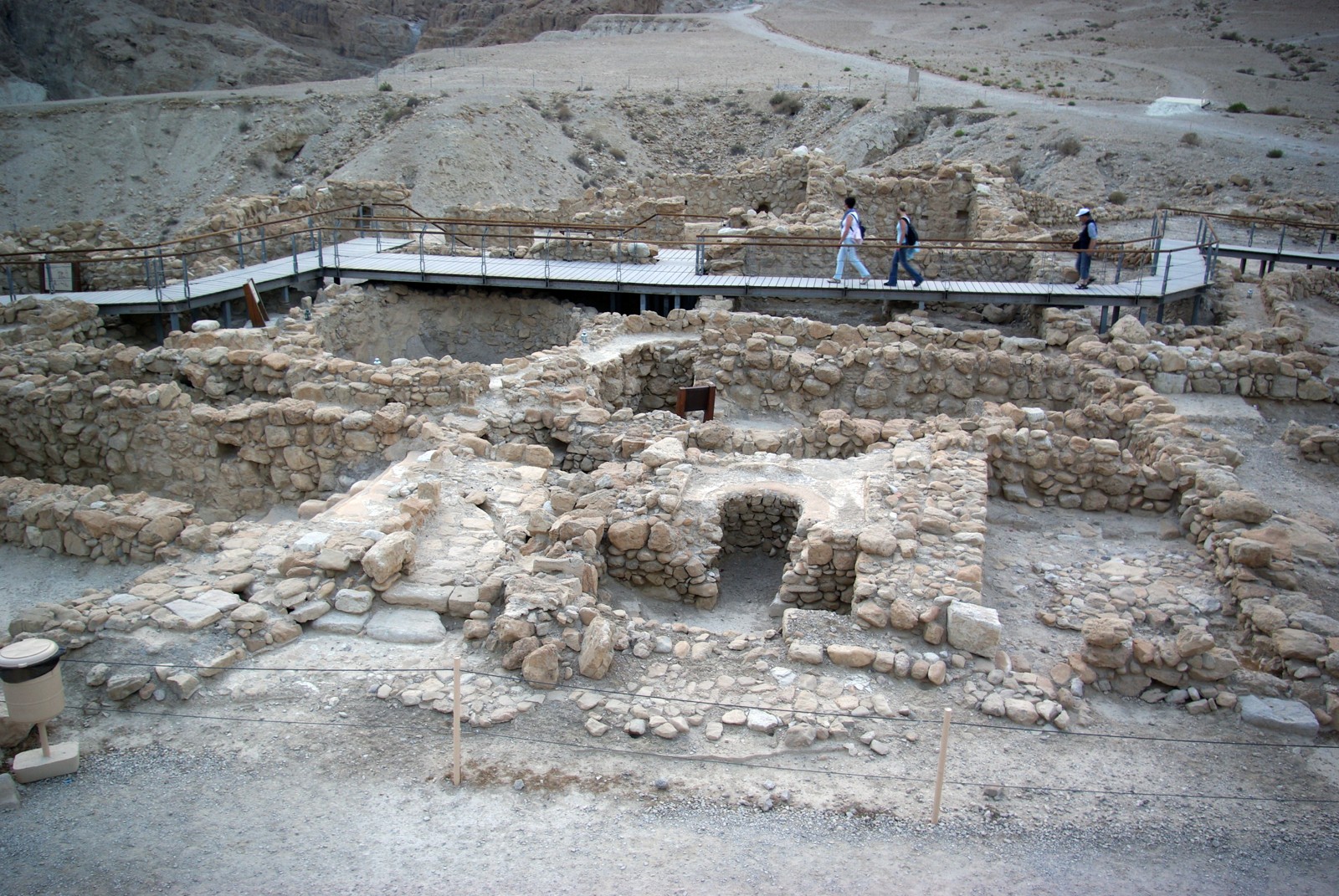
The Dead Sea ScrollsDead Sea ScrollsManuscript collections from the Judaean Desert, best known through Qumran: diverse works, languages and textual forms, with copying distinguished from composition.Glossary · Click to read the explanation, including manuscripts found near QumranQumranArchaeological site northwest of the Dead Sea near manuscript caves; its settlement and the groups who deposited the scrolls are studied together but not assumed identical. It is not synonymous with all Dead Sea Scrolls.Glossary · Click to read the explanation northwest of the Dead SeaDead SeaThe Dead Sea is a salt lake in the Jordan Rift Valley, near sites where ancient manuscripts were foundGlossary · Click to read the explanation, preserve consonantal texts close to the Masoretic tradition before its medieval pointing system. Such forms are commonly called proto-Masoretic or Masoretic-like. Other readings and textual forms also occur in the collection; proximity does not mean word-for-word identity, and not all the scrolls are Masoretic.[1][8]
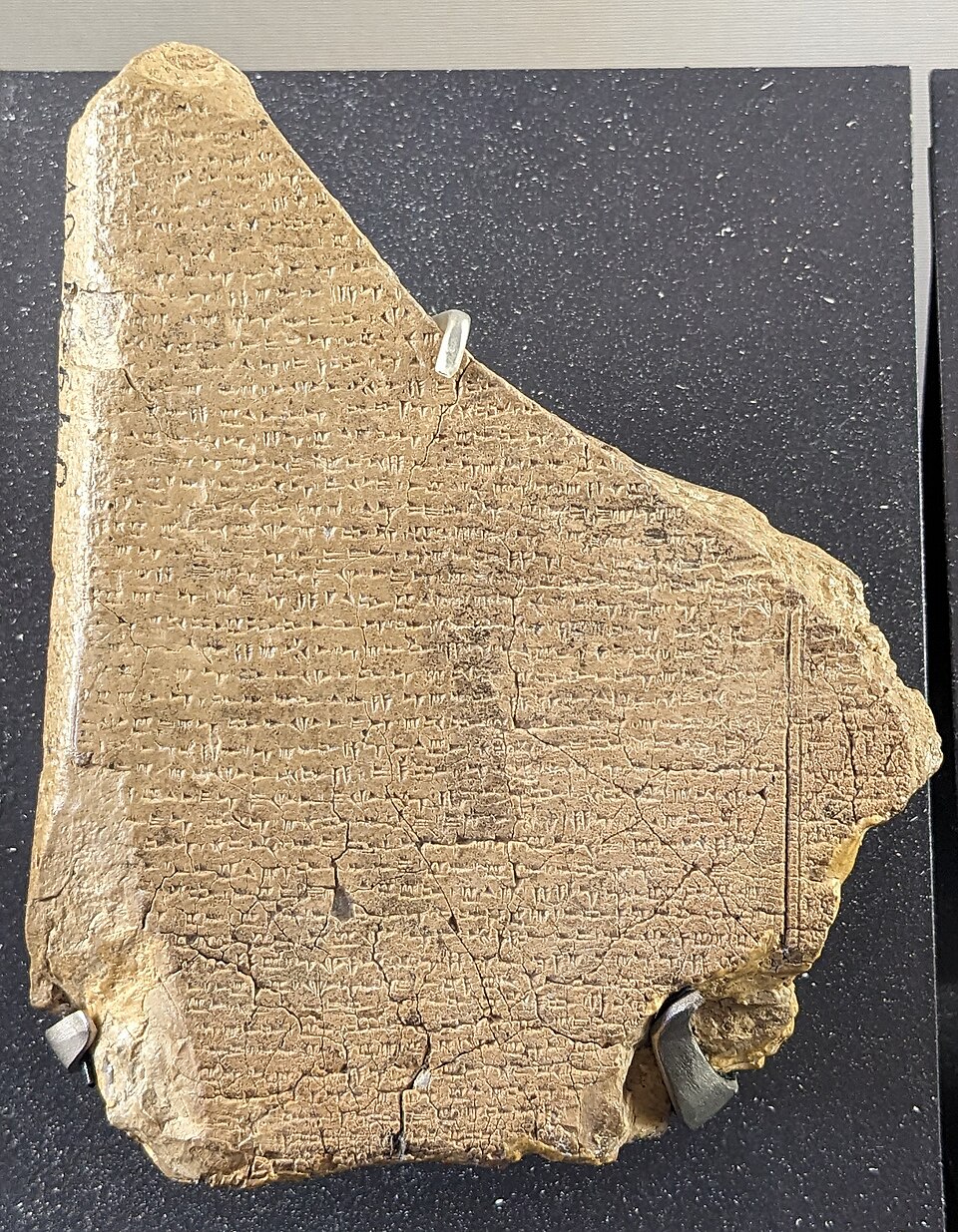
Important medieval witnesses include the Aleppo Codex, dated around 930 CE, and the Leningrad Codex, around 1008–1009 CE. Aleppo survives incompletely; Leningrad is complete and supplies the base text of Biblia Hebraica Stuttgartensia, abbreviated BHS.[3][5][6] These are copying dates, not dates of composition for the books they contain.
An example: Deuteronomy 32:8
In a song within DeuteronomyBook of DeuteronomyTorah book presenting commandments in Moses’ discourse and grounding Sabbath rest in slavery and liberation from Egypt.Glossary · Click to read the explanation, a book of the Torah, the Most High sets the boundaries of peoples. The Masoretic wording gives “according to the number of the sons of Israel”; the next verse describes Israel as the portion of YahwehYahwehThe proper name of Israel’s deity, written יהוה (YHWH), the Tetragrammaton. Its exact ancient pronunciation is not directly preserved; texts and inscriptions witness its history.Glossary · Click to read the explanation, Israel’s God.[7] The Qumran witness 4QDeutj instead preserves “sons of God,” while a common reading in the SeptuagintSeptuagintA name for the varied ancient Greek translations and writings associated with Jewish scripture; beginning with the Torah, the texts differ across books and manuscripts.Glossary · Click to read the explanation, the ancient Jewish Greek translation tradition, gives “angels of God.”[1][2]
The decisive wording can be inspected directly, without supplying the lost surroundings of the Qumran fragment:
- Masoretic text, Deuteronomy 32:8: בני ישראל — “sons of Israel.”
- 4QDeutj = 4Q37, column XII, line 14: בני אלוהים — “sons of God.” The Qumran-Digital transcription preserves these words without restoration brackets; much of the preceding verse in line 13 is restored and is not quoted here.[10]
- Greek: ἀγγέλων θεοῦ — “angels of God,” the widespread reading; υἱῶν θεοῦ — “sons of God,” the reading discussed in Crawford’s critical edition. Greek supports a divine rather than Israelite referent, but does not uniquely determine its Hebrew wording.[2][11]
External evidence matters because the divine reading is not a modern conjecture: it has an ancient Hebrew witness and support in Greek transmission. Internally, allocating nations among divine beings fits the following allocation of Jacob to Yahweh in verse 9. “Sons of Israel” is nevertheless intelligible through the seventy descendants of Jacob in Deuteronomy 10:22; it is not meaningless merely because another reading is preferred. The combination of attestation and context favors a divine reading here. A theological alteration is plausible, but the individual scribe’s motive is not directly recorded.[2][11]
Crawford goes further and prints בני אל, “sons of El,” proposing that adding ישר produced ישראל, while another branch expanded אל to אלוהים. She explicitly identifies בני אל as unattested in the surviving Hebrew witnesses to this verse. It is an economical reconstruction, not what 4Q37 actually says. The stronger conclusion is the antiquity of a divine reading; its precise earliest Hebrew form is less secure. Nor does this alone decide whether the Most High and Yahweh are separate divine figures: that requires interpretation of the song.[11]
What a critical edition does
BHS prints a particular medieval witness as its base text; its apparatus reports selected alternatives and editorial proposals. Printing a reading above the line does not mean that the editors have demonstrated it to be the earliest at every point. An eclectic edition, such as Crawford’s sample, instead places its reconstructed choice in the main text and explains departures in an apparatus. Thus a manuscript, a diplomatic base text and an editor’s reconstruction are different objects. A codex’s late date does not disqualify every reading it preserves, just as an ancient fragment does not win automatically at every disputed point.[1][6][8][11]
References and notes (11)
- Eibert Tigchelaar, “Editing the Hebrew Bible: An Overview of Some Problems,” in Editing the Bible, ed. John S. Kloppenborg and Judith H. Newman (2012), pp. 41–65. Pp. 43–47; p. 46 n. 22 identifies 4QDeutj and sons of God; p. 44 distinguishes consonantal text from medieval pointing. Return to the text ↑
- NET Bible, Deuteronomy 32, translator’s notes. Textual note 14 on verse 8: the three readings and the editors’ preference; not an independent determination of the Most High’s identity. Return to the text ↑
- Emanuel Tov, “The Bible and the Masoretic Text,” TheTorah.com (2017). Sections “The Medieval Masoretic Text” and “The Contents of MT”: scribes, vowels, accents, Masorah and medieval witnesses. Return to the text ↑
- Geoffrey Khan, “The Background of the So-called ‘Extended Tiberian’ Vocalization of Hebrew,” author manuscript, Cambridge repository; publisher’s description of The Tiberian Pronunciation Tradition of Biblical Hebrew (2020). Author manuscript pp. 1–3: Tiberian school, nonstandard pointing, and limits of attribution to Ben Naphtali; the 2020 book description is not full-book reading. Return to the text ↑
- National Library of Israel, Ben Zvi Institute MS 1: Aleppo Codex catalogue record. Date field: 930 CE; manuscript catalogue, not a date of composition for its books. Return to the text ↑
- German Bible Society, “Biblia Hebraica Stuttgartensia.” Paragraphs on the 1008 CE Leningrad base manuscript and critical apparatus; 1008–1009 reflects the dating variation across references. Return to the text ↑
- Hebrew Bible, Deuteronomy 32; Hebrew text with JPS 1917 English translation, Mechon-Mamre. Verses 6–12, especially 8–9: Most High, sons of Israel, Yahweh and his portion; electronic text, not inspection of the original Qumran fragment. Return to the text ↑
- Alexander Achilles Fischer, “Bibeltext / Textkritik (AT),” WiBiLex (March 2018). Sections 2.1–2.4, 2.5.5 and 3.1.3–3.2.1: textual layers, ketiv/qere, manuscript age and textual proximity. Return to the text ↑
- Aaron D. Hornkohl, The Historical Depth of the Tiberian Reading Tradition of Biblical Hebrew (2023). Introduction, pp. 4–8: ketiv/qere; Isaiah 36:12 and Jerome on p. 7. Return to the text ↑
- Qumran-Digital, transcription of 4Q37, version 6 October 2026. Column XII, lines 13–14; scholarly transcription, not an independent decipherment of the parchment. Return to the text ↑
- Sidnie White Crawford, Deuteronomy 32:1–9 sample in “Sample Editions of the Oxford Hebrew Bible,” with Jan Joosten and Eugene Ulrich, Vetus Testamentum 58 (2008), pp. 352–366. Pp. 353–355, 357: sample text, v. 8 apparatus and reasoning for unattested “sons of El”; this conjecture is not attributed to Qumran. Return to the text ↑
Suggest a correction · Suggest a source for this record
Cite this record
IL Archive, «Masoretic Text», https://ilarchive.com/en/entities/masoretic-text
Continue reading