Entity · Deity
Yahweh
A reference page linking a name, group, or concept to the materials that discuss it.
YHWH in writing and pronunciation, Egyptian and Moabite witnesses, Kuntillet ʿAjrud and Ketef Hinnom, relations to El, and changing practices of worship and translation.
Estimated reading time: 8 min Published Last reviewed:
Share article
Text
Introduction
What does the name “Yahweh” designate, and how did a four-letter spelling pass through ancient witnesses into later practices of reading and translation? This entry brings together HebrewHebrewA Northwest Semitic language of the Canaanite group, encompassing Iron Age epigraphy, Biblical, Rabbinic, medieval and Modern Hebrew; its scripts and pronunciations changed over time.Glossary · Click to read the explanation texts, dated inscriptions, and the history of worship, distinguishing what each witness actually says from historical proposals about the name's origins and its relationship to El.
The question is not whether a religious belief is true. It is how a divine name was used and transmitted. A narrative about MosesMosesCentral figure in Exodus, Torah traditions and the Qur’an; childhood accounts differ in detail.Glossary · Click to read the explanation cannot automatically date the writing of that narrative, and a single inscription cannot stand for the entire history of a religion.
The written name and its distinctiveness
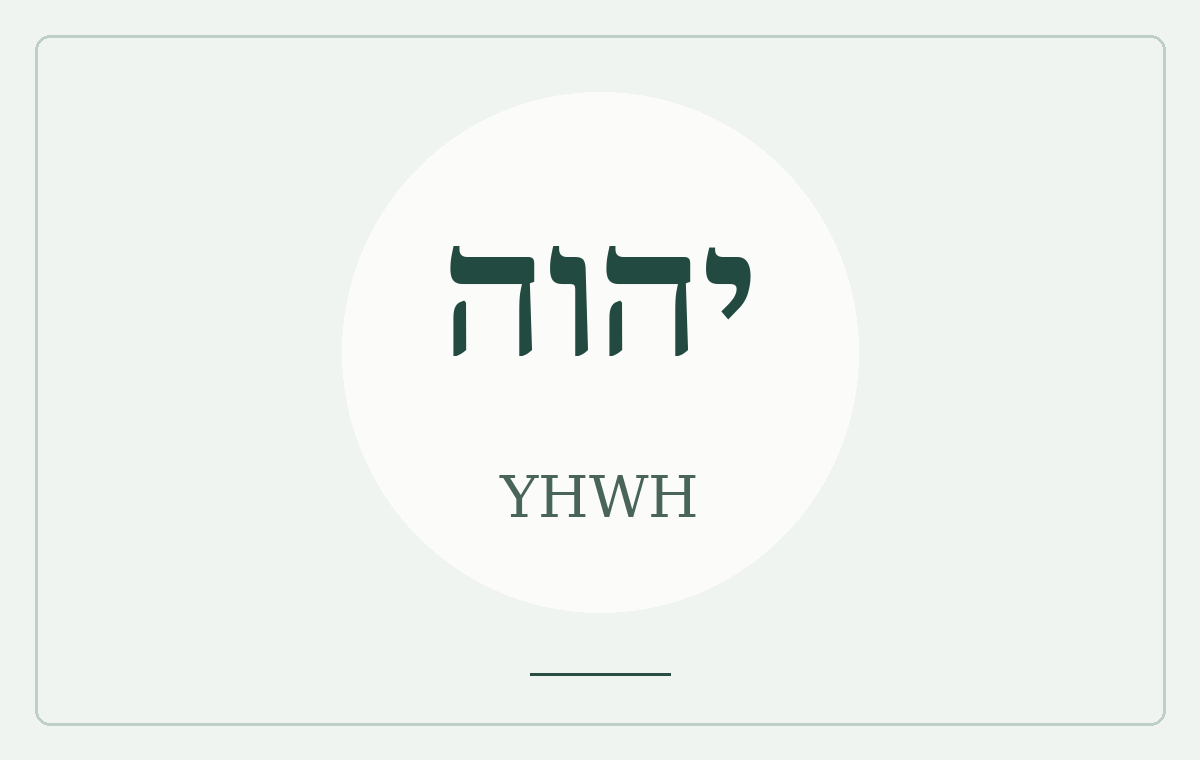
“Yahweh” is a widely favoured scholarly reconstruction of the proper nameProper nameA name that identifies a particular person, place, group, or entity in context, unlike a common noun denoting a class. Spelling alone may not settle the distinction.Glossary · Click to read the explanation of the deity of ancient IsraelAncient IsraelName attested for a population on the Merneptah Stele around 1208 BCE, later for the northern Iron Age kingdom and for broader textual and religious identities; the senses are not identical.Glossary · Click to read the explanation, written יהוה in Hebrew and conventionally transliterated YHWH. It is called the TetragrammatonTetragrammatonTerm for the four Hebrew letters יהוה (YHWH), the name of Israel’s deity in the Hebrew Bible; it does not establish an exact ancient pronunciation or agreed etymology.Glossary · Click to read the explanation because it consists of four consonantal letters: yod, he, waw, and he. This spelling does not, by itself, record all the sounds of its earliest pronunciation. The name should not be confused with the generic Semitic word ElSemitic ilAn ancient Semitic word meaning “god,” with cognates across several languages. It may function as a common noun or a proper name according to context; it is not always Ugaritic El.Glossary · Click to read the explanation, meaning “god”, or simply equated linguistically with the deity ElElEl is a senior deity in Late Bronze Age Ugaritic texts, portrayed as father of the divine family and a council authority, alongside his consort Athirat. This entry does not cover every linguistic use of El.Glossary · Click to read the explanation known from the texts of UgaritUgaritAncient city and kingdom at Ras Shamra on the Syrian coast, flourishing between the fourteenth and early twelfth centuries BCE and preserving multilingual archives.Glossary · Click to read the explanation. A possible historical relationship between religious traditions does not make their names grammatical variants of one word. [1]
Pronunciation, reading substitutes, and translation
As Jewish reading customs developed, the written name was increasingly avoided in speech and replaced with Adonai, “Lord”, or, in other settings, ha-Shem, “the Name”. When scribes added vowel points to the Hebrew text, the pointing accompanying יהוה often served as a cue for the word to be read instead of preserving an exact phonetic record of the older pronunciation. This practice helps explain “LORD” in many English Bibles and equivalent renderings such as le Seigneur in French. [2]
The form “Jehovah” (Jéhovah in French) became established in European religious and translation traditions by combining the name's consonants with pointing associated with a substitute reading. It has a genuine history of religious use, but it is not evidence that the name was pronounced that way in antiquity. Short theophoric nameTheophoric nameA personal name including a deity’s name or another divine element, often as part of a short sentence or invocation, interpreted in its original language and context.Glossary · Click to read the explanation elements ending in -yah or -yahu, together with later transcriptions of the name, contribute to the scholarly preference for “Yahweh”; the precise reconstruction nonetheless involves inference. [3]
What might the name mean? Ehyeh and the verb “to be”
In ExodusBook of ExodusTorah book recounting Israel’s departure from Egypt and containing different formulations of seventh-day rest.Glossary · Click to read the explanation 3:13–15, Moses asks what name he should give the Israelites. The response includes the Hebrew phrase ehyeh asher ehyeh (אהיה אשר אהיה), often rendered “I am who I am” or “I will be what I will be”; YHWH follows in the next verse. The narrative thus creates a theological and verbal association between the name and a form of the verb “to be”. That association does not on its own establish the name's original historical etymology. [4]
Linguists have explored several Semitic roots and verbal formations, producing interpretations concerned with being, presence, or causing to exist, among others. The responsible distinction is between how the Exodus story explains the name in its own context and modern proposals for an earlier derivation. The latter remain hypotheses rather than a universally agreed literal translation. [5]
Narrative layers are not a simple historical timeline
GenesisBook of GenesisHebrew book of the Torah containing Noah’s flood, survival offering and covenant with living creatures.Glossary · Click to read the explanation 4:26 describes people calling on YHWH's name in a narrative era preceding Moses, whereas Exodus 6:2–3 makes disclosure of the name to Moses a turning point and says that the ancestors knew the deity as El Shaddai. The different formulations can be examined against traditions and the editorial history of the books; neither passage independently dates the first historical use of the name. Narrative time, the composition of a passage, and the date of its earliest surviving manuscript are separate questions. [6]
Egyptian notices and a southern poetic geography
Egyptian topographical lists from the reign of Amenhotep III at Soleb and from the reign of Ramesses II at Amarah West preserve a sequence often represented as “ShasuShasuEgyptian designation for mobile pastoral populations of the Late Bronze Age; associated lists contain a name rendered Y-h-w. It identifies neither one unified people nor a certain connection with Yahweh.Glossary · Click to read the explanation of Yhw” or “land of the Shasu of Yhw”. ShasuShasuEgyptian designation for mobile pastoral populations of the Late Bronze Age; associated lists contain a name rendered Y-h-w. It identifies neither one unified people nor a certain connection with Yahweh.Glossary · Click to read the explanation was an Egyptian designation for mobile groups. These signs do not by themselves establish that Yhw was a deity, nor that the groups identified were Israelites. Daniel Fleming explores a connection with the background of the name Yahweh while stressing that the Egyptian entry is initially an identification of people or place. It is not a straightforward inscription naming “the god Yahweh”. [7]
Hebrew poetry in Judges 5:4–5, Deuteronomy 33:2, and Habakkuk 3:3 represents YHWH or his manifestation as coming from SinaiSinai: peninsula and biblical mountainSinai is a peninsula in eastern Egypt; in the Torah the name also denotes the mountain of revelation to MosesGlossary · Click to read the explanation, Seir, Teman, and Paran. The recurrence of a southern setting makes southern connections a legitimate historical question. It does not identify a single mountain as the demonstrable birthplace of a cult, however; the relationships among these geographic terms have themselves been interpreted differently. [8]
The Mesha Stele: the name outside the biblical books
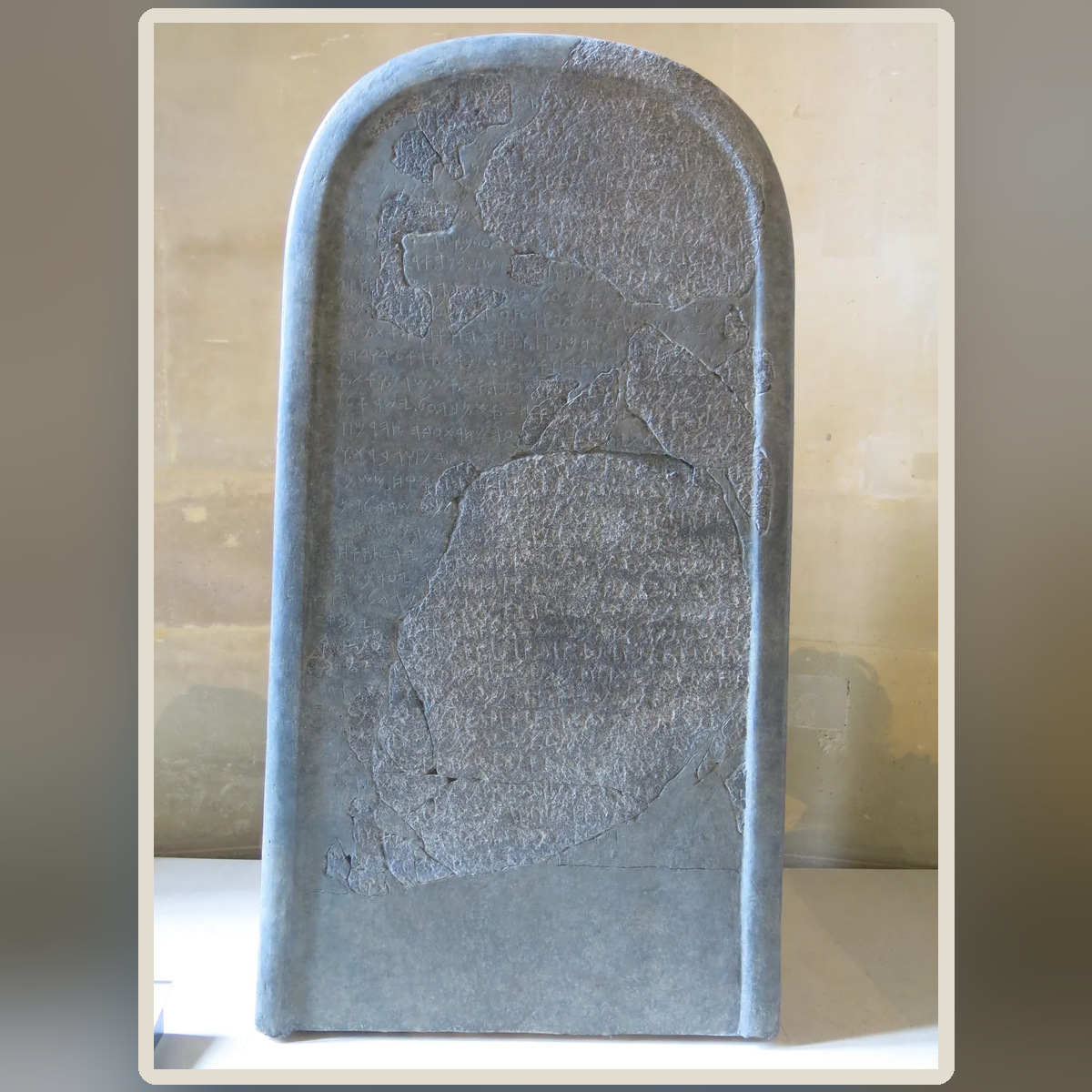
One of the clearest material witnesses is the Mesha SteleMesha SteleA ninth-century BCE Moabite royal basalt stele at the Louvre (AO 5066; KAI 181). Its inscription names Chemosh, Omri, Israel and YHWH (line 18). A proposed “House of David” reading in damaged line 31 is disputed.Glossary · Click to read the explanation, commissioned by a king of MoabAncient MoabAn ancient land and kingdom in present-day Jordan, with Mesha's ninth-century BCE inscription a major local witness.Glossary · Click to read the explanation in the ninth century BCE and now held by the Louvre (AO 5066). Its Moabite inscription narrates campaigns undertaken with the favour of ChemoshChemoshMajor Moabite deity in the ninth-century BCE Mesha Stele, credited with restoring territory and receiving war booty; also named in Hebrew texts from another perspective.Glossary · Click to read the explanation. In lines 17–18, within the account of the capture of Nebo, it refers to vessels or cultic equipment belonging to YHWH, taken as booty and carried before Chemosh. Part of the word for “vessels” is restored in the edited reading rather than surviving undamaged. The stele supplies external evidence for the divine name in an Israelite cultic setting in the ninth century; it neither establishes the name's earlier origin nor verifies every element of the royal account. [9]
Kuntillet ʿAjrud: blessings and “his asherah”
Inscriptions from Kuntillet ʿAjrudKuntillet ʿAjrudA Sinai site with blessings invoking Yahweh of Samaria/Teman and “his asherah” around 800 BCE; inscriptions illuminate religion and writing, while the site’s function and imagery remain debated.Glossary · Click to read the explanation in the northeastern Sinai, dated to the late ninth or early eighth century BCE, preserve blessings mentioning “YHWH of Samaria” and “YHWH of Teman” as well as the expression often transcribed ʾšrth, “his asherah”. The function of the site is disputed. Jeremy Smoak and William Schniedewind argue that the material may reflect the practices of trained scribes rather than demonstrating the existence of a temple there. [10]
Does the word connected to Asherah/AthiratAthiratA prominent goddess commonly understood as El’s consort in Ugaritic texts; she bears the progenitress epithet and intercedes for Baal’s palace.Glossary · Click to read the explanation designate a goddess associated with YHWH or a cult object or emblem associated with his worship? That is a substantive scholarly disagreement. Figures painted on the pottery have also been interpreted as divine portraits, but their identification is insecure: none can responsibly be presented as an archaeologically established image of YHWH. These inscriptions illuminate the diversity of religious blessing language without defining the beliefs of every inhabitant of Israel or Judah. [11]
The Ketef Hinnom amulets: a name invoked for protection
The Ketef Hinnom amuletsKetef Hinnom amuletsTwo inscribed silver amulets found at Ketef Hinnom near Jerusalem in 1979, bearing protective blessings parallel to Numbers 6:24–26. Generally dated to the late seventh or early sixth century BCE, though disputed; they do not date the entire book.Glossary · Click to read the explanation are two small inscribed silver sheets discovered near JerusalemJerusalemJerusalem is a city of religious importance in Judaism, Christianity and IslamGlossary · Click to read the explanation. Their early Hebrew writing includes YHWH and formulas closely related to the priestly blessing in Numbers 6:24–26. Epigraphers generally date them to the late seventh or early sixth century BCE. They show that written blessings could serve a protective purpose before the earliest complete biblical manuscripts now preserved; their wording should not simply be equated, word for word, with the later Masoretic version of Numbers. [12]
El, Elohim, and the relationships between divine designations
In Hebrew, El can be a common word for a god or a divine name; ElohimElohimA Hebrew word with plural morphology, used for “gods” or for a singular deity according to context.Glossary · Click to read the explanation is morphologically plural but frequently takes a singular verb when referring to Israel's deity. The books also use the compound YHWH Elohim, and epithets such as “Most High” and Shaddai occur across naming traditions. These uses illuminate the blending of designations and divine attributes, but they do not turn YHWH into a grammatical derivative of El or allow every epithet to be allocated to a securely dated stage of belief. [1]
Deuteronomy 32:8–9: variant texts and contested interpretations
The Masoretic TextMasoretic TextThe Hebrew Bible’s transmission tradition combining its consonantal text, transmitted vocalization and accentuation, and Masorah notes. The consonantal text has ancient roots; surviving codices that bring these layers together in their Masoretic form are medieval.Glossary · Click to read the explanation of Deuteronomy 32:8 reads “according to the number of the sons of Israel”, while a Qumran witness (4QDeutj) has “sons of God”, and ancient Greek witnesses speak of “sons of God” or “angels of God”. The following verse describes Jacob as YHWH's allotted portion. Emanuel Tov compares the witnesses and argues that the divine-beings reading better preserves an older picture of the distribution of nations. [13]
Some scholars interpret the Most High allotting nations to divine beings as a trace of a stage when El ElyonEl ElyonA Hebrew expression meaning “God Most High.” Genesis 14 identifies its bearer with Yahweh, while the Most High’s identity in Deuteronomy 32 remains debated separately from its manuscript readings.Glossary · Click to read the explanation and YHWH could be distinguished; others read the passage within a framework of divine unity without positing two independently identifiable gods. The manuscript variation is a textual fact. A complete account of how two divine figures allegedly merged is a historical reconstruction, not something established by this verse alone. [13]
From devotion to assertions of divine exclusivity
Many biblical passages call for worship of YHWH and reject other gods, but they do so in different ways. Some require a community's exclusive allegiance; others deny the authority of rival divine powers; still others explicitly deny that another god exists. Isaiah 45:5, in material commonly situated by scholars in a sixth-century BCE setting, uses a strong formula of divine exclusivity. Scholars nevertheless debate whether this denies every other divine being ontologically or rhetorically asserts YHWH’s incomparable authority. Historical study benefits from reading such claims alongside regionally diverse inscriptions and practices, rather than imagining that IsraeliteAncient IsraelName attested for a population on the Merneptah Stele around 1208 BCE, later for the northern Iron Age kingdom and for broader textual and religious identities; the senses are not identical.Glossary · Click to read the explanation religion changed instantaneously from one fixed system into another. [14]
The name beyond Judah: Elephantine
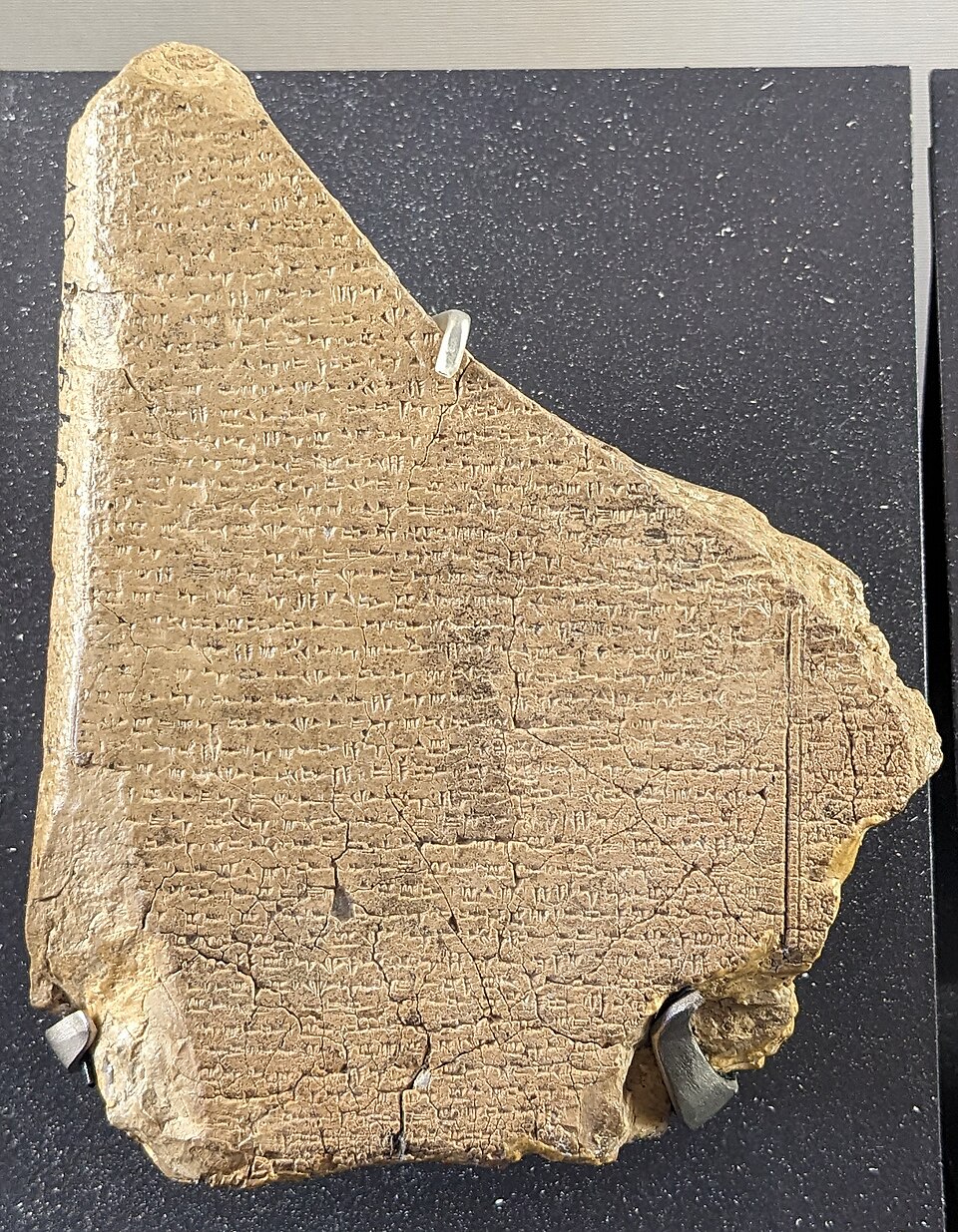
Fifth-century BCE Aramaic documents from the Jewish community on the Nile island of ElephantineElephantine / YebElephantine / Yeb, near Aswan at the Nile’s First Cataract, preserves a long-lived Egyptian town, temples of Khnum and Satet, and Persian-period garrisons. Aramaic papyri document several communities, including Judeans and Yaho’s temple, whose rebuilding was sought in 407 BCE; claims and archaeological interpretations must be distinguished.Glossary · Click to read the explanation use a shortened form of the name, YHW (often read Yahu). A petition for the rebuilding of the Elephantine templeElephantine temple-rebuilding petitionBerlin Aramaic papyrus P.13495 (TAD A4.7), dated 25 November 407 BCE. Jedaniah and Elephantine’s priests petitioned to rebuild Yaho’s temple. The article distinguishes the reported destruction, a later memorandum restricting offerings to grain and incense, and indirect evidence from 402 BCE that may suggest rebuilding.Glossary · Click to read the explanation, written in 407 BCE and preserved in Berlin, asks for permission to reconstruct a temple after its destruction. It provides concrete evidence for worship of the deity outside Jerusalem and for a diversity of institutions under Persian rule. A shorter spelling alone does not demonstrate a distinct god. [15]
Reading the evidence within its limits
The history of YHWH must be reconstructed from very different materials: literature transmitted over centuries, approximately dated physical inscriptions, and names and blessings. YHWH is a proper name, not a grammatical form of El, although traditions bearing these names acquired historical and religious connections. What the ninth-century Mesha Stele shows does not determine the name's prehistory, and the Exodus account of a revelation to Moses does not date its own composition. For the wider debates, see the archive's separate treatments of Yahweh's origins, the convergence of El and Yahweh, and Yahweh and Asherah. [16]
References and notes (16)
- Heath D. Dewrell and Andrew M. Garbarino, “Names of God in the Hebrew Bible,” Oxford Bibliographies (2023), introductory extract. The authors distinguish Yahweh as a proper name, Elohim as a more general designation, and El as a common noun or a particular West Semitic god. The introduction is publicly visible; the full bibliography was not accessed. Introduction, publicly visible extract Return to the text ↑
- Kaufmann Kohler, “Adonai,” Jewish Encyclopedia. The article discusses substituting Adonai or Elohim for YHWH in reading, and the Masoretic pointing as an indication of that practice. This early-twentieth-century reference is used for the history of reading, not as the last word in contemporary scholarship. “Pronunciation” Return to the text ↑
- Emil G. Hirsch, “Jehovah,” Jewish Encyclopedia. Discusses the secondary history of the form “Jehovah” produced from the consonants and substituted vowels; the entry also cautions that the name occurs in earlier medieval sources and should not be dated to a single sixteenth-century inventor. “Jehovah” Return to the text ↑
- Zev Farber, “How Does God Answer the Question: ‘What Is Your Name?’”, TheTorah.com (2017), discussion of Exodus 3:13–15 and the tension between ehyeh and YHWH. The author’s proposed redactional explanation is his interpretation, not a settled fact. Exod 3:13–15; “An Explanation of the Name YHWH?” Return to the text ↑
- James A. Diamond, “YHWH: The God that Is vs. the God that Becomes,” TheTorah.com (2017). Distinguishes the narrative association with the verb “to be” from disputes over the original etymology, and surveys theological readings of ehyeh. “The Name YHWH”; “Ehyeh asher Ehyeh” Return to the text ↑
- Genesis 4:26 and Exodus 6:2–3 in their literary contexts, with James A. Diamond, “YHWH: The God that Is vs. the God that Becomes” (2017), on variation in divine names and compositional history. This is an analysis of transmitted texts, not evidence for dating events in their narratives. “The Multiple Names of God”; Exod 6:3 Return to the text ↑
- Daniel E. Fleming, Yahweh before Israel: Glimpses of History in a Divine Name (Cambridge University Press, 2020), chap. 2, “Yhwʒ of Shasu-Land,” publisher’s public summary. It identifies the two Egyptian lists at Soleb and Amarah West and treats the match of Yhwʒ to Yahweh as conditional; the chapter’s full text was not accessed. Chapter 2, publisher summary Return to the text ↑
- Marvin A. Sweeney, “Habakkuk’s Mythological Depiction of YHWH,” TheTorah.com (2018), section “YHWH from the South” discussing Habakkuk 3:3, Deuteronomy 33:2 and the southern place names. These are poetic place associations rather than verified coordinates. “YHWH from the South (v. 3a)” Return to the text ↑
- Louvre collections, “Stèle de Mesha,” AO 5066, museum catalogue and identification; Jona Lendering, “The Stela of Mesha,” Livius, translation of the Nebo passage (lines 17–18), with the word for “vessels” partly restored in epigraphic editions. The museum dates the object broadly to the ninth century BCE (catalogue range 830–805 BCE). Neb(o) passage (lines 17–18); Louvre: https://collections.louvre.fr/ark:/53355/cl010120339 Return to the text ↑
- Jeremy Smoak and William Schniedewind, “Religion at Kuntillet ʿAjrud,” Religions 10/3 (2019), article 211, sections 1 and 4, open-access article, relevant sections accessed. The authors propose scribal training and everyday religious discourse as an explanation, rather than regarding the site as demonstrably a temple. Sections 1 and 4 Return to the text ↑
- Smoak and Schniedewind, “Religion at Kuntillet ʿAjrud” (2019), section 4, explicitly explain the disagreement over the possessive suffix of ʾasherah and whether this denotes a goddess or a cultic symbol. The identity of the painted figures cannot be deduced from the blessing formula alone. Section 4, “The Israelite Pantheon at Kuntillet ʿAjrud” Return to the text ↑
- Jeremy D. Smoak, “The Ketef Hinnom Amulets: Wearing the Priestly Blessing for Protection,” TheTorah.com (2026), public article sections on the two silver sheets, their early blessing formulas and textual differences from Numbers 6:24–26; compare Barkay et al., “The Amulets from Ketef Hinnom” (BASOR 334, 2004), public abstract only. “Discovery of the Amulets”; “Ketef Hinnom 2” Return to the text ↑
- Emanuel Tov, “The Sons of Israel or God? – Deuteronomy 32:8,” TheTorah.com (2023), public article and manuscript table, relevant passages accessed. The author contrasts Masoretic “sons of Israel” with Qumran 4QDeutj “sons of God” and Greek witnesses “sons” or “angels”; his preferred history of the change is a scholarly interpretation. Manuscript variants of Deut 32:8–9 Return to the text ↑
- Mark S. Smith, The Origins of Biblical Monotheism (Oxford, 2001), chap. 10 “Monotheism in Isaiah 40–55”, publisher’s public abstract, on polemical monotheistic rhetoric; compare the Hebrew of Isaiah 45:5 quoted and discussed in “How YHWH Became King of the Universe”, TheTorah.com (2023). The Oxford chapter’s full text was not accessed. Publisher abstract, chap. 10; biblical citation Isa 45:5 Return to the text ↑
- Staatliche Museen zu Berlin, “Aramäischer Papyrus mit einer Eingabe … zum Wiederaufbau des Jahve-Tempels,” museum catalogue for the 407 BCE Elephantine petition. The museum describes the Aramaic petition to Bagohi and the Yahu temple; its catalogue is not a complete diplomatic edition of the papyrus. Papyrus petition, 25 November 407 BCE; object description Return to the text ↑
- Methodological synthesis from Dewrell and Garbarino (2023, introductory extract), Fleming (2020, chapter summary), and Tov (2023, relevant passages and variants table). This note records the difference between an inscription, a manuscript variant, a literary narrative, and an inference; it is not a claim that every cited monograph or original text was read in full. Introductory extract and scope of evidence Return to the text ↑
Suggest a correction · Suggest a source for this record
Cite this record
IL Archive, «Yahweh», https://ilarchive.com/en/entities/yahweh
Continue reading