Entity · Concept
El Elyon
A reference page linking a name, group, or concept to the materials that discuss it.
- Names
- El Elyon · אֵל עֶלְיוֹן
A Hebrew expression meaning “God Most High.” Genesis 14 identifies its bearer with Yahweh, while the Most High’s identity in Deuteronomy 32 remains debated separately from its manuscript readings.
Estimated reading time: 5 min Published Last reviewed:
Share article
Video
The Night the Gods Closed the Sky: Balaam and the Council of the Gods
More than twenty-seven centuries ago, someone wrote a vision on a plastered wall at Deir ʿAlla: the gods come to Balaam son of Beor at night, and a council orders the sky shut. We read the wall line by line, then set it beside Ugarit, the Book of Numbers and later traditions, and settle neither reading. Some scenes are AI-generated illustrations.
The YouTube player loads only when you press play. Watch on YouTube
Text
Introduction
El Elyon is a HebrewHebrewA Northwest Semitic language of the Canaanite group, encompassing Iron Age epigraphy, Biblical, Rabbinic, medieval and Modern Hebrew; its scripts and pronunciations changed over time.Glossary · Click to read the explanation expression usually translated “God Most High.” Distinguishing the title’s meaning from its bearer’s identity clarifies its biblical uses, particularly in Genesis and Deuteronomy, and the debate over its relationship to YahwehYahwehThe proper name of Israel’s deity, written יהוה (YHWH), the Tetragrammaton. Its exact ancient pronunciation is not directly preserved; texts and inscriptions witness its history.Glossary · Click to read the explanation.
Name and title
El can mean “god” or be the name of the deity ElElEl is a senior deity in Late Bronze Age Ugaritic texts, portrayed as father of the divine family and a council authority, alongside his consort Athirat. This entry does not cover every linguistic use of El.Glossary · Click to read the explanation, known from ancient Near Eastern texts. Elyon means “Most High.” The expression alone therefore cannot establish a separate deity in every occurrence; its referent depends on context.[1]
Genesis 14
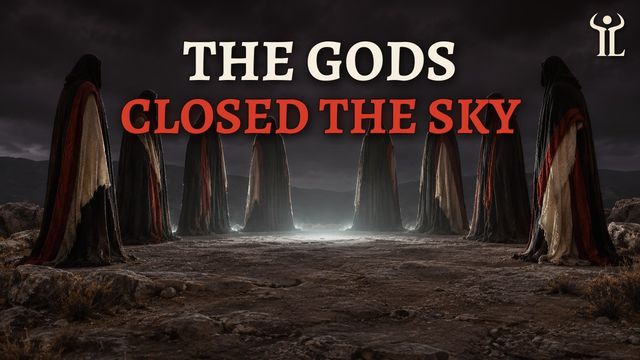
In the Book of GenesisBook of GenesisHebrew book of the Torah containing Noah’s flood, survival offering and covenant with living creatures.Glossary · Click to read the explanation, one of the Torah’s books, AbrahamAbrahamCentral figure in Genesis, the Qur'an and Jewish, Christian and Islamic traditions; the sacrifice study compares what each text says about him.Glossary · Click to read the explanation, called Abram in this passage, meets Melchizedek, king of Salem and priest of El Elyon. The priest blesses him in the name of El Elyon, maker of heaven and earth. In verse 22, Abram’s oath combines the name YahwehYahwehThe proper name of Israel’s deity, written יהוה (YHWH), the Tetragrammaton. Its exact ancient pronunciation is not directly preserved; texts and inscriptions witness its history.Glossary · Click to read the explanation, Israel’s God, with El Elyon. This explicitly identifies them in the received Masoretic Hebrew text, but does not date the title’s origin or the narrative’s formation.[2]
The decisive phrase in Genesis 14:22 is:
This is an excerpt of Abram’s oath, not the complete verse; punctuation is simplified and nothing is restored.[2] The successive descriptions in verses 18–22 connect Melchizedek’s priesthood, the blessing and Abram’s oath. Alan Kam-Yau Chan’s discourse analysis emphasizes this literary identification. It is stronger evidence for the received narrative’s meaning than an isolated etymology, but cannot establish that every earlier bearer of the title was already identified with Yahweh.[6]
Deuteronomy 32: text and witness
A poem in the Book of DeuteronomyBook of DeuteronomyTorah book presenting commandments in Moses’ discourse and grounding Sabbath rest in slavery and liberation from Egypt.Glossary · Click to read the explanation uses Elyon, “Most High,” without El. Its Masoretic wording in verses 8–9 is:[5]
This quotation follows the received Hebrew text, with simplified punctuation. It must not be presented as a transcription of a Qumran fragment. In the Dead Sea ScrollsDead Sea ScrollsManuscript collections from the Judaean Desert, best known through Qumran: diverse works, languages and textual forms, with copying distinguished from composition.Glossary · Click to read the explanation, the relevant witness is 4Q37, also designated 4QDeuteronomyʲ. Qumran-Digital’s transcription, column 12, line 14, reads בני אלוהים, “sons of God/divine beings,” unbracketed, followed by a gap. Most of the preceding verse in line 13 is restored in brackets. Thus the crucial noun phrase is preserved, but the entire passage above is not preserved continuously on this fragment. Its spelling includes the letter waw; the shorter conjecture בני אל is not this manuscript’s exact reading.[7]
This variant concerns transmission, not automatically the identity of the Most High. The divine-beings reading makes better sense of a heavenly allocation of peoples and is supported by an ancient Hebrew witness; both interpretations below accept it. The Masoretic TextMasoretic TextThe Hebrew Bible’s transmission tradition combining its consonantal text, transmitted vocalization and accentuation, and Masorah notes. The consonantal text has ancient roots; surviving codices that bring these layers together in their Masoretic form are medieval.Glossary · Click to read the explanation instead reads “sons of Israel.” Choosing the former reading does not itself prove that Yahweh was originally a son of a separate El.[3][4]
What the competing readings explain
Jeremy Smoak and William SchniedewindWilliam M. SchniedewindUCLA professor of Biblical Studies and Northwest Semitic Languages and author of The Finger of the Scribe.Glossary · Click to read the explanation, specialists in biblical and ancient Israelite studies, read the allocator and recipient as distinct: Elyon distributes the nations, while Yahweh receives Israel. The distribution image gives this reconstruction real force. Yet the verses neither name El separately nor explicitly call Yahweh a son; the proposed older divine hierarchy is a historical interpretation of the scene, not a genealogy stated by the fragment.[4]
Biblical scholar Michael S. HeiserMichael S. HeiserScholar of the Bible and Semitic languages whose work examined the divine council and divine plurality in Hebrew texts.Glossary · Click to read the explanation argues against a necessary distinction. Deuteronomy 32:6 calls Yahweh Israel’s father and maker; 4:19–20 represents him as allocating the heavenly hostHeavenly HostA heavenly group whose meaning varies: celestial bodies in some texts, attendants around the throne deliberating in 1 Kings 22.Glossary · Click to read the explanation to other peoples while taking Israel himself. These contexts support “Most High” as Yahweh’s title. The conjunction ki at 32:9 can connect or emphasize the statement; it cannot alone establish either two gods or one.[3]
The stronger reading of Deuteronomy’s received literary setting is therefore Yahweh’s sovereignty, not an explicit account of his subordination. An older allocation tradition involving distinct deities remains a plausible reconstruction, but its precise form and age are not demonstrated by these two verses. Conversely, Genesis 14’s explicit identification does not settle that earlier history. Textual reconstruction, interpretation of the completed work and reconstruction of religious history answer different questions.[2][3][4]
Three different chronological questions
- Narrative setting: Genesis situates the encounter in Abram’s lifetime; Deuteronomy places the poem in MosesMosesCentral figure in Exodus, Torah traditions and the Qur’an; childhood accounts differ in detail.Glossary · Click to read the explanation’ final address. The allocation of peoples evokes a primordial past, not a datable contemporary event.
- Composition: Genesis 14 and its Melchizedek episode have disputed compositional histories; the presence of an ancient-sounding title does not date them.[6] Deuteronomy 32 is also disputed. Tina Dykesteen Nilsen contrasts pre-exilic readings with her late-sixth-/early-fifth-century BCE model, based on its relationship to Isaiah; apparently archaic language may also be deliberate archaism. This is an argued model, not an agreed date or a date for every inherited motif.[9]
- Surviving manuscript: Michael Langlois places 4Q37 palaeographically in the first half of the first century CE, preferably its second quarter; a date around 50 CE remains possible. This dates the handwriting, not the poem’s creation.[8] The complete Leningrad Codex, dated 1008–1009 CE, is a much later Masoretic witness, not the first appearance of the title.[10]
References and notes (10)
- Heath D. Dewrell and Andrew M. Garbarino, “Names of God in the Hebrew Bible,” Oxford Bibliographies, 2023. Open introduction only, especially El as a common noun or divine name and compound names; not the full article or bibliography. Return to the text ↑
- Hebrew Bible, Genesis 14:18–22. Mechon-Mamre, Hebrew text with the Jewish Publication Society’s 1917 English translation. Verses 18–22; the passage calls the patriarch Abram; Yahweh and El Elyon occur together in verse 22. Return to the text ↑
- Michael S. Heiser, “Are Yahweh and El Distinct Deities in Deut. 32:8–9 and Psalm 82?”, Hiphil 3 (2006), pp. 1–9. Printed pp. 6–8 (PDF pages 7–9 including repository cover): context, title and ki, while accepting the divine-beings reading. Return to the text ↑
- Jeremy Smoak and William Schniedewind, “Religion at Kuntillet ʿAjrud,” Religions 10(3), 211 (2019). Pages 7–8: Deuteronomy’s witnesses and the interpretation distinguishing El from Yahweh. Reading these pages does not imply adopting every reconstruction proposed there. Return to the text ↑
- Hebrew Bible, Deuteronomy 32:3–12. Mechon-Mamre, Hebrew text with the Jewish Publication Society’s 1917 English translation. Especially verses 8–9; this presents the Masoretic Text, not an edition of the Qumran fragments. Return to the text ↑
- Alan Kam-Yau Chan, Melchizedek Passages in the Bible, De Gruyter, 2016. Printed p. 33 and n. 129: dating uncertainty; pp. 47–49: progression of divine titles. These passages, not the entire book, were read. Return to the text ↑
- DFG project 465277421, Qumran-Digital: Text und Lexikon, 4Q37 transcription, version 14 October 2022; CC BY-SA 4.0. Column 12, lines 13–14; only the preserved phrase בני אלוהים is quoted, without restoration. The reconstructed preceding line is not represented as surviving text. Return to the text ↑
- Michael Langlois, “Dead Sea Scrolls Palaeography and the Samaritan Pentateuch,” in The Samaritan Pentateuch and the Dead Sea Scrolls, Peeters, 2019. Printed p. 258, 4Q37 paragraph and n. 13; page image directly inspected. First century CE, not BCE. Return to the text ↑
- Tina Dykesteen Nilsen, “Did Moses Sing? Perspectives on Deuteronomy 32,” The Bible and Interpretation. Open article: sections on the text, literary techniques, Mosaic authorship and function. No claim to have read her 2018 monograph. Return to the text ↑
- National Library of Israel, Ktiv catalogue: Leningrad Codex, National Library of Russia, EVR I B 19a. Ktiv catalogue directly read: Date field 1008–1009 CE and the catalogue’s transcription of the colophon. No manuscript image or original colophon inspected. An example of a complete Masoretic witness, not the earliest witness to every word. Return to the text ↑
Suggest a correction · Suggest a source for this record
Cite this record
IL Archive, «El Elyon», https://ilarchive.com/en/entities/el-elyon
Continue reading