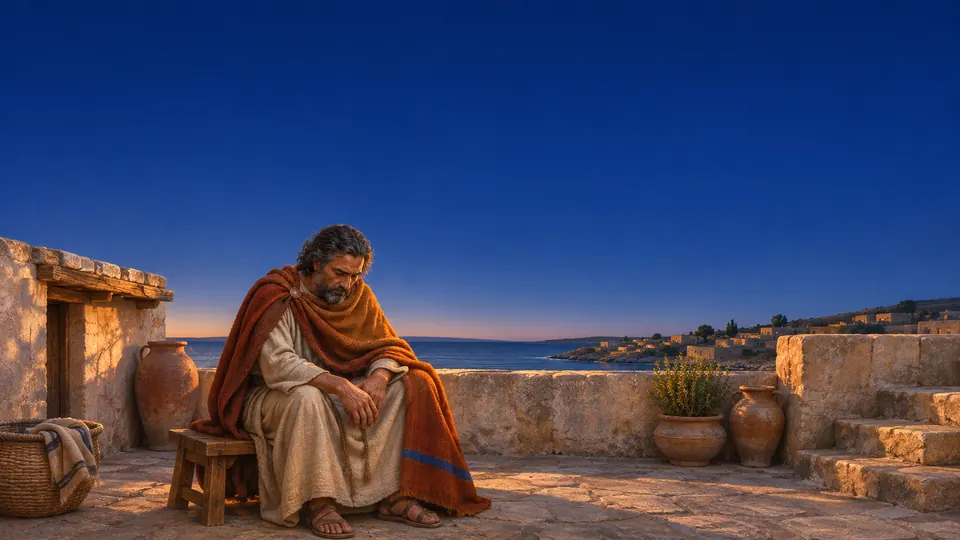
Entity · Deity
El
A reference page linking a name, group, or concept to the materials that discuss it.
- Region
- Ugarit (Ras Shamra), Syrian coast
El is a senior deity in Ugaritic myth, portrayed as a father of the divine family and an arbiter of its affairs. This entry examines the Baal Cycle, Athirat, El’s epithets, and the distinction between his name and the common word for “god.”
Estimated reading time: 5 min Published Last reviewed:
Share article
Video
The Name No One Owns | The Road of El
More than four thousand years ago a palace burned at Ebla, and one small word waited in its clay: ʾl, El. We follow it through names and inscriptions, from Ebla, Mari and Ugarit to the kings of Samʾal, Karatepe and Saba and the stones of the basalt desert, then set the Torah's names and the Arabic question side by side. Some scenes are AI-generated illustrations.
The YouTube player loads only when you press play. Watch on YouTube
Text
Introduction
Who is El, to whom other gods appeal in the texts of UgaritUgaritAncient city and kingdom at Ras Shamra on the Syrian coast, flourishing between the fourteenth and early twelfth centuries BCE and preserving multilingual archives.Glossary · Click to read the explanation? This entry examines his portrayal in Ugaritic evidence, especially his place within the divine family and his relationship with Athirat and Baal. It distinguishes what the myths actually say from wider historical interpretations and from the identity proposed for surviving artifacts.
In Semitic languages, the form El may function as a common nounCommon nounA noun referring to a member of a class, such as “city” or “god”, unlike a proper name designating a particular entity. Semitic il/El may fulfill either function in context.Glossary · Click to read the explanation meaning “god” or as the proper nameProper nameA name that identifies a particular person, place, group, or entity in context, unlike a common noun denoting a class. Spelling alone may not settle the distinction.Glossary · Click to read the explanation of a particular deity. The subject here is the divine figure described in Ugaritic texts, not every occurrence of that word in different languages and periods. [1]
Ugarit and its written witnesses
UgaritUgaritAncient city and kingdom at Ras Shamra on the Syrian coast, flourishing between the fourteenth and early twelfth centuries BCE and preserving multilingual archives.Glossary · Click to read the explanation was a city and kingdom on the Syrian coast during the Late Bronze AgeLate Bronze AgeAn archaeological period around 1600–1200 BCE in much of the Near East, with international diplomacy, exchange and religious diversity; its endpoints vary by region.Glossary · Click to read the explanation, at the site now known as Ras Shamra. Excavations recovered myths, ritualRitualAn organised or distinguished practice meaningful to a community; it may leave traces, but its form alone does not reveal an associated doctrine.Glossary · Click to read the explanation documents, and god listsGod ListsTexts collecting divine names for preservation, teaching and classification, with varying theological organization.Glossary · Click to read the explanation, many written in UgariticUgaritic languageAncient Semitic language preserved in Ugarit’s tablets on the Syrian coast, from the fourteenth–twelfth centuries BCE, written in a cuneiform alphabet.Glossary · Click to read the explanation using an alphabetic cuneiformUgaritic alphabetAlphabetic cuneiform system of Late Bronze Age Ugarit, using thirty chiefly consonantal written signs, distinct from Akkadian syllabic cuneiform.Glossary · Click to read the explanation script. These records illuminate the religious ideas of the scribal and elite milieu that produced them; they do not necessarily represent every belief held by the wider population. [3]
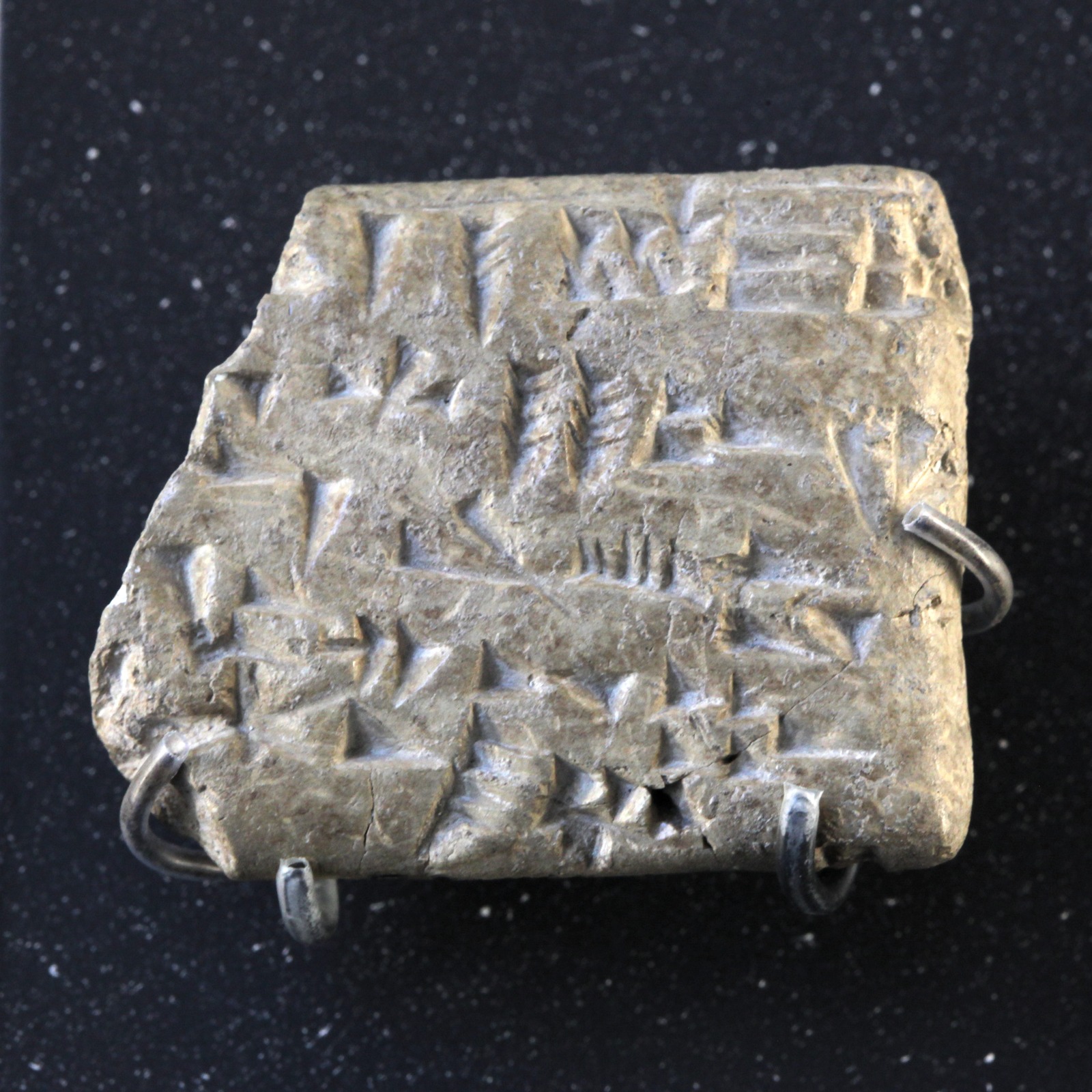
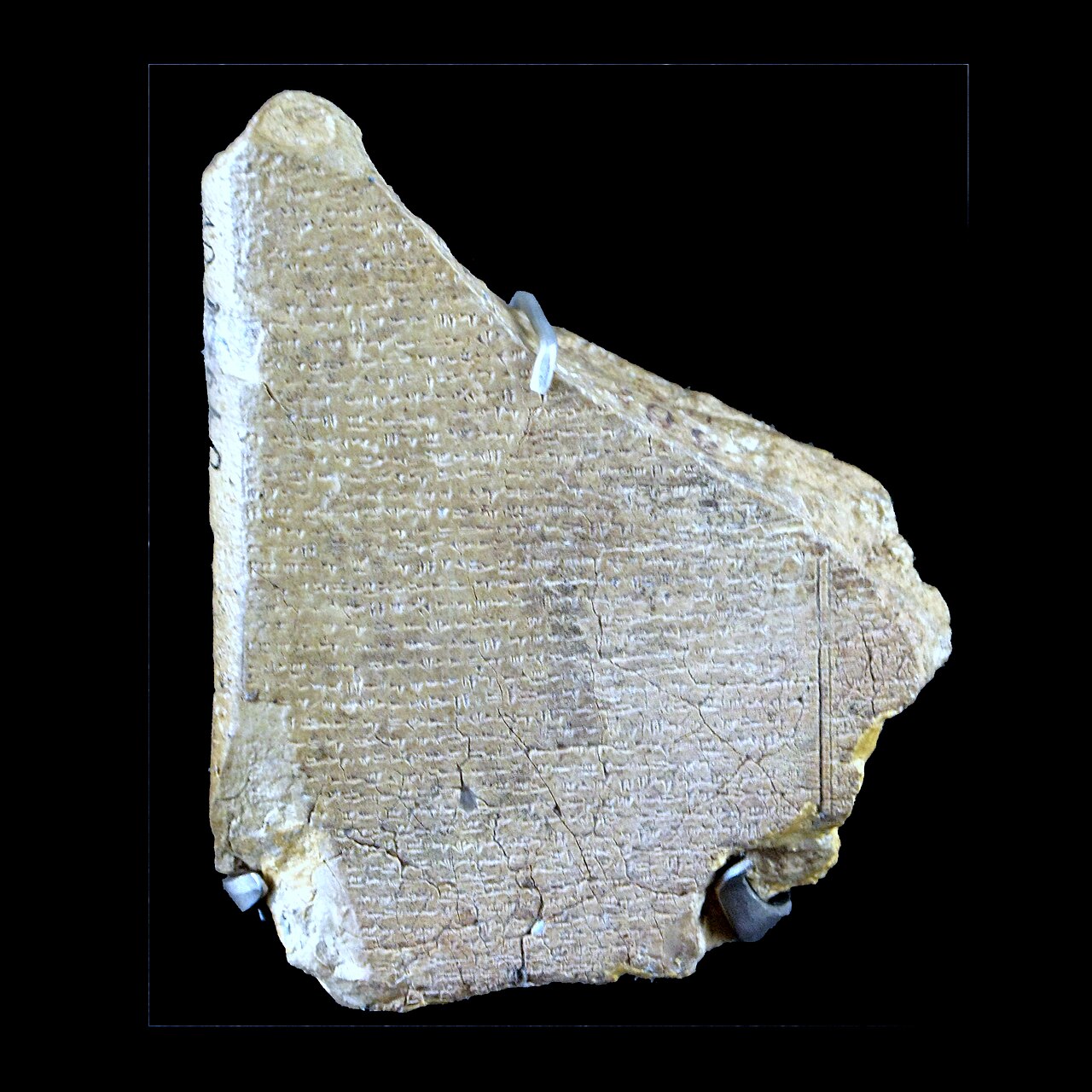
One central set of witnesses is the Baal CycleBaal CycleA group of Late Bronze Age Ugaritic religious texts recounting Baal’s conflicts, relationships with the gods and the building of his palace.Glossary · Click to read the explanation, mythological compositions about struggles for sovereignty among the gods. Modern scholarship commonly identifies the tablets and passages with KTUKTU: Ugaritic Text ReferencesAbbreviation for a modern edition of alphabetic cuneiform texts. Its text references can be cross-identified with find numbers such as RS or RIH; they are not dates.Glossary · Click to read the explanation numbers specifying text, column, and line; those numbers are not dates for the narrated events. A fragment of the cycle survives in the Louvre as tablet AO 16640. It is material evidence for the writing of this mythology, not a portrait of El. [7]
Father, king, and counselor
El is portrayed as the senior figure of the divine family. His titles include “Bull El,” “father of the gods,” and “king, father of years.” The bull epithet conveys strength and paternity in the literary language; it does not require a literal bovine body. Related language refers to the “sons of El,” the divine community associated with his authority. [4] [8]
Scenes of the divine councilDivine councilA divine council is a religious and literary scene in which divine beings gather before a superior authority for discussion, commissioning or judgment; it is not identical to a pantheon list.Glossary · Click to read the explanation show El receiving requests and making decisions. In a passage involving Athirat (Asherah)AthiratA prominent goddess commonly understood as El’s consort in Ugaritic texts; she bears the progenitress epithet and intercedes for Baal’s palace.Glossary · Click to read the explanation, El is presented as a figure of wisdom and advanced age, with a greying beard. These are literary features of the divine father in the story, not evidence that the physical appearance of a historical being can be reconstructed with certainty. [4]
Other descriptions present him as father of humankind or creator of creatures. Since these expressions occur in different texts and settings, they should not automatically be assembled into one seamless Ugaritic creation doctrine. [4] [8]
Athirat and the divine family
Athirat appears as El’s consort and an influential figure in the divine household. In the Baal Cycle, “seventy sons of Athirat” are mentioned in the context of a feast for the gods (KTU 1.4 VI 46). In its poetic setting, the number evokes the breadth or completeness of the group; it should not be taken as an independent census of every deity actually worshipped in Ugarit. [4]
Divine kinship is not a fixed genealogical chart. BaalBaalUgaritic storm god and warrior king who defeats Yamm, builds his palace with El’s consent and confronts Mot. References to El and Dagan as fathers do not define a single genealogy.Glossary · Click to read the explanation is sometimes addressed as a “son” of El in language expressive of divine relationship and standing, while other formulas associate Baal with DaganDaganA god worshipped in Syria and Mesopotamia, especially at Tuttul and Terqa on the Euphrates, and associated with royal authority. His name appears as Dagon in the Hebrew Bible; no ancient image of him is securely identified.Glossary · Click to read the explanation as his father. A single paternal title therefore cannot settle every genealogy in every version of the traditions. [8]
El’s authority and Baal’s power
Baal is the active storm god who fights Yamm, the sea godYam / NaharSea god in Ugaritic texts, associated with the name Nahar and portrayed in the Baal Cycle as Baal’s rival for authority among the gods.Glossary · Click to read the explanation, and seeks a palace that reflects his position. Yet the Baal Cycle does not assign him all authority without qualification. In KTU 1.3 and 1.4, Athirat’s intervention with El is important in securing permission for Baal’s palace. The senior god grants authorization, while the warrior god seeks to establish his place. [5]
This story is not direct proof that the worship of Baal displaced the worship of El, or a historical record of a single political coup. It is a religious narrative about power in the divine realm. Comparisons with human kingship may illuminate it, but should remain interpretations rather than identification of the gods with actual rulers. [3] [5]
The dwelling of El
Passages in the cycle locate El’s dwelling at the sources of two rivers, beside deep waters (KTU 1.4 IV). This is a mythic landscape linking divine sovereignty with springs and fertility; the passage itself does not identify a pair of archaeological or geographic locations. The distant dwelling also contributes to the literary portrait of an elder figure who is approached for judgment and counsel. [4]
Images, worship, and the limits of identification
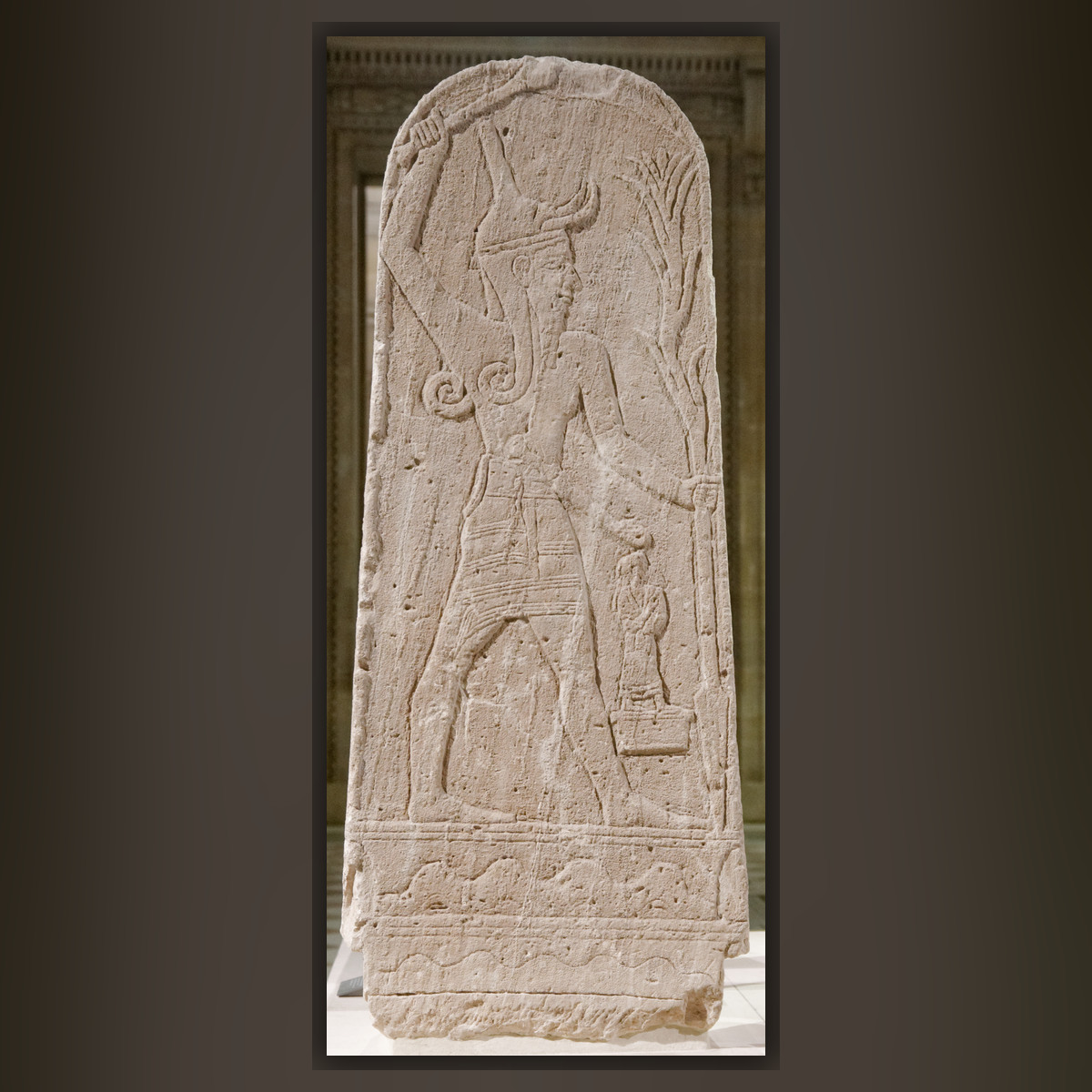
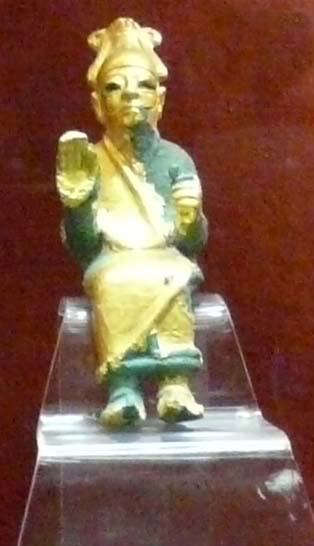
Some seated divine statuettes from Ugarit have been identified as possible representations of El. A small gilded-bronze example, now in the National Museum of Damascus (S 3573), dates approximately to the fourteenth–thirteenth centuries BCE. Its identification rests on style and comparison, not on an inscription on the object naming El. The cover therefore labels that identification as probable or tentative, rather than certain. [6]
It also matters whether the evidence comes from myths, god lists, or offering records. A deity’s role in a story does not by itself establish how widely it was worshipped or whether it had its own temple, while a list of offerings does not tell us everything that a myth narrates. These sources complement each other without being interchangeable. [3]
A proper name and a wider Semitic vocabulary
Words related to El persisted in several Semitic languages, including HebrewHebrewA Northwest Semitic language of the Canaanite group, encompassing Iron Age epigraphy, Biblical, Rabbinic, medieval and Modern Hebrew; its scripts and pronunciations changed over time.Glossary · Click to read the explanation. Yet a shared word is not automatic evidence that every occurrence invokes the very same Ugaritic divine personality. The form may be a common noun, a title, or a divine name within a different tradition. The archive therefore treats the Semitic word ElSemitic ilAn ancient Semitic word meaning “god,” with cognates across several languages. It may function as a common noun or a proper name according to context; it is not always Ugaritic El.Glossary · Click to read the explanation separately from this Ugaritic deity. [1] [2]
Ugaritic texts offer important evidence for the history of religious ideas in the region, including comparisons with the Hebrew Bible. Such comparisons require attention to the age and setting of each text and to the way the name is used there. Scholarship cannot move directly from a shared word to the continued cult of an identical god everywhere it occurs. [2] [8]
Taken together, the surviving witnesses portray El as a father and arbiter in a family of gods alongside Athirat, Baal, and other figures. This is a portrait of El in the Ugaritic material that has survived, not a complete account of every belief in the ancient LevantThe LevantThe Levant is a regional name for lands along the eastern MediterraneanGlossary · Click to read the explanation. [3] [4]
References and notes (8)
- Heath D. Dewrell & Andrew M. Garbarino, Names of God in the Hebrew Bible, Oxford Bibliographies (2023) Available introduction: El as common noun or proper name, and Elohim and Yahweh. The cited literature was not read in full. Return to the text ↑
- Mark S. Smith, The Origins of Biblical Monotheism, Oxford University Press (2001) Publisher’s abstract and contents on divine structures and monotheism. Modern scholarship, not a quotation of a particular Ugaritic text or a full-book reading. Return to the text ↑
- K. L. Noll, “Canaanite Religion,” Religion Compass 1, no. 1 (2007): 61–92; authorized online text at Brandon University. Online sections I (sources), IV (variant myths), and V (El, Baal, myth and cult) read; not a claim of consulting the journal issue in print. Return to the text ↑
- K. L. Noll, “Canaanite Religion” (2007), section V on El and Athirat, citing KTU 1.4 IV 20–30, V 3–5, VI 46, and KTU 1.65. Passages understood through the cited scholarly discussion, not independently collated with Ugaritic manuscripts. Section V, “El” and “Athirat”; scholarly English discussion and cited excerpts, not a full reading of the Ugaritic originals. Return to the text ↑
- Mark S. Smith and Wayne T. Pitard, The Ugaritic Baal Cycle, vol. II (Brill, 2009), on KTU/CAT 1.3–1.4 (publisher/university abstract; full volume not accessed). University publisher abstract describing El’s permission for Baal’s palace; no reading of the full critical translation. Return to the text ↑
- Virtual Museum of Syria, “Seated God Figurine (possibly El),” gilded bronze from Ugarit, National Museum of Damascus S 3573; corresponding photograph and file-specific CC0 license by ywpark2003 on Wikimedia Commons. Full artifact entry, dating, inventory, tentative attribution, plus original Wikimedia file/license page; no inscription naming the god. Return to the text ↑
- Musée du Louvre, inventory AO 16640 (RS 3.367 / 3.346), Ugaritic tablet from the Baal Cycle, 1400–1200 BCE; individual Wikimedia Commons file record by Rama. Louvre object record: dating, script, language, nature of the text, fragmentary condition; no assertion that the pictured face records El’s name. Return to the text ↑
- Michael T. Wingert, The “God of the Fathers” and Self-Identification in the Hebrew Bible, PhD dissertation, UCLA (2017); selected passages of chapter 5 on El’s Ugaritic epithets, plus abstract on limits of claims about continuity of worship. Abstract and chapter 5 excerpts around pp. 113–114 on divine fatherhood, epithets, and Baal/Dagan; not the entire dissertation. Return to the text ↑
Suggest a correction · Suggest a source for this record
Cite this record
IL Archive, «El», https://ilarchive.com/en/entities/el
Continue reading
Related readings