Entity · Concept
Ugaritic alphabet
A reference page linking a name, group, or concept to the materials that discuss it.
Long cuneiform alphabet of 30 signs, chiefly consonantal. Its wedge shapes do not imply Akkadian syllabic principles or priority as the first alphabet.
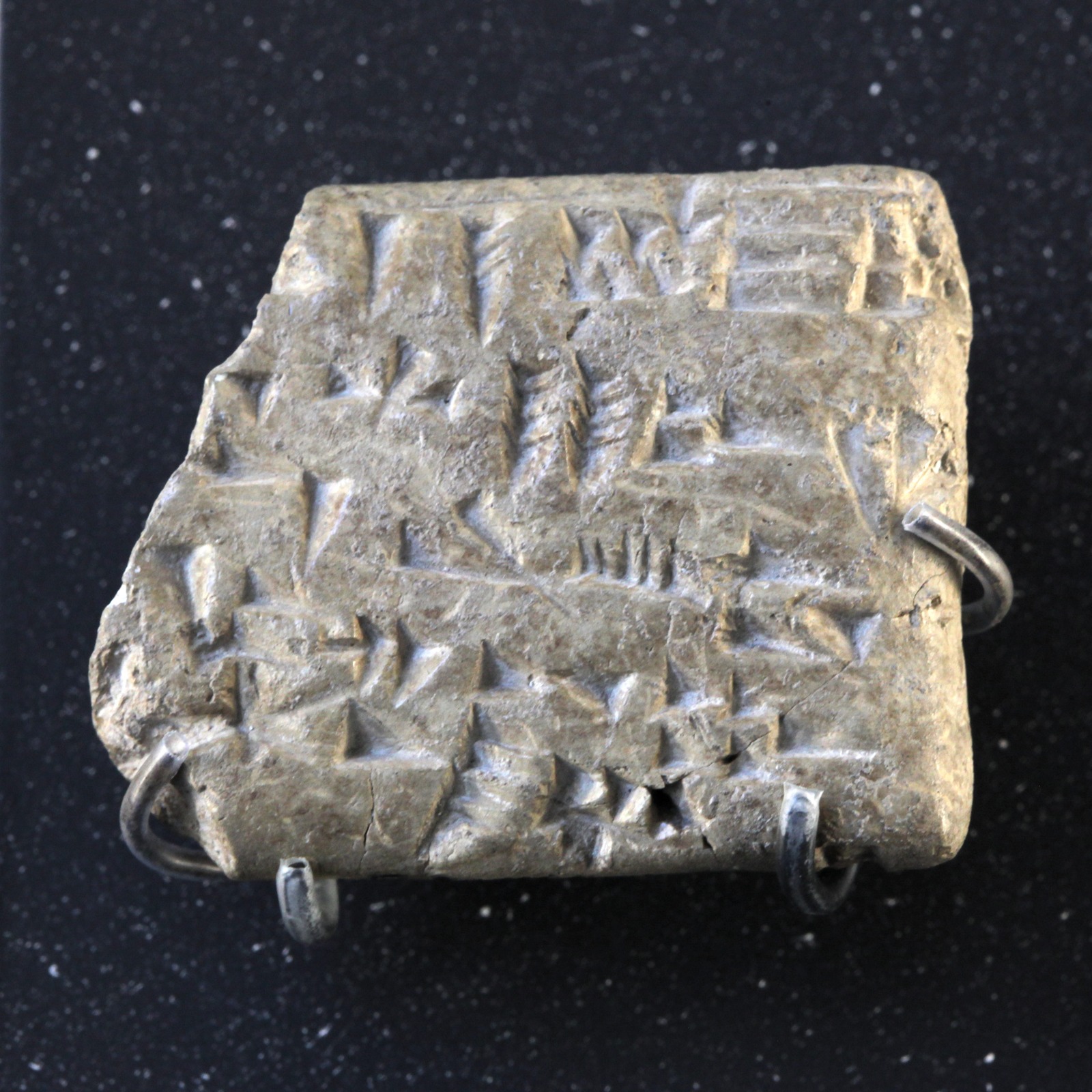
Text
Late Bronze AgeLate Bronze AgeAn archaeological period conventionally around 1600–1200 BCE in much of the Near East, with regional variation.Glossary · Click to read the explanation writing system combining wedge impressions on clay with an alphabetic principle. Three glottal-stop signs relate to accompanying vowels; ordinary writing runs left to right. Adaptation of an existing alphabet is a better-supported proposal than first-alphabet invention. [1]
Abecedaries illuminate teaching. The illustrated AO 19992 is incomplete, missing 7 letters; it differs from complete RS 12.033, found 1948. [2][3]
References and notes
- Paolo Merlo. Ugaritic: writing. Mnamon. DOI: 10.25429/sns.it/lettere/mnamon019. Complete main entry: 30 signs, cuneiform technique/alphabetic principle, three glottal-stop signs, direction, rarer systems and probable adaptation of an older alphabet. General 14th–12th-century range broader than language entry. Return to the text ↑
- Anne-Sophie Dalix. Un abécédaire : la tablette RS 12.033. Ministère de la Culture. Complete tablet found 1948, 30-sign order and teaching. Study photograph shows another incomplete tablet AO 19992/RS 10.087. Return to the text ↑
- Musée du Louvre. Tablette: abécédaire incomplet. AO 19992 / RS 10.087, KTU 5.4. Incomplete abecedary, 7 missing letters, museum date 1400–1200 BCE, found 1938. Different fromRS 12.033. Licensed Rama photo separate from protected museum photographs. Return to the text ↑
Research history
Substantive changes are retained here. Minor copy edits remain in the internal operational log.
-
Substantive record update
Suggest a correction · Suggest a source for this record
Cite this record
IL Archive, «Ugaritic alphabet», Edition 2, https://ilarchive.com/en/entities/ugaritic-alphabet