Entity · Deity
Athirat
A reference page linking a name, group, or concept to the materials that discuss it.
- Names
- Asherah · Athirat
- Timeline
- From 1400 BCE to 1200 BCE
A prominent goddess commonly understood as El’s consort in Ugaritic texts; she bears the progenitress epithet and intercedes for Baal’s palace.
Estimated reading time: 10 min Published Last reviewed:
Share article
Video
The Baal Cycle: The Sea, a palace and the meeting with Death
The Sea, a palace and the meeting with Death. The whole story in three illustrated chapters, told from the ancient clay tablets; where the tablets are broken, the narration says so. Illustrations, narration voice and visual effects were created with AI tools by IL Archive; the text is a faithful retelling based on the ancient tablets.
The YouTube player loads only when you press play. Watch on YouTube
Reading path
Links recorded in this entry.
Periods
When does it appear?
- From 1400 BCE to 1200 BCE
Dates
Dates have distinct roles. The timeline uses creation, composition or historical coverage, rather than publication or discovery dates.
- Historical coverage
- Approximately From 1400 BCE to 1200 BCE
Text
Introduction
Athirat (Ugaritic ʾaṯrt), also known through the related HebrewHebrewA Northwest Semitic language of the Canaanite group, encompassing Iron Age epigraphy, Biblical, Rabbinic, medieval and Modern Hebrew; its scripts and pronunciations changed over time.Glossary · Click to read the explanation name Asherah, is a major goddess of the ancient LevantThe LevantThe Levant is a regional name for lands along the eastern MediterraneanGlossary · Click to read the explanation. The fullest narrative portrait comes from Late Bronze AgeLate Bronze AgeAn archaeological period around 1600–1200 BCE in much of the Near East, with international diplomacy, exchange and religious diversity; its endpoints vary by region.Glossary · Click to read the explanation UgaritUgaritAncient city and kingdom at Ras Shamra on the Syrian coast, flourishing between the fourteenth and early twelfth centuries BCE and preserving multilingual archives.Glossary · Click to read the explanation, the city at Ras Shamra on the coast of present-day Syria. There she belongs beside ElElEl is a senior deity in Late Bronze Age Ugaritic texts, portrayed as father of the divine family and a council authority, alongside his consort Athirat. This entry does not cover every linguistic use of El.Glossary · Click to read the explanation, the senior divine ruler, and acts as mother, mediator and participant in decisions about divine kingship. What do these roles mean, and how far can they illuminate later references to Asherah? The answer requires distinguishing Ugaritic literature and ritualRitualAn organised or distinguished practice meaningful to a community; it may leave traces, but its form alone does not reveal an associated doctrine.Glossary · Click to read the explanation from Iron Age inscriptions and biblical polemic.[6][7]
Names, places and the dates of the evidence
Athirat and Asherah are related forms of a name, not a license to combine every occurrence into one timeless biography. Earlier second-millennium BCE evidence includes the goddess Ashratum in Babylonia and the divine element in the name Abdi-Ashirta, ruler of Amurru in the fourteenth century BCE. These attestations help establish the name’s history; they do not by themselves establish identical cults or relationships everywhere.[4][11]
The main chronological distinctions are these:
- At Ugarit, the surviving tablets belong to the Late Bronze Age, before the city’s destruction around the beginning of the twelfth century BCE. Dating the Baal CycleBaal CycleA group of Late Bronze Age Ugaritic religious texts recounting Baal’s conflicts, relationships with the gods and the building of his palace.Glossary · Click to read the explanation’s scribe IlimilkuIlimilkuUgaritic scribe associated with the Baal Cycle, Kirta and Aqhat; handwriting and colophons aid attribution. His work alone does not date the traditions’ origins.Glossary · Click to read the explanation to the fourteenth or thirteenth century has been debated. The tablets are witnesses to a developed tradition, not dated records of the gods’ actions or proof of when every story originated.[7]
- The blessings from Kuntillet ʿAjrudKuntillet ʿAjrudA Sinai site with blessings invoking Yahweh of Samaria/Teman and “his asherah” around 800 BCE; inscriptions illuminate religion and writing, while the site’s function and imagery remain debated.Glossary · Click to read the explanation belong around the late ninth–early eighth century BCE; the damaged tomb inscription from Khirbet el-QomKhirbet el-QomSite west of Hebron known for an eighth-century BCE funerary inscription commonly associating Yahweh with “his asherah”; damaged text and readings disputed.Glossary · Click to read the explanation belongs to the eighth century. They are contemporary written objects from different southern contexts, several centuries after Ugarit.[4][10]
- Biblical narratives place events in earlier periods, including the monarchies of Israel and Judah. Their arrangement and evaluation reflect composition and editing: proposals for the Deuteronomistic History include a late-seventh-century edition with later revisions, or a principal exilic edition in the sixth century. The surviving manuscript tradition is later still: the complete Leningrad Hebrew Bible is an early-eleventh-century CE codex. A manuscript’s date is not the date of either its narrative events or its composition.[13][14]
KTU is a modern numbering system for the alphabetic cuneiformUgaritic alphabetAlphabetic cuneiform system of Late Bronze Age Ugarit, using thirty chiefly consonantal written signs, distinct from Akkadian syllabic cuneiform.Glossary · Click to read the explanation texts of Ugarit; Roman numerals identify columns and following numbers identify lines. The short transliterations below follow the cited editions, with normalized letter signs. They are not new readings of the clay tablets. The quoted title and banquet words are not restored in the edition; damaged neighboring words are not supplied here. The Arabic spelling ʿAshīra denotes the goddess, not a social kinship group.
Motherhood and the divine household
A decisive epithet occurs in KTU 1.4 III 26:[7]
“Progenitress” and “creatress of the gods” are conventional translations. The root qny has been discussed in connection with producing, acquiring and possessing; its dictionary possibilities alone cannot decide the phrase. The repeated references to Athirat’s children give the parental interpretation greater contextual weight than a bare “owner of the gods.” The critical commentary also rejects translating it as a goddess who creates humanity: humanity is not the object named in the epithet. The title supports divine maternity, but supplies no complete account of the creation of the universe.[3][7]
At the inauguration of Baal’s palace, the invitation culminates in this expression, KTU 1.4 VI 46, within the invitation of VI 44–46:[1][7]
The preceding lines call the guests Baal’s brothers and kin; the following lines distinguish gods and goddesses. For that reason, “children” or “offspring” conveys the collective better here than an exclusively male understanding of the traditional “sons.” Seventy functions as a conventional number for a large, complete group. Its use for divine groups elsewhere strengthens this reading, but the passage is an invitation, not a list of seventy individually named deities. It presents the divine family’s participation in Baal’s kingship rather than a numerical census.[7]
Athirat’s maternal role includes nourishment: KTU 1.23:23–24 associates her with the suckling of divine beings. This is stronger evidence for a nurturing role than a general modern label such as “fertility goddess,” which can obscure the different kinds of action attributed to her. Her relationship with El is commonly understood as consortship from their joint position and interaction in the narratives; that reconstruction should not be mistaken for an explicit marriage formula in every passage.[4][5]
Mediation, authority and contested kingship
BaalBaalUgaritic storm god and warrior king who defeats Yamm, builds his palace with El’s consent and confronts Mot. References to El and Dagan as fathers do not define a single genealogy.Glossary · Click to read the explanation, the storm god, needs a palace appropriate to his standing. He and AnatAnatAnat is an ancient Near Eastern goddess attested at Mari, Ugarit and in Egypt. In Ugaritic narratives she is a warrior, Baal’s ally and a mourner for him; her roles vary by tradition and context.Glossary · Click to read the explanation, the powerful goddess who supports him, approach Athirat in KTU 1.4 III–V. Her influence matters because El must authorize construction. She makes the successful petition, and Anat carries the news to Baal in V 20–27. Athirat is therefore not merely a passive mother: she negotiates a decision that gives visible institutional form to Baal’s status. The gifts presented to her belong to the story’s negotiations; treating them simply as proof of greed misses the formal exchange of honor and obligation.[2][7]
Her relationship with Baal is not uniformly supportive. In KTU 1.4 II 21–26 she initially fears for herself and her children when Baal and Anat approach. Later, after Baal is reported dead, El asks her to supply a son as king, and she proposes AthtarAthtarDeity who tries Baal’s throne in a Ugaritic myth and descends; the name Athtar also occurs in ancient South Arabian inscriptions and local cults. The text does not describe a revolt against El.Glossary · Click to read the explanation (KTU 1.6 I 43–55). The narrative then exposes the proposed successor’s inadequacy: his feet and head cannot reach the throne’s footstool and headrest (KTU 1.6 I 59–61). These changing alignments explain why maternal kinship does not eliminate conflict. Reading Athirat through the analogy of a royal mother is useful for her influence over succession, but “queen mother” is an interpretive model, not a complete translation of every occurrence of her title rbt, “Lady.” The widow–queen-mother analogy is limited because El remains alive and ruling.[5][7]
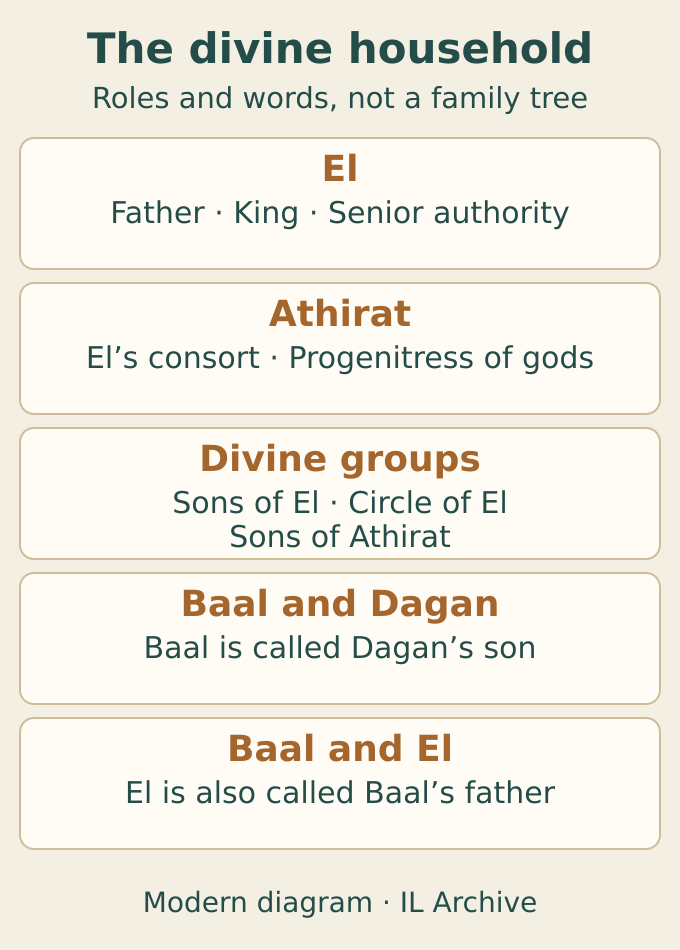
Nor does the divine household yield a consistent modern family tree. Baal is called the son of DaganDaganA god worshipped in Syria and Mesopotamia, especially at Tuttul and Terqa on the Euphrates, and associated with royal authority. His name appears as Dagon in the Hebrew Bible; no ancient image of him is securely identified.Glossary · Click to read the explanation, while El can also be addressed as his father. The language combines descent, rank and membership. The retained diagram summarizes these roles, including the traditional “sons” terminology; the banquet passage shows why that terminology need not exclude goddesses.[1][7]
Worship and royal dependence
Ritual texts provide a different kind of evidence from divine stories. In the offering prescription RS 1.001 = KTU 1.39, obverse line 6, Athirat receives an animal:[8]
These words are not restored in the edition. The noun š is rendered “ram” by Bordreuil and Pardee, a more precise rendering than the general “sheep”. Athirat appears among several recipients in a sequence of offerings; the text as a whole distinguishes daytime and nighttime observances. It establishes her inclusion in Ugarit’s cultic practice, not just its literature. The order of names does not establish marriages between adjacent deities, and this prescription alone cannot measure the popularity of her worship across the population.[5][8]
The Tale of KirtaTale of KirtaUgaritic poetic narrative in three tablets about King Kirta, his family and a vow; KTU1.16 names Ilimilku, without proving he invented all its traditions.Glossary · Click to read the explanation, a Ugaritic story about a king’s household and succession, extends the picture to human dependence on the goddess. Kirta vows a rich gift if he obtains his bride, addressing Athirat of TyreTyreTyre is a city on the coast of present-day southern Lebanon and an important ancient Phoenician centerGlossary · Click to read the explanation and the goddess of the Sidonians (KTU 1.14 IV 38–43). Tyre and Sidon are coastal cities in present-day Lebanon; the wording locates the story within a wider coastal religious geography. In KTU 1.15 III 25–30 Athirat remembers the vow. The ensuing illness is generally connected with its nonfulfilment, although her speech breaks off and the full curse is not preserved. The story links divine favor, obligation and dynastic continuity; it is not a dated historical report of a particular royal illness.[5]
Lady Athirat of the Sea
Another recurrent title, here in KTU 1.4 III 25, reads:[7]
The sea association has more support than an etymology alone: Athirat appears by the sea, and her attendant is called her fisherman. The construction “Athirat of the Sea” is preferable to treating the whole phrase as a proven name meaning “she who treads upon the sea,” since Athirat also occurs independently. Even so, the title does not by itself define a fixed maritime jurisdiction.[7]
The difficult scene in KTU 1.4 II 3–11 has often been understood as spinning, washing garments and preparing food. A 2020 philological reassessment instead connects the disputed word npyn with a net and reads the scene alongside the fisherman episode in II 28–36. Its strength is that it explains the nearby sea, net and fisherman together; its weakness is its dependence on disputed vocabulary and a new division of the verses. A maritime connection is secure enough to include in Athirat’s profile, but identifying her specifically as patron of fishing or of weaving remains more interpretive. Neither proposal should replace the firmly attested maternal and mediating roles.[9]
Hebrew Asherah: deity and material cult object
In the Hebrew Bible, asherah can denote something made, cut down, removed and burned. The story of Gideon makes its material aspect especially clear. Judges 6:26 specifies the fuel for an offering:[12]
The preceding verse orders its cutting down beside Baal’s altar. Deuteronomy 16:21 prohibits planting an asherah of any tree or wood beside YahwehYahwehThe proper name of Israel’s deity, written יהוה (YHWH), the Tetragrammaton. Its exact ancient pronunciation is not directly preserved; texts and inscriptions witness its history.Glossary · Click to read the explanation’s altar, while 2 Kings 23:6 describes one being removed from the JerusalemJerusalemJerusalem is a city of religious importance in Judaism, Christianity and IslamGlossary · Click to read the explanation temple and burned. These contexts make a wooden cult installation a strong reading, but do not decide whether its form was a living tree, a worked pole or an image. “Pole” is an interpretation, not a shape explicitly specified in every occurrence.[4][12]
Other contexts preserve a more personal religious dimension: 1 Kings 18:19 speaks of prophets of Asherah, and 2 Kings 23:4 groups equipment for Baal, Asherah and the heavenly hostHeavenly HostA heavenly group whose meaning varies: celestial bodies in some texts, attendants around the throne deliberating in 1 Kings 22.Glossary · Click to read the explanation. Such language makes a goddess or her represented presence a serious interpretation, without turning every use of the word into a divine proper nameProper nameA name that identifies a particular person, place, group, or entity in context, unlike a common noun denoting a class. Spelling alone may not settle the distinction.Glossary · Click to read the explanation. Object and deity are not necessarily mutually exclusive: an object could embody or represent a deity. The polemical narratives condemn these practices; they are not neutral descriptions by the worshippers themselves. Understanding their final literary form is distinct from reconstructing the earlier cults they criticize.[4][12][13]
The Iron Age blessings and the limits of continuity
At Kuntillet ʿAjrudKuntillet ʿAjrudA Sinai site with blessings invoking Yahweh of Samaria/Teman and “his asherah” around 800 BCE; inscriptions illuminate religion and writing, while the site’s function and imagery remain debated.Glossary · Click to read the explanation, a desert site in northeastern SinaiSinai: peninsula and biblical mountainSinai is a peninsula in eastern Egypt; in the Torah the name also denotes the mountain of revelation to MosesGlossary · Click to read the explanation, inscriptions on large storage jars include blessings invoking YahwehYahwehThe proper name of Israel’s deity, written יהוה (YHWH), the Tetragrammaton. Its exact ancient pronunciation is not directly preserved; texts and inscriptions witness its history.Glossary · Click to read the explanation. A short surviving segment of Pithos A, inscription 3.1, line 2, reads:[4][10][11]
This conventional translation takes the final h in ʾšrth as “his”; that grammatical interpretation is part of the debate, not an additional word written separately. The selected phrase is not a restoration, although other portions of the inscription are damaged. Pithos B names Yahweh of Teman instead. These local designations matter: the evidence is not a declaration of a single uniform cult throughout Israel and Judah. The genre is blessing language, plausibly including scribal letter exercises, not a narrative of divine marriage.[10]
The cult-symbol interpretation has a real grammatical advantage: possessive suffixes normally attach to common nouns rather than personal names. A goddess interpretation draws strength from the invocation alongside Yahweh and the earlier divine name; proponents explain the expression through a consort designation or a deity’s localized manifestation. Biblical scholar Richard S. HessRichard S. HessOld Testament and Semitic-language scholar at Denver Seminary, studying ancient inscriptions, names and religion.Glossary · Click to read the explanation’s 2025 reassessment goes further: he argues that the final h marks a vowel in the name Asherata, rather than a pronoun, using earlier syllabic spellings and archaic feminine endings.[11]
That proposal deserves consideration because it challenges the grammatical premise itself. Its remaining difficulty is the historical bridge from earlier spellings to the precise form and usage of eighth-century Hebrew. Conversely, the common-noun interpretation cannot establish that an associated goddess had disappeared: a symbol can retain a divine referent. The strongest shared conclusion is a positive association of Yahweh and ʾšrth in these blessings. The wording alone does not settle whether the referent is an independently acting goddess, her symbol, or exactly how the users understood their relationship. The much more damaged Khirbet el-QomKhirbet el-QomSite west of Hebron known for an eighth-century BCE funerary inscription commonly associating Yahweh with “his asherah”; damaged text and readings disputed.Glossary · Click to read the explanation tomb inscription offers a related but less secure textual case; it should not be used to repair every uncertainty at Kuntillet ʿAjrud.[4][10][11]
Athirat’s name, maternity and authority at Ugarit make the later Asherah evidence historically intelligible, but do not authorize importing all her Ugaritic traits into every Hebrew witness. Equally, later polemic should not reduce the Ugaritic goddess to a wooden object. The evidence supports related traditions whose meanings varied with place, period and genre.
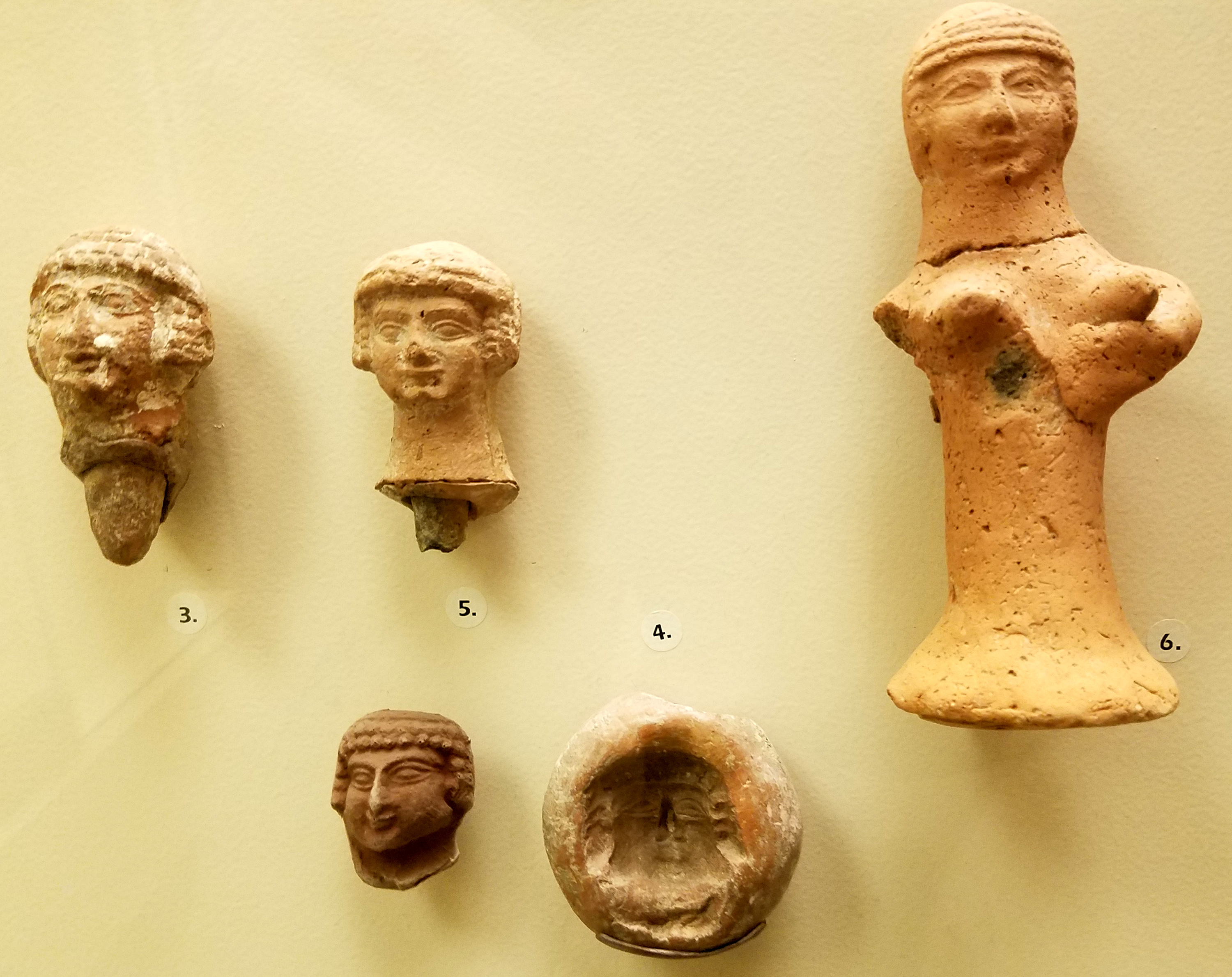
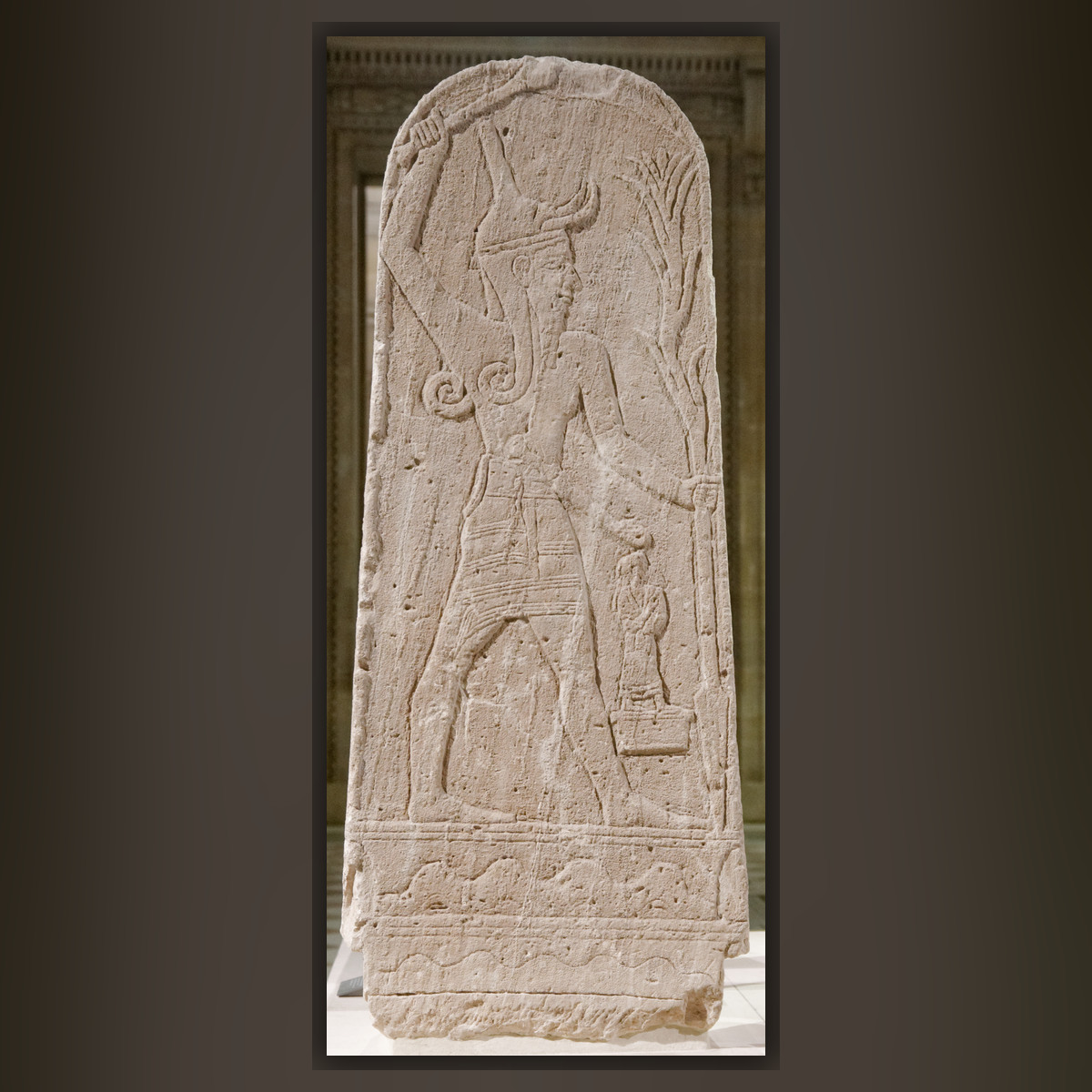
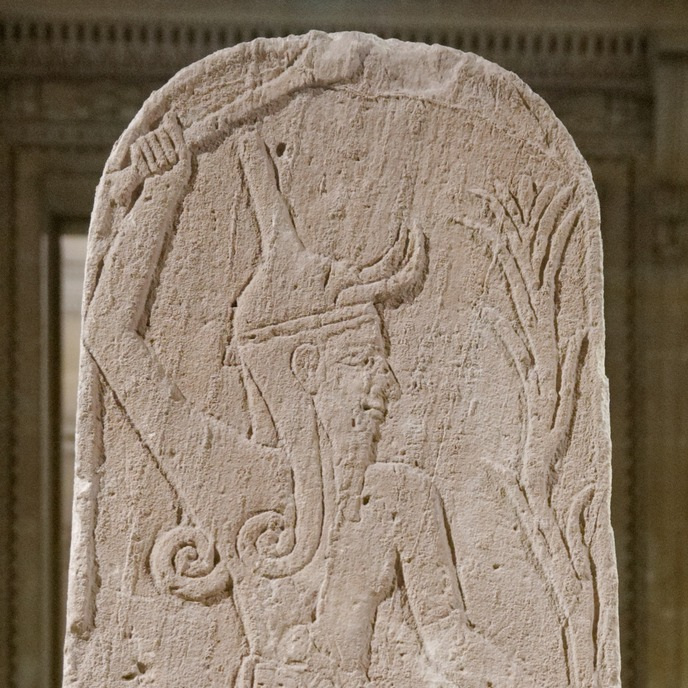
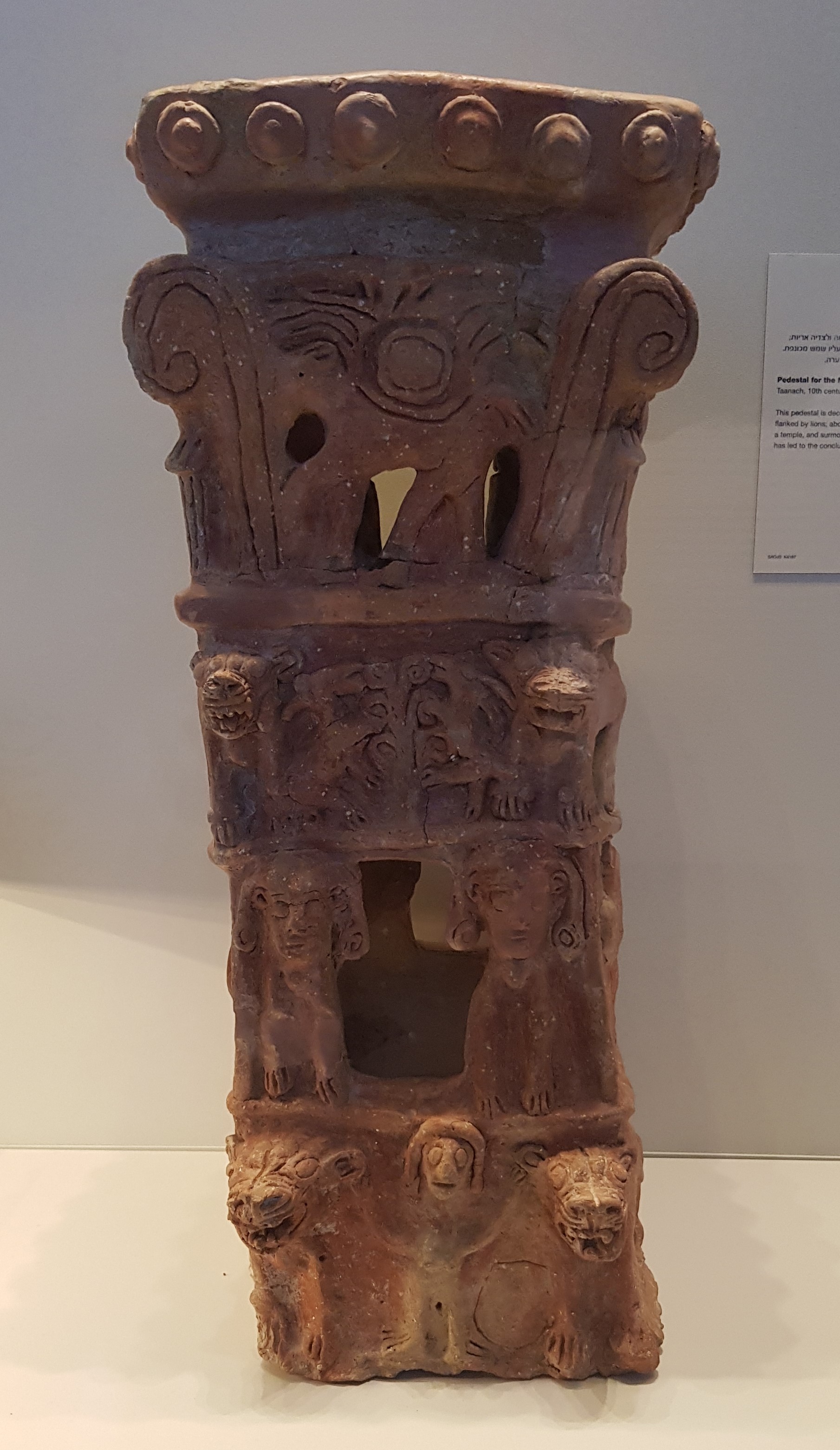
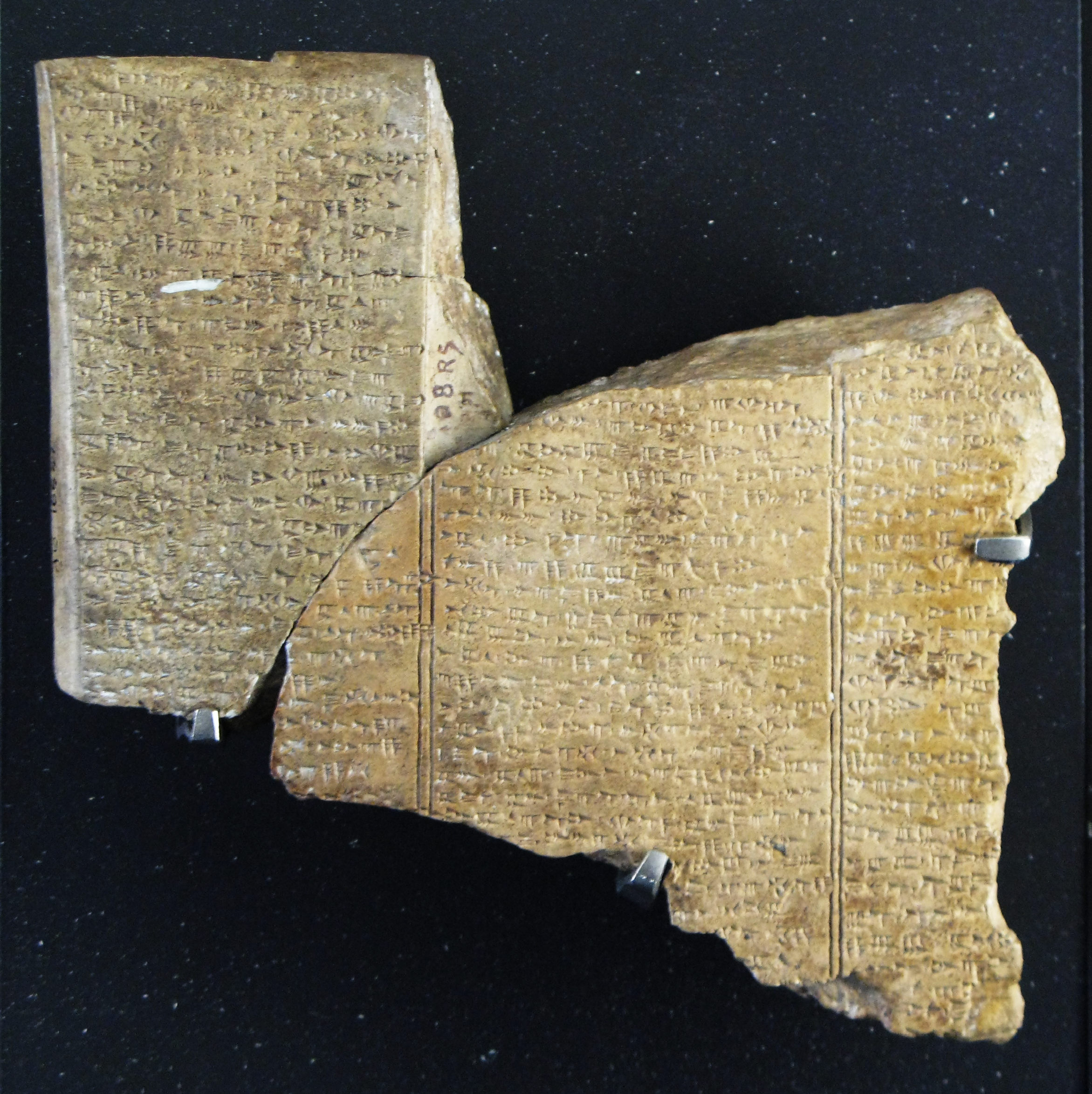
The photographs and diagram serve that distinction. The cover is a genuine Baal Cycle tablet, KTU 1.5, not a portrait of Athirat or the KTU 1.4 passages quoted above. The diagram is a modern explanation. Neither it nor an unidentified ancient female figure supplies an independently verified likeness of this goddess.
References and notes (14)
- Sang Youl Cho, Pro-Angelology in the Ugaritic Texts and the Hebrew Bible: A Comparative Study of the Nature and Roles of Lesser Deities, PhD thesis, University of Edinburgh, 2007. Pp. 13–15 and 77 on group designations and Baal’s parentage; pp. 93–94 on Athirat’s epithet, seventy sons in KTU 1.4 VI 44–46, and interpretations of the number. Return to the text ↑
- Jeffery B. Lloyd, The Goddess Anat: An Examination of the Textual and Iconographic Evidence from the Second Millennium B.C., PhD thesis, University of Edinburgh, 1994. P. 190: Athirat as El’s consort and the palace request; pp. 192–193: successful intercession, permission to build, and Anat’s announcement to Baal. Return to the text ↑
- Jesús-Luis Cunchillos, “Conférence de Jesus-Luis Cunchillos,” École pratique des hautes études, Section des sciences religieuses, Annuaire 94 (1985–1986), 1985, pp. 279–282. P. 279, “Religion ugaritique”: meanings of qny, the epithet qnyt ilm, and the limits of interpreting “creator of the gods.” Return to the text ↑
- Judith M. Hadley, “Evidence for Asherah,” Bible Interp, December 2008. Sections on the revival of research, Ugarit, Khirbet el-Qom and Pithos A; then the verb list under “Asherah in the Bible” and the opening discussion of Josiah’s reform. Return to the text ↑
- Steve A. Wiggins (1992). Athirat, Asherah, Ashratu: A Reassessment According to the Textual Sources. PhD thesis, University of Edinburgh. Pp. 31–38 on Kirta’s vow and illness; pp. 76–79, 84, 86–92 on mediation and succession; pp. 117–118 and 124 on offerings; pp. 105–106 on nursing in KTU 1.23:23–24. Return to the text ↑
- French Ministry of Culture, “Ougarit - Ras Shamra.” Opening paragraph and site context: ancient city on the Syrian coast, with remains at Ras Shamra. Return to the text ↑
- Mark S. Smith and Wayne T. Pitard, The Ugaritic Baal Cycle, volume II, Brill, 2009. Pp. 7–8 on dating; pp. 45–47 on family and mythic time; p. 63 on Athtar’s throne; pp. 405–407 on titles; p. 461 for KTU 1.4 III 25–26; pp. 587–592, 594, 628–630 and 632 for VI 44–46 and the seventy as male and female offspring. Return to the text ↑
- Pierre Bordreuil and Dennis Pardee, A Manual of Ugaritic, Eisenbrauns, 2009. Pp. 198–200, text 8, RS 1.001 = KTU 1.39, obverse line 6: ʾaṯrt . š; transcription, translation and ritual context. Return to the text ↑
- Shirly Natan-Yulzary, “Lady Athirat of the Sea – A New Look at KTU 1.4 ii 3–11,” Aula Orientalis 38/1 (2020), pp. 131–146. Pp. 131–133 and 136–140: npyn, plk, verse division, and comparison with the fisherman scene II 28–36; the maritime interpretation is a proposal, not an undisputed text. Return to the text ↑
- Jeremy D. Smoak and William M. Schniedewind, “Religion at Kuntillet ʿAjrud,” Religions 10/3 (2019), article 211. Introduction and sections 2–4: site context and dating, blessings and scribal exercises, and the meaning of “his asherah.” Return to the text ↑
- Richard S. Hess, “New Evidence for Asherata/Asherah,” Religions 16/4 (2025), article 397. Sections 1–2: Bronze and Iron Age evidence, especially Kuntillet ʿAjrud inscription 3.1, line 2, and the argument that h marks a vowel rather than a pronoun. Return to the text ↑
- Hebrew Bible text displayed by Mechon Mamre; short translations in the entry are newly made for this article. Judges 6:25–30, especially 6:26; Deuteronomy 16:21–22; 1 Kings 18:19; 2 Kings 23:4–7. Link opens the quoted Judges passage. Return to the text ↑
- Alison L. Joseph, “The Deuteronomistic History and Israel’s Kings,” Bible Interp, June 2016. Opening discussion of late-seventh-century versus exilic composition and redaction models, then the literary evaluation of kings. Return to the text ↑
- West Semitic Research Project, University of Southern California, “Biblical Manuscripts.” Paragraph on the Leningrad Codex: the complete manuscript dates to the early eleventh century CE. Return to the text ↑
Suggest a correction · Suggest a source for this record
Cite this record
IL Archive, «Athirat», https://ilarchive.com/en/entities/athirat
Continue reading
Related readings