Entity · Figure
Ilimilku
A reference page linking a name, group, or concept to the materials that discuss it.
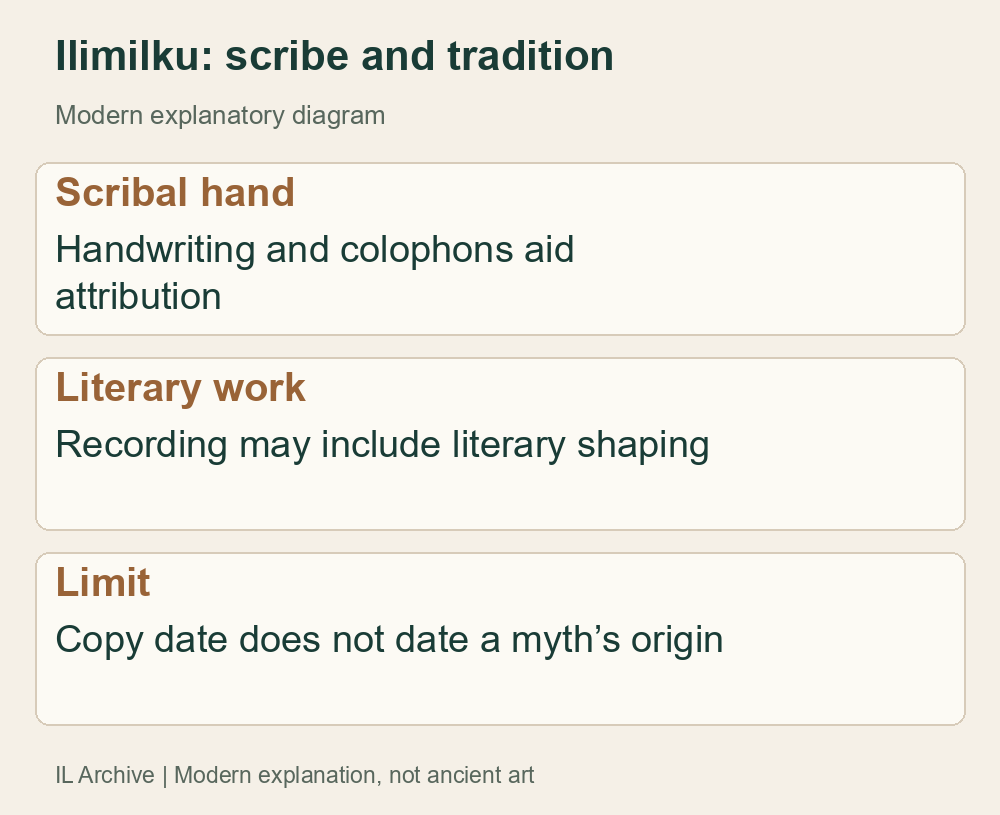
Ugaritic scribe associated with the Baal Cycle, Kirta and Aqhat; handwriting and colophons aid attribution. His work alone does not date the traditions’ origins.
Estimated reading time: 4 min Published Last reviewed:
Share article
Video
The Name No One Owns | The Road of El
More than four thousand years ago a palace burned at Ebla, and one small word waited in its clay: ʾl, El. We follow it through names and inscriptions, from Ebla, Mari and Ugarit to the kings of Samʾal, Karatepe and Saba and the stones of the basalt desert, then set the Torah's names and the Arabic question side by side. Some scenes are AI-generated illustrations.
The YouTube player loads only when you press play. Watch on YouTube
Text
Introduction
Ilimilku was a scribe associated with UgaritUgaritAncient city and kingdom at Ras Shamra on the Syrian coast, flourishing between the fourteenth and early twelfth centuries BCE and preserving multilingual archives.Glossary · Click to read the explanation, the ancient city at Ras Shamra on the Syrian coast. His name is connected with literary tablets written in UgariticUgaritic languageAncient Semitic language preserved in Ugarit’s tablets on the Syrian coast, from the fourteenth–twelfth centuries BCE, written in a cuneiform alphabet.Glossary · Click to read the explanation in the Late Bronze AgeLate Bronze AgeAn archaeological period around 1600–1200 BCE in much of the Near East, with international diplomacy, exchange and religious diversity; its endpoints vary by region.Glossary · Click to read the explanation. How is his hand identified, and what does attribution tell us about composition? This entry distinguishes evidence for a scribe’s work from the history of the traditions he transmitted.
A surviving name, uneven evidence
The attributed group includes the Baal CycleBaal CycleA group of Late Bronze Age Ugaritic religious texts recounting Baal’s conflicts, relationships with the gods and the building of his palace.Glossary · Click to read the explanation, concerning the god BaalBaalUgaritic storm god and warrior king who defeats Yamm, builds his palace with El’s consent and confronts Mot. References to El and Dagan as fathers do not define a single genealogy.Glossary · Click to read the explanation’s conflicts and kingship, and the Tale of KirtaTale of KirtaUgaritic poetic narrative in three tablets about King Kirta, his family and a vow; KTU1.16 names Ilimilku, without proving he invented all its traditions.Glossary · Click to read the explanation and Tale of AqhatTale of AqhatUgaritic poetic narrative in three tablets about Aqhat, Danel’s son; attribution to Ilimilku relies on comparison, with his name restored in a damaged colophon.Glossary · Click to read the explanation, narratives about family, kingship and human relationships with the gods. Colophons and handwriting comparisons connect these tablets with the scribe; there are not twelve independently preserved signatures. [2]
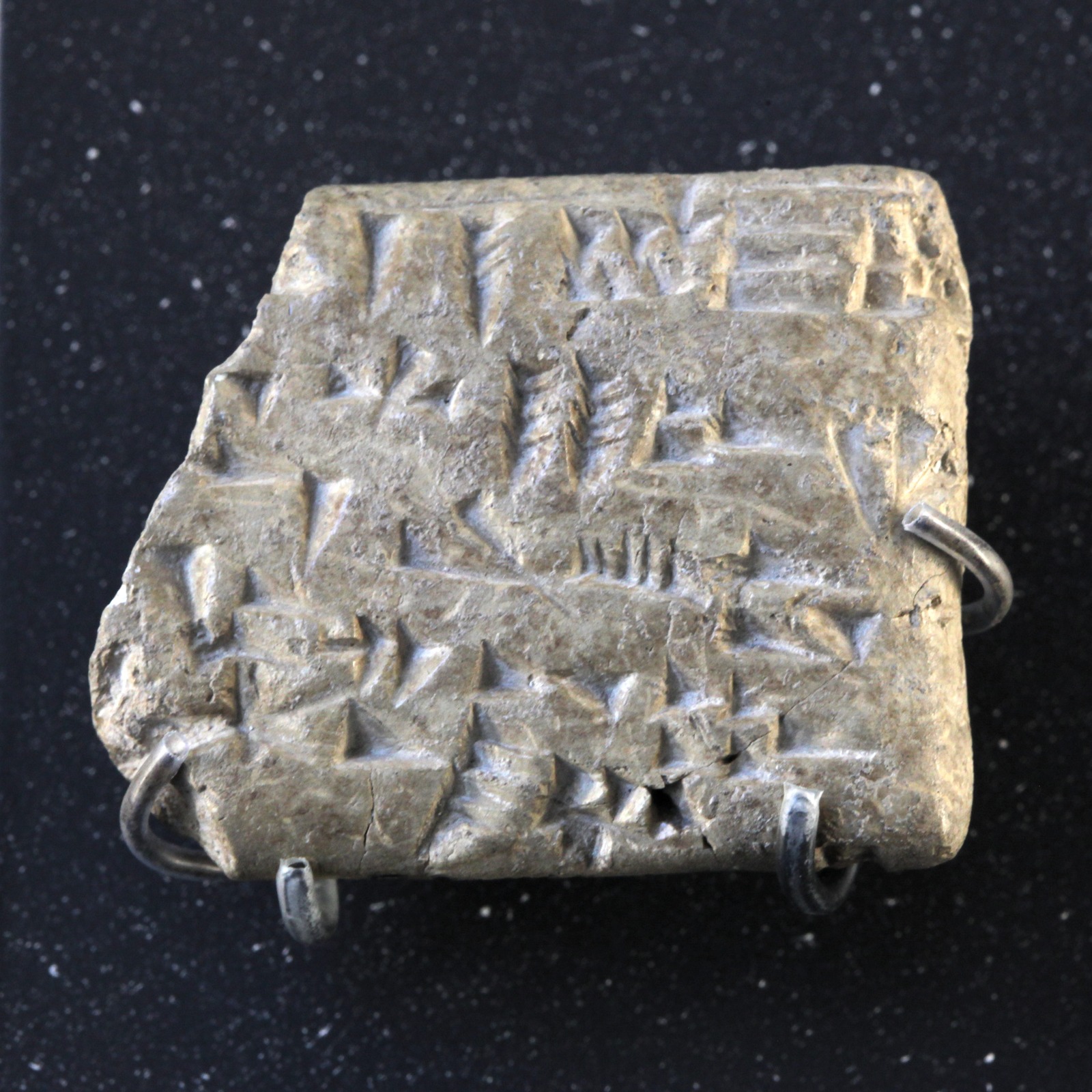
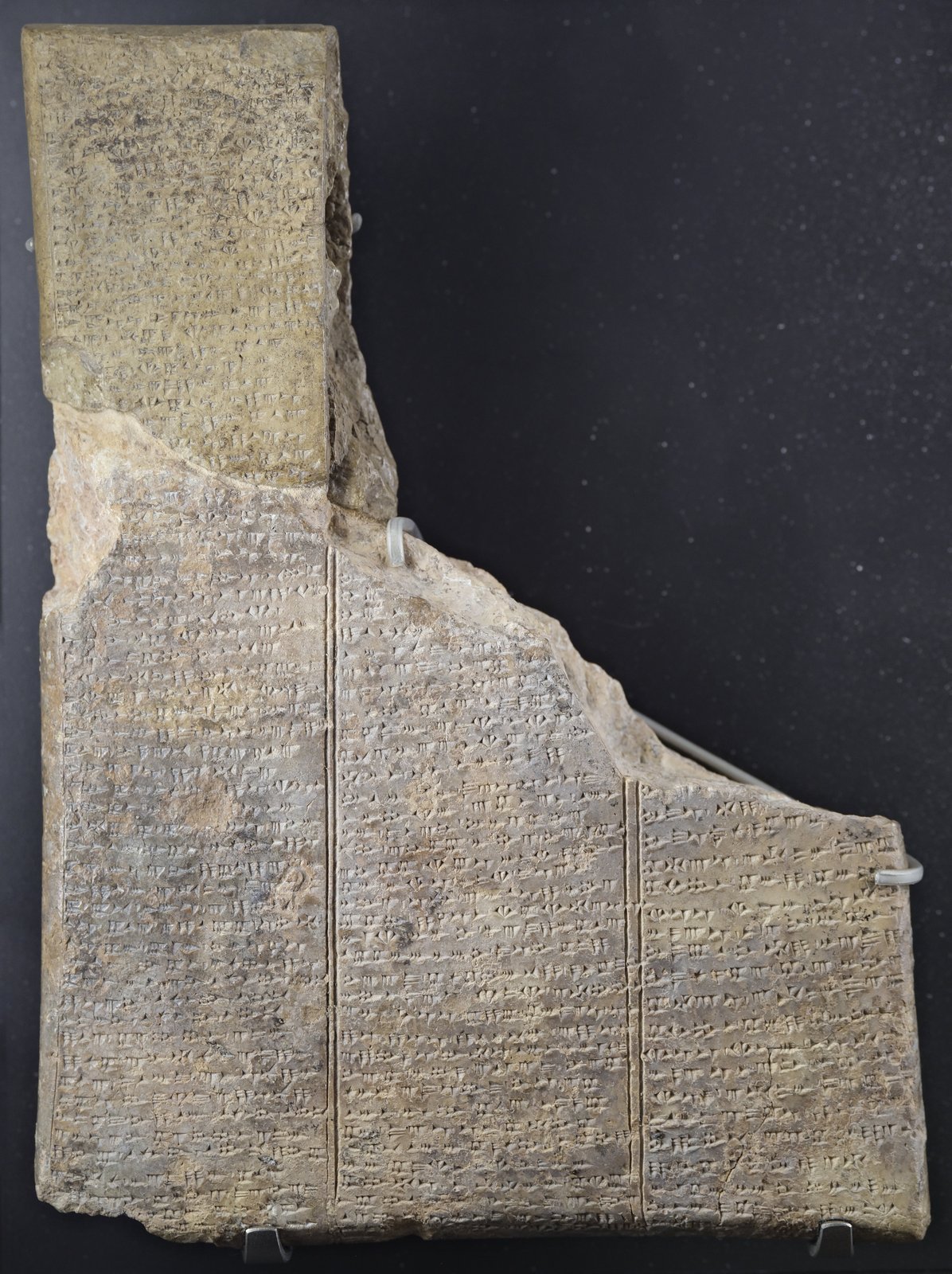
A colophon is an identifying statement added to a tablet, not a speech by a character. The end of the Baal Cycle, KTUKTU: Ugaritic Text ReferencesAbbreviation for a modern edition of alphabetic cuneiform texts. Its text references can be cross-identified with find numbers such as RS or RIH; they are not dates.Glossary · Click to read the explanation 1.6, column VI, lines 54–58, preserves Ilimilku’s name, his association with Shubbanu and his relationship to Attēnu, presented as his teacher. Attēnu’s title prln is generally understood as “diviner.” The allocation of titles such as chief priest and chief herdsman between the two men is disputed: they should not all become certain offices in Ilimilku’s biography. [3][4]
The opening of the same colophon, KTU 1.6 VI 54–55, in simplified Latin transliteration; the slash separates lines and the ellipsis marks continuation: [4][6]
Meaning: “The scribe Ilimilku the Shubbanite, pupil of Attēnu the diviner…”. Here spr is translated as the title “scribe”; it has also been read as the verb “wrote”. This attests writing and training, not a declaration that the scribe invented the narrative. Line 57 contains nqmd mlk ugrt, “Niqmaddu, king of Ugarit”, without a number distinguishing the namesake kings. This transcription follows published scholarship, not an independent examination of the tablet’s surface. [4][5][6]
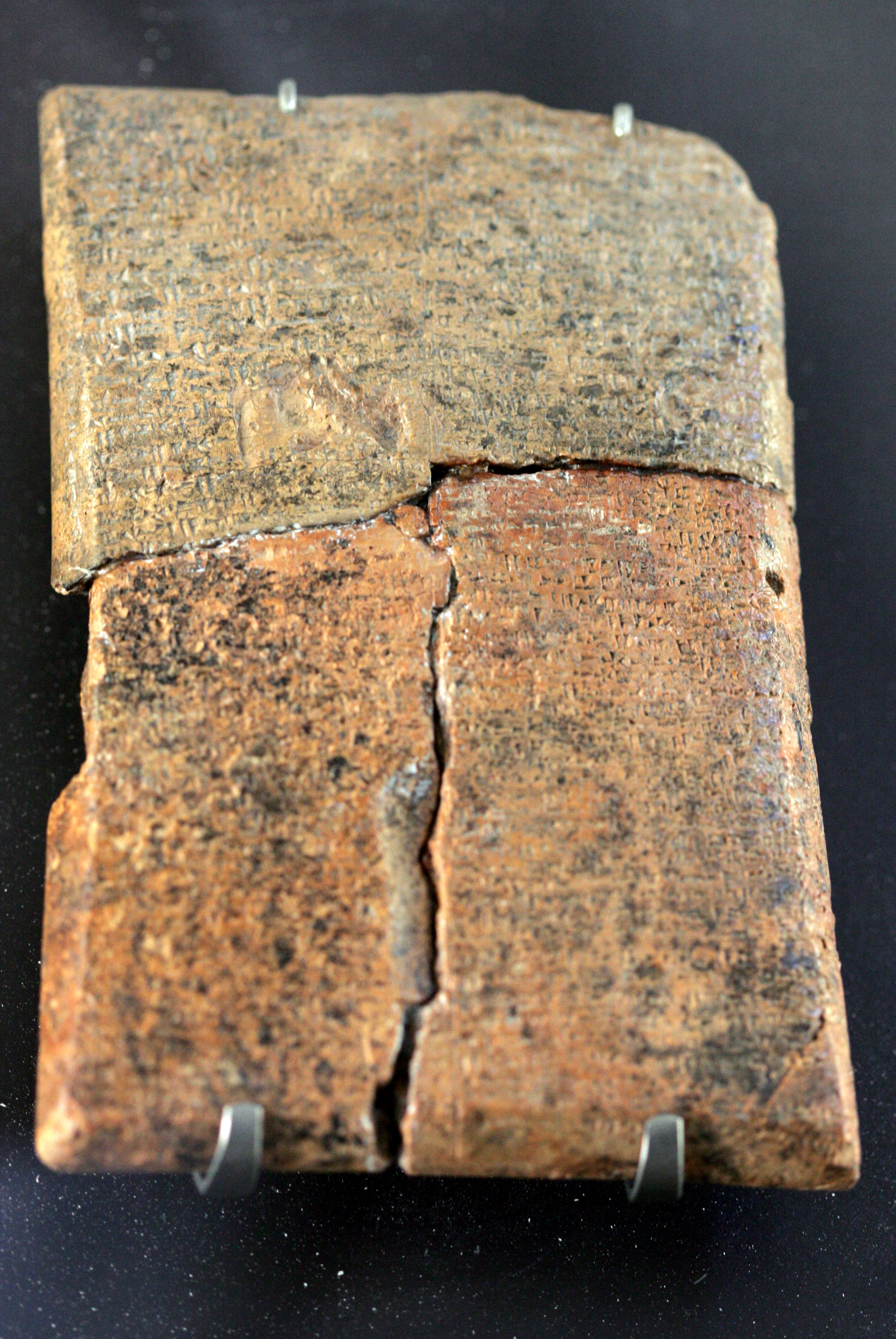
KTU 1.16 of Kirta preserves a colophon explicitly naming him. The Aqhat colophon on KTU 1.17 is badly damaged: his name is restored by comparison, not fully legible. Handwriting comparisons support attribution of the tablet group, but a surviving name differs from reconstructed text. KTU numbers identify texts in an edition of Ugaritic alphabetic inscriptions; they are not dates. [3][5]
When did he work?
Proposed dates have included the fourteenth century BCE and the late thirteenth. One argument for the later setting is a similar colophon on RS 92.2016, also known as KTU 1.179, from the house of UrtenuUrtenu and his houseUrtenu was an elite figure of Late Bronze Age Ugarit, associated with a house and tablet archives in the city’s southern sector; correspondence links him with court affairs and trade, although his precise office is uncertain.Glossary · Click to read the explanation, an elite figure at Ugarit. Yet the name in this colophon is also lost and restored, and a similar name in another document does not by itself identify the same person. [5]
The alternatives can be outlined without turning them into successive stages in one man’s life: [3][5][7]
- Fourteenth century BCE: association with the Niqmaddu usually numbered II, but III in Smith and Pitard’s numbering. AkkadianAkkadianAn ancient East Semitic language written in cuneiform from the third millennium BCE; its varieties include Babylonian and Assyrian, and it served in international diplomacy.Glossary · Click to read the explanation documents attest a namesake scribe then, but his identification with the epic scribe is unproven.
- Late thirteenth century BCE: association with Niqmaddu, the penultimate king. Boyes calls him III; Válek and Wyatt call him IV. Here the numbering differs, not the intended king.
Boyes favours the later dating from the Urtenu archive’s context and the matching affiliation, teacher and titles, a stronger combination than a shared name alone. Yet an archive can preserve older copies, and the scribe’s name in this witness is restored. We therefore use the later period as a probable setting, not a certain date for every tablet. The French archaeological accounts fit this setting. Neither birth and death years nor one fixed composition year for all three works can be established. [1][2][3][7]
Copyist or composer?
Scribal work can combine transmission with literary shaping. What supports each possibility? Wyatt points to shared formulas and organisation, including preparations of a donkey for a journey in KTU 1.4 IV 2–15 and KTU 1.19 II 1–11. He treats these as support for an active literary role rather than neutral recording. [6]
Conversely, Smith and Pitard interpret possible errors in KTU 1.17 II 17 and KTU 1.4 II 13 as evidence of copying a written exemplar. This explains a type of error; it does not exclude all creativity. [5]
His work in producing the copies is the firmer conclusion; his share in composition is less certain. A repeated formula may be inherited, while a copyist may adapt and organise what he transmits. Literary contribution therefore remains plausible, but a common hand or style cannot attribute every story to him or connect its composition with a particular royal occasion. Being called Attēnu’s pupil establishes neither dictation nor his age when he inscribed the tablets. [3][5][6]
The essential distinction is between the tablet’s date and the story’s history: even a secure copying date would not date the beginnings of every mythical element. Identifying a scribal hand does not make Ilimilku the inventor of Ugarit’s religion.
References and notes (7)
- Carole Roche-Hawley. Les scribes à Ougarit. Ministère de la Culture. Complete page, especially the final paragraph: Ilimilku within scribal culture and possible composition alongside writing down. Return to the text ↑
- Arnaud Sérandour. La première littérature levantine connue. Ministère de la Culture. Complete page, especially Ilu/imilku: grouped works, handwriting, colophons and late dating; details checked against notes3–5. Return to the text ↑
- František Válek, “The Epics of Aqhat and Kirta as Social Myths?”, Aula Orientalis 42/2 (2024), pp.253–280. pp.261–264, §4.2 and opening of §4.3: preservation, titles, authorship and dating; author-posted text, not a reading of the whole article. Return to the text ↑
- Tania Notarius, “Ugaritic prln and Hurrian furullinni ‘haruspex’”, Göttinger Miszellen zur Ugaritistik 2 (2025). Online article and notes: KTU1.6VI54–58 and attribution of prln to Attēnu; divinatory meaning rests on lexical comparison. Return to the text ↑
- Mark S. Smith and Wayne T. Pitard, The Ugaritic Baal Cycle, vol.II, Brill, 2009. pp.7–8,11–14 (through the conclusion on the scribe’s role),725–727: page text read, not the whole book. The short quotation was cross-checked against Notarius and Wyatt, not the original tablet. Return to the text ↑
- Nicolas Wyatt, “Ilimilku of Ugarit, l’homme et l’œuvre: An Enquiry into a Scribe’s Authorial Role”, in Observing the Scribe at Work, OLA 301, 2021, pp.9–19. Chapter main text pp.9–16 read in the preview: colophon p.10; titles, authorial role and formula comparisons thereafter. Not the entire edited volume. Return to the text ↑
- Philip J. Boyes, “Negotiating Imperialism and Resistance in Late Bronze Age Ugarit: The Rise of Alphabetic Cuneiform”, Cambridge Archaeological Journal 29/2 (2019), pp.185–199. Cambridge repository manuscript: PDF pp.11–12 and note5 on PDF p.36, on Ilimilku’s date, Urtenu’s context and restoration of the name. Not the entire article. Return to the text ↑
Suggest a correction · Suggest a source for this record
Cite this record
IL Archive, «Ilimilku», https://ilarchive.com/en/entities/ilmilku
Continue reading
Related readings