Study
Six Days, Then the Seventh: The Seven-Day Pattern in Ugaritic Epic
An extended study of a topic, with evidence and references.
- Timeline
- From 1400 BCE to 1200 BCE
- Region
- The Levant
Three Ugaritic epics count six days and let the decisive event fall on the seventh. A reading of the pattern in the Baal, Kirta and Aqhat poems, and of how far it can be compared with other sevens.
Estimated reading time: 9 min Published Last reviewed:
Share article
Video
Why Is Seven Sacred? What the Clay Tablets of Ancient Iraq Reveal
Our fourth documentary follows the number seven through the clay tablets of ancient Iraq and its neighbours, then reads the scriptures in their own words and with respect. Some scenes are AI-generated illustrations.
The YouTube player loads only when you press play. Watch on YouTube
Text
Introduction
Why does so much happen on the seventh day in the poems of ancient UgaritUgaritAncient city and kingdom at Ras Shamra on the Syrian coast, flourishing between the fourteenth and early twelfth centuries BCE and preserving multilingual archives.Glossary · Click to read the explanation? In three of the city's narrative poems, the storyteller counts the days of an action in pairs and then turns the story on the seventh. Readers who know the HebrewHebrewA Northwest Semitic language of the Canaanite group, encompassing Iron Age epigraphy, Biblical, Rabbinic, medieval and Modern Hebrew; its scripts and pronunciations changed over time.Glossary · Click to read the explanation Bible will think at once of the seventh day of creation, and some will wonder whether Ugarit already kept a Sabbath.
This study reads the passages one by one and then asks two questions. What does the pattern show about how these poets told stories? And what does it not show, about a weekly calendar, about rest, or about borrowing between Ugarit and the Bible? At each step it separates what the tablet says from what scholars infer from it.
A way of counting time in poetry
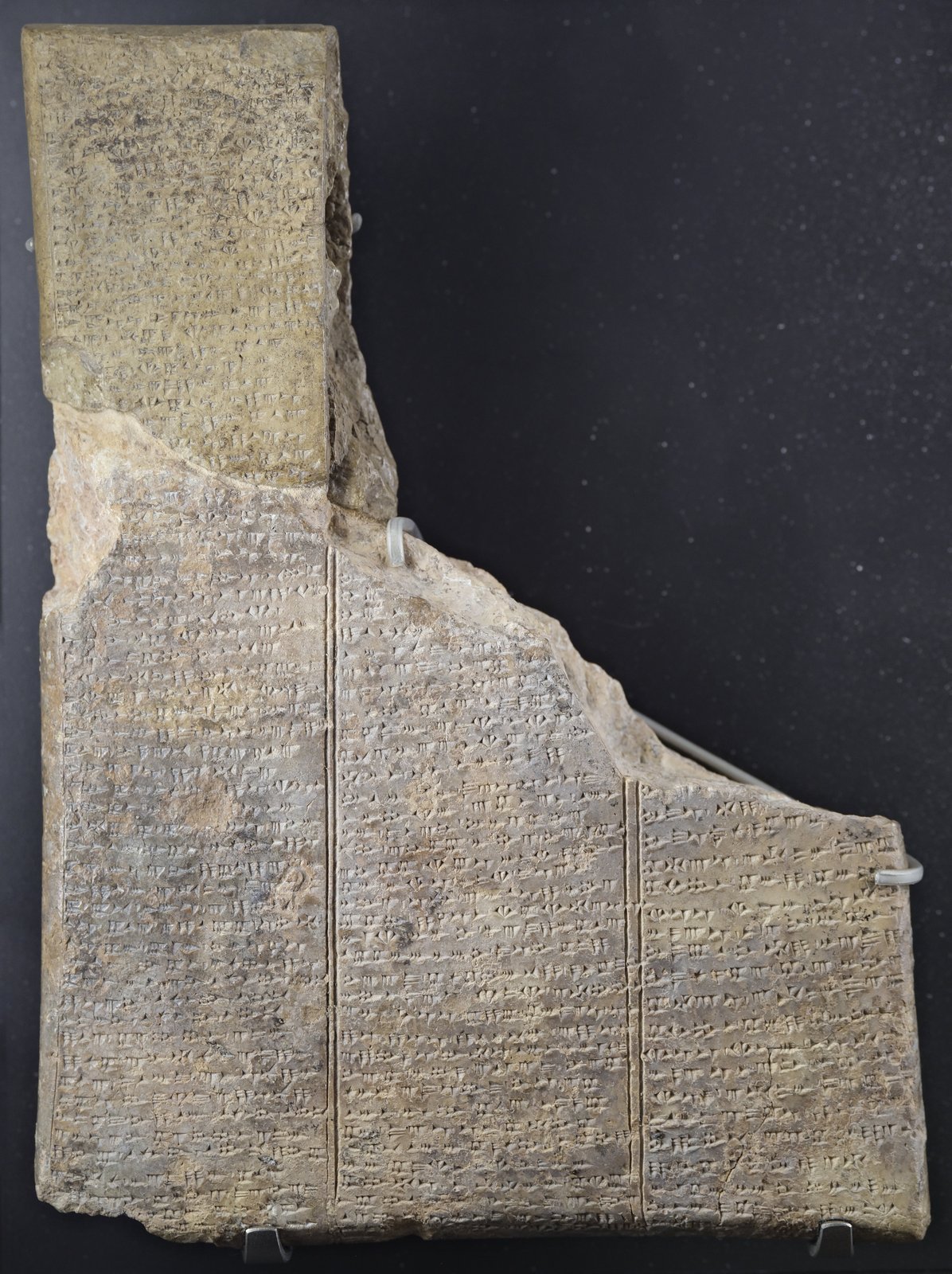
UgaritUgaritAncient city and kingdom at Ras Shamra on the Syrian coast, flourishing between the fourteenth and early twelfth centuries BCE and preserving multilingual archives.Glossary · Click to read the explanation, at Ras Shamra on the Syrian coast, flourished between the fourteenth and early twelfth centuries BCE. Its scribes wrote the local language, UgariticUgaritic languageAncient Semitic language preserved in Ugarit’s tablets on the Syrian coast, from the fourteenth–twelfth centuries BCE, written in a cuneiform alphabet.Glossary · Click to read the explanation, in a cuneiformCuneiformWriting with wedge-shaped signs, developed from Mesopotamian recording traditions and used for several languages from the third millennium BCE.Glossary · Click to read the explanation alphabet. Three long poems survive from its archives: the Baal CycleBaal CycleA group of Late Bronze Age Ugaritic religious texts recounting Baal’s conflicts, relationships with the gods and the building of his palace.Glossary · Click to read the explanation, the Tale of KirtaTale of KirtaUgaritic poetic narrative in three tablets about King Kirta, his family and a vow; KTU1.16 names Ilimilku, without proving he invented all its traditions.Glossary · Click to read the explanation and the Tale of AqhatTale of AqhatUgaritic poetic narrative in three tablets about Aqhat, Danel’s son; attribution to Ilimilku relies on comparison, with his name restored in a damaged colophon.Glossary · Click to read the explanation. All three are associated with the scribe IlimilkuIlimilkuUgaritic scribe associated with the Baal Cycle, Kirta and Aqhat; handwriting and colophons aid attribution. His work alone does not date the traditions’ origins.Glossary · Click to read the explanation, although copying a tablet is not the same as inventing the story it contains. Modern editions number the tablets in the KTUKTU: Ugaritic Text ReferencesAbbreviation for a modern edition of alphabetic cuneiform texts. Its text references can be cross-identified with find numbers such as RS or RIH; they are not dates.Glossary · Click to read the explanation system, and the references below follow it.
The counting formula is simple. The poet does not say "for six days". He counts in pairs: a day and a second, a third and a fourth, a fifth and a sixth. The line that opens the seventh day breaks the rhythm, and the turn in the story falls there. Scholars call this the seven-day unit. Samuel E. Loewenstamm gave it its classic study in 1965, and later studies traced counting formulae for the passing of time in AkkadianAkkadianAn ancient East Semitic language written in cuneiform from the third millennium BCE; its varieties include Babylonian and Assyrian, and it served in international diplomacy.Glossary · Click to read the explanation epic and elsewhere in Ugaritic narrative. [1]
Baal's palace: a fire for six days
In the Baal Cycle, BaalBaalUgaritic storm god and warrior king who defeats Yamm, builds his palace with El’s consent and confronts Mot. References to El and Dagan as fathers do not define a single genealogy.Glossary · Click to read the explanation, the storm god, finally receives permission to build a palace. The divine craftsman Kothar-wa-HasisKothar-wa-HasisUgaritic divine craftsman who makes Baal’s weapons, builds his palace and proposes its window; also associated with Aqhat’s bow. No securely identified ancient portrait.Glossary · Click to read the explanation builds it with cedar from Lebanon and Siryon. Then a fire is lit inside the house. It blazes for a day and a second, a third and a fourth, a fifth and a sixth. On the seventh day the fire leaves the house, and the silver has turned into plates and the gold into bricks. Baal rejoices that his house of silver and his palace of gold are built. [2]
The passage is in KTU 1.4 VI. In the standard edition by Mark S. Smith and Wayne T. Pitard, this column is divided into the building of the palace (lines 16–38) and the banquet that celebrates it (lines 38–59). At the banquet Baal invites the gods, among them the seventy children of AthiratAthiratA prominent goddess commonly understood as El’s consort in Ugaritic texts; she bears the progenitress epithet and intercedes for Baal’s palace.Glossary · Click to read the explanation; the archive's study of El at Ugarit discusses that number separately. [3]
The six days of fire are poetry about divine building, not a recipe for ancient metalwork. The seventh day marks completion: the work is finished, the metals are transformed, and the feast can begin.
Kirta: two sevens on the road to Udum
The Tale of Kirta opens with a king who has lost his wife and all his children. In a dream the god ElElEl is a senior deity in Late Bronze Age Ugaritic texts, portrayed as father of the divine family and a council authority, alongside his consort Athirat. This entry does not cover every linguistic use of El.Glossary · Click to read the explanation tells him how to win a new bride: gather a vast army, march to the city of Udum, and besiege it. El counts the march in the same way:
Source: KTU 1.14 III 2–4, from the transliteration printed by Shirly Natan-Yulzary (after the third edition of KTU); a literal rendering made for this archive, following the sense of Edward L. Greenstein's translation. [4]
On the seventh day Kirta is to reach Udum and raid its outlying villages. Then comes a second count. He must wait a day and a second, a third and a fourth, a fifth and a sixth, without shooting a single arrow into the city. At sunrise on the seventh, King Pabuli of Udum will be unable to sleep for the noise of his animals and will send messengers to Kirta. Natan-Yulzary, whose reading builds on the translation by Edward L. GreensteinEdward L. GreensteinEdward L. Greenstein is a Hebrew Bible scholar and professor emeritus in Bar-Ilan University’s Bible Department.Glossary · Click to read the explanation, calls this a double use of the seven-day pattern. [5]
The pattern also lets the poet surprise the audience. When the poem repeats El's instructions as Kirta carries them out, it departs from them. On the third day of the march Kirta stops at a shrine of Athirat (Asherah in Natan-Yulzary's terms) and makes a vow, the vow he later fails to keep. Natan-Yulzary argues that this break in the expected sequence warns the audience of his coming misfortune. On the seventh day of the siege the poem also adds a scene, badly damaged, in which Pabuli calls to his wife; she reads it as a reminder of the family that Kirta lacks. [6]
Seven recurs elsewhere in the poem. The account of Kirta's lost offspring ends with a seventh part, his new children come in a pattern of seven and eight, and, when Kirta falls ill, El asks the gods seven times who will cure him. Natan-Yulzary reads the seven-day pattern in Kirta as a way of expressing the passage of time, with the climactic seventh day signalling importance and completeness. [7]
Danel: six days of offerings, then a turning point
The Tale of Aqhat begins with Danel, a respected patriarch who has no son. In KTU 1.17 I he gives food to the gods and drink to the holy ones and lies down, and the poem counts the days in pairs again: a day and a second, a third and a fourth, a fifth and a sixth. On the seventh day Baal draws near and pleads with El on Danel's behalf, asking him to bless Danel with a son. El grants the blessing. [8]
Several scholars describe this scene as an incubation, a rite in which a person sleeps in a holy place hoping for a divine answer. Marcin Majewski is cautious: he describes a ritualRitualAn organised or distinguished practice meaningful to a community; it may leave traces, but its form alone does not reveal an associated doctrine.Glossary · Click to read the explanation carried out in the manner of an incubation, most likely at a shrine. [9] Eric McDonnell calls it incubation outright and notes that the list of six duties of an ideal son, repeated four times in this episode, mirrors the six days of Danel's feast for the gods. That is his reading of the poem's design, not something the text states. [10]
The pattern returns twice more in the same tablet. In KTU 1.17 II, when Danel comes home, the Kotharat arrive, goddesses whom the scene links with conception and birth, called daughters of Hilal and swallows. Danel slaughters an ox and feeds them for six counted days; on the seventh day they leave his house, and he begins to count the months of his wife's pregnancy. In the damaged opening of KTU 1.17 V, the seventh day again marks a turn: Danel sits at the city gate, judging the cases of the widow and the orphan, and sees Kothar-wa-Hasis coming with a bow, the gift on which the rest of the story turns. [11]
Seven years: the same habit on a longer scale
The poems also count in years. In KTU 1.6 V, after Baal has struck down Athirat's sons and taken his throne again, time passes in a rising series of days, months and years, and in the seventh year MotMotGod of death in the Baal Cycle; an adversary who returns even after a violent attack.Glossary · Click to read the explanation, the god of death, comes back to confront him. In Kirta, seven years pass before Athirat remembers the vow Kirta has not fulfilled (KTU 1.15 III). In the Tale of Aqhat, mourning women weep for the murdered Aqhat for seven years (KTU 1.19 IV). [12]
Mark S. Smith surveys these seven-year periods and concludes that they serve a literary purpose, often a long and indefinite span that marks a turning point in the life of a family, human or divine. He also notes that ritual texts from Ras Shamra prescribe sevenfold actions, such as offerings and processions performed seven times, and suggests that seven may have marked completion or fullness in ritual as in story. [13]
What scholars have made of the pattern
Some scholars have looked for a calendar behind these numbers. Cyrus H. Gordon in 1949 read several Ugaritic seven-year periods as a seven-year "sabbatical" cycle of famine and plenty. As Smith reports, de Moor criticized that theory, and Dijkstra proposed an astronomical explanation instead, which Smith in turn finds built on undemonstrated assumptions. The calendrical readings remain unproven; the literary function of the numbers is where scholars broadly agree. [13]
Loewenstamm's 1965 article in the Israel Exploration Journal remains the starting point for the seven-day unit in Ugaritic epic, and Gordon returned to the subject in a short article, "The Seventh Day", in Ugarit-Forschungen 11 (1979). This study cites both from their bibliographic records; their full arguments were not read for it. [14]
What the pattern shows, and what it does not
The passages show a confirmed literary convention. In three poems, and in more than one tablet of the Tale of Aqhat, a six-day count in pairs leads to a decisive seventh day. The convention builds suspense: listeners know that something will happen on the seventh day, and a poet can play with that expectation, as the Kirta poet does when the hero leaves the expected route.
The passages do not show a weekly Sabbath at Ugarit. Each count measures a single event: a fire, a march, a siege, a visit. None of these passages speaks of ceasing work, of rest for a household, or of a day that returns every week. The Hebrew Sabbath, by contrast, is a seven-day cycle that runs independently of the month and is tied in its commandments to rest for people and animals, as the archive's entry on the SabbathSabbath, the weekly rest daySacred seventh day in Jewish traditions, linked by commandments to household rest, creation and liberation.Glossary · Click to read the explanation and its study of the Sabbath and Babylonian šapattu describe. Any link between the Ugaritic literary seventh day and the biblical day of rest would have to be argued from other evidence; on the evidence read here it is unproven.
Reading Ugaritic sevens beside the Hebrew Bible
Biblical narrative also builds to a seventh day. The creation account in the Book of GenesisBook of GenesisHebrew book of the Torah containing Noah’s flood, survival offering and covenant with living creatures.Glossary · Click to read the explanation ends: "And on the seventh day God finished His work which He had made; and He rested on the seventh day from all His work which He had made" (Gen 2:2). At SinaiSinai: peninsula and biblical mountainSinai is a peninsula in eastern Egypt; in the Torah the name also denotes the mountain of revelation to MosesGlossary · Click to read the explanation, "the cloud covered it six days; and the seventh day He called unto MosesMosesCentral figure in Exodus, Torah traditions and the Qur’an; childhood accounts differ in detail.Glossary · Click to read the explanation out of the midst of the cloud" (Exod 24:16). At Jericho, seven priests carry seven horns, and on the seventh day the people go round the city seven times (Josh 6:4, 15). [15]
Natan-Yulzary compares the seven-day siege of Udum with the siege of Jericho and finds that the differences matter more than the shared outline. Kirta seeks a wife and an heir and is forbidden to attack the city; in Joshua the seven days are a procession with the Ark, and the walls fall. She judges a direct literary link between the two stories unproven and explains the shared features as part of "a shared pool of motifs, patterns and modes of expression" common to biblical and Ugaritic literature. [16]
Each text gives the seventh day its own meaning. In the Ugaritic poems it completes an action. In Genesis it is the day that God blessed and hallowed (Gen 2:3), a meaning that believing readers receive within their own scripture. A shared way of counting is evidence of a common literary culture in the region; it is not, by itself, evidence of borrowing in either direction, as the archive's study Resemblance Does Not Establish Borrowing explains. How these traditions relate remains debated, and this study leaves the question open.
References and notes
- Samuel E. Loewenstamm, "The Seven-Day Unit in Ugaritic Epic Literature", Israel Exploration Journal 15 (1965), pp. 121–133; with the later studies listed by Shirly Natan-Yulzary, JANES 35 (2021), p. 107 n. 82 (D. R. Freedman, "Counting Formulae in the Akkadian Epics", JANES 3, 1970–71; K. T. Aitken, "Formulaic Patterns for the Passing of Time in Ugaritic Narrative", UF 19, 1987) Loewenstamm: bibliographic record only (Old Testament Abstracts / KeiBi, Tübingen); the article itself was not read. Natan-Yulzary, p. 107 n. 82, read for the later studies. Return to the text ↑
- KTU 1.4 VI, English reading text of the Baal Cycle on intertextual.bible ("KTU: Cuneiform Texts from Ugarit"; the translator is not named on the page) KTU 1.4 VI read in full: the window dispute, the cedar, the fire counted in pairs of days to the seventh, silver plates and gold bricks, the banquet Return to the text ↑
- Mark S. Smith and Wayne T. Pitard, The Ugaritic Baal Cycle, vol. II: Introduction with Text, Translation and Commentary of KTU/CAT 1.3–1.4, Leiden and Boston: Brill, 2009 Table of contents only: CAT 1.4 VI, "Lines 16–38: The Construction of the Palace" (p. 610) and "Lines 38–59: The Banquet Celebrating Baal's Palace" (p. 625). The translation volume itself was not reachable; the invitation of the guests at 1.4 VI 44–46 was checked in M. S. Smith 2006, p. 32 (note 13). Return to the text ↑
- Shirly Natan-Yulzary, "Reading Ugaritic Narrative-Poetry: The Epic Description of Kirta's Expedition to Udum in KTU 1.14", Journal of the Ancient Near Eastern Society 35 (2021), pp. 82–120 pp. 105–106 with n. 80: transliteration of KTU 1.14 iii 2–21 (after KTU³ pp. 39–41) and English translation based on E. L. Greenstein in S. B. Parker (ed.), Ugaritic Narrative Poetry (1997), pp. 15–16 Return to the text ↑
- Shirly Natan-Yulzary, "Reading Ugaritic Narrative-Poetry: The Epic Description of Kirta's Expedition to Udum in KTU 1.14", JANES 35 (2021), pp. 82–120 p. 94 (a seven-day march and a seven-day siege, KTU 1.14 iii 2–4, 10–15) and pp. 106–108 (the double use of the seven-day pattern) Return to the text ↑
- Shirly Natan-Yulzary, "Reading Ugaritic Narrative-Poetry: The Epic Description of Kirta's Expedition to Udum in KTU 1.14", JANES 35 (2021), pp. 82–120 pp. 82–83 (the vow, KTU 1.14 iv 36–43) and pp. 109–110 (the stop at the shrine on the third day, KTU 1.14 iv 31–48; Pabuli and his wife on the seventh day, KTU 1.14 v 12–17) Return to the text ↑
- Shirly Natan-Yulzary, "Reading Ugaritic Narrative-Poetry: The Epic Description of Kirta's Expedition to Udum in KTU 1.14", JANES 35 (2021), pp. 82–120 pp. 112–113 with nn. 92–93: sevens in Kirta (the seventh part, KTU 1.14 i 20; seven/eight children and years; El's sevenfold question) and the function of the pattern Return to the text ↑
- KTU 1.17 I, English reading text of the Tale of Aqhat on intertextual.bible (translator not named on the page) KTU 1.17 I read in full: Danel's rite counted in pairs of days, Baal's intercession on the seventh day, El's blessing Return to the text ↑
- Marcin Majewski, "Filial Duties in the Ugaritic Epic of Danilu and Aqhatu", Collectanea Theologica 93, no. 1 (2023), pp. 5–43 pp. 8–11: context of the list of filial duties, the incubation-like ritual and Baal's intercession (KTU 1.17 I 18–33) Return to the text ↑
- Eric D. McDonnell Jr., "Will Womankind Now Go Hunting? Constructions of Gender in the Aqhat Epic", Antiguo Oriente 19 (2021), pp. 41–64 pp. 45–47: incubation rites in KTU 1.17 i 1–15, the fourfold list of six duties, and the link to the six days of Danel's feast Return to the text ↑
- KTU 1.17 II and 1.17 V, English reading text of the Tale of Aqhat on intertextual.bible (translator not named on the page); with Mark S. Smith, The Rituals and Myths of the Feast of the Goodly Gods of KTU/CAT 1.23, Society of Biblical Literature, 2006 KTU 1.17 II (the Kotharat fed for six days, departing on the seventh) and the damaged opening of 1.17 V (the seventh day at the gate, Kothar's bow) read in full; Smith 2006, p. 104, for the counting of the months at 1.17 II 43–45 Return to the text ↑
- KTU 1.6 V, 1.15 III and 1.19 IV, English reading text on intertextual.bible (translator not named on the page); line references after Mark S. Smith 2006 KTU 1.6 V (the seventh year and Mot's return), 1.15 III ("in seven years" and Athirat's remembering the vow) and 1.19 IV (seven years of mourning) read; line references 1.6 V 8–10, 1.15 III 22 and 1.19 IV 15–18 as cited by Smith 2006, pp. 118–119 Return to the text ↑
- Mark S. Smith, The Rituals and Myths of the Feast of the Goodly Gods of KTU/CAT 1.23: Royal Constructions of Opposition, Intersection, Integration, and Domination, Resources for Biblical Study 51, Atlanta: Society of Biblical Literature, 2006 p. 50 (sevenfold actions in Ras Shamra ritual texts) and pp. 118–119 (seven-year periods in the Baal Cycle, Kirta and Aqhat; Gordon 1949 and its critics, de Moor and Dijkstra) Return to the text ↑
- Cyrus H. Gordon, "The Seventh Day (in Ugaritic and biblical literature)", Ugarit-Forschungen 11 (1979, published 1980), pp. 299–301; and Loewenstamm 1965 (note 1) Bibliographic records only (Old Testament Abstracts / KeiBi, Tübingen); neither article was read Return to the text ↑
- The Holy Scriptures according to the Masoretic Text, Jewish Publication Society, 1917 (Mechon Mamre online edition) Genesis 2:2–3; Exodus 24:16; Joshua 6:4, 6:15 (English text checked on the chapter pages) Return to the text ↑
- Shirly Natan-Yulzary, "Reading Ugaritic Narrative-Poetry: The Epic Description of Kirta's Expedition to Udum in KTU 1.14", JANES 35 (2021), pp. 82–120 pp. 110–114 with nn. 89–90: comparison of the siege of Udum with Joshua 6, and the conclusion that the parallels probably come from a shared pool of motifs Return to the text ↑
Suggest a correction · Suggest a source for this record
Cite this record
IL Archive, «Six Days, Then the Seventh: The Seven-Day Pattern in Ugaritic Epic», https://ilarchive.com/en/studies/seven-day-pattern-in-ugaritic-epic
Continue reading
Related readings