Entity · Deity
Kothar-wa-Hasis
A reference page linking a name, group, or concept to the materials that discuss it.
- Names
- Kothar-wa-Hasis · Kothar-wa-Khasis · kṯr w ḫss
- Region
- Ugarit (Ras Shamra), northern Levant; Late Bronze Age textual context
Ugaritic deity of craft and discernment: makes Baal’s weapons against Yamm, builds his palace and proposes its window; also associated with Aqhat’s bow, with the evidence distinguished from interpretation.
Estimated reading time: 6 min Published Last reviewed:
Share article

Video
The Baal Cycle: The Sea, a palace and the meeting with Death
The Sea, a palace and the meeting with Death. The whole story in three illustrated chapters, told from the ancient clay tablets; where the tablets are broken, the narration says so. Illustrations, narration voice and visual effects were created with AI tools by IL Archive; the text is a faithful retelling based on the ancient tablets.
The YouTube player loads only when you press play. Watch on YouTube
Text
Introduction
Who equips a victorious god and gives his royal dwelling its form? The Ugaritic Baal CycleBaal CycleA group of Late Bronze Age Ugaritic religious texts recounting Baal’s conflicts, relationships with the gods and the building of his palace.Glossary · Click to read the explanation assigns a conspicuous role to Kothar-wa-Hasis, a deity associated with technical skill and discerning counsel. He is more than a convenient assistant: he prepares the weapons of conflict, fashions the signs of kingship, and proposes an architectural feature linked to the storm god’s activity. This entry separates what the broken tablets actually say from scholarly interpretations and from what modern pictures cannot establish.[1]
Identity and the compound name
Kothar-wa-Hasis, also called simply Kothar, belongs to the religious literature of UgaritUgaritAncient city and kingdom at Ras Shamra on the Syrian coast, flourishing between the fourteenth and early twelfth centuries BCE and preserving multilingual archives.Glossary · Click to read the explanation on the Syrian coast in the Late Bronze AgeLate Bronze AgeAn archaeological period around 1600–1200 BCE in much of the Near East, with international diplomacy, exchange and religious diversity; its endpoints vary by region.Glossary · Click to read the explanation. The Ugaritic consonantal name is conventionally transcribed kṯr w ḫss and broadly understood as “Skilful and Wise” or “Adept and Perceptive.” This explains the compound name; it does not demonstrate that “Kothar” and “Hasis” must be two separate beings whenever they appear. A designation involving skillful hands is also found. Scholarly vocalizations remain reconstructions of a consonant-only writing system.[2]
Nor does the phonetic resemblance between Kothar and a name from a later language by itself prove identity or historical borrowing. He is one deity among other participants in an Ugaritic divine community, rather than a universal name for every artisan god.
What survives of the evidence?
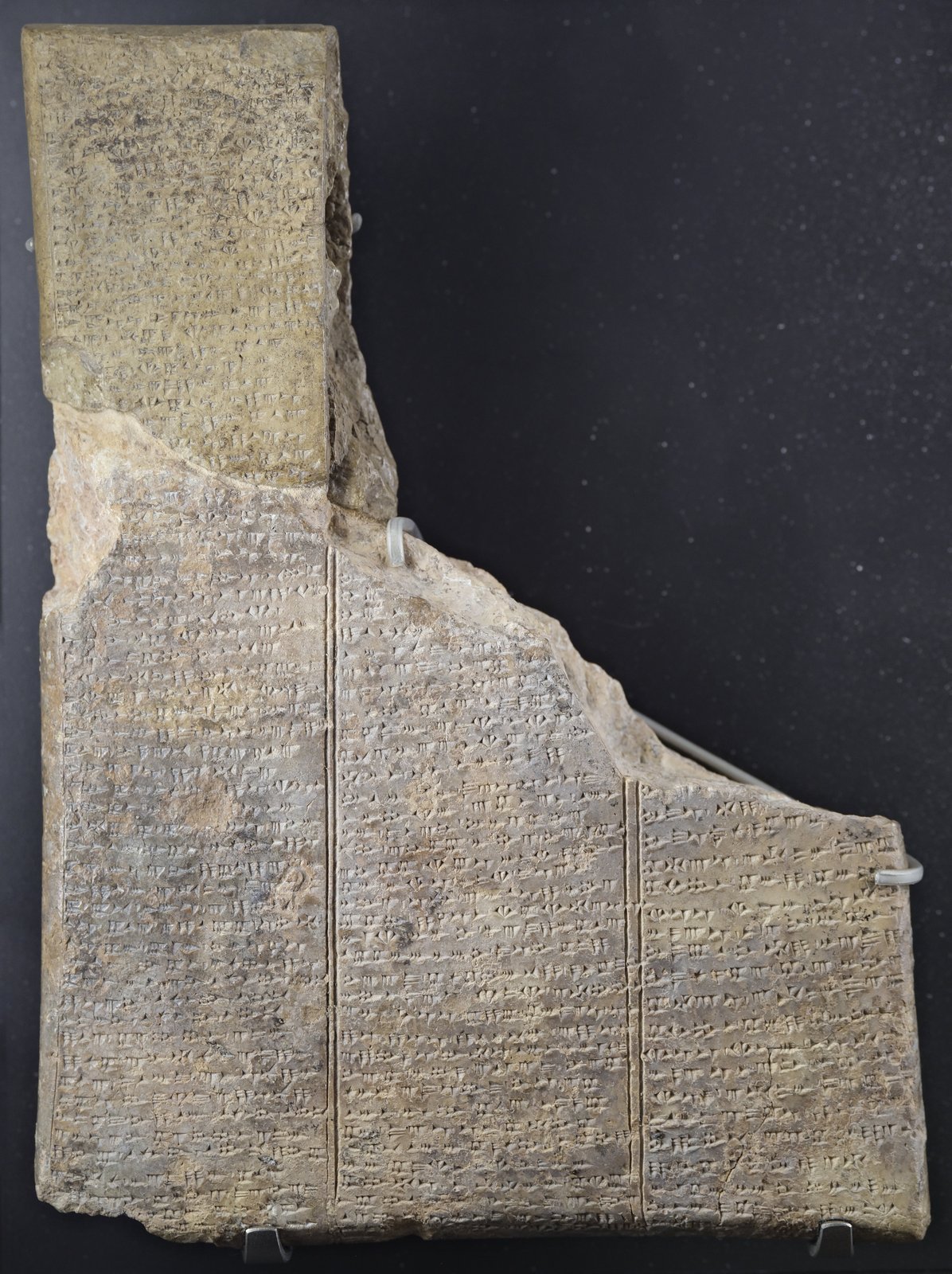
His principal episodes are preserved on clay tablets written in alphabetic Ugaritic cuneiformCuneiformWriting with wedge-shaped signs, developed from Mesopotamian recording traditions and used for several languages from the third millennium BCE.Glossary · Click to read the explanation: KTU 1.2, on the conflict with Yamm/RiverYam / NaharSea god in Ugaritic texts, associated with the name Nahar and portrayed in the Baal Cycle as Baal’s rival for authority among the gods.Glossary · Click to read the explanation, and KTU 1.3–1.4, on the royal palace. These are textual catalogue numbers, not necessarily the museum inventory numbers of individual objects. The Louvre records tablet AO 16640 / RS 3.346 and RS 3.367 under KTU 1.2; it must not be mistaken for the tablet containing the palace-window episode in KTU 1.4. The museum broadly dates it to the fourteenth–thirteenth centuries BCE; that does not date the invention of every mythic motif to the moment its surviving copy was made.[3]
Two weapons against the Sea
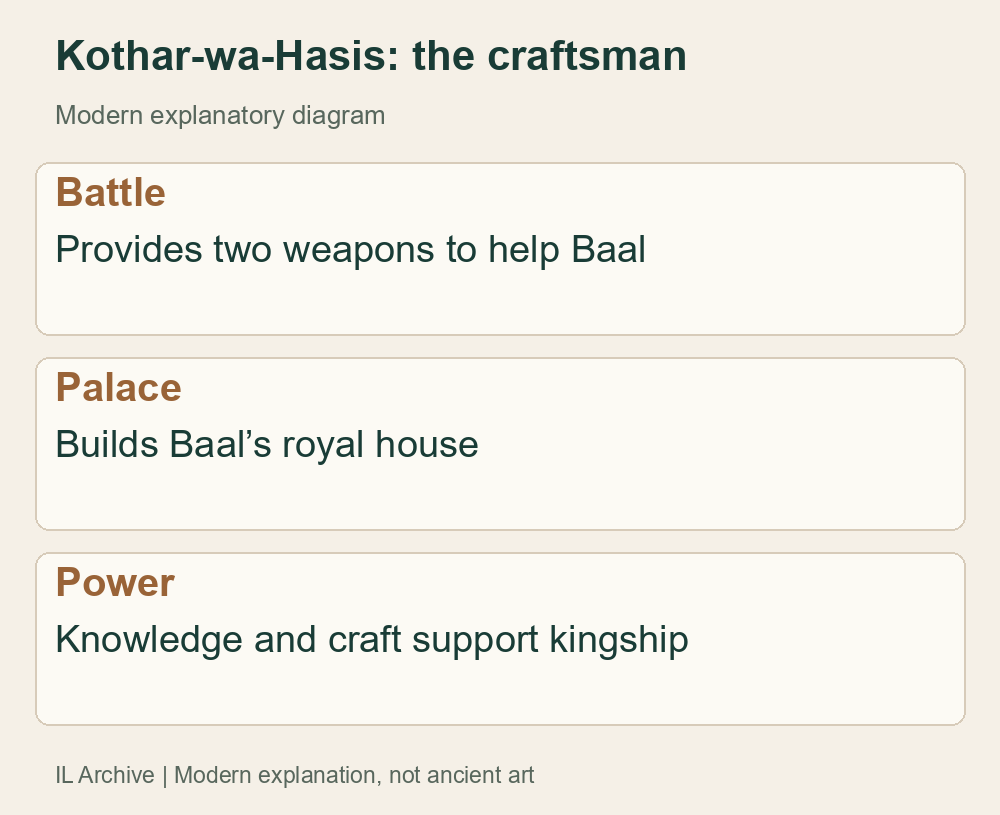
In the combat episode Kothar makes two weapons, often described as clubs, for BaalBaalUgaritic storm god and warrior king who defeats Yamm, builds his palace with El’s consent and confronts Mot. References to El and Dagan as fathers do not define a single genealogy.Glossary · Click to read the explanation, names them, and associates their names with their desired effect. Their names are variously romanized Yagrush and Ayyamur, names associated with driving away or expelling. The first blow does not bring Yamm down; the second weapon succeeds. Thus victory is not depicted simply as the storm god’s bodily strength: the maker’s expertise and effective speech help shape it. The passage supplies no securely recoverable archaeological design for either weapon.[4]
A distinction matters here between the story, which attributes action to named weapons, and an interpretation of that story as placing value on craft or efficacious words. The latter is reasonable, but it is not evidence for an excavated or historically used weapon.
Victory does not automatically bestow a palace
Even after victory, Baal still lacks a residence fitting the gods. AnatAnatAnat is an ancient Near Eastern goddess attested at Mari, Ugarit and in Egypt. In Ugaritic narratives she is a warrior, Baal’s ally and a mourner for him; her roles vary by tradition and context.Glossary · Click to read the explanation and AthiratAthiratA prominent goddess commonly understood as El’s consort in Ugaritic texts; she bears the progenitress epithet and intercedes for Baal’s palace.Glossary · Click to read the explanation figure in negotiations, while ElElEl is a senior deity in Late Bronze Age Ugaritic texts, portrayed as father of the divine family and a council authority, alongside his consort Athirat. This entry does not cover every linguistic use of El.Glossary · Click to read the explanation retains a decisive role in authorizing construction. Smith and Pitard interpret Baal’s presents to Athirat against Late Bronze Age diplomatic gift-giving, rather than treating them as an established instance of bribery. Kothar’s contribution also matters here: in KTU 1.4 I 20–43 he approaches the bellows with metalworking tools, casts silver and gold, and fashions costly furnishings—including a throne, table and gifts intended for Athirat. Craft helps make political reconciliation possible, not just fighting and palace building. Military success and recognized royal accommodation are closely connected stages, but they are not a single achievement performed by Kothar alone.[5]
The craftsman at Baal’s table
Following news of permission, KTU 1.4 V describes the gathering of precious materials and the summons to Kothar-wa-Hasis. He is offered food and seated at Baal’s right hand, a literary expression of status within the scene. Baal instructs him to build on the heights of Saphon, the mountain associated with his power in the Ugaritic tradition. The vast dimensions claimed for the palace belong to the rhetoric of divine kingship; they should not be turned into a measured plan of an excavated building.[6]
Fire, cedar, silver and gold
In KTU 1.4 VI, cedar from Lebanon and Siryan accompanies an extraordinary fire within the building. It lasts through six days and dies down on the seventh; silver is described as becoming plates and gold as bricks. This is a poetic account of divine construction, drawing on the language of building and metalworking, not a verified recipe for ancient temple construction or an archaeological report about a furnace. The palace is then celebrated at a feast involving other deities, marking recognition of Baal’s royal status.[7]
Disagreement over the window
Kothar proposes fitting a window or aperture in the palace. Baal refuses at first. The craftsman repeats the proposal and predicts that Baal will reconsider. The surviving lines that might explain Baal’s objection are badly damaged, mentioning Yamm and Baal’s daughters in an incomplete passage. It is therefore unwarranted to present as certain either that Mot would later enter through this window or that fear of Yamm’s revenge fully explains the refusal. Those are competing scholarly reconstructions, not an intact ancient statement.[8]
Architecture becomes a storm image
Once the palace stands, Baal agrees to open the window. The poem connects this opening with a break in the clouds from which the storm god utters his voice: thunder associated with the life-giving rains. Smith and Pitard interpret it as the climax of the palace episode and a display of Baal’s effective sovereignty over nature. Nothing here identifies an actual masonry opening in an excavated sanctuary, nor does the narrative explicitly say that the window brought about Baal’s later conflict with MotMotGod of death in the Baal Cycle; an adversary who returns even after a violent attack.Glossary · Click to read the explanation. The artisan’s proposal has become part of the divine function, not merely decoration.[8]
The bow in the Tale of Aqhat
Kothar’s literary role goes beyond the Baal Cycle. In the Tale of Aqhat (KTU 1.17) he is associated with a magnificent bow and arrows presented to Danel, Aqhat’s father; that gift becomes central to the story. Here craftsmanship affects the narrative through the transfer of a prized object rather than palace building or battle against Yamm. This makes “Baal’s personal craftsman” an overly narrow description. The episode was checked against the accessible opening of Delbert R. Hillers’s chapter; the whole chapter was not available for reading.[9]
Caphtor and Memphis: a craftsman’s geography
Passages in the Baal Cycle associate Kothar with distant places conventionally identified as Caphtor and Egyptian Memphis. Caphtor is often connected with CreteCreteGreek island in the eastern Mediterranean, associated in Hesiod with hiding the infant Zeus.Glossary · Click to read the explanation, although its precise identification is debated. Memphis, a centre of worship of the Egyptian artisan deity PtahPtahPtah is an Egyptian god associated with Memphis, craftsmanship and creationGlossary · Click to read the explanation, invites comparison; it does not automatically make Kothar and Ptah the same god. These distant locations show the broad Mediterranean horizons imagined in the text without proving an itinerary of real artisans or an exact route of transmission.[10]
The limits of material reconstruction
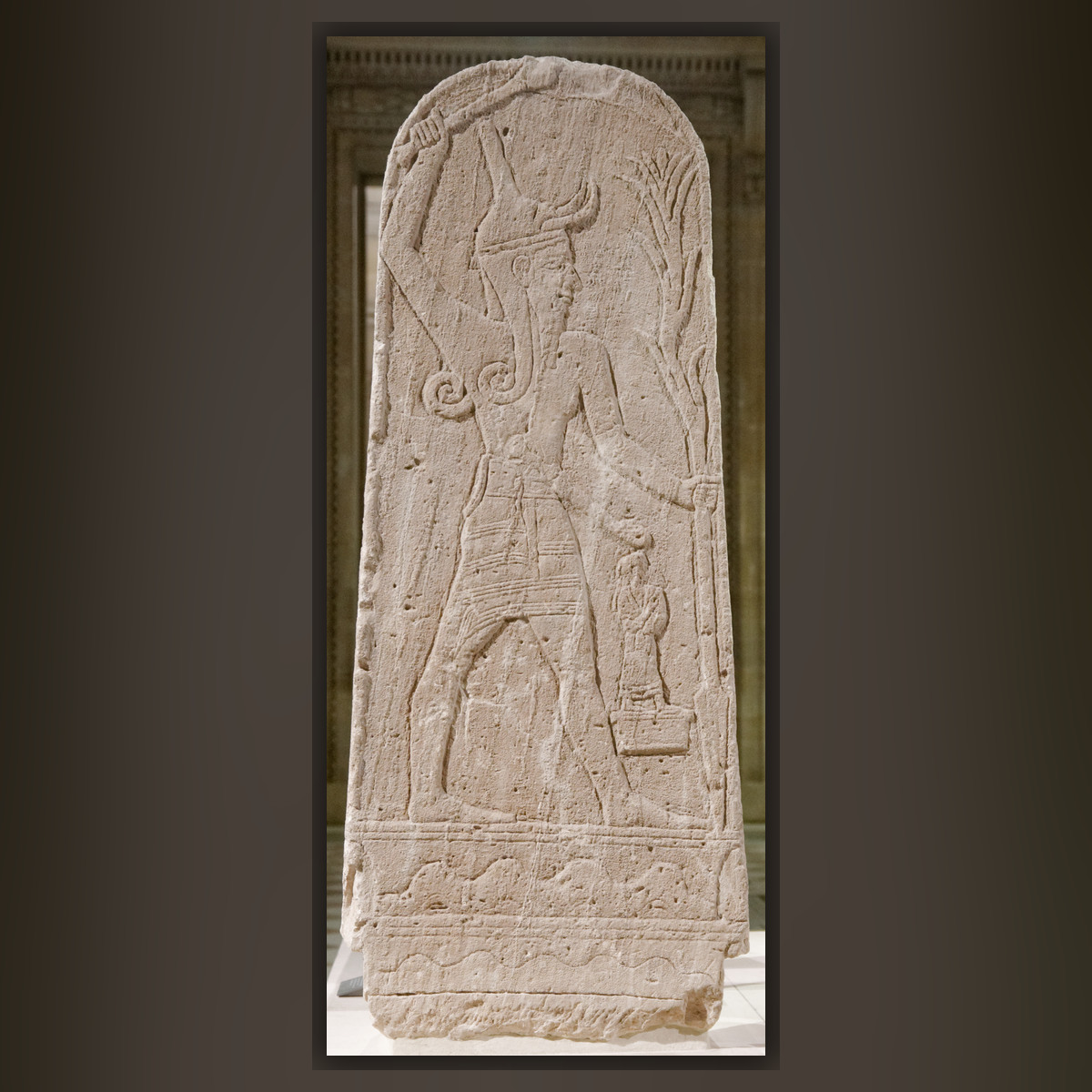
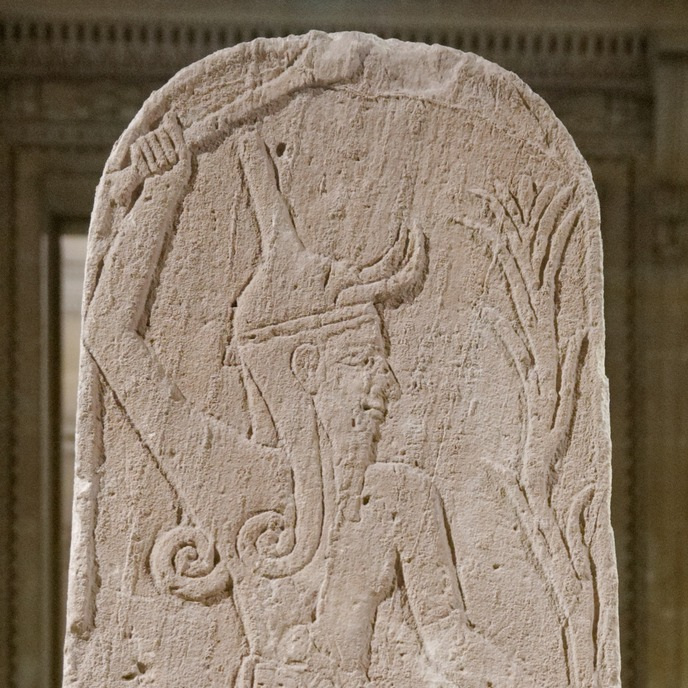
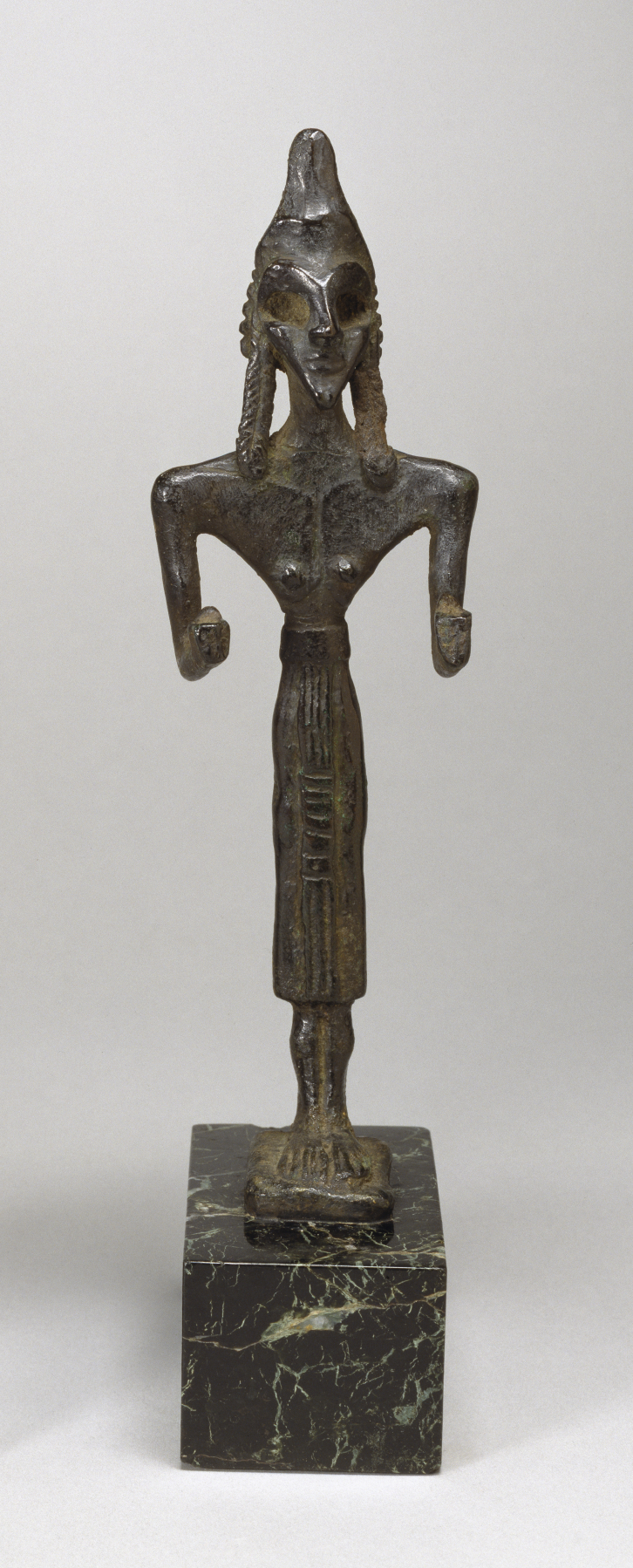
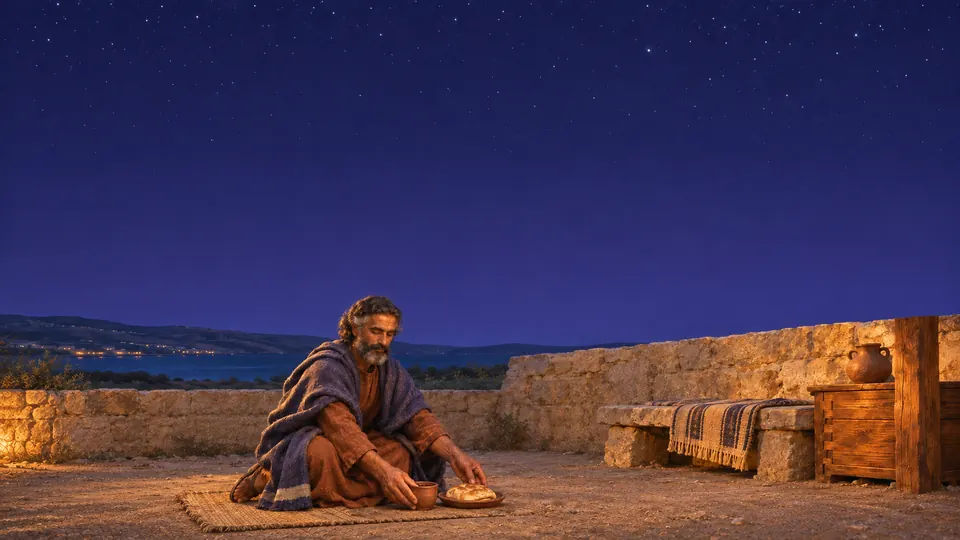
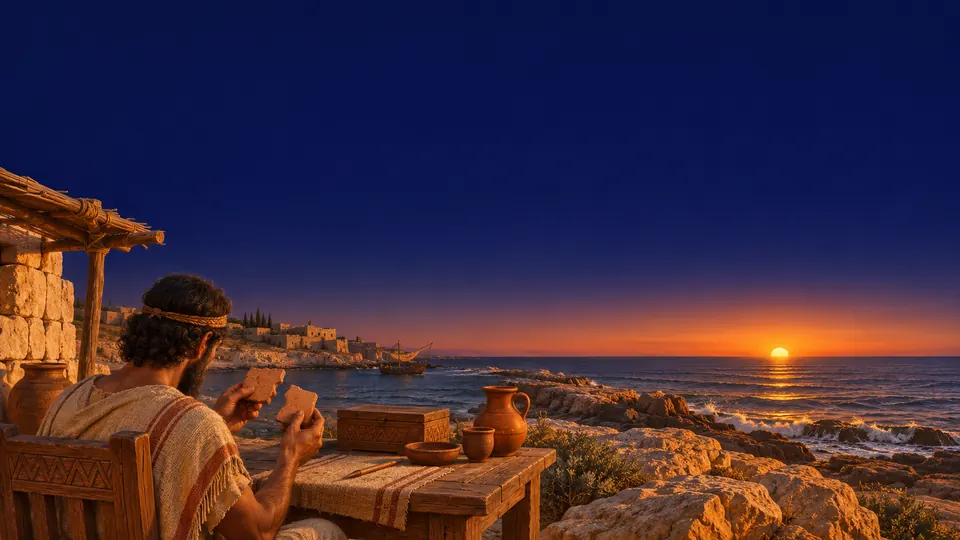
What survives is a combination of original tablets and modern editions and translations, not a securely identified statue of Kothar or recovered specimens of Yagrush and Ayyamur. Reconstructions can change as fragments are joined or readings reassessed; KTU, RS, and AO also refer to different cataloguing systems. The accompanying educational diagram remains explicitly modern. The separate cover is symbolic and must not be mistaken for a photograph of an ancient workshop or an authenticated reconstruction of Ugaritic divine architecture.[3]
What his role reveals
Kothar-wa-Hasis combines craftsmanship, knowledge and consequential speech. His weapons assist Baal, his architectural counsel makes the palace a site of thunderous self-manifestation, and the Aqhat bow extends the role beyond this cycle. That is a conclusion about a religious-literary character attested in Ugaritic texts, not evidence that these events took place as history. El’s authority and the negotiations involving Athirat remain essential to the palace narrative despite the craftsman’s prominent part.[1]
References and notes (10)
- Ira Spar (2009), “The Gods and Goddesses of Canaan,” The Metropolitan Museum of Art. Full museum essay read; introductory Ugarit section and passages on Baal, Yamm, El, Athirat, and the palace. Its seasonal interpretation is not treated as a consensus. Return to the text ↑
- Mark S. Smith and Wayne T. Pitard (2009), The Ugaritic Baal Cycle, vol. II: Introduction, Text, Translation and Commentary of KTU/CAT 1.3–1.4, Brill. Consulted in a hosted PDF: contents, printed introduction pp. 38–40, translation pp. 80–84, and selected commentary passages pp. 380–381, 601–604, 670–674; the entire book was not read. Return to the text ↑
- Louvre Museum, Collections: tablet AO 16640, excavation nos. RS 3.346 and RS 3.367, Baal Cycle KTU 1.2, 14th–13th centuries BCE. Direct collection record read: identifiers, object, findspot, date, KTU 1.2; no claim of independently deciphering the photographed signs. Return to the text ↑
- Mark S. Smith (1994), The Ugaritic Baal Cycle, vol. I: KTU 1.1–1.2, Brill; read alongside Ira Spar (2009) and Smith–Pitard (2009) cross-references to KTU 1.2 IV. Volume-I publisher synopsis and bibliographic scope only; not a full-text reading. Checked the full Spar essay and passages in vol. II referencing KTU 1.2 IV; not a fresh line-by-line Ugaritic collation. Return to the text ↑
- Smith and Pitard (2009), vol. II, introduction to the building narrative of the Baal Cycle. Printed introduction pp. 38–40 and translation pp. 76–79 (notably KTU 1.4 I 20–43); checked the gift-forging episode and diplomatic protocol, without generalizing to all Bronze Age societies. Return to the text ↑
- Smith and Pitard (2009), vol. II, translation of KTU 1.4 V, especially lines 12–65. Translation, printed pp. 81–82 (PDF pp. 121–122), materials, Kothar’s summons and seating, and the Saphon palace order. Return to the text ↑
- Smith and Pitard (2009), vol. II, translation of KTU 1.4 VI, lines 16–58. Translation on printed pp. 83–84 read: cedar, fire, seven-day sequence, metals, feast; not evidence of an excavated building procedure. Return to the text ↑
- Smith and Pitard (2009), vol. II, introduction p. 40, translation of KTU 1.4 V–VII, and selected window commentary. Introduction p. 40; translation pp. 82–85; selected commentary pp. 601–604 and 670–674. Checked damaged 1.4 VI 10–13 and the thunder interpretation, not Baal’s precise motivation. Return to the text ↑
- Delbert R. Hillers (reprinted 2015), “The Bow of Aqhat: The Meaning of a Mythological Theme,” in Poets Before Homer, Penn State University Press, JSTOR listing. JSTOR book and chapter metadata plus the accessible opening passage describing Kothar’s bow and arrows for Danel; not the full chapter or a Ugaritic collation. Return to the text ↑
- Smith and Pitard (2009), vol. II, comments on Kothar’s geographical epithets in KTU 1.3 VI, Caphtor and Memphis. Selected commentary, printed pp. 379–381 (PDF c. 419–421); geographical identification and its uncertainty, not proof of identity with Ptah. Return to the text ↑
Suggest a correction · Suggest a source for this record
Cite this record
IL Archive, «Kothar-wa-Hasis», https://ilarchive.com/en/entities/kothar-wa-hasis
Continue reading
Related readings