Study
El and Baal
An extended study of a topic, with evidence and references.
The old father and the young god: battle, palace, mourning, Athtar’s throne and Shapshu’s warning reveal overlapping authority without a narrative of El’s deposition.
Share article
Text
The old father and the young god
On a first reading of the Ugaritic Baal CycleBaal CycleA group of Late Bronze Age Ugaritic religious texts recounting Baal’s conflicts, relationships with the gods and the building of his palace.Glossary · Click to read the explanation, BaalBaalStorm god and protagonist of Ugarit’s Baal Cycle; exercises active kingship while El retains importance and authorizes the palace.Glossary · Click to read the explanation can seem to be the supreme god. He fights the Sea, obtains a palace, unleashes the storm and confronts MotMotGod of death in the Baal Cycle; an adversary who returns even after a violent attack.Glossary · Click to read the explanation. ElEl at UgaritA deity prominent in West Semitic traditions, especially as head of the divine family in Ugaritic texts.Glossary · Click to read the explanation appears at his dwelling, an elder whom other gods consult and whose approval they seek. An appealing explanation follows: the old father lost his authority and the young god replaced him.
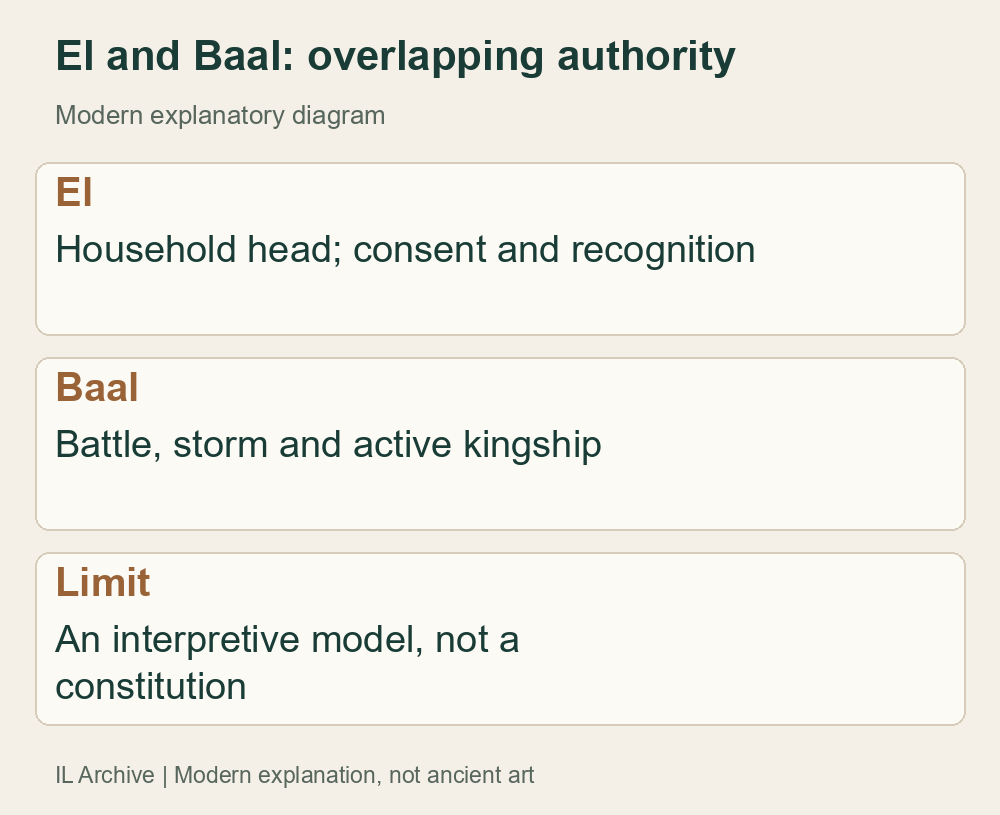
The texts do not narrate that revolution. BaalBaalStorm god and protagonist of Ugarit’s Baal Cycle; exercises active kingship while El retains importance and authorizes the palace.Glossary · Click to read the explanation rises to kingship without killing El or taking his throne. They are better understood as presenting two overlapping forms of authority: the father who heads the divine household, and the warrior king who acts and wins. This is an interpretive model supported by the texts, not a surviving constitution defining every god’s responsibilities in every situation.[1]
One world, different roles
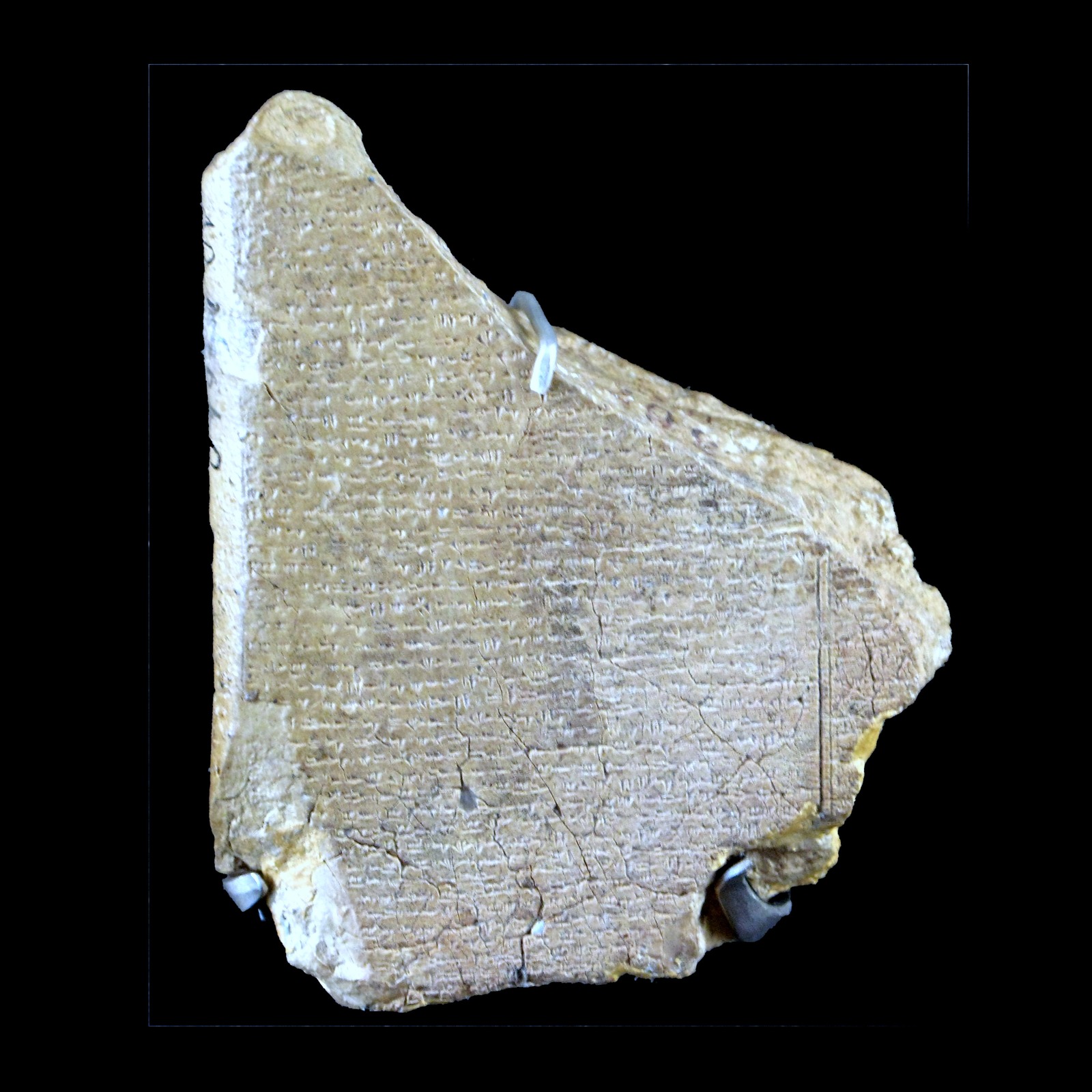
The texts come from Late Bronze AgeLate Bronze AgeAn archaeological period conventionally around 1600–1200 BCE in much of the Near East, with regional variation.Glossary · Click to read the explanation UgaritUgaritAncient city and kingdom at Ras Shamra on the Syrian coast, flourishing between the fourteenth and early twelfth centuries BCE and preserving multilingual archives.Glossary · Click to read the explanation, modern Ras Shamra near LatakiaLatakiaA coastal city in Syria, south of ancient Ugarit at Ras Shamra.Glossary · Click to read the explanation. The cycle comprises six tablets conventionally referenced as KTUKTU: Ugaritic Text ReferencesAbbreviation for a modern scholarly corpus of alphabetic cuneiform texts; its numbers are references, not dates.Glossary · Click to read the explanation 1.1–1.6. These numbers belong to a modern scholarly corpus, not a dating system. The surviving stories are incomplete: breaks, gaps and reading difficulties sometimes prevent confident connections between events.[2][3]
They are also mythological literature, not a survey of every inhabitant’s beliefs. They reveal portrayals of authority, conflict and divine relationships, but cannot alone establish which god every family preferred or how prominent each was in every ritualRitualAn organised or distinguished practice meaningful to a community; it may leave traces, but its form alone does not reveal an associated doctrine.Glossary · Click to read the explanation. Baal’s centrality in the story does not automatically make him the sole head of the pantheonPantheonThe set of deities associated with a religious tradition, including their roles and relationships.Glossary · Click to read the explanation.
El: father, bull and king
El’s portrayal combines fatherhood, kingship and seniority. His titles and the language of the divine household make him the head of the family to which the gods belong. Bull El is a figure of standing and generative power, not an elder whose age necessarily means weakness.[1][4]
In the palace episode his wisdom is associated with gray hair and beard, and he is addressed as father and king. Yet divine fatherhood is not always a genealogy in the modern sense: it can also express allegiance, rank and membership of a household. The paternal head must therefore be distinguished from the claim that every council member is his immediate biological child.[1][2]
Baal: kingship achieved through action
Baal, the storm god associated with Haddu, embodies thunder, rain and fighting strength. His seat is associated with Mount Saphon, usually identified with Jebel al-Aqra north of Ugarit. In the cycle, kingship is more than a title supplied by the narrator: it involves confrontation, victory, obtaining a palace and defending an acquired position.[7]
Calling him the young god is useful beside the elderly El, but gives no measurable age or proof that his worship was new. Here the phrase describes the narrative’s active power. The contrast between elder and warrior should not become a chronology in which one deity necessarily originated after the other.
The first opponent is Yam, not El
The first major surviving struggle for kingship is Baal’s conflict with YamYam / NaharSea god and Baal’s opponent for kingship, also associated with Nahar, River.Glossary · Click to read the explanation, the Sea, also associated with the name Nahar, River. Yam’s messengers make demands threatening Baal’s position within the divine community. Readings of the opening passages place El on the side granting Yam support or recognition, while Baal resists the demand for submission.[7]
This is less harmonious than a kindly father surrounded by agreeable children. Competition, pressure and conflicting interests exist. But Baal’s fighting opponent in this episode is Yam. It does not tell of Baal entering El’s dwelling to depose him; damage to the beginning also counsels against reconstructing El’s entire policy from what remains.
Kothar-wa-Hasis: Baal does not win alone
Kothar-wa-HasisKothar-wa-HasisCraftsman god in the Baal Cycle, supplying weapons and building the palace.Glossary · Click to read the explanation, the craftsman god, participates in the battle. He supplies two weapons that help Baal defeat Yam, and later appears in the building of the palace. The warrior king thus depends on skill and knowledge supplied by another god, as he depends on mediationIntercessionMediation subject in the cited Quranic texts to permission and approval, not divine independence.Glossary · Click to read the explanation and permission concerning his palace.[7]
The detail broadens the meaning of power. Baal is the hero, but the world does not operate through one character alone. Warrior, craftsman, intermediaries and household head each contribute. Victory over the Sea opens the way to Baal’s kingship without demonstrating that all divine authority has passed to him.
Why does the victor need a palace?
After the battle comes the problem of a house. Baal lacks a palace fitting his position and compares his situation with gods who have houses. The palace signifies recognized kingship and provides a place from which to display sovereignty; the request is therefore more than a need for shelter.[2][3]
Smith and Pitard describe KTU 1.3–1.4 as the story of securing El’s permission for a palace and constructing it. Battle has produced victory, but arranging the victor’s place within the order requires another process. The palace episode is consequently among the clearest indications of El’s continuing importance during Baal’s rise.[3]
Anat puts pressure on the father
AnatAnatAn active and violent goddess in Ugaritic literature; pressures El over Baal’s palace and addresses him with paternal and wisdom language.Glossary · Click to read the explanation does not always address El gently. In pursuing Baal’s house, she threatens to stain his gray head and beard with blood. This violent scene is difficult to reconcile with an order in which nobody dares challenge its head.[2]
The threat does not make El powerless. The need to change his position reveals that it matters. Moreover, the subsequent dialogue survives only partly, and translations and restorations vary. His authority faces pressure and negotiation; the verbal violence does not itself demonstrate his political collapse within the myth.
Athirat mediates and El agrees
AthiratAthiratA high-ranking goddess commonly understood as El’s consort in Ugaritic texts; associated with the progenitress epithet and the palace intercession.Glossary · Click to read the explanation then uses a different kind of mediation. She speaks to El, employs the language of wisdom and standing, and gains his agreement. The news reaches Baal, and Kothar-wa-Hasis begins constructing the palace.[2][3]
The sequence suggests a relative distinction between winning and granting recognition. It is not absolute: the tablets are not a legal code. Yet it explains why the warrior Baal cannot act in this episode as though El did not exist. The household head does not perform every action, but his consent remains consequential.
Did Baal become king instead of El?
The texts use royal language for both figures. Neither title must be a mistake: divine kingship need not follow a modern rule assigning it to one individual within one jurisdiction. El can represent the senior paternal head while Baal embodies active kingship in warfare and storm.[1]
This reading helps bring the evidence together, but does not make the gods equal in every situation or remove their tensions. Baal gains a real position, and El retains a real position. Treating either as a merely honorary name for the other fails to explain their different actions and relationships.
Where did the “retired El” reading come from?
The contrast between elder and warrior led some scholars to portray El as an inactive god retreating before Baal. Patrick Miller introduced his 1967 study “El the Warrior” by describing this widespread assumption. Its attractions include El’s limited fighting, distant dwelling and exposure to Anat’s threats.[6]
But the story does not equate authority with combat. Permission, fatherhood, council membership and influence over kingship give El more than an empty title. Lloyd also explicitly discusses the limits of reading Anat’s threat as evidence of his fading power. Absence from most battles is insufficient to establish absence from the divine order.[1][2]
Another crisis: Mot
After the palace, MotMotGod of death in the Baal Cycle; an adversary who returns even after a violent attack.Glossary · Click to read the explanation, the god of death, becomes the principal adversary. The means used to defeat Yam cannot simply resolve this crisis. Baal’s power disappears, his death is announced, and his absence becomes a problem for the gods and the world dependent on rain and fertility.[2][7]
The danger is different. The Sea conflict displays the ability to defeat a rival for kingship; the Mot conflict puts life’s continuation and Baal’s own standing at risk. Yet the story does not announce El’s end or an empty palace belonging to him. The announced absence is Baal’s.
El descends from his throne to mourn
KTU 1.5 VI describes El hearing of Baal’s death, descending from throne and footstool to the ground, putting dust on his head and mourning. The statement “El never leaves his throne” is therefore inaccurate if taken literally. He does descend, out of grief, rather than because Baal deposed him.[2]
The scene presents a father and household head affected by an internal crisis. Grief does not prove the absence of earlier disputes: rivalry and attachment can coexist. What it directly establishes is that Baal’s death matters to El, rather than being merely a rival’s fall that he welcomes with indifference.
Athtar tries Baal’s throne
During Baal’s absence, AthtarAthtarGod who tries Baal’s throne on Saphon during his absence, then descends; it is not El’s throne.Glossary · Click to read the explanation is proposed for kingship by Athirat. He ascends Saphon and sits on Baal’s throne, but his feet do not reach the footstool and his head does not reach its top. He declares that he cannot rule on Saphon and descends.[5]
The crucial detail is whose throne it is: Baal’s, not El’s. The text continues with Athtar ruling in the “earth,” a word whose scope and interpretation are debated. We need not claim that he lost every kingship in every sphere, or turn the episode into a fallen angel’s rebellion. The clear evidence is his failure to remain in the particular position vacated by Baal.[5]
Anat attacks Mot
Anat searches for Baal and confronts Mot. KTU 1.6 II describes violent actions against him: splitting, winnowing, burning, grinding and sowing. Scholars have discussed these words in relation to grain and agricultural work, but verbal similarities alone do not settle the scene’s function or ritual meaning.[2]
Nor is Mot’s power abolished permanently: he appears again in the cycle. Calling Anat’s action the final elimination of death goes beyond the text. The story presents revenge and conflict while allowing adversaries to return, rather than a simple sequence ending with the disappearance of death altogether.
Baal’s return: survival and loss
El dreams of rain, oil and honey and recognizes that Baal is alive. ShapshuShapshuUgaritic sun goddess; involved in Baal’s crisis and intervening verbally in the Mot conflict.Glossary · Click to read the explanation, the sun goddess, participates in the search connected with the crisis. But a missing passage separates Anat’s attack on Mot from the dream: not every transitional step survives.[2]
Connecting the episodes within the story is reasonable. Insisting that Anat revived Baal through a precisely described action is stronger than the tablets allow. We have an announced death, an attack on Mot, and then knowledge of life and return. The complete mechanism cannot be confidently supplied from the surviving sources.
Shapshu reminds Mot of El’s anger
In the final confrontation between Baal and Mot, Shapshu warns Mot about opposing Baal when El could withdraw support for his throne, overturn it and break his scepter. Theodore Lewis discusses this royal language in KTU 1.6 VI 27–29 and identifies Shapshu as the speaker.[4]
Mot responds and yields before the threat. The action must be stated precisely: the scene does not narrate El actually deposing Mot. Shapshu invokes the possibility of his anger to influence Mot. That demonstrates the continuing weight of El’s authority without inventing a military confrontation he personally undertook.
Paternal authority and warrior power
Taken together, the episodes show the value of distinguishing the two forms of power. Baal fights Yam, has a palace, commands the storm and faces Mot. El grants approval, mourns Baal, and matters to the fate of kingship. The capacity to act and the standing of the household head overlap without becoming identical.[1][2][4]
This can be described as cooperation and tension within the divine councilDivine councilA representation of divine beings acting as an assembly with authority and differentiated roles.Glossary · Click to read the explanation. It does not make El an absolute ruler nobody can challenge, or Baal a functionary without agency. Both are active gods in a polytheistic world; their different roles explain the coexistence of Baal’s kingship with El’s seniority.
Is Baal literally El’s son?
Baal bears the title son of DaganDaganDeity known in Syria and Mesopotamia, attested in Ugaritic lists, offerings and names; Baal is called his son. Temple attribution remains debated.Glossary · Click to read the explanation, while other passages use paternal language concerning El. Neither expression should be erased to produce a modern family tree with only one father. Divine household language may combine different genealogies and traditions with the notion of a head to whom the group belongs.[1][2]
Thus “the old father and the young god” does not establish a story of a son killing his father. The household image helps explain the divine community, but does not remove complex relationships or license filling textual gaps with an unattested succession narrative.
The divine world extends beyond the cycle’s hero
Texts outside the battle sequence show that the religious world cannot be reduced to Baal. KTU 1.65 opens with El, El’s sons, their circle and assembly; Baal subsequently appears in the text. Burnett discusses this structure as evidence for the family model and its paternal head.[1]
This evidence is distinct from Baal’s role as the best-known literary work’s hero. Yet KTU 1.65 is not a complete census of all worshipped beings or a measure of each god’s popularity. Literature must be compared with ritual texts and documents instead of measuring worship through a hero’s number of scenes.
More than a story of the seasons
A relationship between the rain god’s absence, fertility and returning life is reasonable. The museum account relates the cycle to the seasons. Other studies caution against making it the script of a fixed agricultural rite or reducing all its political and royal conflict to an annual cycle.[2][7]
The story invites discussion of fertility, death and return, but also kingship, the palace and divine order. A seasonal interpretation is a scholarly reading, not an explicit declaration by each tablet that it represents a particular season. Recurrence and return do not establish that every event was annually reenacted in a known ritual.
What can images add?
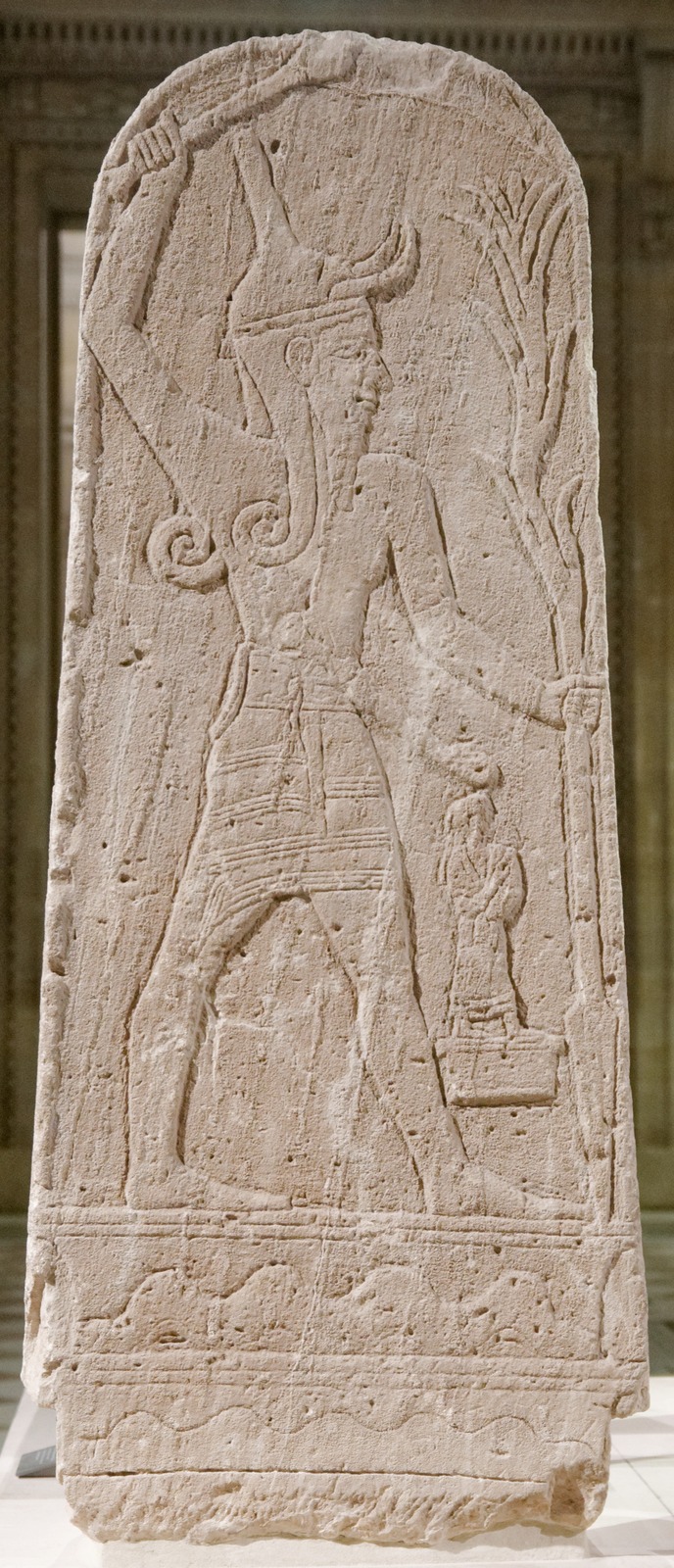
The Baal with Thunderbolt stela, AO 15775, supplies archaeological evidence for a warrior god’s representation at Ugarit. The Louvre assigns the broad date range 2000–1150 BCE; it should not be made into an image securely dated to the cycle’s year of composition.[8]
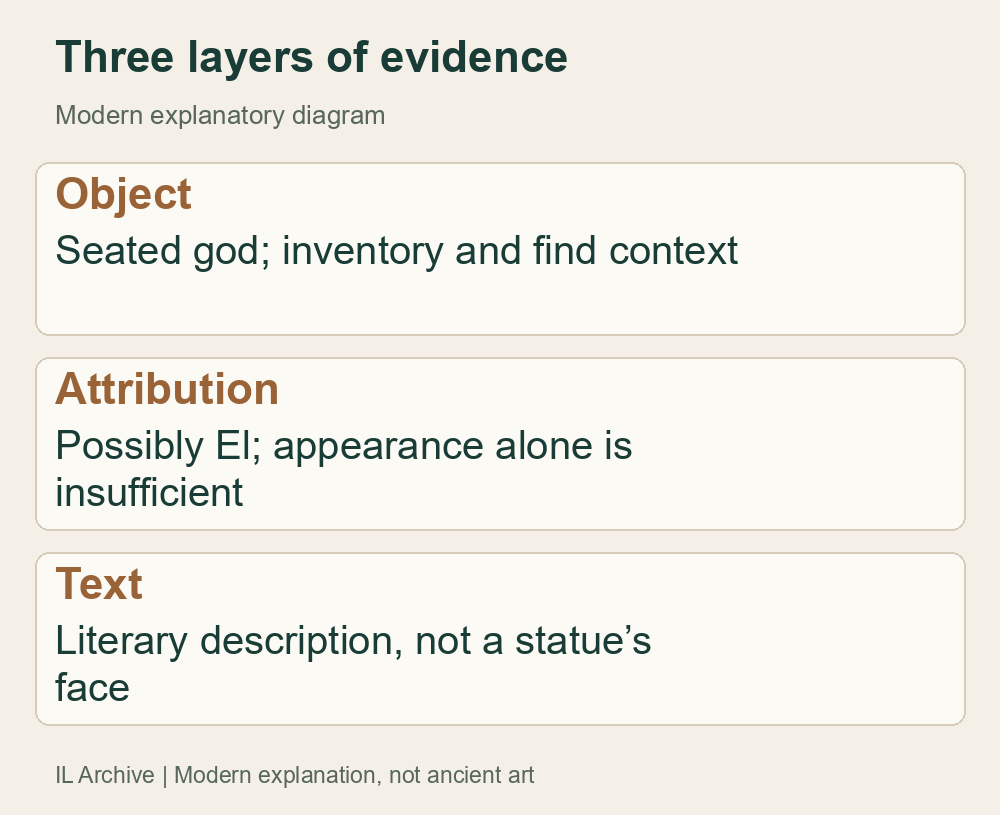
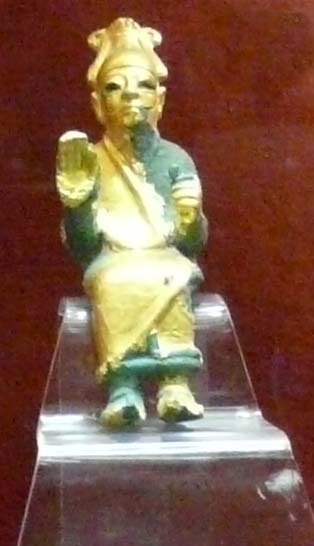
For the seated figurineFigurineSmall three-dimensional representations of people, animals or other beings. Size and appearance alone do not establish a toy, portrait, ritual object or deity; manufacture, discovery context and use require study.Glossary · Click to read the explanation RS 23.394 / S3573, the Virtual Museum of Syria tentatively proposes El. Two photographs therefore cannot become visual proof that an old god was deposed by a victorious young one. Object attribution and textual interpretation are related questions, but neither automatically settles the other.[9]
What do we know about a historical rise?
The texts explicitly show Baal defeating Yam, receiving a palace with El’s permission and confronting Mot. Athtar tries Baal’s throne, and Shapshu warns Mot about El’s anger threatening his kingship. These are specific narrative indications, not merely impressions of an active and an inactive character.[2][3][4][5][7]
As an interpretation, El’s paternal authority and Baal’s warrior kingship within one structure are well supported. Baal’s prominence may reflect a historical change in the storm god’s standing. But the cycle alone does not establish when or how that change occurred, or demonstrate that Baal abolished El or took over his entire position.
Baal became king; El remained household head
Baal seeks his own throne and his own palace. During his absence, Athtar tries to occupy his position. On returning, Baal regains the power to defend his kingship. El does not become a closed chapter: his approval, grief and standing remain part of the world in which the hero acts.
The more useful question is therefore not which god possessed all power, but what power the stories attributed to each. Baal embodies victory and action; El embodies the senior paternal head and recognition of standing. Ugarit retained both, together with their tensions, without narrating the young god’s killing of the father and seizure of his throne.
References and notes
- Joel S. Burnett (2022). The Persistence of El in Iron Age Israel and Ammon. In Biblical and Ancient Near Eastern Studies in Honor of P. Kyle McCarter Jr. Ugaritic section, printed pp. 301–303 only; PDF pp. 328–330. KTU1.65, divine household, son of Dagan and senior El/warrior Baal interpretation. Entire chapter and volume not claimed read. Return to the text ↑
- Jeffery B. Lloyd (1994). The Goddess Anat: An Examination of the Textual and Iconographic Evidence from the Second Millennium B.C. University of Edinburgh doctoral thesis. Selected pp.181–184,191–192,197–198,203–208: palace request/threat/permission, mourning in KTU1.5VI, Anat’s attack in KTU1.6II, gap before El’s dream and agricultural-reading limits. Restorations/interpretations distinguished from secure wording. Whole thesis not read. Return to the text ↑
- Mark S. Smith and Wayne T. Pitard (2009). The Ugaritic Baal Cycle, Volume II: Introduction with Text, Translation and Commentary of KTU/CAT 1.3–1.4. University of Illinois abstract and metadata only: KTU1.3–1.4, El’s permission and palace construction. The 864-page volume and its line-by-line commentary not claimed read. Return to the text ↑
- Theodore J. Lewis (2022). God [ʾIlu] and King in KTU 1.23. In “Like ʾIlu Are You Wise”: Studies in Northwest Semitic Languages and Literatures in Honor of Dennis G. Pardee. SAOC 73. P.34, especially n.18: KTU1.6VI27–29, Shapshu warns Mot of throne support withdrawn, throne overturned and scepter broken; no executed deposition in the scene. Royal titles in n.17. Whole volume not read. Return to the text ↑
- Nicolas Wyatt (2009). The Concept and Purpose of Hell: Its Nature and Development in West Semitic Thought. Numen 56, 161–184. DOI: 10.1163/156852709X404964. Pp.168–169, especially n.14 and KTU1.6I50–67 translation: Athirat proposes Athtar, Baal’s throne on Saphon, footstool, descent and rule in the earth. Wyatt’s discussion of earth/rebellion is an interpretation, not a consensus. Return to the text ↑
- Patrick D. Miller Jr. (1967). El the Warrior. Harvard Theological Review 60(4), 411–431. DOI: 10.1017/S0017816000003886. Opening extract, metadata and visible references only: the widespread assumption of inactive, declining El. Full article not claimed read; publication1967, not online release2011. Return to the text ↑
- Ira Spar (2009). The Gods and Goddesses of Canaan. The Metropolitan Museum of Art. Complete museum essay: storm Baal/Saphon, Yam/messengers, weapons/Kothar-wa-Hasis, palace and seasonal interpretation. Seasons reading compared with Lloyd’s cautions, not presented as consensus; uncertain El imagery. Return to the text ↑
- Musée du Louvre. Stèle du Baal au foudre. AO 15775 / RS 4.427. Identity, limestone, broad date2000–1150 BCE and Ugarit find. Protected museum photos not used; Jastrow’s public-domain photograph documented separately in media metadata. Return to the text ↑
- Virtual Museum of Syria. Seated God Figurine (possibly El). RS 23.394 / Damascus S3573. Catalogue checked for the preceding archive study on the same date:1400–1300 BCE,13.5cm, bronze/gold foil, possible El. Damascus display refers to2011 data, not verification of current location. Separate ywpark2003 CC0 photo used. Return to the text ↑
Suggest a correction · Suggest a source for this record
Cite this record
IL Archive, «El and Baal», Edition 1, https://ilarchive.com/en/studies/el-and-baal
Continue reading