Site · City
Ugarit
- Region
- The Levant
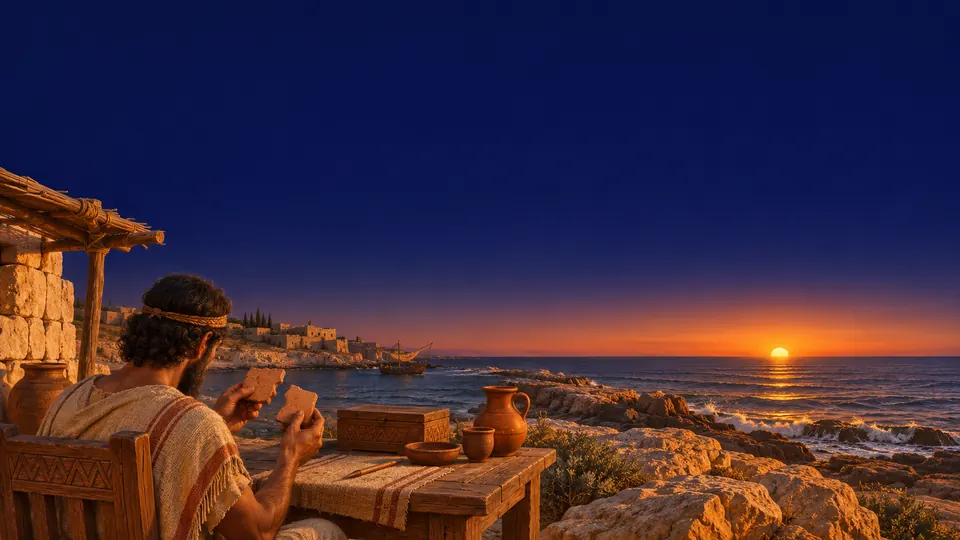
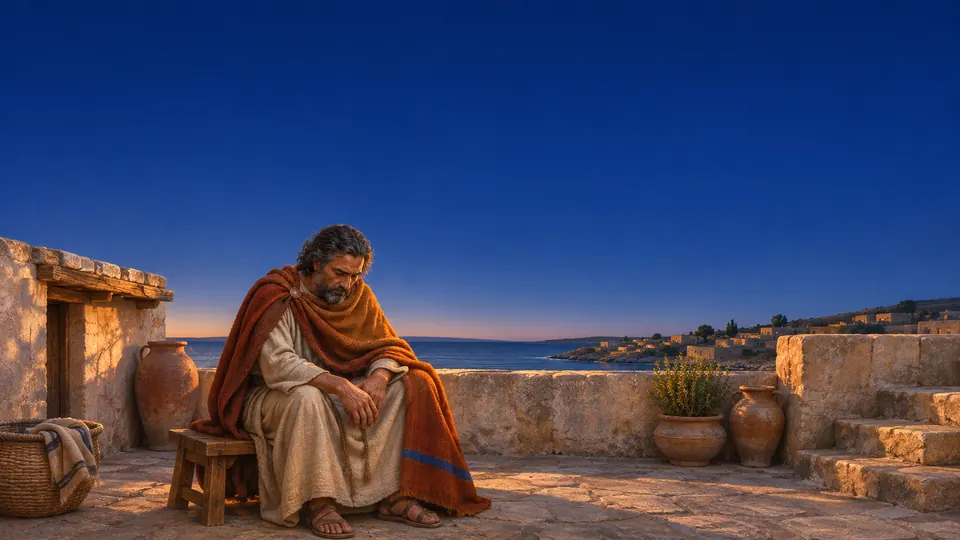
At Ras Shamra on the Syrian coast, Ugarit’s palace and port connected a Late Bronze Age kingdom to its neighbours. A royal archive, a school tablet and a private house show how its scribes used different languages.
Estimated reading time: 3 min Published Last reviewed:
Share article
Video
The Name No One Owns | The Road of El
More than four thousand years ago a palace burned at Ebla, and one small word waited in its clay: ʾl, El. We follow it through names and inscriptions, from Ebla, Mari and Ugarit to the kings of Samʾal, Karatepe and Saba and the stones of the basalt desert, then set the Torah's names and the Arabic question side by side. Some scenes are AI-generated illustrations.
The YouTube player loads only when you press play. Watch on YouTube
Text
Introduction
Ugarit was the capital of a kingdom on the Syrian coast, near modern LatakiaLatakiaA coastal city in Syria, south of ancient Ugarit at Ras Shamra.Glossary · Click to read the explanation. It flourished from the fourteenth to the early twelfth century BCE, during the Late Bronze AgeLate Bronze AgeAn archaeological period around 1600–1200 BCE in much of the Near East, with international diplomacy, exchange and religious diversity; its endpoints vary by region.Glossary · Click to read the explanation. Its ruins lie at Ras Shamra, about 800 metres inland from the bay of Minet el-Beida, where the kingdom’s principal port, Mahadu, stood. A stone-built tomb discovered at the port in 1928 led to systematic excavations in 1929. The settlement mound preserves a much longer history, beginning with Neolithic farming communities around 7500 BCE. [1]
The palace and the city
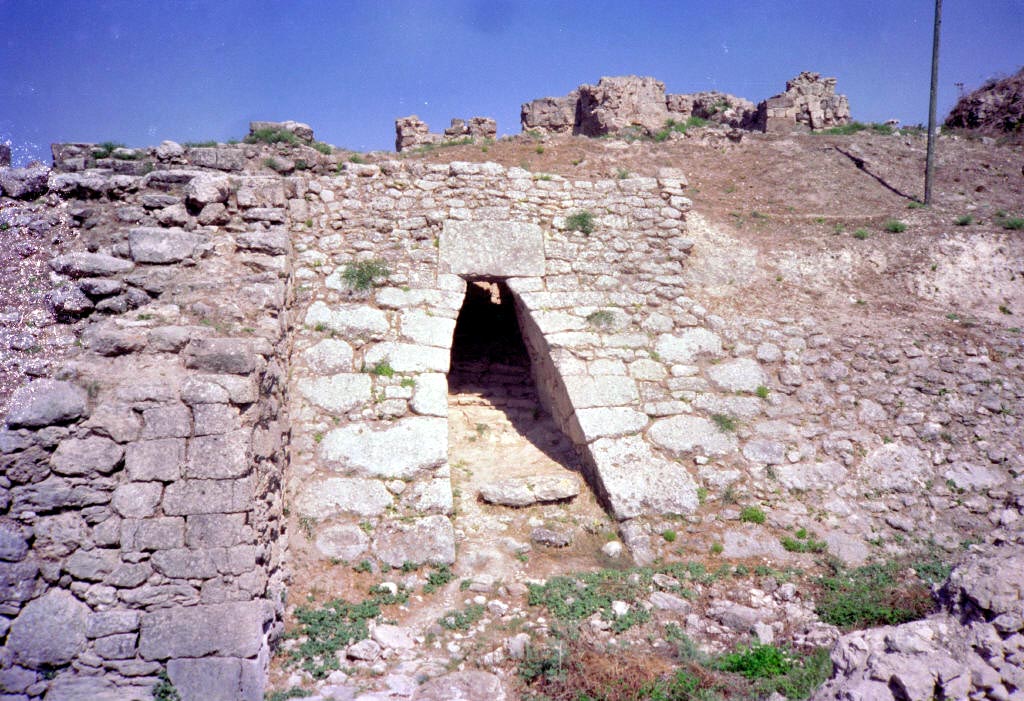
The royal palace stood in the northwest of the city, near a fortified entrance. Its main doorway, under a porch carried by two columns, faced a paved square. The surviving ground floor includes reception rooms, storerooms and part of the royal burial area. Stairs signal that there were upper floors. Valérie Matoïan places both royal apartments and administrative offices there. Carved ivory found in and around Court III attests to the palace furnishings. The building was already a point of comparison in the fourteenth century BCE, when Rib-Hadda of Byblos likened the residence at TyreTyreTyre is a city on the coast of present-day southern Lebanon and an important ancient Phoenician centerGlossary · Click to read the explanation to the one at Ugarit in a letter preserved at AmarnaAmarna / AkhetatenAmarna is the archaeological site of Akhetaten, Akhenaten’s fourteenth-century BCE capital in Middle Egypt, preserving royal boundary stelae, temples, houses and cemeteries.Glossary · Click to read the explanation. [2]
What the scribes wrote
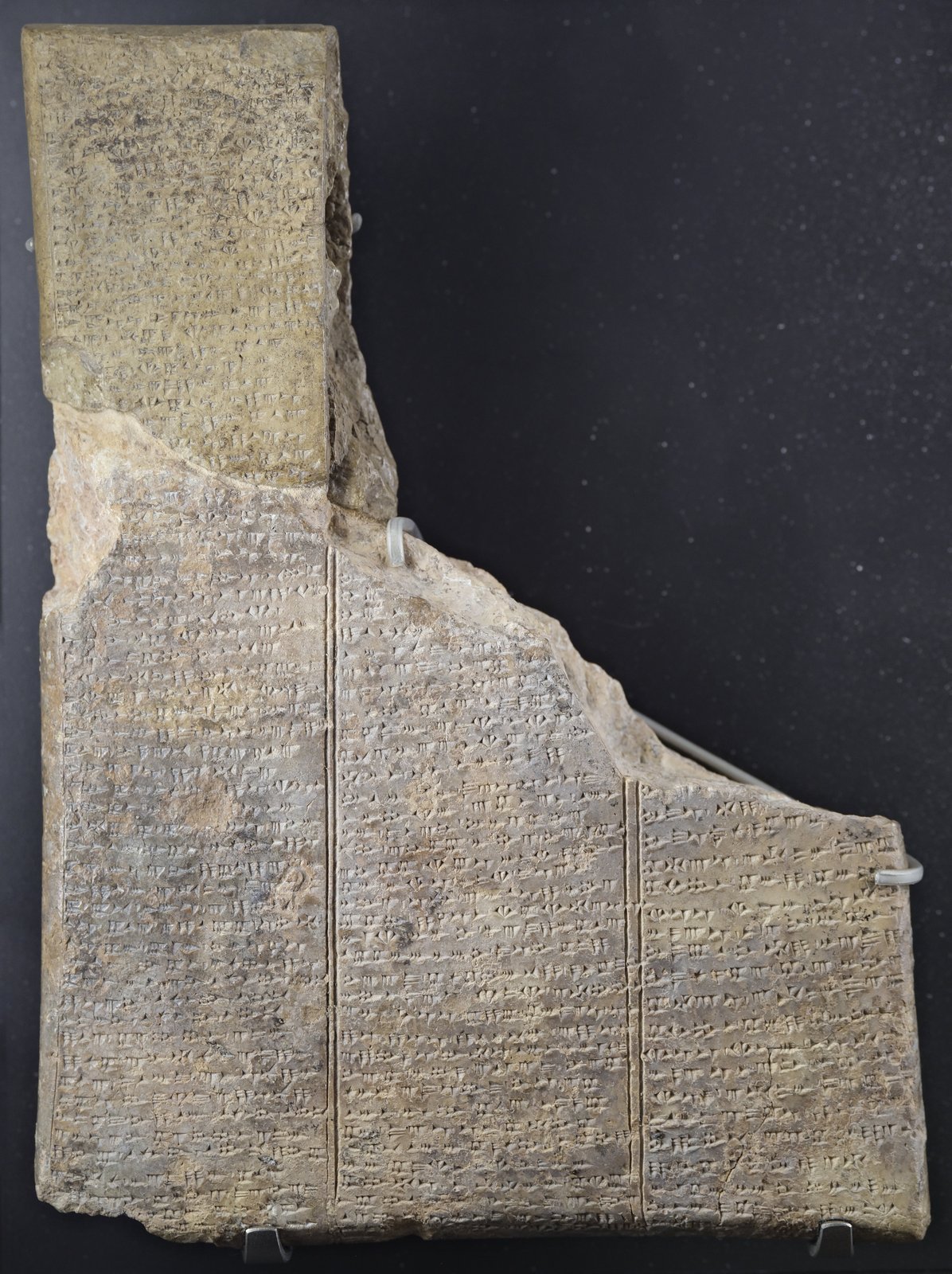
Babylonian, a variety of AkkadianAkkadianAn ancient East Semitic language written in cuneiform from the third millennium BCE; its varieties include Babylonian and Assyrian, and it served in international diplomacy.Glossary · Click to read the explanation, served for international letters and treaties and for many local legal documents. Scribes wrote it in Mesopotamian cuneiformCuneiformWriting with wedge-shaped signs, developed from Mesopotamian recording traditions and used for several languages from the third millennium BCE.Glossary · Click to read the explanation, whose signs could stand for whole words or for syllables. They generally wrote the local UgariticUgaritic languageAncient Semitic language preserved in Ugarit’s tablets on the Syrian coast, from the fourteenth–twelfth centuries BCE, written in a cuneiform alphabet.Glossary · Click to read the explanation language with a separate alphabet. Some tablets used both writing systems. The clay tablet RS 12.033, found in the royal palace in 1948, lists the thirty letters of the long alphabet in order and is read from left to right. Abecedaries like this one, found in palace and private archives, help show how scribes learned to write the local language. [3][4]
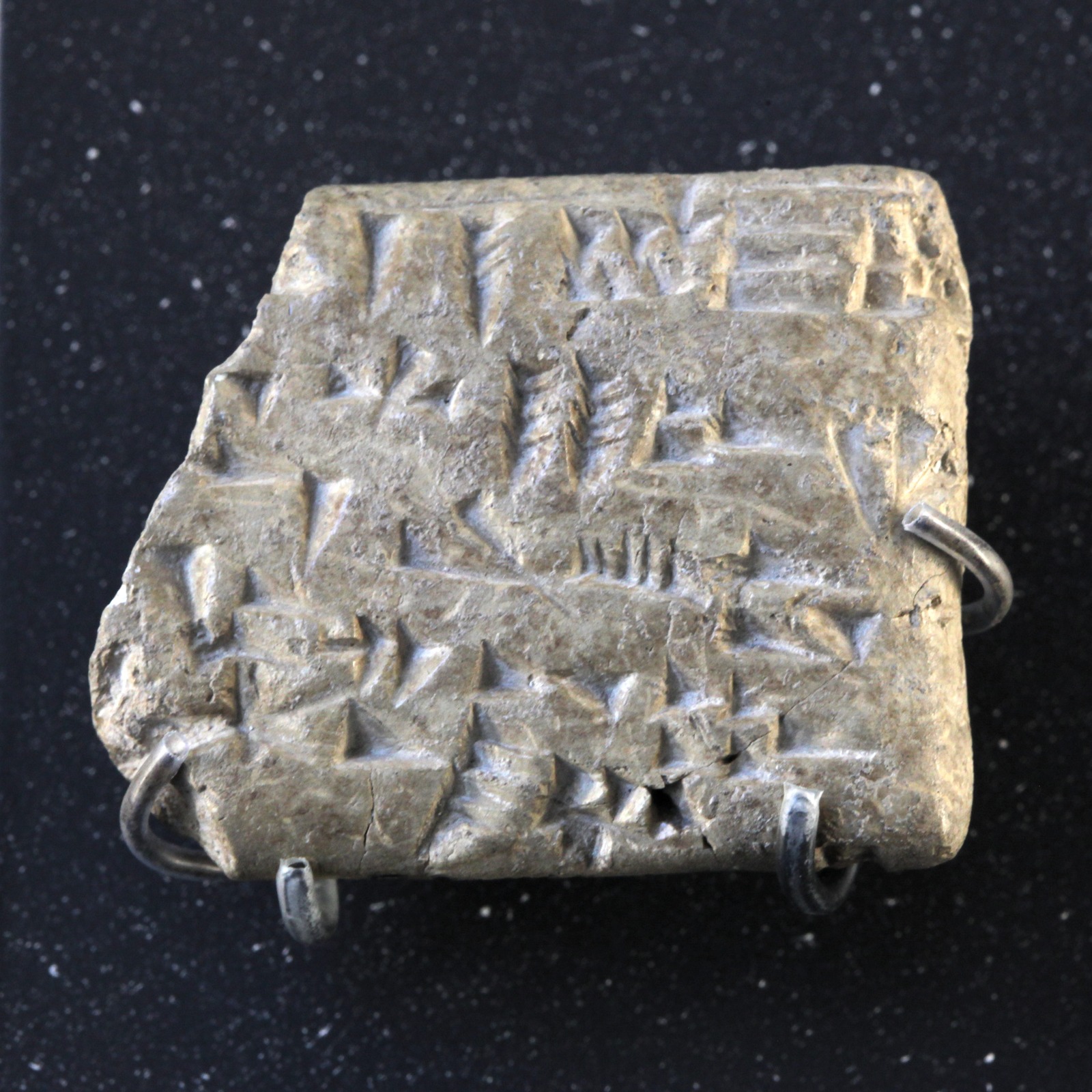
The House of Urtenu yielded a different kind of teaching tablet. One surviving half of RS 94.2939 contains about a hundred words listed in Sumerian, Akkadian and Hurrian. The Sumerian entries determine the order, and the contents range from kinship and occupations to words for animals and plants. The exercise shows how a scribe could use an established Mesopotamian word list to work across languages. [5]
Poetry, ritual and the end of the kingdom
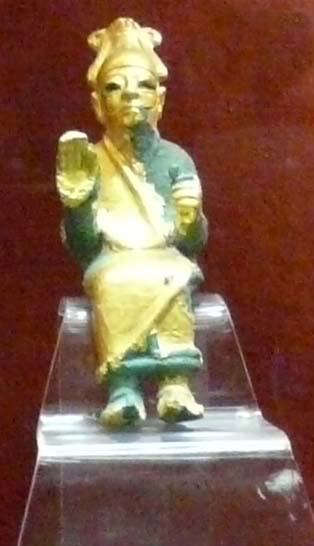
On the acropolis, between two large sanctuaries, stood the building known as the House of the High Priest. Its finds include the tablets of the Baal CycleBaal CycleA group of Late Bronze Age Ugaritic religious texts recounting Baal’s conflicts, relationships with the gods and the building of his palace.Glossary · Click to read the explanation and other poems. The closing inscriptions on several tablets name the scribe IlimilkuIlimilkuUgaritic scribe associated with the Baal Cycle, Kirta and Aqhat; handwriting and colophons aid attribution. His work alone does not date the traditions’ origins.Glossary · Click to read the explanation. In the epic of Kirta, the king honours ElElEl is a senior deity in Late Bronze Age Ugaritic texts, portrayed as father of the divine family and a council authority, alongside his consort Athirat. This entry does not cover every linguistic use of El.Glossary · Click to read the explanation and BaalBaalUgaritic storm god and warrior king who defeats Yamm, builds his palace with El’s consent and confronts Mot. References to El and Dagan as fathers do not define a single genealogy.Glossary · Click to read the explanation. RitualRitualAn organised or distinguished practice meaningful to a community; it may leave traces, but its form alone does not reveal an associated doctrine.Glossary · Click to read the explanation texts furnish a different kind of evidence. They point to ceremonies in the royal residence, while excavation identified places of worship in the palace district, residential areas and at the port. [1][6][7]
A letter found on the southern mound, RS 86.2230, was sent to Ammurapi, Ugarit’s last known king, by the Egyptian official Beya. It gives a point of reference for the kingdom’s final years. Ugarit suffered extensive fire damage early in the twelfth century BCE. The archaeologist Olivier Callot treats about 1180 BCE as an indicative date and leaves open whether the destruction occurred in one episode or several. He also notes signs of limited reoccupation after the kingdom fell. [8][9]
Quick answers
Where was Ugarit? Its capital lay at Ras Shamra, near Latakia on the Syrian coast. Its main port was at nearby Minet el-Beida. [1]
How many letters did the Ugaritic alphabetUgaritic alphabetAlphabetic cuneiform system of Late Bronze Age Ugarit, using thirty chiefly consonantal written signs, distinct from Akkadian syllabic cuneiform.Glossary · Click to read the explanation have? The complete list on RS 12.033 has thirty letters. [4]
When was Ugarit destroyed? Much of the city burned early in the twelfth century BCE. About 1180 BCE is an approximate date. [9]
References and notes (9)
- Ministère de la Culture, “Ougarit - Ras Shamra” Site overview and plan. The port and its distance from the tell, the beginning of excavations, earlier occupation and the acropolis. Return to the text ↑
- Valérie Matoïan, “Le palais royal d’Ougarit,” Ministère de la Culture Main text. Entry and square, surviving ground floor, upper-floor interpretation, ivories and the Amarna letter. Return to the text ↑
- Carole Roche-Hawley, “Corpus et langue / La documentation textuelle d’Ougarit,” Ministère de la Culture Discussion of languages and scripts. Babylonian diplomacy and local contracts, and school texts employing both scripts. Return to the text ↑
- Anne-Sophie Dalix, “Un abécédaire : la tablette RS 12.033,” Ministère de la Culture Entry on RS 12.033. Palace find in 1948, the long alphabet of thirty letters, direction of reading and scribal education. Return to the text ↑
- Béatrice André-Salvini, “Un vocabulaire trilingue d’Ougarit,” Ministère de la Culture Entry on RS 94.2939. House of Urtenu findspot, three languages, order of the words and subjects covered. Return to the text ↑
- Arnaud Sérandour, “La première littérature levantine connue,” Ministère de la Culture Section on Ilimilku. House of the High Priest, tablets of the Baal Cycle and the scribe’s closing inscriptions. Return to the text ↑
- Valérie Matoïan, “Les lieux dévolus aux pratiques religieuses,” Ministère de la Culture Sections on texts and excavation. El and Baal in Kirta, royal ritual and archaeological evidence for places of worship. Return to the text ↑
- Jacques Freu, “La tablette RS 86.2230 et la phase finale du royaume d’Ugarit,” Syria 65 (1988), pp. 395–398 Opening on p. 395. Findspot, sender Beya and recipient Ammurapi. Return to the text ↑
- Olivier Callot, “Réflexions sur Ougarit après ca 1180 av. J.-C.,” in Ougarit au Bronze moyen et au Bronze récent (2008), pp. 119–125 Opening discussion, p. 119. Evidence of fire, approximate chronology, uncertainty over the sequence and traces of reoccupation. Return to the text ↑
Suggest a correction · Suggest a source for this record
Cite this record
IL Archive, «Ugarit», https://ilarchive.com/en/sites/ugarit
Continue reading
Related readings